Artwork
宋 佚名 倣周文矩 宮中圖 卷|In the Palace
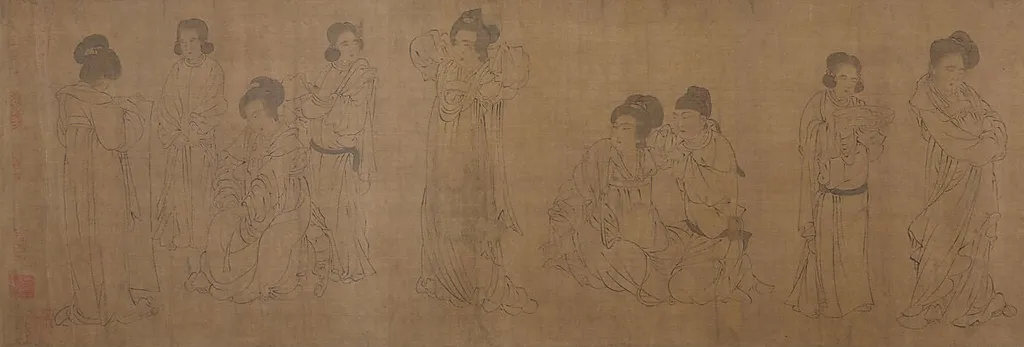
宋 佚名 倣周文矩 宮中圖 卷|In the Palace is an ink painting by the Song dynasty painting artist After Zhou Wenju. It dates from 1140 and is held in the collection of the Metropolitan Museum of Art. Created around 1140 during the Song dynasty, this anonymous handscroll follows the style of Zhou Wenju.
About this work
Technique & Style
The work is executed as a handscroll using ink with selective touches of color on silk, a combination typical of refined Southern Song painting.
The work is executed as a handscroll using ink with selective touches of color on silk, a combination typical of refined Southern Song painting. Composition and line work emulate the dense, meticulously organized figural groupings and delicate, sinuous drapery folds associated with the tenth-century master Zhou Wenju, whose manner the anonymous hand emulates. Stylistic hallmarks include finely modulated ink washes, precise yet fluid contour lines, and a restrained palette that privileges ink over hue to convey volume and atmosphere within the palace interior.
History & Provenance
The handscroll titled In the Palace is dated to 1140 and attributed to an anonymous artist working in the style of Zhou Wenju. This work, executed in ink with touches of color on silk, originated in China during the Song dynasty. The piece is currently held in the collection of the Metropolitan Museum of Art, where it remains a significant example of genre scenes depicting women from this period.
Overview
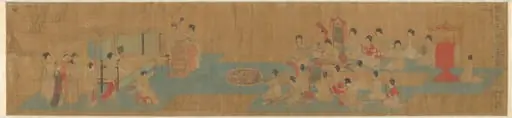
Created around 1140 during the Song dynasty, this anonymous handscroll follows the style of Zhou Wenju. Executed in ink with subtle colour accents on silk, the work presents a leisurely palace interior populated by women in elegant robes.
Subject & Meaning
The scene portrays a group of court ladies moving through a garden within the imperial residence. Their poised gestures and the tranquil setting suggest a focus on refined daily life rather than narrative action, emphasizing the cultured atmosphere of the palace.
Context
During the Song era, court paintings often depicted the leisurely pursuits of aristocratic women, reflecting contemporary ideals of elegance and propriety. This work aligns with that tradition, offering insight into the aesthetic values and domestic rituals of the imperial household.

Artist & collection
Artist
After Zhou Wenju is a cataloguing designation rather than a personal name. It marks a work made in the manner of, or as a copy after, the Chinese painter Zhou Wenju, who served at the court of the Southern Tang in the…

 Untitled
 南宋 傳 李唐 晉文公復國圖 卷|Duke Wen of Jin Recovering His State
 元? 佚名 仿李公麟 屈原九歌圖 卷|The Nine Songs: Illustrations to the poems of Qu Yuan (343–277 B.C.)
 Untitled
 United by Music 合樂圖
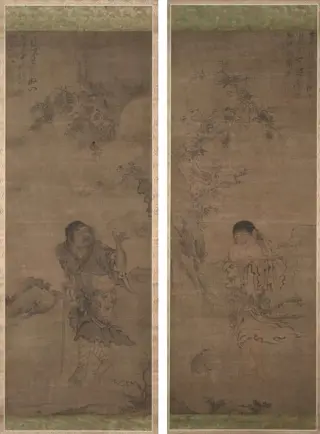 Li Tieguai; Liu Haichan
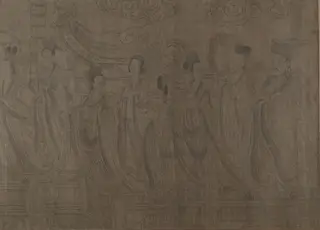 Untitled
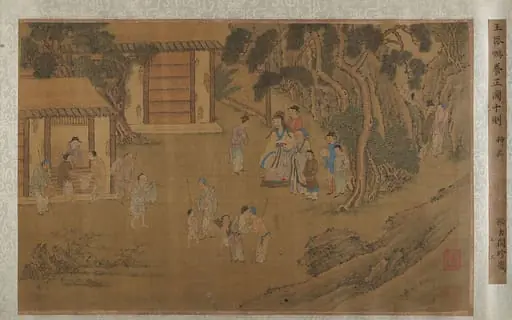 明/清 佚名 舊傳王振鵬 養正圖 卷|Family Training
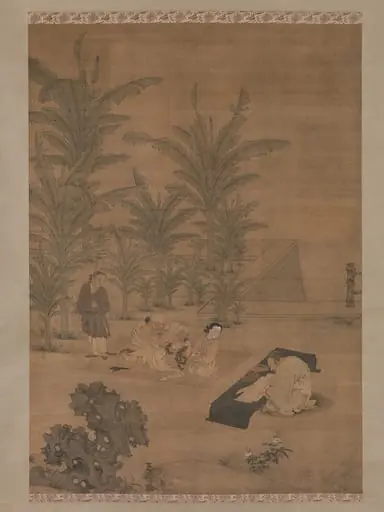 明 杜堇 伏生授經圖 軸|The Scholar Fu Sheng Transmitting the Book of Documents