Artwork
元? 佚名 仿李公麟 屈原九歌圖 卷|The Nine Songs: Illustrations to the poems of Qu Yuan (343–277 B.C.)
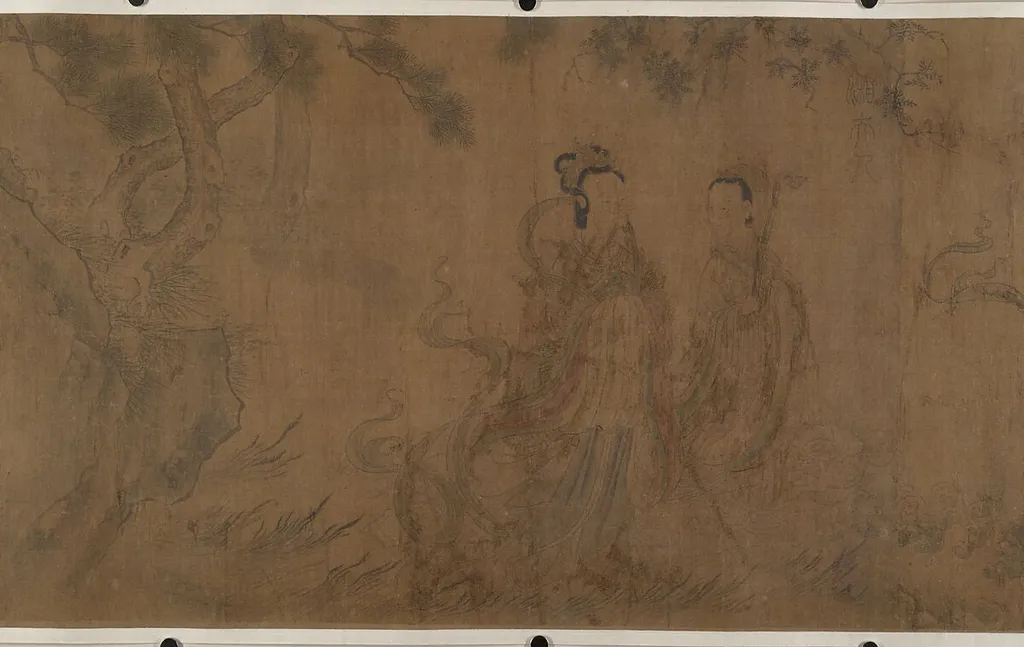
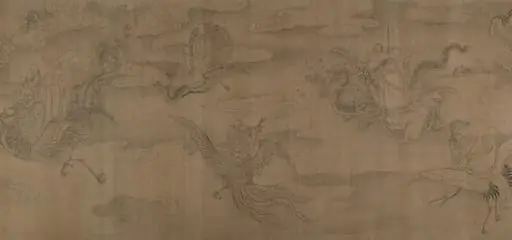
元? 佚名 仿李公麟 屈原九歌圖 卷|The Nine Songs: Illustrations to the poems of Qu Yuan (343–277 B.C.) is an ink painting by the Chinese Orthodox School artist After Li Gonglin. It dates from 1319 and is held in the collection of the Metropolitan Museum of Art. This handscroll, titled The Nine Songs: Illustrations to the poems of Qu Yuan, renders a series of scenes in ink and color on silk.
About this work
Technique & Style
The anonymous painter renders the figures with delicate line work and subtle washes, emulating Li Gonglin’s manner of restrained modeling and attenuated forms.
The handscroll is executed in ink and color on silk, a combination that aligns with Song–Yuan pictorial conventions for refined narrative illustration. The anonymous painter renders the figures with delicate line work and subtle washes, emulating Li Gonglin’s manner of restrained modeling and attenuated forms. Compositional clarity and a muted palette characterize the scroll, with light mineral pigments and low saturation evoking the archaizing taste of thirteenth–fourteenth century scholarly painting.
History & Provenance
The work is dated 1319 and is attributed to an anonymous painter working in the manner of Li Gonglin. It takes the form of a handscroll executed in ink and color on silk, measuring 32.1 cm in height and 467.4 cm in length. The painting is held in the collection of the Metropolitan Museum of Art, New York.
The handscroll titled The Nine Songs: Illustrations to the poems of Qu Yuan is held in the collection of the Metropolitan Museum of Art. The work, attributed to an anonymous painter working in the style of Li Gonglin, was created in 1319. It is cataloged as a painting executed in ink and color on silk, measuring 32.1 cm in height and 467.4 cm in width.
The source material does not provide a specific inventory or accession number, nor does it list any exhibition history for the piece.
Overview
This handscroll, titled The Nine Songs: Illustrations to the poems of Qu Yuan, renders a series of scenes in ink and color on silk. Created in 1319 by an anonymous artist working in the style of Li Gonglin, it visually interprets ancient verses by the poet Qu Yuan (343–277 B.C.). The long format allows for a narrative progression, inviting viewers to unroll it section by section to follow the depicted events and figures.
Subject & Meaning
The scroll brings to life the lyrical world of Qu Yuan's Nine Songs, a collection of ancient Chinese poetry. These verses, penned by a poet renowned for his protest and eventual self-sacrifice by drowning, explore themes of shamanism, deities, and human emotion. The artwork portrays various figures, including gods, ethereal dancers, and poets, engaging in mystical interactions within natural settings, reflecting the spiritual and allegorical content of the original texts.
Artist & collection

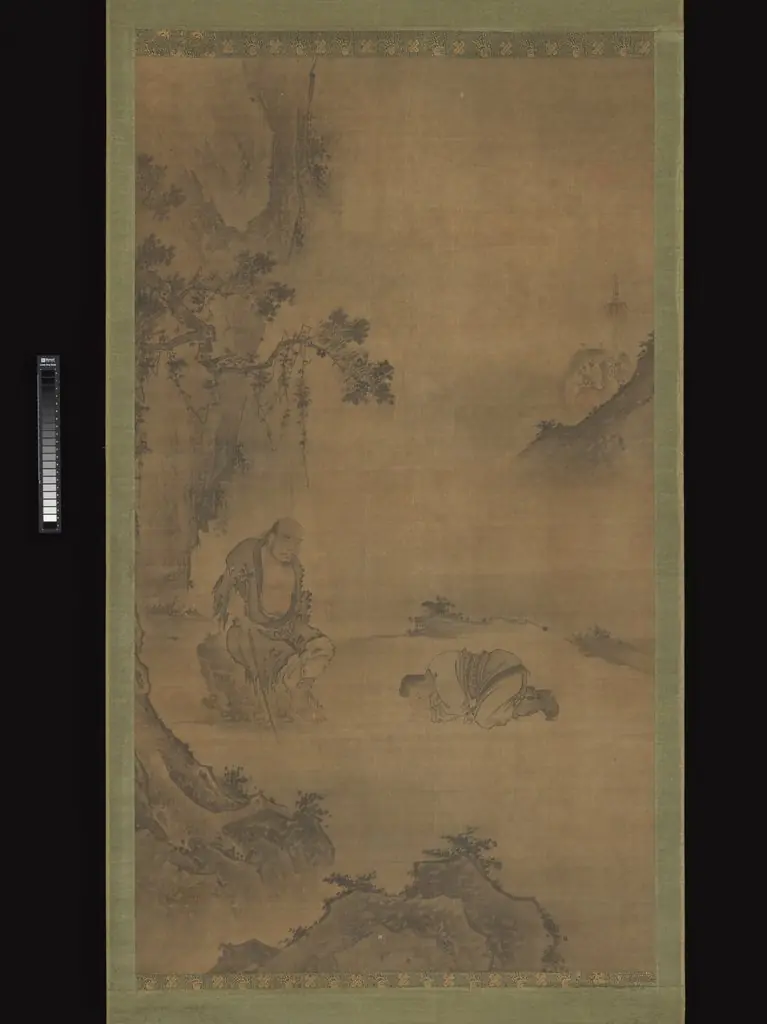
- Daoist immortal Li Tieguai receiving a visitor
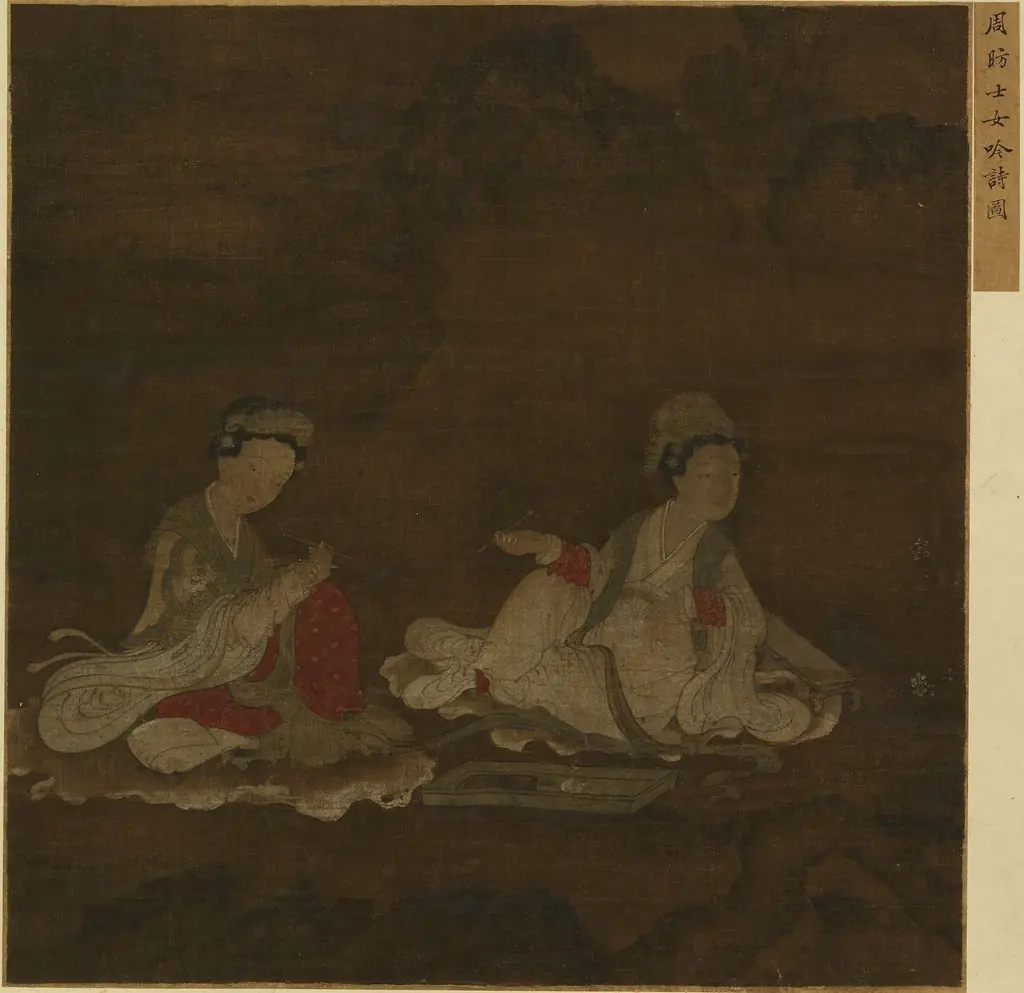 名繪集珍 冊 唐周昉士女吟詩圖
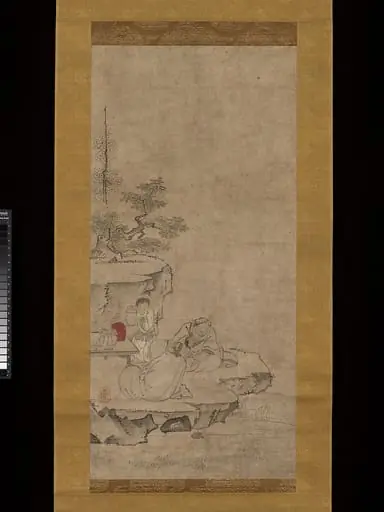 Untitled
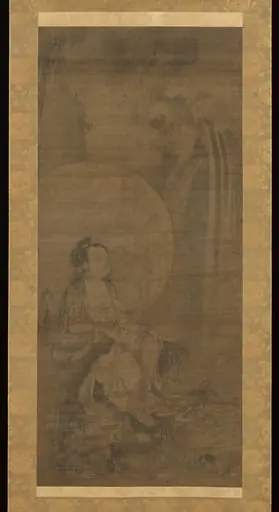 白衣観音図|White-robed Kannon
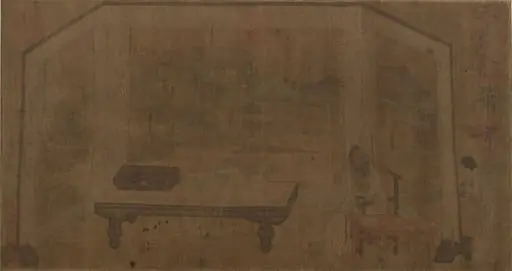 宋/明? 佚名 仿王齊翰 挑耳圖 卷|Library Scene
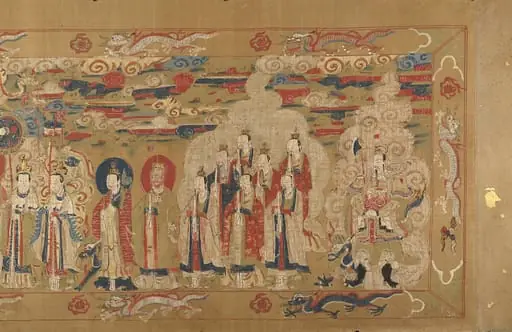 明 佚名 奉神圖 卷|Canonization scroll of Li Zhong
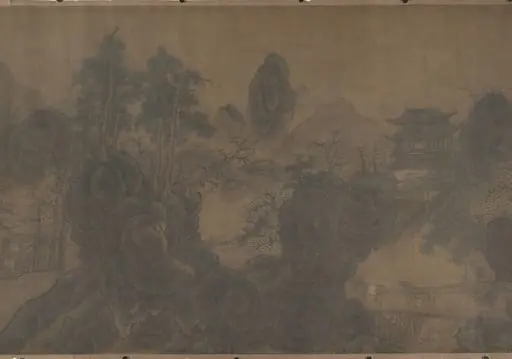 明/清 佚名 舊傳郭煕 關山行旅圖 卷|Traveling amid Mountains
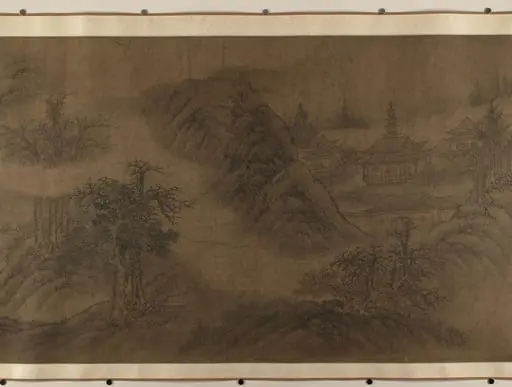 明 佚名 舊傳燕文貴 溪山行旅圖 卷|Landscape
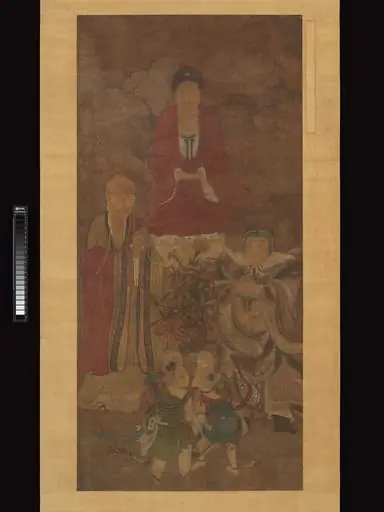 明 佚名 禮佛圖 軸|Shakyamuni with luohan, heavenly king, and boys
 五代 傳董元 溪岸圖 軸|Riverbank
 Lonely Retreat Overlooking a Misty Valley
 Nine Songs