Artwork
宋 佚名 倣周昉 戲嬰圖 卷|Palace Ladies Bathing Children
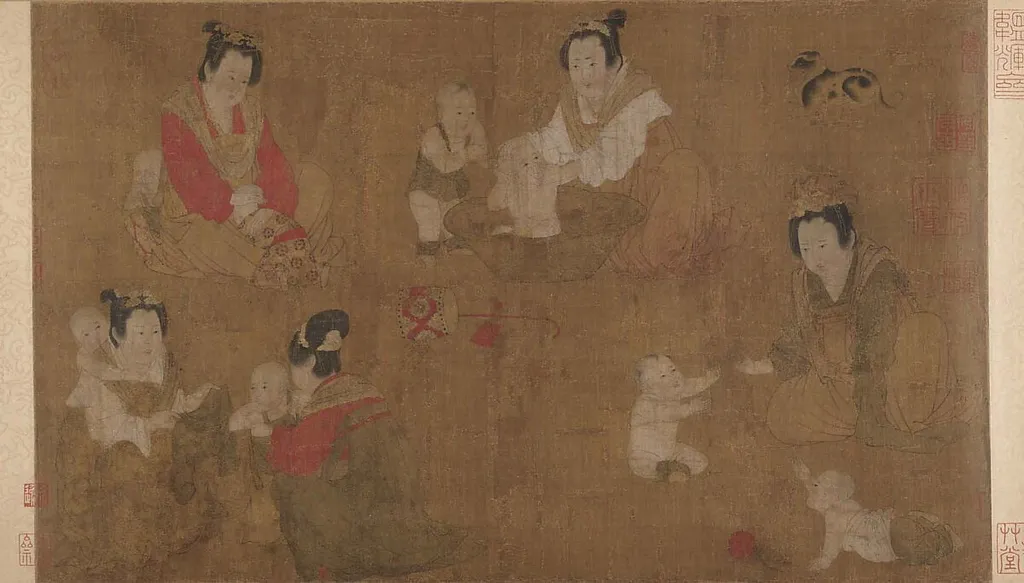
宋 佚名 倣周昉 戲嬰圖 卷|Palace Ladies Bathing Children is an ink painting by the Song dynasty painting artist Zhou Fang. It is held in the collection of the Metropolitan Museum of Art.
About this work
Subject & Meaning
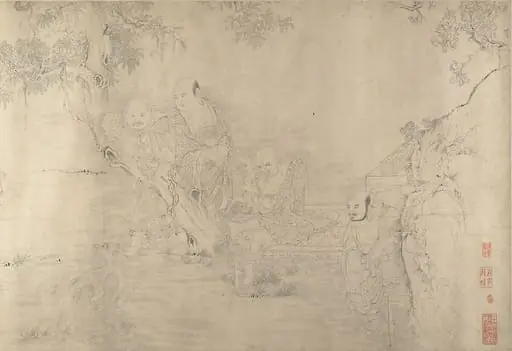
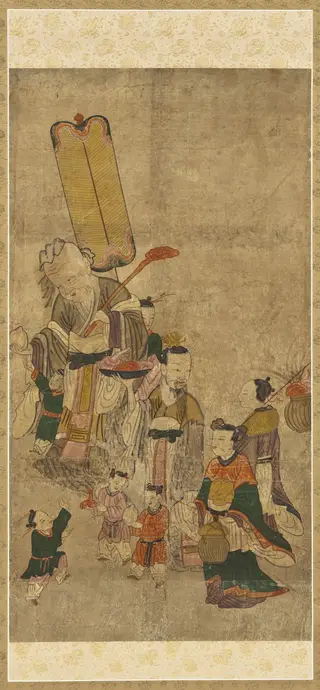
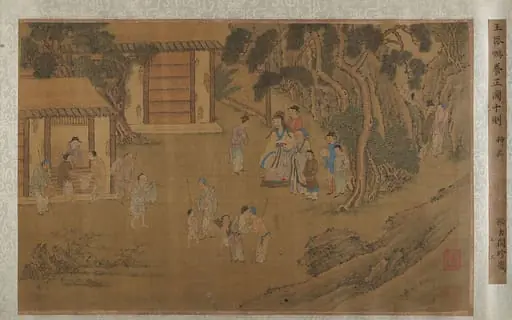
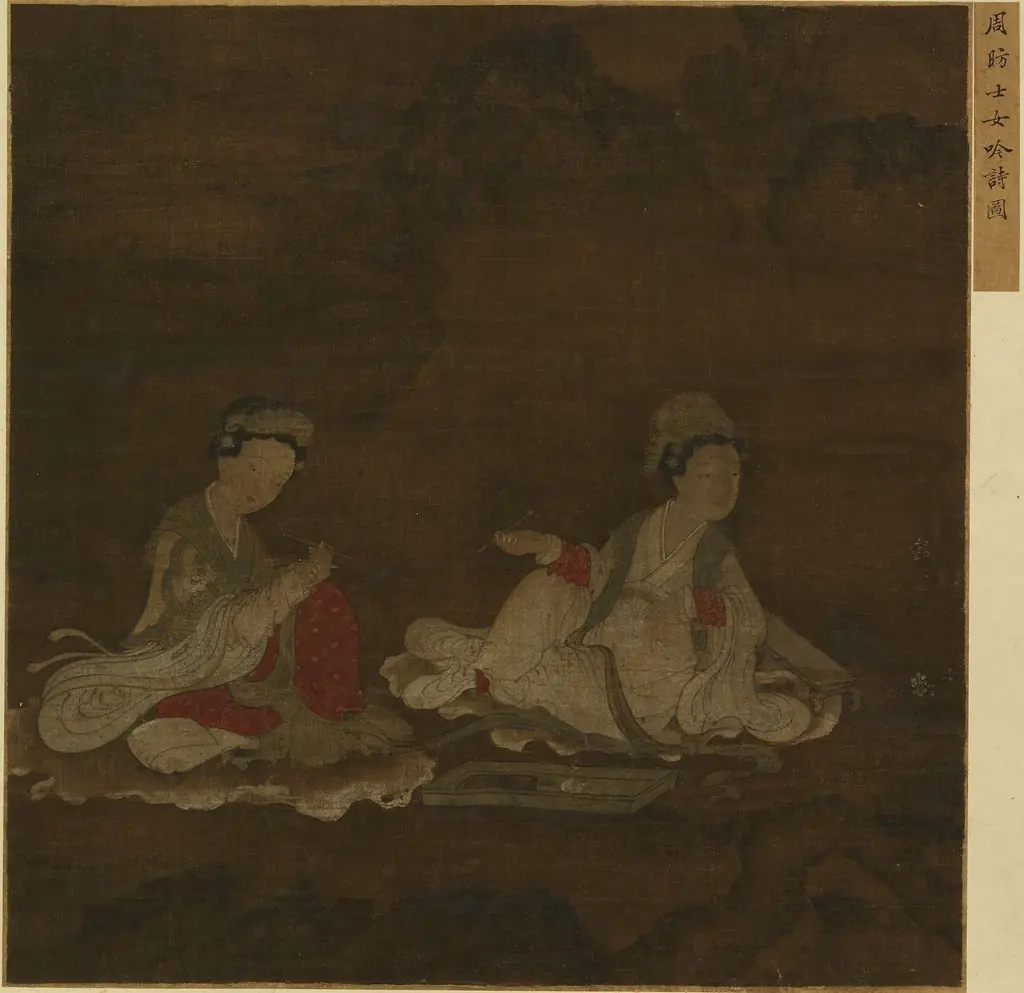
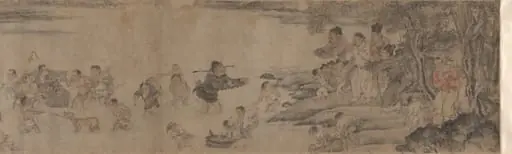
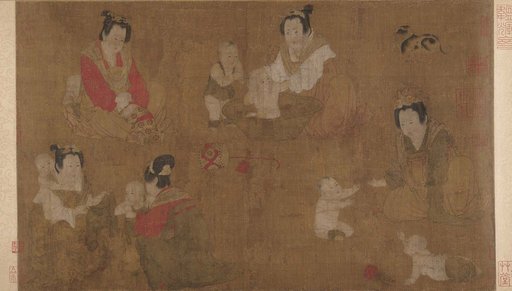
The handscroll depicts a genre scene of palace ladies bathing infants, capturing an intimate moment of domestic care within an imperial setting.
The handscroll depicts a genre scene of palace ladies bathing infants, capturing an intimate moment of domestic care within an imperial setting. Created around 1100 by an unidentified artist working in the style of Zhou Fang, the work illustrates women attending to young children, emphasizing themes of nurturing and maternal affection. The iconography centers on the interaction between adult women and infants, a common motif in Chinese painting that often symbolizes fertility, lineage continuity, and the idealized virtues of courtly life.
By portraying these figures in a serene, ritualized act of bathing, the composition reflects cultural values surrounding family, purity, and the elevated status of women in the Song dynasty court. The visual narrative avoids grand ceremonial display, instead focusing on the quiet dignity and tenderness of everyday aristocratic existence.
Technique & Style
The handscroll employs fine ink lines and delicate mineral pigments on silk, a combination typical of Northern Song courtly painting. The anonymous hand works in the manner of the Tang master Zhou Fang, with attenuated figures and rhythmic drapery folds rendered through supple, continuous contour lines. Color is applied in thin, layered washes, emphasizing translucent silks and subtle flesh tones rather than opaque modeling.
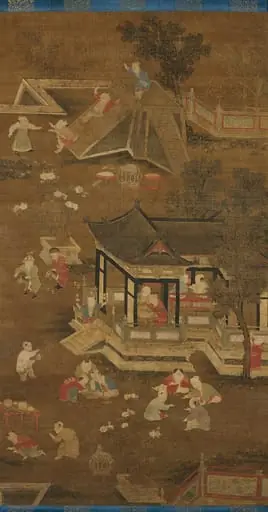
The composition unfolds in a shallow, staggered recession of palace halls and garden courts, guiding the viewer's eye through a choreography of intimate gestures.
History & Provenance
The handscroll Palace Ladies Bathing Children (倣周昉 戲嬰圖 卷) was created in China around the year 1100, during the Song dynasty. Although it bears the stylistic influence of the Tang dynasty master Zhou Fang, the actual creator remains unidentified and the work is recorded as anonymous. It is executed in ink and color on silk and depicts women bathing infants.
The artwork is held in the collection of the Metropolitan Museum of Art. The available records do not specify the original commissioning patron, the chain of ownership prior to the museum, or a unique accession number, nor do they document any past or upcoming exhibition history for the scroll.
Overview
This handscroll, titled Palace Ladies Bathing Children, is an anonymous Chinese painting from the Song dynasty, dating to approximately 1100. Executed with ink and color on silk, it presents a domestic genre scene. The work is attributed as an imitation of the style of Zhou Fang, a renowned Tang dynasty painter. It captures a moment of everyday life, depicting women attending to young children within a refined setting.
Artist & collection
Artist
Zhou Fang (Chinese: 周昉; Wade–Giles: Chou Fang; c. 730–800), courtesy name Zhonglang (仲朗), was a Chinese painter during the Tang dynasty. He lived in the Tang capital of Chang'an (modern Xi'an) and painted for the…