Artwork
Saint Dionysius the Areopagite in Prayer
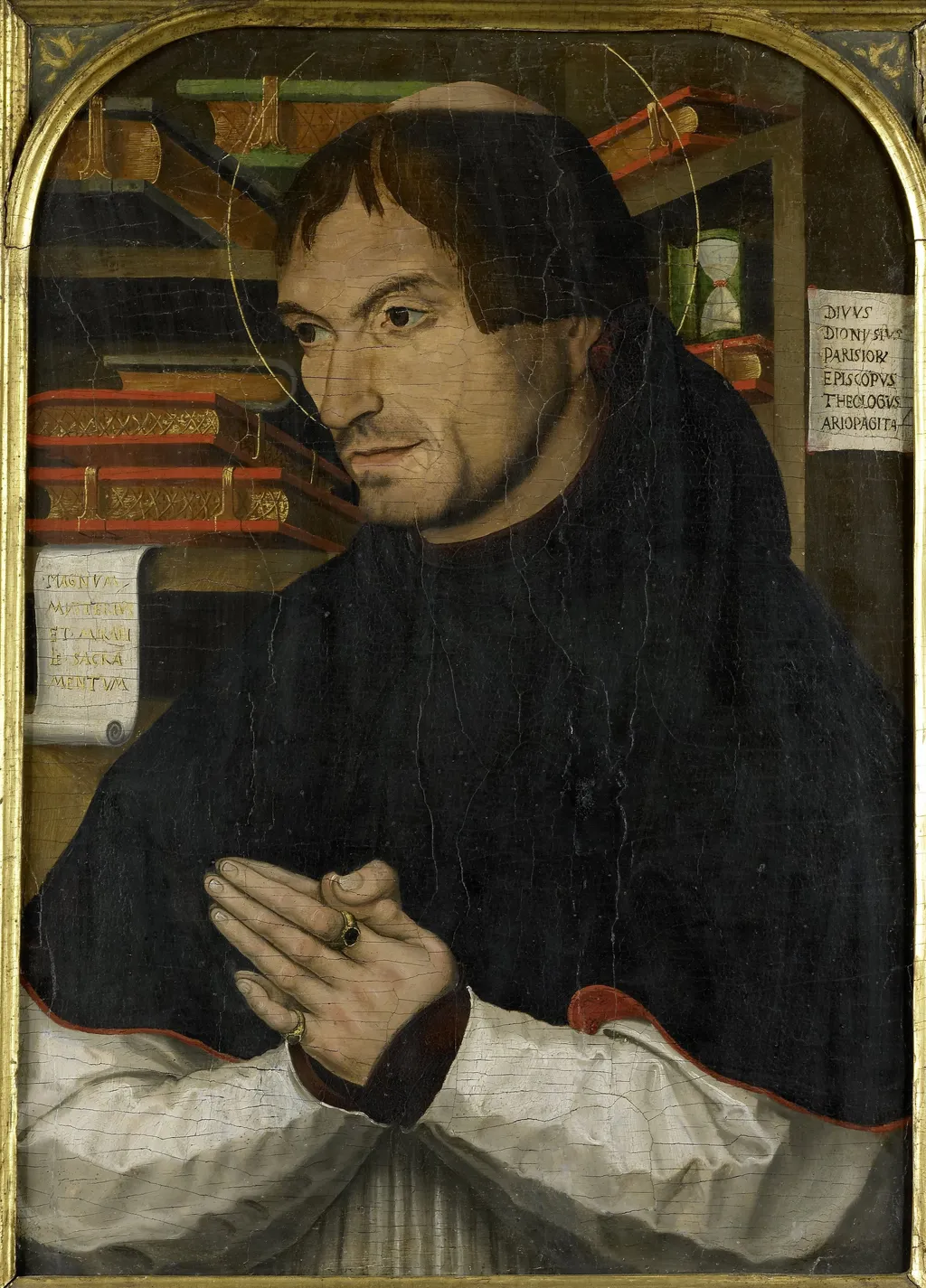
Saint Dionysius the Areopagite in Prayer is an oil painting. It dates from 1507 and is held in the collection of the Rijksmuseum. The oil painting portrays a solitary figure in a posture of prayer, his hands joined before his chest.
About this work
Subject & Meaning
The work belongs to the religious art genre, reflecting Counter-Reformation interests in personal piety and visual meditation.
The painting portrays Saint Dionysius the Areopagite in a moment of devotional prayer, rendered in oil on panel. The composition emphasizes his contemplative posture and direct gaze, embodying the saint's role as a converted Athenian bishop and symbol of scholarly conversion to Christianity. The work belongs to the religious art genre, reflecting Counter-Reformation interests in personal piety and visual meditation.
Technique & Style
Saint Dionysius the Areopagite in Prayer is executed in oil paint on a wooden panel support, a technique consistent with early sixteenth-century Northern devotional painting. The work is a religious painting on a modest scale, measuring 49 cm in height by 35 cm in width, which places it in the intimate range typical of private devotional images rather than large altarpieces.
Stylistically, the panel format and oil medium of this 1507 work align it with the tradition of small-format religious panels produced for private prayer and contemplation. The oil-on-panel technique allowed for the fine detail and luminous surface treatment associated with devotional imagery of the period.
History & Provenance
Created in 1507, the oil-on-panel painting titled Saint Dionysius the Areopagite in Prayer is attributed to an anonymous artist. The work depicts the religious figure Dionysius the Areopagite in a prayerful pose. It is currently held in the collection of the Rijksmuseum.
Overview
The oil painting portrays a solitary figure in a posture of prayer, his hands joined before his chest. He is dressed in a white shirt beneath a black robe, and a luminous halo crowns his head, indicating sanctity. Behind him a bookshelf holds an assortment of volumes in red, green and brown tones, suggesting an environment of learning or scriptural study.
Context
Saint Dionysius, mentioned in the Acts of the Apostles, became a prominent figure in early Christian thought, particularly in the development of mystical theology. Depicting him amidst books reflects the medieval and post‑medieval tradition of representing saints as custodians of divine knowledge.
Artist & collection

 Portrait of a Haarlem Citizen
 Santo Tomás y un donante
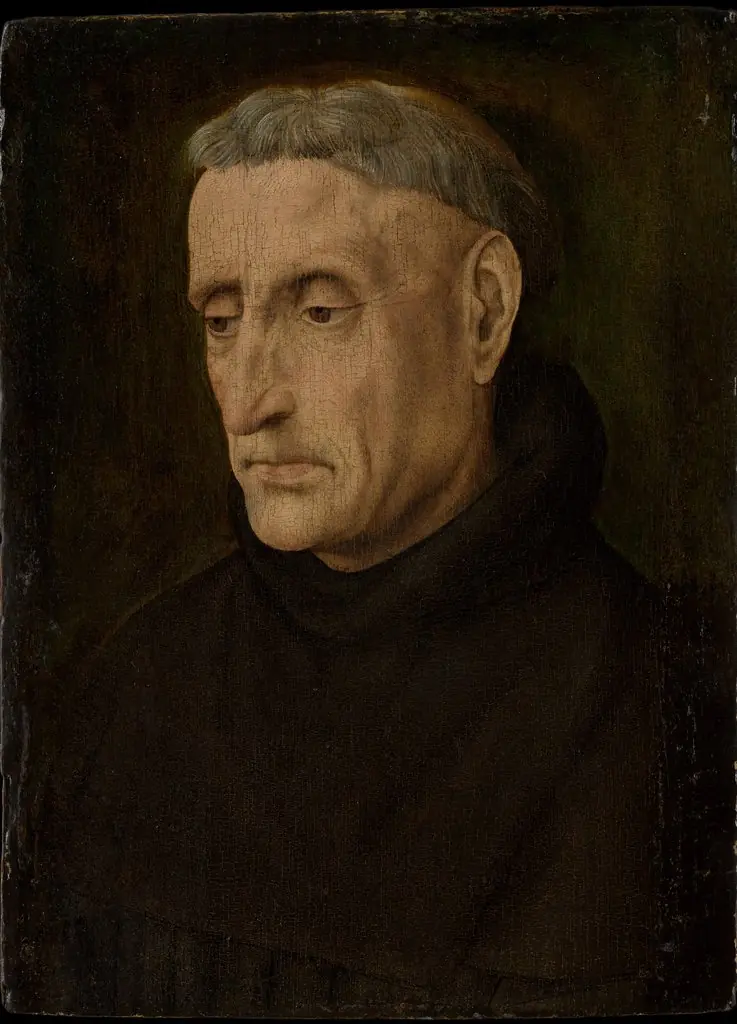 A Benedictine Monk
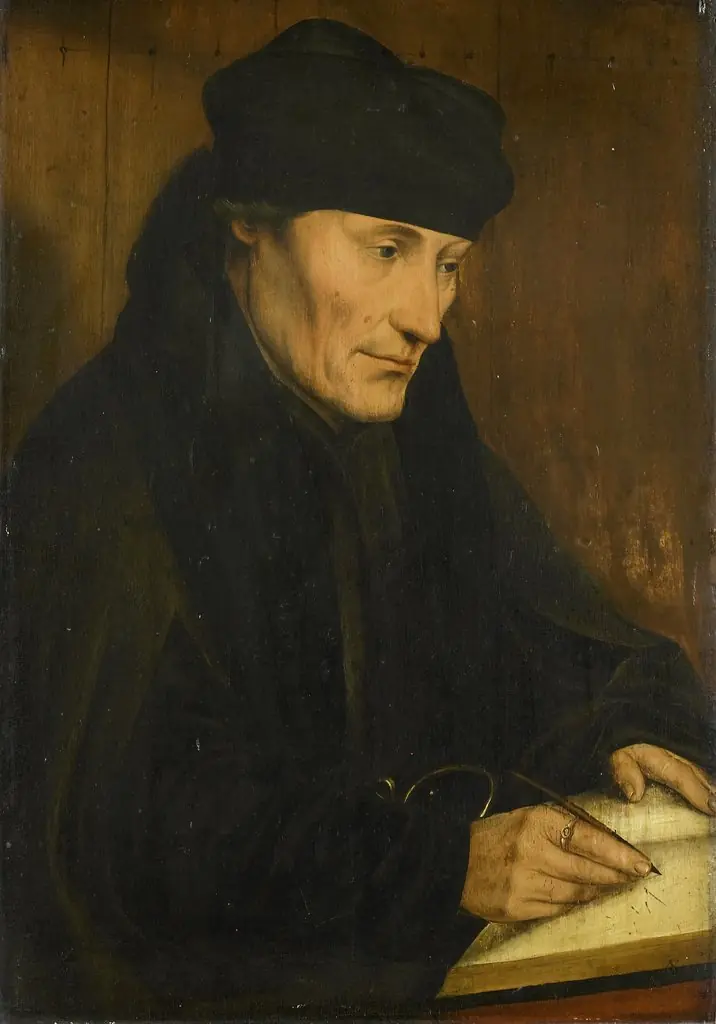 Portrait of Desiderius Erasmus (1469?-1536)
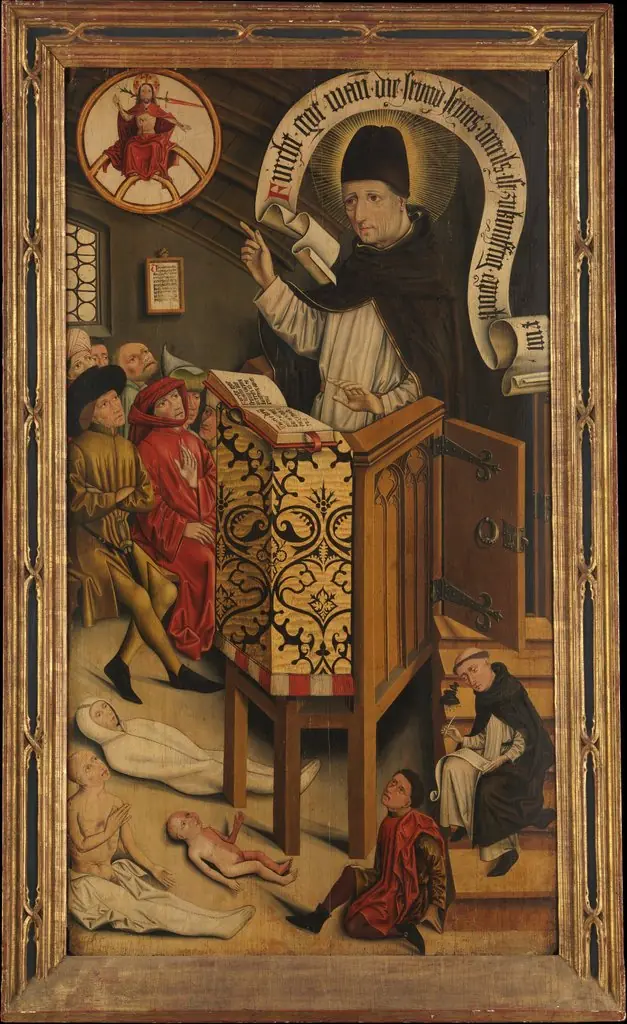 Sermon of Saint Albertus Magnus
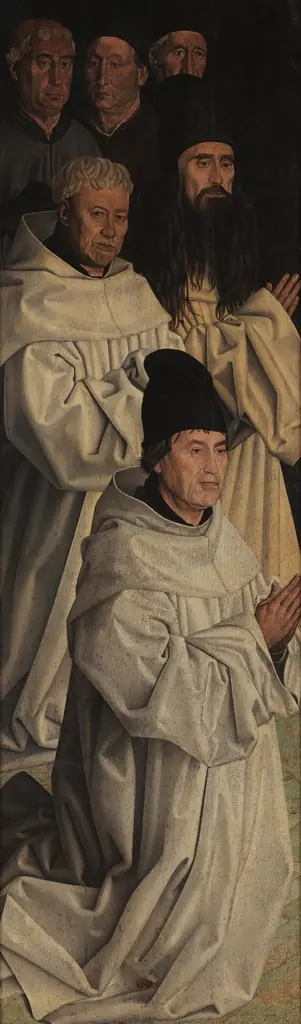 Saint Vincent Panels, first panel
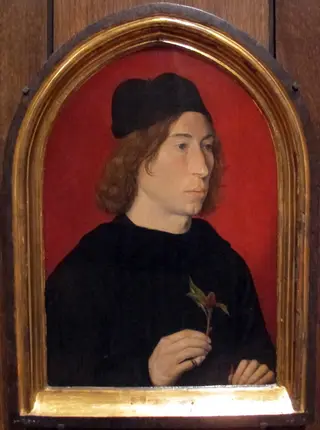 Portrait of a Young Man Holding a Sprig of Cockscomb
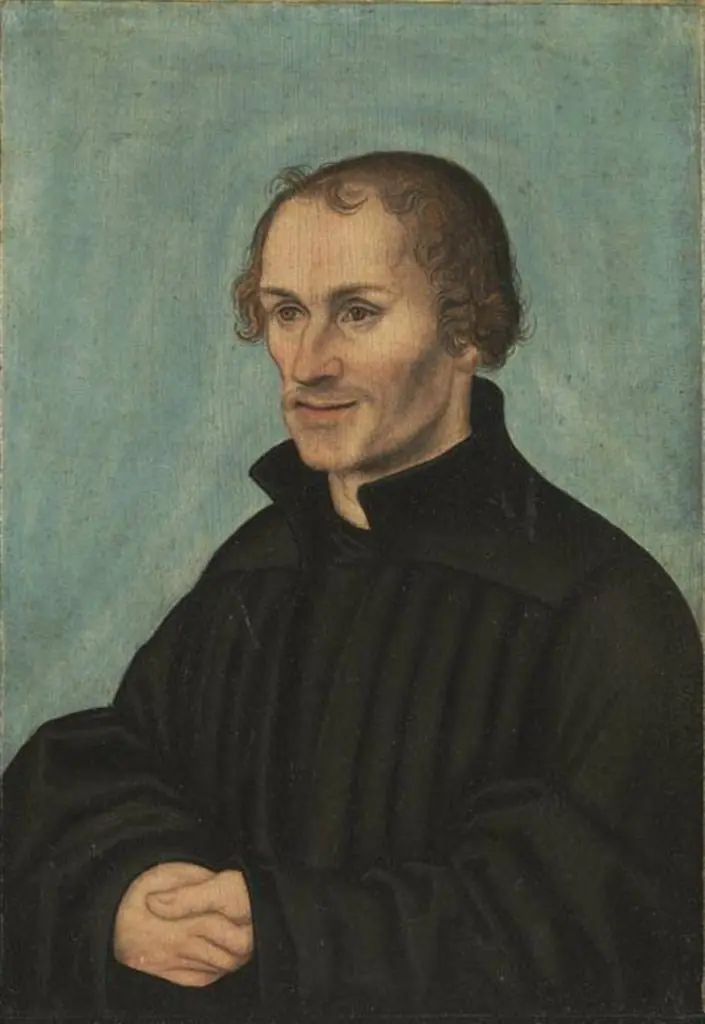 Portrait of Philipp Melanchthon
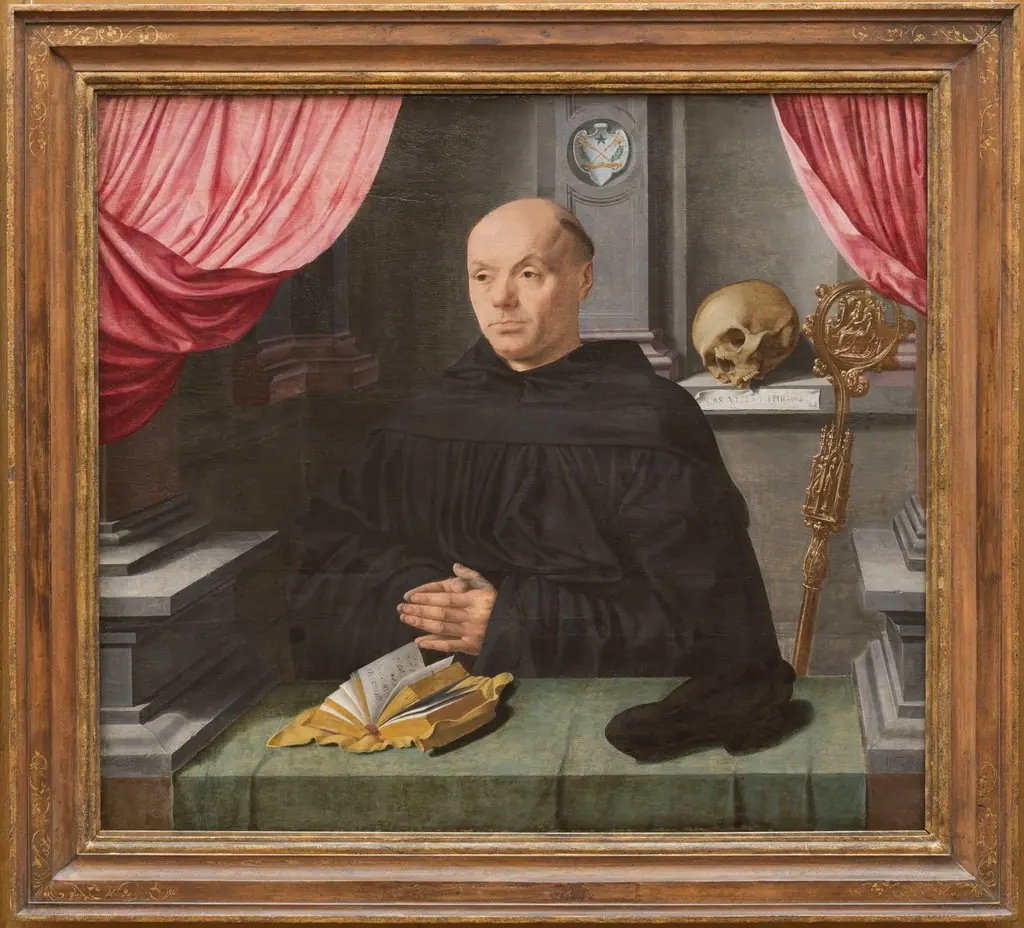 Abbot Johann Ingenray
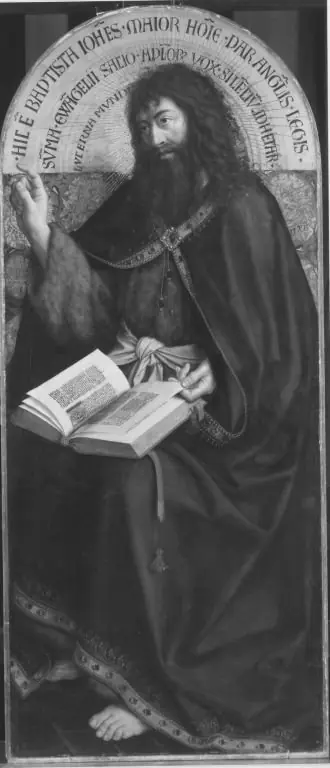 Saint John the Baptist (after The Ghent Altarpiece)
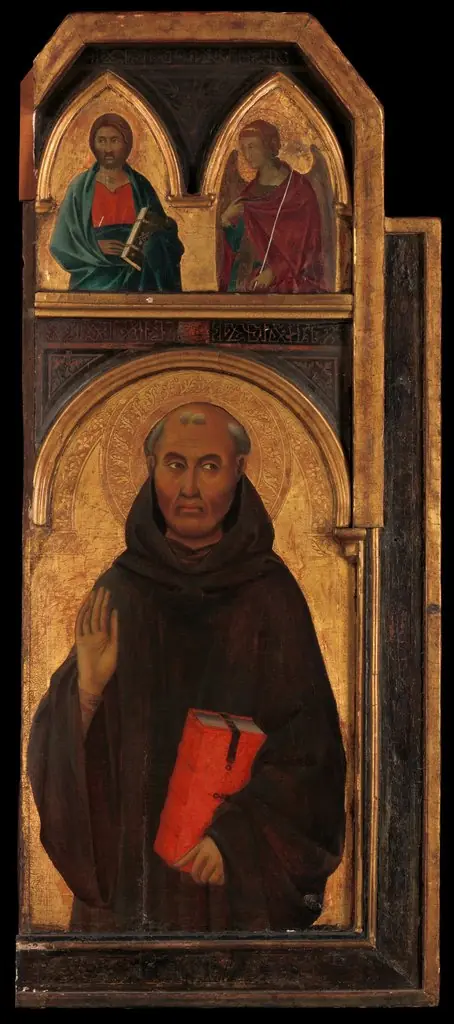 Saint Benedict
- Saint Dionysius the Areopagite in Prayer