Artwork
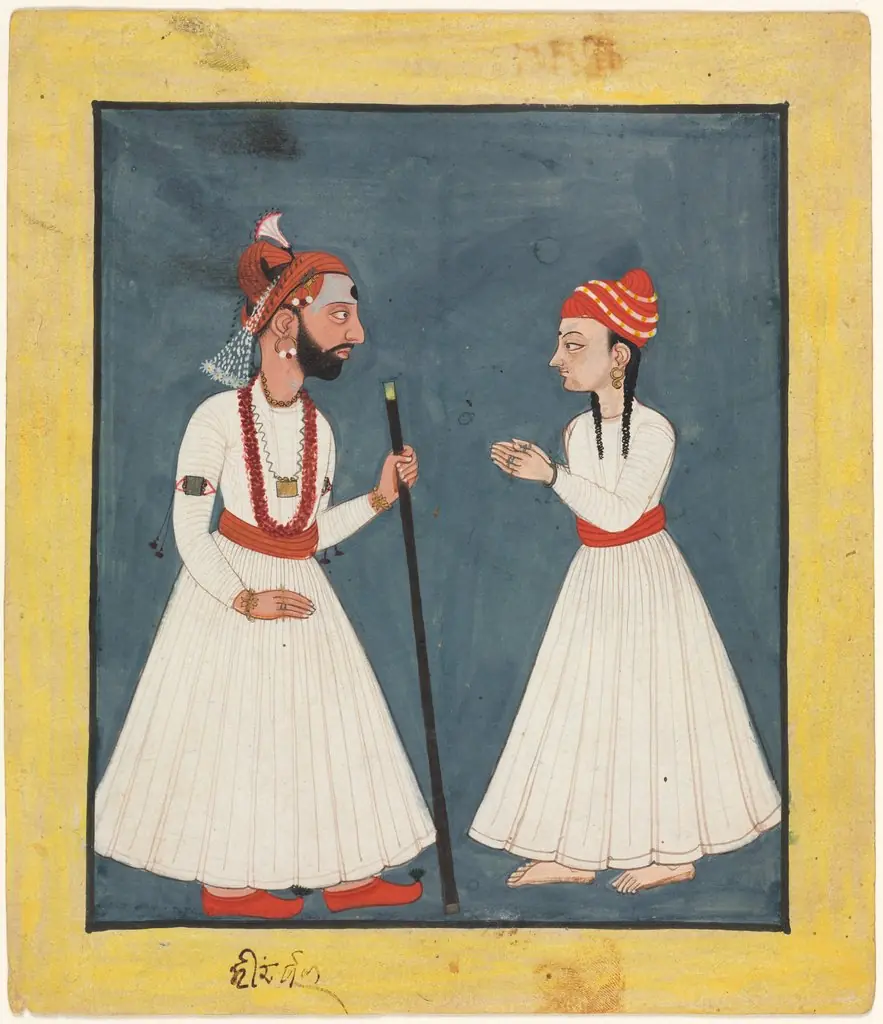
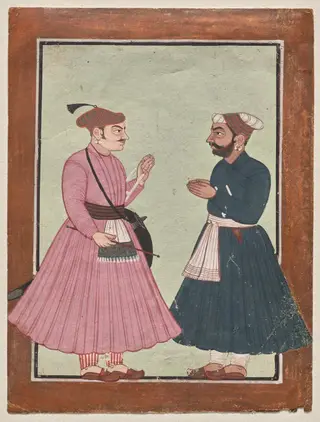
A noble, probably Raja Gaur Sen, receives another noble
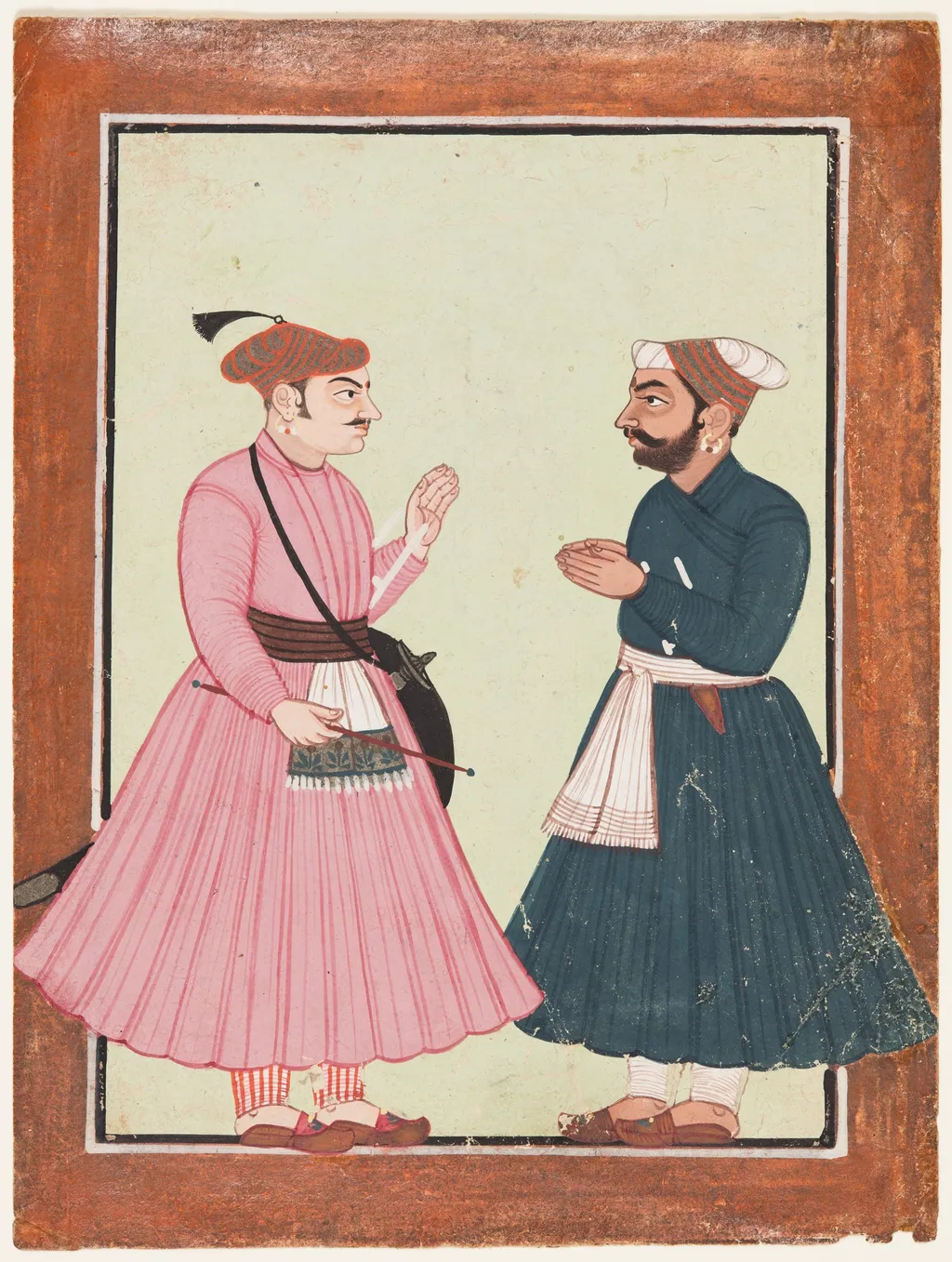
A noble, probably Raja Gaur Sen, receives another noble is an unspecified painting. It dates from 1710 and is held in the collection of the Cleveland Museum of Art.
About this work
Subject & Meaning
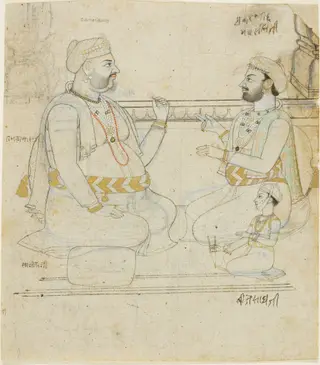
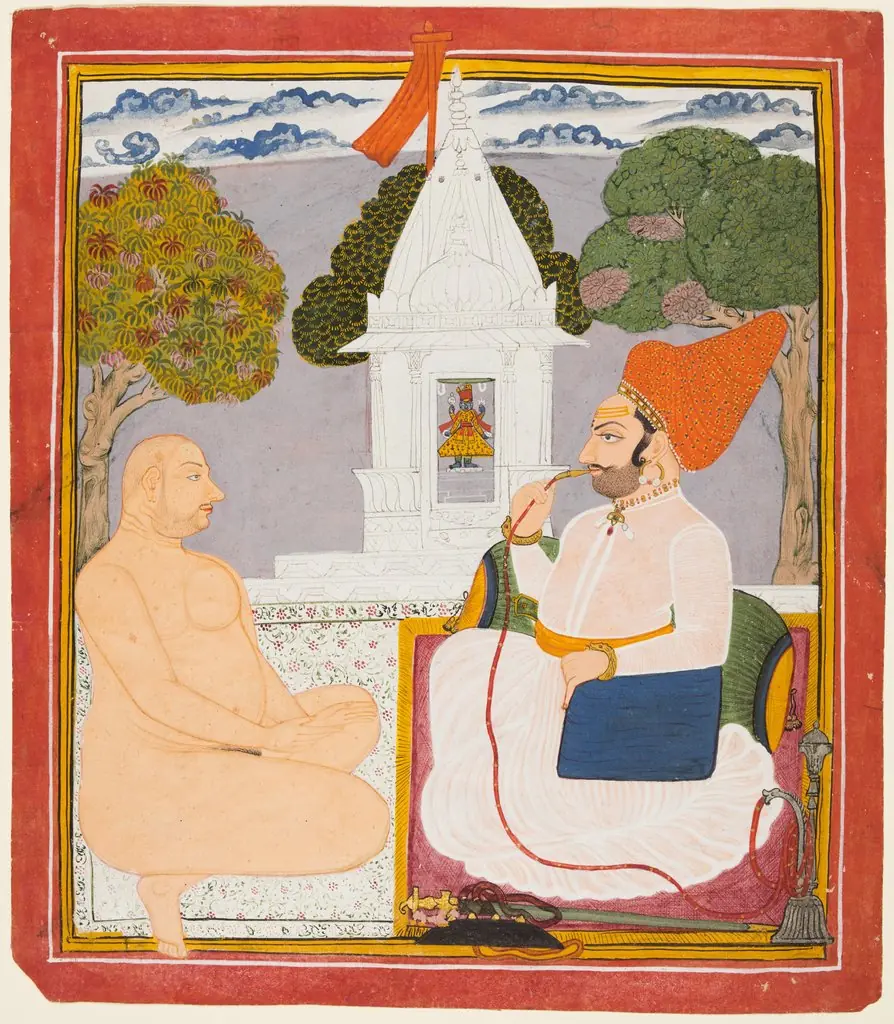
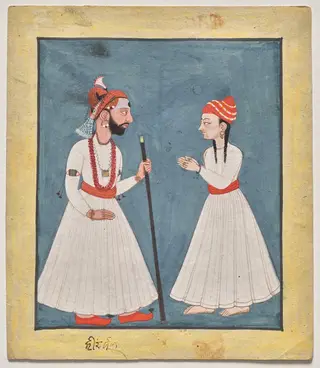
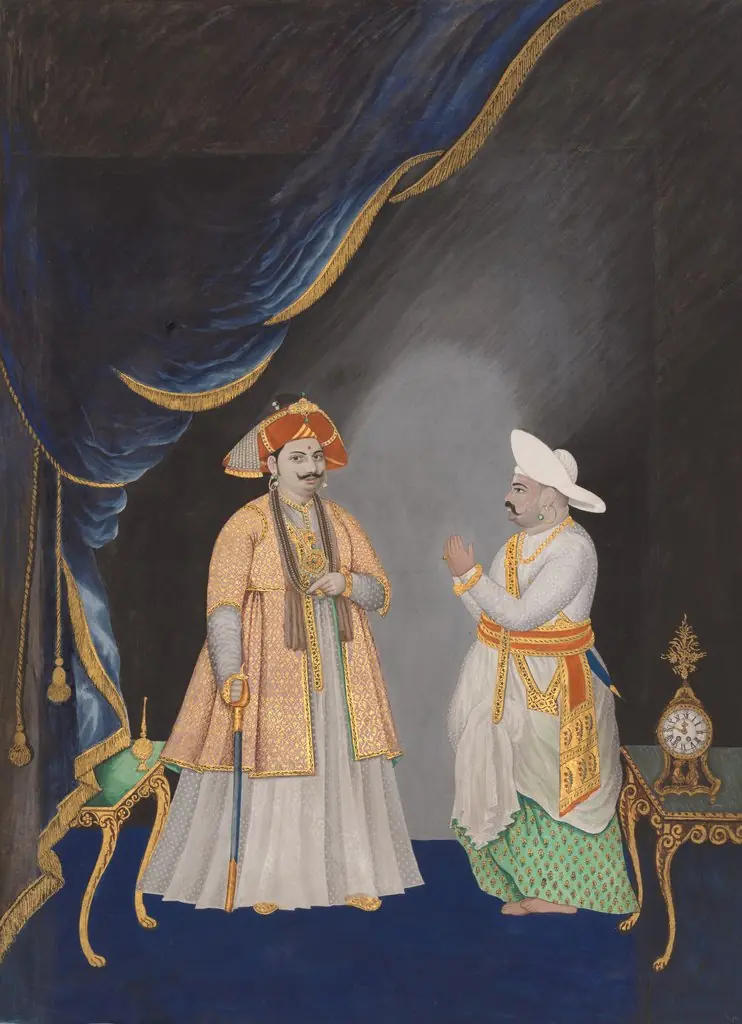
The painting depicts a formal reception scene, identified as a nobleman, probably Raja Gaur Sen, welcoming another noble.
The painting depicts a formal reception scene, identified as a nobleman, probably Raja Gaur Sen, welcoming another noble. The work represents the diplomatic and social hierarchies of early 18th-century Rajput courts, emphasizing the ritual of hospitality and the status of the figures through their poses, attire, and the spatial arrangement of the composition. The probable identification of the main figure as Raja Gaur Sen ties the scene to a specific historical ruler, suggesting the painting may commemorate a political alliance or a visit of significance.
Technique & Style
The work is a painting on canvas depicting a noble figure receiving another noble, likely Raja Gaur Sen. Executed circa 1710, it exemplifies Rajasthani court portraiture with restrained naturalism and delicate line work. The surface bears signs of age, including fine craquelure and areas of pigment loss, indicating careful handling over centuries. The composition balances symmetry and narrative detail, reflecting Mughal-influenced stylistic conventions of early 18th-century Indian court painting.
The painting is executed in oil or tempera on canvas, a support typical of regional workshops in the period. Brushwork remains precise, with emphasis on textile patterning and ornamental detail rather than gestural expression. The palette favors muted ochres, reds, and golds, applied in thin, layered washes to suggest depth without chiaroscuro. These formal choices align with contemporaneous Rajput artistic sensibilities, prioritizing symbolic dignity over individual psychological presence.
History & Provenance
The painting is dated to 1710, as recorded by the Cleveland Museum of Art, which holds the work in its collection (accession number 2018.99). The artist is unknown. No further details of its commission or ownership chain are provided in the available sources.
Overview
The work portrays two figures in traditional Indian dress standing opposite one another before a muted green backdrop framed by a brown border. The left figure is clothed in a pink robe and turban, accented with a black sash and a sword at his side. The right figure wears a dark blue robe and turban, highlighted by a white sash. The composition balances the two men, suggesting a formal encounter.
Context
Portraits of nobles receiving guests were a conventional genre in Indian court art, serving both as records of political alliances and as visual affirmations of hierarchical order. The attire and regalia correspond to the dress codes of North Indian aristocracy in the early modern period, situating the work within a broader tradition of elite portraiture.
Artist & collection