Artwork
A Rathor Noble Visiting a Holy Man at a Vishnu Shrine
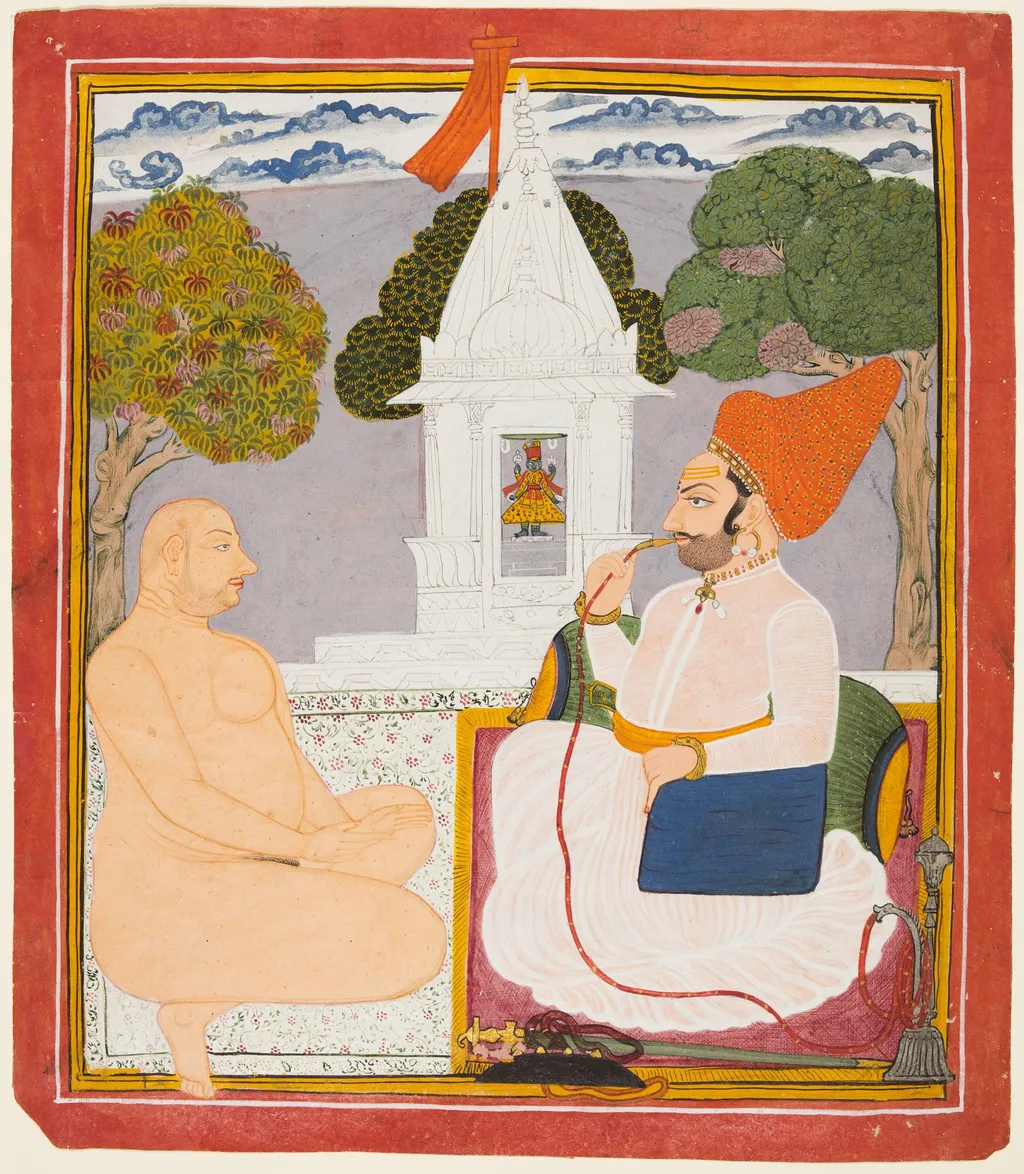
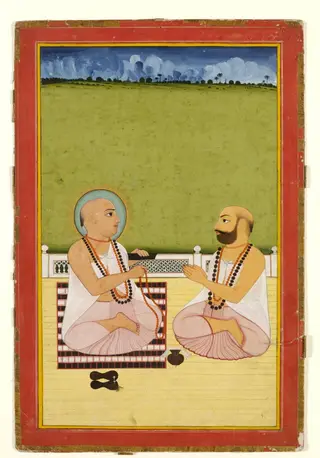
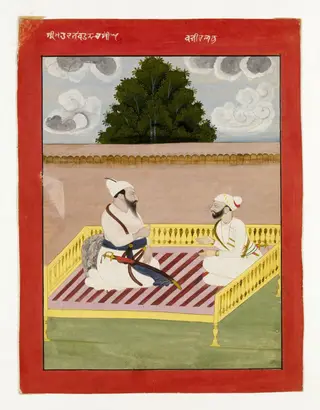
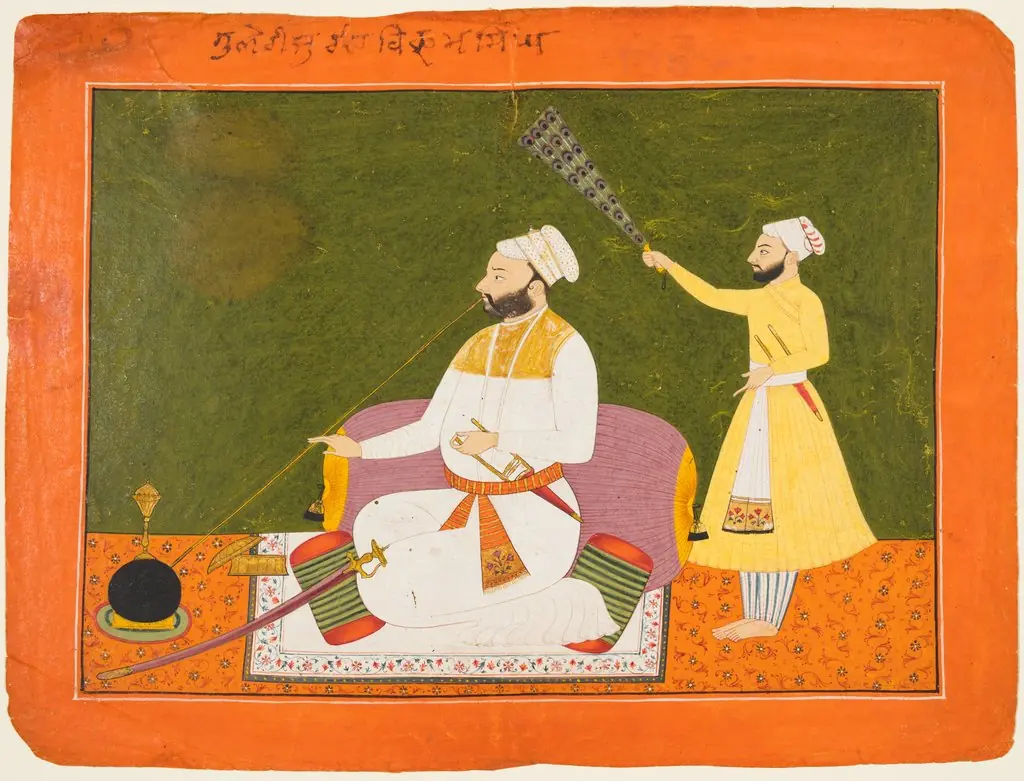
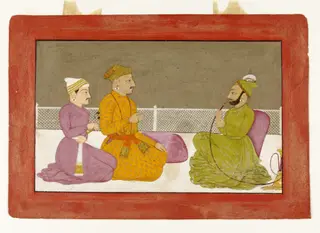
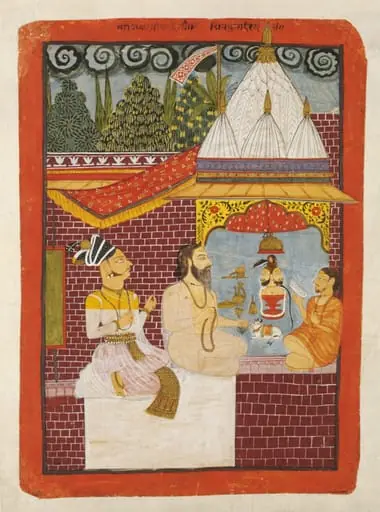
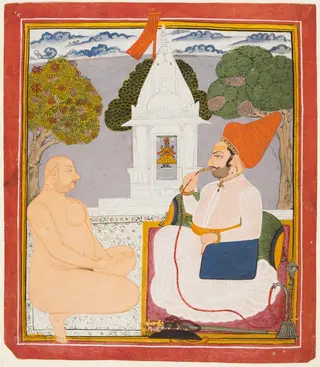
A Rathor Noble Visiting a Holy Man at a Vishnu Shrine is an unspecified painting. It dates from 1760 and is held in the collection of the Cleveland Museum of Art. The composition depicts a Rathore noble reclining on a couch opposite a nude ascetic seated on the ground.
About this work
Subject & Meaning
The painting portrays a Rathor nobleman in a devotional encounter before a Vishnu shrine, emphasizing personal piety and the sanctity of the divine presence.
The painting portrays a Rathor nobleman in a devotional encounter before a Vishnu shrine, emphasizing personal piety and the sanctity of the divine presence. The composition combines regal attire with humble reverence, symbolizing the intersection of aristocratic power and spiritual devotion in 18th-century Rajput culture. Iconographically, the shrine, the figure of Vishnu, and the accompanying ritual objects signal a specific Vaishnava cult practice, reflecting theological themes of surrender and divine grace.
The work thus represents a synthesis of courtly patronage and religious expression, illustrating how elite subjects engaged with Hindu iconography to articulate both worldly authority and spiritual aspiration.
Technique & Style
The work is an oil painting on canvas created in 1760. It depicts a Rathor noble in a devotional scene at a Vishnu shrine, rendered with fine brushwork and muted palette characteristic of Rajput court art. The composition emphasizes hierarchical scale and intimate gesture, reflecting stylistic conventions of 18th-century miniature-influenced painting.
The canvas support shows signs of age, with minor craquelure across the surface, but remains structurally sound. The paint layer is applied in thin, layered glazes, preserving delicate tonal transitions. These handling and material traits align with known practices of Pahari-influenced ateliers active in the late Mughal period.
History & Provenance
The work titled A Rathor Noble Visiting a Holy Man at a Vishnu Shrine is attributed to an unknown artist and was created in 1760. It entered the collection of the Cleveland Museum of Art, where it remains on view in the Indian and Southeast Asian art galleries. The painting was acquired by the museum and is catalogued under the accession number 2018.202.
The work was likely commissioned by a Rathor nobleman as a devotional image intended for display within a Vishnu shrine, reflecting the patronage practices of 18th‑century Rajput courts.
The painting is held in the collection of the Cleveland Museum of Art, where it is recorded under the accession number 2018.202. The work entered the museum's holdings in 2018 and remains part of its permanent collection.
No exhibition history beyond its institutional housing at the Cleveland Museum of Art is documented in the available sources.
Overview
The composition depicts a Rathore noble reclining on a couch opposite a nude ascetic seated on the ground. The noble is attired in a white robe, orange turban and gold ornaments, holding a hookah, while the holy man sits cross‑legged with hands on his knees. Behind them a white Vishnu shrine stands amid trees under a cloudy sky, creating a solemn, contemplative atmosphere.
Artist & collection