Artwork
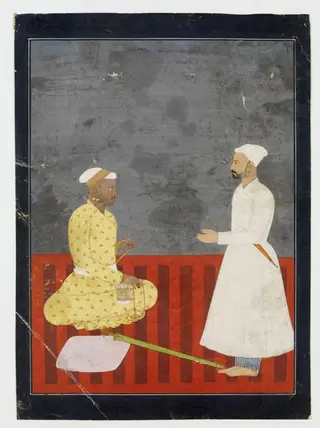
Maharaja Serfoji II accompanied by his Minister
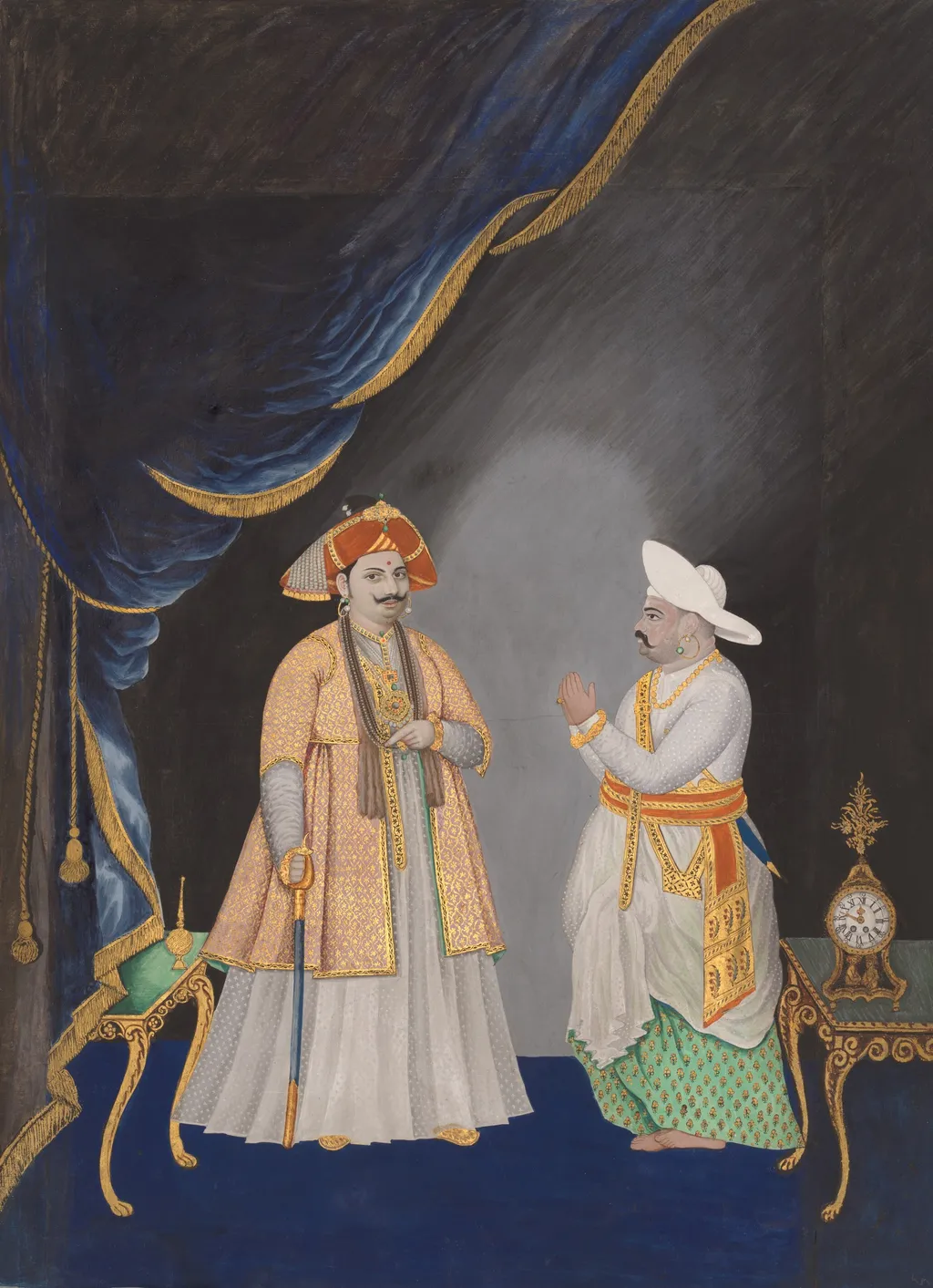
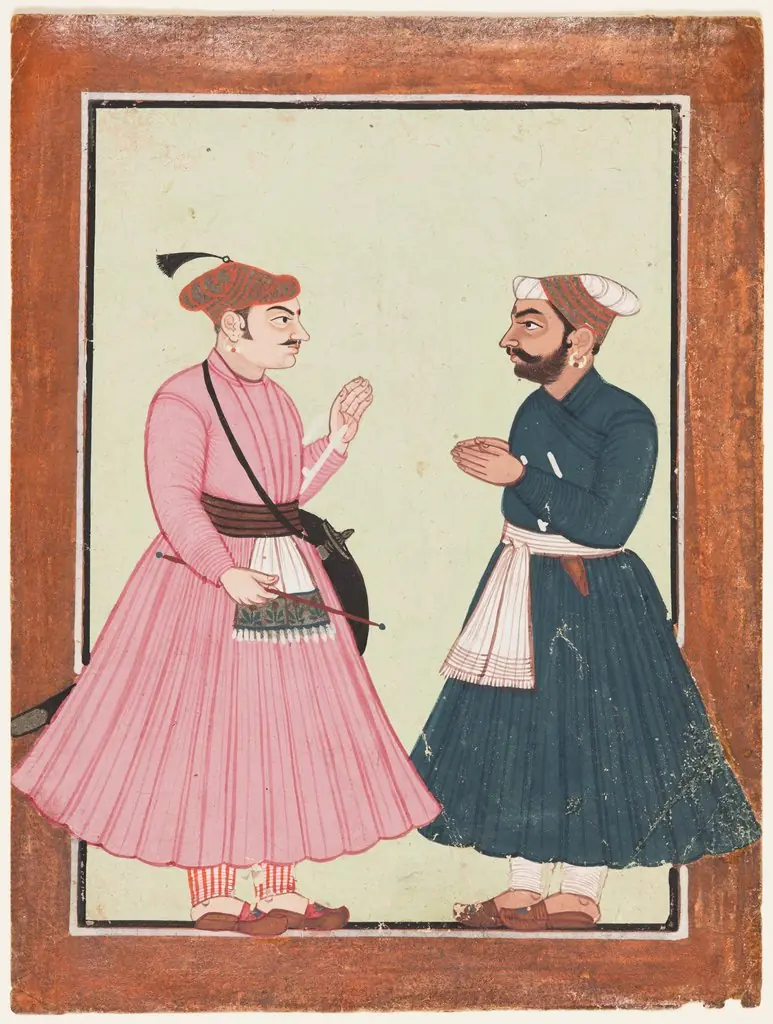
Maharaja Serfoji II accompanied by his Minister is an unspecified painting. It dates from 1800 and is held in the collection of the Metropolitan Museum of Art. The work portrays two seated figures in a formal interior, rendered in a muted palette with contrasting accents.
About this work
Subject & Meaning
The composition emphasizes the hierarchical relationship and the minister’s role as an advisor, reflecting the political and cultural patronage of the period.
The work portrays the Maratha ruler of Thanjavur with his chief minister, a scene that underscores the sovereign’s authority and the collaborative governance within the royal court. The composition emphasizes the hierarchical relationship and the minister’s role as an advisor, reflecting the political and cultural patronage of the period. The painting’s iconography aligns with 19th‑century Indian court portraiture, where the presence of a minister signifies administrative competence and the ruler’s reliance on counsel.
This representation conveys both the personal authority of the monarch and the broader institutional structure of his administration.
History & Provenance
The painting was commissioned by the Maratha ruler of Thanjavur, Maharaja Serfoji II, to document his courtly entourage, specifically his chief minister. Executed circa 1800 in India, it entered the collection of the Metropolitan Museum of Art, where it remains on view.
Context
The painting reflects the cultural patronage of the Thanjavur Maratha court in early 19th-century South India, where rulers like Serfoji II fostered artistic production blending European techniques with local traditions. Its depiction of a monarch with a minister highlights administrative structures within the royal household, situating it within the broader context of colonial-era court portraiture. Scholarship notes its stylistic links to Company School aesthetics while emphasizing the artist's anonymous status as indicative of workshop practices in colonial India.
Legacy
The painting has been exhibited at the Metropolitan Museum of Art in New York, where it is part of the museum's collection and recognized for illustrating early 19th-century court portraiture in India. Its presence in a major institution has contributed to renewed scholarly interest in the artistic patronage of Serfoji II and the visual culture of the Maratha court.
Overview
The work portrays two seated figures in a formal interior, rendered in a muted palette with contrasting accents. The left figure dons a white robe, an orange‑patterned coat, and a matching hat, holding a cane, while the right figure wears a white shirt, green trousers, a white hat and a red sash, gesturing with his hands. Behind them a dark wall is draped with a blue curtain trimmed in gold tassels, and a small table bearing a clock appears to the right.
Technique & Style
Executed in oil on canvas, the painting employs a restrained realism characteristic of early 19th‑century Indian court portraiture. Fine brushwork defines the textiles and accessories, while broader strokes suggest the draped curtain and wall. The subtle chiaroscuro models the figures against a dark background, creating a sense of depth without elaborate spatial illusion.
Artist & collection