Artwork
Two Rajput Noblemen with a Child
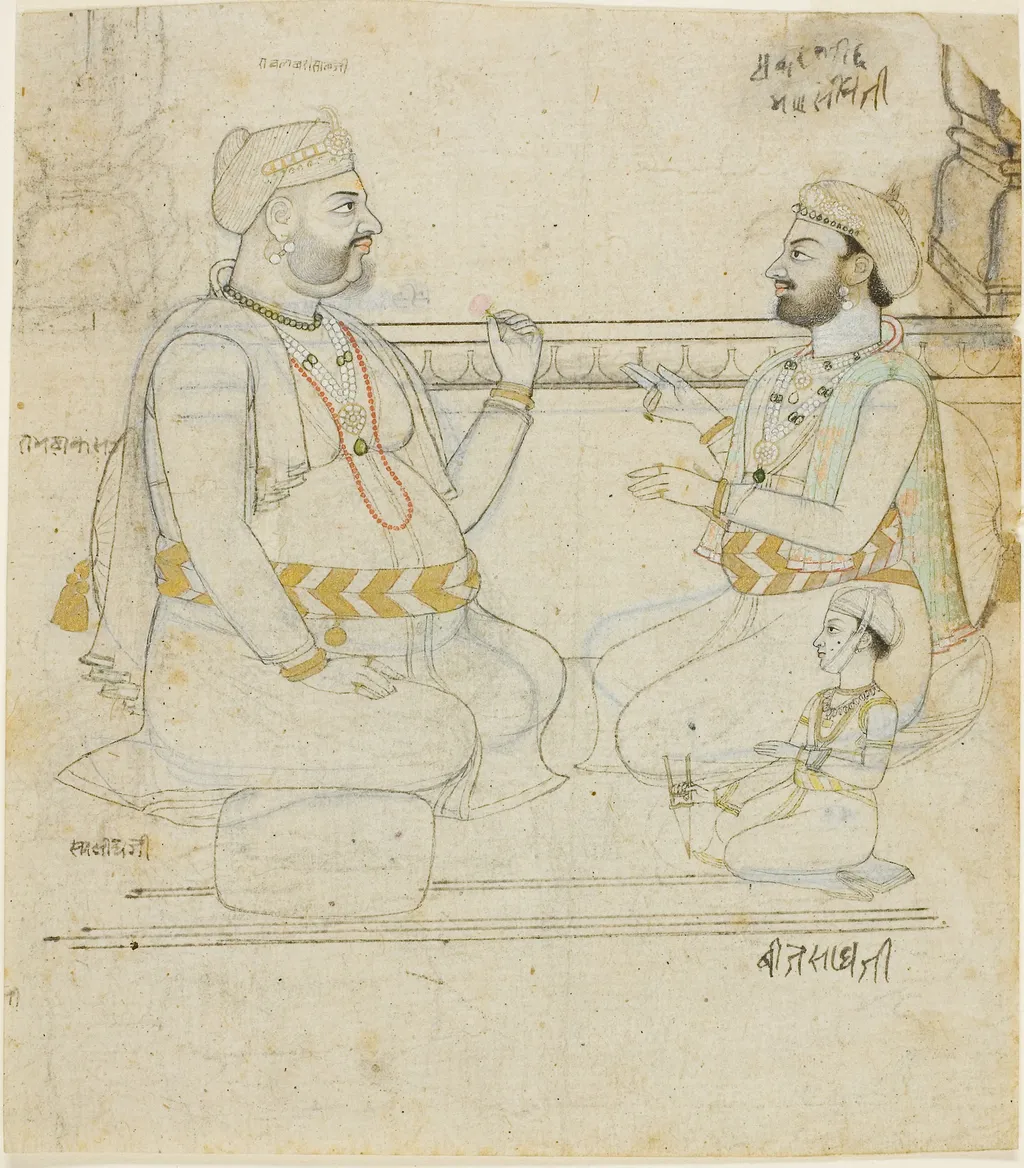
Two Rajput Noblemen with a Child is an unspecified painting by the Rajput painting artist Unknown. It dates from 1750 and is held in the collection of the Art Institute of Chicago. This Rajput miniature painting depicts two adult men and a child seated together on the floor, engaged in a quiet, intimate moment.
About this work
Overview
This Rajput miniature painting depicts two adult men and a child seated together on the floor, engaged in a quiet, intimate moment.
This Rajput miniature painting depicts two adult men and a child seated together on the floor, engaged in a quiet, intimate moment. The figures are arranged symmetrically, with the child positioned between them, suggesting a familial or guardian relationship. The setting is minimal, with a plain wall serving as the backdrop, drawing focus to the figures and their subtle interactions. The composition conveys stillness and mutual attention.
Subject & Meaning
The two men, likely noblemen, are portrayed with beards and turbans, markers of status and maturity in Rajput courtly culture. The child, similarly attired, may be a young heir or relative under their care. Their posture and gaze suggest a moment of instruction or quiet conversation, possibly reinforcing lineage, duty, or spiritual guidance. The scene reflects values of familial continuity and dignified domestic life within aristocratic circles.
Technique & Style
Executed in the Rajput miniature tradition, the painting uses fine brushwork and flat, saturated pigments to define forms. Clothing is rendered with delicate patterns, and facial features are softly modeled, emphasizing expression over realism. The background’s plain surface, inscribed with script, contrasts with the detailed figures, a common compositional device to isolate the human element and heighten its emotional weight.
History & Provenance
The painting originates from a Rajput court, likely in Rajasthan or the Punjab Hills, during the late 17th or early 18th century. It was likely commissioned by a noble family to commemorate a private moment, rather than a public event. Its survival suggests it was preserved within a lineage or collected by later patrons, though its specific early ownership remains undocumented.
Context
In Rajput painting, domestic and courtly scenes often conveyed ideals of hierarchy, lineage, and moral conduct. Unlike Mughal works emphasizing grandeur, Rajput miniatures frequently focused on intimate, emotionally resonant moments. This painting aligns with regional traditions that valued quiet dignity and familial bonds, reflecting a broader cultural emphasis on personal virtue within aristocratic life.
Legacy
This work exemplifies the quiet realism of Rajput portraiture, distinguishing it from more stylized or mythological themes of the period. Its preservation offers insight into how elite families represented personal relationships in art. While not widely known outside specialist circles, it contributes to understanding the diversity of Indian miniature painting beyond royal or religious subjects.
Artist & collection









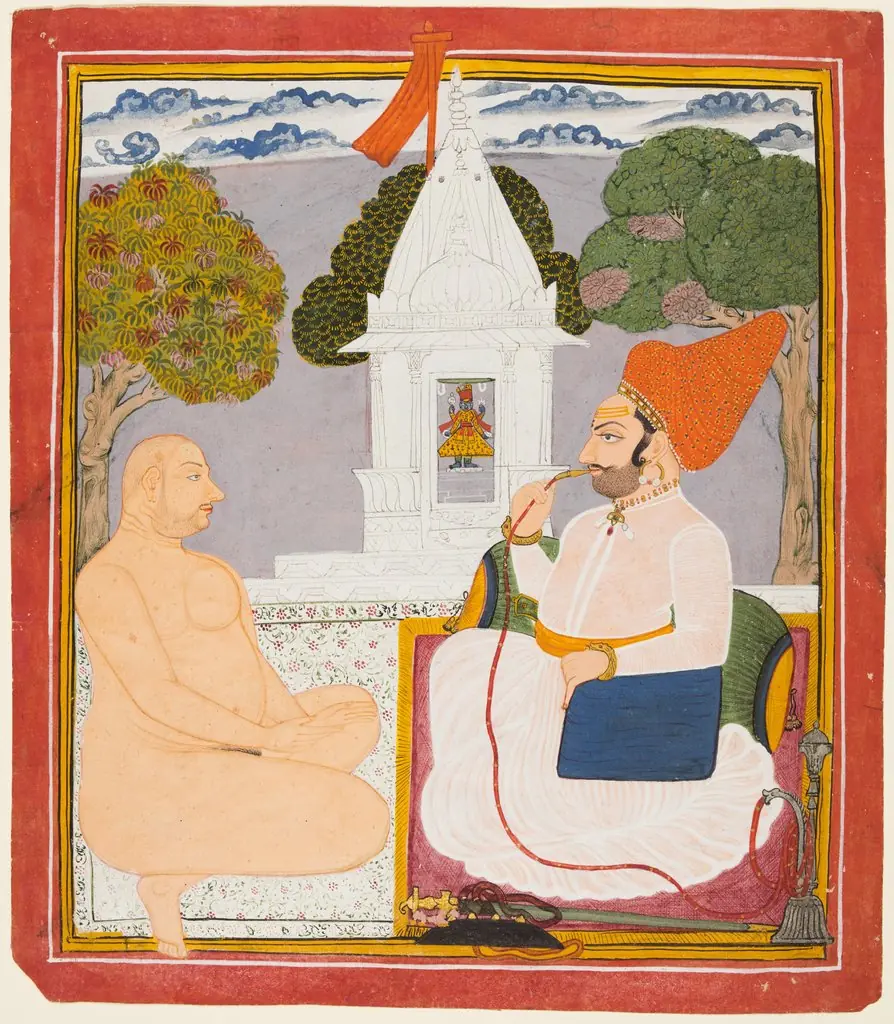 A Rathor Noble Visiting a Holy Man at a Vishnu Shrine
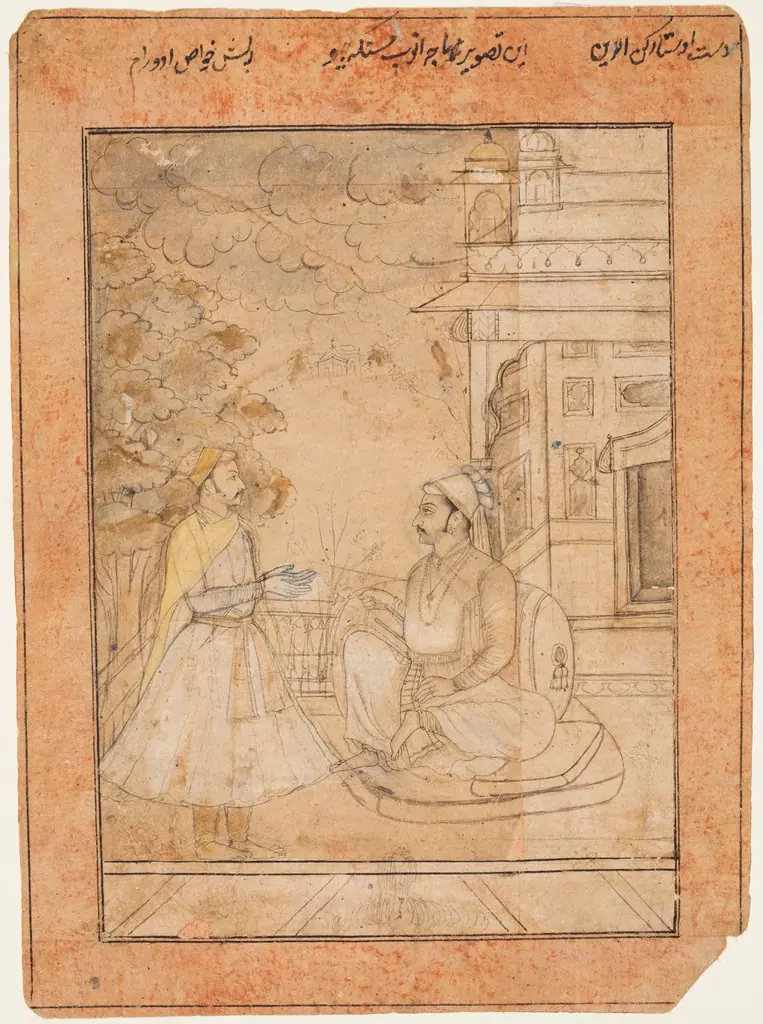 Maharaja Anup Singh of Bikaner (reigned 1669–98) Receives a Courtier
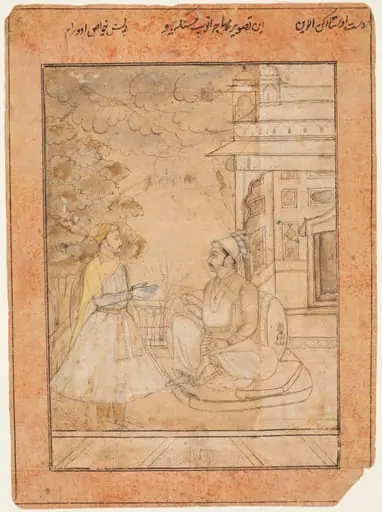 Maharaja Anup Singh of Bikaner (reigned 1669–98) Receives a Courtier
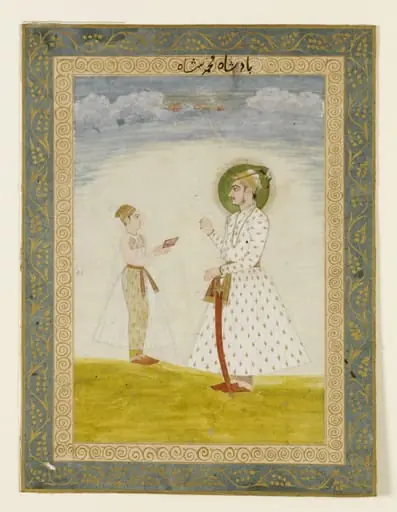 Muhammad Shah
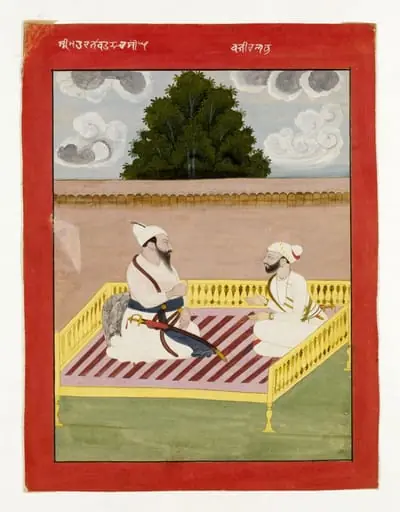 Raja Bahadur Singh of Bhoti and Wazir Labh
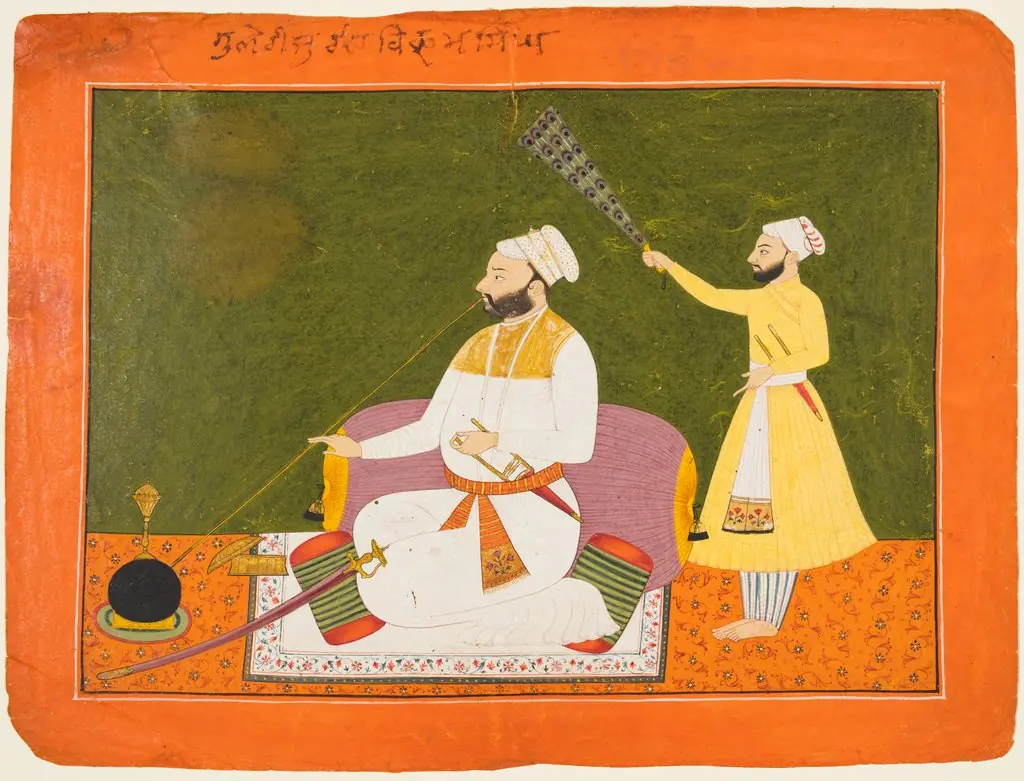 Raja Bikram Singh of Guler (r. 1661–75) Smoking a Hookah
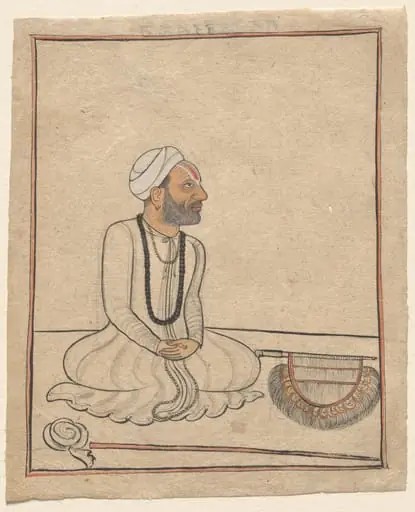 Gosain Narottam Das
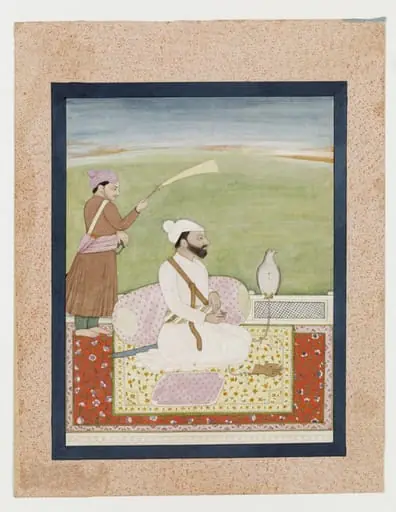 Raja Ajab Dev
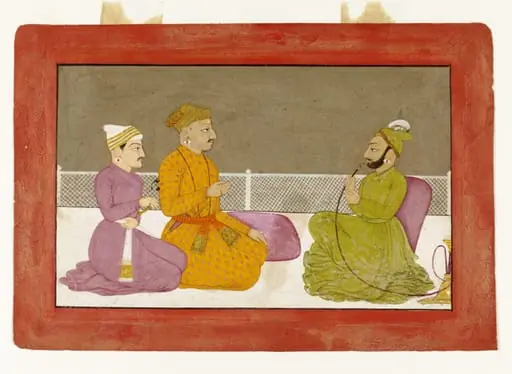 Raja Bhupal Dev of Jasrota, Raja Dalip Singh and Raja Daya Dhat