Artwork
Shamsher Sen of Mandi with a youth
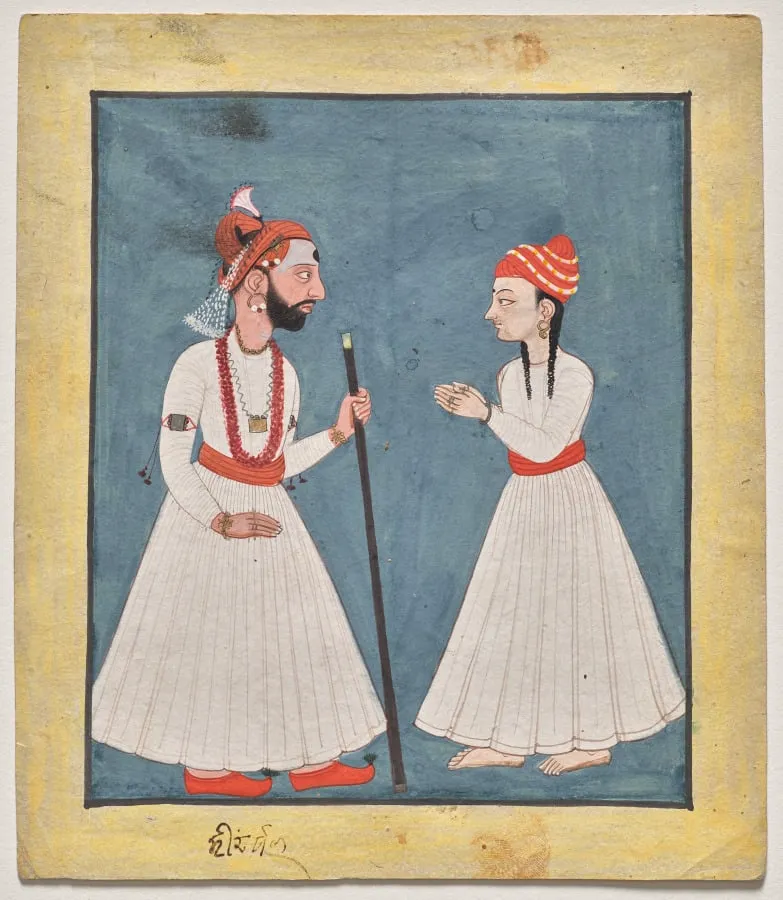
Shamsher Sen of Mandi with a youth is an unspecified painting by the Pahari Painting artist Unknown. It dates from 1765 and is held in the collection of the Cleveland Museum of Art. The painting portrays Shamsher Sen, who assumed control of the Pahari kingdom of Mandi in 1727, seated on a raised platform.
- Accession no.
- 2012.302
- Credit line
- Gift of Dr. Norman Zaworski
About this work
Overview
The painting portrays Shamsher Sen, who assumed control of the Pahari kingdom of Mandi in 1727, seated on a raised platform. He is dressed in a vivid red robe and turban, his forehead marked with white ash. A younger figure stands before him, bowing in deference, while the king’s intense stare engages the viewer directly.
Subject & Meaning
Shamsher Sen is depicted with symbols of Shaivite devotion: ash on his forehead and neck, and a small whistle tucked into his flower‑adorned turban, both indicating affiliation with the worship of Shiva. The inscription along the lower edge reads “shri damyan,” translating to “Honorable Minister,” reflecting his role as a minister of the deity Krishna, a reminder of the pluralistic loyalties of Pahari rulers.
Technique & Style
Executed in the characteristic Pahari miniature manner, the work combines delicate brushwork with rich coloration, especially the saturated red of the king’s attire. Fine detailing highlights the ash marks and the intricate arrangement of flowers in the turban, while the sharp, focused gaze of the ruler is rendered through precise line work that creates a sense of immediacy.
History & Provenance
Created shortly after Shamsher Sen’s accession, the portrait likely served a courtly purpose, documenting his authority and religious affiliations. The painting has remained associated with the Mandi royal collection, passing through successive generations of the dynasty before entering the museum’s holdings, where it is displayed as a representative example of early 18th‑century Pahari art.
Context
In the early 1700s, the Pahari kingdoms of the western Himalayas cultivated a distinctive artistic tradition that blended local aesthetics with broader North Indian influences. Portraits such as this one were uncommon, emphasizing personal devotion and political legitimacy. The inclusion of both Shiva and Krishna symbols illustrates the syncretic religious environment of the region.
Artist & collection









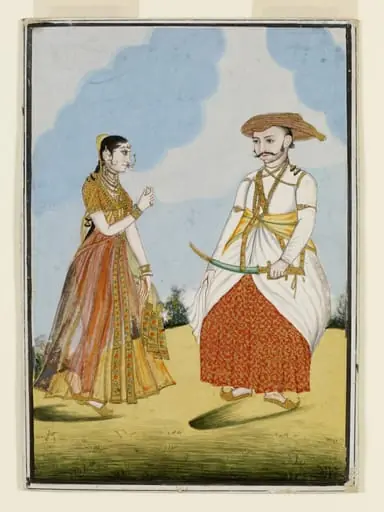 A warrior with his wife
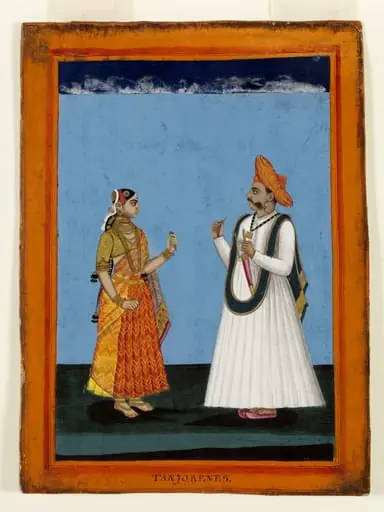 A Tanjore man in a white 'jama' holding 'pan' .
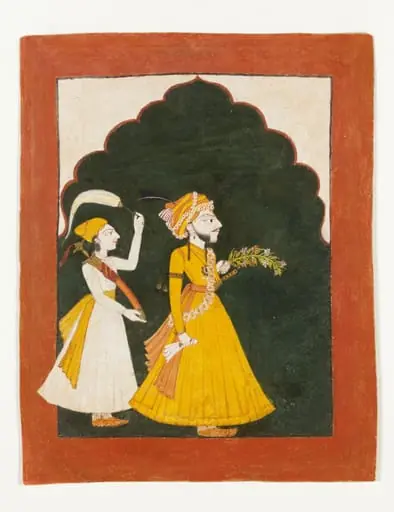 Raja Jai Singh of Kulu
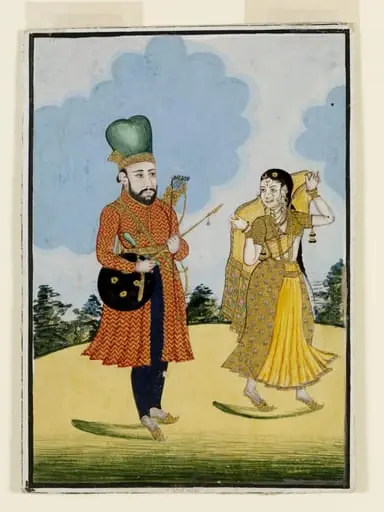 A Turkish couple
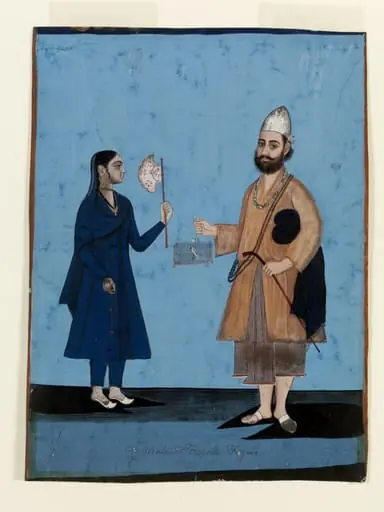 A fakir and his wife
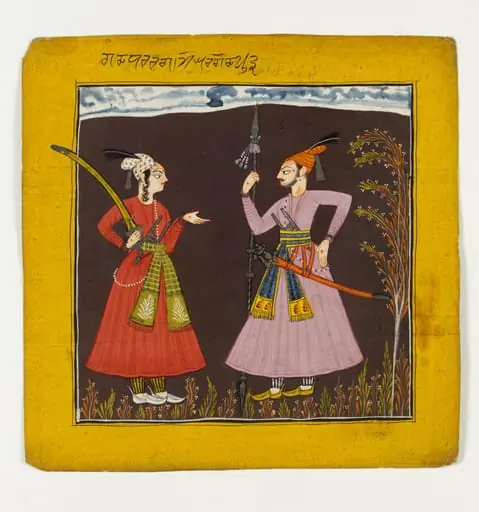 Gadadhara Raga
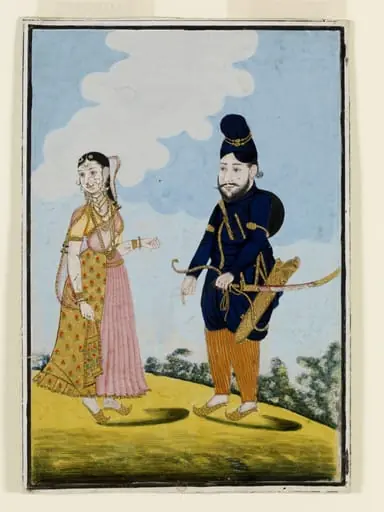 A Sikh Warrior and his wife
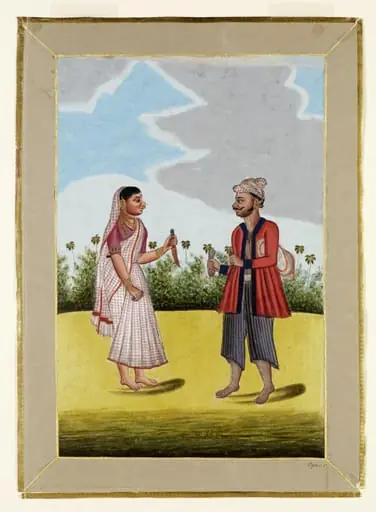 Lascars
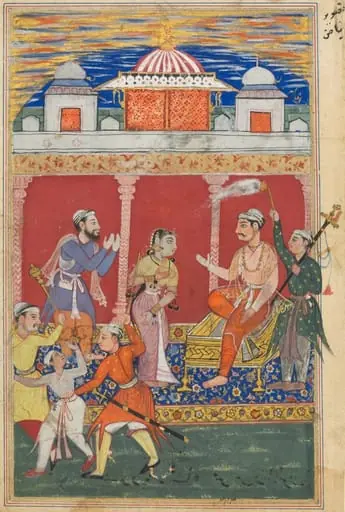 The prince’s ordeal continues, he is ordered away to be executed for the fifth time, from a Tuti-nama (Tales of a Parrot): Eighth Night