Artwork
A Pastoral Scene
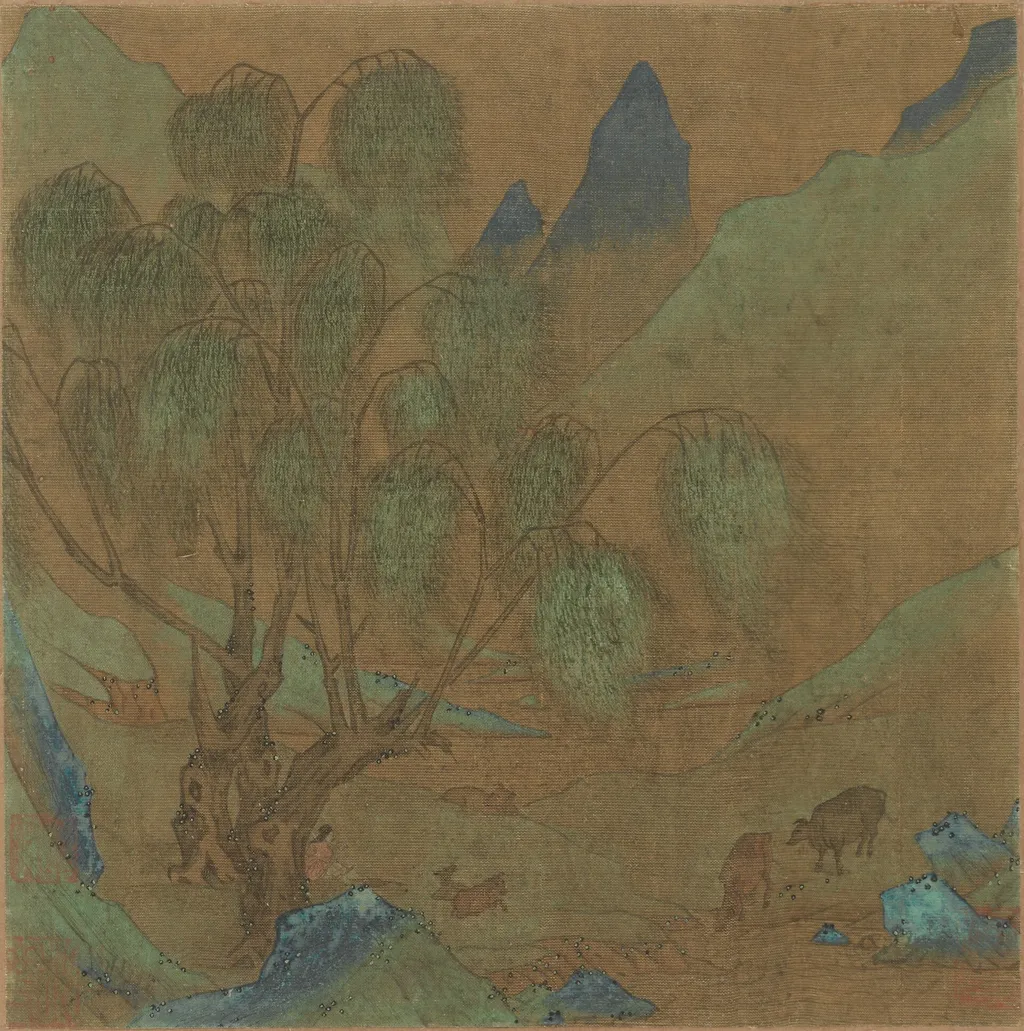
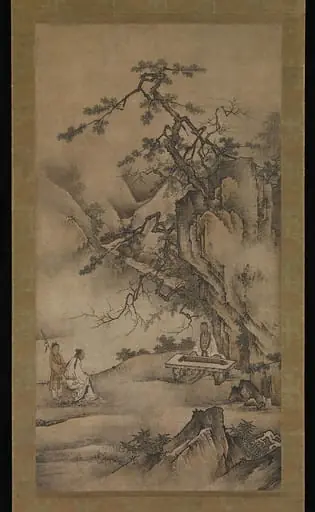
A Pastoral Scene is an unspecified painting. It dates from 1319 and is held in the collection of the Cleveland Museum of Art. The work presents an expansive rural landscape, where gentle undulations of hills recede toward the horizon.
About this work
History & Provenance
A Pastoral Scene is held in the collection of the Cleveland Museum of Art, where it is cataloged under the accession number 1919.951. The work was created in 1319 and has been part of the museum's holdings since its acquisition.
Context
The painting is held in the collection of the Cleveland Museum of Art, where it has been part of the permanent holdings since its creation.
The work titled A Pastoral Scene was created in 1319 by an anonymous hand and is classified as a painting. It belongs to the corpus of works associated with the artist identified by the Wikidata entity f3d4b04d144e4b8e7c7bb9ed2fb5b903. The painting is held in the collection of the Cleveland Museum of Art, where it has been part of the permanent holdings since its creation.
Scholarship on the work remains limited, with most critical attention focusing on its stylistic relationship to early Italian devotional art and its role within the broader development of pastoral imagery in the early fourteenth century.
Overview
The work presents an expansive rural landscape, where gentle undulations of hills recede toward the horizon. Patches of verdant and earthy tones intermix across the terrain, punctuated by isolated trees and a meandering stream that threads through the composition. The overall palette is subdued, conveying the atmosphere of a tranquil day in the countryside.
Subject & Meaning
The painting captures a serene pastoral setting, emphasizing the harmonious relationship between land, water, and vegetation. By depicting an unpopulated scene, the artist invites contemplation of nature’s quiet rhythms and the timeless quality of open fields, suggesting a contemplative escape from urban activity.
Technique & Style
Executed with brisk, short brushstrokes, the surface is textured, giving the impression of viewing the scene from a distance. This handling creates a slightly rough, almost impressionistic finish, where forms dissolve into one another and the hills gradually fade into the background, reinforcing the sense of depth and calm.
Artist & collection

- A Pastoral Scene
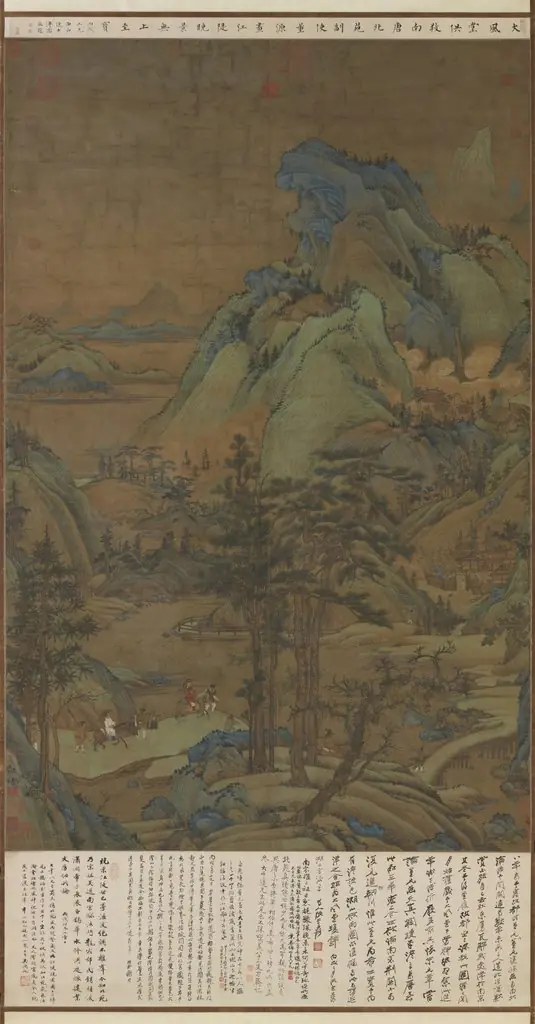 Late Scenery Along a Riverbank
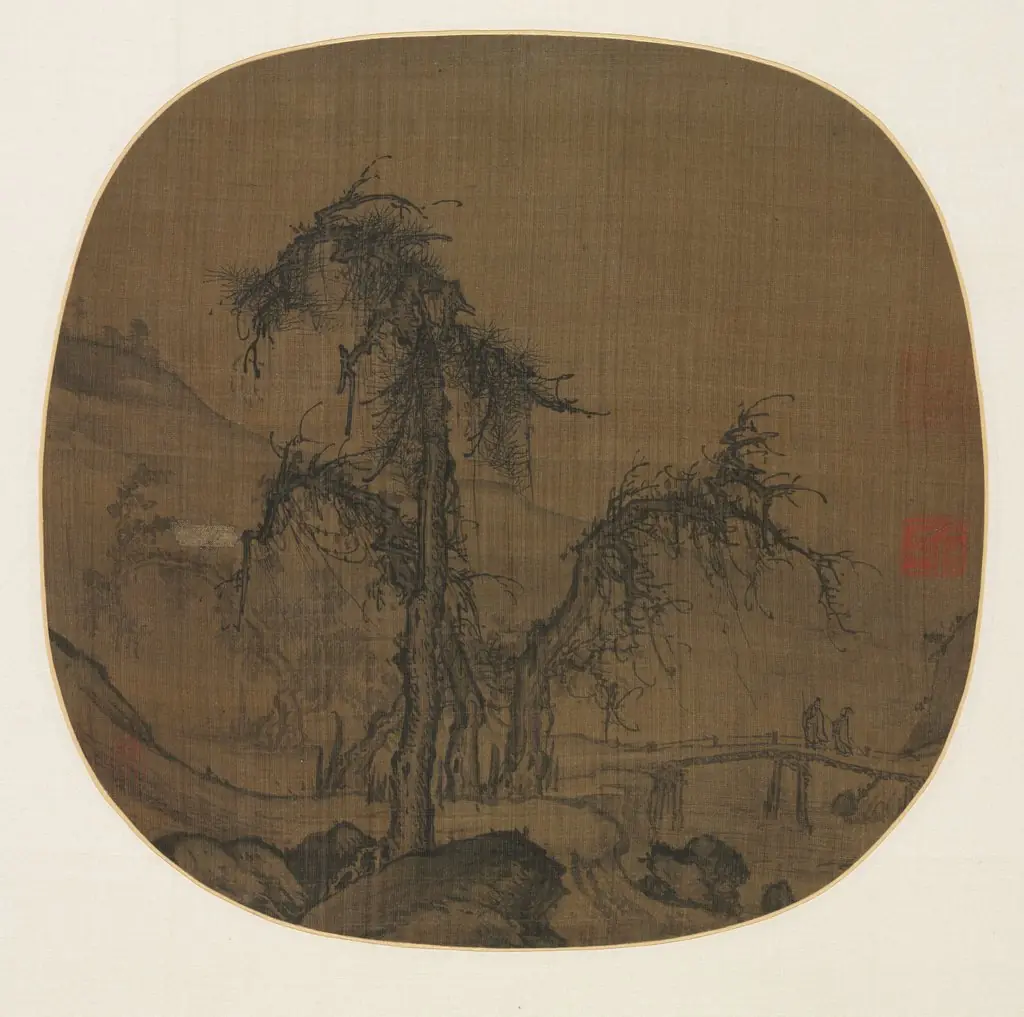 Ramblers over a Winding Stream
 Landscape with Fishermen
 Landscape
 Drinking in the Moonlight
 五代董源江堤晚景 軸
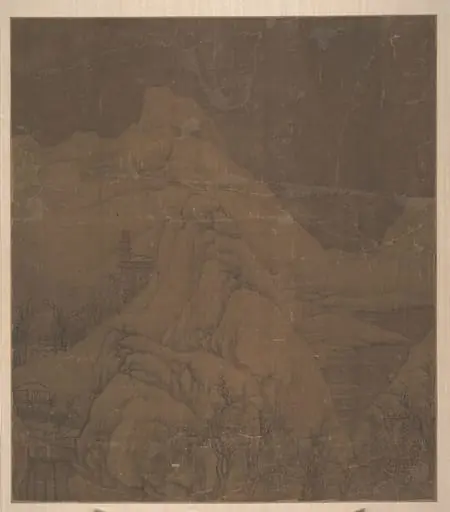 Untitled
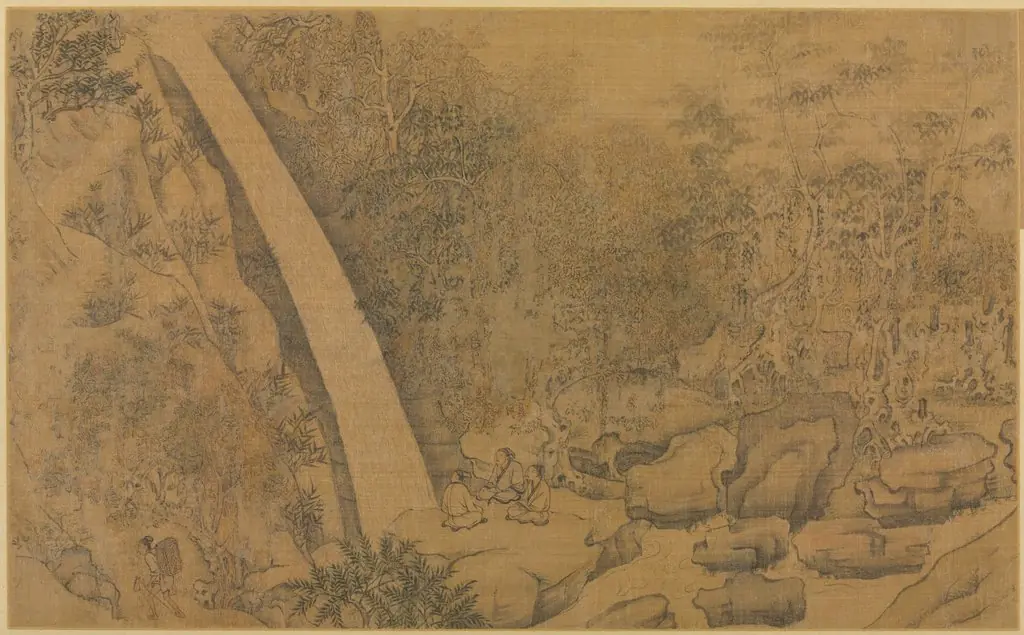 Dwelling in the Longmian ("Sleeping Dragon") Mountains
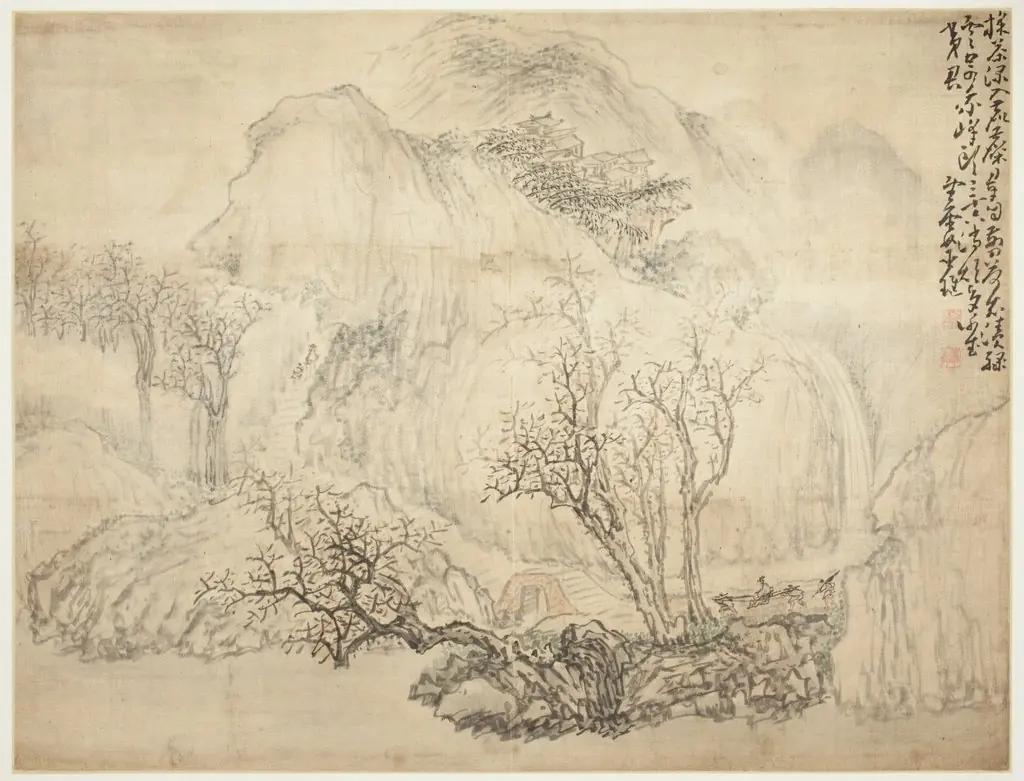 Landscapes and Figures: Landscape
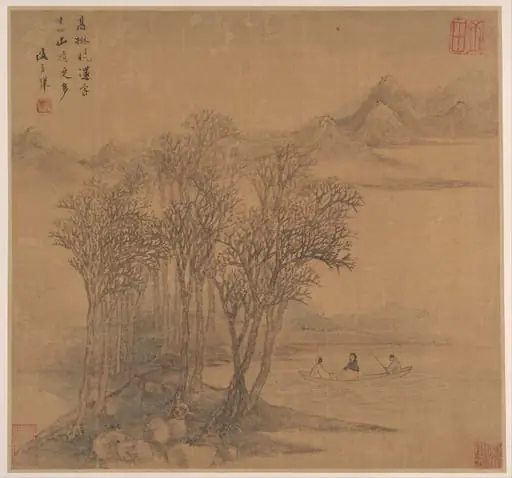 明 盛茂曄 唐詩意山水圖 冊|Landscapes after Tang Poems
 狩野元信周辺 伯牙鍾子期図|Bo Ya Plays the Qin as Zhong Ziqi Listens