Artwork
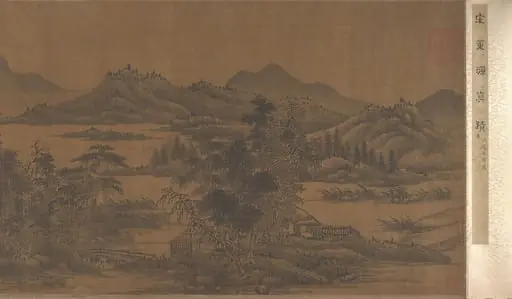
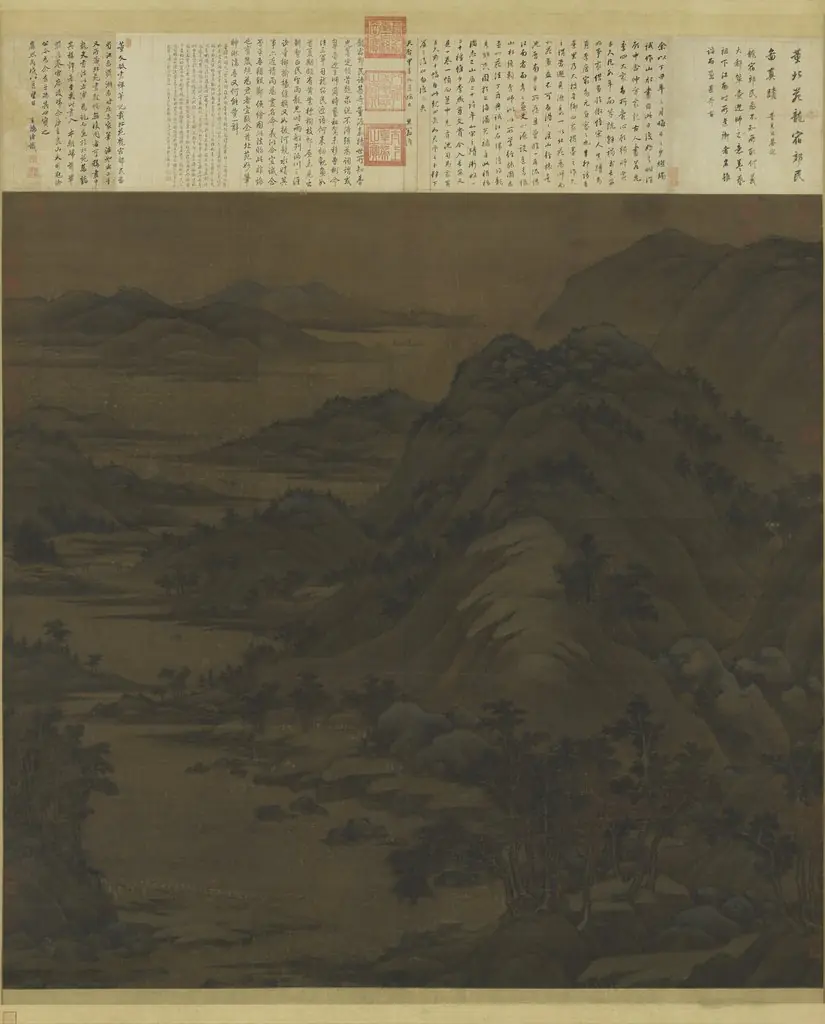
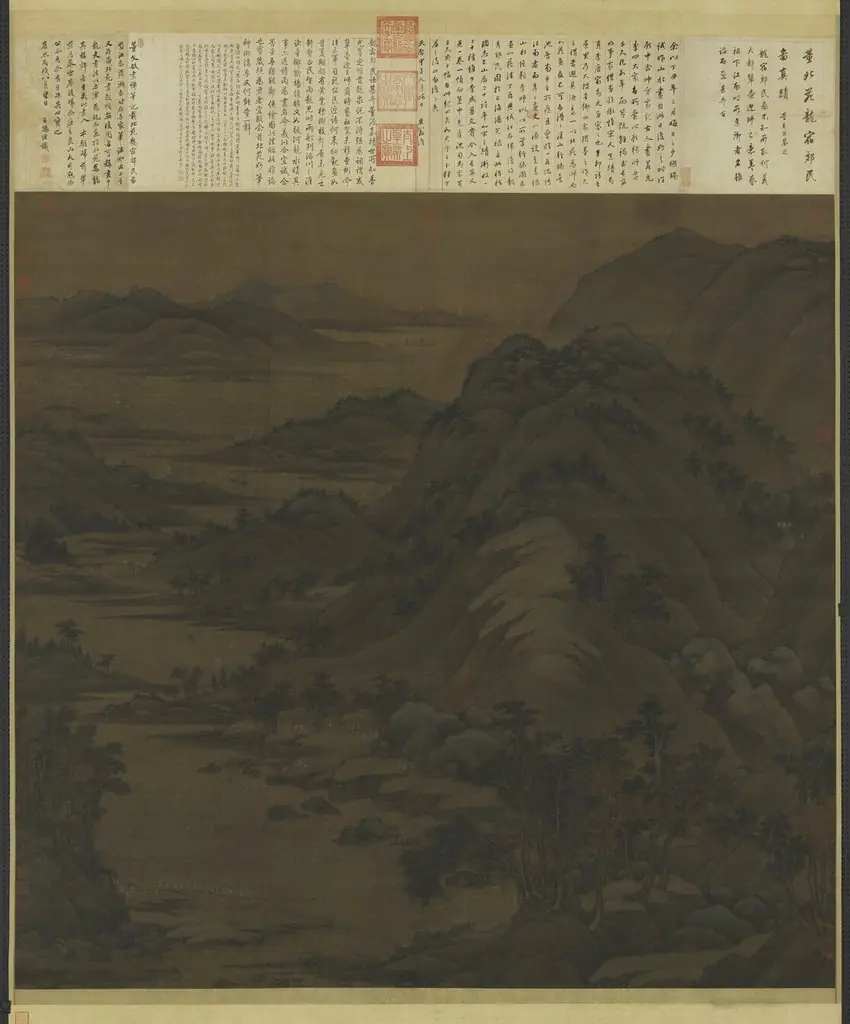
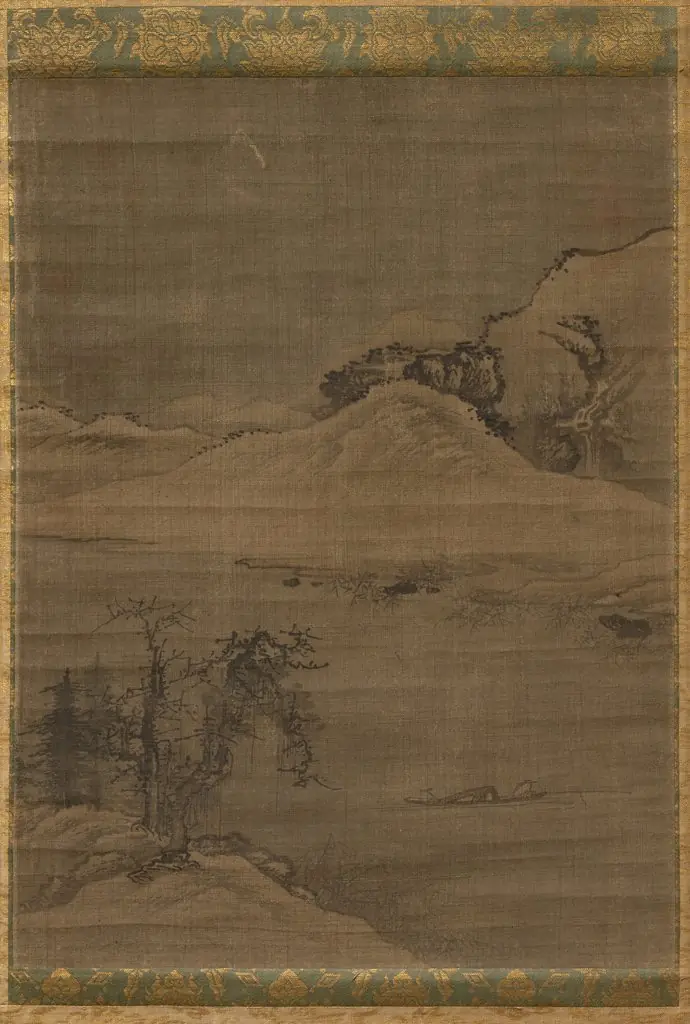
Late Scenery Along a Riverbank
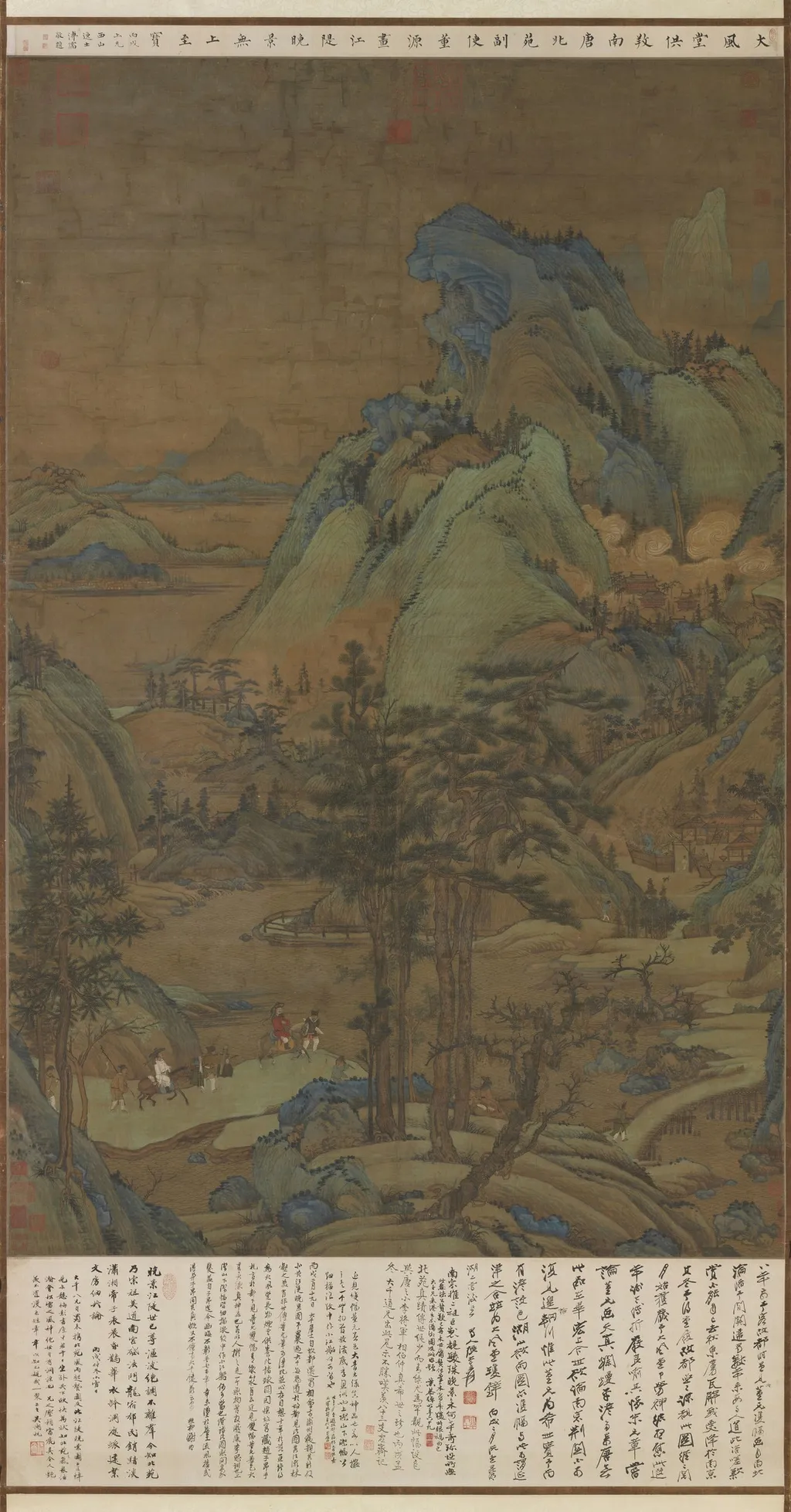
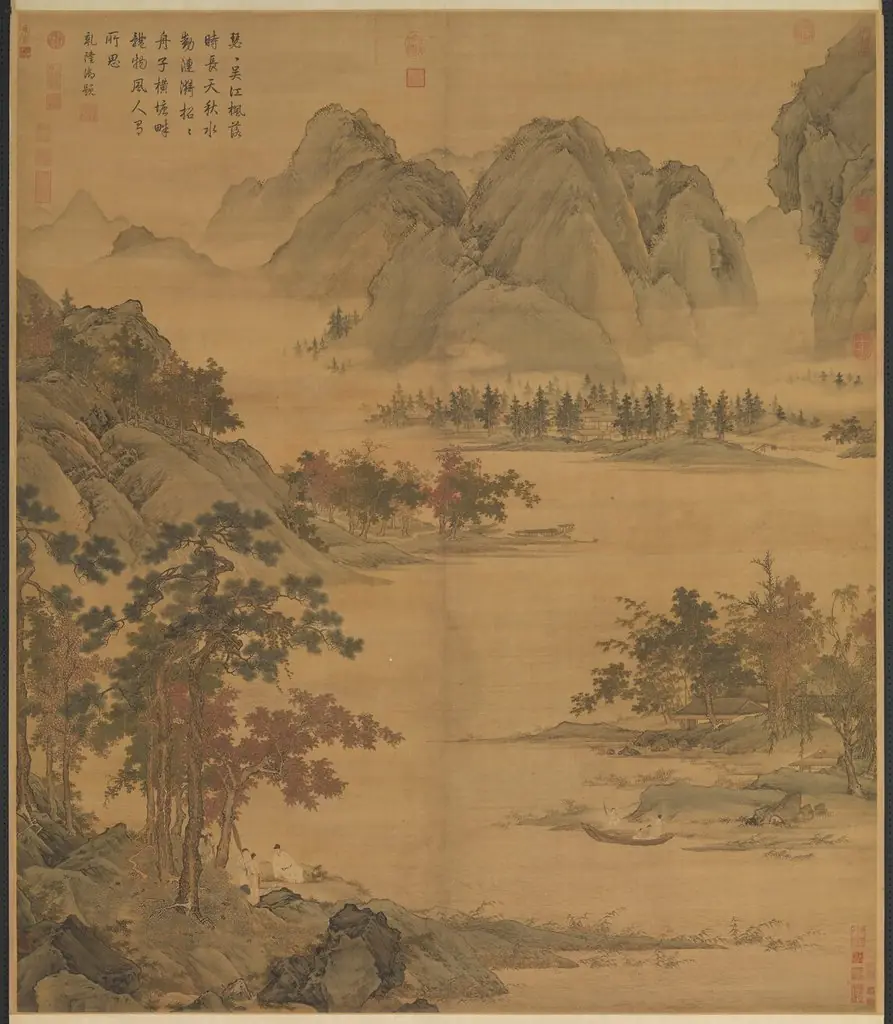
Late Scenery Along a Riverbank is an unspecified painting by the Song dynasty landscape artist Dong Yuan. It dates from 958 and is held in the collection of the National Palace Museum.
About this work
Overview
The work belongs to a tradition that would later define Southern Song landscape painting, emphasizing harmony between human presence and the natural world.
Created around 958 during the Southern Tang dynasty, this silk painting by Dong Yuan captures a quiet riverside landscape. Executed with meticulous brushwork, it reflects the aesthetic priorities of its time: subtlety, naturalism, and quiet contemplation. The work belongs to a tradition that would later define Southern Song landscape painting, emphasizing harmony between human presence and the natural world.
Subject & Meaning
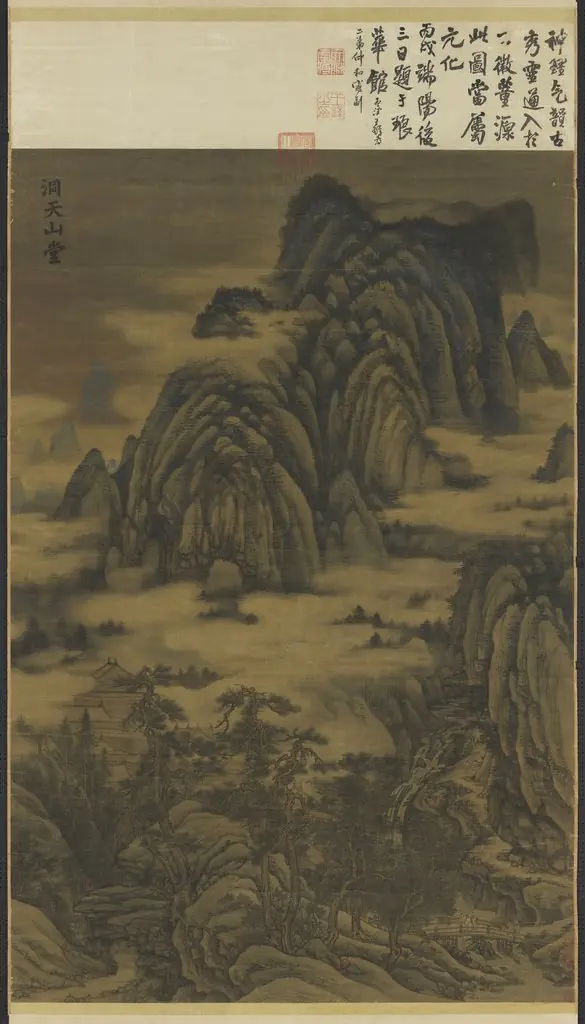
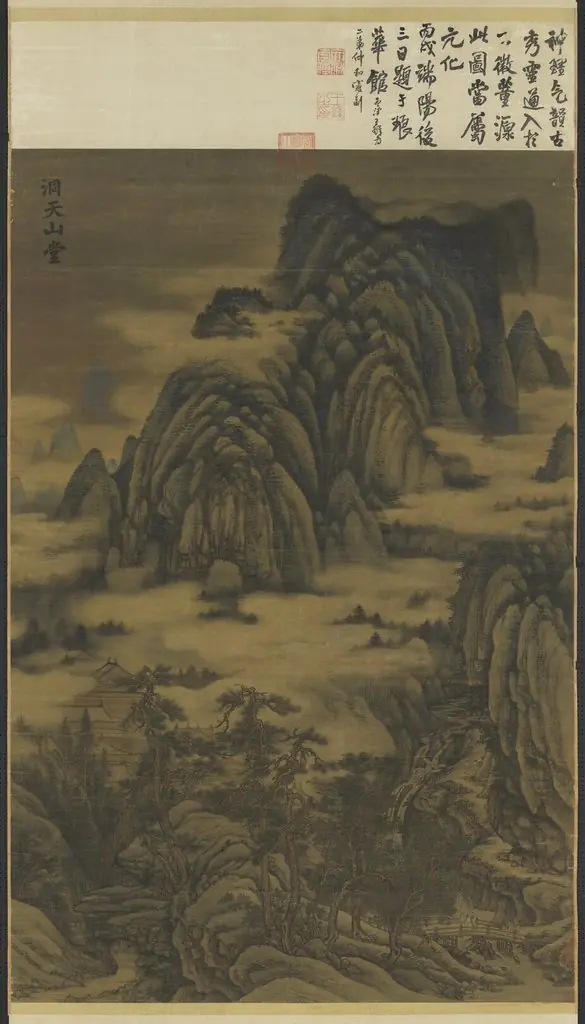
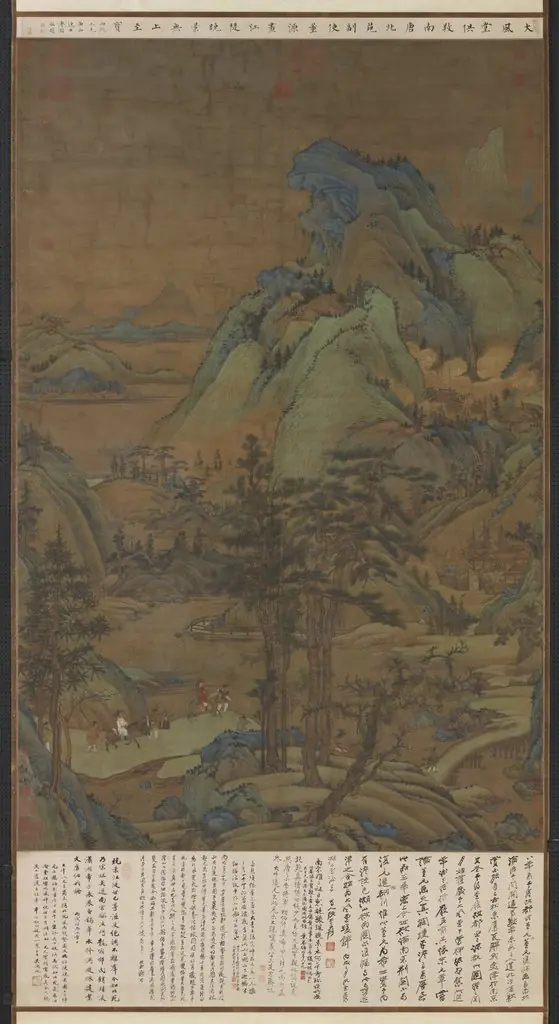
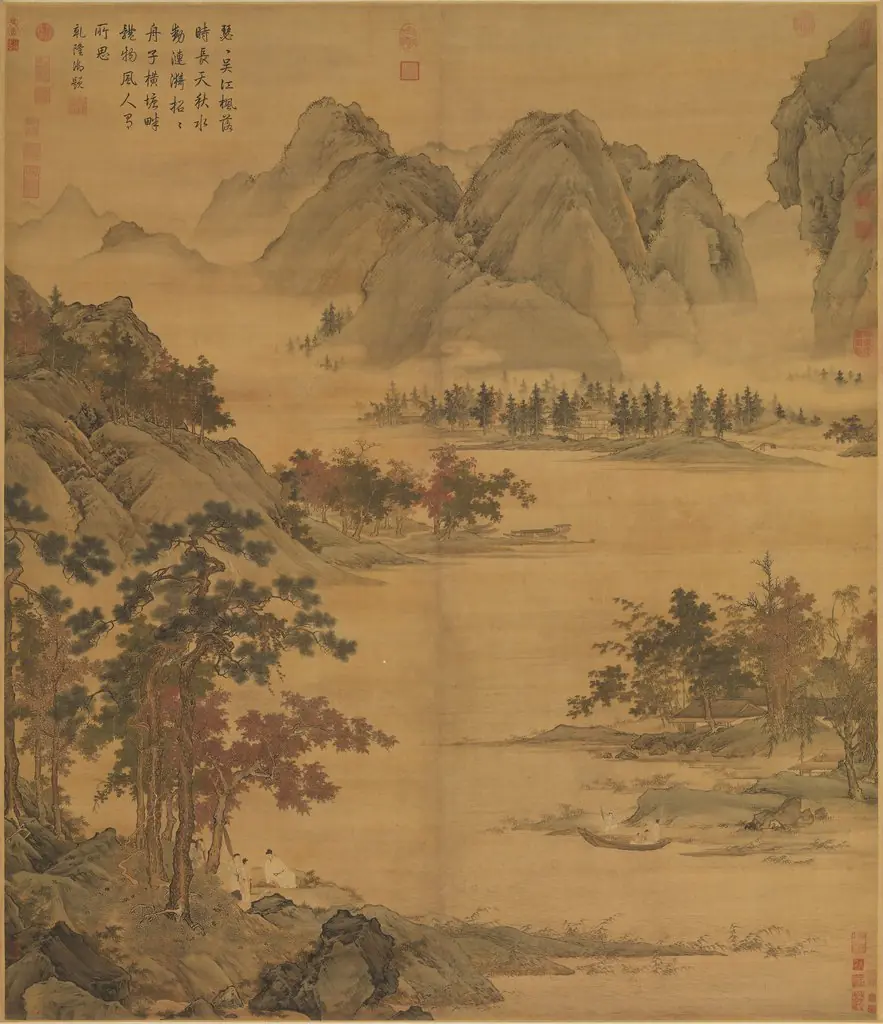
The scene portrays a tranquil river winding through rolling hills, with sparse human figures and small boats suggesting quiet activity. Trees rise tall along the banks, their forms rendered with delicate precision. The composition invites slow viewing, evoking a sense of solitude and seasonal transition.
Rather than dramatizing nature, it honors its stillness, aligning with Daoist and Confucian ideals of balance and restraint.
Technique & Style
Dong Yuan employed fine, layered brushstrokes to build texture in rocks, foliage, and water. The muted palette, soft greens, grays, and browns, enhances the painting’s subdued mood. Silk, as a support, allowed for nuanced ink washes and fine detail.
His technique, known as 'pomo' (dotting ink), uses small, rhythmic strokes to suggest foliage and terrain, a method that became foundational for later landscape artists.
History & Provenance
Painted in Nanjing, then the Southern Tang capital, the work emerged from a courtly artistic environment that valued scholarly refinement. Though its early ownership is undocumented, it survived into later dynasties, likely preserved by collectors who prized Southern Tang painting for its poetic restraint. Its survival on silk speaks to careful handling and enduring cultural value.
Context
During the Five Dynasties and Ten Kingdoms period, regional courts like Southern Tang fostered distinct artistic identities separate from northern centers. Dong Yuan’s landscapes responded to this cultural fragmentation by developing a lyrical, localized style rooted in the Jiangnan region’s misty hills and waterways. His approach contrasted with the more monumental northern landscapes, offering instead an intimate, atmospheric vision.
Legacy
Dong Yuan’s influence extended through the Song dynasty and beyond, shaping the development of literati landscape painting. His emphasis on texture, atmospheric depth, and quiet composition became benchmarks for later artists. While few of his works survive, this painting remains a key reference for understanding the evolution of Chinese ink landscape traditions in the 10th century.
Artist & collection

Artist
Dong Yuan (Chinese: 董源; pinyin: Dǒng Yuán; Wade–Giles: Tung Yüan; Gan: dung3 ngion4; c.

![Summer Mountains (after Dong Yuan [active about ad 937-975]), by Huang Gongwang](https://artifactworldgallery.com/img/huang-gongwang--summer-mountains-after-dong-yuan-active-about-ad-937-975--a5e22b9ec870e011-w320.webp)