Artwork
A Prince Riding an Elephant in Procession
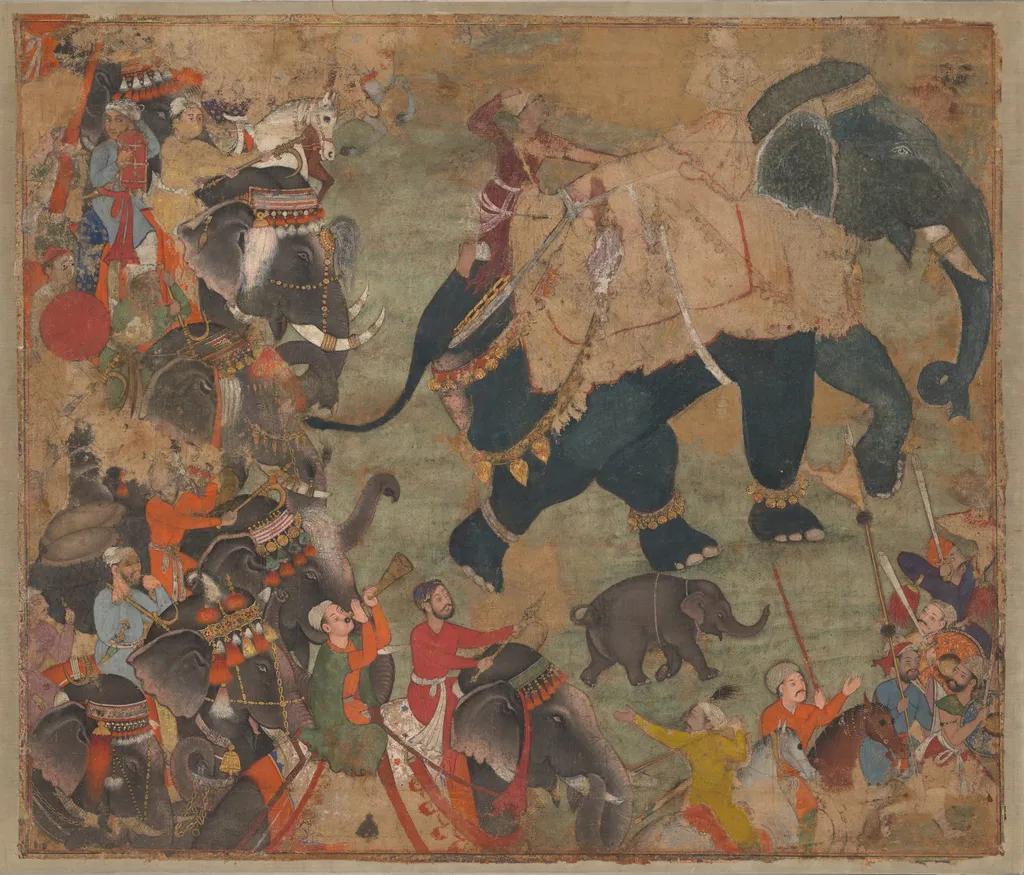
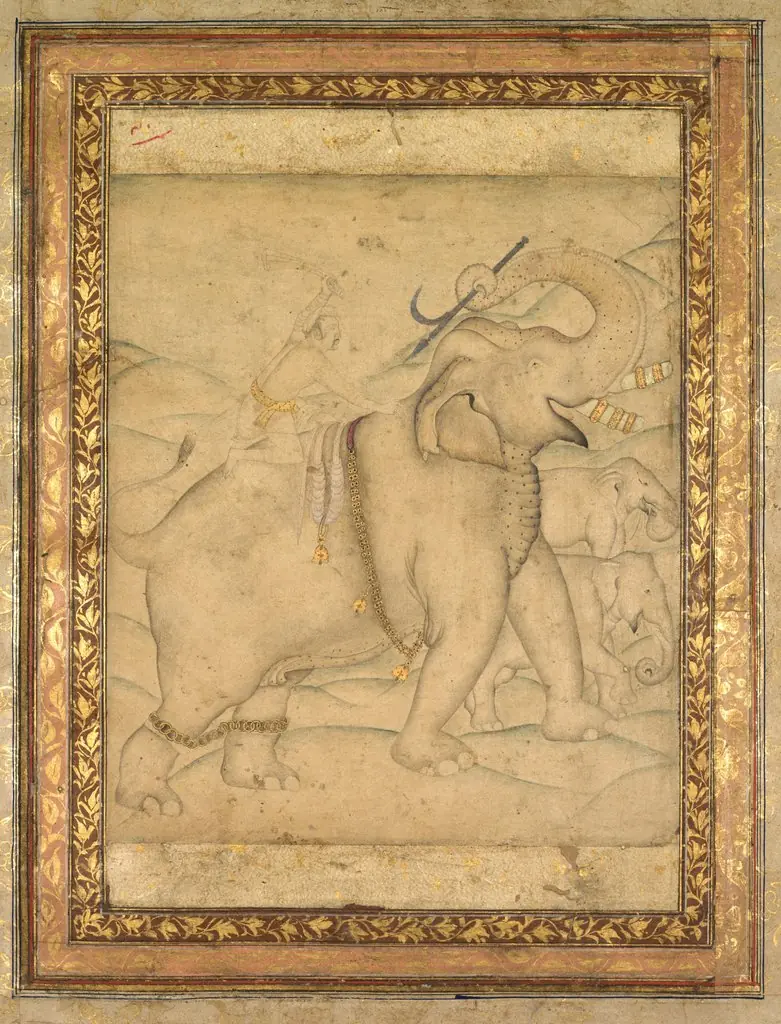
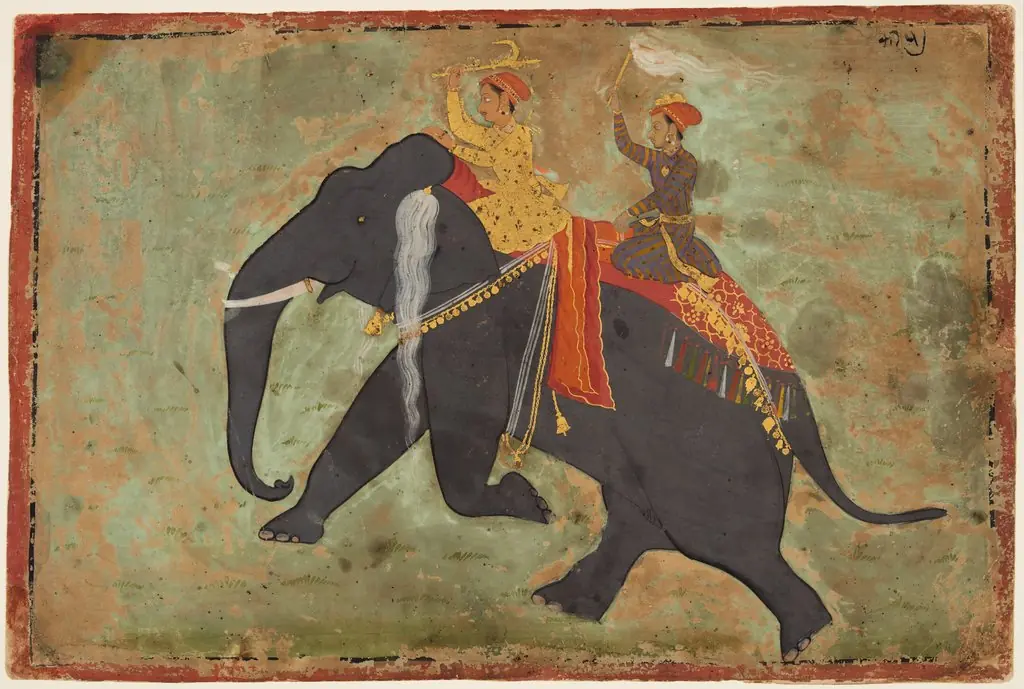
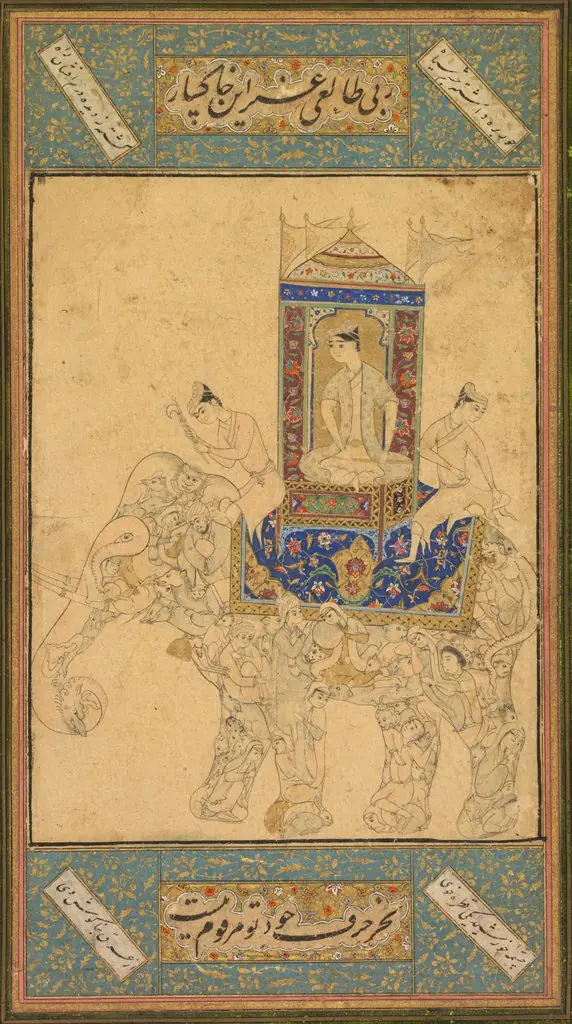
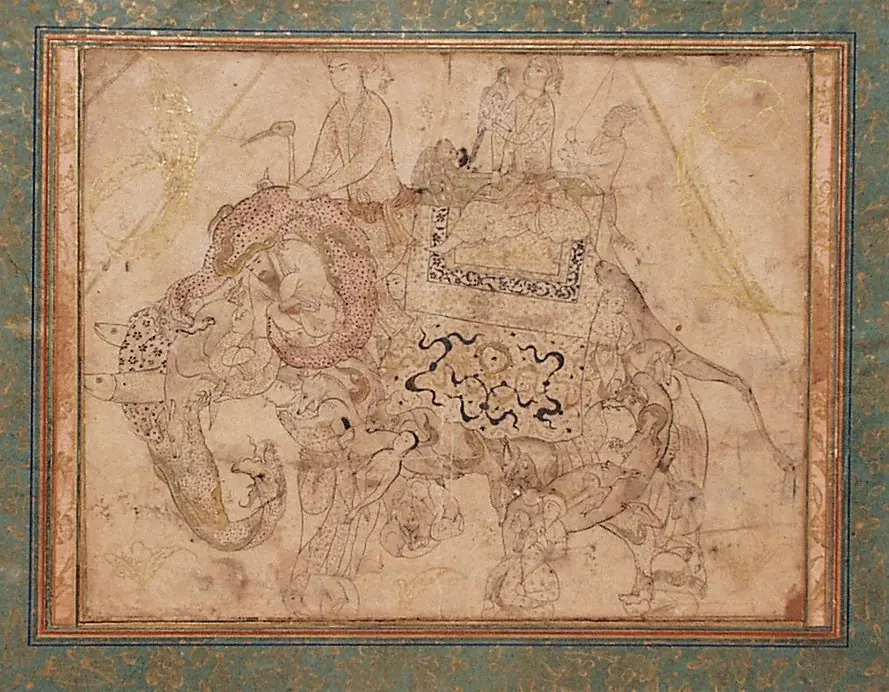
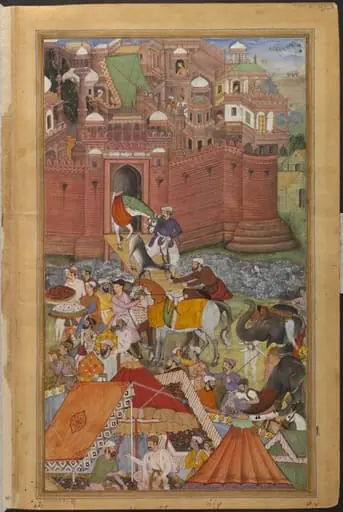
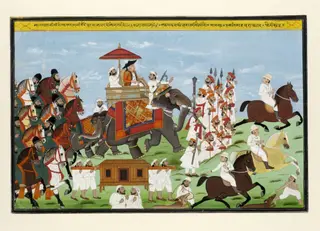
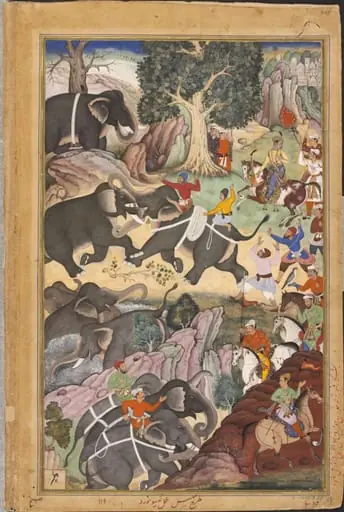
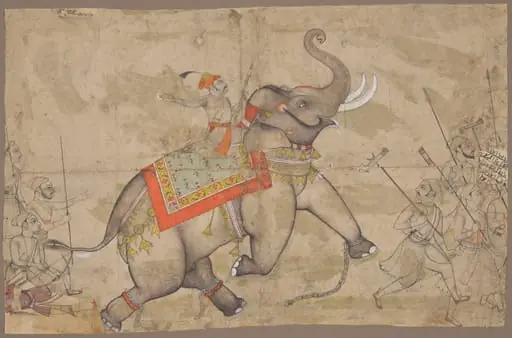
A Prince Riding an Elephant in Procession is an unspecified painting. It dates from 1570 and is held in the collection of the Metropolitan Museum of Art. The work depicts a ceremonial procession centered on a princely figure astride a richly adorned elephant.
About this work
Subject & Meaning
The painting portrays a royal figure mounted on an elephant during a ceremonial procession, emphasizing the sovereign's power and divine authority.
The painting portrays a royal figure mounted on an elephant during a ceremonial procession, emphasizing the sovereign's power and divine authority. The elephant, long associated with royal pomp and religious symbolism in Indian tradition, underscores the prince's connection to both temporal rule and spiritual legitimacy. Rendered in 1570, the work originates from India and is housed in the Metropolitan Museum of Art, reflecting the cross-cultural transmission of Mughal artistic motifs into European collections.
History & Provenance
Created in 1570, the painting titled A Prince Riding an Elephant in Procession was produced in India by an anonymous artist. The work is currently held in the collection of the Metropolitan Museum of Art. No specific details regarding the original commission, the identity of the patron, or the precise chain of ownership prior to the museum's acquisition are provided in the available records.
The painting is held by the Metropolitan Museum of Art, New York, where it is recorded as accession number 66.173.
It has been exhibited at the museum in the 2016 installation “Peacock in the Desert: The Royal Arts of Jodhpur, India,” where it was shown under the title A Prince Riding an Elephant in Procession.
Overview
The work depicts a ceremonial procession centered on a princely figure astride a richly adorned elephant. The rider wears a white costume and a turban, brandishing a sword, while the elephant is draped in a red‑and‑white blanket and embellished with gold ornaments. Accompanying figures on horses and additional elephants, some armed, populate the scene against a muted green‑brown backdrop.
Technique & Style
Rendered in a painted medium, the piece employs a balanced palette of earthy tones and vivid accents to differentiate the central figures from the background. Fine detailing on the elephant’s jewelry and the prince’s attire demonstrates careful brushwork, while the broader, less defined surroundings create depth and focus attention on the procession’s focal point.
Context
The scene reflects a tradition of royal processions common in South‑Asian courts, where elephants served as symbols of sovereignty and grandeur. The visual language of armor, turbans, and jeweled animal harnesses aligns with historical depictions of ceremonial pageantry that reinforced dynastic legitimacy.
Artist & collection