Artwork
The Elephant of Maharana Jai Singh of Mewar (r. 1680–98) Catches a Horse by the Tail
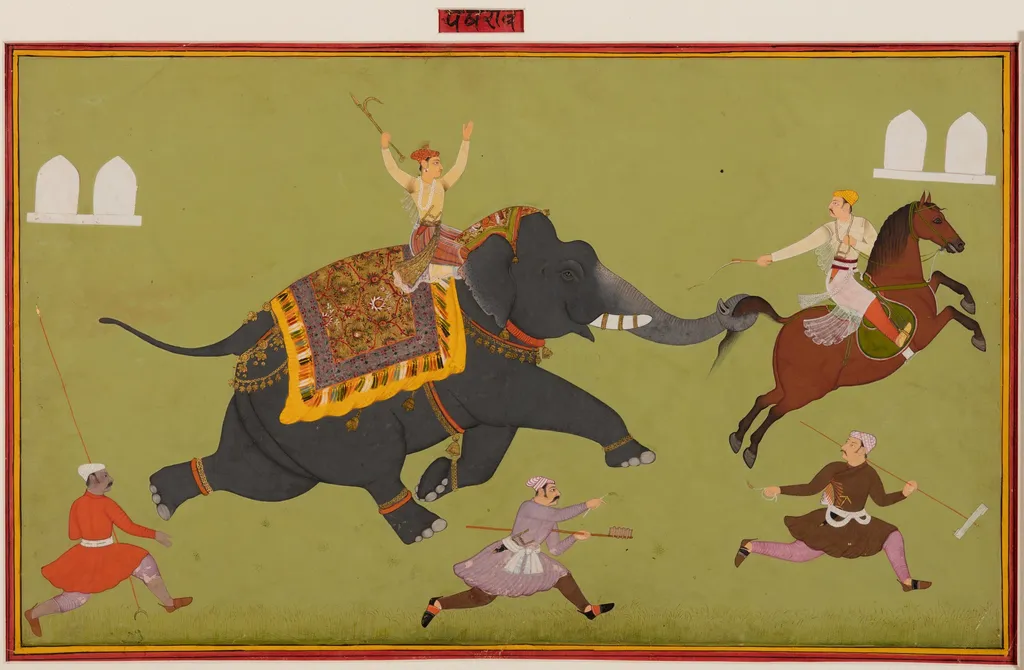
The Elephant of Maharana Jai Singh of Mewar (r. 1680–98) Catches a Horse by the Tail is an unspecified painting. It dates from 1690 and is held in the collection of the Cleveland Museum of Art.
About this work
History & Provenance
Created in 1680 in the Mewar region, this painting was produced during the reign of Maharana Jai Singh, who ruled from 1680 to 1698.
Created in 1680 in the Mewar region, this painting was produced during the reign of Maharana Jai Singh, who ruled from 1680 to 1698. The work is attributed to an unknown artist. It currently resides in the collection of the Cleveland Museum of Art, where it is cataloged under the accession number 2018.137.
The specific circumstances of its original commission and the details of its ownership history prior to its acquisition by the Cleveland institution are not documented in the available records.
The painting is held by the Cleveland Museum of Art, where it forms part of the museum's collection. Its accession number is 2018.137, identifying it within the institution's holdings.
The work was produced in Mewar in 1680, and it has been associated with the Cleveland Museum of Art as its present location.
Overview
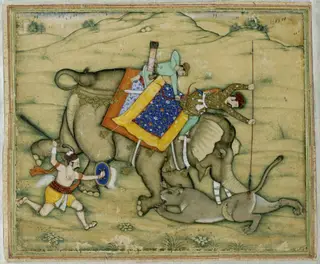
The work portrays a dramatic encounter between a dark‑gray elephant, draped in a yellow‑red blanket, and a brown horse bearing a rider in white and red. Five figures surround the animals, each attired in varied hues; one grips a spear, another a staff. Flanking the scene are two white arches, while a green ground suggests an open field.
Subject & Meaning
The composition captures a moment of tension, likely drawn from a royal hunt or martial display, where the elephant appears to seize the horse by its tail. The presence of armed attendants and the regal rider hints at a narrative of power and control within a courtly or ceremonial context.
Technique & Style
Rendered in a flat, linear manner, the painting emphasizes bold outlines and vivid color blocks rather than naturalistic shading. The figures and animals are stylized, with exaggerated postures that convey motion, while the architectural arches are simplified to frame the central action.
Context
Mewar’s visual culture blended indigenous Indian motifs with influences from Mughal court painting, producing works that combined narrative vigor with decorative richness. Scenes of hunting and elephant‑horse confrontations were common, symbolising royal authority and the mastery of nature.
Legacy
The painting serves as a visual record of Rajput courtly life and the aesthetic preferences of late‑17th‑century Mewar. It continues to inform scholars about the interplay of martial symbolism and artistic conventions in regional Indian painting traditions.
Artist & collection

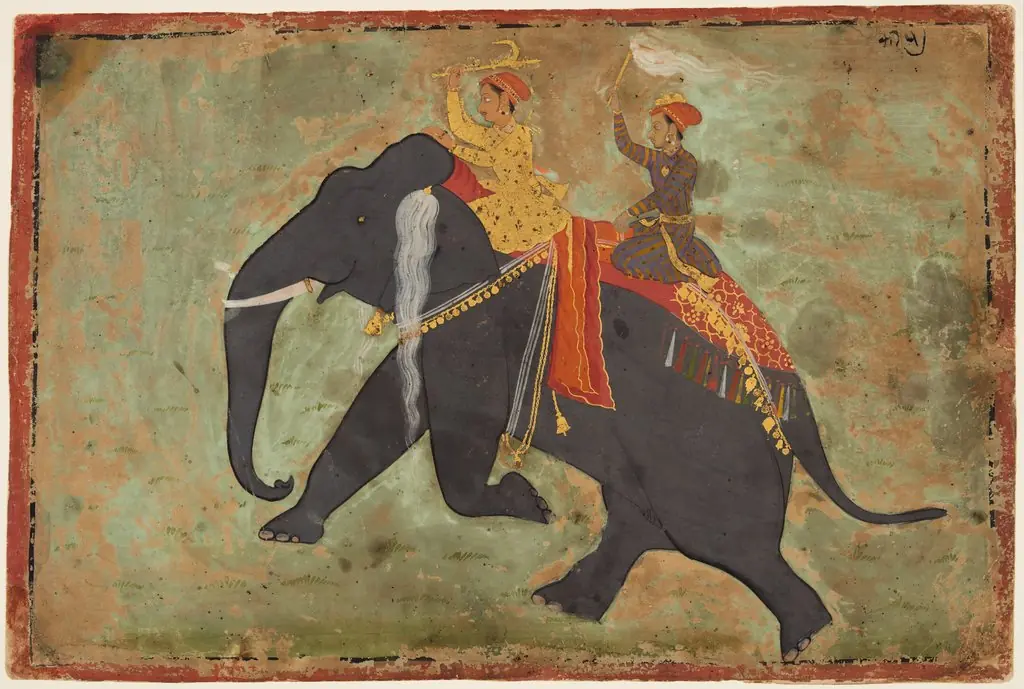
- Prince Amar Singh (1672–1710) Drives His Own Elephant
 The Elephant of Maharana Jai Singh of Mewar (r. 1680–98) Catches a Horse by the Tail
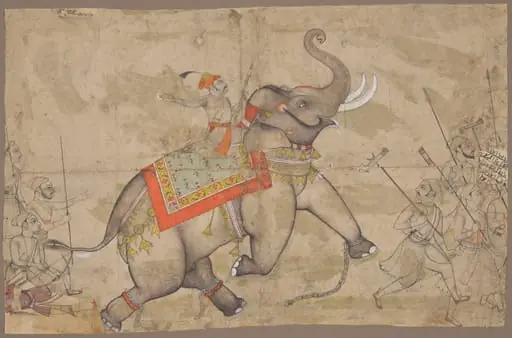 A Raja on an Elephant
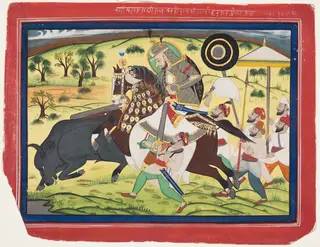 Maharao Ram Singh II of Kota (r. 1828–66) Hunting Buffalo
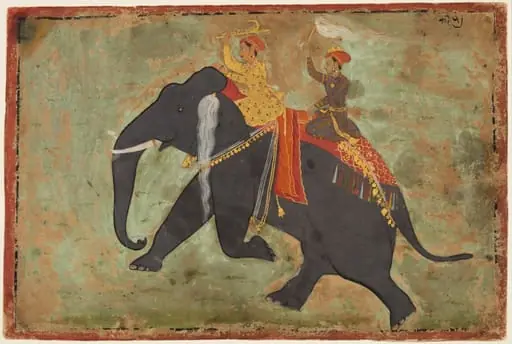 Prince Amar Singh (1672–1710) Drives His Own Elephant
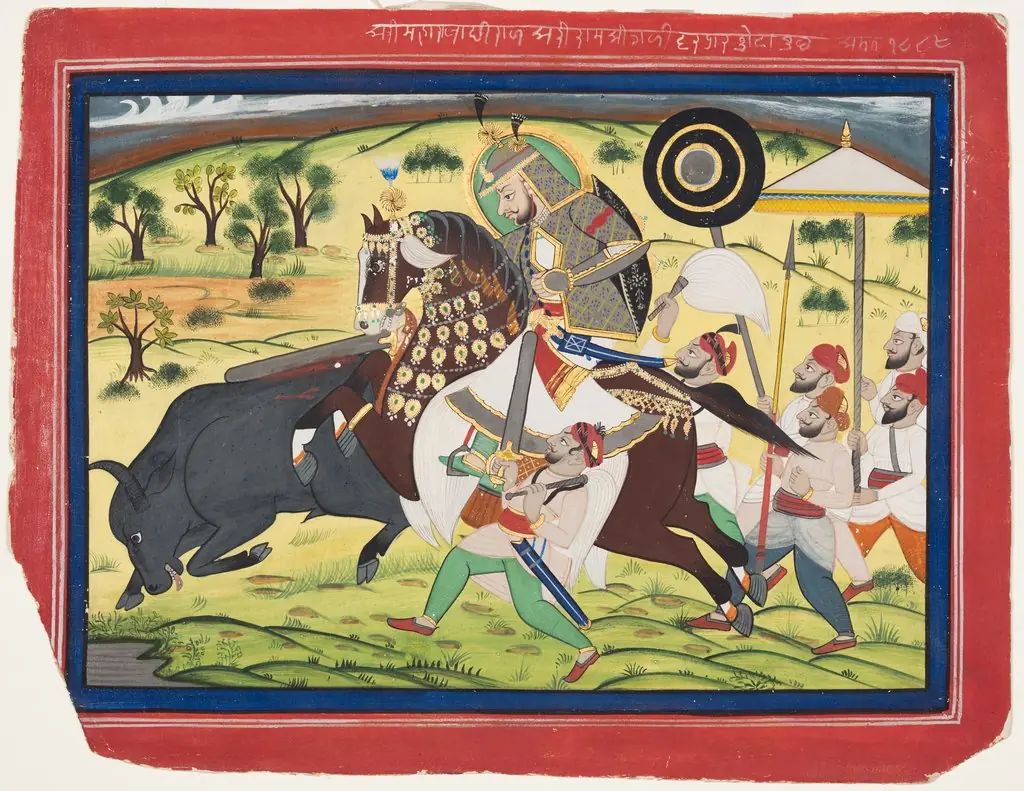 Maharao Ram Singh II of Kota (r. 1828–66) Hunting Buffalo
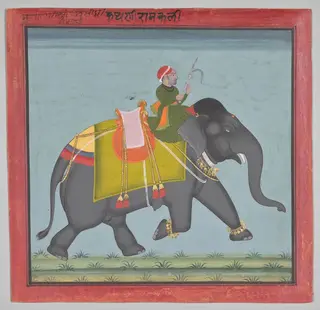 Royal Elephant Ramkali with a Mahout
 Mahant of Tarakeshwar Rides on an Elephant