Artwork
A princess with attendants on a terrace
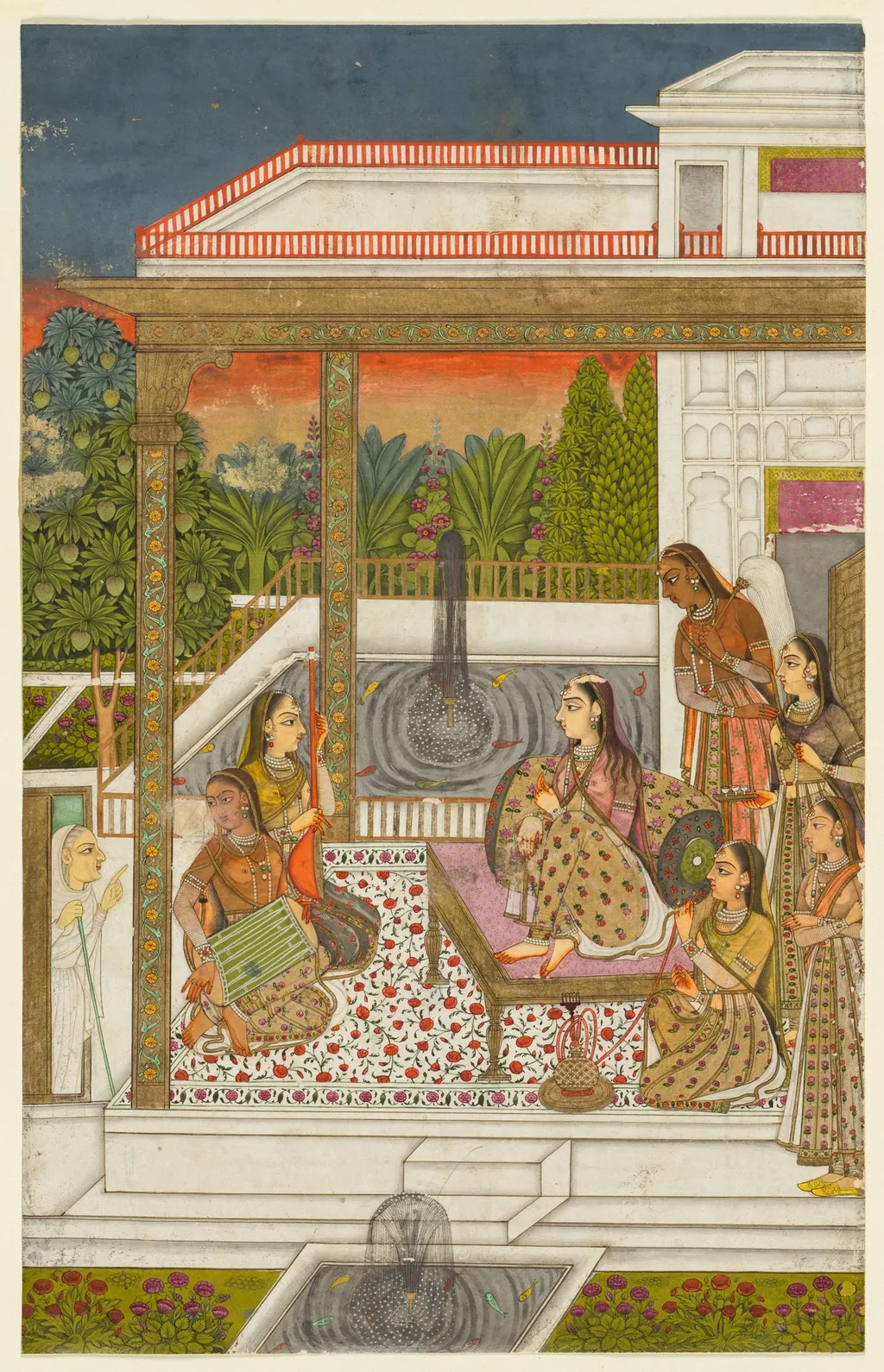
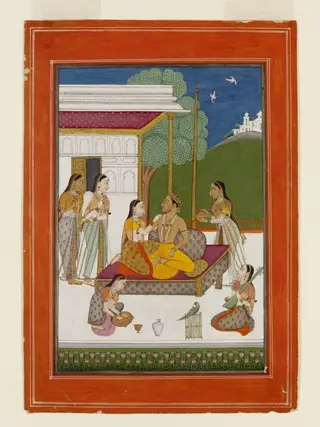
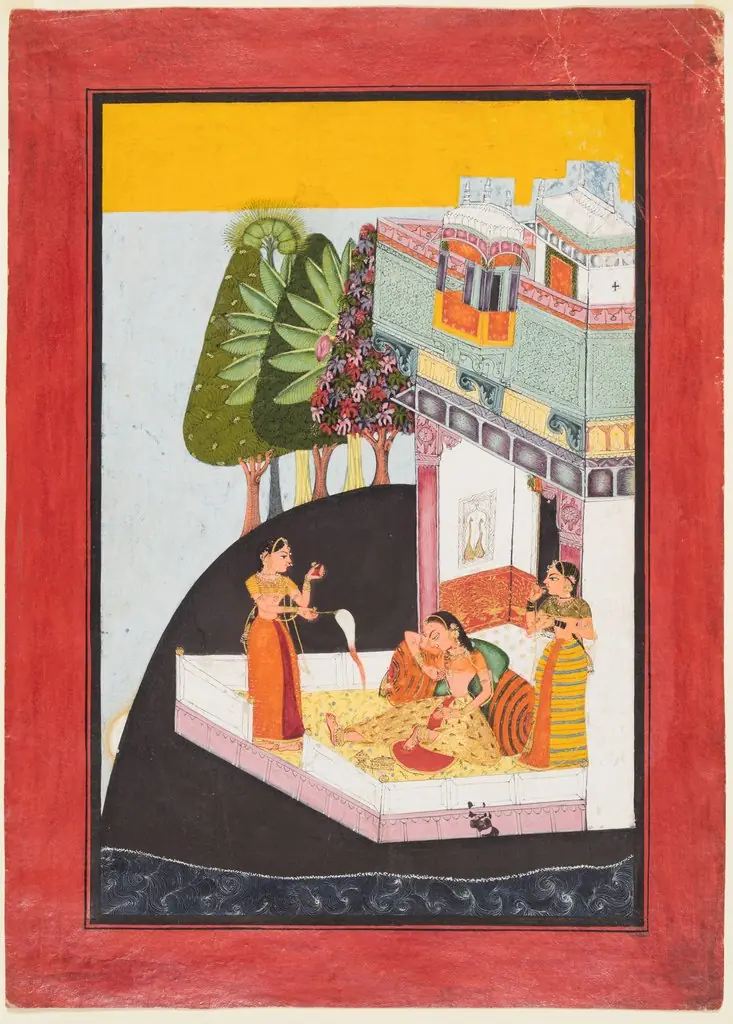
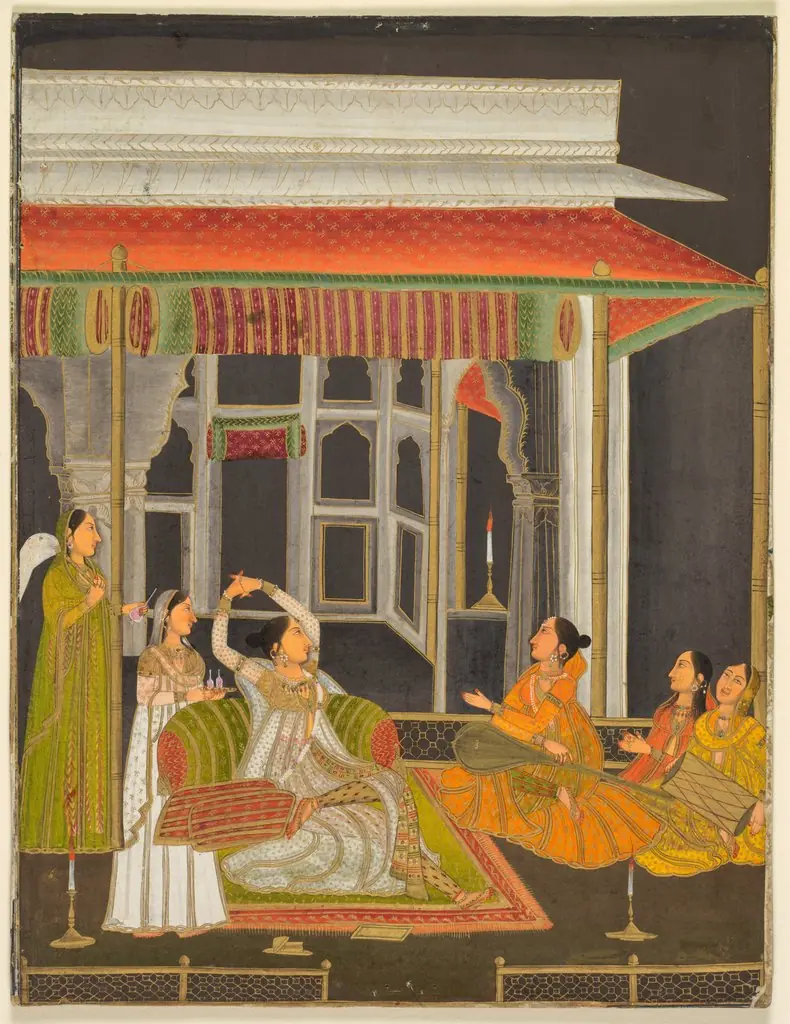
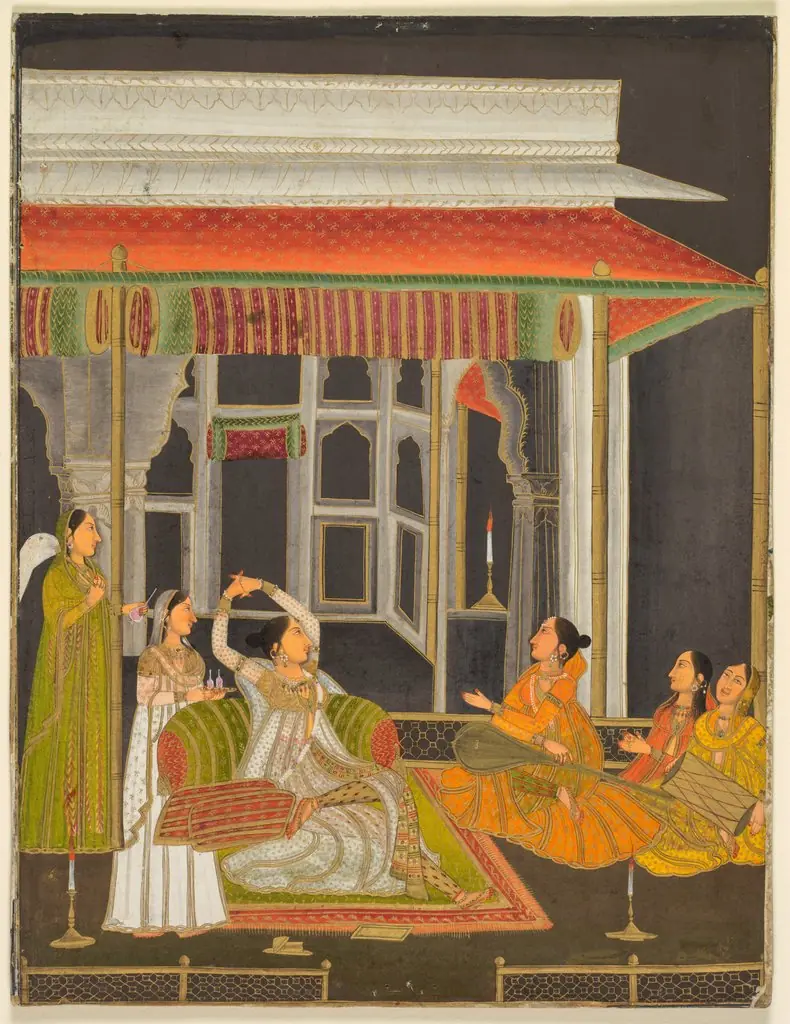
A princess with attendants on a terrace is an unspecified painting. It dates from 1725 and is held in the collection of the Cleveland Museum of Art. The work depicts a seated princess on an elevated terrace, surrounded by a small retinue of attendants.
About this work
Technique & Style
Gold accents heighten the jewelry, borders, and decorative motifs, enhancing the painting’s courtly elegance.
The painting A Princess with Attendants on a Terrace was executed in opaque watercolor and gold on paper, a characteristic medium of early 18th-century Indian miniature painting. The support is a fine, handmade paper, consistent with Mughal and Rajput traditions of the period. The figures, textiles, and architectural elements are defined with delicate, controlled lines.
Stylistically, the work adheres to the refined idiom of late Mughal or provincial Rajasthani ateliers, evident in the flattened spatial composition, hierarchical scaling of figures, and richly patterned surfaces. Gold accents heighten the jewelry, borders, and decorative motifs, enhancing the painting’s courtly elegance.
History & Provenance
The painting titled A princess with attendants on a terrace was created in 1725 by an unknown artist. It is currently held in the collection of the Cleveland Museum of Art, where it is cataloged under the accession number 2013.291. No further details regarding the original commission, specific patron, or the chain of ownership prior to its acquisition by the museum are provided in the available records.
Overview
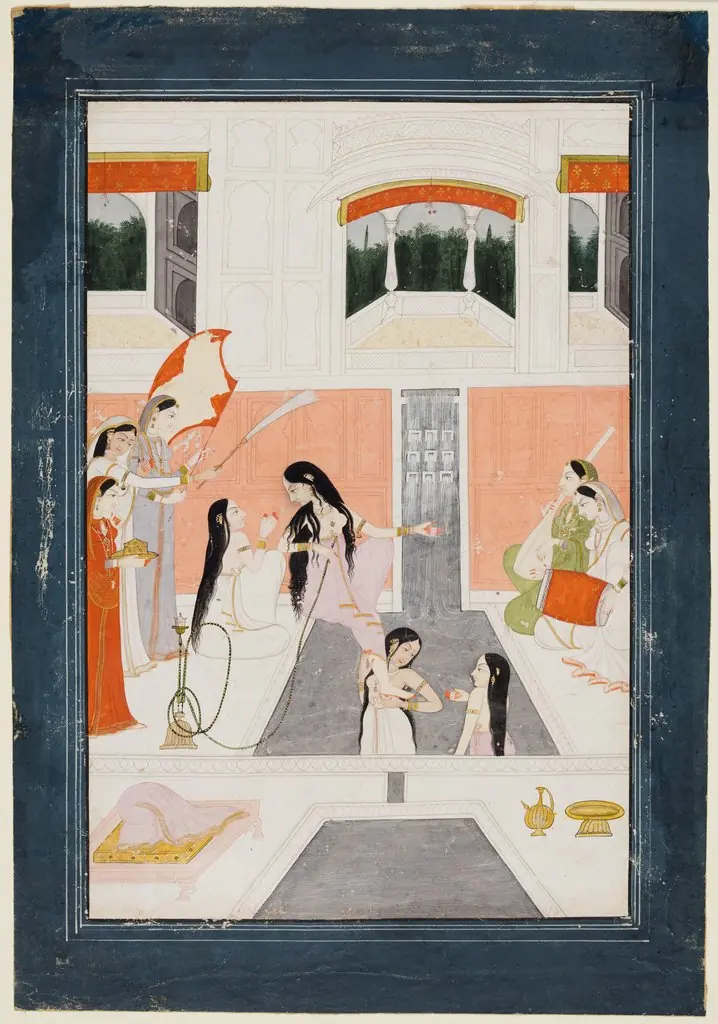
The work depicts a seated princess on an elevated terrace, surrounded by a small retinue of attendants. She holds a fan while dressed in a flowing gown, and the figures around her carry items such as a basket and a parasol. Beyond the architectural setting, a garden with trees and flowering plants stretches into a blue sky dotted with clouds, creating a calm, composed scene.
Subject & Meaning
The composition centers on aristocratic leisure, emphasizing the princess’s status through her elevated position and the attentive service of her companions. The inclusion of everyday objects, basket, parasol, alongside the fan suggests a blend of domestic routine and ceremonial display, reflecting ideals of refined femininity and courtly poise prevalent in courtly portraiture.
Context
The scene aligns with a broader tradition of courtly genre paintings that portray noble figures in idyllic, landscaped settings. Such works often served to reinforce social hierarchy and the cultivated tastes of elite patrons, situating the subject within an idealized, harmonious environment that blends architecture and nature.
Artist & collection