Artwork
Adoration of the Magi
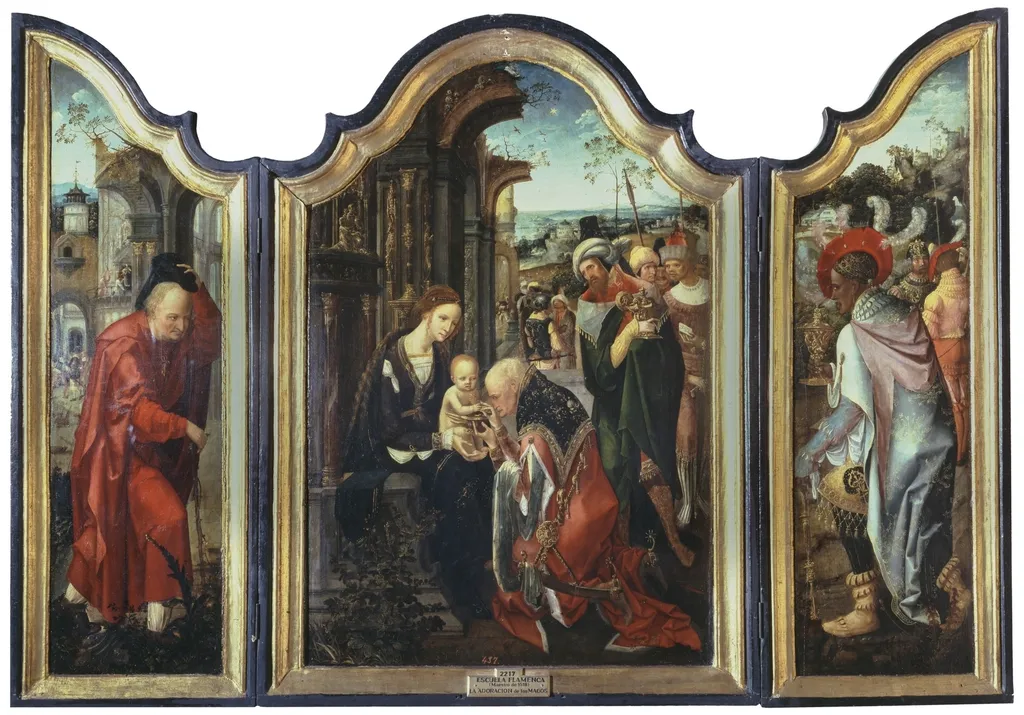
Adoration of the Magi is an oil painting. It dates from 1501 and is held in the collection of the Museo del Prado.
About this work
Technique & Style
Handling aligns with early sixteenth-century Northern European practice, employing fine glazes to build luminous drapery and delicate flesh tones.
The painting is executed in oil on wood panel and measures 120 cm in height by 173 cm in width. The composition centers on the Christ Child receiving gifts from the three Magi, flanked by the Madonna and Saint Joseph, with the kneeling figures of Balthazar, Melchior, and Caspar arranged symmetrically. Handling aligns with early sixteenth-century Northern European practice, employing fine glazes to build luminous drapery and delicate flesh tones.
The panel support, consistent with contemporaneous Netherlandish tradition, underpins the meticulous detail and saturated color typical of devotional works intended for private or courtly devotion.
History & Provenance
This oil painting on panel, depicting the Adoration of the Magi, was created in 1501. The work measures 120 cm in height and 173 cm in width. While the specific individual who commissioned the piece remains unrecorded in the available data, its inception is firmly dated to the turn of the sixteenth century.
The artist responsible for the execution is currently unidentified, though the work is historically associated with the collections of the Museo del Prado. The painting has remained within the Prado's holdings, where it is cataloged under the inventory number P002217. No further details regarding intermediate ownership transfers or specific acquisition dates are provided in the current records.
Legacy
The Adoration of the Magi, painted circa 1501 in oil on panel, entered the collection of the Museo del Prado where it is displayed as a representative example of early sixteenth‑century Spanish religious art. Its composition, depicting the Virgin, Child and the three Magi, has been cited in scholarly surveys of the period as a benchmark for studying the development of devotional imagery in the Iberian Peninsula. The work’s attribution to an anonymous master and its well‑preserved state have contributed to its reputation as a key reference point for understanding the stylistic transition from late Gothic to Renaissance aesthetics in the region.
Overview
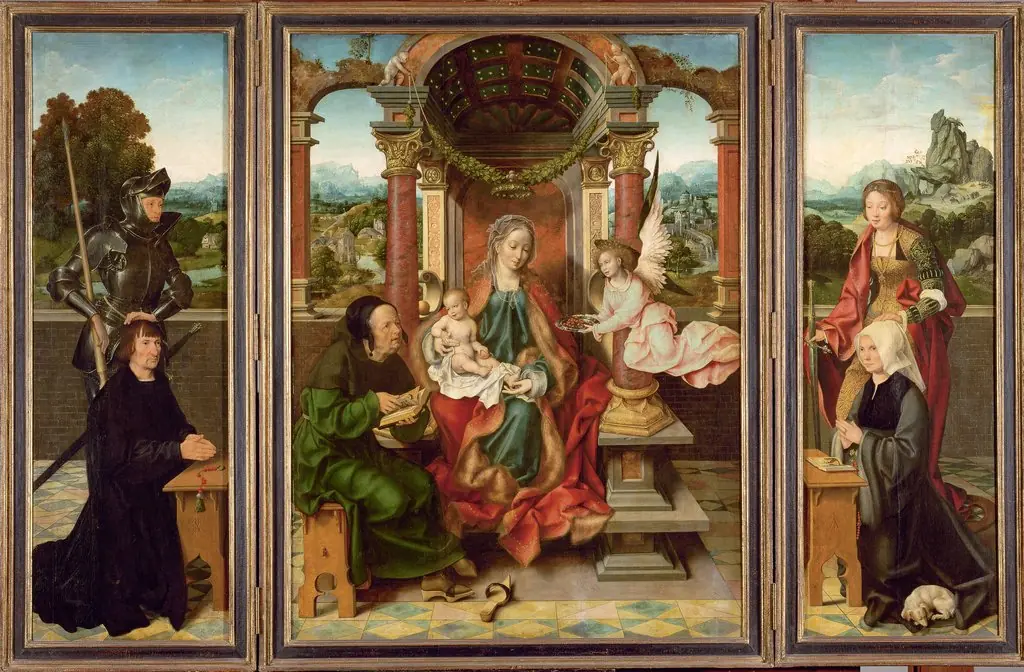
This oil painting, titled "Adoration of the Magi," depicts a significant biblical event. It presents a gathering of figures around the Virgin Mary and the Christ Child, set within an architectural space that opens to a distant vista. The artwork is characterized by its vibrant palette and detailed rendering of the sacred narrative, inviting viewers into a moment of reverence and presentation.
Subject & Meaning
The central focus of the composition is the Madonna cradling the infant Jesus, surrounded by a retinue of figures. Among them, the Magi are distinguished by their regal attire, including crowns, as they approach to offer homage. One king kneels in devotion, presenting a gift, while another stands nearby, holding a staff. This scene commemorates the Epiphany, celebrating the revelation of Christ to the Gentiles.
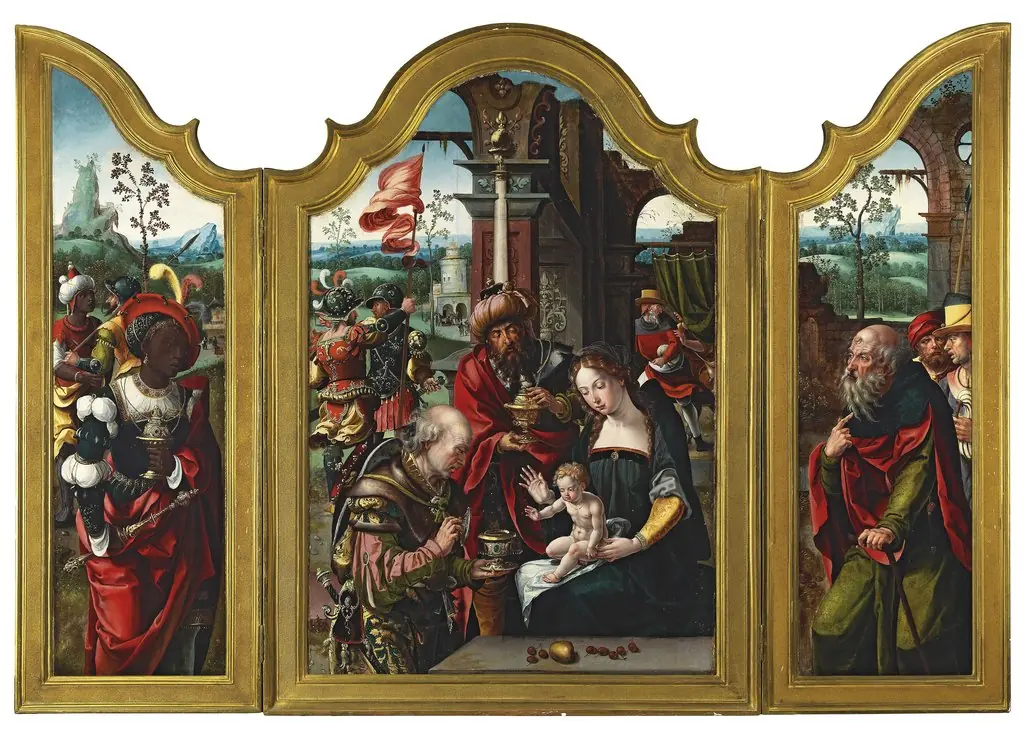
Artist & collection

- Adoration of the Magi
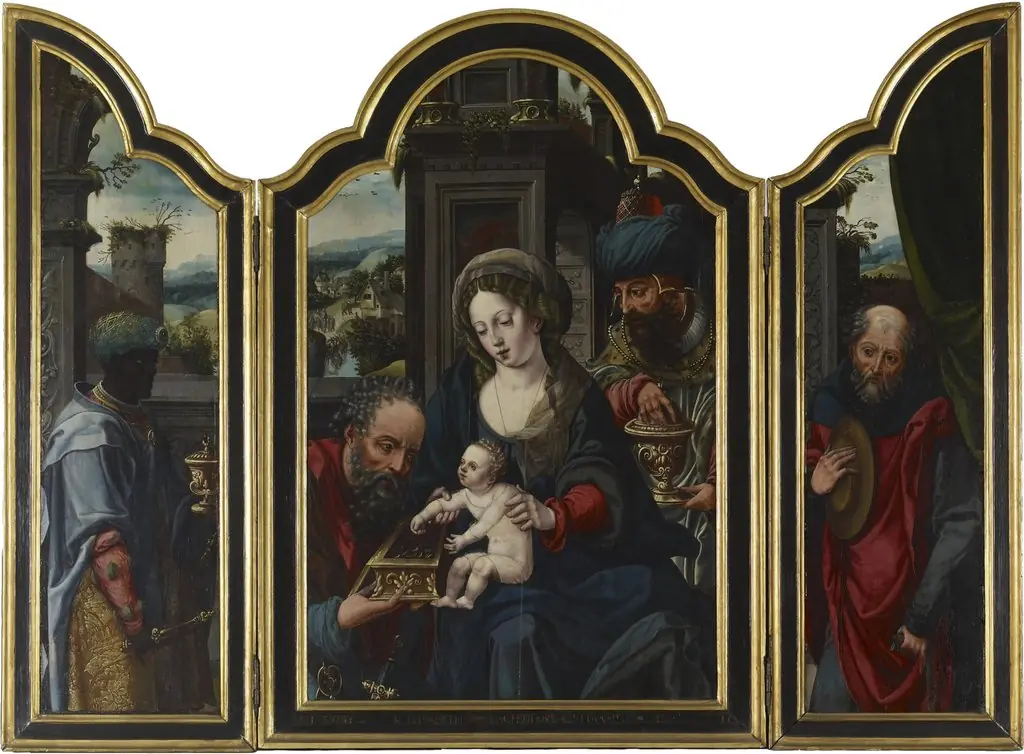 Adoration of the Magi
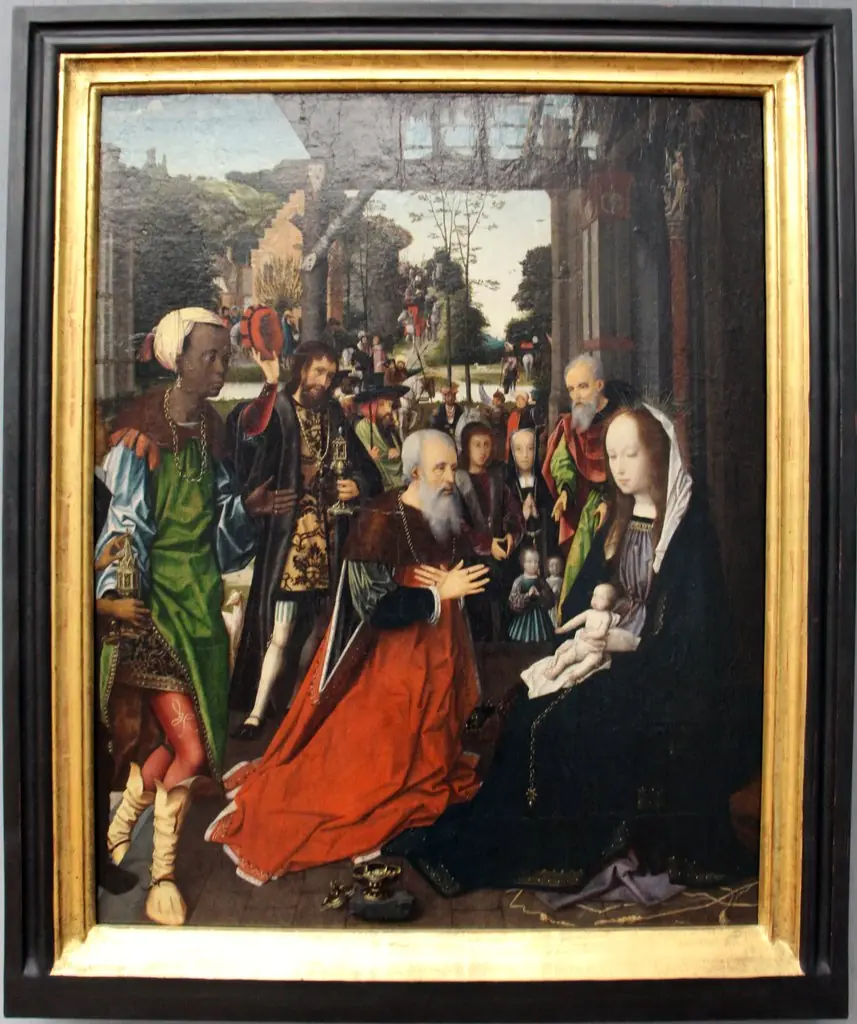 Adoration of the Magi
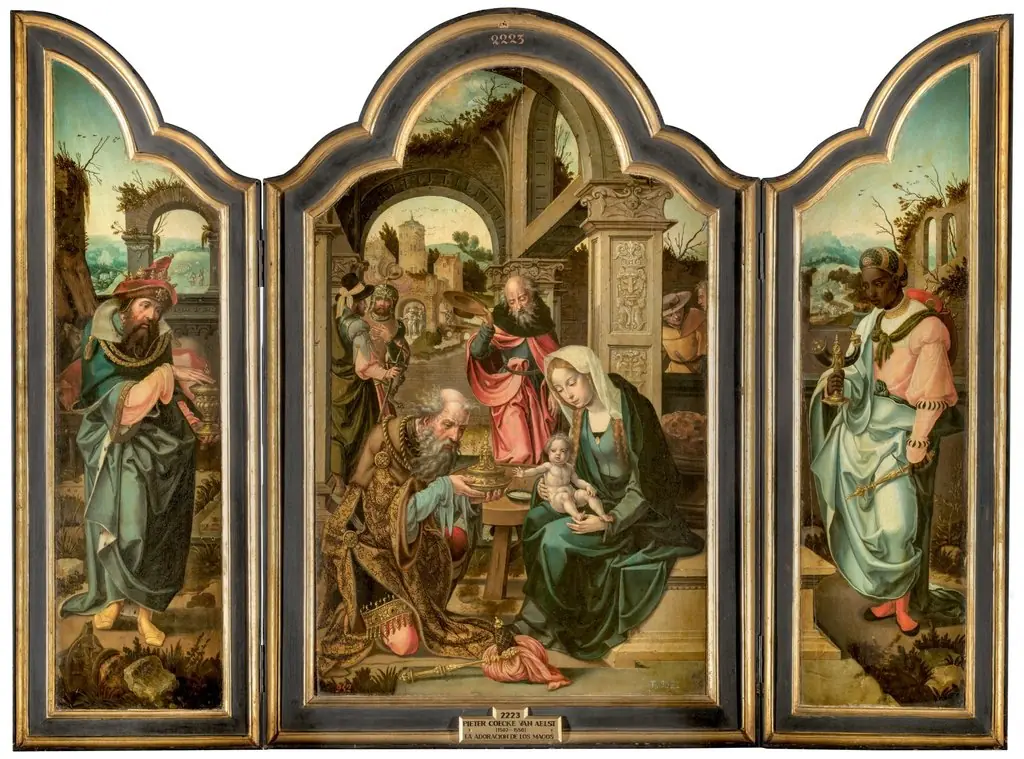 The Adoration of the Magi
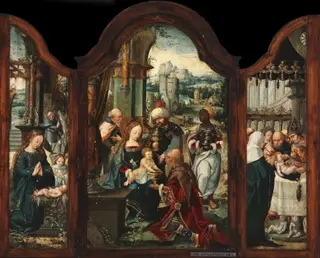 Triptych. Central panel: The Adoration of the Magi; left wing: The Nativity; right wing: The Circumcision
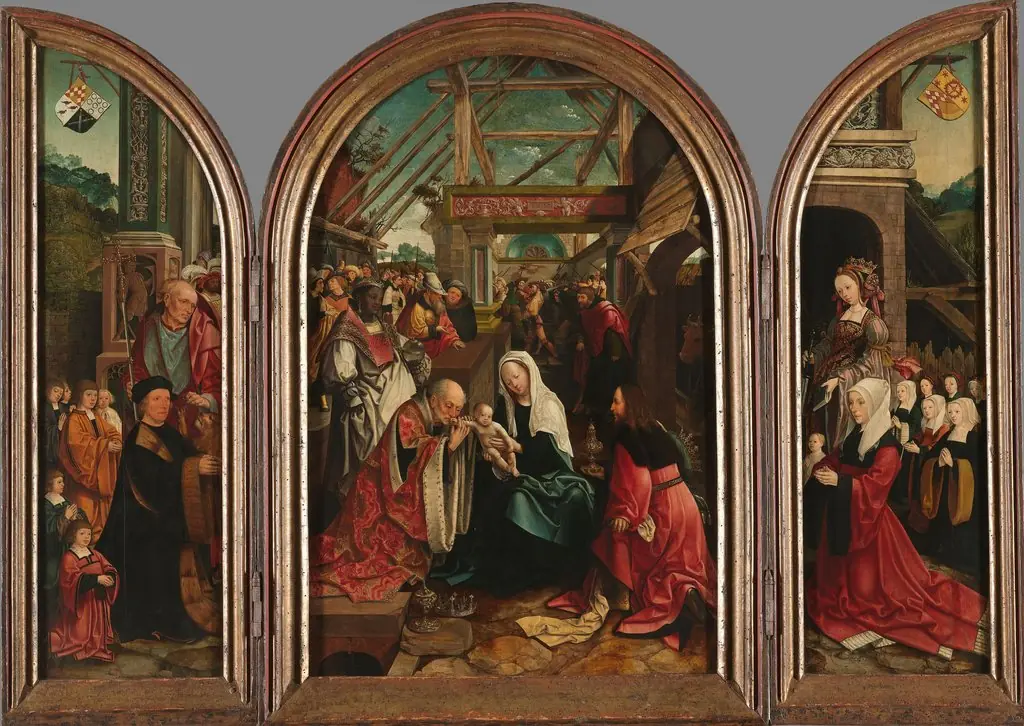 The Adoration of the Magi
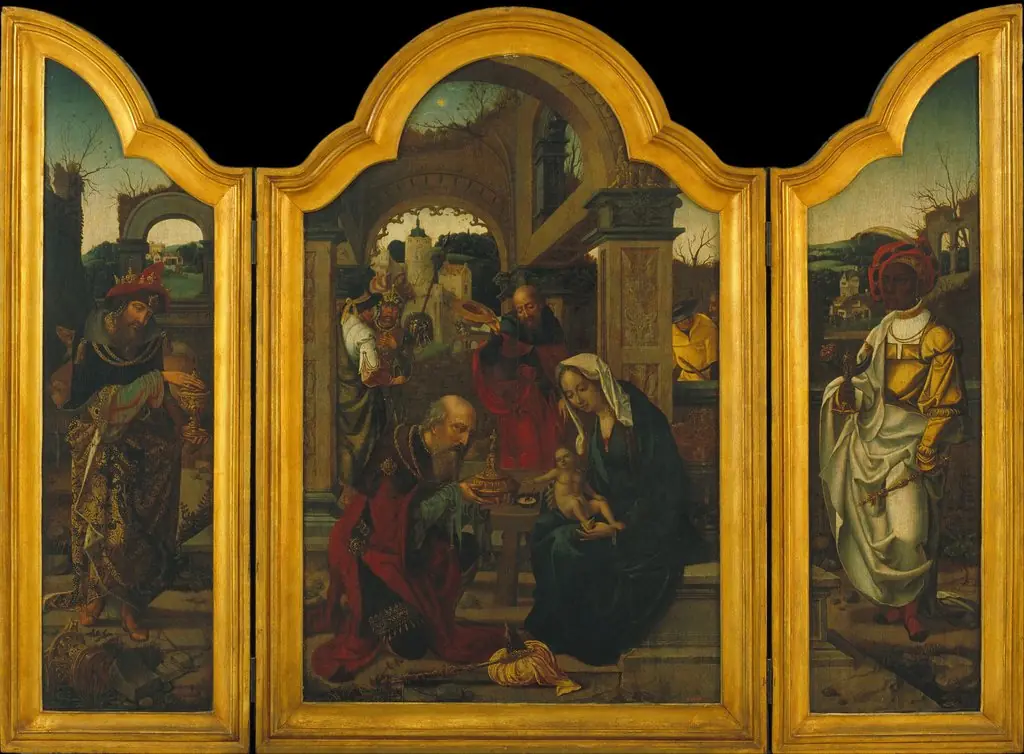 Triptych with the Epiphany
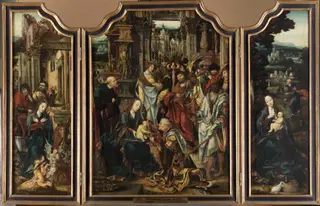 Flügelaltar; Mittelbild: Anbetung der Könige; linker Flügel: Anbetung der Hirten; rechter Flügel: Ruhe auf der Flucht nach Ägypten
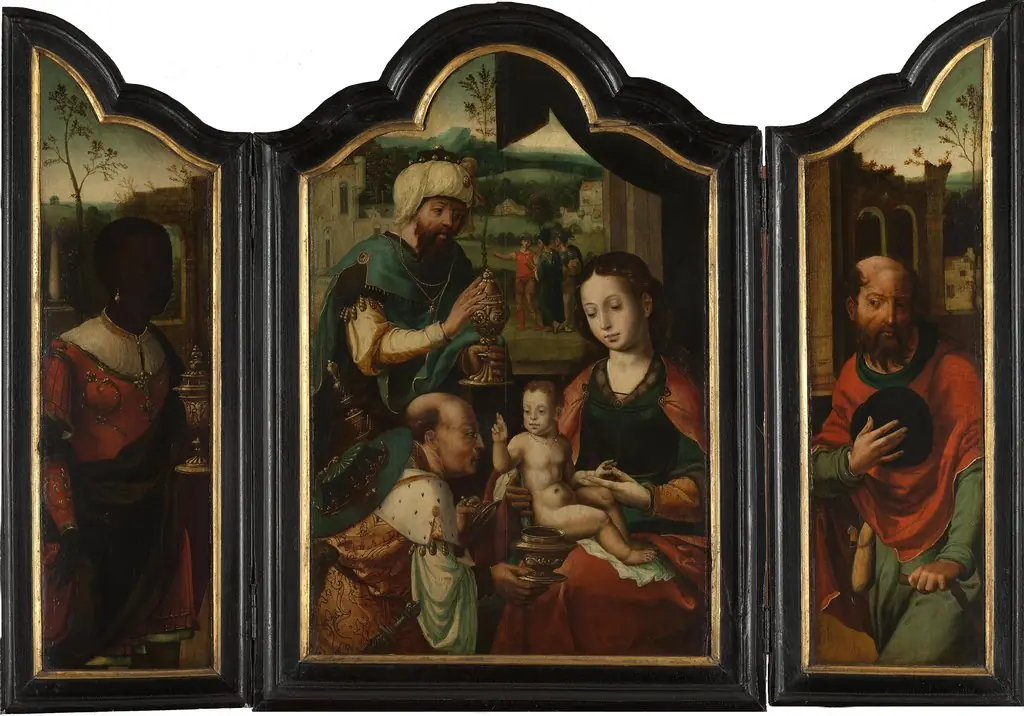 Triptych with Adoration of the Magi
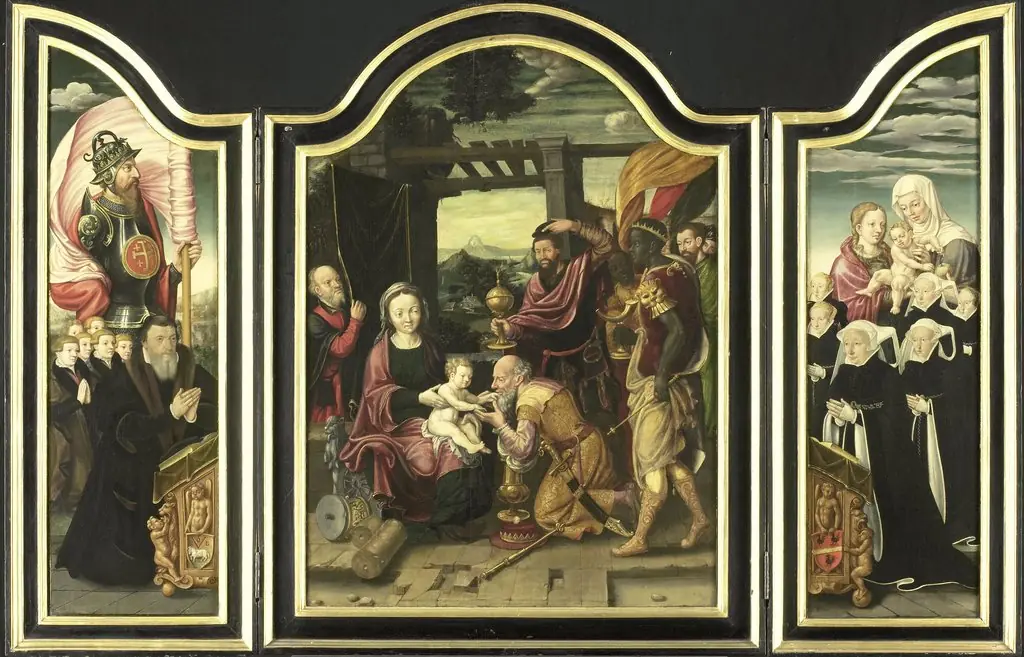 Triptych with the Adoration of the Magi
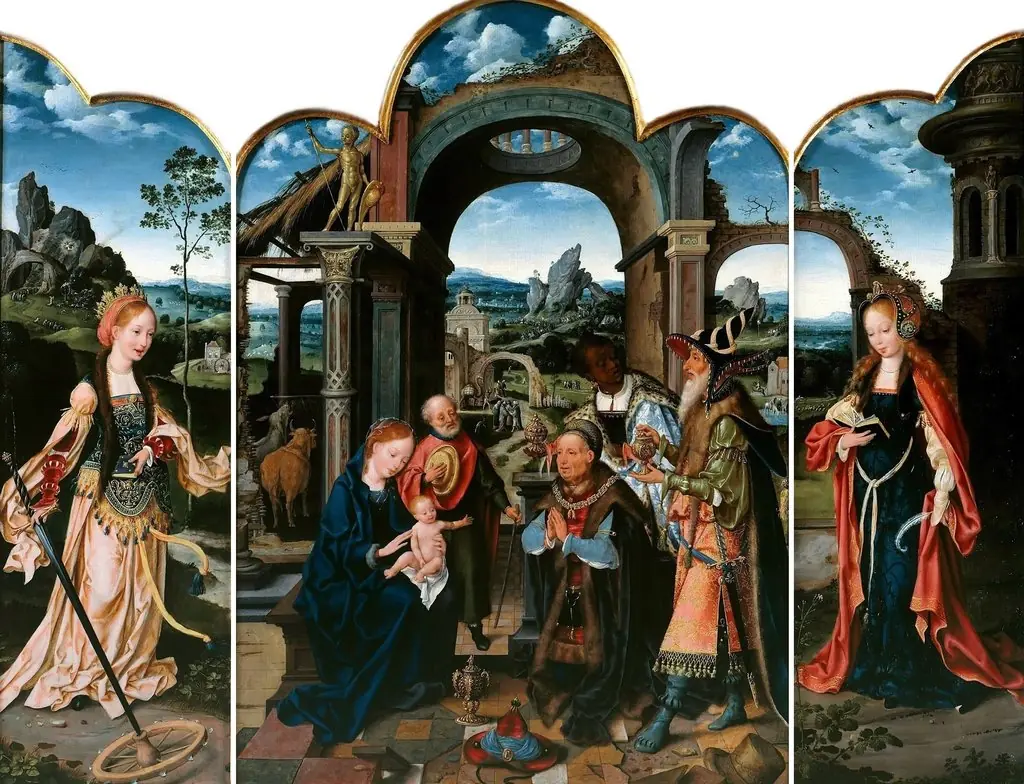 Adoration of the Magi with Sigismund I of Poland.
 Winged Altar