Artwork
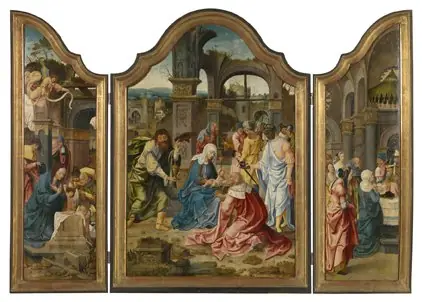
Triptych with Adoration of the Magi
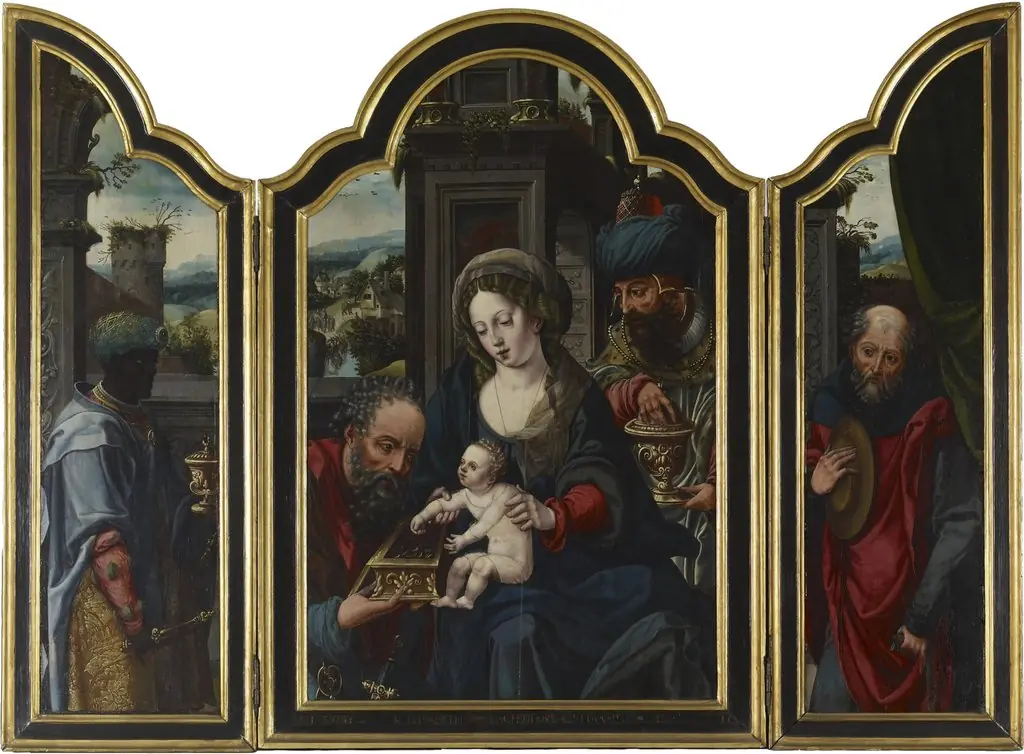
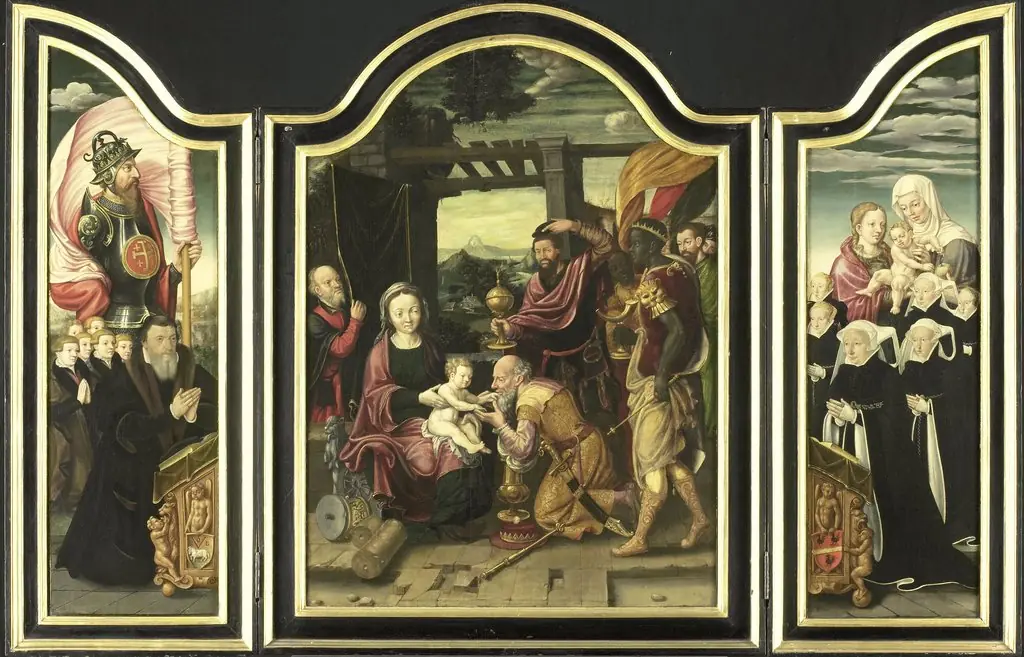
Triptych with Adoration of the Magi is an oil painting. It dates from 1550 and is held in the collection of the Rijksmuseum.
About this work
Subject & Meaning
The integration of the wings into a unified central composition represents an innovation that brought symmetry and breadth to the traditional Adoration format.
The triptych's central subject is the Adoration of the Magi, a Nativity scene drawn from the Gospel of Matthew, in which wise men travel from the east following a star to worship the newborn Christ Child and present gifts of gold, frankincense, and myrrh. While the biblical account does not specify their number, Western Christian tradition developed the Magi into three kings drawn from the three known continents of the era, and they were eventually given names.
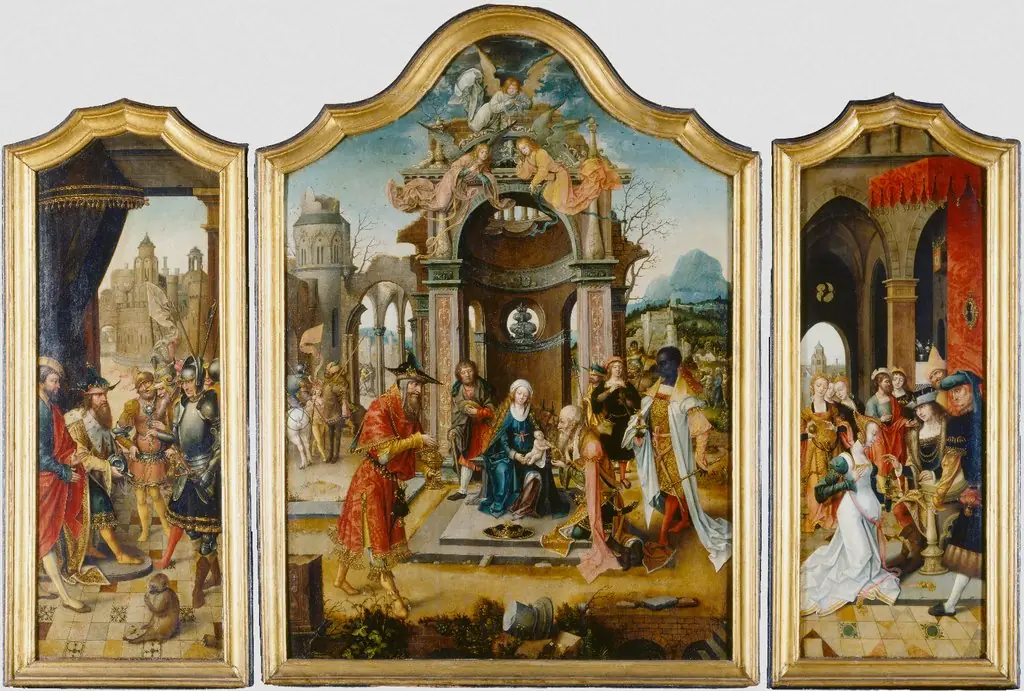
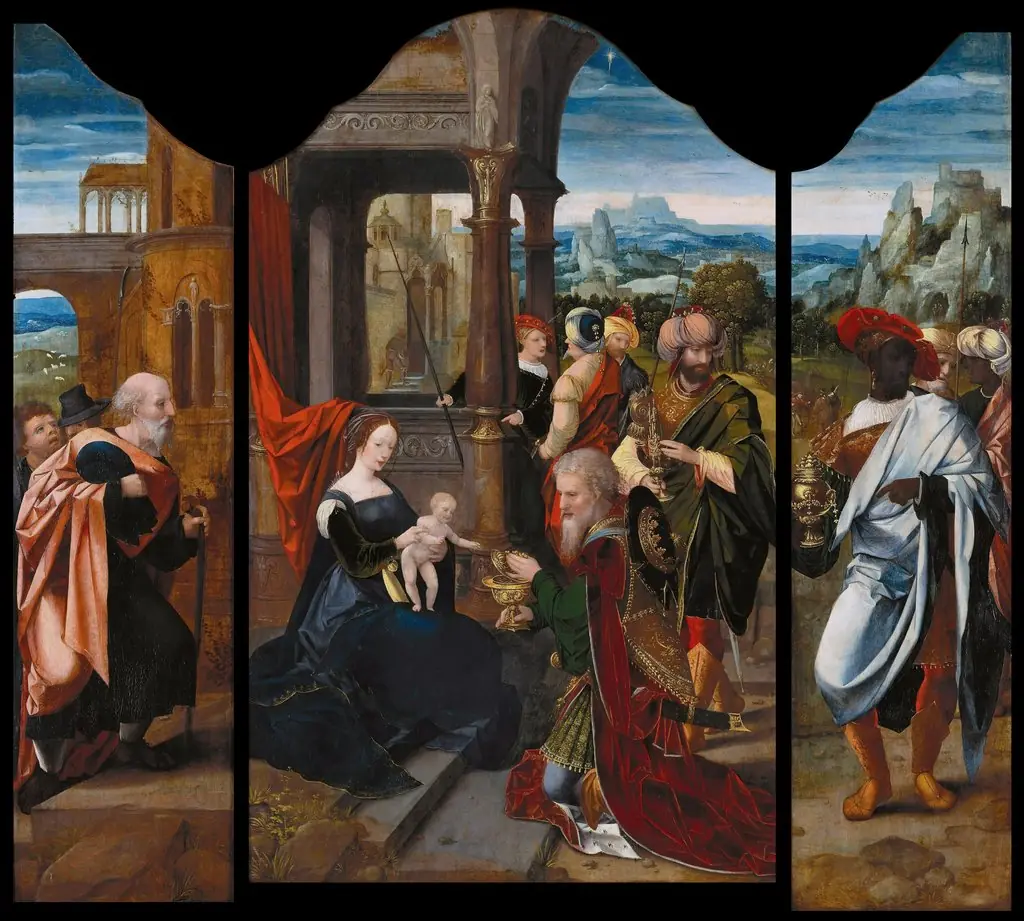
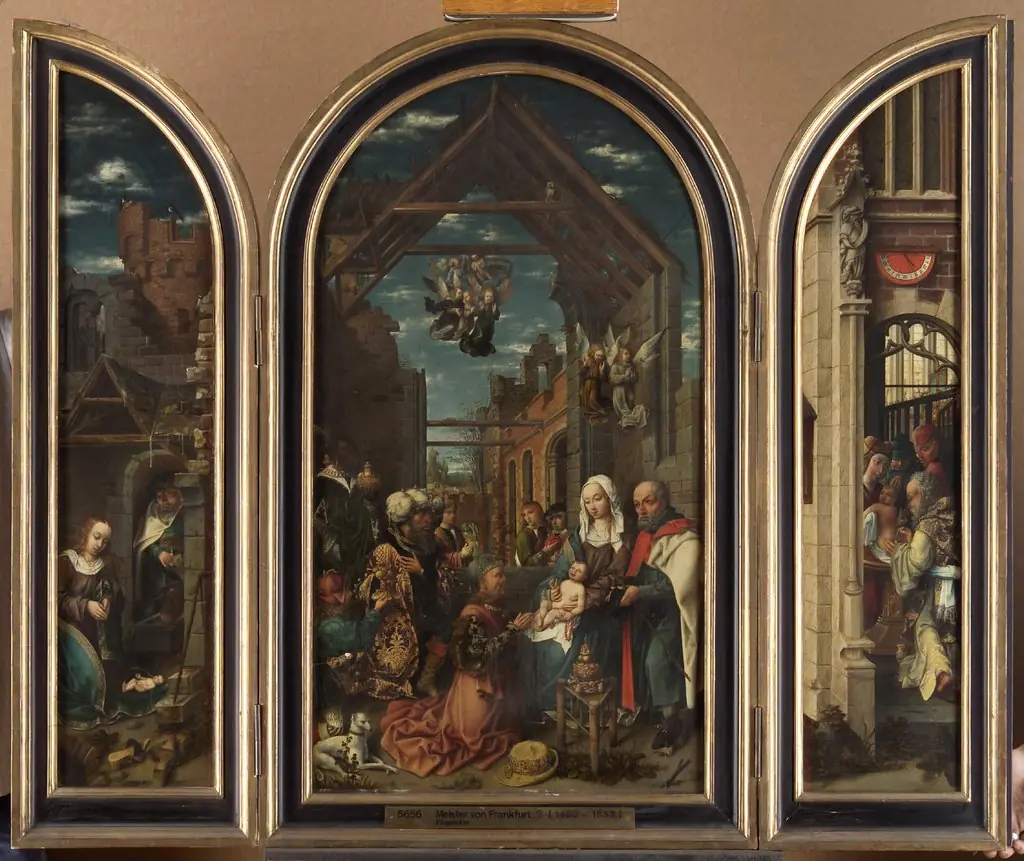
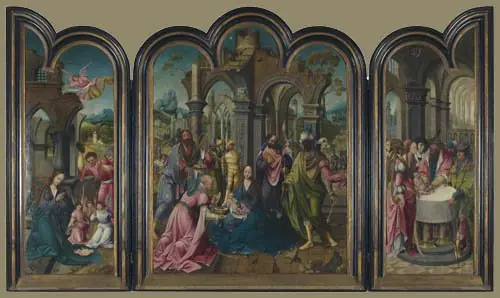
Across the three panels, the composition forms a continuous idealised manger scene. King Balthazar stands in the left panel, while King Caspar stands behind the kneeling King Melchior in the central panel, presenting their offerings to the Christ Child. Saint Joseph, holding a cane and hat, appears in the right panel.
The work reflects the iconographic conventions of fifteenth-century Flemish models while incorporating the influence of Italian Renaissance painting, transmitted through Bernard van Orley and Coecke van Aelst's presumed exposure to Italy. The integration of the wings into a unified central composition represents an innovation that brought symmetry and breadth to the traditional Adoration format.
Technique & Style
Executed in oil on wooden panel as a triptych, the work measures 75 cm in height and 50 cm in width and dates to 1550. The paint is applied in thin layers typical of mid-sixteenth-century workshop practice, with the outer wings depicting the three Magi in separate panels while the central panel shows the Nativity. Compositional symmetry and a broad spatial arrangement reflect an adaptation of Italian Renaissance conventions.
The integration of the wings into the central scene creates a unified narrative, an innovation noted in contemporary analyses.
History & Provenance
Attributed to the workshop of Pieter Coecke van Aelst, this oil-on-panel triptych depicting the Adoration of the Magi was created circa 1550. The composition reflects influences from Italian Renaissance painting, which Coecke van Aelst encountered during his training under Bernard van Orley and a presumed stay in Italy.
The work entered the modern historical record within the collection of Cornelis Hoogendijk in The Hague. Hoogendijk placed the painting on loan to the Rijksmuseum in Amsterdam in 1907. Following his death, his heirs formally donated the triptych to the museum's permanent collection in 1912, where it remains housed.
Context
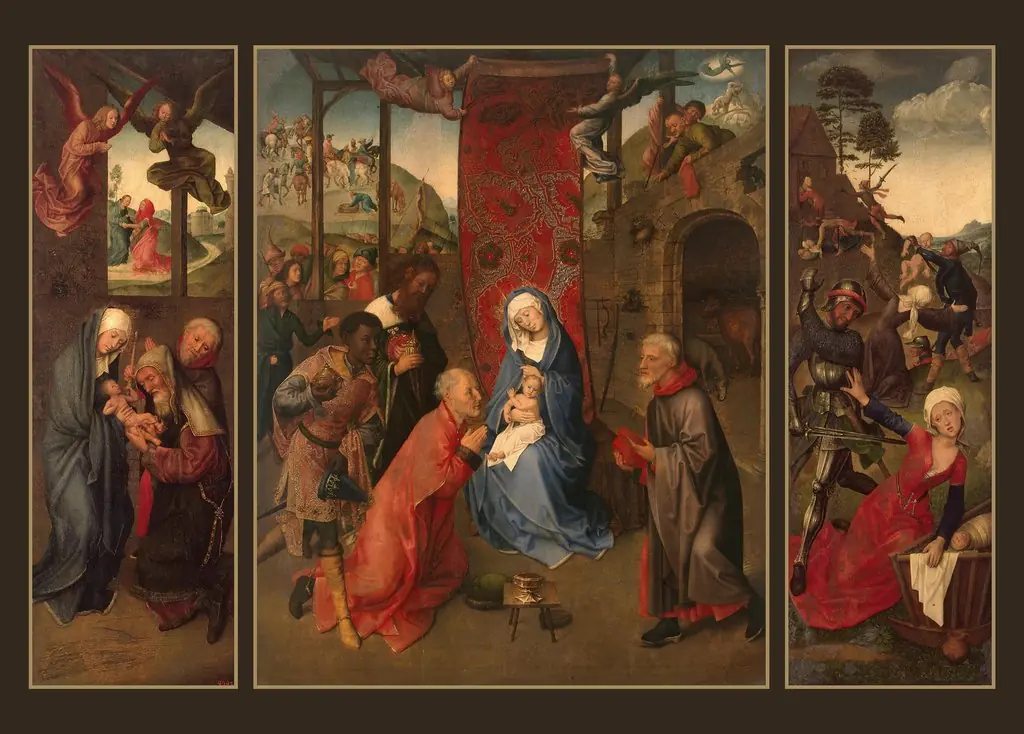
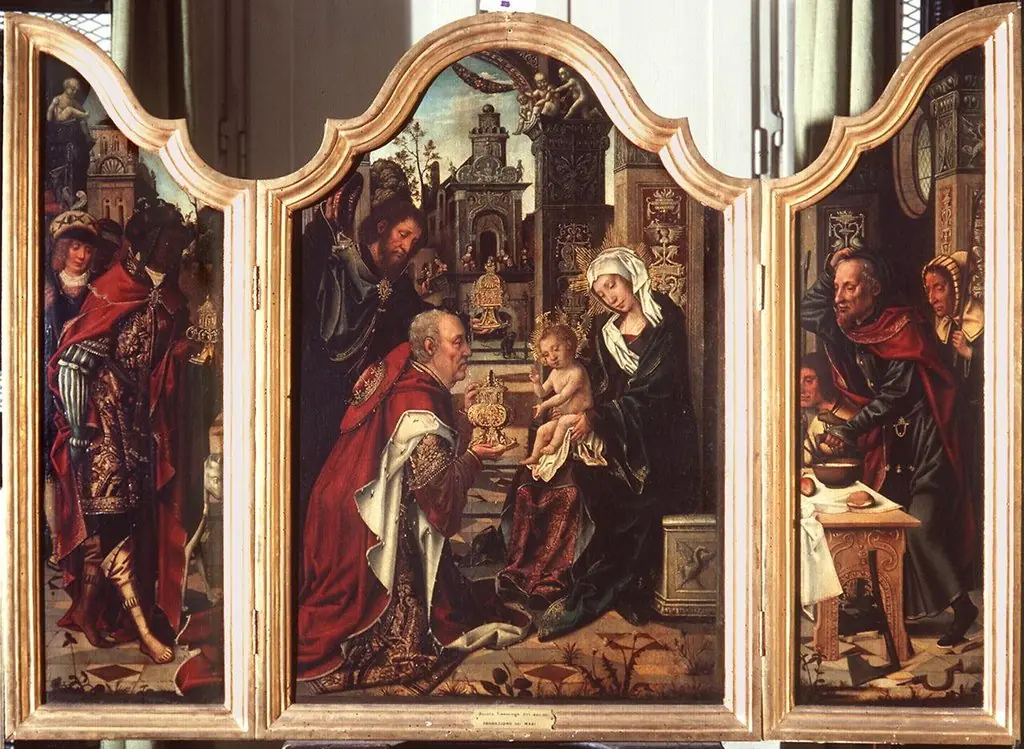
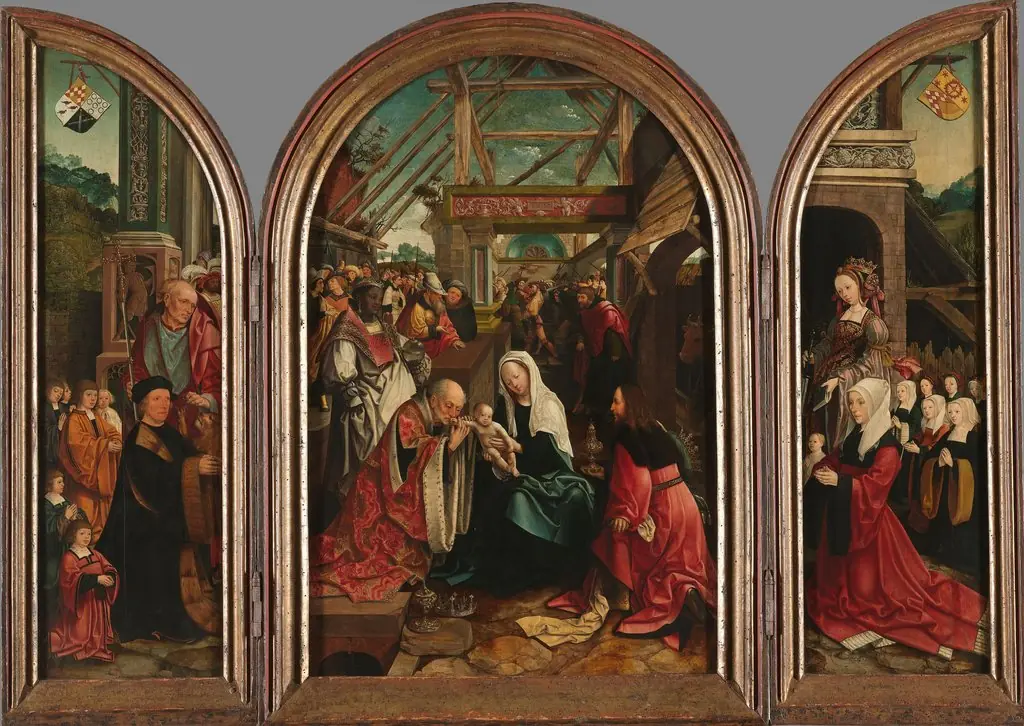
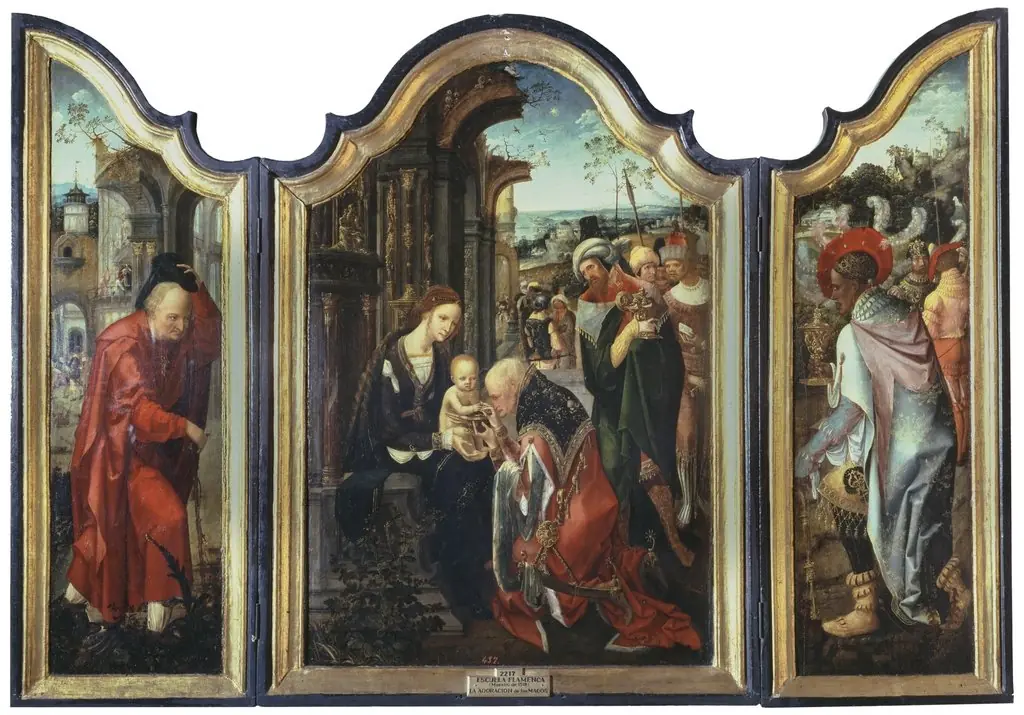
Attributed to the workshop of Pieter Coecke van Aelst, this c. 1550 triptych exemplifies the integration of Italian Renaissance influences into Flemish religious art, a synthesis Coecke developed under Bernard van Orley and during his time in Italy. While the composition relies on fifteenth-century models, its specific arrangement, merging the wings into a continuous central scene with symmetry and breadth, represented an innovation widely adopted by subsequent generations. This approach distinguishes the work from earlier iterations, such as the autograph version in the Museo del Prado, by repositioning figures like Joseph and the Magi to create a unified spatial narrative.
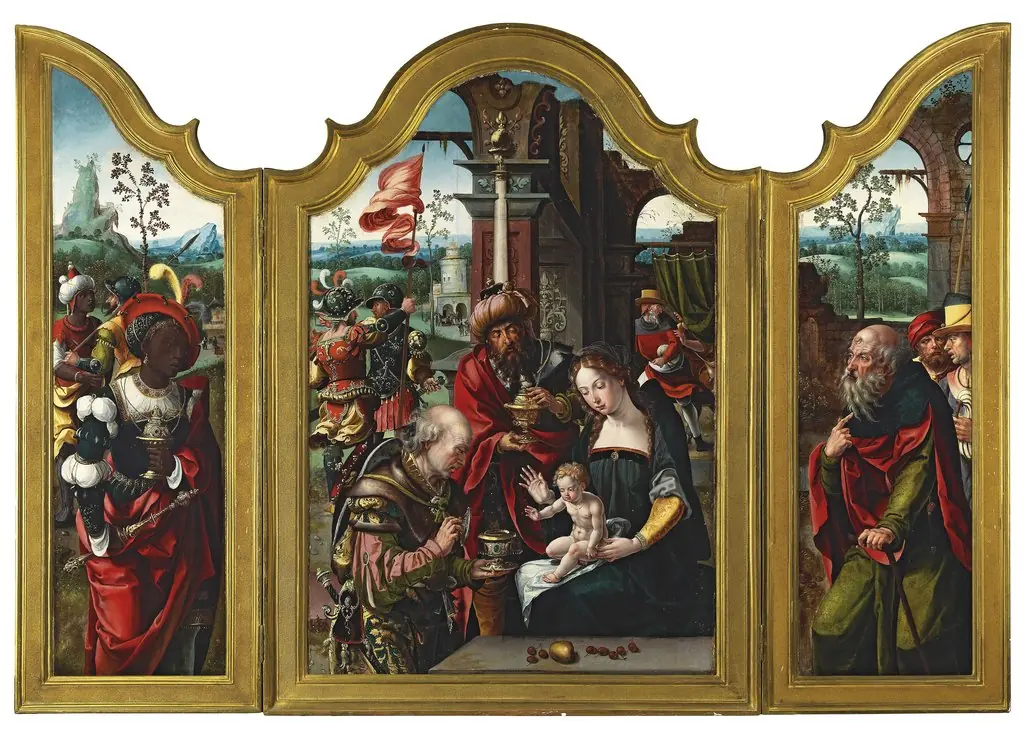
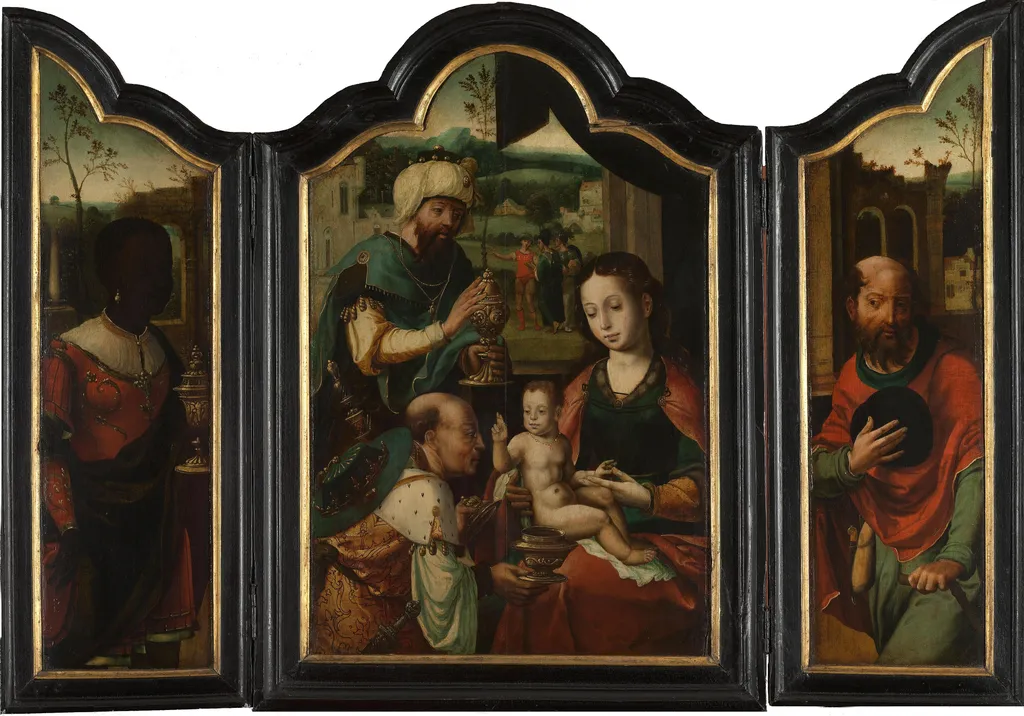
The painting stands within a broader context of similar treatments produced by Coecke's circle and contemporaries like Joos van Cleve and the Master of the Antwerp Adoration, reflecting the period's evolving visual strategies for depicting the Adoration of the Magi.
Overview
This oil on panel triptych, titled Triptych with Adoration of the Magi, dates to approximately 1530. It was produced by the workshop of the Flemish artist Pieter Coecke van Aelst and depicts the Nativity scene, specifically the Adoration of the Magi. The multi-panel artwork is currently housed in the collection of the Rijksmuseum in Amsterdam.
Artist & collection