Artwork
The Adoration of the Magi
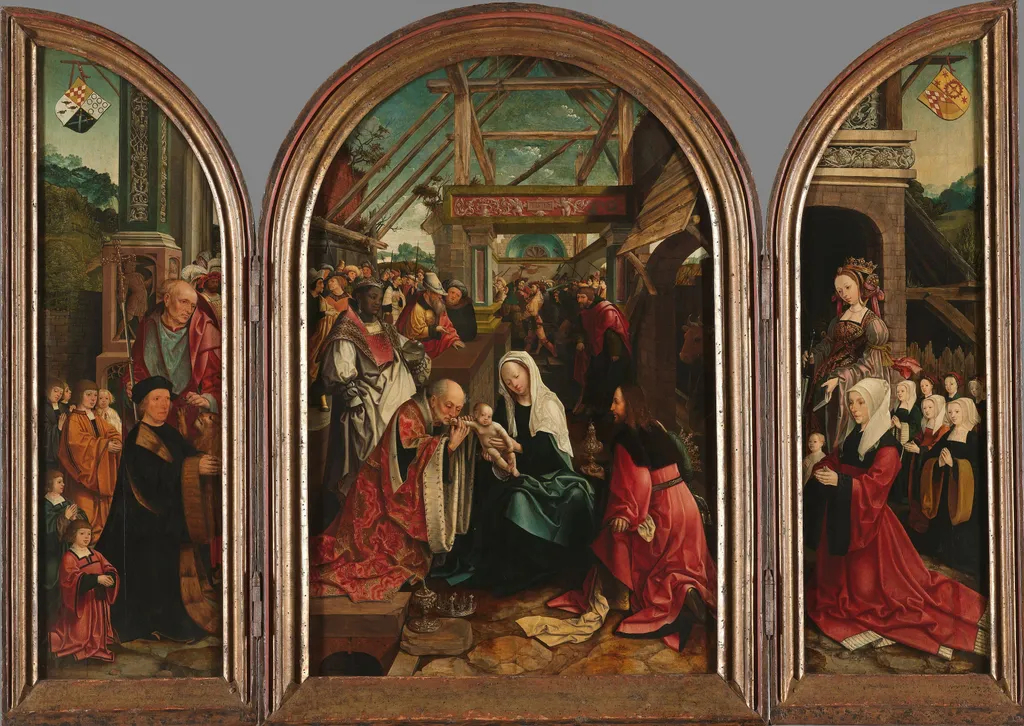
The Adoration of the Magi is an oil painting by the Northern Renaissance artist Jacob Cornelisz. van Oostsanen. It dates from 1517 and is held in the collection of the Rijksmuseum.
About this work
The painting is called The Adoration of the Magi. It was made by Jacob Cornelisz. van Oostsanen in 1517. The artist used oil paint to create this work, which is now held at the Rijksmuseum, and it's a triptych, meaning it has three panels, which was a common format for paintings at that time.
You can learn more about this type of painting by looking up the subject: adoration of the Magi.
Subject & Meaning
Behind them, lines of armed attendants form their entourages, conversing among themselves and seemingly unaware of the sacred encounter at the center.
The painting depicts the Adoration of the Magi, the biblical scene in which the Three Kings pay homage to the infant Christ. In the central panel, the Virgin Mary presents the Christ Child to King Melchior, who kneels to kiss the child's hand; his crown removed and his gift of gold set aside. King Caspar stands to the right with frankincense, while King Balthazar to the left holds myrrh.
Behind them, lines of armed attendants form their entourages, conversing among themselves and seemingly unaware of the sacred encounter at the center.
The triptych format incorporates donor portraits on the wings: the male donor with his six sons and patron Saint Jerome on the left, and his wife with Saint Catherine of Alexandria and seven daughters on the right. Some children appear in white shrouds, indicating they had died before the work's completion. The outer wings, painted in grisaille, feature Saint Christopher and Saint Anthony Abbot. This structure integrates personal devotion with the universal narrative of Christ's revelation to the Gentiles.
Technique & Style
Executed in 1517, this work is an oil painting on panel arranged as a triptych. The central composition features the Virgin Mary and Christ Child situated before a ruined gateway explicitly dated to the year of creation. The artist employs a narrative style where the entourages of the Three Kings appear engaged in conversation, seemingly oblivious to the sacred adoration occurring in the foreground.
The outer wings are rendered in grisaille, depicting Saint Christopher and Saint Anthony Abbot, while the inner wings display donors alongside their patron saints and family coats of arms. White shrouds worn by specific children on the wings indicate they died before the artwork was completed. Although the three panels currently appear stylistically disjointed, suggesting they may have been executed at different times, they remain accompanied by their original wings.
History & Provenance
Created in Amsterdam in 1517, this triptych by Jacob Cornelisz. van Oostsanen features a central panel with a ruined gateway dated within the depiction. The work was attributed to various artists, including Jan Gossaert, Hans Memling, and Lucas van Leyden, in the nineteenth century, until Max Jakob Friedländer assigned it to Oostsanen in 1935 on the basis of its underdrawings. The earliest documented ownership traces to a Franciscan convent near Messiera in 1792.
King William II of the Netherlands acquired the piece before 1823, after which it passed through the collections of Prince Frederik and Princess Marie of the Netherlands. Later owners included Lambertus Johannes Nieuwenhuys and J. William Middendorf II. In 1978, the Rijksmuseum purchased the painting from Middendorf for 1,145,833 guilders, with support from the Prins Bernhard Fonds and the Vereniging Rembrandt.
It remains in the Rijksmuseum’s collection in Amsterdam under inventory number SK-A-1565, displayed as a key example of Early Netherlandish religious art with its original triptych wings.
Context
The Adoration of the Magi by Jacob Cornelisz. van Oostsanen has undergone significant shifts in attribution and interpretation within art-historical scholarship. Long misattributed to Jan Gossaert, Hans Memling, and Lucas van Leyden, the work’s correct identification as by Oostsanen was established only in the 20th century through technical examination of underdrawings and stylistic comparison to his documented oeuvre.
Its place in the artist’s career reflects the Northern European tradition of devotional triptychs, integrating donor portraits and grisaille saints within a biblical narrative. The triptych’s wings, originally paired with the central panel, were later noted as compositionally inconsistent, suggesting possible independent execution or later integration. The painting’s documented provenance begins in a Franciscan convent near Messiera in 1792, entering Dutch royal collections before passing through private hands to the Rijksmuseum in 1978 with substantial support from cultural funds.
Legacy
The Adoration of the Magi exerted influence through its role in shaping donor portraiture in Dutch religious triptychs, particularly in its treatment of donor figures alongside saints and documented patronage patterns. Its legacy includes scholarly reattribution to Jacob Cornelisz. van Oostsanen in 1935 by Max Jakob Friedländer, establishing its place within Early Netherlandish painting traditions. The work's documented provenance reflects a complex ownership history involving the Dutch royal family and major collections, culminating in its acquisition by the Rijksmuseum in 1978.
Later scholarship cemented its recognition as a significant example of 16th-century Amsterdam workshop practice, noted for its grisaille wing panels and narrative complexity involving the Magi's entourages and donor families.
Overview
The Adoration of the Magi is a 1517 oil-on-panel triptych by the Early Netherlandish painter Jacob Cornelisz. van Oostsanen, currently held in the collection of the Rijksmuseum in Amsterdam. The work depicts the biblical episode of the Three Kings presenting gifts to the infant Jesus, a subject central to Northern Renaissance religious art. Executed in the artist's mature style, the composition features the characteristic intricate detail and vibrant color palette associated with van Oostsanen's workshop in Amsterdam during the early sixteenth century.
The central panel focuses on the adoration scene, while the wings likely contain attendant figures or related narratives, adhering to the traditional altarpiece format of the period. Created at the height of the artist's career, this piece exemplifies the transition from late Gothic sensibilities to the emerging Renaissance influences in the Low Countries. It stands as a significant example of van Oostsanen's ability to combine complex iconography with the meticulous surface detail favored by his patrons.
The painting remains a key work for understanding the development of religious imagery in early 16th-century Dutch art.
Own this work as a print
Artist & collection

Artist
Jacob Cornelisz. van Oostsanen
Jacob Cornelisz van Oostsanen (before 1470 – 1533) was a Northern Netherlandish designer of woodcuts and painter.

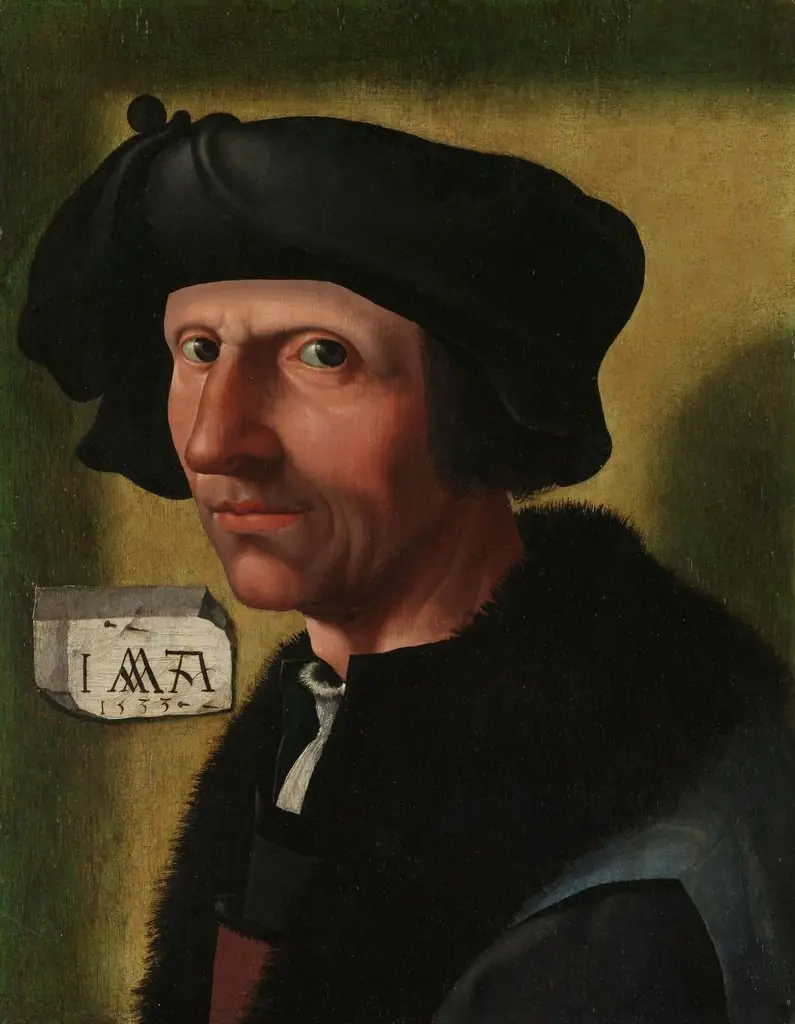
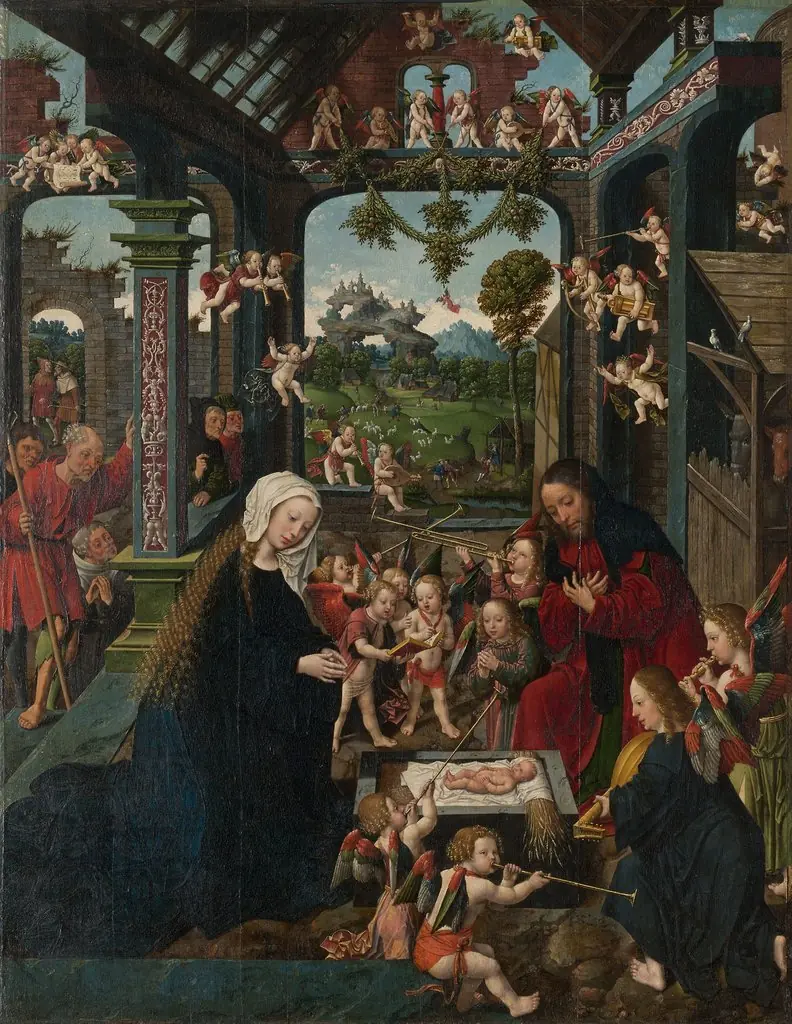
- The Adoration of the Magi
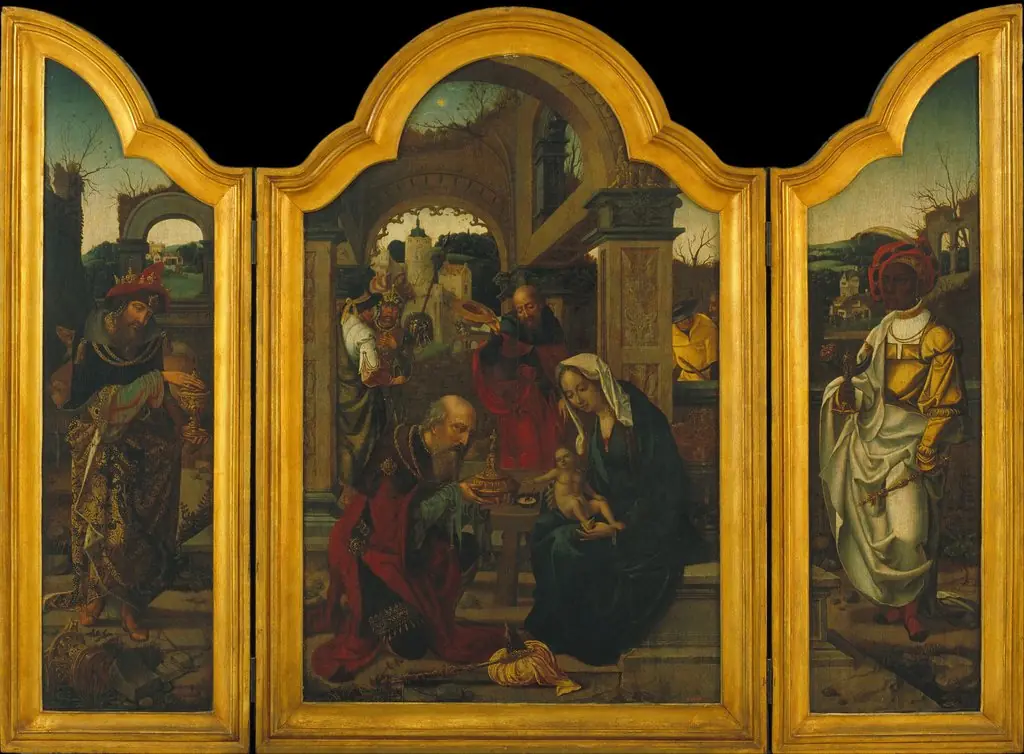 Triptych with the Epiphany
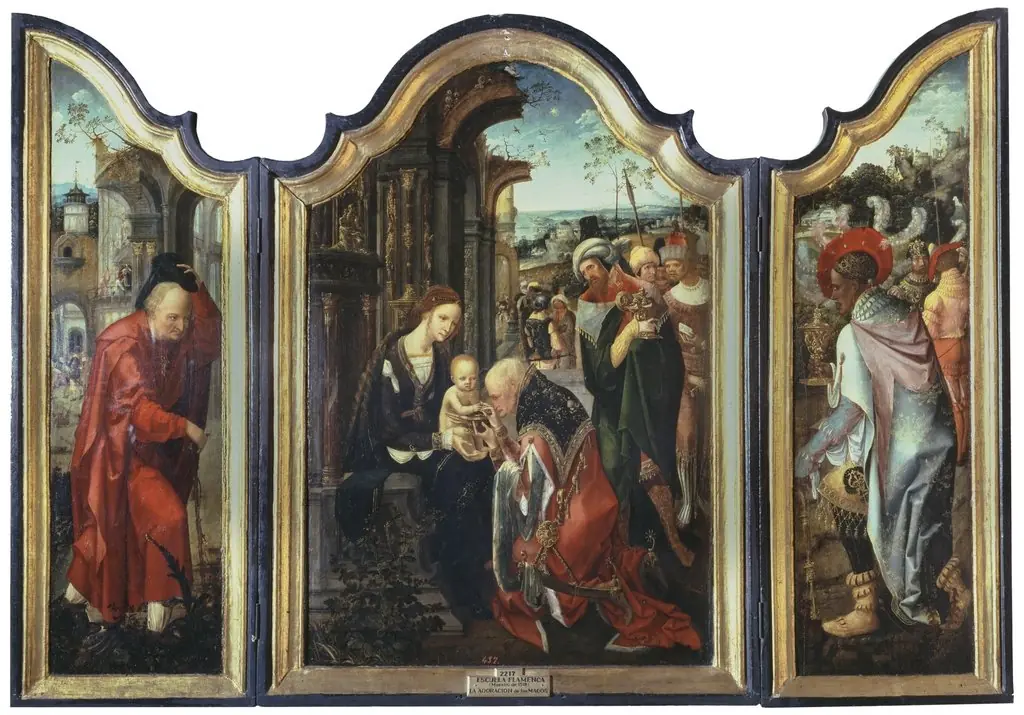 Adoration of the Magi
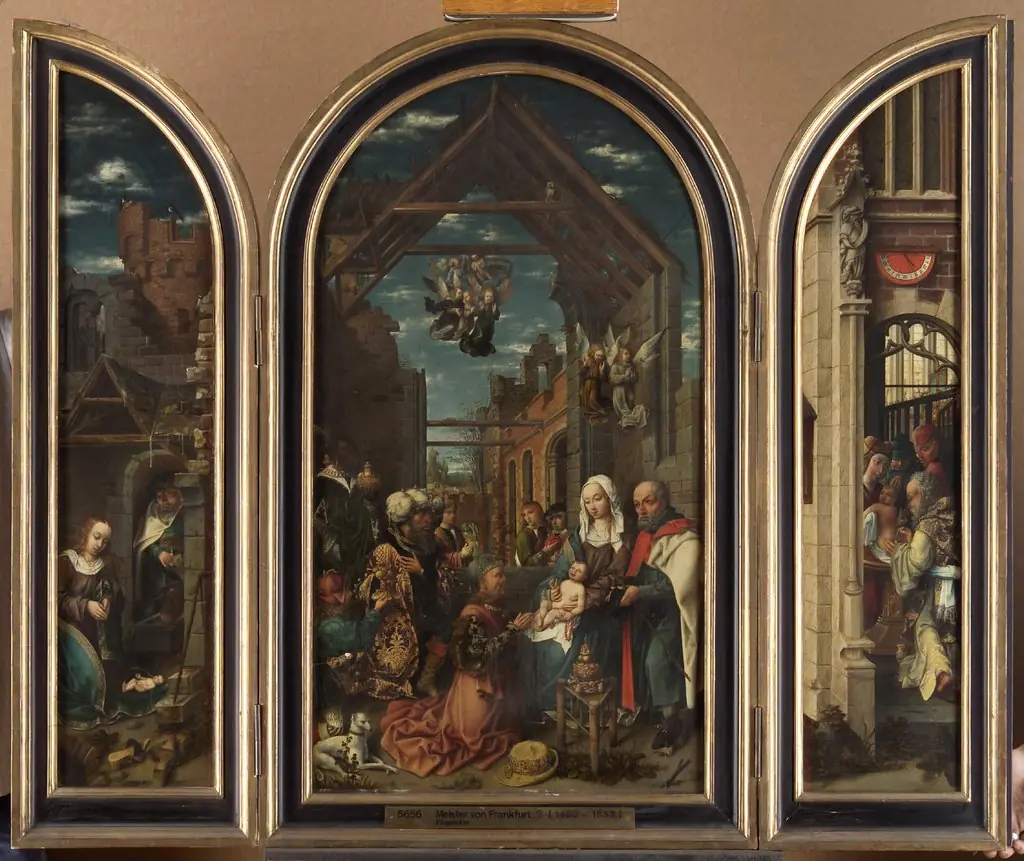 Triptych of the adoration of the magi
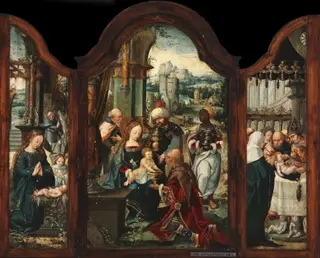 Triptych. Central panel: The Adoration of the Magi; left wing: The Nativity; right wing: The Circumcision
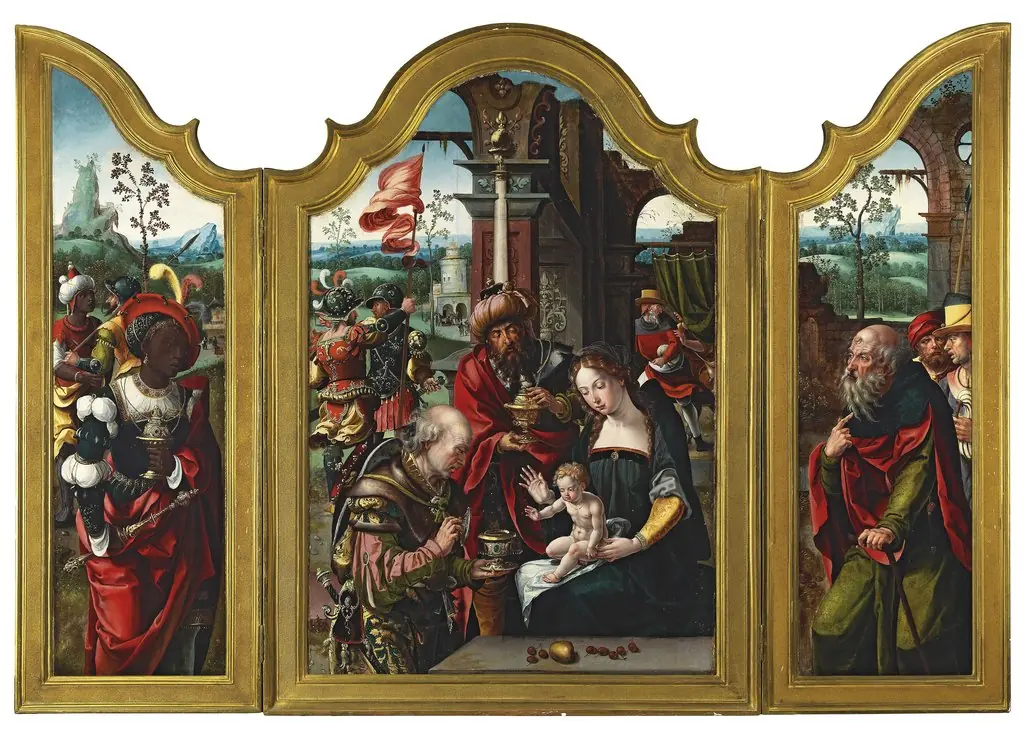 Adoration of the Magi
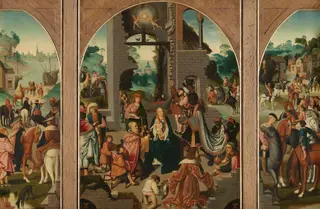 Triptych with Adoration of the Magi (center and inner wings), Saint Antony Abbot (left, outer wing) and Saint Adrian (right, outer wing)
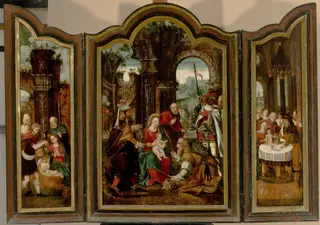 Triptych: Adoration of the Magi, Adoration of the Shepherds, Circumcision
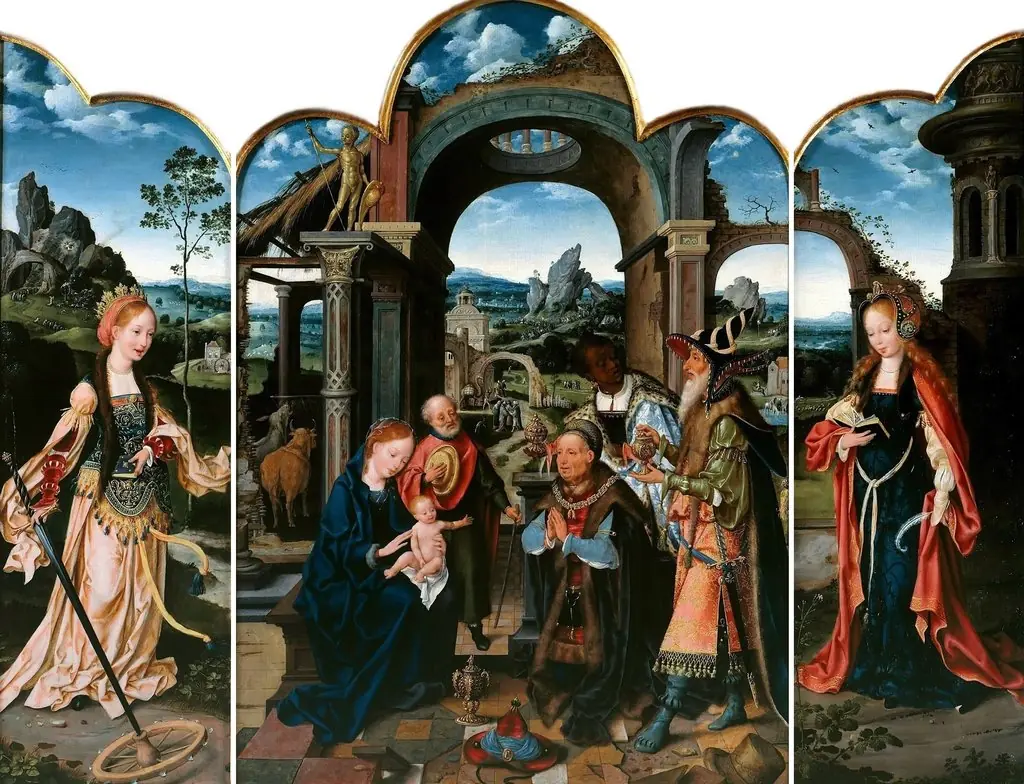 Adoration of the Magi with Sigismund I of Poland.
![Altarpiece showing scenes from the Infancy of Christ: The Adoration of the Magi [center]; The Annunciation; The Presentation of Christ in the Temple; The Flight into Egypt; The Nativity [clockwise from upper left], by Master of Hoogstraeten](https://artifactworldgallery.com/img/master-of-hoogstraeten--altarpiece-showing-scenes-from-the-infancy-of-christ-the-ado--6a236bfea3373486-w320.webp) Altarpiece showing scenes from the Infancy of Christ: The Adoration of the Magi [center]; The Annunciation; The Presentation of Christ in the Temple; The Flight into Egypt; The Nativity [clockwise from upper left]
Altarpiece showing scenes from the Infancy of Christ: The Adoration of the Magi [center]; The Annunciation; The Presentation of Christ in the Temple; The Flight into Egypt; The Nativity [clockwise from upper left]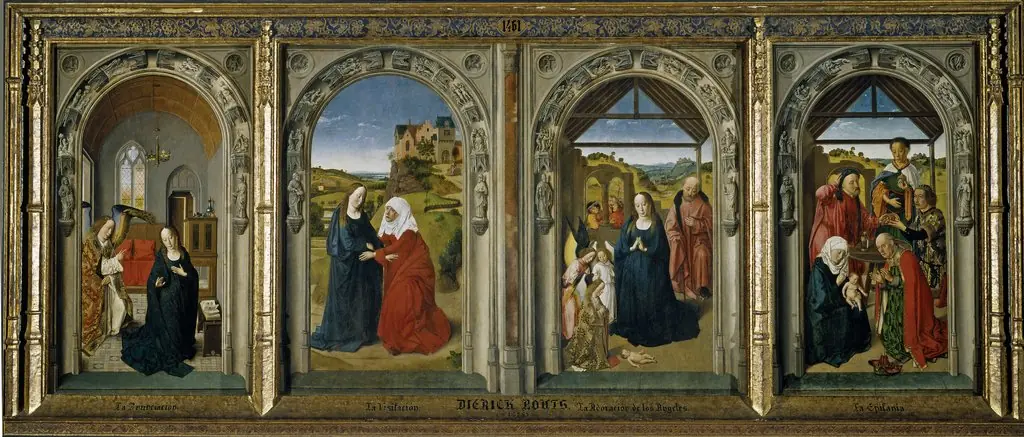 Triptych with Scenes from the Life of the Virgin
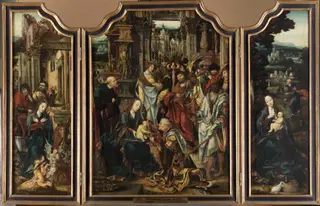 Flügelaltar; Mittelbild: Anbetung der Könige; linker Flügel: Anbetung der Hirten; rechter Flügel: Ruhe auf der Flucht nach Ägypten