Artwork
Adoration of the Magi
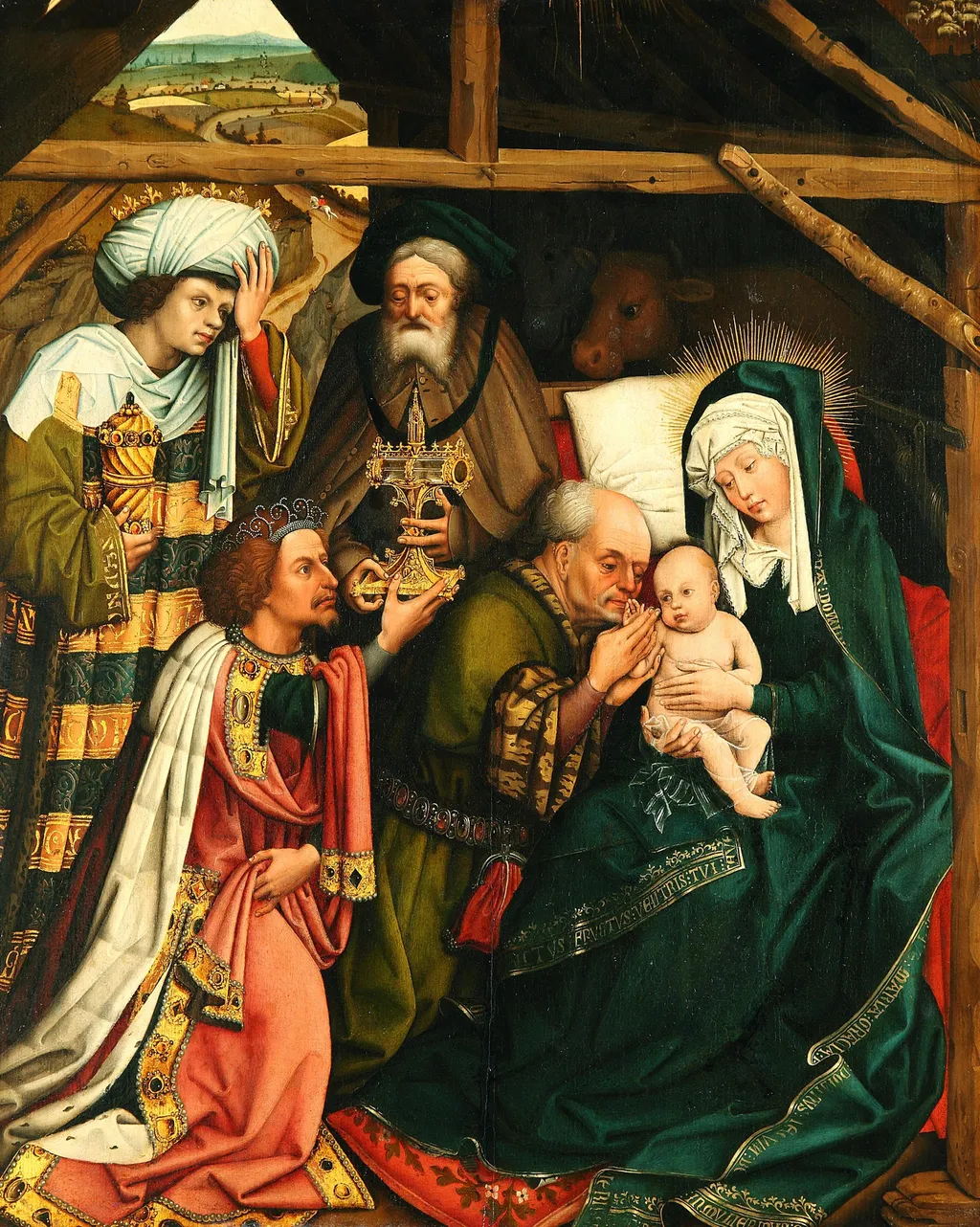
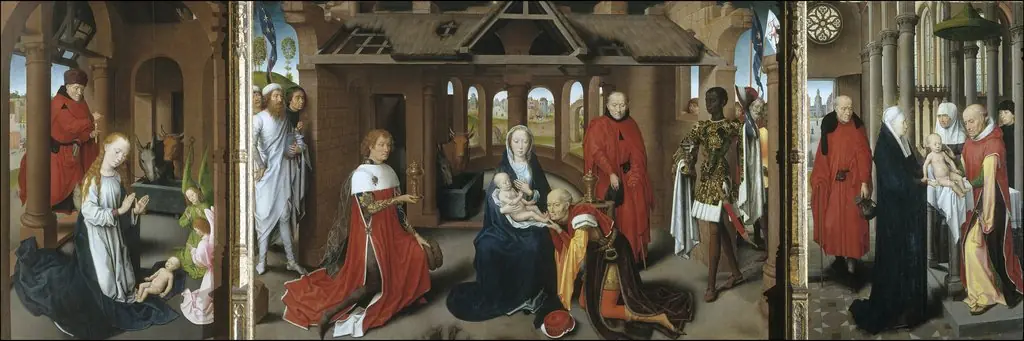
Adoration of the Magi is a paint painting. It dates from 1498 and is held in the collection of the Gemäldegalerie Berlin. The work depicts a small gathering around an infant, who rests on a woman's lap.
About this work
Subject & Meaning
The composition centers on the seated Madonna and Child, surrounded by the kneeling Magi in rich garments, emphasizing reverence and homage.
The painting depicts the biblical episode of the Adoration of the Magi, showing the Christ Child with the Virgin Mary receiving the three Magi, Melchior, Caspar, and Balthazar, who present gifts of gold, frankincense, and myrrh. The composition centers on the seated Madonna and Child, surrounded by the kneeling Magi in rich garments, emphasizing reverence and homage. The panel's small dimensions and intimate scale suggest a devotional image intended for private contemplation rather than public display.
The presence of the Magi underscores themes of gentile recognition of Christ's divinity and the fulfillment of prophecy, while their varied ages and attire often symbolize the three stages of life and the universality of salvation. The Christ Child's blessing gesture and Mary's maternal role reinforce the central Christian tenets of incarnation and redemption.
History & Provenance
The painting titled Adoration of the Magi was created in 1498 by an unknown artist. This religious work on panel depicts the biblical scene of the Magi adoring the Christ Child, featuring the Virgin Mary with Melchior, Caspar, and Balthazar offering gifts. It is currently held in the collection of the Gemäldegalerie in Berlin.
The work measures 49 cm in height and 41 cm in width. No specific patron, commission, or earlier ownership history prior to its entry into the museum is documented in the available sources.
Context
The Adoration of the Magi, painted in 1498, is a religious panel housed in the Gemäldegalerie Berlin, portraying the Christ Child surrounded by the Magi and attendant figures. It belongs to the broader tradition of late 15th-century devotional painting, reflecting contemporary artistic approaches to biblical narrative. Its composition and iconography illustrate the role of religious imagery in the cultural and artistic discourse of the period.
Legacy
As a religious panel from 1498, the Adoration of the Magi belongs to the tradition of late medieval and early Renaissance devotional imagery, in which the Adoration motif was widely depicted. Now held in the Gemäldegalerie Berlin, the work remains accessible for study as an example of the period's treatment of the subject.
Overview
The work depicts a small gathering around an infant, who rests on a woman's lap. The woman wears a green garment and a white head covering, while three richly dressed figures stand nearby. One holds a golden box, another gently kisses the child's hand, and a third watches attentively.
The setting is a modest wooden structure, its backdrop marked by a red cloth. The palette emphasizes deep greens and abundant gold, creating a calm, reverent atmosphere.
Technique & Style
Executed in paint, the composition relies on vivid coloration and a strong contrast between the golden accents and the deep green attire. The figures are rendered with a smooth, almost sculptural quality, and the simple wooden interior is suggested through minimal detailing, allowing the focus to remain on the interaction between the characters and the infant.
Artist & collection

- Adoration of the Magi
 Adoration of the Magi
 Adoration of the Magi
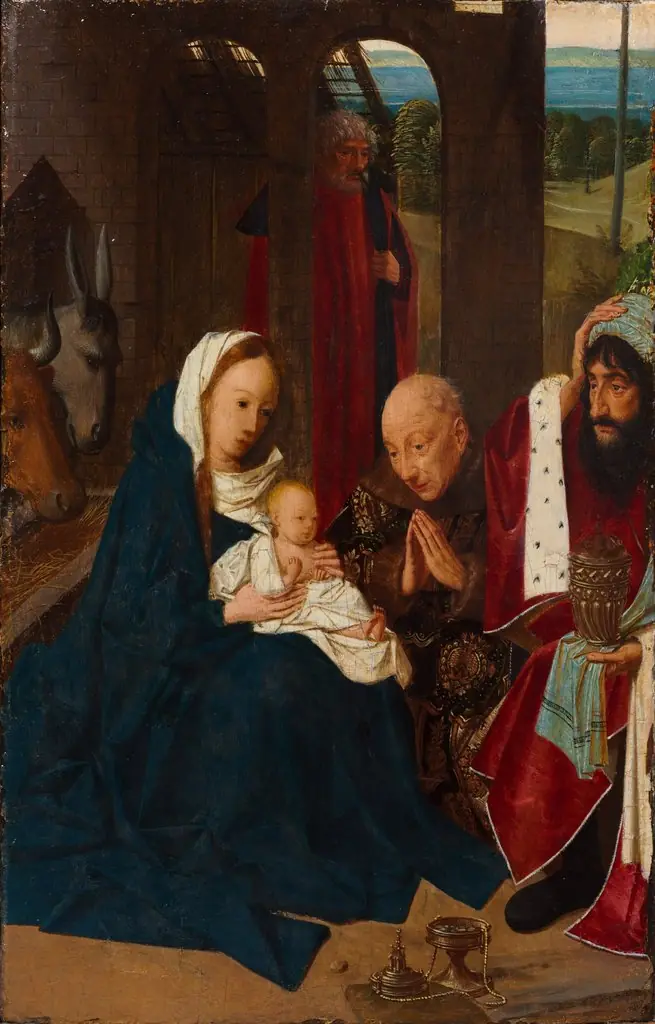 The Adoration of the Magi
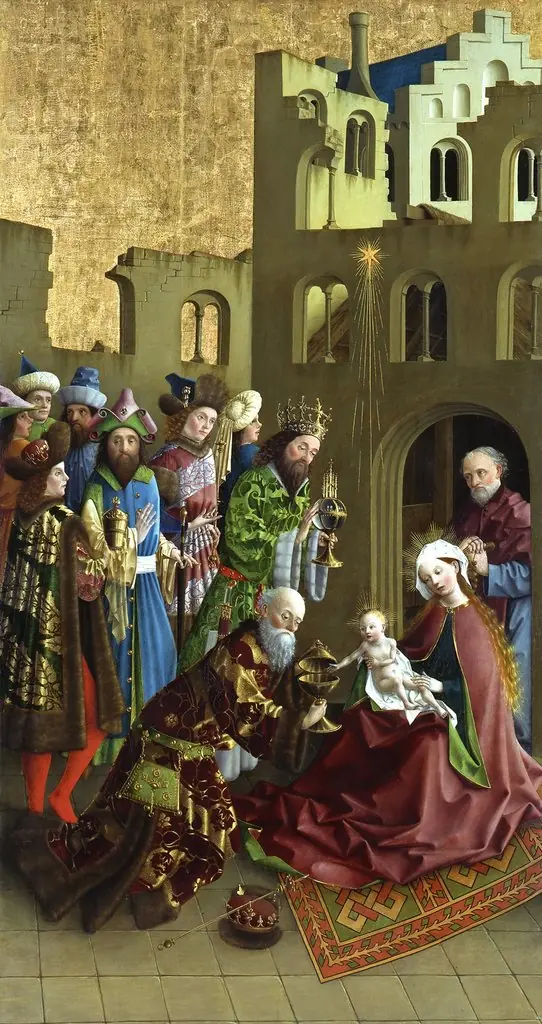 Darmstadt Altarpiece: The Epiphany
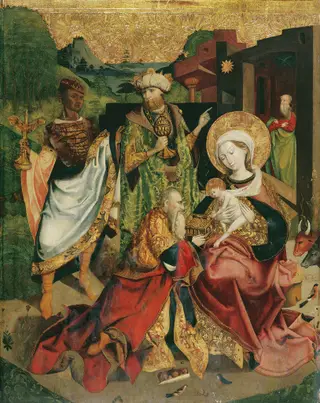 Anbetung der Hl. Drei Könige
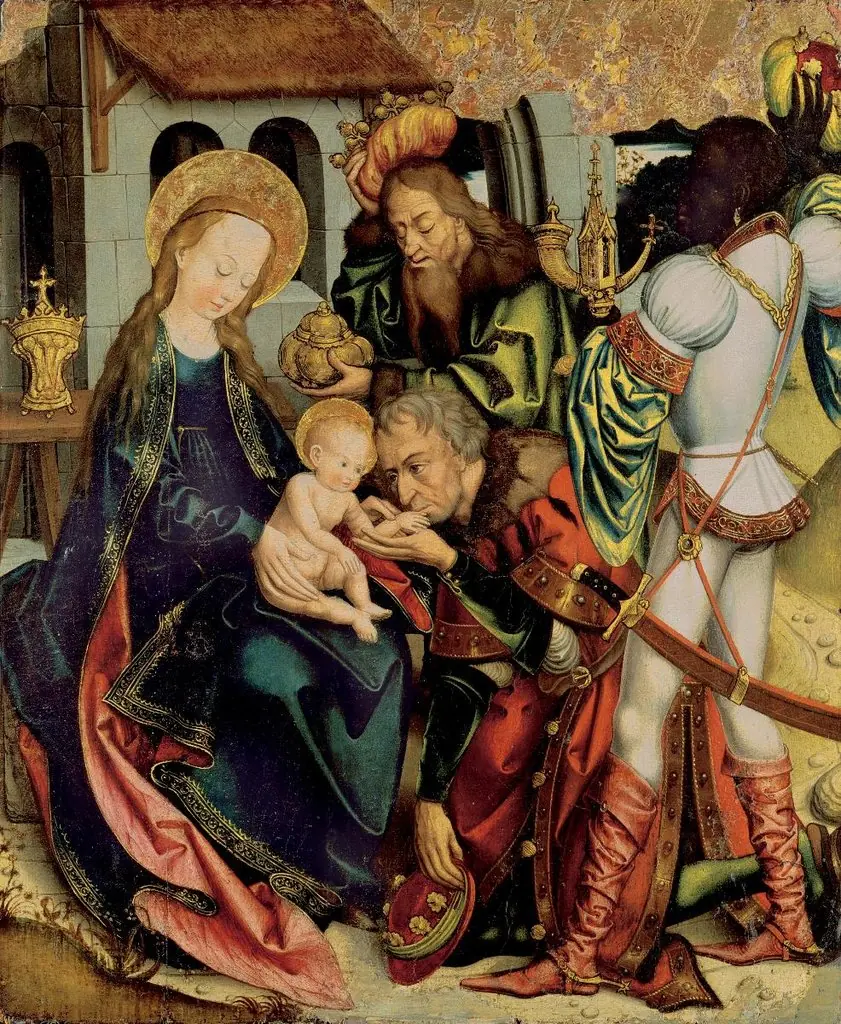 Anbetung der Heiligen Drei Könige
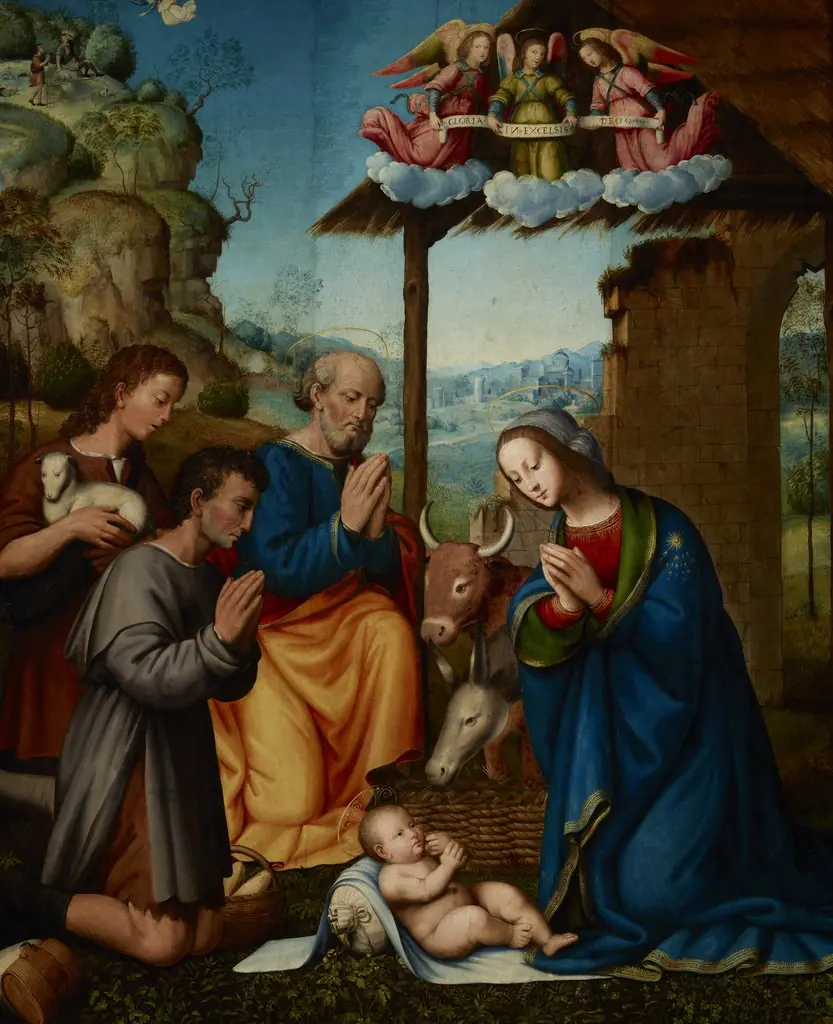 Adoration of the Shepherds (Adoration of the Child by Mary, St Joseph and Shepherds)
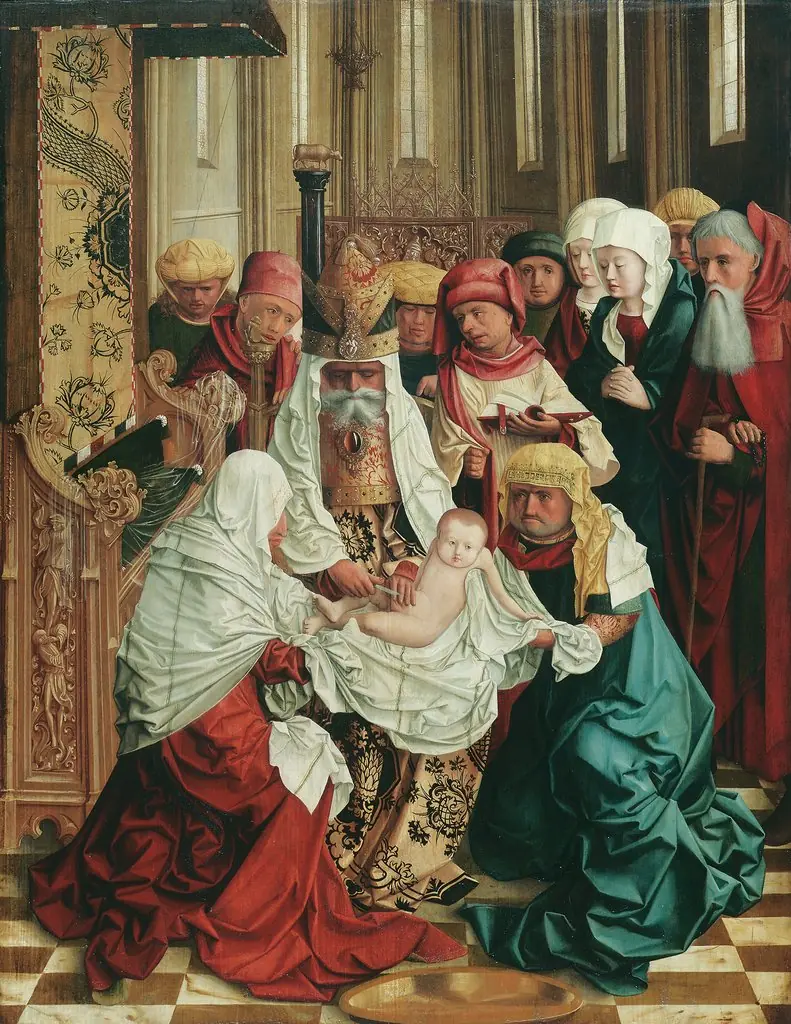 Beschneidung Christi
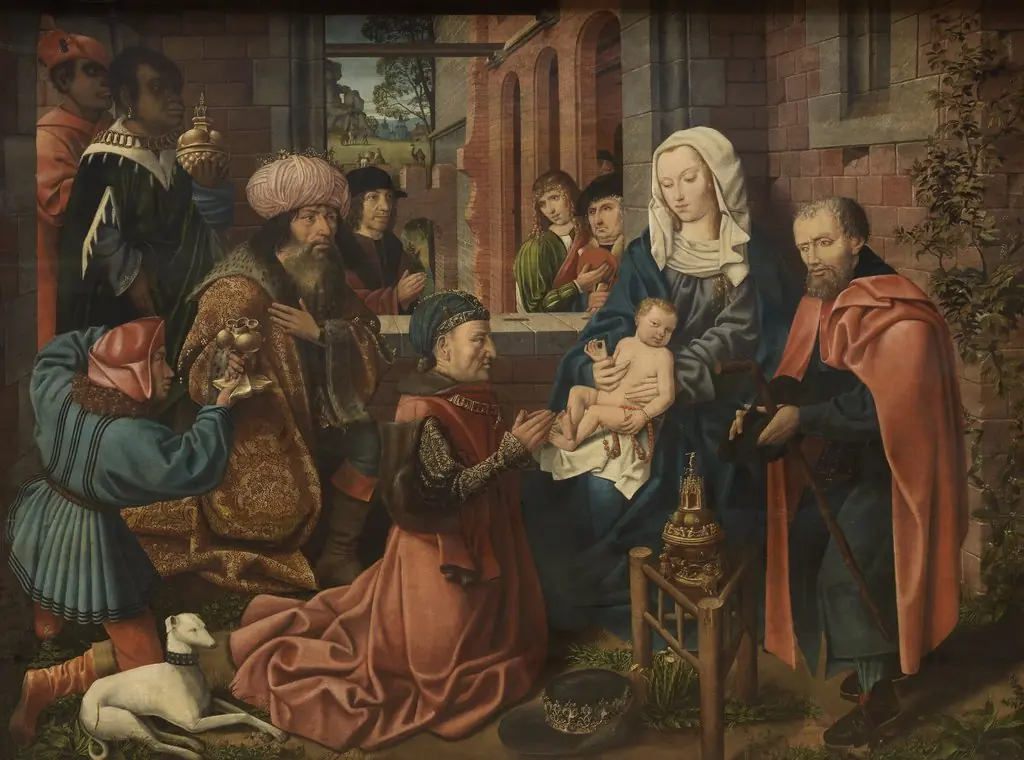 The Adoration of the Magi
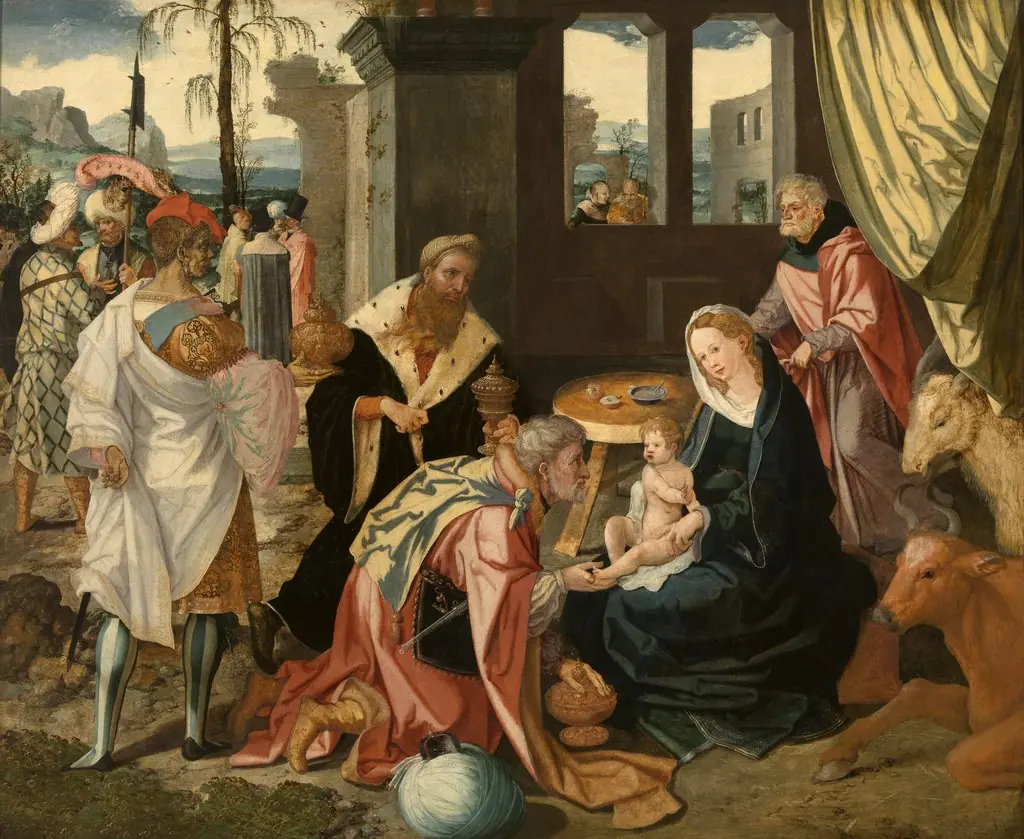 The Adoration of the Magi
 Adoration of the Magi Triptych