Artwork
Beschneidung Christi
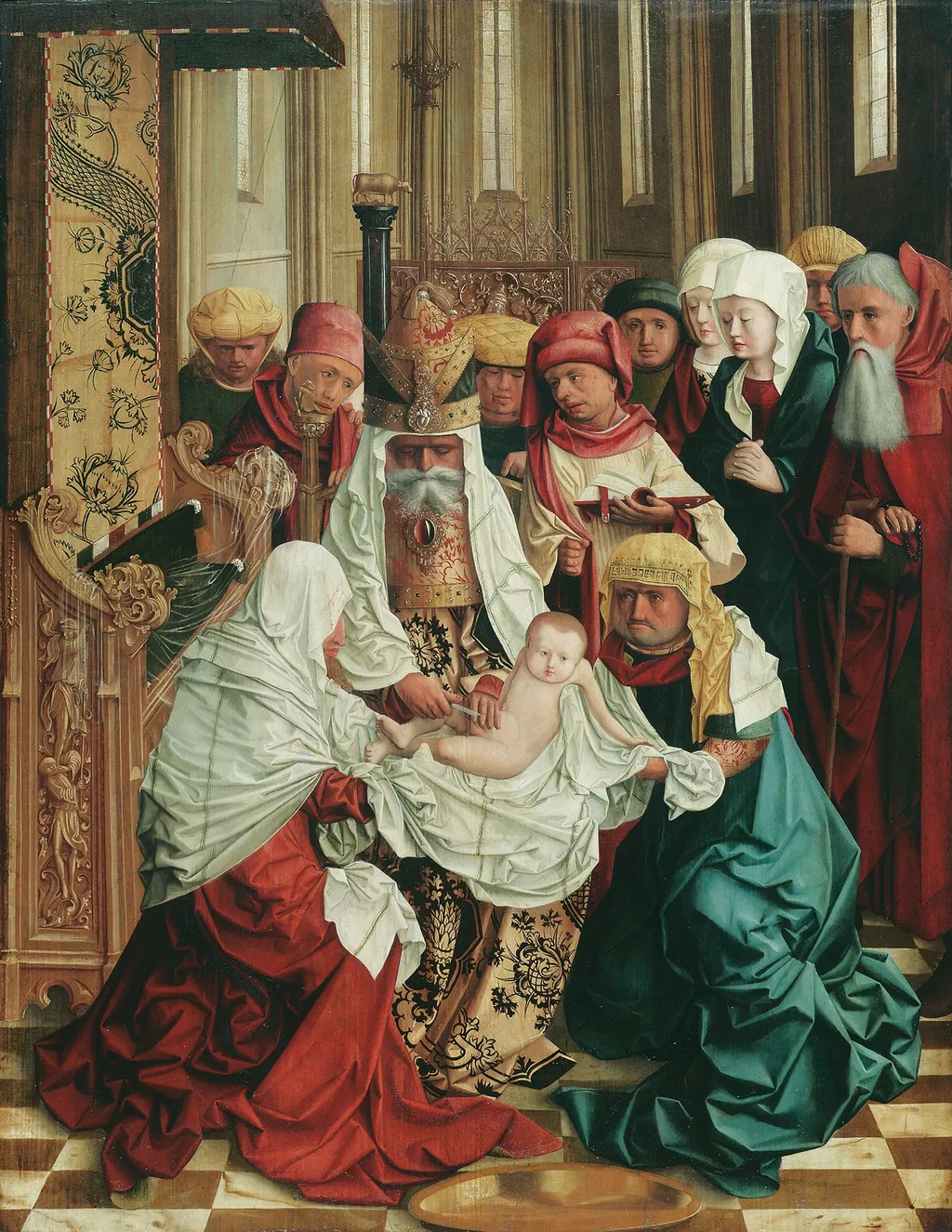
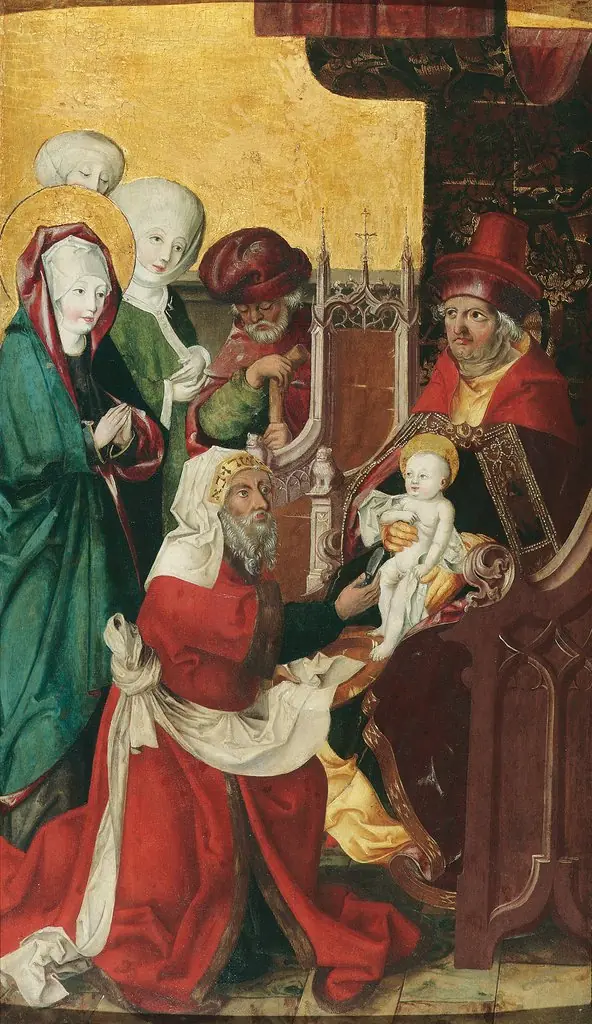
Beschneidung Christi is an unspecified painting by the Northern Renaissance artist Meister von Mondsee. It dates from 1499 and is held in the collection of the Kunsthistorisches Museum.
About this work
Overview
Beschneidung Christi (Circumcision of Christ) is a panel painting by the Austrian late-Gothic painter known as the Meister von Mondsee, dated to 1497.
Beschneidung Christi (Circumcision of Christ) is a panel painting by the Austrian late-Gothic painter known as the Meister von Mondsee, dated to 1497. Executed in oil on fir wood (or possibly spruce/fir, Tannenholz), the work measures 113 by 87.5 centimetres and depicts the circumcision of the infant Jesus in a crowded architectural interior. The painting is held in the collection of the Belvedere in Vienna, where it forms part of the ensemble associated with the so-called Mondseer Altar. As one of the key works by one of the most significant painters of late medieval Austria, it occupies an important place in the study of Austrian panel painting at the turn of the sixteenth century.
Subject & Meaning
The painting depicts the circumcision of Jesus, an event described in the Gospel of Luke that establishes Christ's fulfilment of Jewish law and his first shedding of blood. The composition centres on the Virgin Mary, seated and wearing a white headdress and red dress, who holds the nude infant on a white cloth. Before her, a bearded high priest wearing an ornate golden mitre and richly decorated liturgical vestments extends a small knife toward the child. A kneeling assistant in a golden headdress and blue-green robe holds the cloth. The scene is witnessed by numerous onlookers in varied headgear, including turbans and hoods, some holding a book or prayer beads. The setting incorporates tall Gothic architectural elements, slender columns, and a high canopy, with a decorated tapestry at the left and a small golden calf statue atop a dark column near the centre, the latter possibly alluding to idolatry or serving as a symbolic counterpoint to the Christian narrative. A circular basin near the bottom edge alludes to the ritual purification associated with the ceremony.
Technique & Style
The work is painted on fir wood, a support typical of Austrian and South German panel painting of the period. The surface is smooth with precise detail in fabrics, faces, and architectural elements. Light falls evenly across the scene with soft shadows, creating a clarity that allows the viewer to read the complex narrative. The palette is dominated by deep reds, blues, gold, and white, with particular attention to the rendering of textiles and liturgical garments. The checkered floor pattern creates spatial depth, while the Gothic architectural setting frames the sacred action. The handling combines the detailed observation characteristic of late Gothic painting with a compositional clarity that organises the numerous figures into a coherent narrative space.
History & Provenance
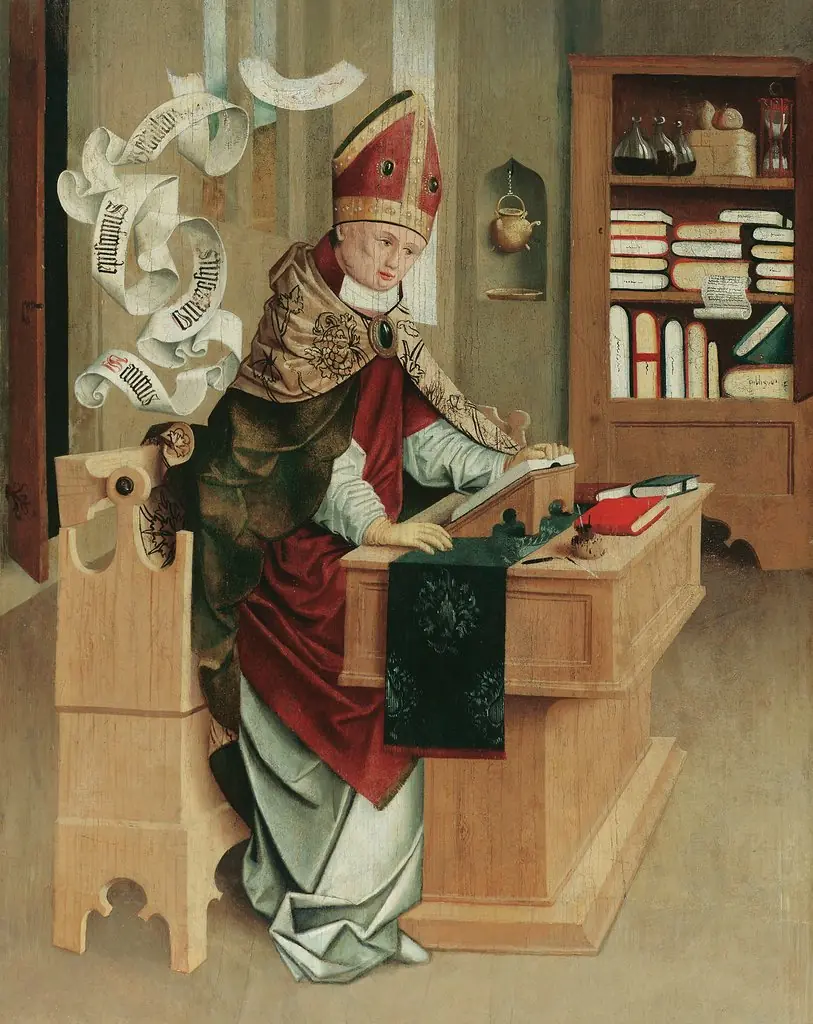
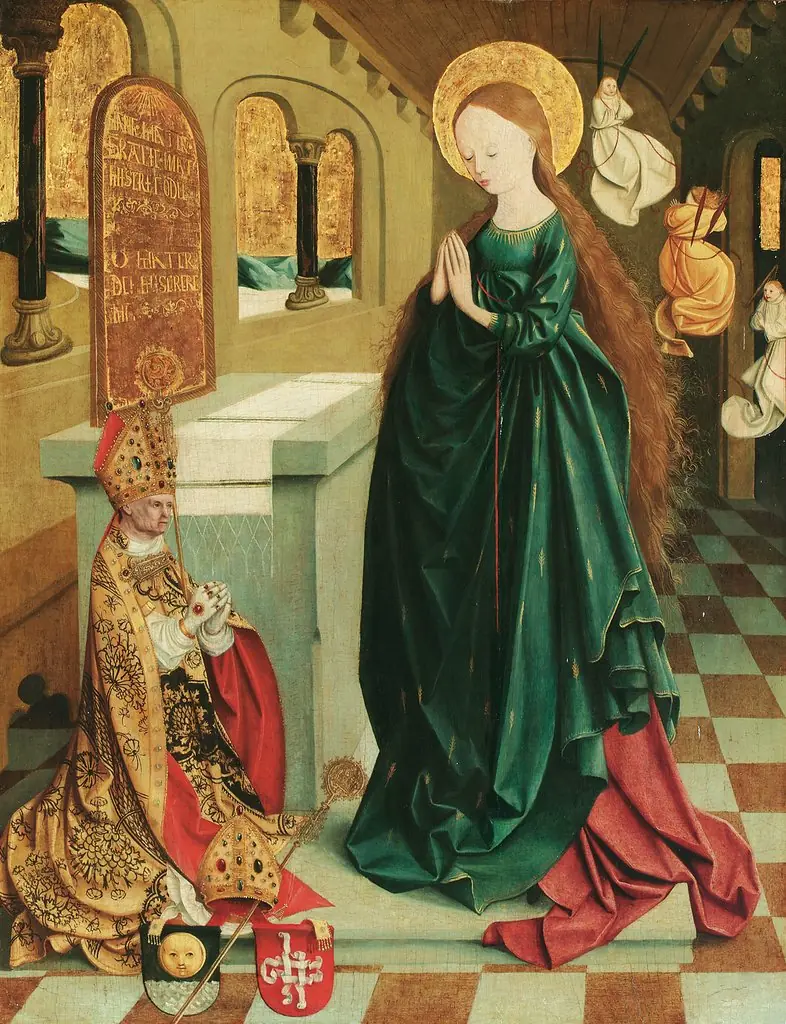
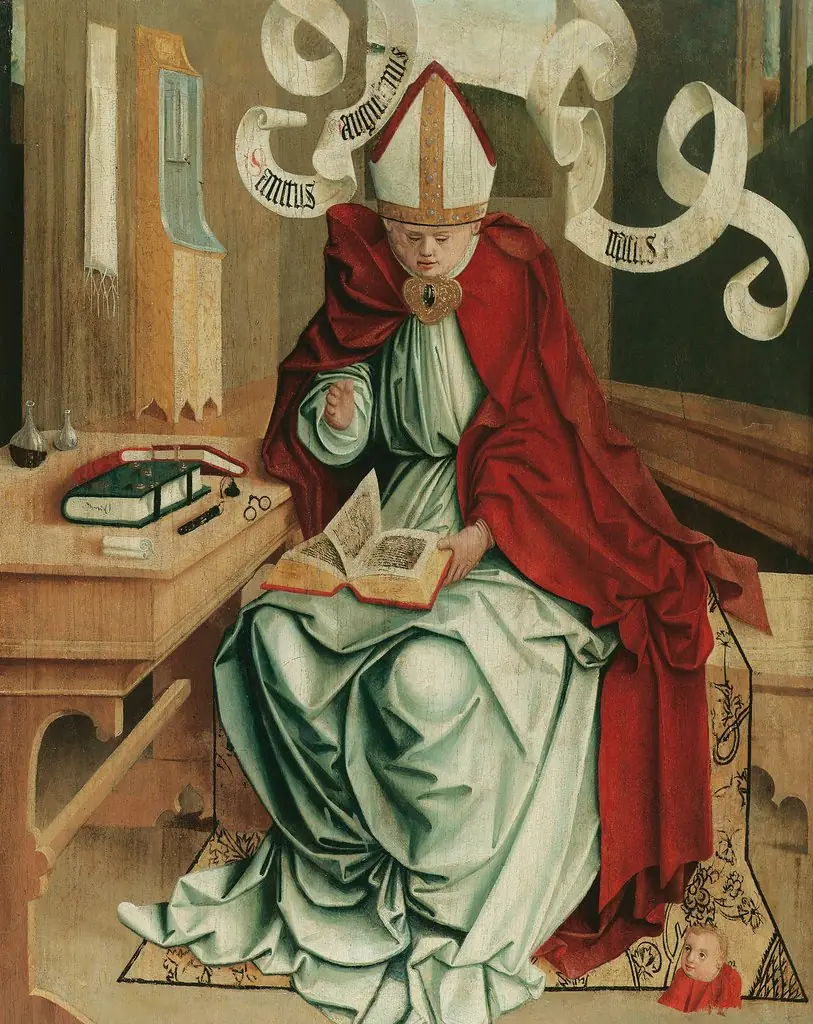
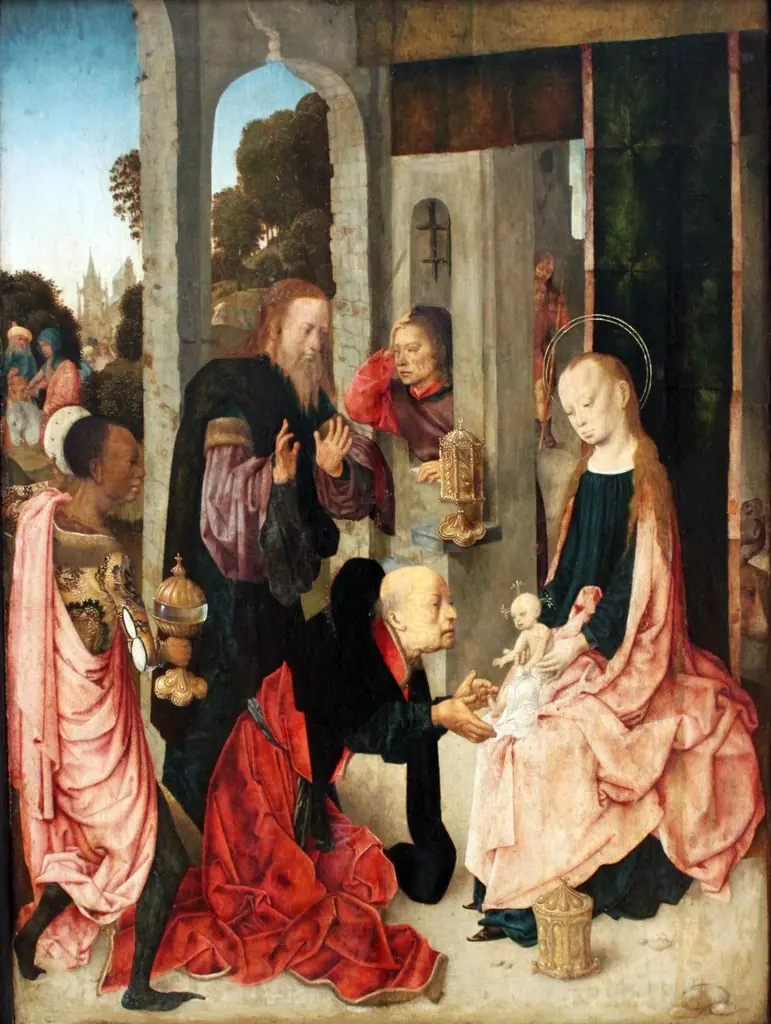
The painting was originally one of four panel pictures that formed part of a predella, the base of an altarpiece that was opened on festive occasions to reveal different subjects. According to the reconstruction, the outer sides of the predella showed Saint Ambrose and Saint Augustine, while the inner sides depicted the Flight into Egypt and Mary in the Wheatfield (Maria im Ährenkleid). The Beschneidung Christi is now held by the Belvedere in Vienna, with the inventory number 4961. In February 2020, the Upper Belvedere presented the exhibition series IM BLICK, curated by Veronika Pirker-Aurenhammer, which united for the first time the entire ensemble of the so-called Mondseer Altar and examined the masterpiece in its art-historical and cultural-historical context.
Context
The Meister von Mondsee was active around 1490 to 1500 and is regarded as one of the most important painters of late medieval Austria. The 2020 Belvedere exhibition underscored his significance within the artistic landscape of the period. The Mondseer Altar ensemble, to which the Beschneidung Christi belonged, represents a major commission of Austrian late Gothic art, demonstrating the sophisticated patronage and religious culture of the region at the close of the fifteenth century. The predella format, with its reversible panels offering different imagery for liturgical and festive occasions, reflects the dynamic function of altarpieces in late medieval devotional practice. Scholarly attention to the master has focused on reconstructing his oeuvre and understanding his workshop practices within the broader context of Austrian painting between the traditions of the International Gothic and the emerging Renaissance sensibilities.
Legacy
The reputation of the Meister von Mondsee rests substantially on the survival of the Mondseer Altar ensemble, with the Beschneidung Christi serving as a key work for attributions and stylistic analysis. The 2020 Belvedere exhibition marked a significant moment in the reception of his work, bringing together the complete ensemble for the first time and situating it within contemporary scholarship on late medieval Austrian art. The painting continues to be reproduced and studied as a characteristic example of the master's narrative skill and his ability to combine sacred subject matter with detailed observation of costume, architecture, and human interaction. Its presence in the Belvedere ensures its accessibility to scholars and the public, while digital initiatives such as the museum's streaming programme have extended its reach beyond the physical gallery.
Own this work as a print
Artist & collection