Artwork
Adoration of the Magi Triptych
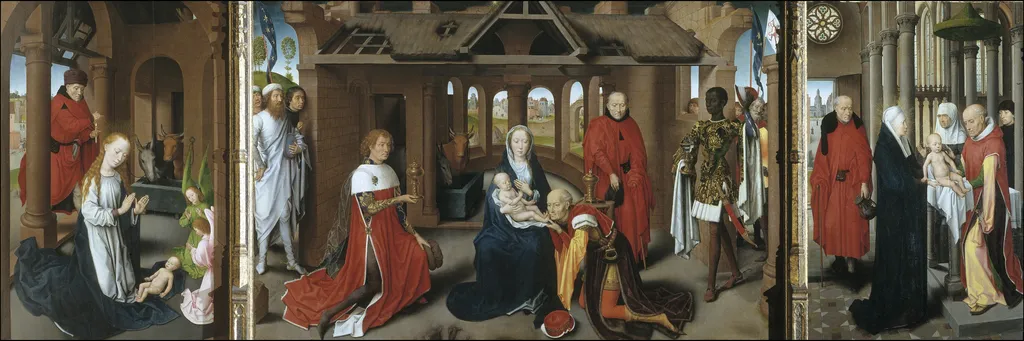
Adoration of the Magi Triptych is an oil painting by the Northern Renaissance artist Hans Memling. It dates from 1470 and is held in the collection of the Museo del Prado.
About this work
Subject & Meaning
Symbolic elements include Joseph holding two turtledoves in the right panel, representing the biblical offering for Mary's purification.
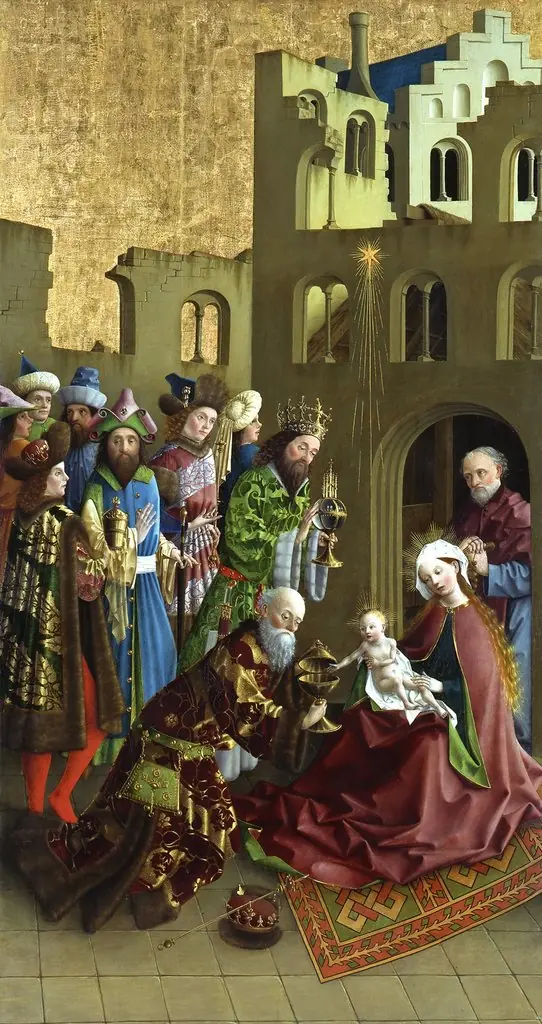
The triptych depicts three interconnected scenes from the infancy of Christ: the Nativity on the left wing, the Adoration of the Magi in the central panel, and the Presentation in the Temple on the right. The central scene emphasizes the homage paid by the three kings, whose opulent brocade costumes and specific gestures, such as Balthasar removing his hat, signify reverence. The old king Melchior kisses the Christ Child's feet, a motif derived from Rogier van der Weyden's earlier works.
Symbolic elements include Joseph holding two turtledoves in the right panel, representing the biblical offering for Mary's purification. In the left wing, Joseph stands behind the Virgin rather than kneeling, acting as a protector shielding the candlelight, which symbolizes the arrival of the Messiah as the light of the world. The open barn and temple settings reveal animated urban landscapes, grounding the sacred events in a contemporary Flemish context.
Technique & Style
The Adoration of the Magi Triptych is an oil‑on‑wood panel work executed in the early Netherlandish style. The central panel, measuring 147.5 cm × 96 cm, depicts the Magi adoration in oil paint, while the side panels show a Nativity and a Presentation in the Temple; the outer faces of the wings are no longer extant. Richly patterned brocade, gold‑threaded garments and jeweled containers are rendered with precise detail, and the composition employs a spacious layout that separates the figures to heighten hieratic emphasis. The painting’s surface condition reflects loss of the original exterior panels, leaving only the interior scenes intact.
History & Provenance
The Adoration of the Magi Triptych was painted by the Early Netherlandish master Hans Memling, active in Bruges. Its dating remains debated: the Museo del Prado places the work at 1470–1472, while Max Jakob Friedländer proposed a date of 1470, and other scholars argue for a later execution, possibly after 1479 and thus subsequent to the Jan Floreins Triptych.
The triptych was formerly housed in the Casa Real de Aceca and later in the oratory of Charles V at the Royal Palace of Aranjuez, which is why it is also known as the Triptych of Charles V. The exterior faces of the wings, originally painted, are no longer legible. The work entered the Museo del Prado in 1847, where it remains today.
The Adoration of the Magi Triptych is held by the Museo del Prado in Madrid, which acquired it in 1847. It is also known as the Prado Triptych, and earlier in its history it was preserved in the oratory of Charles V at the Royal Palace of Aranjuez, having previously been kept at the Royal House of Aceca, which is why it is sometimes called the Triptych of Charles V. No specific inventory or accession number is recorded in the available sources, and no exhibition history beyond its residence at the Prado is documented.
Legacy
The Adoration of the Magi Triptych is recognized as one of Hans Memling's most renowned works, with its attribution universally accepted by art historians. Historically, it was known as the "Triptych of Charles V" due to its former placement in the royal oratory of Charles V at the Aranjuez Palace and previously at the Aceca Royal House. The work entered the Museo del Prado in Madrid in 1847, where it remains a significant holding.
Art historians frequently analyze its legacy through its thematic and compositional links to other major Early Netherlandish pieces, specifically the Jan Floreins Altarpiece and the Hulin de Loo Polyptych. Scholars note that while it shares structural similarities with these works, Memling adapted the composition to allow for greater spacing of figures and more elaborate detailing of the Magi's costumes.
Overview
Hans Memling's "Adoration of the Magi Triptych," an oil on panel work, dates to around 1479–1480. This altarpiece, also known as the Prado Triptych, is housed in the Prado Museum in Madrid. Its central panel depicts the Adoration of the Magi, flanked by scenes of the Nativity and the Presentation of Christ in the Temple. The painting measures 147.5 cm by 96 cm in its main section.
Context
The thematic choices and their artistic execution in the "Adoration of the Magi Triptych" align with several other significant works by Memling. These include the Saint Columba Altarpiece, created around 1455, the Jan Floreins Altarpiece from 1479, and the Hulin de Loo Altarpiece, dating to approximately 1462. Such connections highlight recurring motifs and compositional strategies within the artist's broader body of work.
Artist & collection
Artist
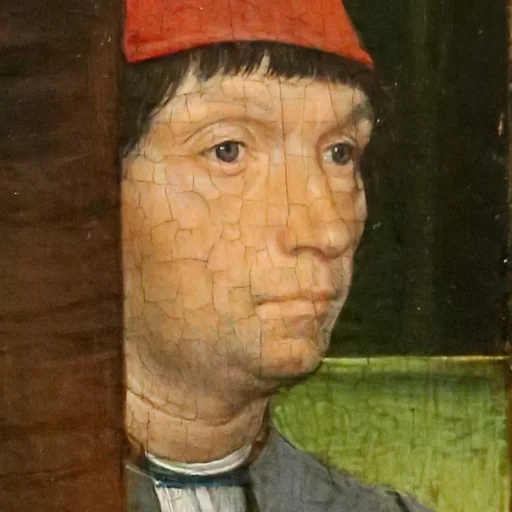
Hans Memling was a German-Flemish painter who worked in the tradition of Early Netherlandish painting.

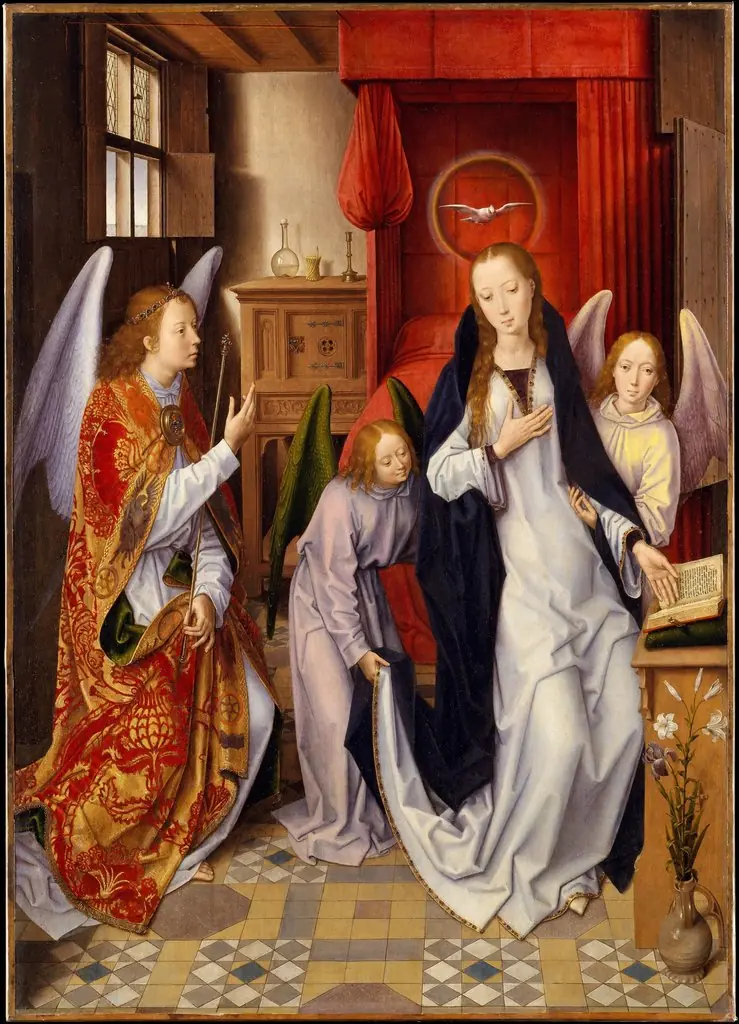
![Saint Veronica [obverse], by Hans Memling](https://artifactworldgallery.com/img/hans-memling--saint-veronica-obverse--5a649fd8b09c96b9-w320.webp)
- Adoration of the Magi
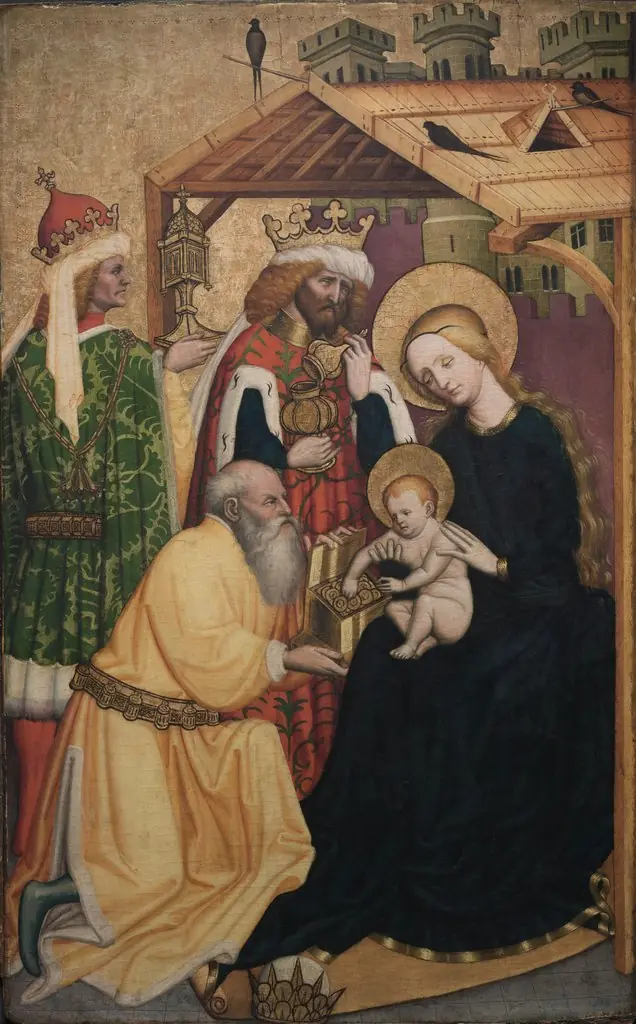 Adoration of the Magi
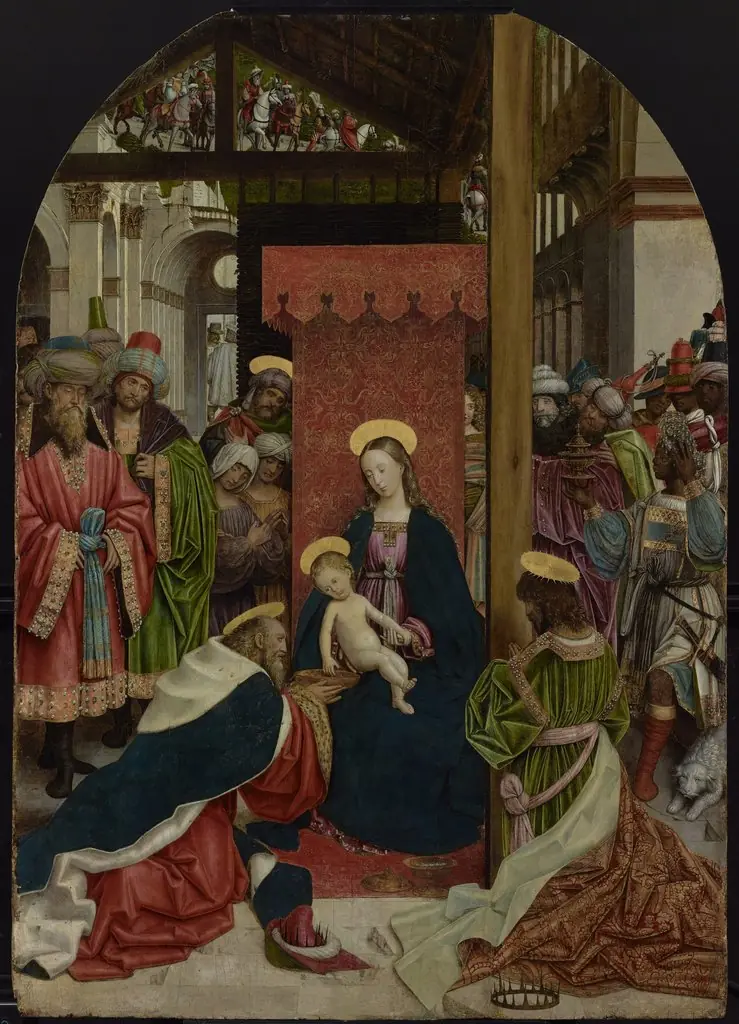 Adoration of the Magi
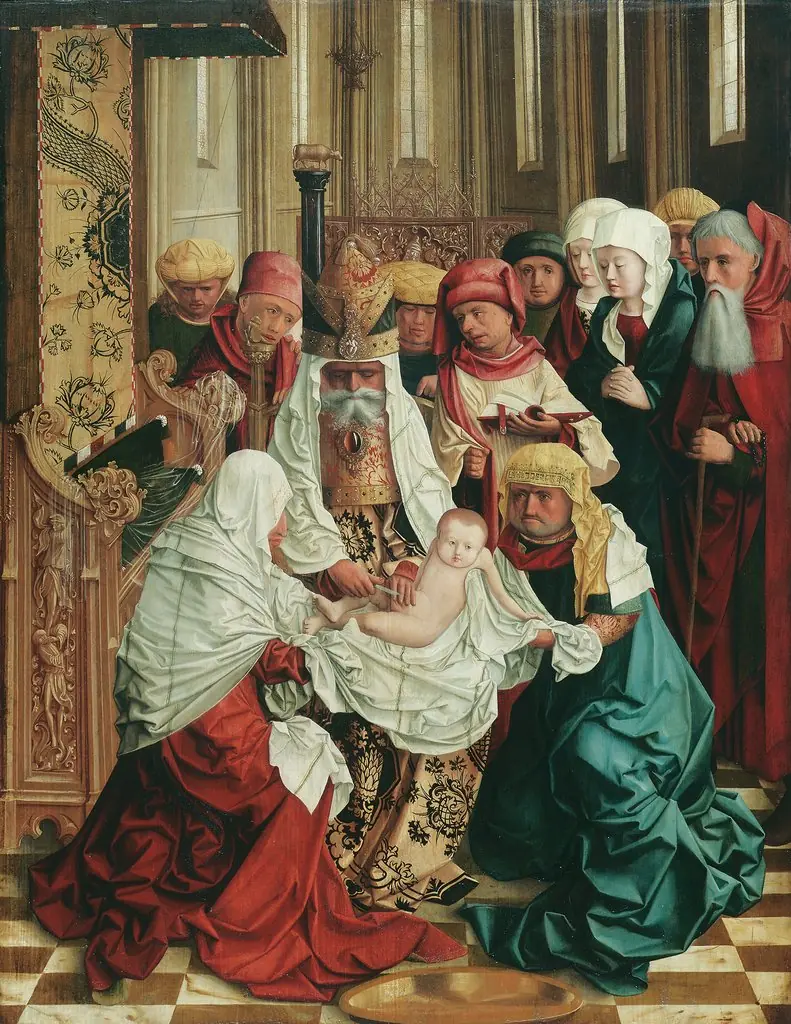 Beschneidung Christi
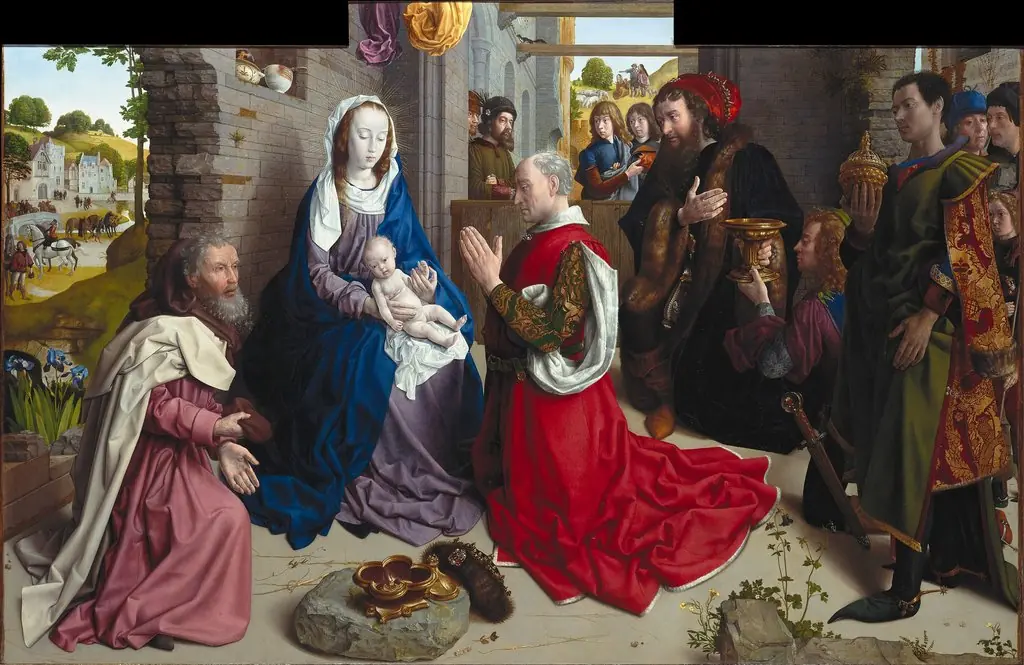 Monforte Altarpiece
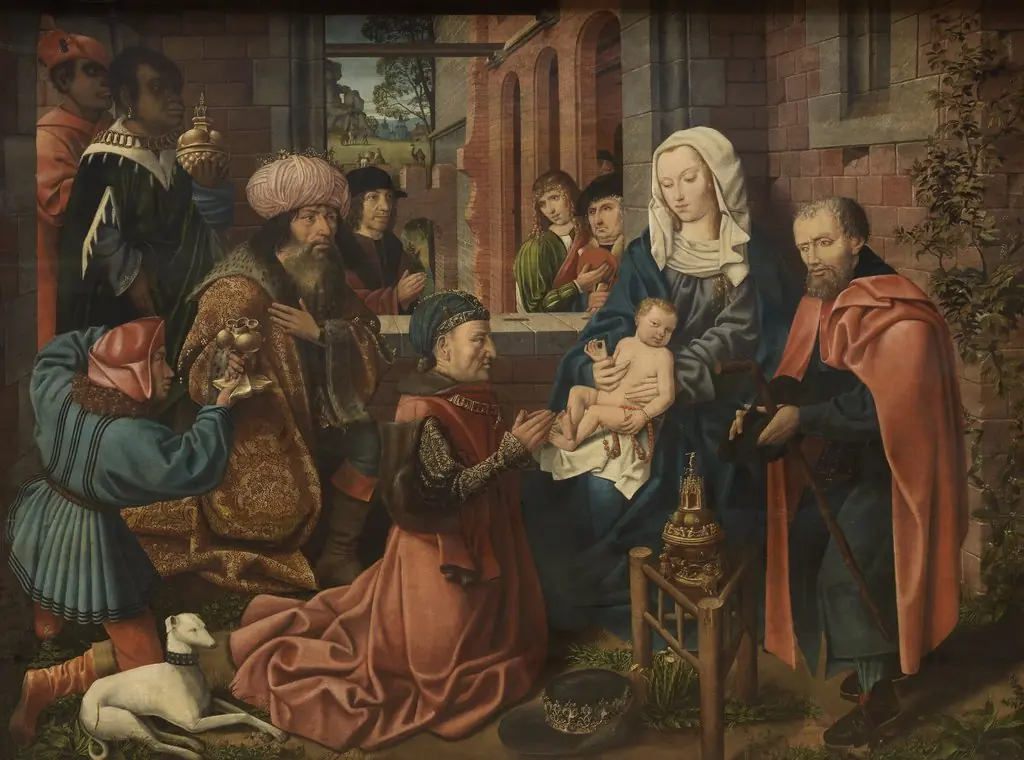 The Adoration of the Magi
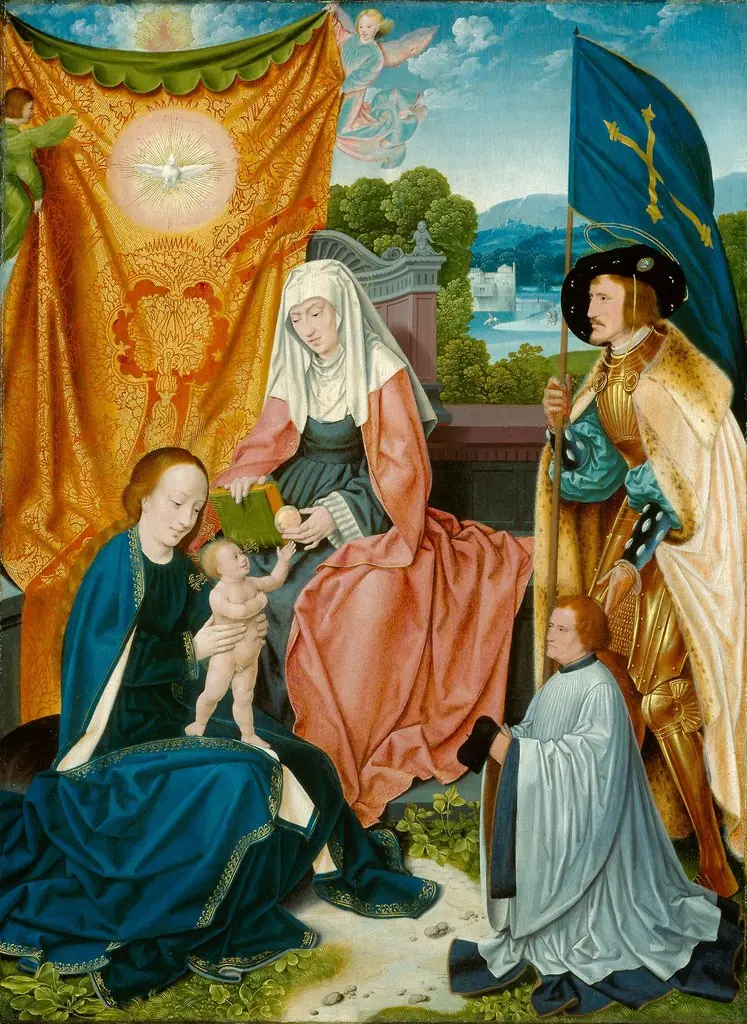 Virgin and Child with Saint Anne, Saint Gereon, and a Donor
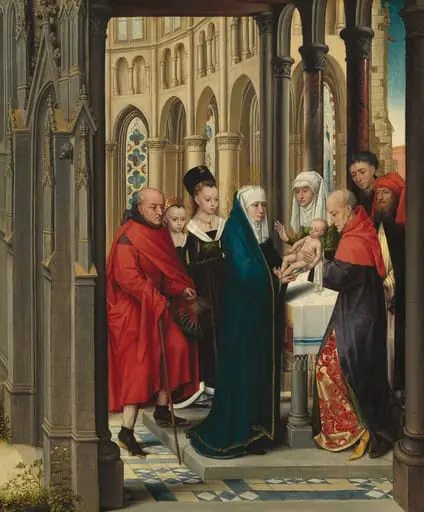 The Presentation in the Temple
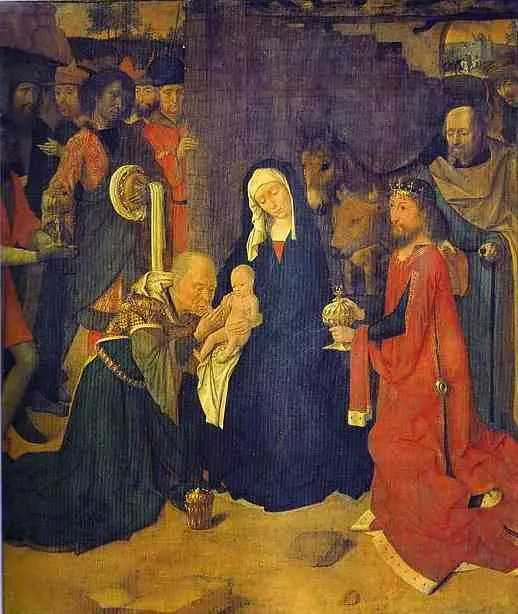 Adoration of the Magi
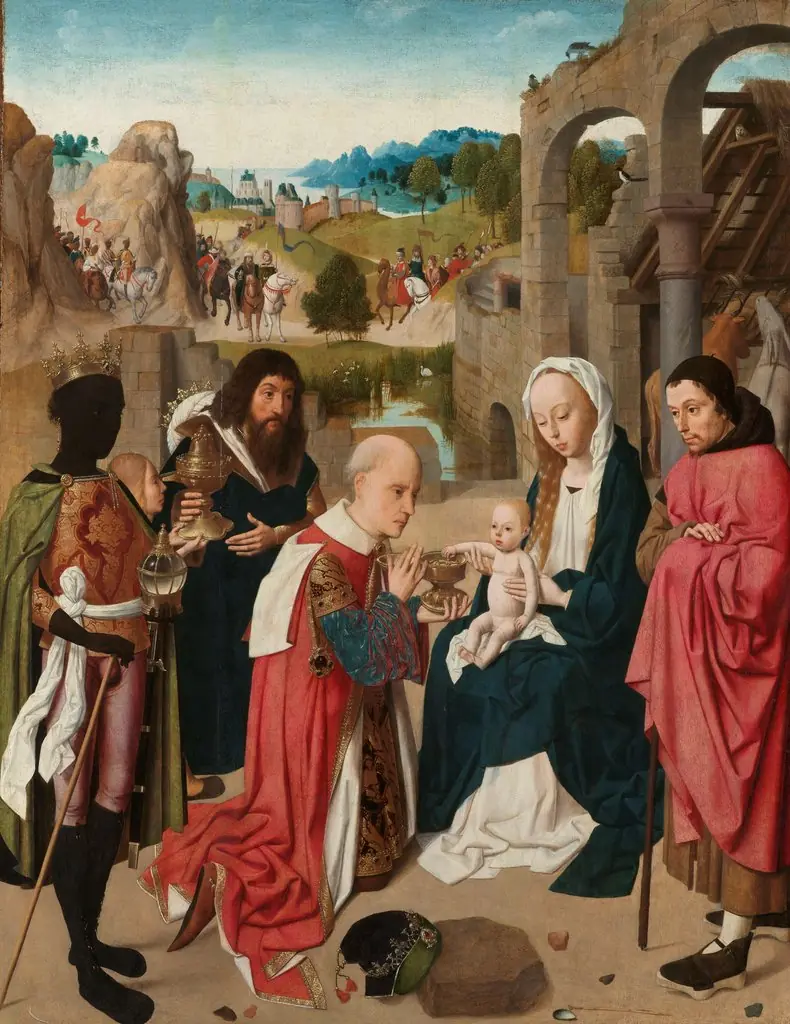 The Adoration of the Magi
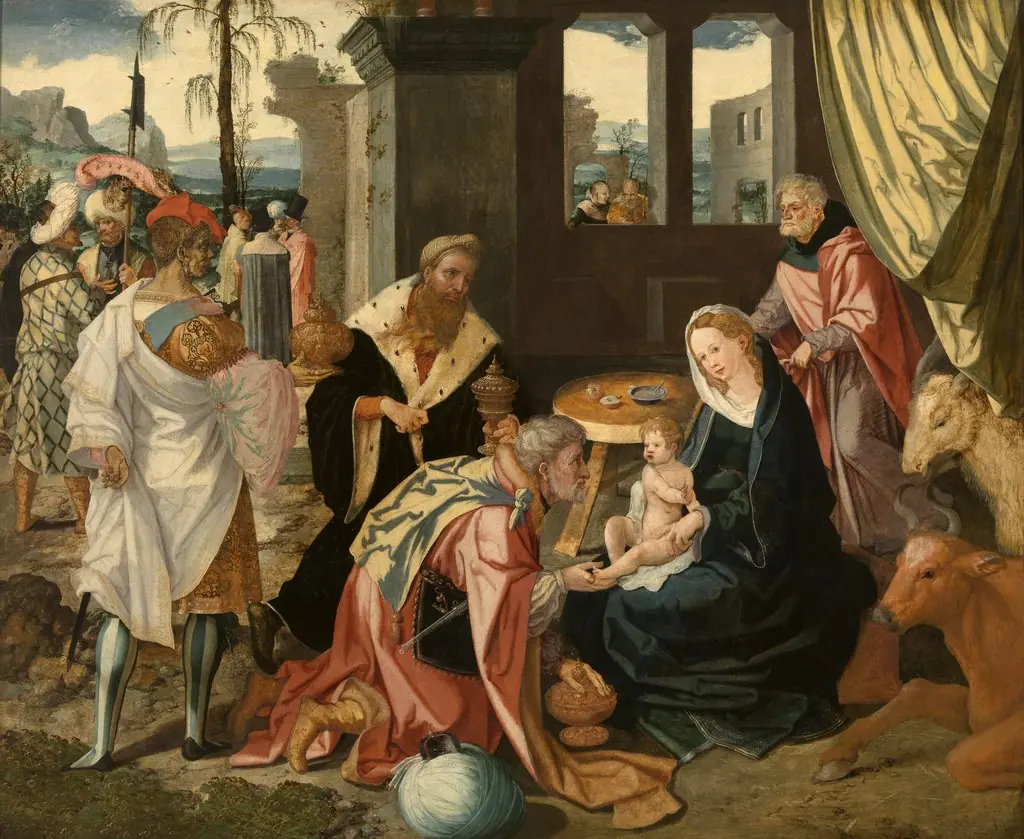 The Adoration of the Magi
 Darmstadt Altarpiece: The Epiphany