Artwork
All Saints
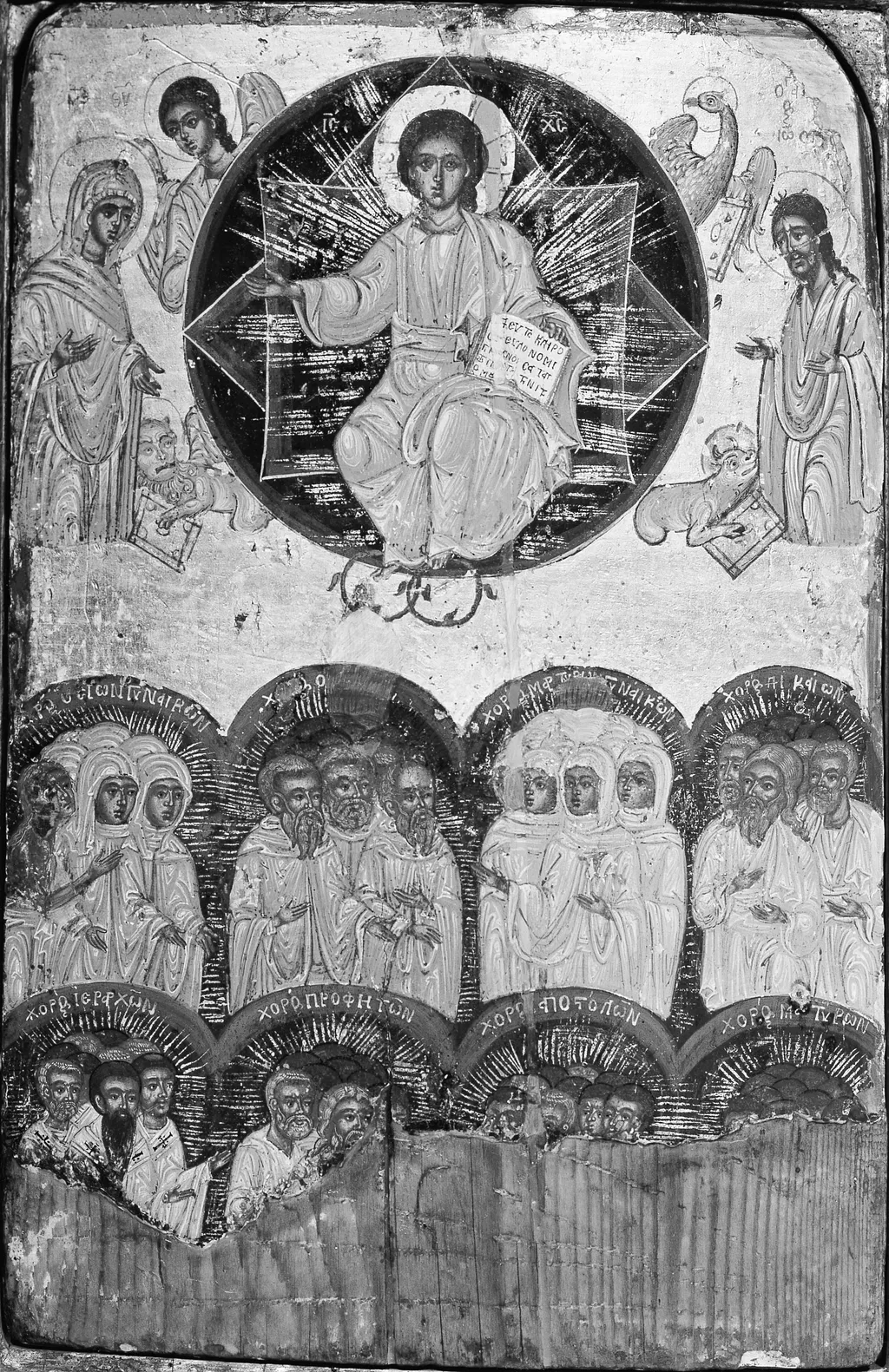
All Saints is a tempera painting. It dates from 1800 and is held in the collection of the Metropolitan Museum of Art.
About this work
Subject & Meaning
As a tempera painting on panel, the work functions within the tradition of religious art intended to inspire devotion and illustrate the heavenly assembly.
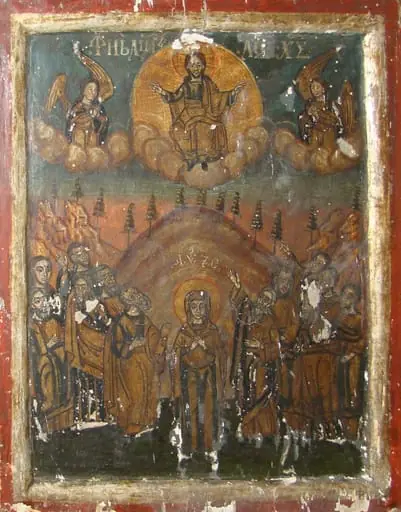
The artwork depicts a religious scene featuring Christ and the Virgin Mary alongside John the Baptist and other saints. Created by an anonymous Greek painter, the composition serves as a visual representation of the communion of saints, a central theme in Christian iconography where holy figures are gathered together. The inclusion of John the Baptist, often positioned as a forerunner, alongside the central figures of Christ and Mary, underscores the theological hierarchy and the intercessory role of the saints.
As a tempera painting on panel, the work functions within the tradition of religious art intended to inspire devotion and illustrate the heavenly assembly. The specific arrangement of these figures reflects the iconographic conventions of the period, emphasizing the collective witness of the saints to the divine mystery.
Technique & Style
The work titled All Saints is executed in tempera on a wooden panel, a medium and support noted in the documentation. The painting, dated 1800, portrays the biblical figures John the Baptist, a generic saint, Christ, and the Virgin Mary, reflecting a strictly religious iconography typical of Greek ecclesiastical art. Its authorship is attributed to an anonymous Greek master, and the composition follows conventional hierarchical arrangement of the saints.
The surface bears the characteristic matte finish of tempera, and the panel’s dimensions measure approximately 31.8 cm by 21 cm, consistent with the recorded size.
History & Provenance
The painting All Saints was created around the year 1800 by an anonymous Greek artist. Executed in tempera on a panel, the work measures 31.8 cm in height and 21 cm in width. It depicts religious figures including Christ, the Virgin Mary, John the Baptist, and various saints.
The precise commissioning details and original ownership history prior to its current location are not specified in the available records. The artwork is currently held in the collection of the Metropolitan Museum of Art, where it is cataloged as a religious painting from the early 19th century.
Context
The work titled "All Saints" is a tempera painting on panel created in 1800 by an anonymous Greek artist, depicting John the Baptist, saint, Christ, and Mary. It belongs to the genre of religious art and is part of the Metropolitan Museum of Art collection. As an anonymous piece, it exemplifies early‑19th‑century Greek devotional painting, situating it within a broader tradition of religious imagery.
Limited scholarly commentary reflects the challenges of attributing works by unknown masters, yet its museum presence underscores its relevance to the study of Greek ecclesiastical art.
Overview
This tempera painting, titled "All Saints," presents a devotional scene centered on a haloed figure. This central individual is enthroned within a radiant circular frame, flanked by two angels. Below them, a multitude of saints is arranged in two distinct rows. The artwork conveys a sense of profound serenity and reverence, reflecting its sacred subject matter.
Artist & collection

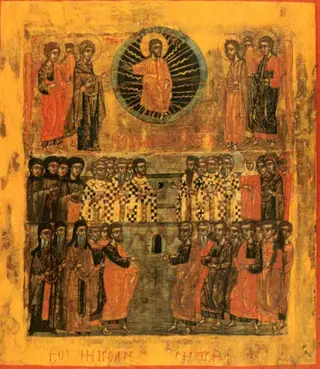 Duminica Tuturor Sfinților
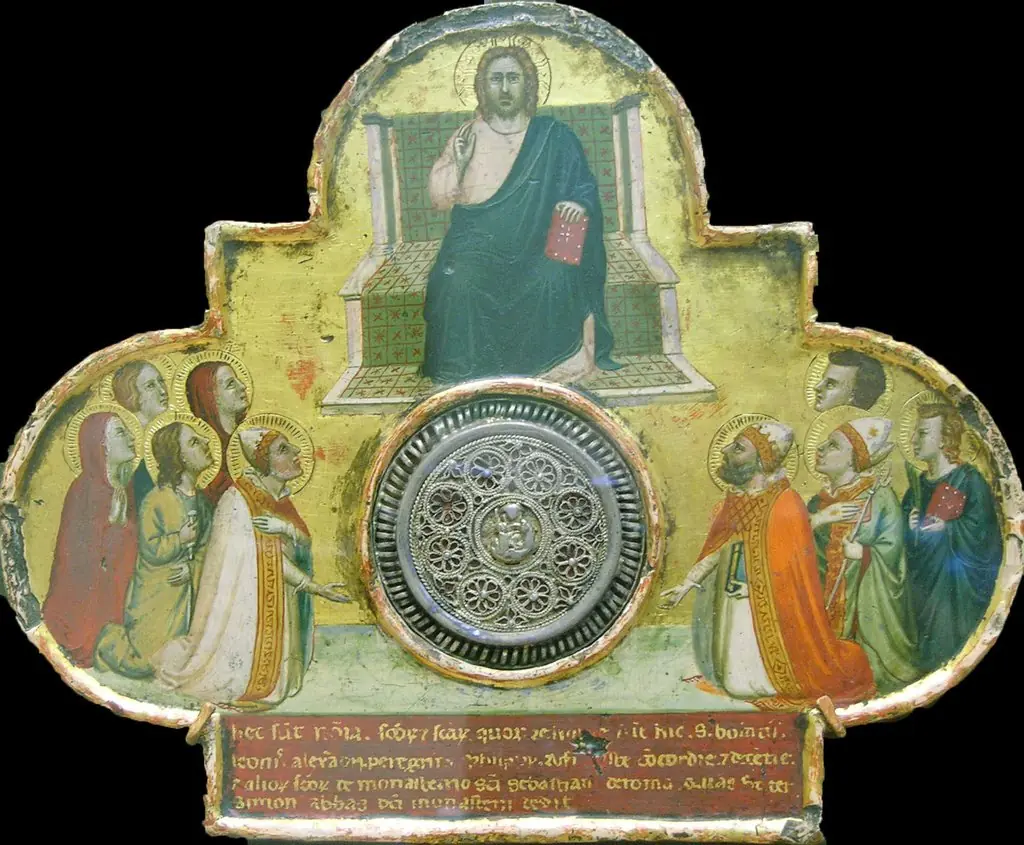 Christ Enthroned with Saints
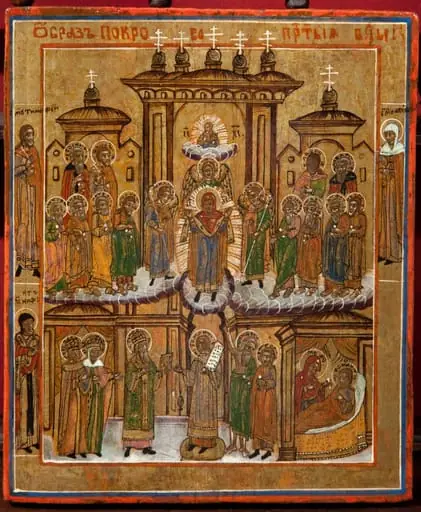 Acoperământul Maicii Domnului; Pocrovul
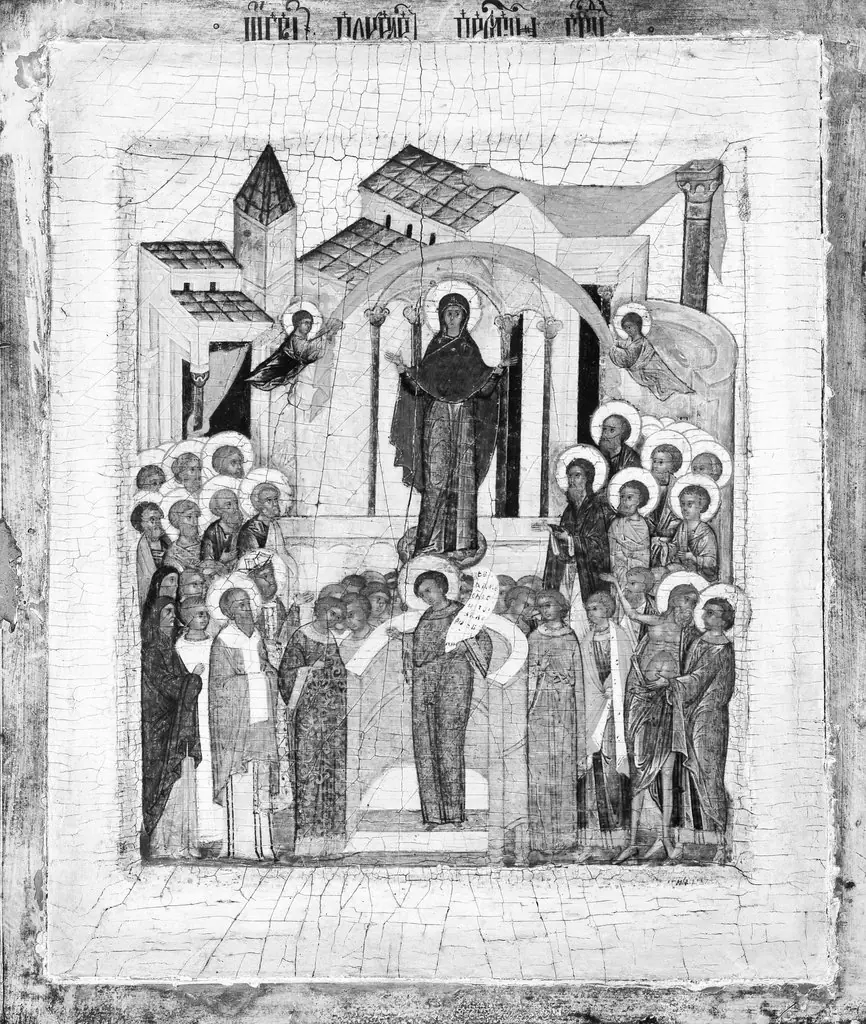 The Protection of the Mother of God
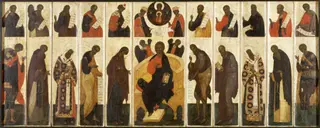 Great Deesis with Prophets
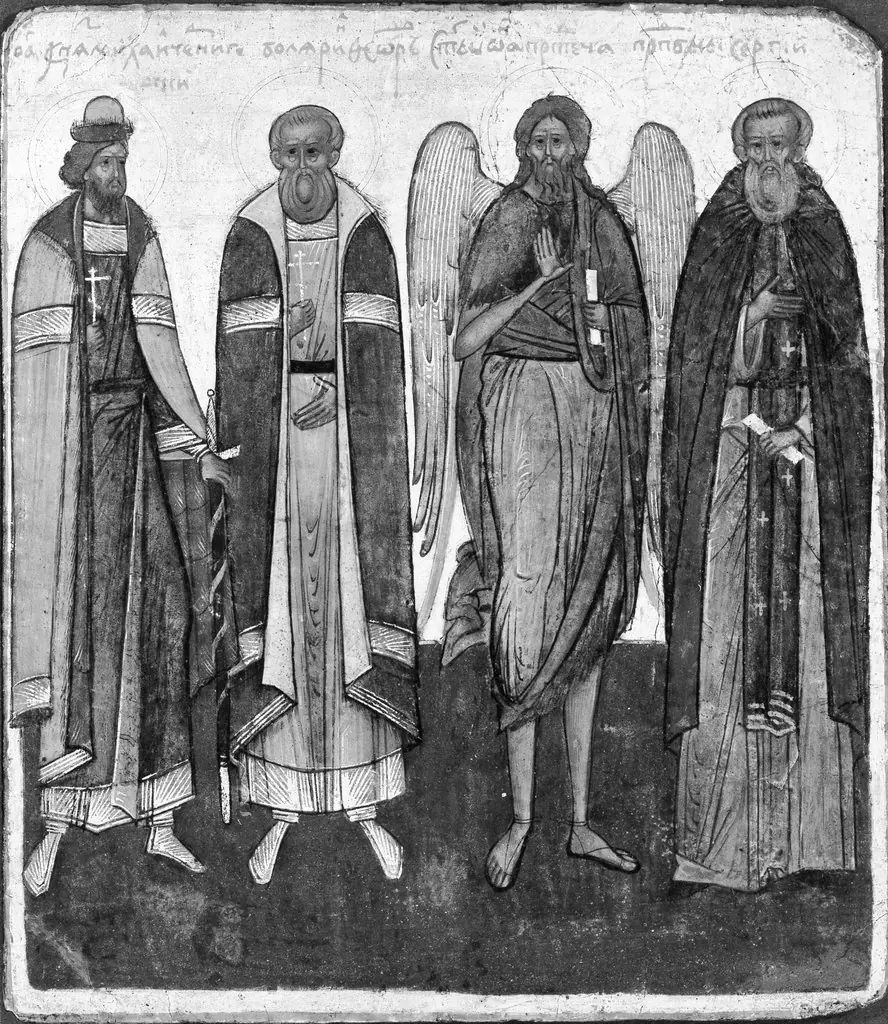 Panel from a Saints' Calendar (painted on both sides)
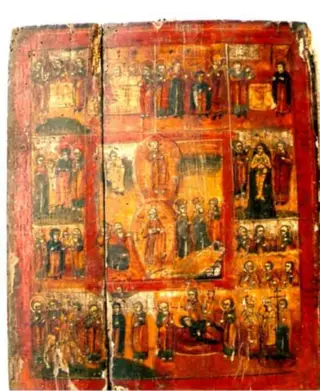 Coborârea în iad
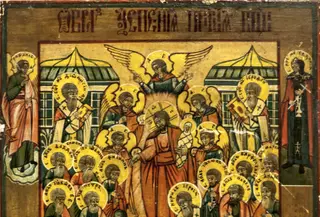 Maica Domului, întinsă pe catafalcul drapat cu material verde, deasupra Iisus Hristos, înconjurat de 5 îngeri(inscripția A:G.pe nimb, ține sufletul Maicii(în fomră de prunc înfășat)pe mâna stângă, iar cu dreapta binecuvântează. Maica are mâinile împreunate pe piept,stola verde cu falduri albe, marforion roșu cu stelele Fecioriei. În jurul catafalcului: Sfântul Kiril Ierosa și sfântul apostol Petru cădelnițând, la picioare Sf. Pavel cu veșmântul stergându-și ocii, Sf. Andrei, alături de alți sfinți ierarhi și apostoli: Sf.Vartolomei, Sf. apostol, ,Sf. Apostol Iakov Zevedei, , Filip, Sf. Apostol Ioan, Simon, Tadei. Îm planul următor, pe fundalul unor clădiri cu arhitectură ipic rusească, Sf. Mucenic Dionisii, și Ierotei, în veșminte argierești, cu Evanghelia în mână. În fața catafalcului redată scena apocrifă, Arhanghelul Mihail taindu-i mâinile cu sabia evreului fanatic Atonie pentru că a îndrăznit să batjocorească patul funerar al Maicii Domnului. Pe chenarul lat 4 sfinți : Sf. Arhanghel Rafail pe nori, Sf. Muceniță Evdochia și sfântul Feodor, în veșminte monahale, cu mătăniile în mână, Sf. Fotinia .Cromatica: Fondul galben ocru, chenar în nuanță mai închisă, colțurile de jos verde, marginal verde și roșu, benzi înguste.Veșminte: roșu cărămiziu, albastru, verde, galben, alb, negru. Linia desenului groasă, culorile tari.
 Înălțarea Domnului