Artwork
Great Deesis with Prophets
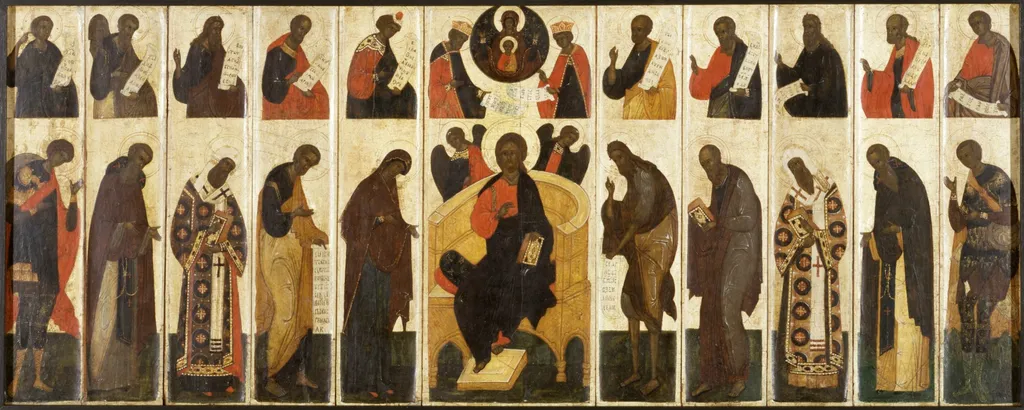
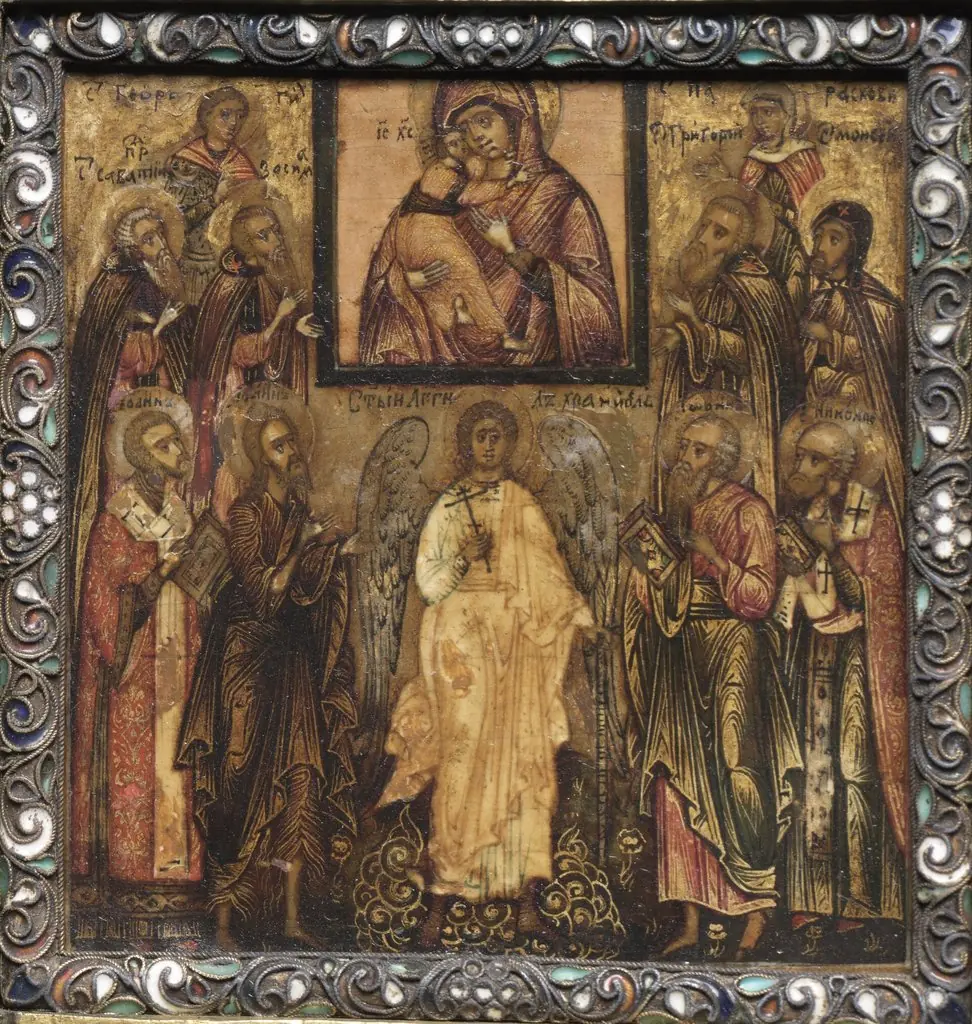
Great Deesis with Prophets is a tempera painting by the Russian Icon artist Unknown. It dates from 1550 and is held in the collection of the Walters Art Museum.
About this work
Overview
This tempera painting, titled Great Deesis with Prophets, presents a hierarchical arrangement of sacred figures in a single horizontal plane.
This tempera painting, titled Great Deesis with Prophets, presents a hierarchical arrangement of sacred figures in a single horizontal plane. Central to the composition is the Deesis, Christ flanked by the Virgin Mary and John the Baptist, surrounded by prophets. The figures are rendered with solemn stillness, their postures and gazes reinforcing spiritual hierarchy. The medium of tempera contributes to a luminous, matte surface, characteristic of late medieval iconographic traditions.
Subject & Meaning
The Deesis represents a traditional Christian intercessory scene, where Christ, as judge, is petitioned by the Virgin and John the Baptist on behalf of humanity. The surrounding prophets, identified by inscriptions and attributes, serve as witnesses to divine truth. Their presence underscores the continuity between Old Testament prophecy and New Testament fulfillment, reinforcing theological authority through visual hierarchy and symbolic gesture.
Technique & Style
Tempera paint, made from pigment mixed with egg yolk, was applied in thin, precise layers to achieve fine detail and a smooth, enduring finish. Gold leaf highlights the halos and garments, enhancing spiritual radiance. The figures are stylized rather than naturalistic, with elongated proportions and flattened space, aligning with Byzantine conventions. Patterns on robes are meticulously rendered, emphasizing sacred status over individual expression.
History & Provenance
The painting originates from the Eastern Orthodox tradition, likely produced in a monastic workshop during the late medieval period. It entered the Walters Art Museum’s collection in the early 20th century through the acquisition of private holdings of Byzantine and medieval art. Its preservation reflects its enduring cultural value, though its exact place of origin and original context remain undocumented.
Context
Created during a period when religious imagery served as both devotional aid and doctrinal instruction, this work reflects the liturgical needs of Orthodox communities. Similar compositions adorned church apses and iconostases, guiding worshipers through theological narratives. The use of tempera and gold was standard in sacred art across the Byzantine world, prioritizing symbolic clarity over spatial realism.
Legacy
As a representative of Byzantine-influenced iconography, the painting contributes to the understanding of how religious authority was visually encoded in medieval Christianity. Its presence in a major Western museum highlights the cross-cultural transmission of Eastern Christian art. While no longer used liturgically, it remains a key example of devotional painting’s formal and spiritual discipline.
Artist & collection









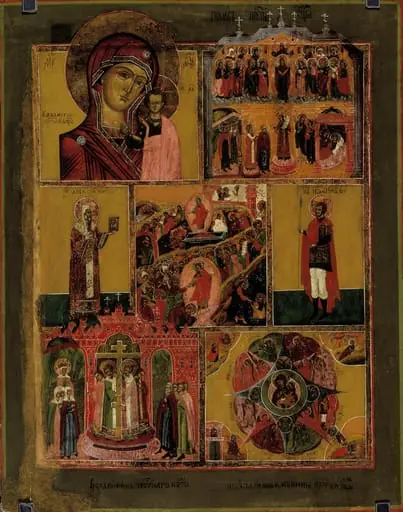
- Pääsiäinen ja kirkkovuoden juhlia, venäläinen ikoni
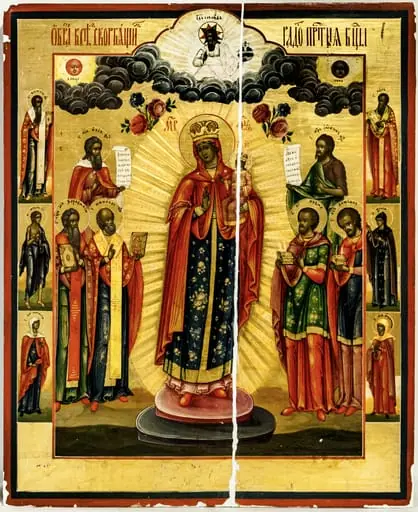 Central, Maica Domnului cu Pruncul ambii încoronați. Fecioara stă cu picioarele pe scabellum fiind înconjurată de o mandorlă din assist auriu. Cu dreapta binecuvintează, în stânga îl ține pe Iisus care binecuvintează la rândul său cu mâna dreaptă, în stânga ținând Cartea Sfântă. Veșminte împărătești cu borduri aurite, nimb cruciger. Maria înveșmântată cu stola albastră, decorată cu motive florale, maforion roșu, stelele întreitei Feciorii pe umeri și pe frunte. În jur, grupuri de sfinți: în dreapta Sfinții Haralambie și Nicolae, ambii având câte o Carte Sfântă, în planul superior, Sf. Proroc Ilie, cu un rotulus desfășurat. În stânga Sfinții Kosma și Damian și Ioan Botezătorul, acesta în pandant cu Ilie. Pe chenar, dispuși vertical, câte trei Sfinți (stânga, de jos în sus Sf. Muceniță Natalia, Sf. Maria Egipteanca, Sf. Vasile, și dreapta: Sfântul Karp, sfânta Xenia, și sfânta muceniță Agrepina (Agripina). În partea superioară a icoanei, Dumnezeu Savaot, în veșminte albe, înconjurat cu raze de assist, cu globul cruciger în stânga, cu dreapta binecuvântând.În jurul capului stea cu 8 colțuri proiectată pe nimbul circular. Registrul de nori negri cu margini luminate pune în evidență strălucirea zonei superioare și potențează cromatic compoziția. Pe nori, în stânga soarele, în dreapta luna, antropomorfizate. Chenar lat cu motive florale stilizate, obținute prin ștanțare (la fel si razele și zig-zagurile la asist), și două chenare mai înguste cu albastru și roșu. Cromatica: Fond auriu (foiță de aur), roșu aprins, vișiniu, albastru, verde, galben, nuanțe de roșu, alb. Inscripții cu roșu și negru.
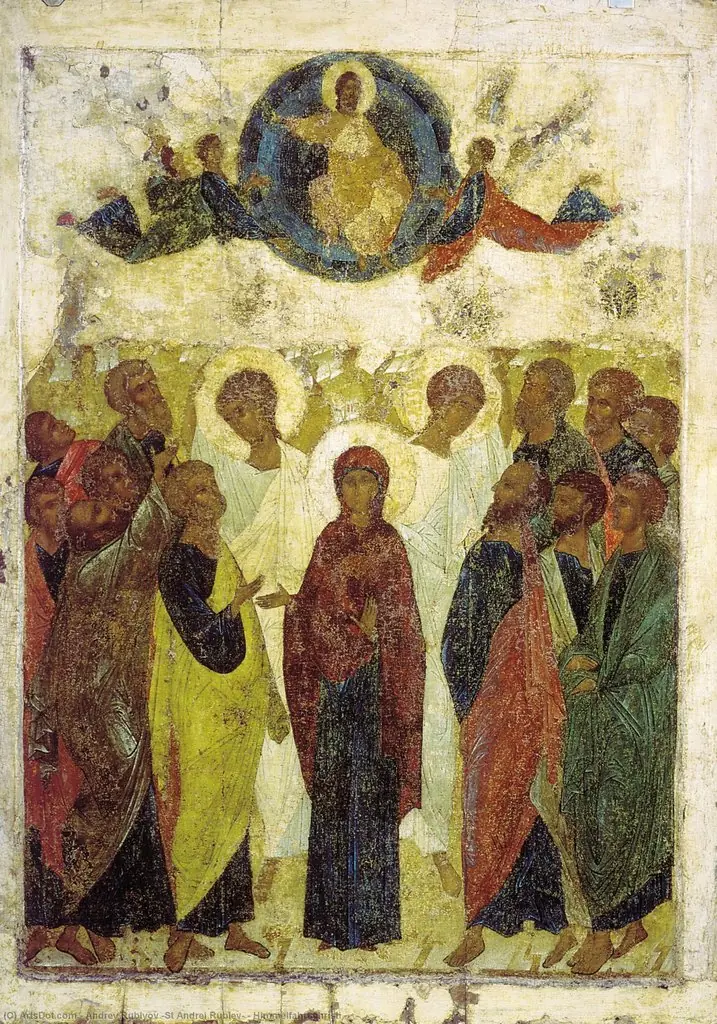
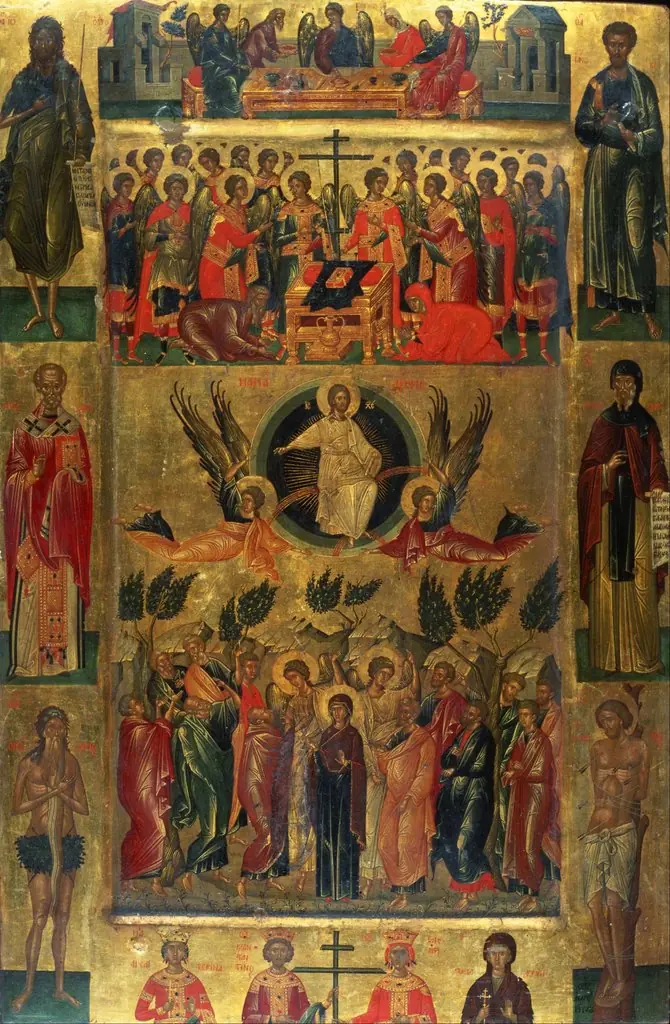 Ascension of Christ with the Hetoimasia
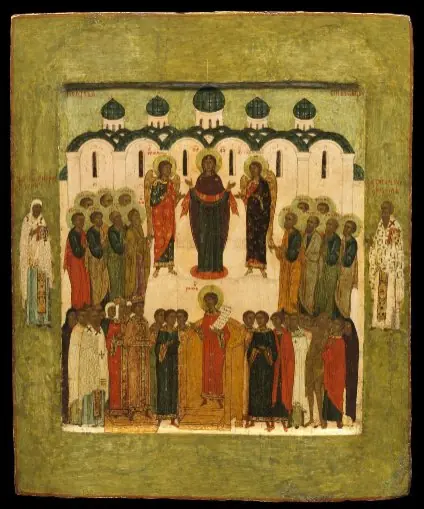 The Virgin's Protection, or Stole
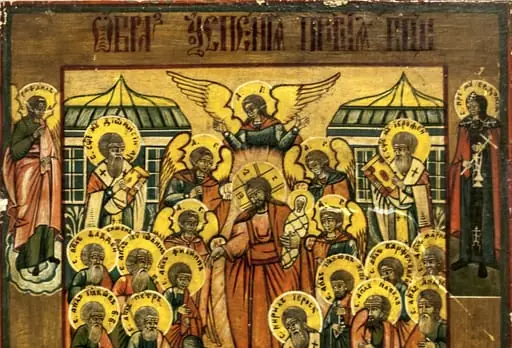 Maica Domului, întinsă pe catafalcul drapat cu material verde, deasupra Iisus Hristos, înconjurat de 5 îngeri(inscripția A:G.pe nimb, ține sufletul Maicii(în fomră de prunc înfășat)pe mâna stângă, iar cu dreapta binecuvântează. Maica are mâinile împreunate pe piept,stola verde cu falduri albe, marforion roșu cu stelele Fecioriei. În jurul catafalcului: Sfântul Kiril Ierosa și sfântul apostol Petru cădelnițând, la picioare Sf. Pavel cu veșmântul stergându-și ocii, Sf. Andrei, alături de alți sfinți ierarhi și apostoli: Sf.Vartolomei, Sf. apostol, ,Sf. Apostol Iakov Zevedei, , Filip, Sf. Apostol Ioan, Simon, Tadei. Îm planul următor, pe fundalul unor clădiri cu arhitectură ipic rusească, Sf. Mucenic Dionisii, și Ierotei, în veșminte argierești, cu Evanghelia în mână. În fața catafalcului redată scena apocrifă, Arhanghelul Mihail taindu-i mâinile cu sabia evreului fanatic Atonie pentru că a îndrăznit să batjocorească patul funerar al Maicii Domnului. Pe chenarul lat 4 sfinți : Sf. Arhanghel Rafail pe nori, Sf. Muceniță Evdochia și sfântul Feodor, în veșminte monahale, cu mătăniile în mână, Sf. Fotinia .Cromatica: Fondul galben ocru, chenar în nuanță mai închisă, colțurile de jos verde, marginal verde și roșu, benzi înguste.Veșminte: roșu cărămiziu, albastru, verde, galben, alb, negru. Linia desenului groasă, culorile tari.
 Untitled
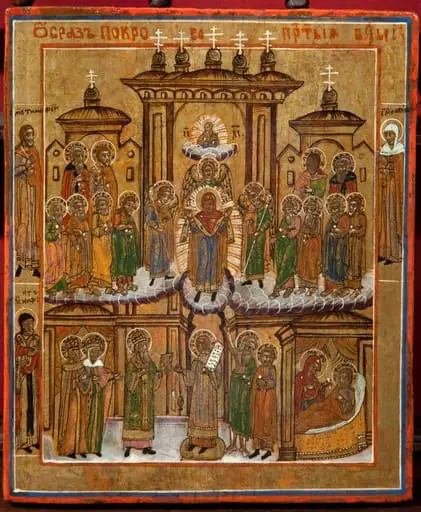 Acoperământul Maicii Domnului; Pocrovul
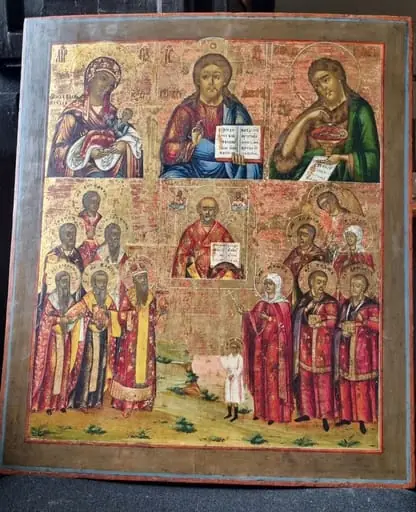 Icoană cu mai multe scene
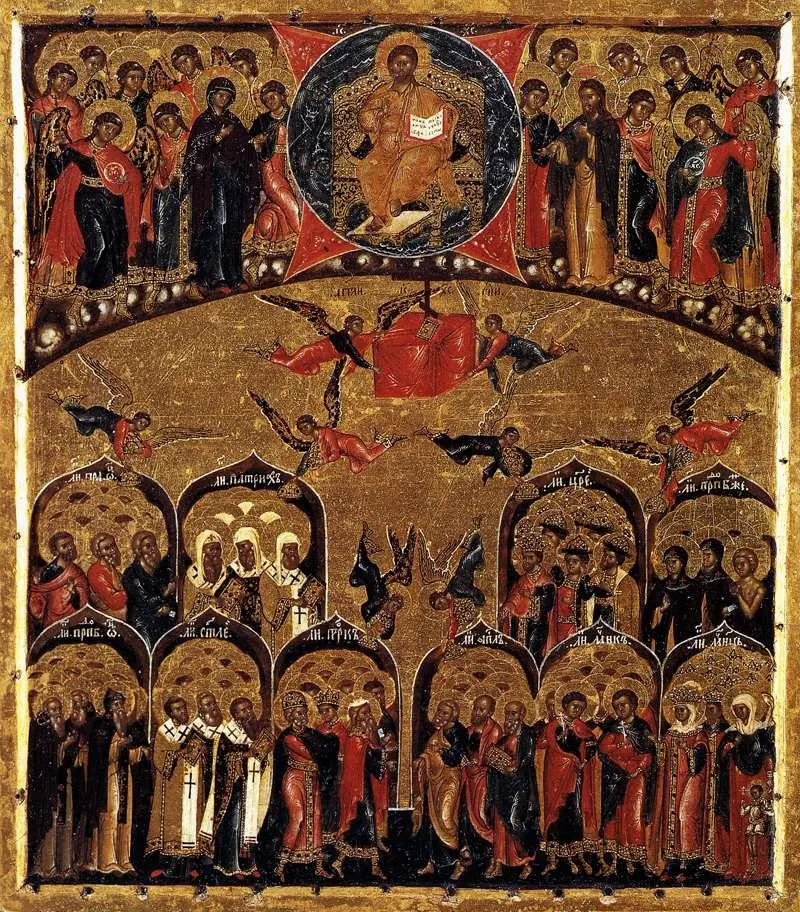 Synaxis of All Saints
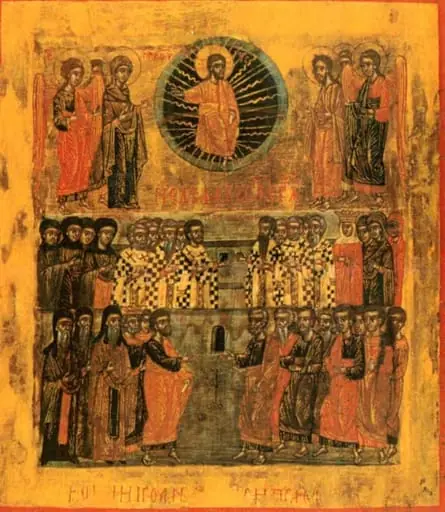 Duminica Tuturor Sfinților
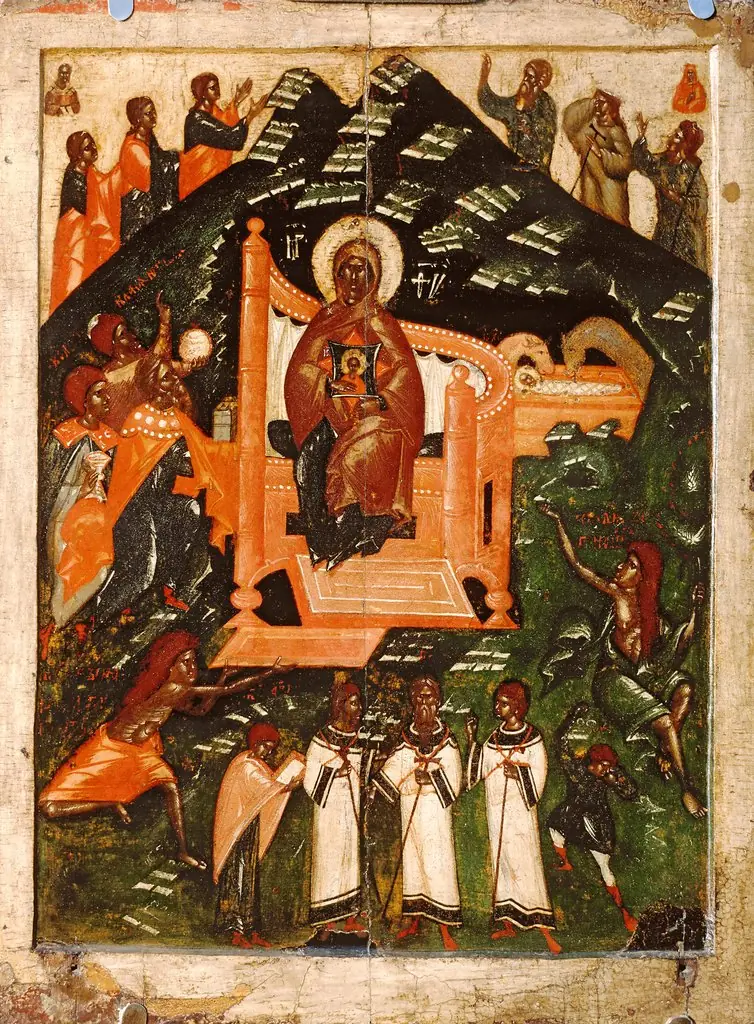 Celebration of Our Lady
 Portable Triptych Icon: Adoration of the Miracle-Working Icon of the Vladimir Mother of God