Artwork
Annapurna and Shiva
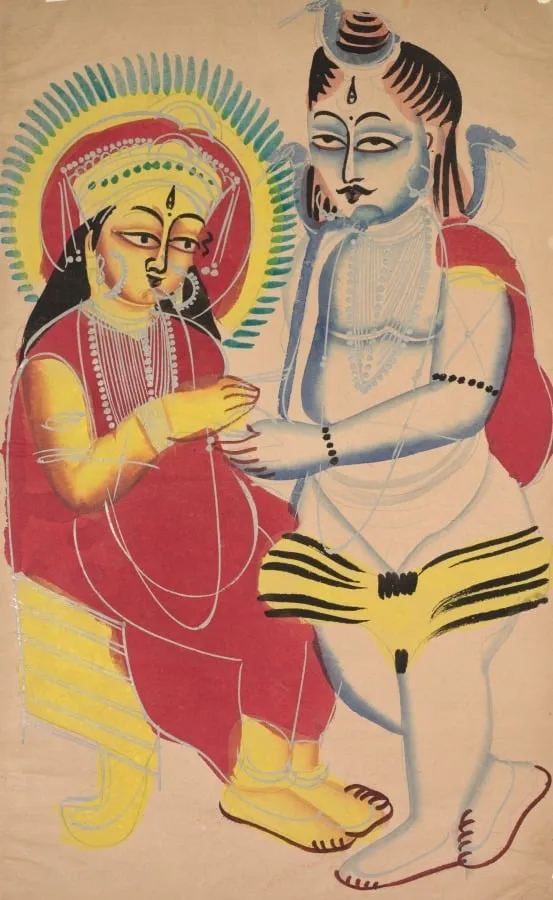
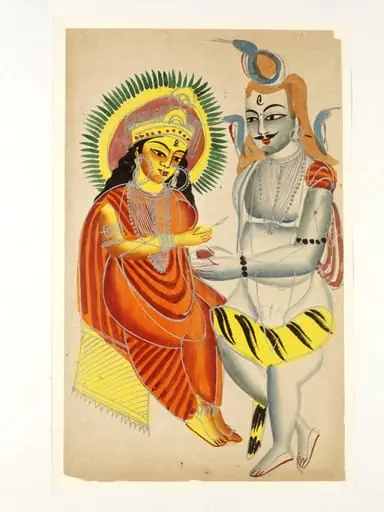
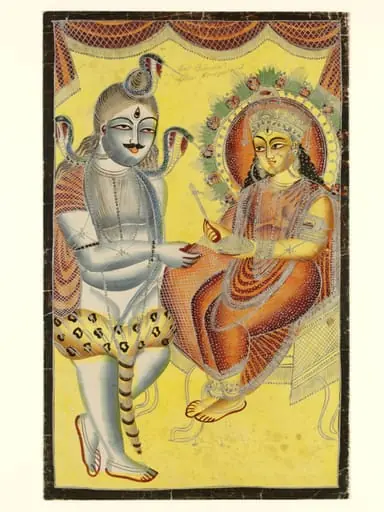
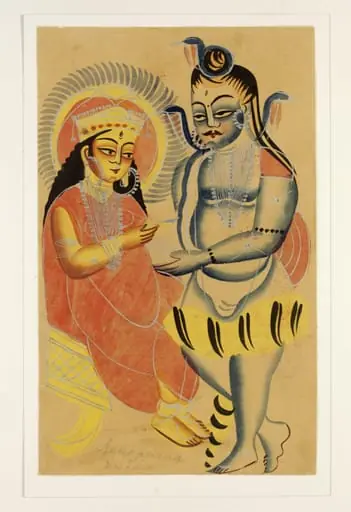
Annapurna and Shiva is an unspecified painting by the Bengal School artist Unknown. It dates from 1890 and is held in the collection of the Cleveland Museum of Art. The work portrays the Hindu goddess Annapurna serving a bowl of food to Shiva, who is shown in a humble, ascetic posture.
- Accession no.
- 2003.162
About this work
Overview
The work portrays the Hindu goddess Annapurna serving a bowl of food to Shiva, who is shown in a humble, ascetic posture. Rendered in vivid, flat colors and defined outlines, the scene emphasizes the act of nourishment between the two deities.
Subject & Meaning
Annapurna, identified as the provider of abundant sustenance, is seated on a throne and offers rice to Shiva, the god associated with destruction. By depicting Shiva as a mendicant dependent on the goddess, the image underscores the principle that even divine forces require nourishment.
Technique & Style
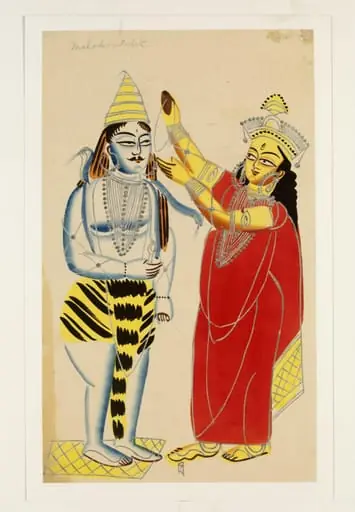
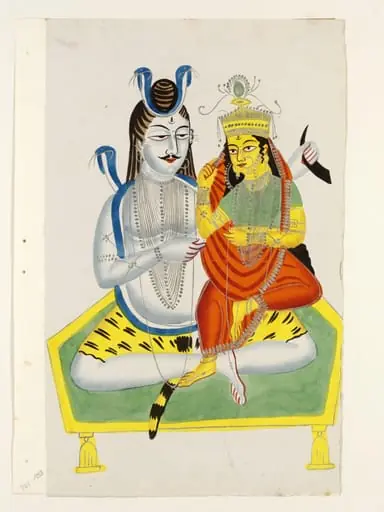
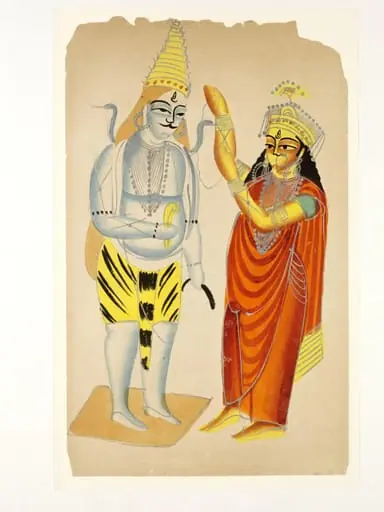
Created in the Kalighat school of Kolkata, the painting employs bold, unmodulated hues and strong contour lines characteristic of cheap devotional prints made for pilgrims. The composition lacks chiaroscuro, favoring a flat, graphic quality that conveys the narrative directly.
History & Provenance
Originating from the Kalighat district, a 19th‑century hub where itinerant artists produced inexpensive religious imagery, the piece reflects the commercial devotional market that catered to visitors of the nearby shrine. Its provenance traces to that local tradition of mass‑produced, colorful prints.
Context
Kalighat artworks often combined popular religious themes with a simplified visual language to reach a broad audience. This painting fits that pattern, presenting a familiar mythic episode in a format accessible to everyday worshippers.
Artist & collection