Artwork
blid
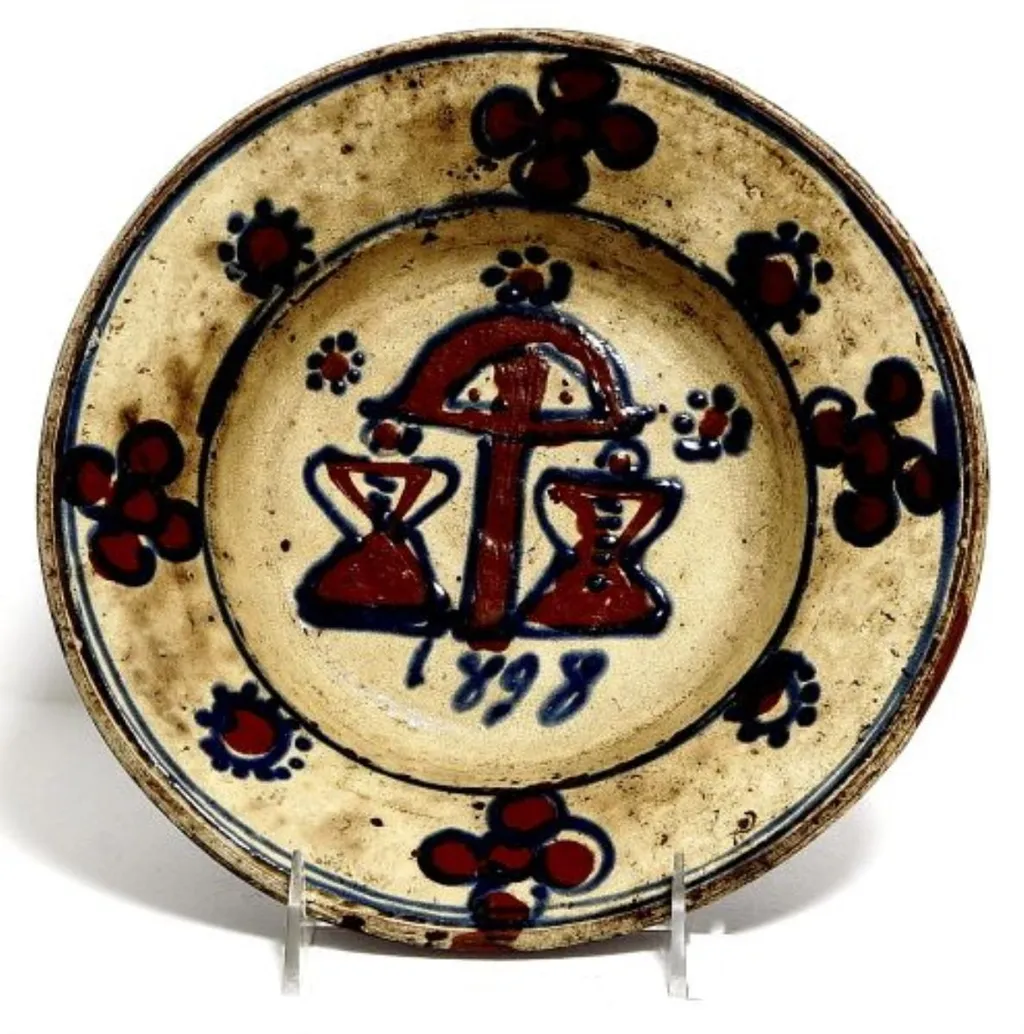
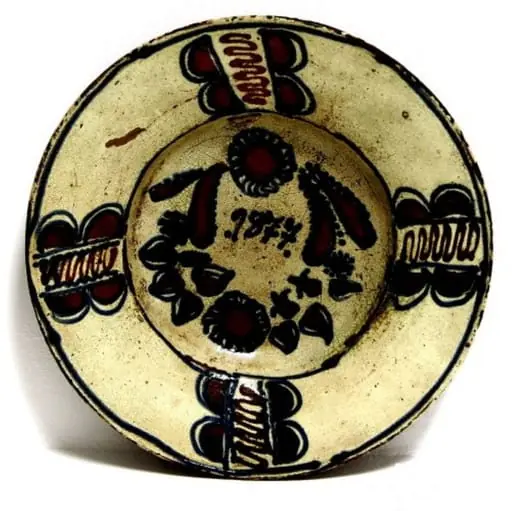
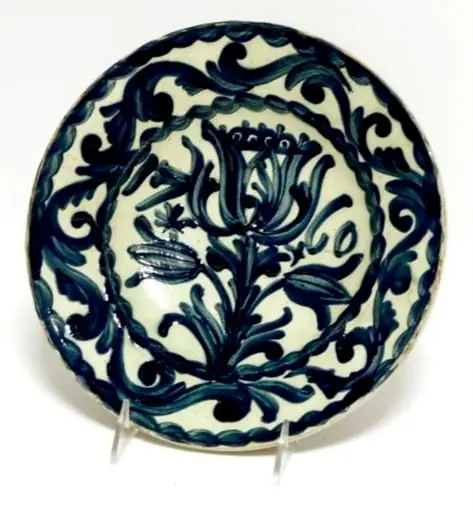
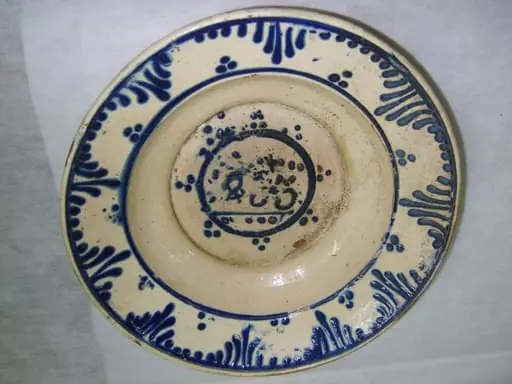
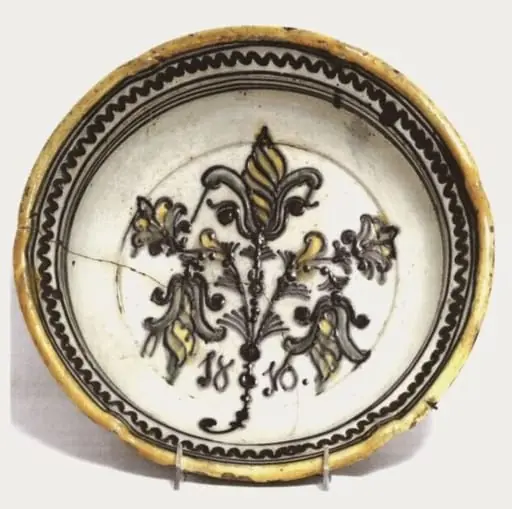
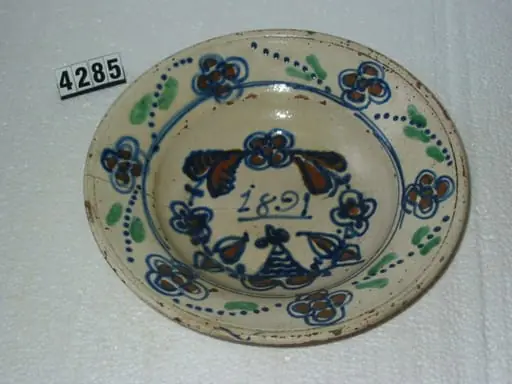
blid is a photography by the Impressionist artist Unknown. It dates from 1880 and is held in the collection of the Romanian Peasant Museum. This ceramic dish features a plain, rounded form with a pale ground, suggesting utilitarian use rather than ceremonial display.
About this work
Overview
Its central imagery, a cross with a curved top and two figures beneath, points to religious symbolism common in rural European folk traditions.
This ceramic dish features a plain, rounded form with a pale ground, suggesting utilitarian use rather than ceremonial display. Its central imagery, a cross with a curved top and two figures beneath, points to religious symbolism common in rural European folk traditions. Decorative elements include clusters of red flowers and scattered blue dots along the rim, indicating a modest decorative intent consistent with domestic objects of the period.
Subject & Meaning
The two figures beneath the cross appear to be in a posture of reverence, possibly praying or holding objects of devotion. The cross, with its curved top, resembles a wayside cross often found along rural paths in parts of Europe, serving as markers of faith, protection, or remembrance. The scene likely reflects everyday spiritual practice, embedding religious symbolism into household items used in daily life.
Technique & Style
The decoration is executed in simple, hand-painted strokes using limited pigments, red for floral motifs and blue for small accents against a light background. The forms are stylized rather than naturalistic, indicating a folk tradition where precision was secondary to symbolic clarity. The composition centers the religious motif, balancing it with rhythmic floral patterns around the rim, typical of regional ceramic decoration.
History & Provenance
Though exact origin is undocumented, the dish’s form and iconography align with 18th- to 19th-century European folk ceramics, particularly from areas where wayside crosses were prevalent. Such objects were commonly produced in local workshops for household use, often passed down through generations. Its survival suggests it was valued not merely as a vessel but as a vessel of cultural and spiritual continuity.
Context
In rural communities, religious symbols were integrated into daily life through objects like this dish. Wayside crosses, often erected at crossroads or village edges, served as focal points for prayer or remembrance. Reproducing such imagery on domestic ware reflects a blending of sacred and secular spheres, where faith was not confined to churches but lived in the home.
Legacy
This dish exemplifies how vernacular art preserved religious motifs outside institutional frameworks. While not created by trained artists, its persistence in collections today highlights the cultural weight carried by humble objects. It contributes to broader understandings of how ordinary people expressed belief through material culture, offering insight into non-elite spiritual practices.
Artist & collection