Artwork
bold de sobă
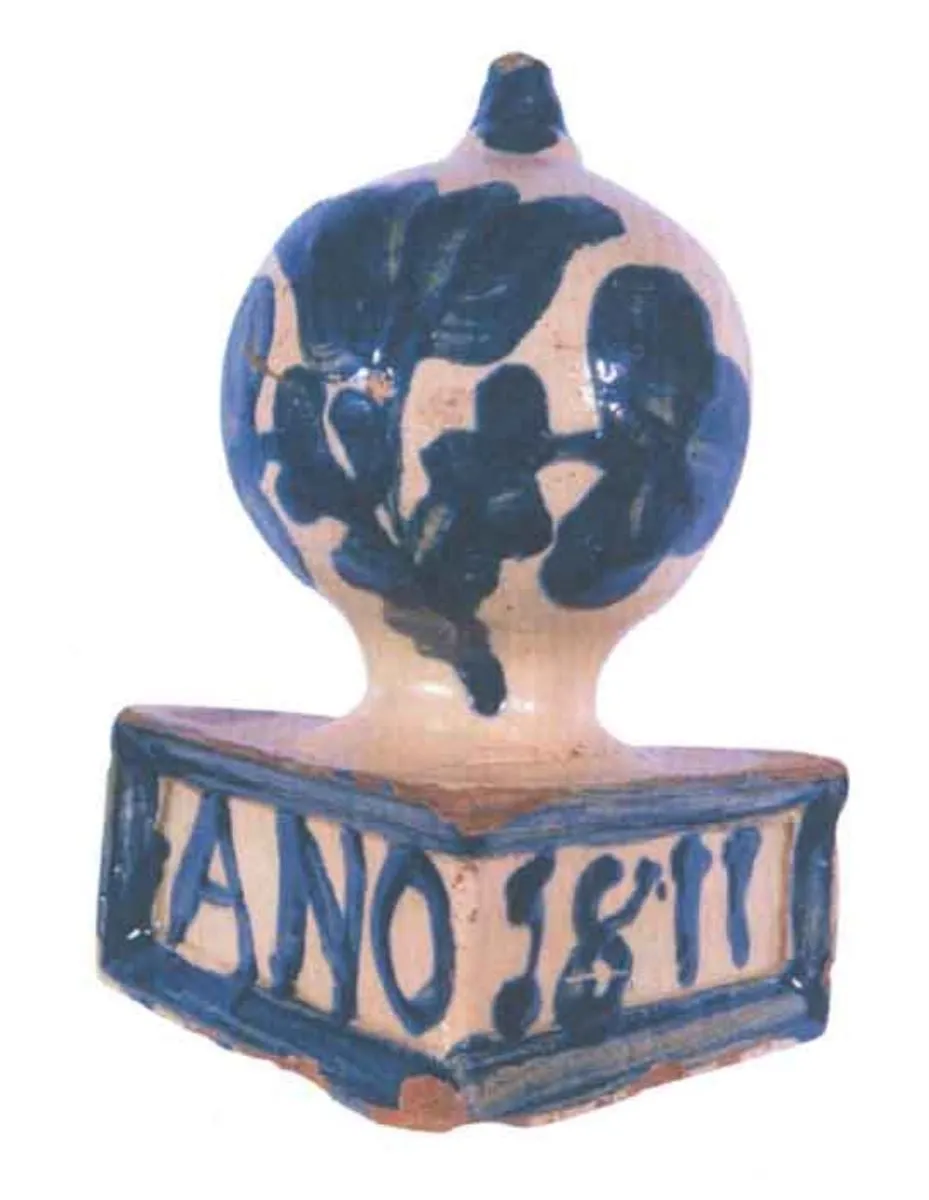
bold de sobă is a photography by the Romanticist artist Unknown. It dates from 1811 and is held in the collection of the Romanian Peasant Museum. The object is a modest ceramic vessel, roughly spherical with a single handle, and a flat rectangular base.
About this work
The year "1811" suggests this might be from a time when people used simple, handmade pottery for everyday things.
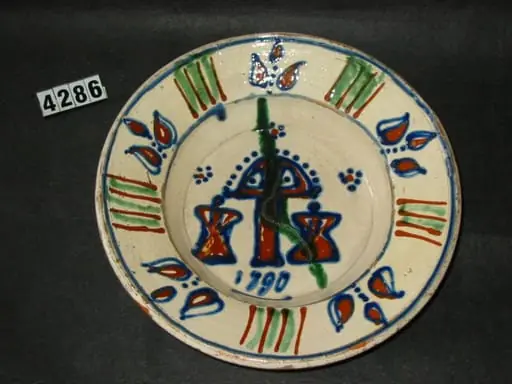
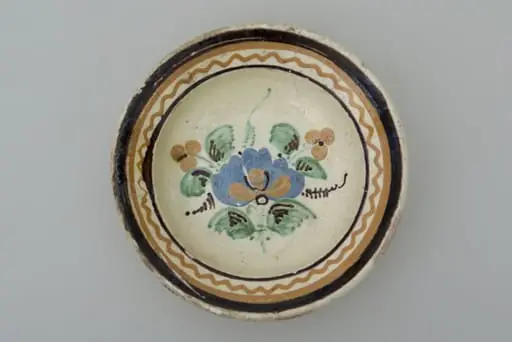
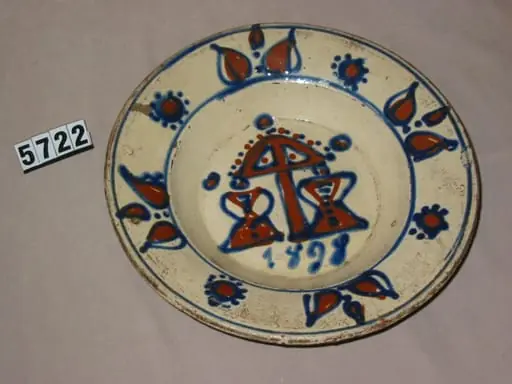
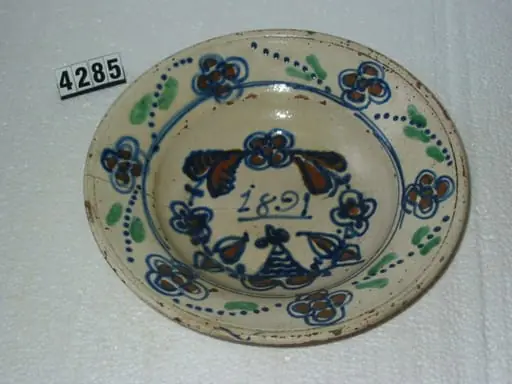
This looks like a small ceramic object shaped like a round pot with a handle. The top is painted in dark blue and light brown, showing what looks like a flower or plant design. Below it, there’s a rectangular base with the words "ANO 1811" written in bold blue letters.
The year "1811" suggests this might be from a time when people used simple, handmade pottery for everyday things. The flower design is rough but intentional, giving it a homemade feel.
If you like this kind of folk art, look up Romanticism.
Overview
The object is a modest ceramic vessel, roughly spherical with a single handle, and a flat rectangular base. Its glaze combines dark blue and light brown tones, and a stylized floral motif decorates the rim. The base bears the inscription “ANO 1811” rendered in prominent blue lettering, indicating its date of production.
Subject & Meaning
The painted design centers on a simplified flower or plant, rendered in a naïve, folk‑art manner. Such motifs often symbolized fertility, growth, or domestic comfort in everyday pottery, reflecting the maker’s connection to local decorative traditions rather than formal artistic allegory.
Technique & Style
The piece is hand‑thrown on a potter’s wheel and subsequently painted with mineral pigments before a low‑temperature firing. The brushwork is loose and uneven, characteristic of vernacular ceramics where functional use outweighs refined finish. The color palette of deep blue and earthy brown aligns with regional glaze recipes of the early nineteenth century.
History & Provenance
The inscription “ANO 1811” dates the vessel to the early nineteenth century, a period when small, utilitarian ceramics were produced for household use across Europe. No further provenance is recorded, suggesting the object likely originated in a local workshop serving a rural or small‑town market.
Context
In 1811, the Romantic movement was influencing decorative arts, encouraging a turn toward natural motifs and handcrafted aesthetics. While the pot is not a high‑style Romantic piece, its floral decoration and handmade quality echo the broader cultural shift toward valuing folk traditions and the picturesque.
Artist & collection