Artwork
Candlestand and holder (guéridon)
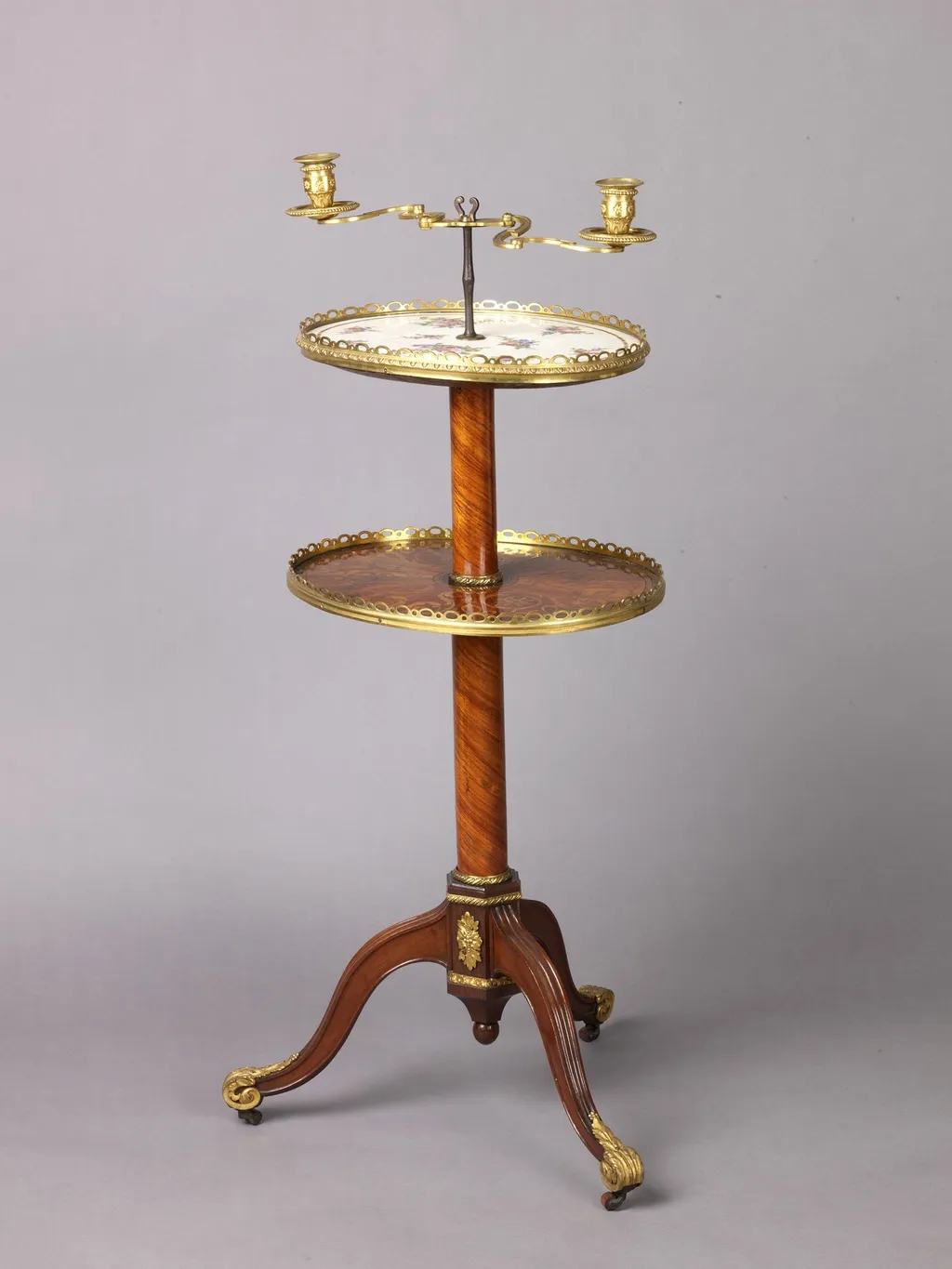
Candlestand and holder (guéridon) is an unspecified painting. It dates from 1730 and is held in the collection of the Metropolitan Museum of Art. The work depicts an elaborate candlestand, or guérillon, rendered in a painted format.
About this work
To learn more about the artistic techniques used in this piece, explore the technique of impasto.
The painting shows a tall, ornate candlestand with two tiers. The top tier has a white surface with gold trim and a floral pattern. It holds a small, golden candleholder with two arms.
The bottom tier is made of dark wood with a marbled pattern and gold trim. The stand has three curved legs with golden feet.
The candlestand appears to be from the 18th century, with intricate carvings and ornate details. The use of gold and marble suggests a high level of craftsmanship.
To learn more about the artistic techniques used in this piece, explore the technique of impasto.
History & Provenance
Created in 1730, this work is attributed to the craftsman Martin Carlin. Although classified as a painting in some internal records, the object is a candlestand and holder, known as a guéridon. The piece entered the collection of the Metropolitan Museum of Art through the bequest of Robert Lehman, who previously owned the item.
The specific circumstances of its original commission and the details of its ownership history prior to Lehman's acquisition are not detailed in the available records.
The painting Candlestand and holder (guéridon), created in 1730 and attributed to Martin Carlin, is part of the Metropolitan Museum of Art's collection. It was formerly owned by Robert Lehman.
The work has been exhibited at the Metropolitan Museum of Art.
Context
The candlestand and holder (guéridon) was created in 1730 and is classified as a painting, as documented in its primary description.
Attribution to the French decorative artist Martin Carlin connects the work to his significant contributions to 18th-century French interior design and furniture, particularly his candlestands.
It is held in the collection of the Metropolitan Museum of Art, forming part of the Robert Lehman Collection, which underscores its historical and artistic significance within the museum's European decorative arts holdings.
Scholarly attention has focused on Carlin's workshop production and the attribution of decorative objects from this period, with this piece cited in discussions of French Rococo design and material culture.
Overview
The work depicts an elaborate candlestand, or guérillon, rendered in a painted format. It presents a two‑tiered structure: an upper level finished in a white surface edged with gold and adorned with a floral motif, supporting a small, bifurcated golden candleholder; a lower level of dark wood simulated with a marbled pattern, also trimmed in gold. The base rests on three curved legs capped with gilded feet.
Subject & Meaning
The composition focuses on the candlestand as an object of decorative luxury, emphasizing its layered surfaces and ornamental details. By highlighting the interplay of light‑colored marble, dark wood, and gold accents, the painting underscores the status of such furnishings within 18th‑century interior design, where elaborate accessories signified wealth and refined taste.
Technique & Style
Executed in a painted medium, the artist employs careful modeling to suggest varied textures, smooth marble, polished wood, and gleaming metal. The rendering of gold trim and reflective surfaces suggests a subtle use of impasto to build up highlights, while fine brushwork conveys the intricate carvings and floral patterns characteristic of the period’s Rococo aesthetic.
Legacy
Works that render decorative objects in fine detail contribute to our understanding of material culture and aesthetic preferences of the period. By preserving the visual language of Rococo ornamentation, such paintings aid scholars in reconstructing the appearance and significance of luxury interiors in 18th‑century Europe.
Artist & collection

- A Salver with Two Bases
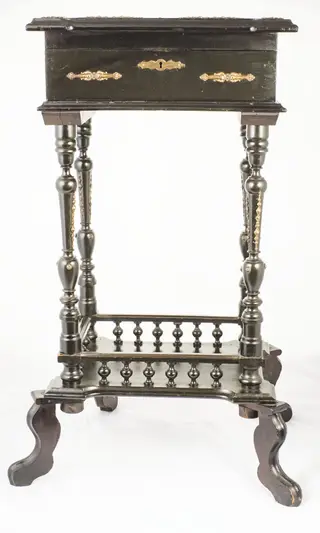 Masă din lemn furniruit negru. Are blat din porțelan oval, pictat cu rozete cu motive florale în alb, galben, mov și negru. Se sprijină pe patru picioare formate din o parte strunjită și una care imită laba animalieră. Sunt prinse între ele printr-un blat trapezoidal și un grilaj strunjit. Blatul cuprinde un sertar dreptunghiular care se deschide vertical. Capacul este prins cu balamale metalice. Interiorul său este capitonat cu pluș și mătase roșie. Pe capac este prinsă central o oglindă și sunt confecționate din mătase suporturi pentru prinderea diverselor ustensile necesare scrisului sau alte accesorii, precum hartie, plicuri, etc.. Masa (picioare și blat ) este decorată cu aplicații metalice din bronz.
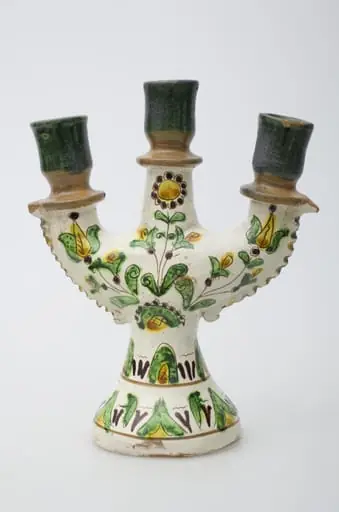 Obiect ceramic de uz casnic, format dintr-un picior tronconic, din care pornesc trei brațe, în care se introduc lumânările. Decorul pictural, realizat pe toată suprafața obiectului, este compus din motive geometrizante și vegetale. Primul registru, situat pe baza evazată, este format din elemente vegetale, dispuse circular și încadrat între două linii concentrice subțiri. Cel de-al doilea registru prezintă decor similar celui din registru inferior. Registrul superior este compus din trei flori, dintre care două (laterale) cu pistilul pronunțat, cea de-a treia, poziționată central, floarea soarelui. Gâtul și buza vasului au fost decorate cu verde și maro deschis. Iscălitură: indescifrabil. Cromatică: fond: alb; motive: crem; verde, maro închis, maro deschis, galben, negru.
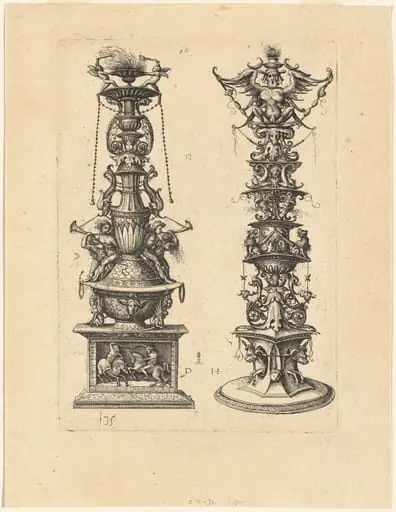 Two Candelabrum Designs
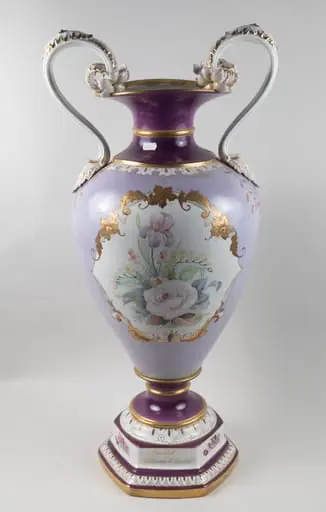 Vază din porțelan, tip amforă, cu două anse, decorată pe un fond mov cu două medalioane, unul reprezentând portretul Elenei Ceaușescu. cel de-al doilea medalion este decorat un buchet cu flori. Pe gâtul vazei o dedicație ”Omagiu, Ianuarie 1989”. Oferită de Consiliul Național al Femeilor. Vază oferită Elenei Ceaușescu de Consiliul Național al Femeilor cu ocazia aniversării zilei de naștere, ianuarie 1989.
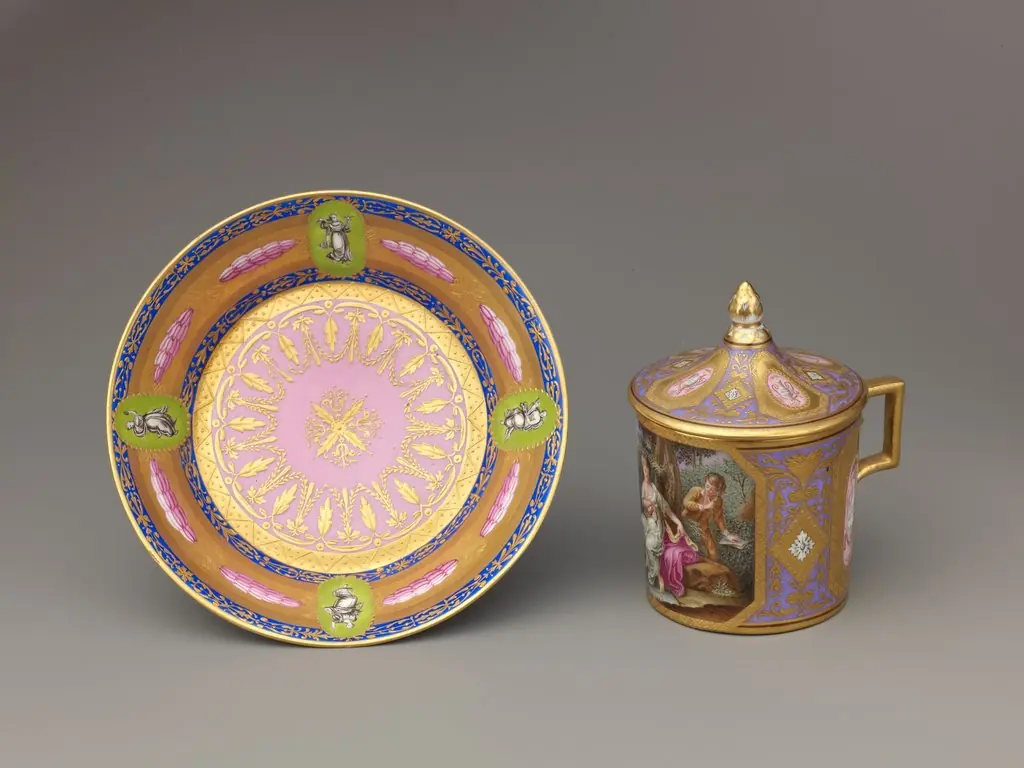 Covered Cup and Saucer
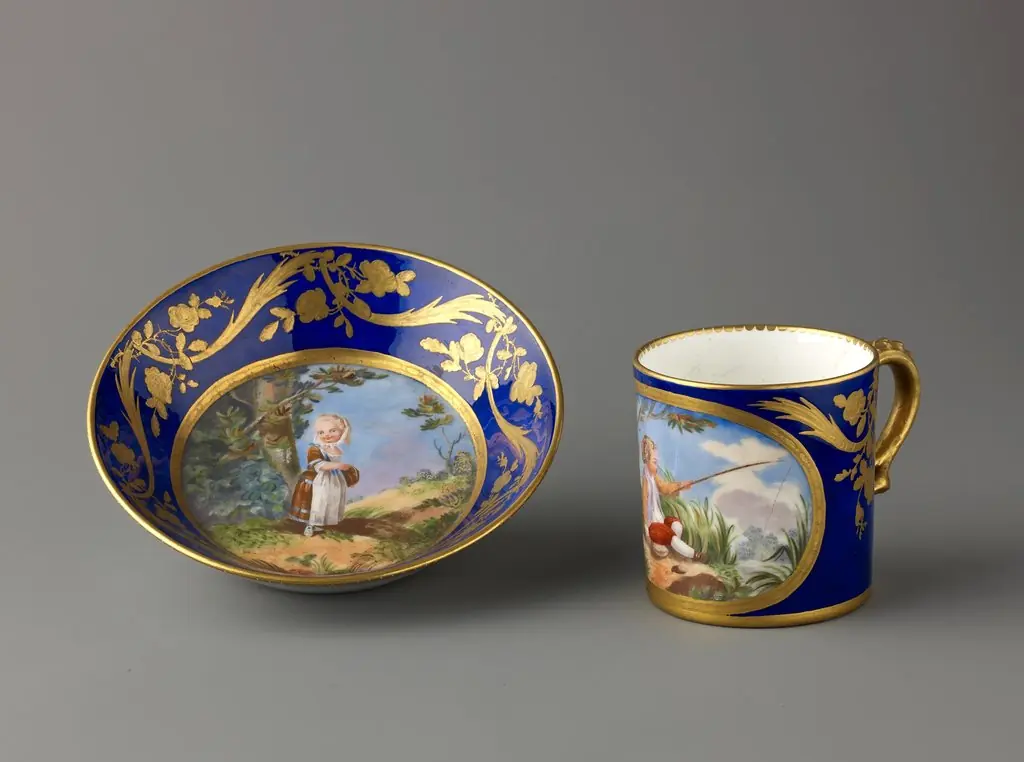 Cup and saucer
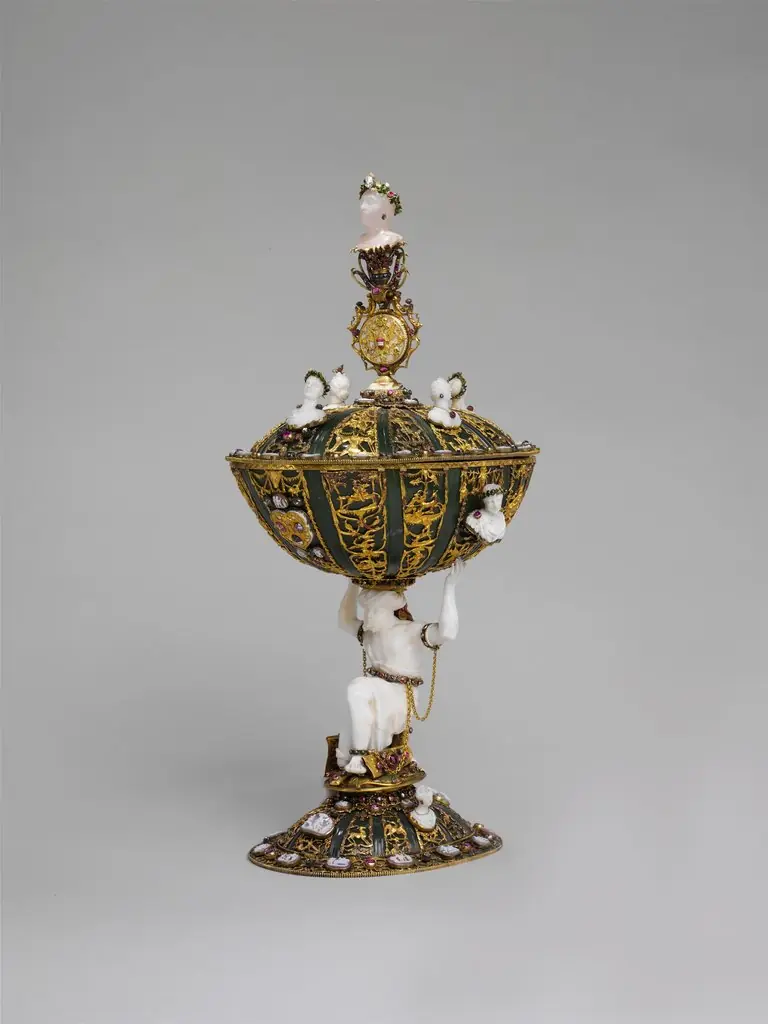 Cup and Cover Supported by an Enchained Turk
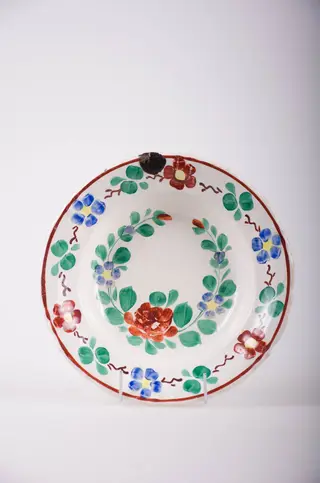 Farfurie de porțelan smălțuită pe fond alb. Decorată cu flori și frunze dispuse sub formă de ghirlande atât în centrul vasului cât și pe buza acestuia. De asemenea sunt prezente și motive geometrice: linia și linii întrerupte. Comatică: fond: alb; motive: verde; albastru; galben; roșu.
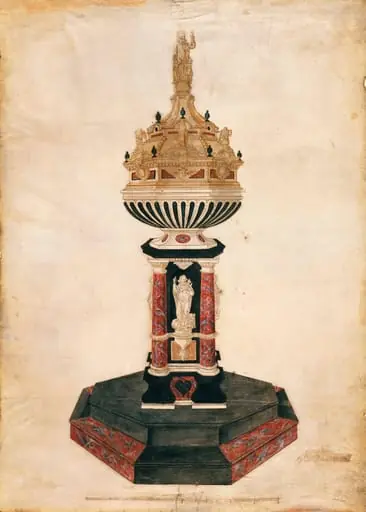 Canterbury Cathedral Font Design