Artwork
Christ in Glory
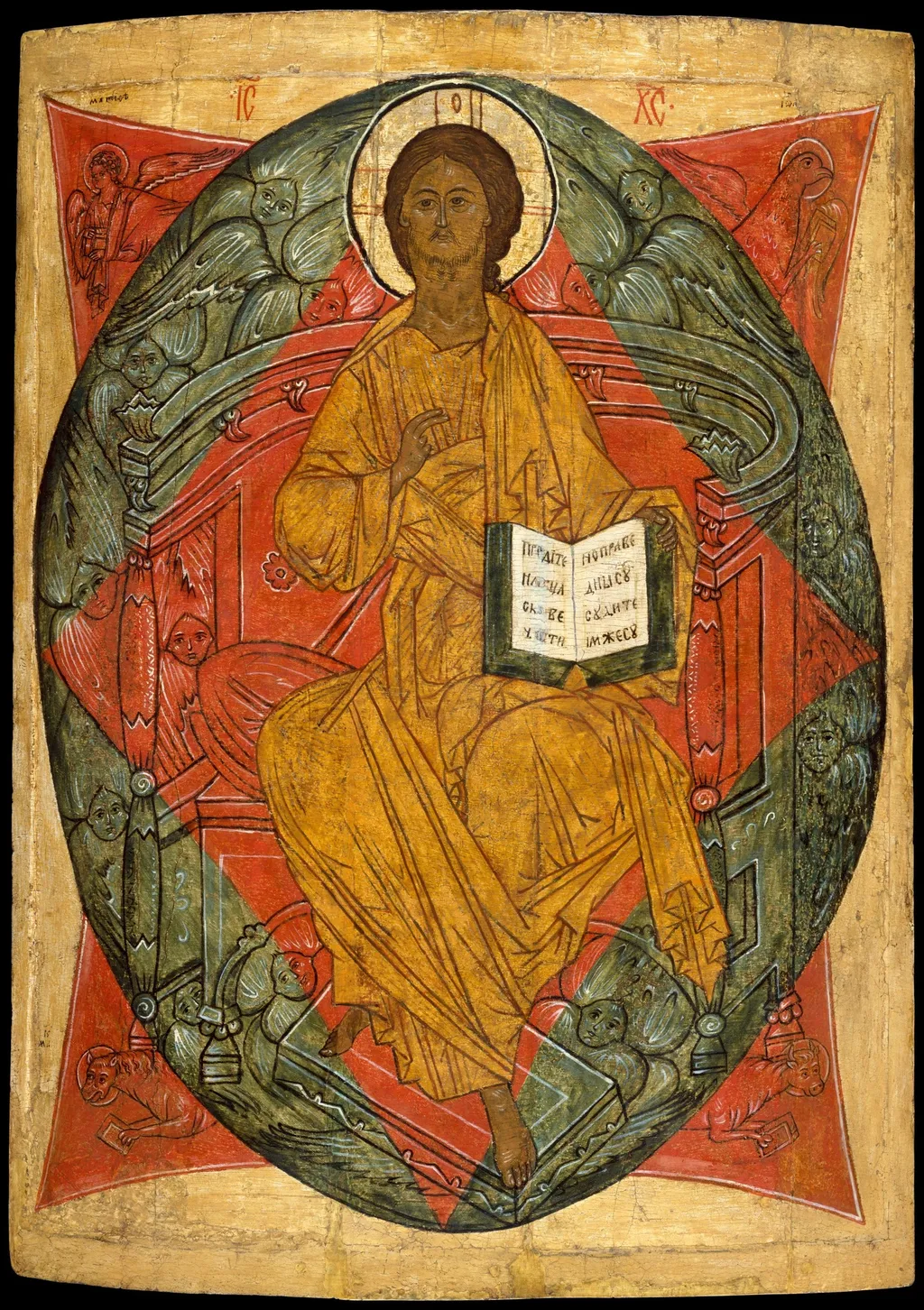
Christ in Glory is a tempera painting. It dates from 1500 and is held in the collection of the Metropolitan Museum of Art.
About this work
Technique & Style
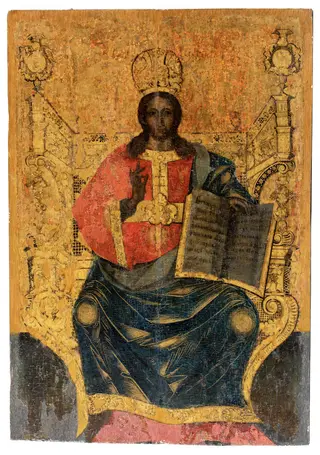
The composition features the depiction of a book, consistent with its iconographic classification as a representation of Christ in Glory.
Created around 1500, this religious panel painting utilizes tempera as its primary medium. The work is executed on a wooden support, measuring 107 cm in height and 78.4 cm in width. Stylistically, the piece is attributed to an anonymous Russian artist, potentially originating from the Novgorod region.
The composition features the depiction of a book, consistent with its iconographic classification as a representation of Christ in Glory.
History & Provenance
Christ in Glory is a tempera painting on panel created around 1500 by an anonymous Russian artist associated with Novgorod. The work measures 107 cm in height and 78.4 cm in width. It has been part of the Metropolitan Museum of Art's collection, where it forms part of the museum's holdings of religious panel paintings. No specific accession number, exhibition history, or detailed acquisition record is documented in the available sources.
Overview
This tempera painting, titled Christ in Glory, depicts a central male figure seated within a circular border. Adorned in a yellow robe, the figure holds an open book, his gaze directed forward. A vibrant red background frames the composition, which is further enriched by detailed depictions of green foliage and various animals encircling the central image. The artwork's age and medium suggest a historical period of creation.
Subject & Meaning
The artwork centers on the figure of Christ, presented frontally and seated on a red chair. He holds a book, its text indistinct, a common attribute signifying divine scripture or wisdom. The surrounding natural elements, including intricate green leaves and various animals, suggest a depiction of creation or paradise, reinforcing the theme of Christ's dominion or presence within the natural world. His direct gaze engages the viewer.
![Christ in Majesty [recto]](https://artifactworldgallery.com/img/christ-in-majesty-recto--312aa8dd5634bdac-w320.webp)
Artist & collection

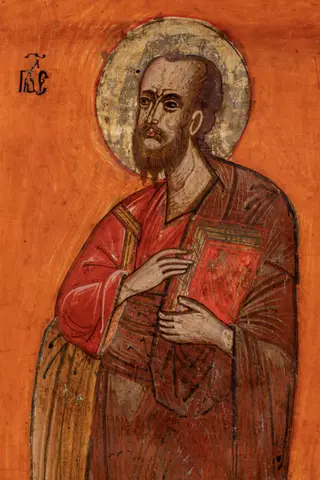 Sfinții apostoli Pavel și Matei
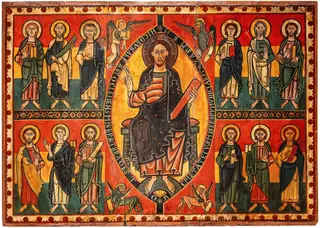 Altar frontal from Esquius
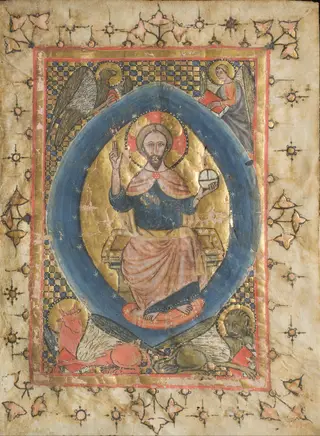 Christ in Majesty with the Symbols of the Evangelists
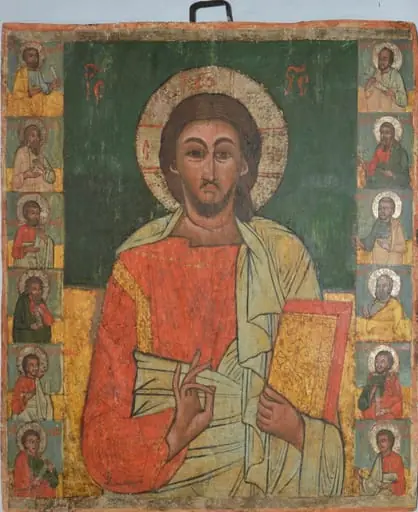 Iisus Hristos Învățător, flancat de apostoli
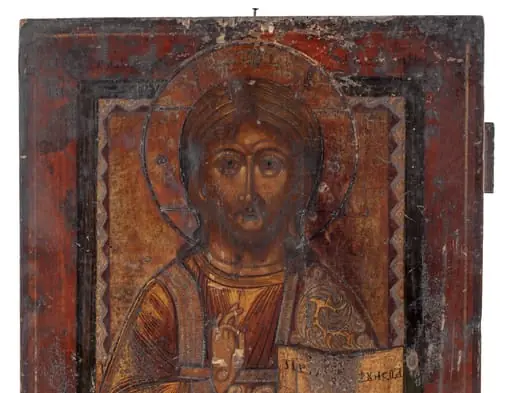 Iisus Christos (Iisus Hristos)
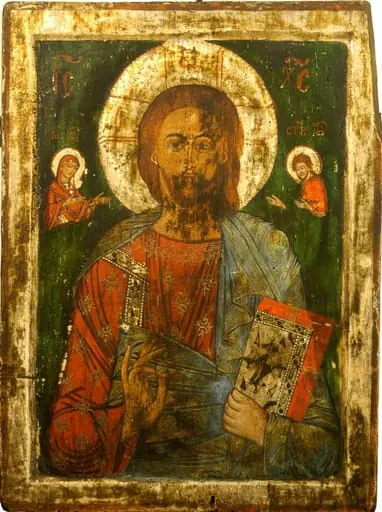 Deisis
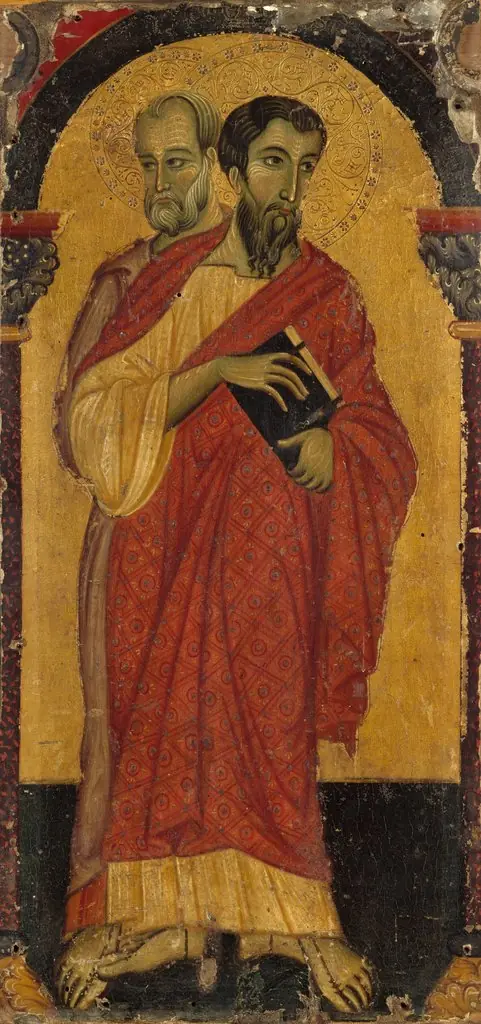 Saints Bartholomew and Simon
 Saviour
 Pantocrator
 Johannes Evankelista ja oppilaansa Prohoros, venäläinen ikoni
 Trinity with the Saints
- Christ in Majesty [recto]