Artwork
Composite Camel with Attendant
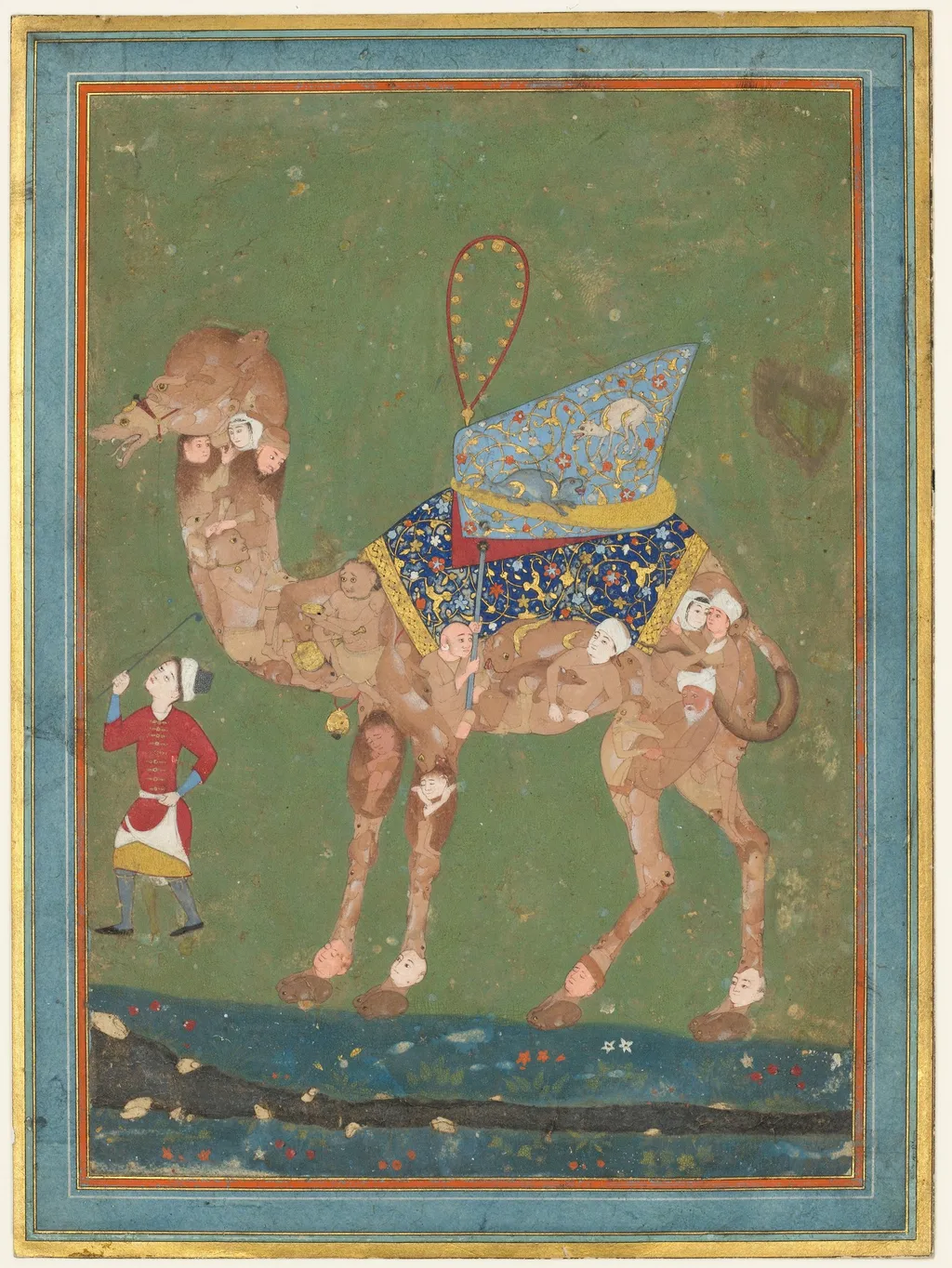
Composite Camel with Attendant is an unspecified painting. It dates from 1562 and is held in the collection of the Metropolitan Museum of Art.
About this work
Subject & Meaning
The painting shows a composite camel accompanied by an attendant, a symbolic pairing that merges two distinct creatures into a single fantastical form.
The painting shows a composite camel accompanied by an attendant, a symbolic pairing that merges two distinct creatures into a single fantastical form. The attendant serves as a human counterpart that emphasizes the surreal and ceremonial function of the hybrid beast within the composition. Together they evoke themes of exotic travel and the blending of natural and cultural realms, reflecting sixteenth‑century artistic interest in imaginative hybrids and courtly display.
The work is housed in the Metropolitan Museum of Art, where it is catalogued as a watercolor dating to 1562.
History & Provenance
The work known as Composite Camel with Attendant is a watercolor painting executed in 1562. Although the specific creator is not definitively identified in available records, the piece has been attributed to an unknown artist. The artwork was created in the year 1562, establishing its historical context within the mid-sixteenth century. It is currently held within the collection of the Metropolitan Museum of Art.
Composite Camel with Attendant is part of the Metropolitan Museum of Art's collection, listed under its accession number 1983.466. The work was created in 1562 and has been exhibited in the museum's galleries dedicated to European paintings.
The painting entered the Met's holdings through a 1983 acquisition, documented in the institution's accession records.
It was featured in the exhibition "European Paintings: Selections from the Collection" at the Metropolitan Museum of Art, which ran from 1984 through 1985.
The Met's online collection entry notes that the work is part of its European Paintings department and is accessible to the public within the museum's permanent galleries.
Overview
The work presents a composite camel constructed from a multitude of small, uniformly rendered figures that are stacked to form the animal’s body. The camel is equipped with a vivid blue saddle adorned with gold motifs and a red tassel that drapes from its neck. To the left, a figure dressed in a red coat and blue trousers holds a staff, standing beside the creature against a blue backdrop framed by red and gold edging.
Technique & Style
The artist employs a repetitive, block‑like arrangement of miniature figures to create the illusion of a larger form, a method that blurs the line between portraiture and abstraction. Simple facial features and outstretched arms give each figure a uniform appearance, while the decorative border of red and gold lines frames the composition with a decorative, almost manuscript‑like quality.
Context
The piece reflects a tradition of imaginative composite figures found in certain folk and courtly visual cultures, where animals are rendered from human components to convey allegorical or whimsical narratives. The use of vivid primary colors and ornamental borders aligns it with decorative painting practices that emphasize visual spectacle over realistic representation.
Artist & collection

 Untitled
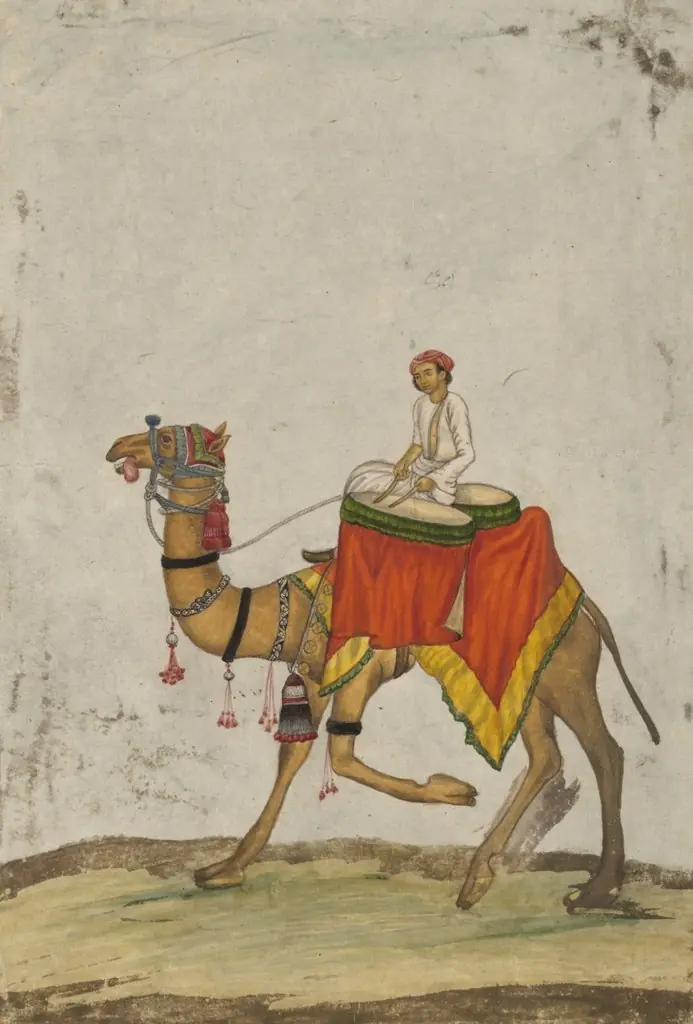 A camel with its rider playing kettle drums
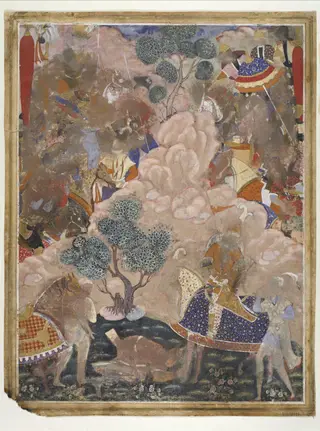 Hamza receives an envoy of Qitanush Shah
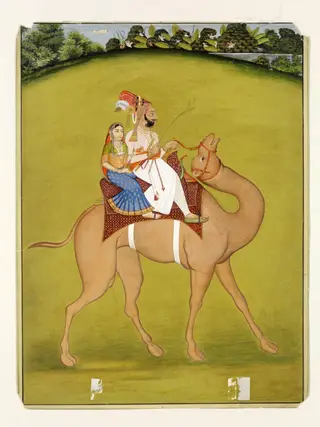 Dhola and Maru
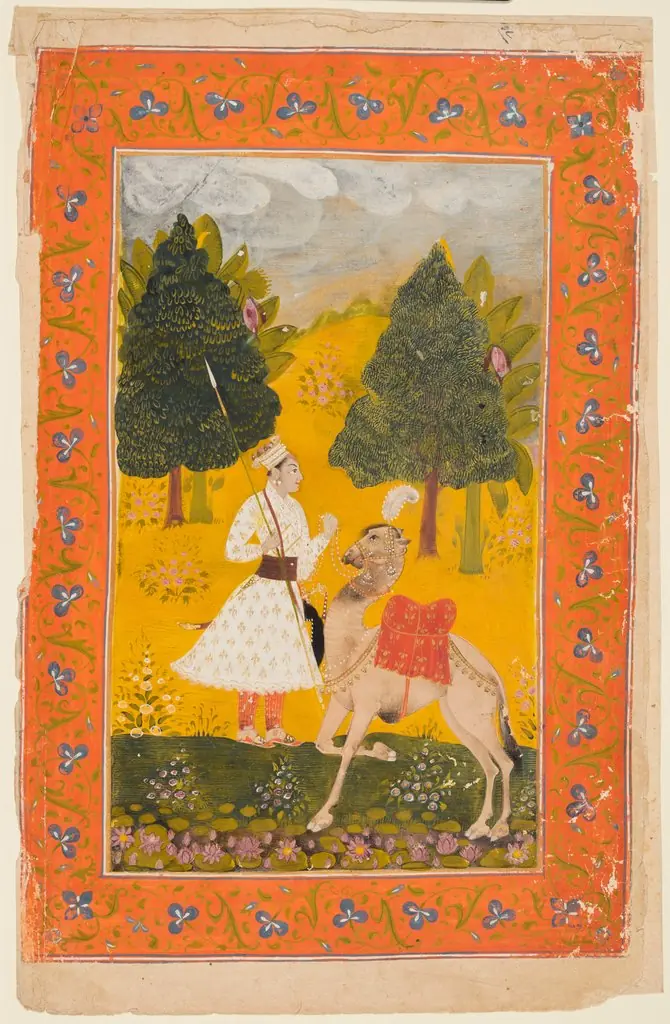 Maru Ragini, from a Ragamala (Garland of Melodies)
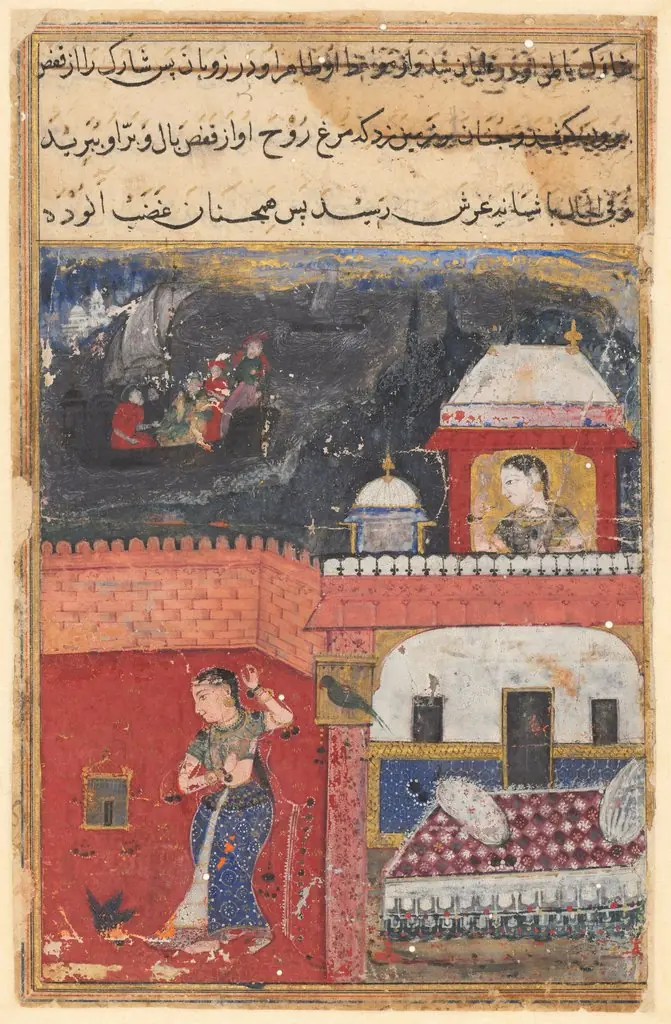 Khujasta kills the pet mynah who advises her not to be unfaithful to Maymun, her husband, from a Tuti-nama (Tales of the Parrot): First Night
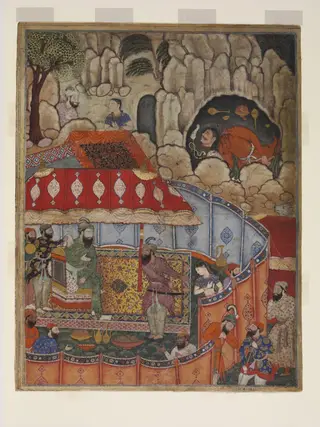 Hamzanama
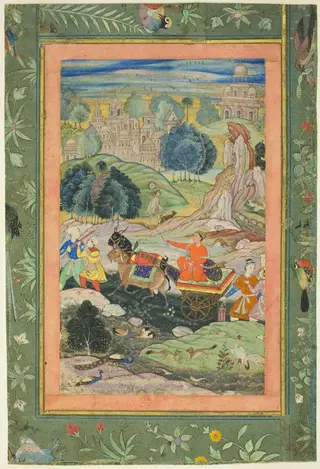 Prince Riding in Chariot Drawn by Goats
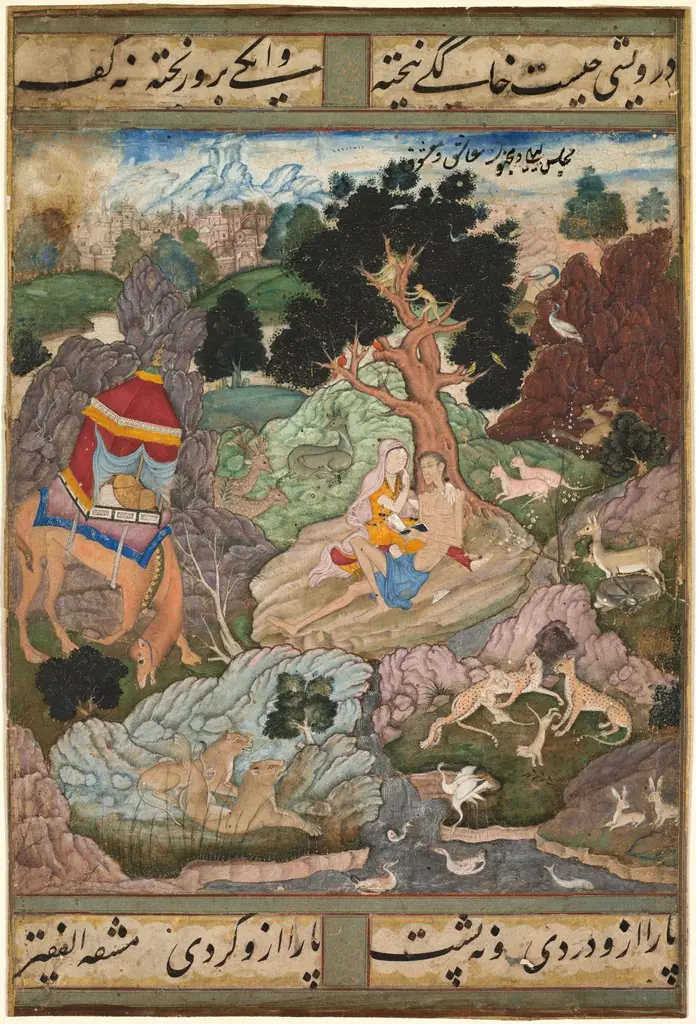 Layla and Majnun in the wilderness with animals, from a Khamsa (Quintet) of Amir Khusrau Dihlavi
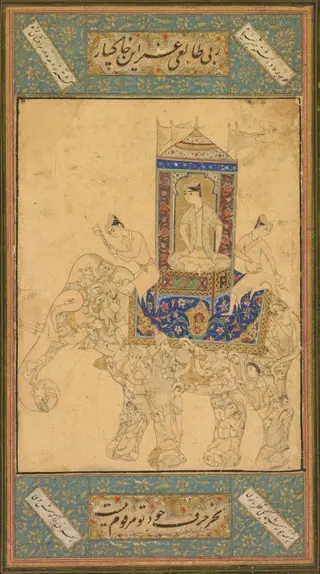 A prince riding a composite elephant