Artwork
Crucifixion with Saints Cosmas and Damian
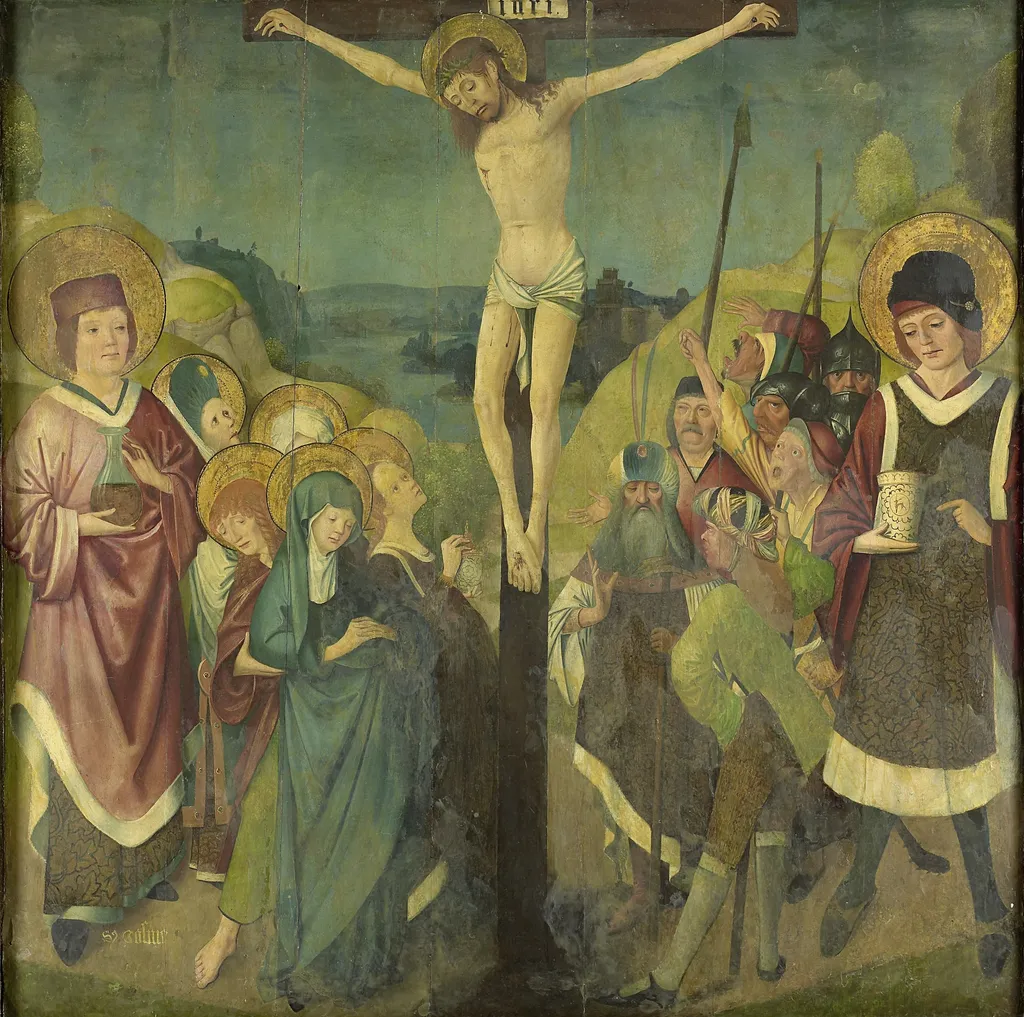
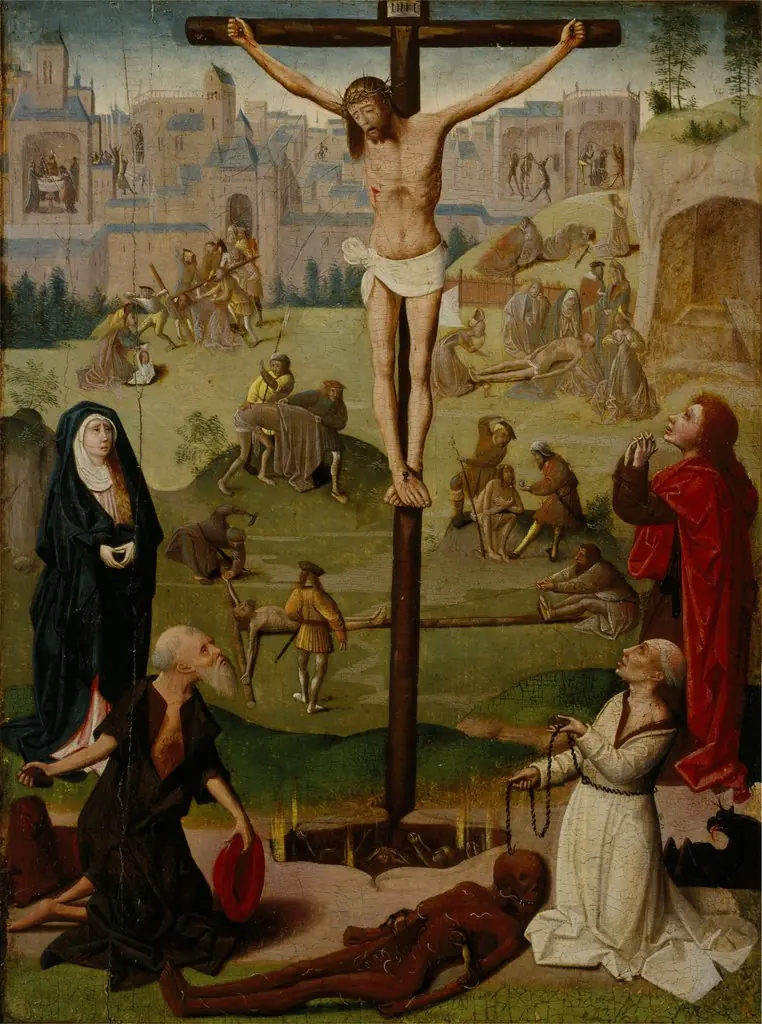
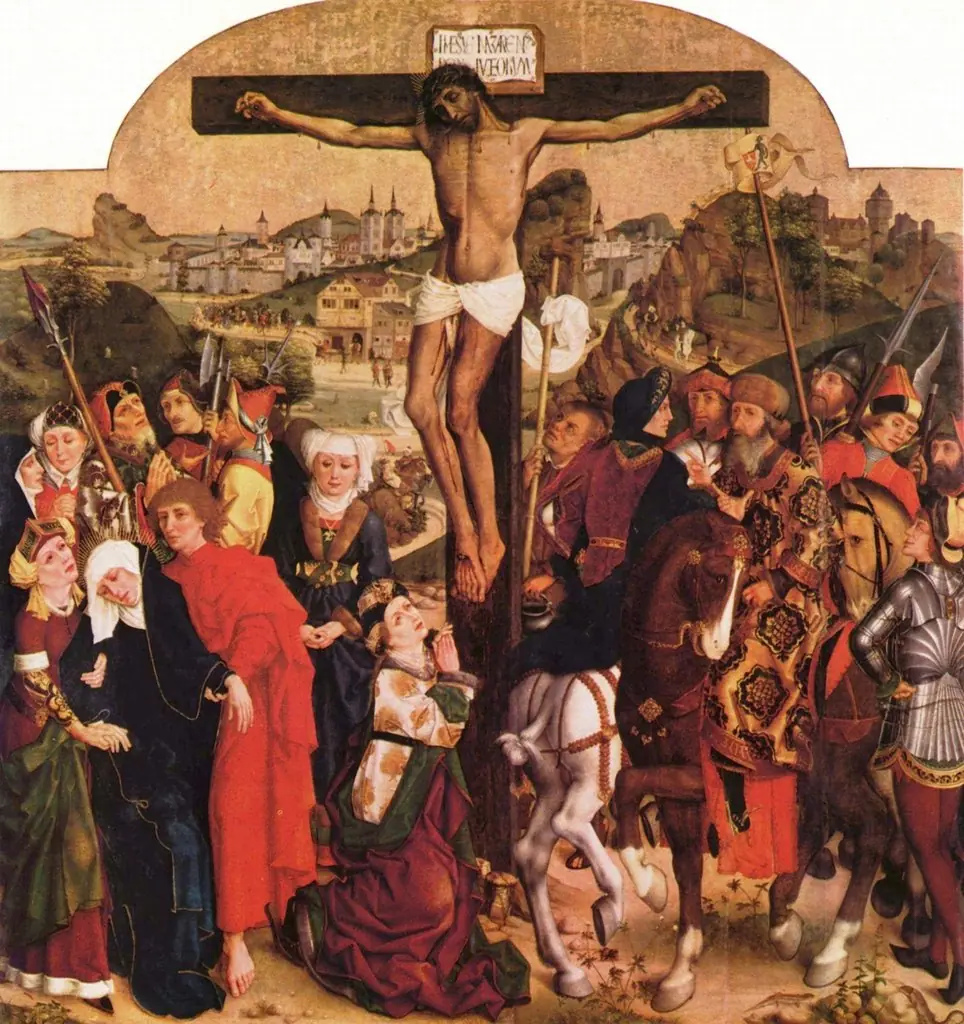
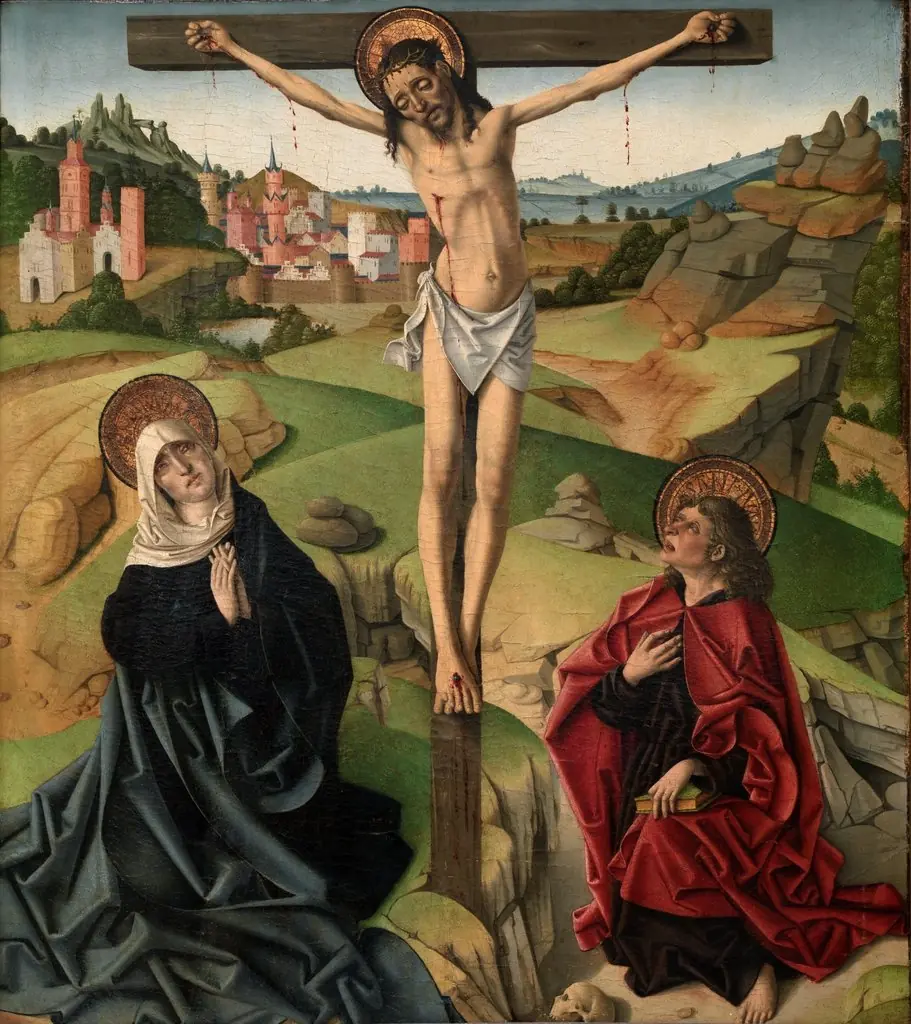
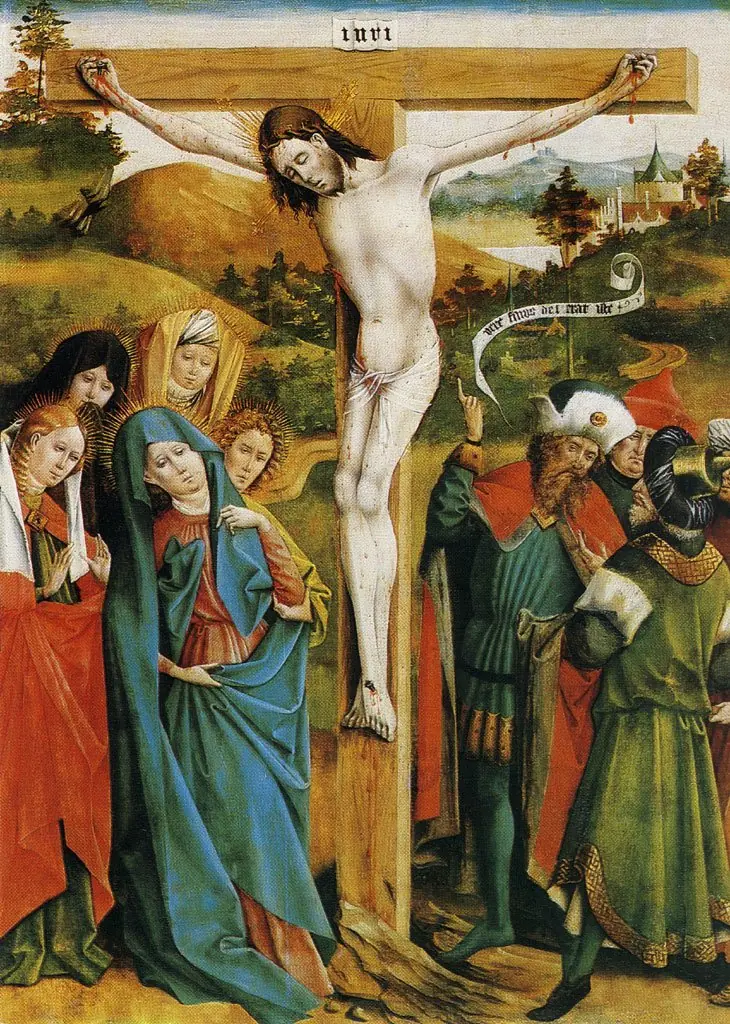
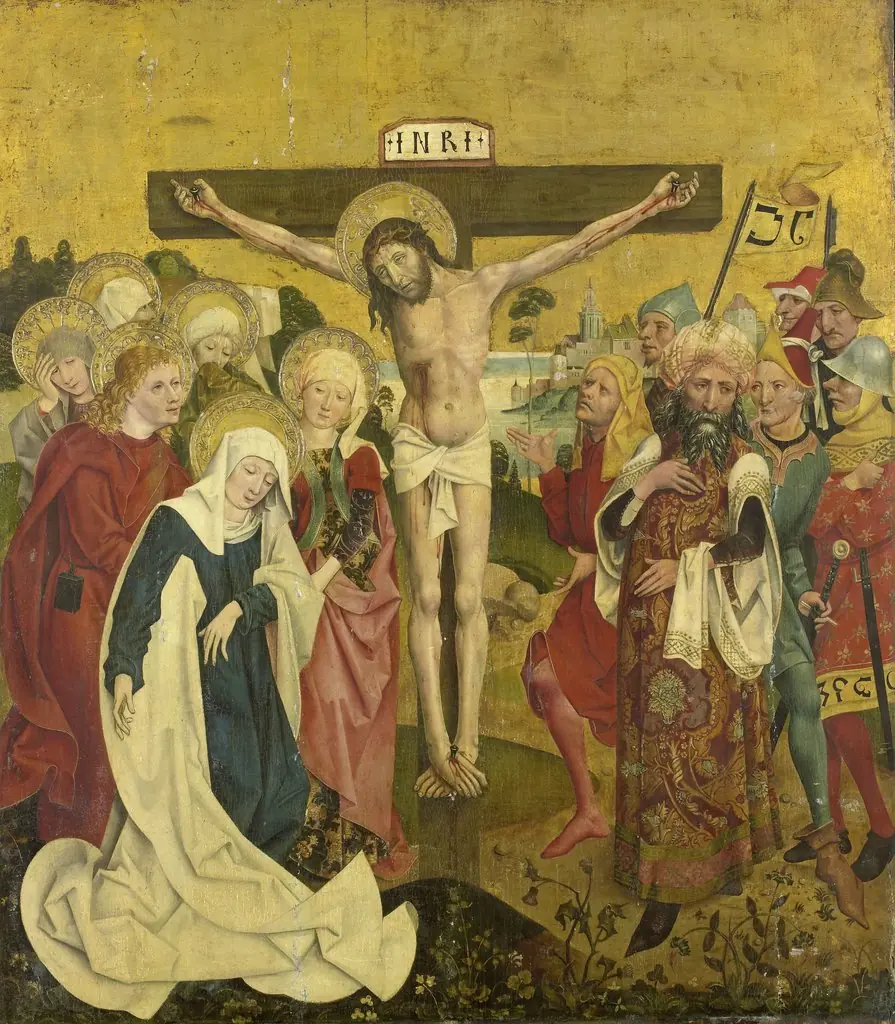
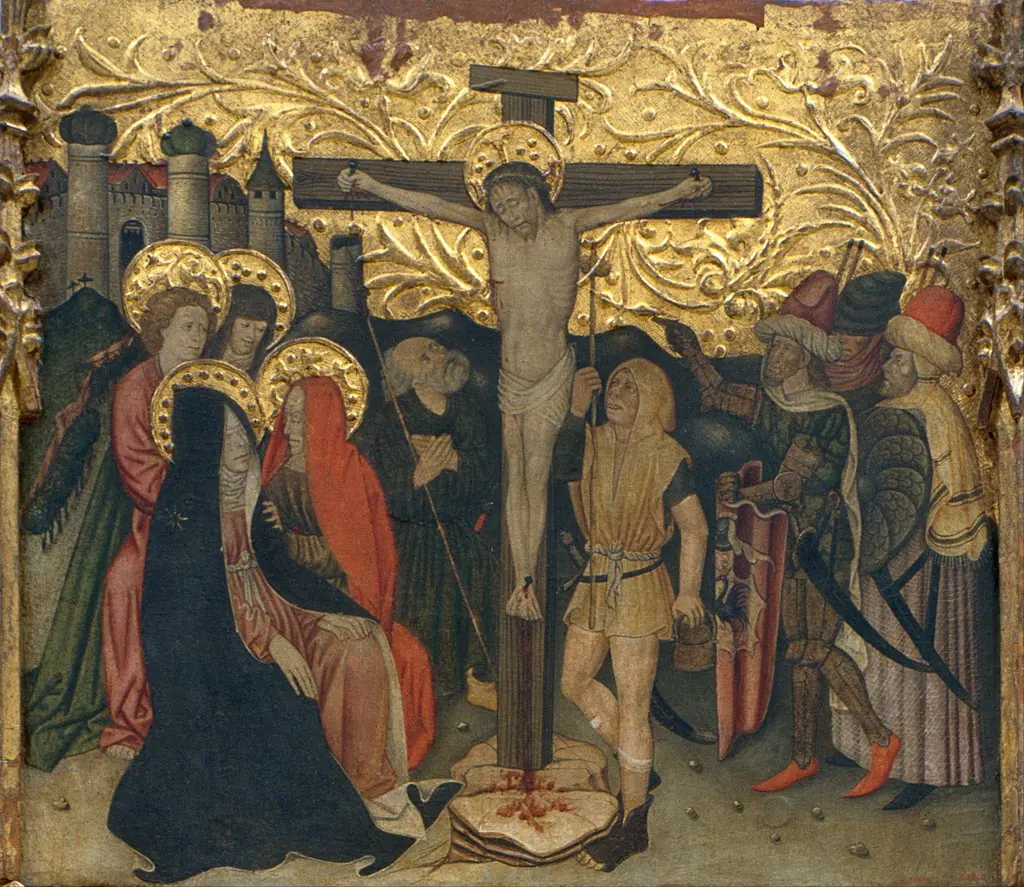
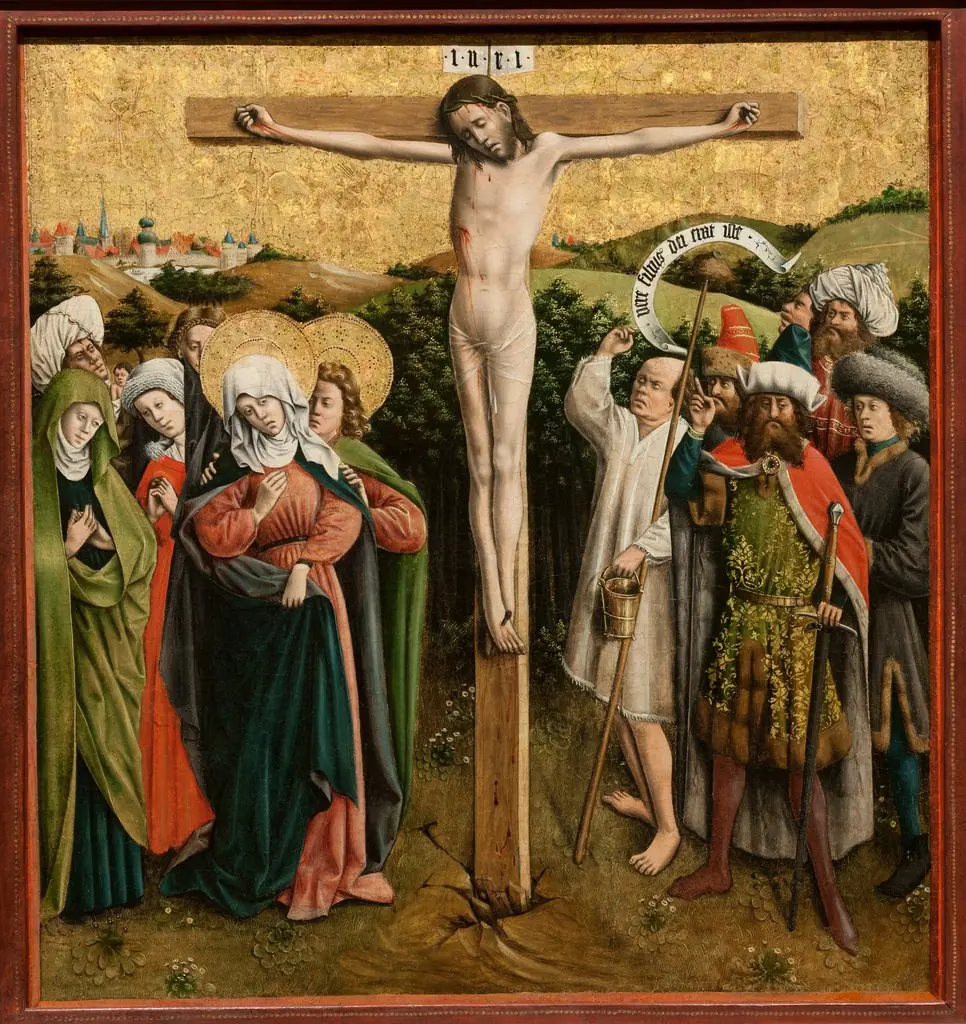
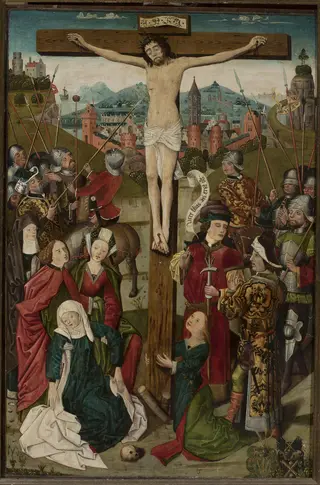
Crucifixion with Saints Cosmas and Damian is an oil painting. It dates from 1437 and is held in the collection of the Rijksmuseum. The work depicts the crucifixion of Christ, centrally positioned on a cross, encircled by a varied assembly of onlookers.
About this work
Subject & Meaning
The composition reflects traditional religious symbolism, where the crucifixion serves as a visual narrative of atonement.
The painting depicts the Crucifixion of Jesus Christ as its central subject, a pivotal event in Christian iconography symbolizing sacrifice, redemption, and divine love. Christ is shown on the cross, flanked by Saints Cosmas and Damian, who were early Christian martyrs and physicians. Their presence underscores themes of healing and salvation, linking their medical vocation with Christ’s role as the ultimate healer of humanity’s spiritual afflictions.
The composition reflects traditional religious symbolism, where the crucifixion serves as a visual narrative of atonement. The inclusion of Cosmas and Damian, often depicted in medieval and Renaissance art as protectors of the faithful, reinforces the painting’s devotional purpose, inviting viewers to contemplate the intersection of earthly suffering and divine grace.
History & Provenance
The Crucifixion with Saints Cosmas and Damian is dated to 1437 by internal curatorial records.
It entered the collection of the Rijksmuseum as part of the Cornelis Hoogendijk bequest in 1893, and has remained in the museum’s holdings since that date.
Legacy
The painting's early attribution to an anonymous hand and its presence in the collection of Cornelis Hoogendijk underscore its significance within Dutch religious art of the 15th century. The work's composition, featuring the crucifixion of Jesus alongside Saints Cosmas and Damian, has informed scholarly discussions of devotional imagery and panel painting techniques in the period.
Its stylistic elements and iconography have been cited in studies of late medieval iconography, particularly in relation to the cult of the saints and the visual representation of martyrdom. The piece's inclusion in the Rijksmuseum's collection has contributed to ongoing research on the development of religious art in the Netherlands.
The attribution history of the work, including its initial classification as anonymous, reflects broader patterns in the study of early Netherlandish painting and the challenges of identifying artistic authorship in the 15th century.
Overview
The work depicts the crucifixion of Christ, centrally positioned on a cross, encircled by a varied assembly of onlookers. To the left, two women in red garments with white trim clutch a jar and a cloth, while on the right, armored soldiers with spears and cups stand as witnesses. A muted green hill rises in the background, punctuated by a distant building, and the figures are marked by gold halos.
Technique & Style
Executed in oil on canvas, the painting employs flat, vivid coloration with limited modeling, creating a decorative surface rather than naturalistic depth. Simple geometric shapes define the figures, and the use of gold halos reinforces their sanctity. Over time, some pigments have faded, softening the original brightness.
Context
The work reflects a tradition of devotional imagery common in post‑Byzantine and early Baroque religious art, where narrative clarity and symbolic color were prioritized over illusionistic space. The inclusion of saints Cosmas and Damian aligns the piece with churches dedicated to healing and charity.
Artist & collection