Artwork
Der hl. Rochus verteilt Almosen
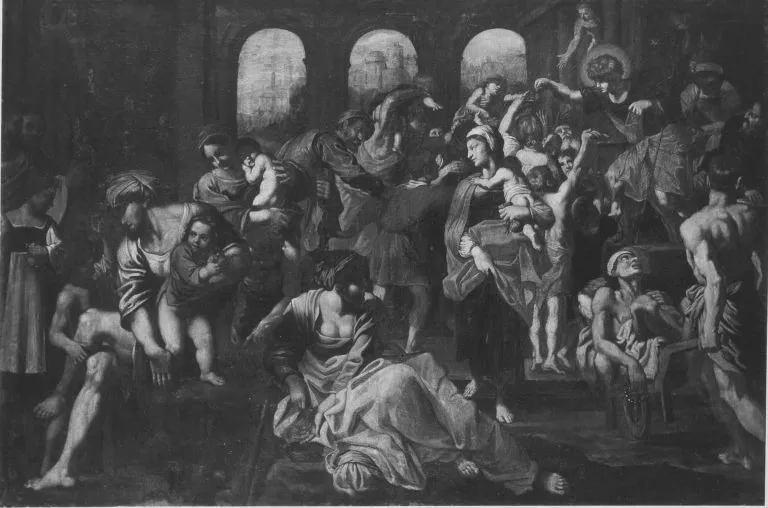
Der hl. Rochus verteilt Almosen is an unspecified painting by the Mannerist artist Unknown. It dates from 1592 and is held in the collection of the Bavarian State Painting Collections. Der hl.
About this work
Subject & Meaning
These visual cues underscore the work's moral message of compassion and heavenly assistance granted through saintly virtue.
Der hl. Rochus verteilt Almosen shows Saint Roch in the act of distributing alms, a scene drawn from his hagiography. The composition emphasizes charitable intercession, portraying the saint with a distinctive pilgrim's staff and a visible wound on his thigh, symbols of his penitential journey and divine favor.
These visual cues underscore the work's moral message of compassion and heavenly assistance granted through saintly virtue. The painting was created in 1584 and is housed in the Alte Pinakothek, part of the Bavarian State Painting Collections.
History & Provenance
The painting Der hl. Rochus verteilt Almosen was created in 1584. It is identified as a copy of an original work by the artist Annibale Carracci. The piece is currently held within the Bavarian State Painting Collections, specifically at the Alte Pinakothek.
The painting Der hl. Rochus verteilt Almosen, dated 1584, is held by the Bavarian State Painting Collections. It resides in the Alte Pinakothek in Munich. The work is identified as a copy of a painting by Annibale Carracci. Its inventory details and specific accession number are not provided in the available records.
Overview
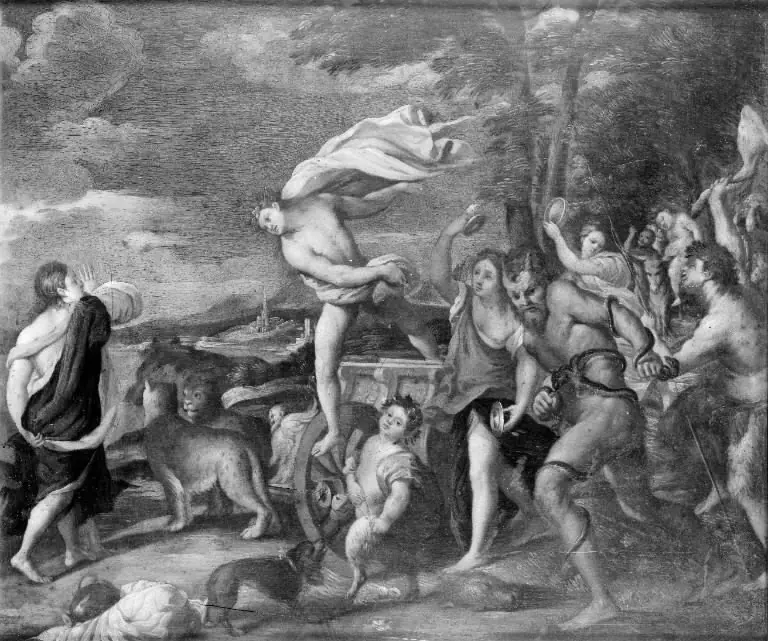
Der hl. Rochus verteilt Almosen is a painted composition that captures a tumultuous gathering of figures rendered in dramatic poses. The scene is populated by individuals lying, reaching, and gesturing, some appearing wounded or startled while others seem to offer assistance.
The overall effect is one of heightened tension, emphasized by an uneven distribution of light across the crowd.
Technique & Style
The artist employs a pronounced chiaroscuro, contrasting illuminated faces with deep shadows to model form and direct the viewer’s eye. This stark lighting creates a sense of depth, allowing certain figures to emerge from darkness while others recede, thereby intensifying the emotional urgency of the scene.
Context
Although specific details of its creation are scarce, the painting aligns with Baroque sensibilities that favored dynamic compositions and dramatic lighting to evoke emotional responses. Such visual strategies were common in religious works intended to inspire piety and empathy among viewers.
Artist & collection









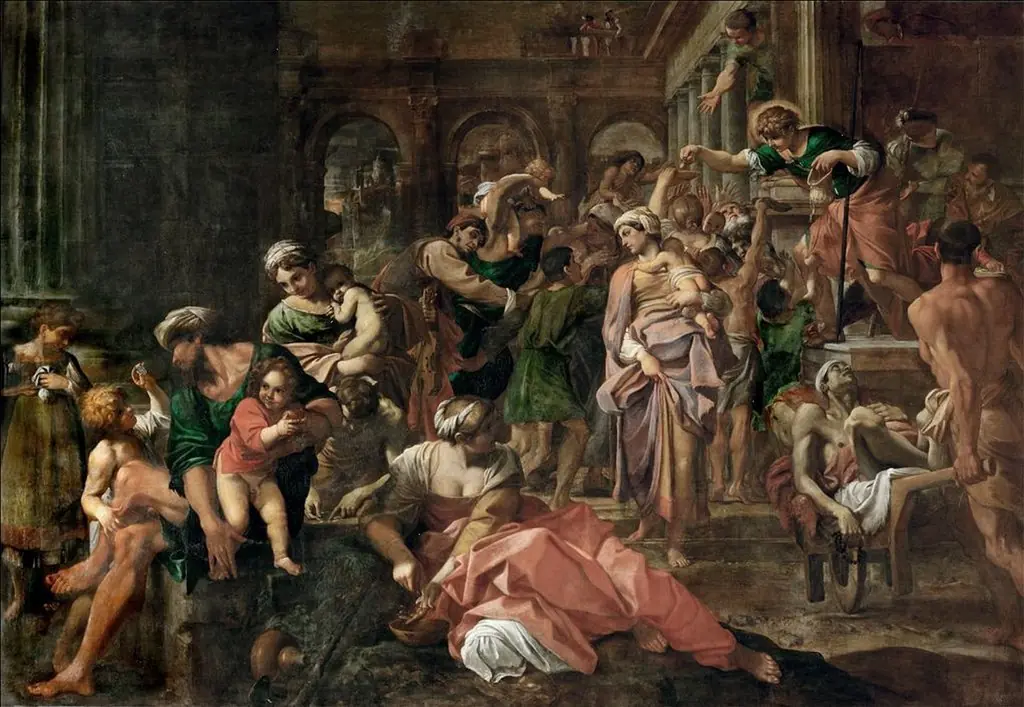 Saint Roch Distributing Alms
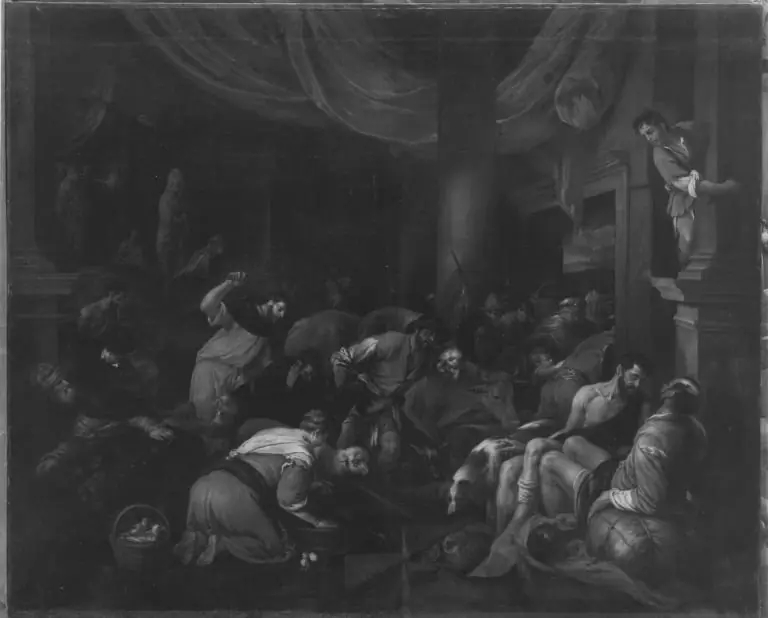 Vertreibung der Wechsler aus dem Tempel (Kopie nach)
 Rape of the Sabines
 Salomon receives the Queen of Sheba
 The Feast Given by Joseph for His Brothers
 Die keusche Susanna
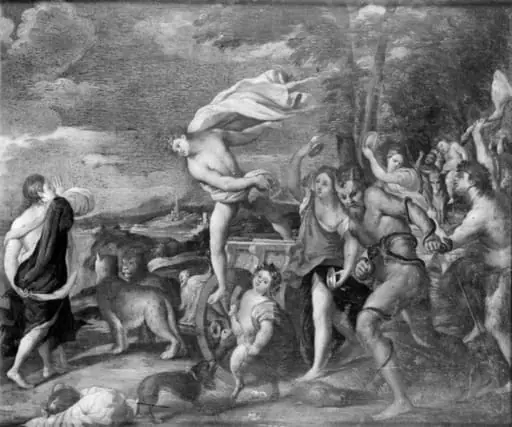 Bacchus and Ariadne
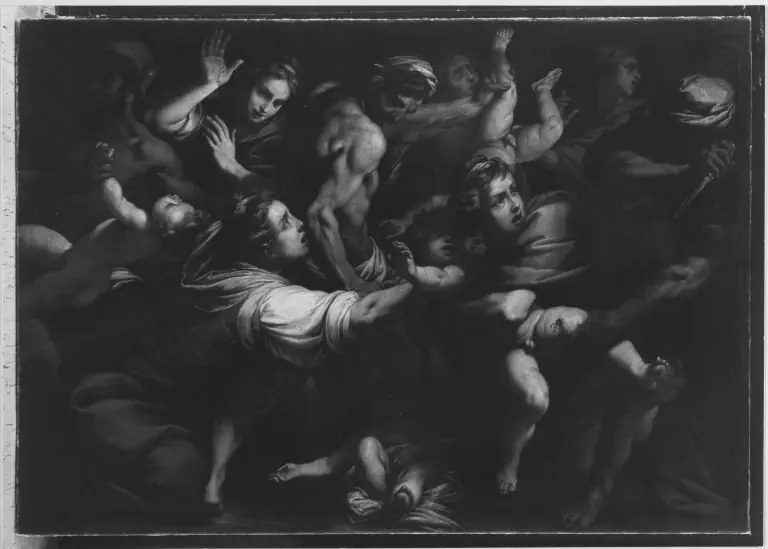 Bethlehemitischer Kindermord
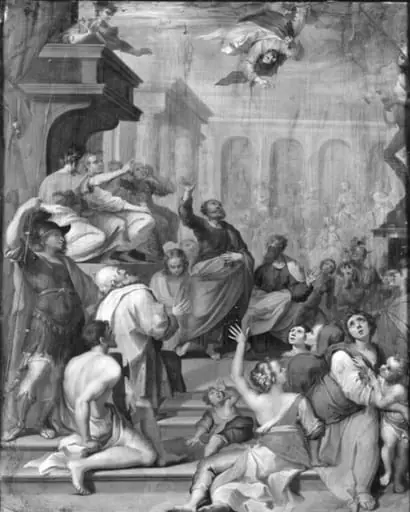 The Fall of Simon Magus
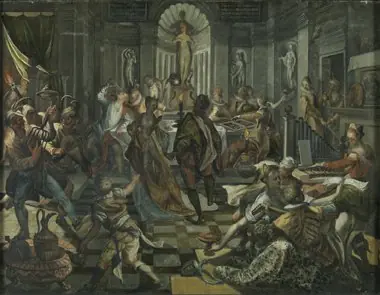 Nocturnal party and masquerade
 Bacchus and Ariadne
- Cleopatra übergibt Augustus Krone uund Szepter