Artwork
Diptych with the Passion of Christ (left wing):Flagellation and Christ Before Pilate
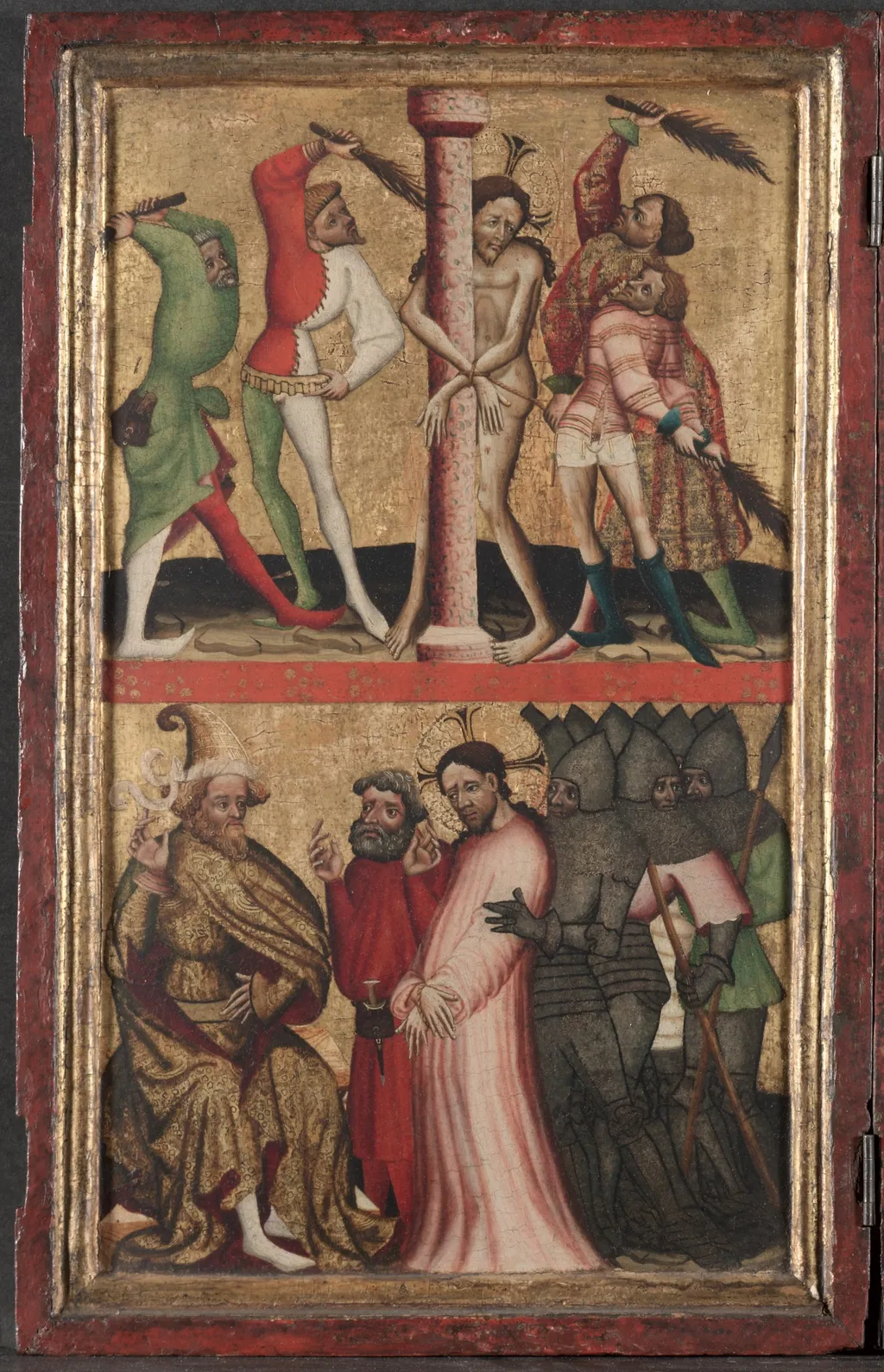
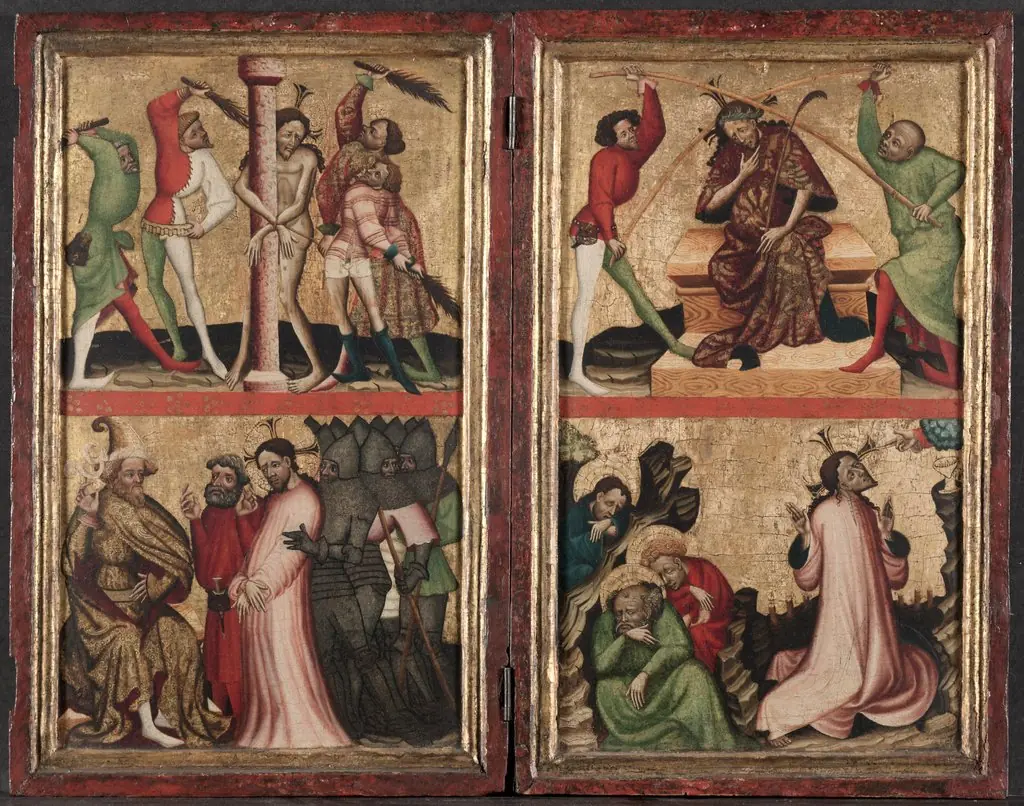
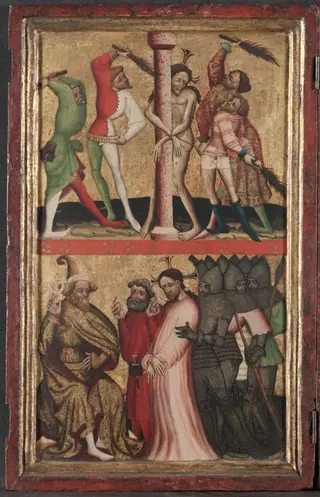
Diptych with the Passion of Christ (left wing):Flagellation and Christ Before Pilate is an unspecified painting. It dates from 1400 and is held in the collection of the Cleveland Museum of Art.
About this work
Subject & Meaning
The left wing of the diptych portrays two sequential moments from the Passion narrative: Christ before Pilate and the Flagellation.
The left wing of the diptych portrays two sequential moments from the Passion narrative: Christ before Pilate and the Flagellation. In the composition, Pilate's court functions as the setting for the trial of Jesus, a standard iconographic motif that emphasizes the judicial condemnation of the Messiah. The flagellation scene underscores the physical torment inflicted upon Christ, reinforcing themes of sacrifice and redemption.
Together, these images serve a devotional purpose, inviting viewers to meditate on the suffering and judicial injustice endured by Christ, central concerns in medieval religious art.
History & Provenance
The left wing of the Passion diptych, depicting the Flagellation and Christ Before Pilate, is held in the collection of the Cleveland Museum of Art, accessioned in 1945 with the number 1945.115.a. Created around 1400 by an unknown artist, this religious painting measures 45.7 by 27.0 centimeters. Its small scale and paired iconography suggest it may have been intended for private devotion rather than a public altarpiece.
No definitive commission record or documented provenance prior to the twentieth century survives, and the available records list no specific past exhibitions or loan history for the panel.
Context
The diptych's left wing, Flagellation and Christ Before Pilate, belongs to a Passion cycle painted circa 1400 and housed in the Cleveland Museum of Art. Its religious genre and devotional function align with early fifteenth-century practices of visualizing Christ's suffering for private contemplation. Scholarship treats the work as part of the broader tradition of Passion imagery, emphasizing its role within a narrative cycle rather than as an isolated piece.
The depiction of Pilate's court underscores the narrative focus on judicial condemnation, linking the panel to contemporary theological interpretations of Christ's trial. Its formal qualities and iconography are studied as exemplars of the period's blend of naturalism and symbolic storytelling.
Overview
This painting constitutes the left panel of a diptych dedicated to the Passion of Christ, presenting two distinct biblical narratives arranged vertically. The upper segment illustrates the Flagellation of Christ, depicting his physical torment. Below, the composition transitions to Christ's appearance before Pontius Pilate.
The artwork is characterized by its vibrant, unshaded colors and a stark, gold background, which collectively emphasize the narrative without suggesting deep spatial recession.
Technique & Style
The artwork employs a distinctive stylistic approach, utilizing flat, bold colors without the nuanced effects of shadow or modeling. This technique creates sharp outlines and focuses attention directly on the figures, rather than on realistic spatial depth. A plain gold background further abstracts the scenes from any specific earthly setting, imbuing them with a timeless, sacred quality. The figures are rendered in traditional attire, contributing to the work's devotional aesthetic.
Artist & collection

 Christ before Pilate
 The Flagellation
 The Betrayal of Christ
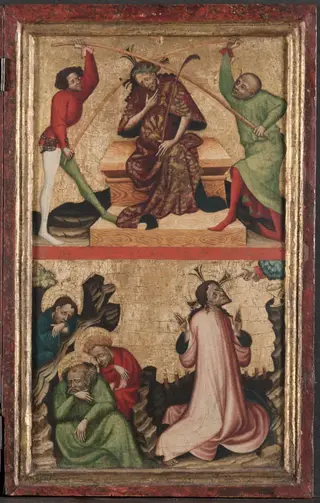
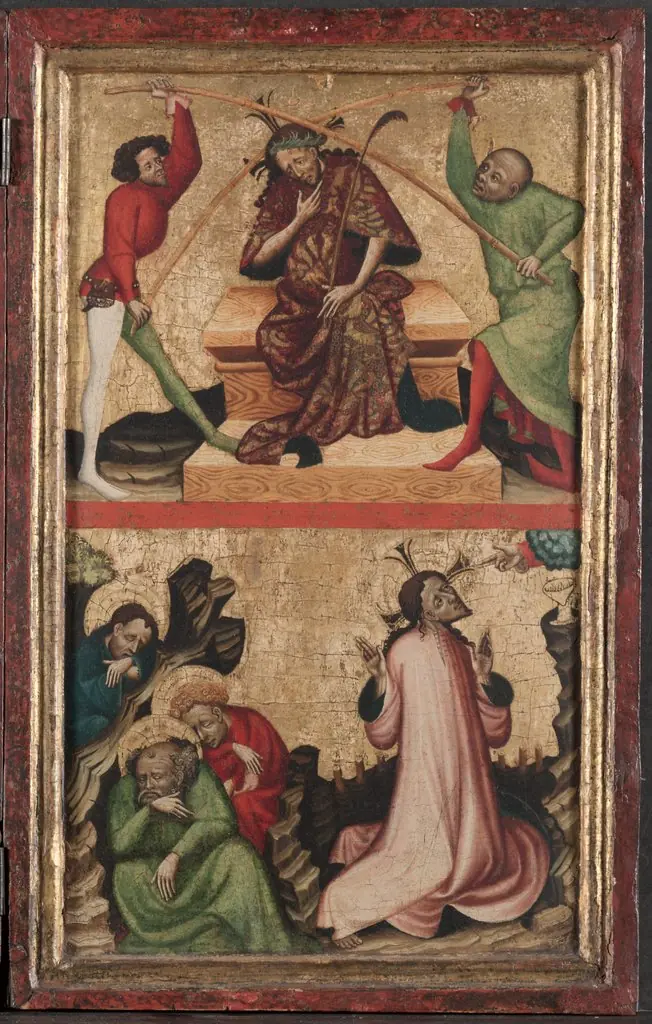 Diptych with the Passion of Christ (right wing): Crowning with Thorns and Agony on the Garden
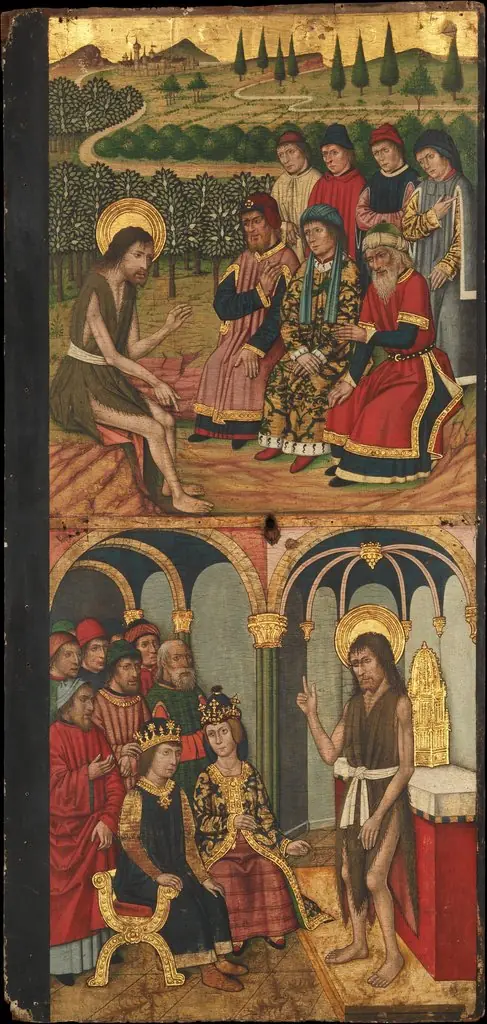 Panel of Saint John the Baptist with Scenes from His Life
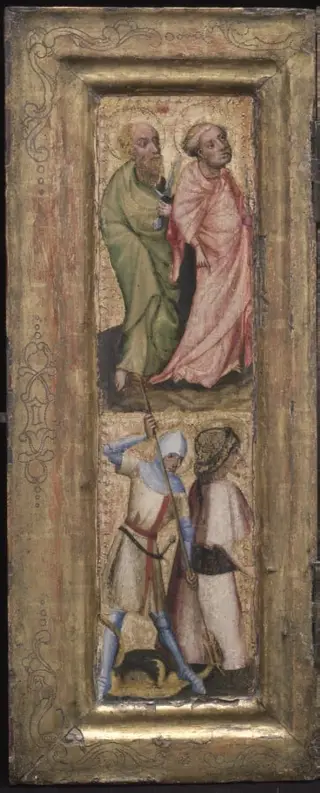 St. Peter, St. Paul, St. George, and St. James the Greater
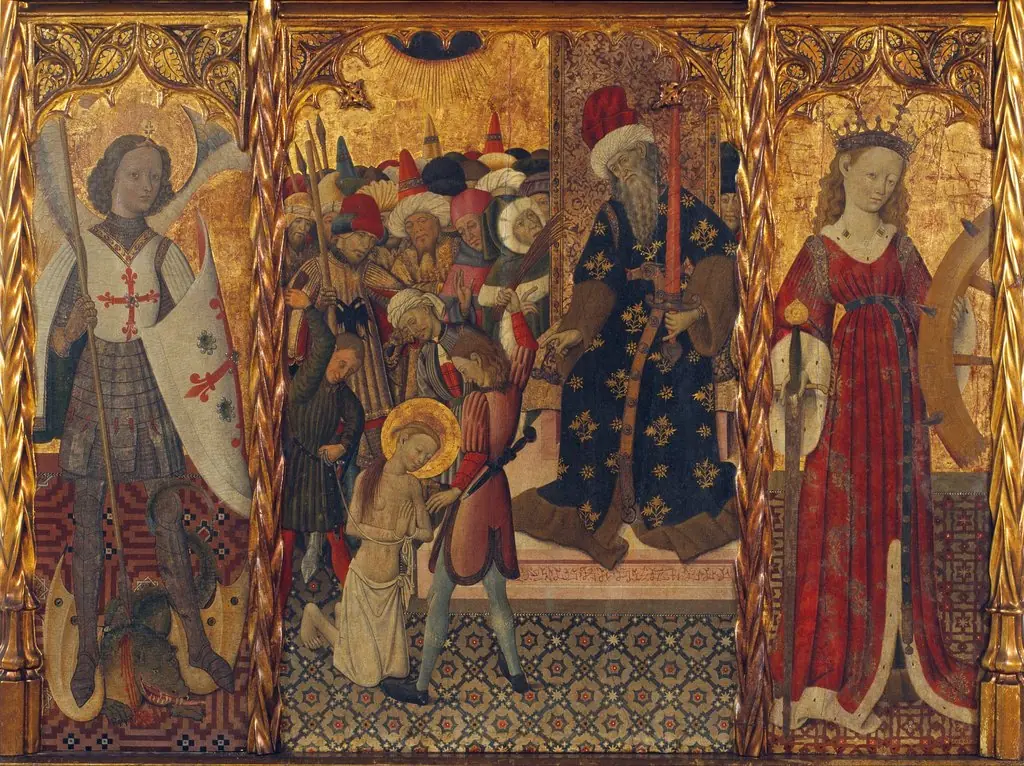 Saint Michael, Martyrdom of Saint Eulalia and Saint Catherine
 Martirio de San Sebastián y San Policarpo