Artwork
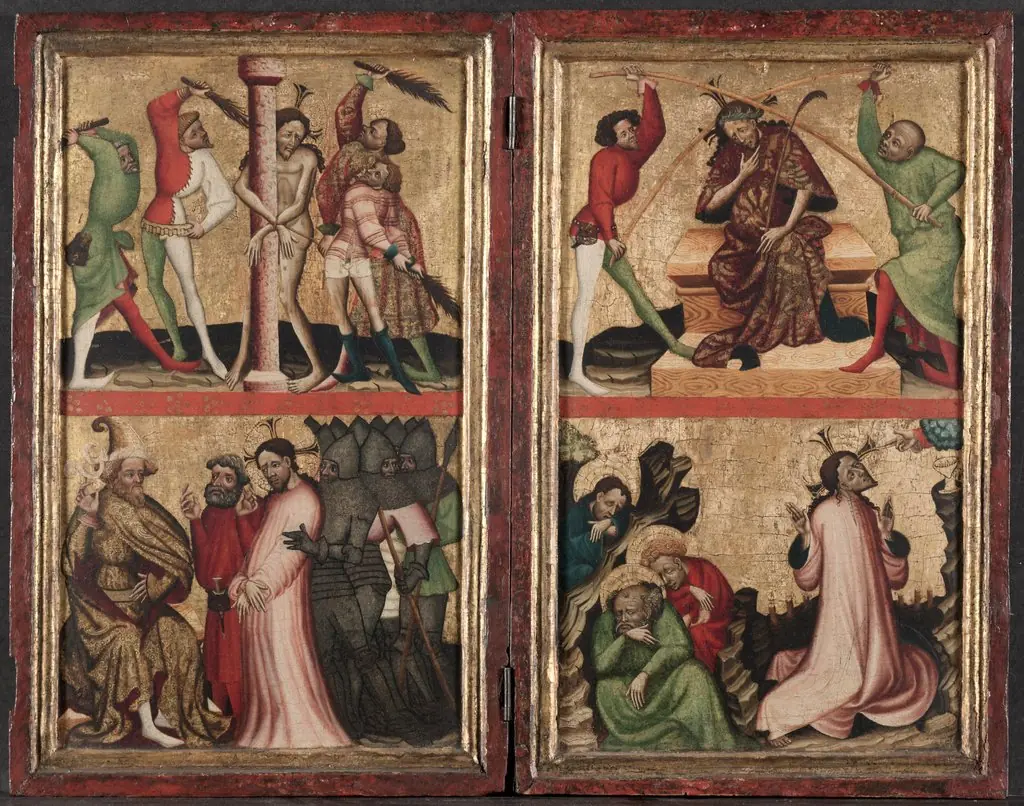
Diptych with the Passion of Christ (right wing): Crowning with Thorns and Agony on the Garden
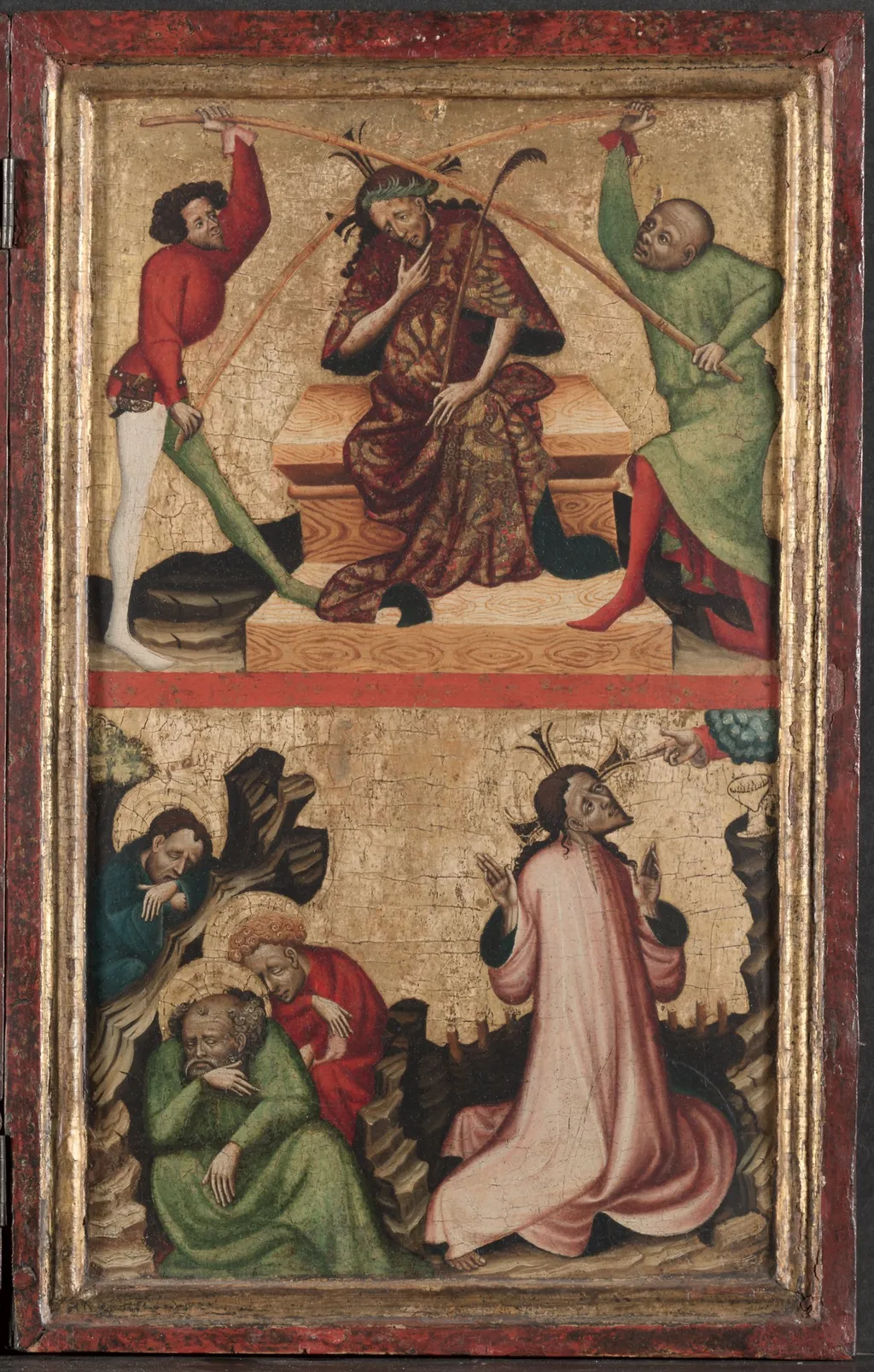
Diptych with the Passion of Christ (right wing): Crowning with Thorns and Agony on the Garden is an unspecified painting. It dates from 1400 and is held in the collection of the Cleveland Museum of Art. This painting, a right wing from a diptych, illustrates two pivotal moments from the Passion of Christ.
About this work
Subject & Meaning
The combination of these specific scenes emphasizes the themes of sacrifice and divine endurance central to Christian theology.
This religious painting, created around 1400, depicts two distinct episodes from the Passion of Christ within a single composition: the Agony in the Garden and the Crowning with Thorns. As the right wing of a diptych dedicated to the Passion narrative, the imagery serves a devotional function, inviting viewers to meditate on the physical and spiritual torment endured by Christ. The combination of these specific scenes emphasizes the themes of sacrifice and divine endurance central to Christian theology.
History & Provenance
The right wing of the Diptych with the Passion of Christ, depicting the Crowning with Thorns and the Agony in the Garden, was created around 1400. The work measures 45.7 cm in height and 27.0 cm in width. It is held in the collection of the Cleveland Museum of Art, catalogued under accession number 1945.115.b. Details regarding the original commission or prior ownership chain are not recorded in available sources.
Overview
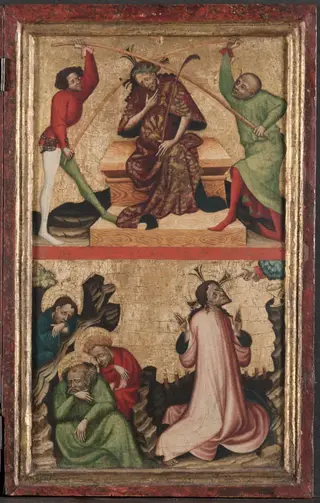
This painting, a right wing from a diptych, illustrates two pivotal moments from the Passion of Christ. The upper panel depicts the Crowning with Thorns, while the lower panel portrays the Agony in the Garden. Rendered with a distinct pre-Renaissance aesthetic, the work presents its narrative through a clear division of space, characteristic of devotional art intended for private contemplation. Its aged wooden frame suggests a long history, reflecting centuries of preservation.
Technique & Style
The painting exhibits stylistic traits common to earlier periods of European art. Figures are depicted with a certain stiffness, and the composition employs flat color application rather than sophisticated techniques for creating spatial depth. This approach results in a direct and symbolic representation of the narrative, prioritizing clarity of subject over naturalistic illusion. The artwork's aged wooden frame further underscores its historical context and enduring presence.
Artist & collection

- Diptych with the Passion of Christ
 Diptych with the Passion of Christ (right wing): Crowning with Thorns and Agony on the Garden
 Diptych with the Passion of Christ (left wing):Flagellation and Christ Before Pilate
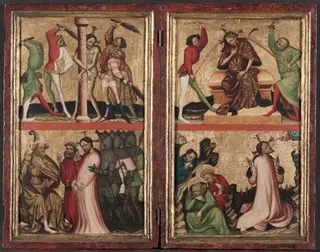 Diptych with the Passion of Christ
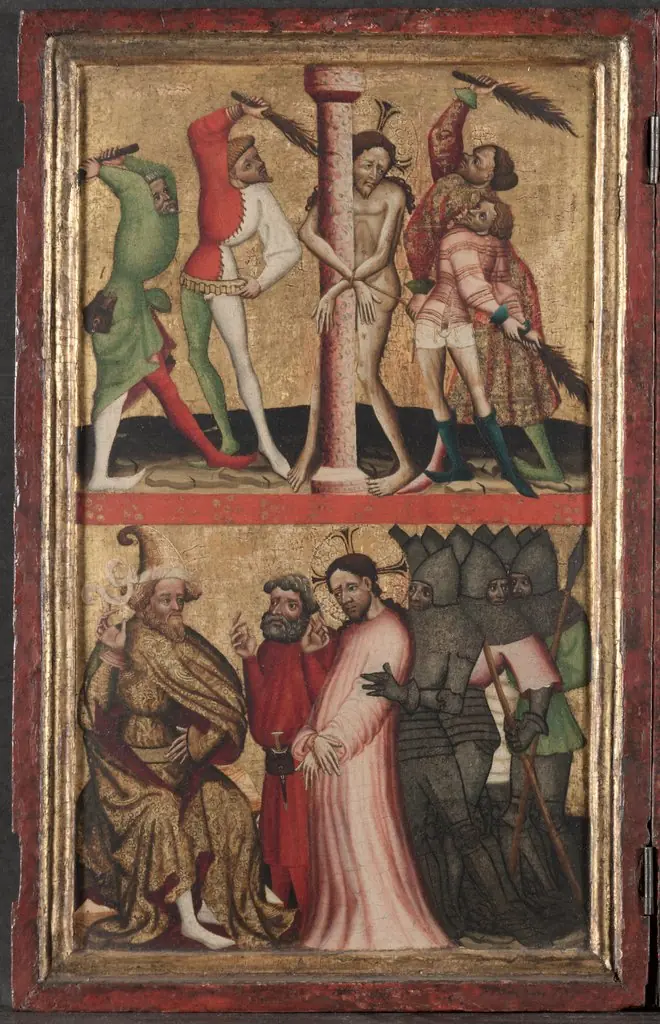
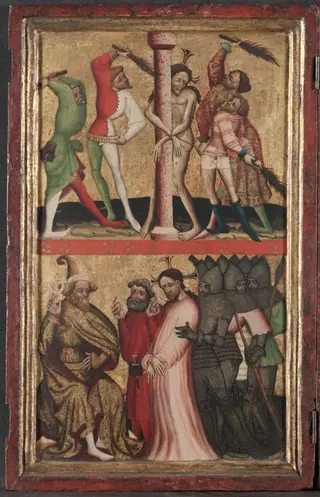 Diptych with the Passion of Christ (left wing):Flagellation and Christ Before Pilate
![Scenes from the Passion of Christ: The Agony in the Garden [left panel], by Andrea Vanni](https://artifactworldgallery.com/img/andrea-vanni--scenes-from-the-passion-of-christ-the-agony-in-the-garden-le--2bad16de75eee8eb-w320.webp) Scenes from the Passion of Christ: The Agony in the Garden [left panel]
Scenes from the Passion of Christ: The Agony in the Garden [left panel]
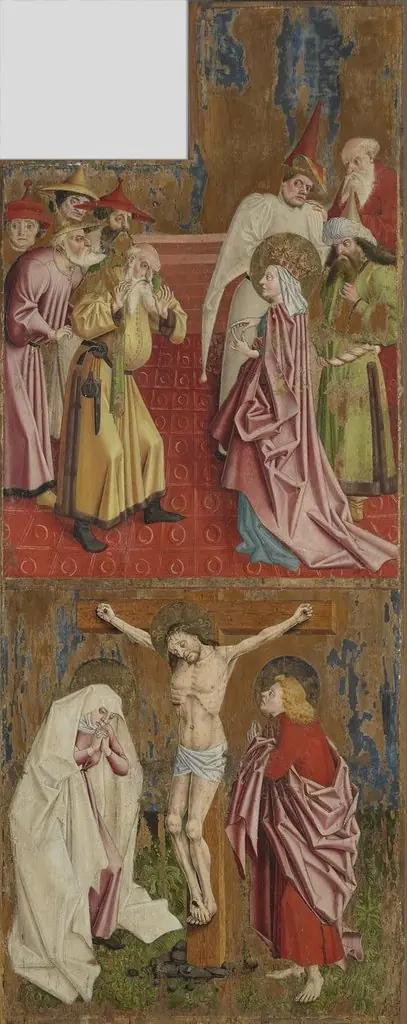 Kreuzaltar, Flügelaußenseite: Die Kaiserin Helena befragt die Juden und Kreuzigung Christi
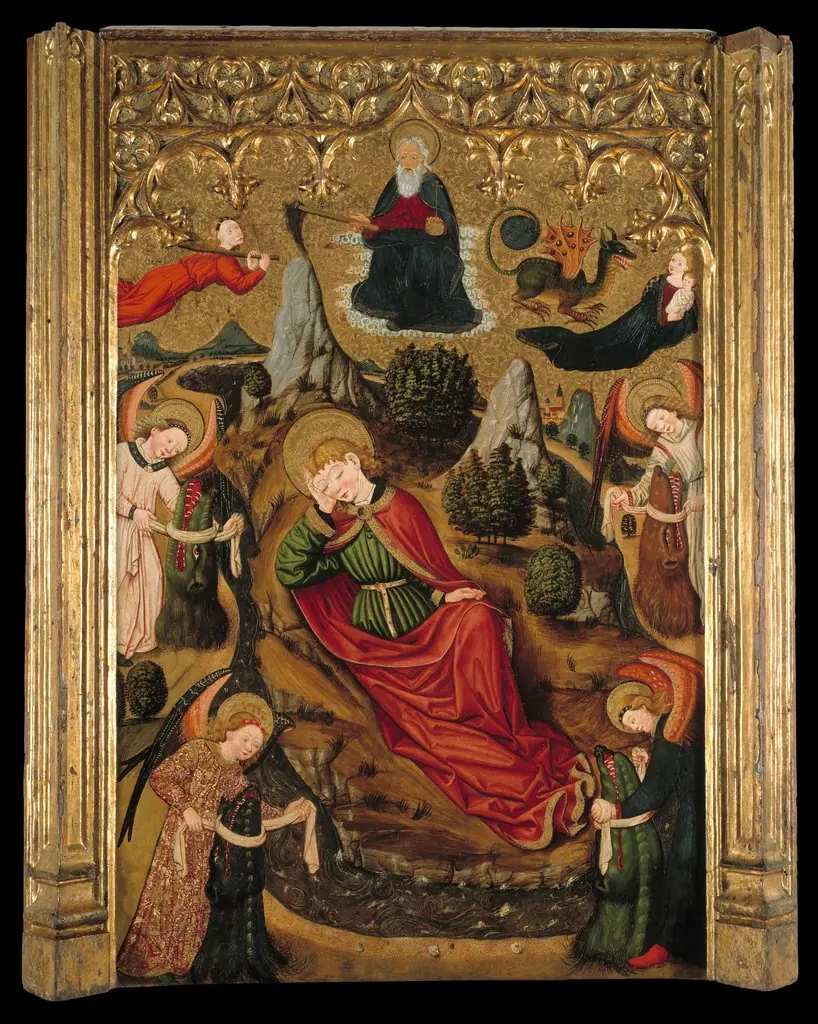 Saint John the Evangelist's Dream at Patmos
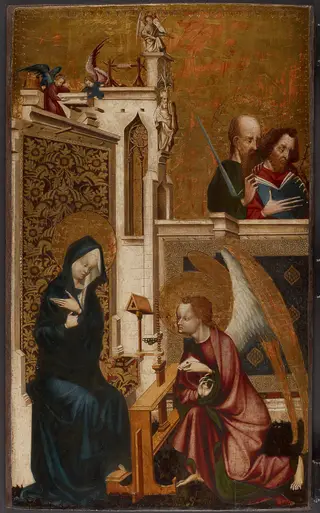 Verkündigung Mariae, Rückseite: Hl. Dorothea
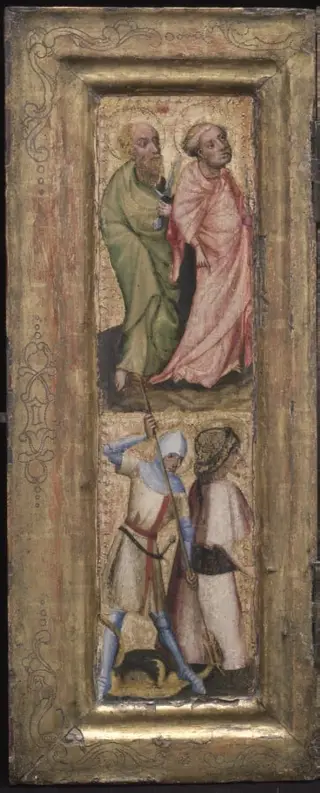 St. Peter, St. Paul, St. George, and St. James the Greater
 Christ on Mount Olive (altar piece)
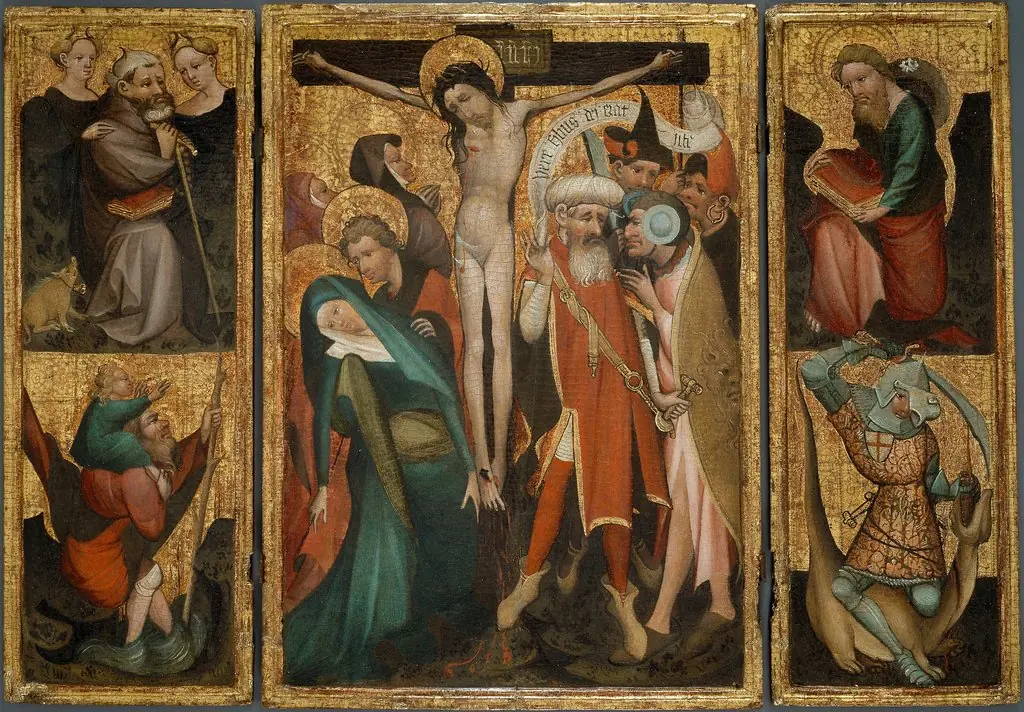 Triptych of the Crucifixion with Saints Anthony, Christopher, James and George