Artwork
Diptych with the Passion of Christ
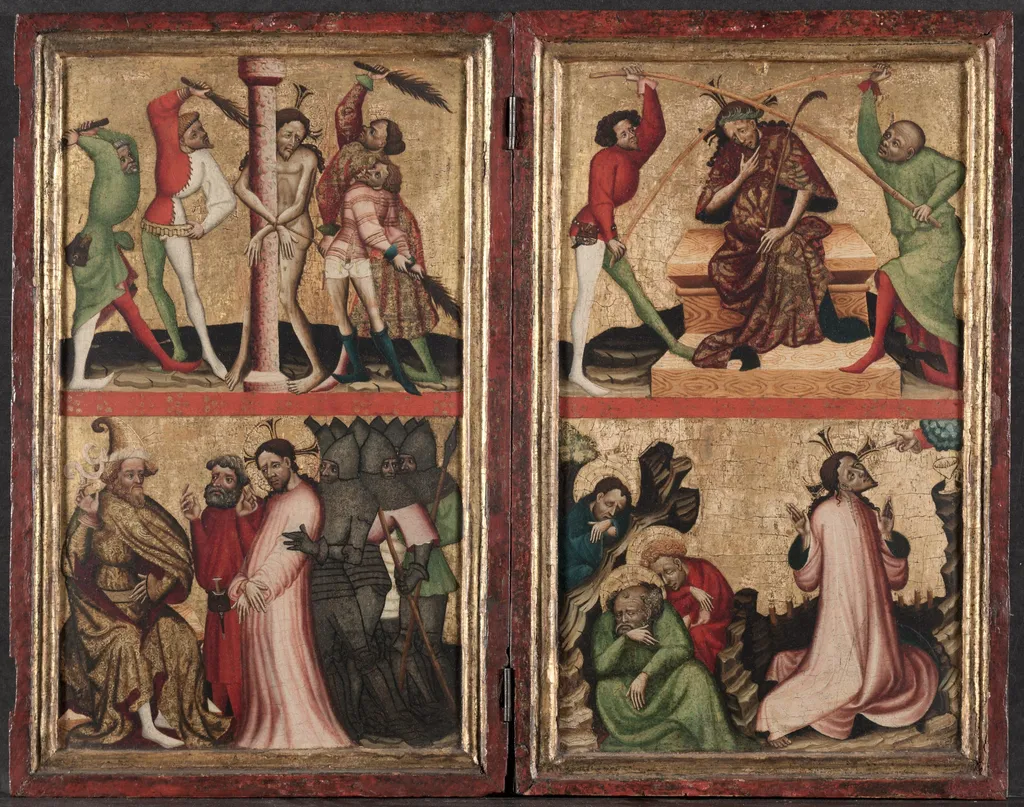
Diptych with the Passion of Christ is an unspecified painting. It dates from 1400 and is held in the collection of the Cleveland Museum of Art. The diptych presents four narrative panels depicting episodes from the Passion of Christ, each populated by figures in medieval attire.
About this work
History & Provenance
The diptych depicts scenes from the Passion of Christ and reflects the stylistic and theological conventions of late medieval religious art.
Diptych with the Passion of Christ is a religious painting created circa 1400 by an unknown artist. It was commissioned as a devotional work and originally intended for private contemplation within a devotional context common in early 15th-century European art. The work entered the collection of the Cleveland Museum of Art, where it remains housed today.
Its dimensions are 45.7 centimeters in height and 27.0 centimeters in width. The diptych depicts scenes from the Passion of Christ and reflects the stylistic and theological conventions of late medieval religious art.
The attribution to an unknown artist is based on scholarly cataloguing, and the work is classified under the broader tradition of Passion-themed devotional paintings. Its creation history is tied to the patronage practices of the period, though specific commissioning details are not recorded.
Context
The diptych depicting the Passion of Christ was created around 1400 and is classified as a religious painting. It is housed in the Cleveland Museum of Art, where it remains on view as part of their collection. The work is attributed to an unknown artist and measures 45.7 cm in height by 27.0 cm in width.
Its creation date and dimensions are documented in the Cleveland Museum of Art's records, and it is recognized as a significant example of early religious art within the museum's holdings.
Overview
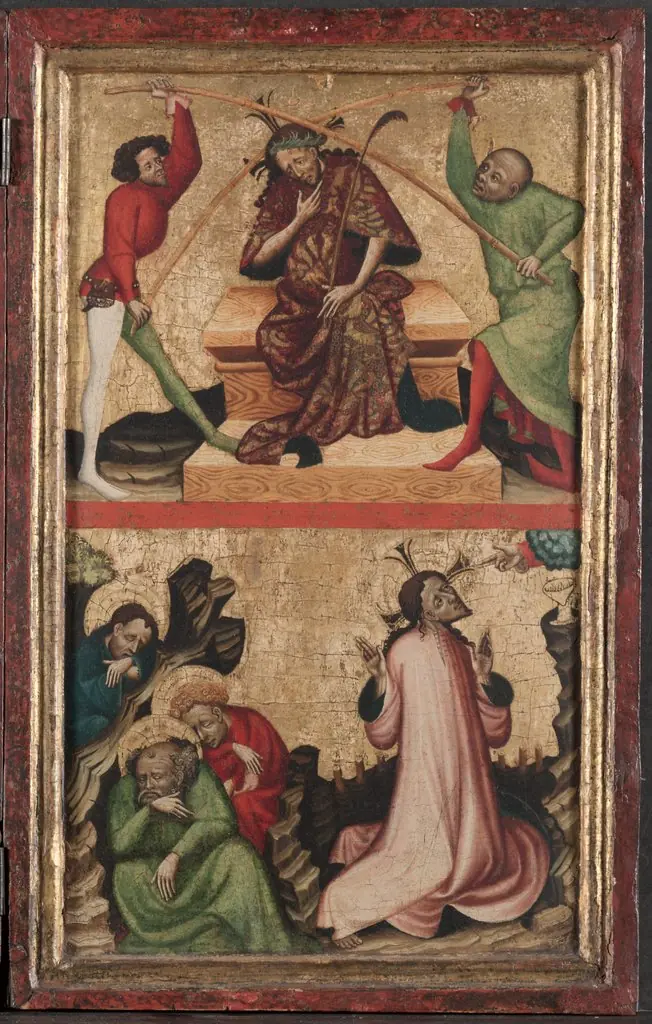
The diptych presents four narrative panels depicting episodes from the Passion of Christ, each populated by figures in medieval attire. The scenes are arranged in a two‑by‑two grid: a man bound and beaten, a scourged figure in animal skin, a gathering before a horned, darkened presence, and a kneeling supplicant before a robed authority. The composition is unified by a flat, vivid palette and stylized facial expressions.
Subject & Meaning
Each panel illustrates a distinct moment of Christ’s suffering and the surrounding reactions, emphasizing the physical torment and the moral judgment of the onlookers. The presence of a horned figure suggests a personification of evil or judgment, while the kneeling figure conveys penitence. Together the scenes convey a didactic narrative of sacrifice, guilt, and redemption within a medieval theological framework.
Technique & Style
The work employs a stark, unmodulated color scheme, with bright, uniform tones that reject gradual shading. Figures are rendered with simplified, expressive faces and minimal anatomical detail, focusing attention on narrative action rather than naturalistic representation. This approach contrasts sharply with later chiaroscuro techniques that model volume through light and shadow, highlighting the artist’s reliance on decorative flatness typical of certain medieval panel traditions.
Artist & collection

- Diptych with the Passion of Christ (right wing): Crowning with Thorns and Agony on the Garden
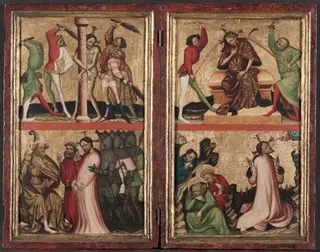 Diptych with the Passion of Christ
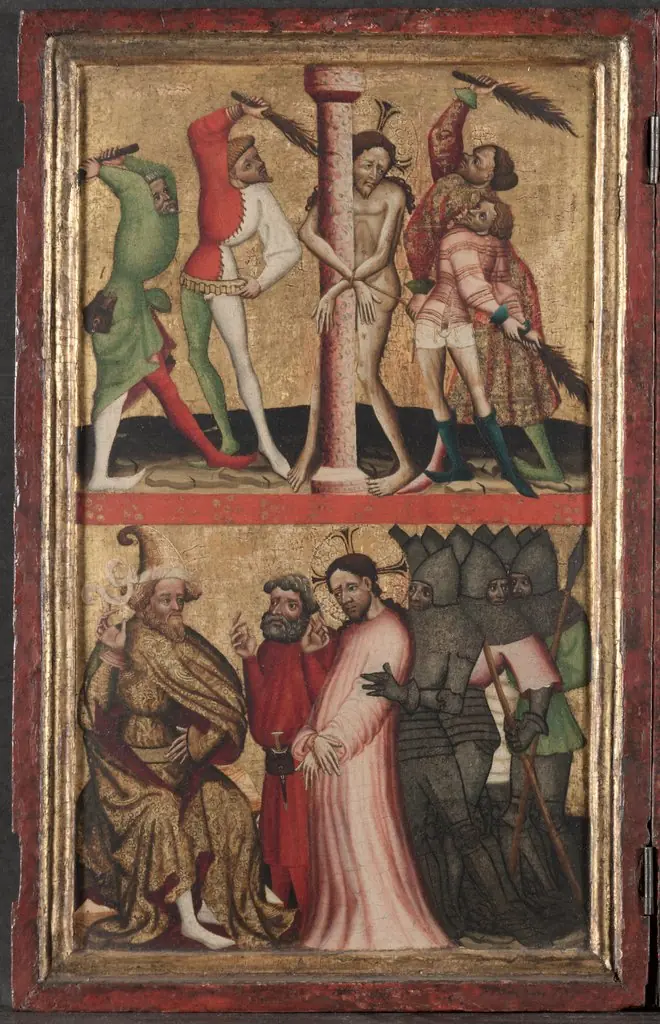 Diptych with the Passion of Christ (left wing):Flagellation and Christ Before Pilate
 Diptych with the Passion of Christ (left wing):Flagellation and Christ Before Pilate
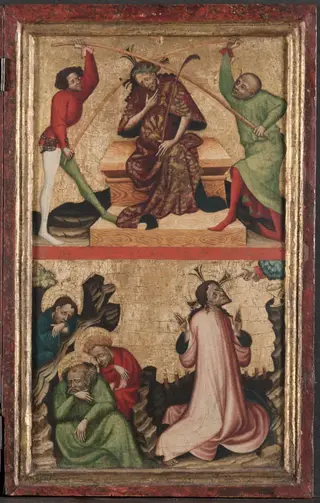 Diptych with the Passion of Christ (right wing): Crowning with Thorns and Agony on the Garden
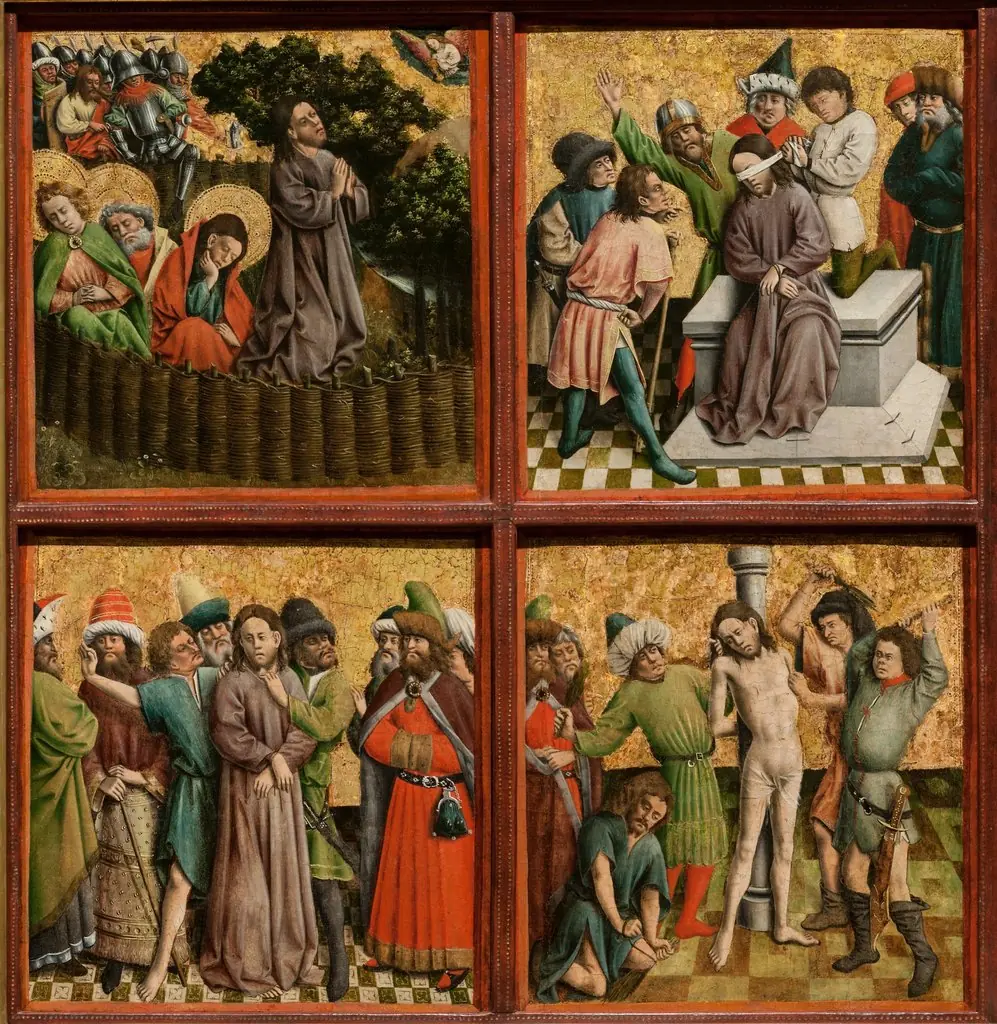 Altarpiece with The Passion of Christ
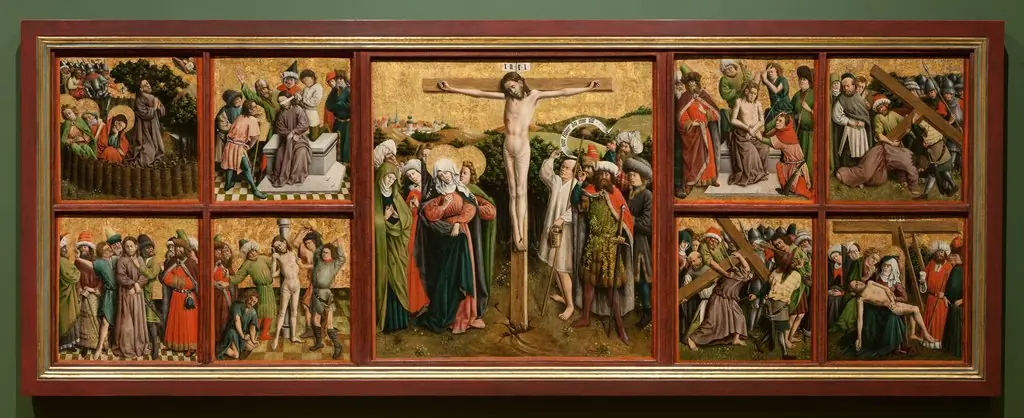 Altarpiece with The Passion of Christ