Artwork
Draupadi Rescued from Abduction, from a Mahabharata
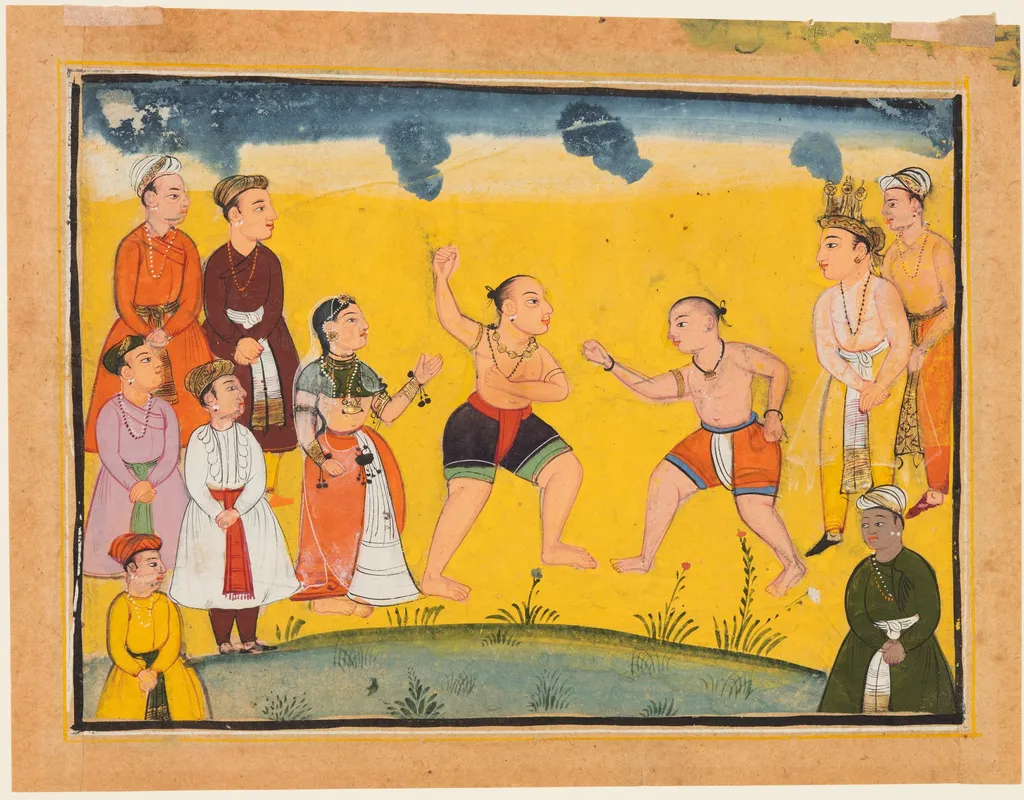
Draupadi Rescued from Abduction, from a Mahabharata is an unspecified painting. It dates from 1615 and is held in the collection of the Cleveland Museum of Art. The work depicts a dramatic episode drawn from the Mahabharata, focusing on the moment when Draupadi is rescued from an attempted abduction.
About this work
History & Provenance
The work is currently part of the collection at the Cleveland Museum of Art, where it is cataloged under the accession number 2018.
The painting Draupadi Rescued from Abduction, from a Mahabharata was created in 1615 by an unknown artist. It is classified as a painting and depicts a scene from the Mahabharata. The work is currently part of the collection at the Cleveland Museum of Art, where it is cataloged under the accession number 2018.189. The inception date is recorded as January 1, 1615.
No further details regarding the original commission, specific ownership chain prior to the museum, or the circumstances of its creation are provided in the available sources.
Legacy
The painting influenced later narrative art across South Asian traditions, inspiring reinterpretations in miniature painting and modern visual retellings of the Mahabharata. Its depiction of Draupadi's rescue from abduction contributed to the character's enduring symbolic role as a representation of resilience and moral agency in regional artistic discourse. The work remains part of the Cleveland Museum of Art's collection, ensuring continued scholarly attention to its compositional and thematic legacy.
Overview
The work depicts a dramatic episode drawn from the Mahabharata, focusing on the moment when Draupadi is rescued from an attempted abduction. Central to the composition are two male figures locked in combat; one raises his fist while the other adopts a defensive stance. Surrounding them, a crowd of onlookers observes the confrontation, heightening the sense of tension.
Subject & Meaning
The narrative illustrates the heroic intervention that saves Draupadi, a key figure in the epic, emphasizing themes of protection and moral righteousness. The presence of numerous spectators underscores the public nature of the conflict and the cultural significance of the event within the larger story.
Technique & Style
Rendered with vivid pigments, the painting relies on a palette dominated by yellows, oranges, and reds, creating a luminous atmosphere against a bright background. Intricate detailing of clothing and accessories reveals careful attention to costume, while the contrast between the bright field and darker clouds above adds depth and drama to the scene.
Context
Set against a backdrop of a bright yellow sky punctuated by darker clouds, the composition balances light and shadow to convey emotional intensity. The arrangement of figures and the dynamic poses reflect traditional Indian narrative painting, where storytelling is enhanced through expressive gestures and vivid coloration.
Artist & collection

 Untitled
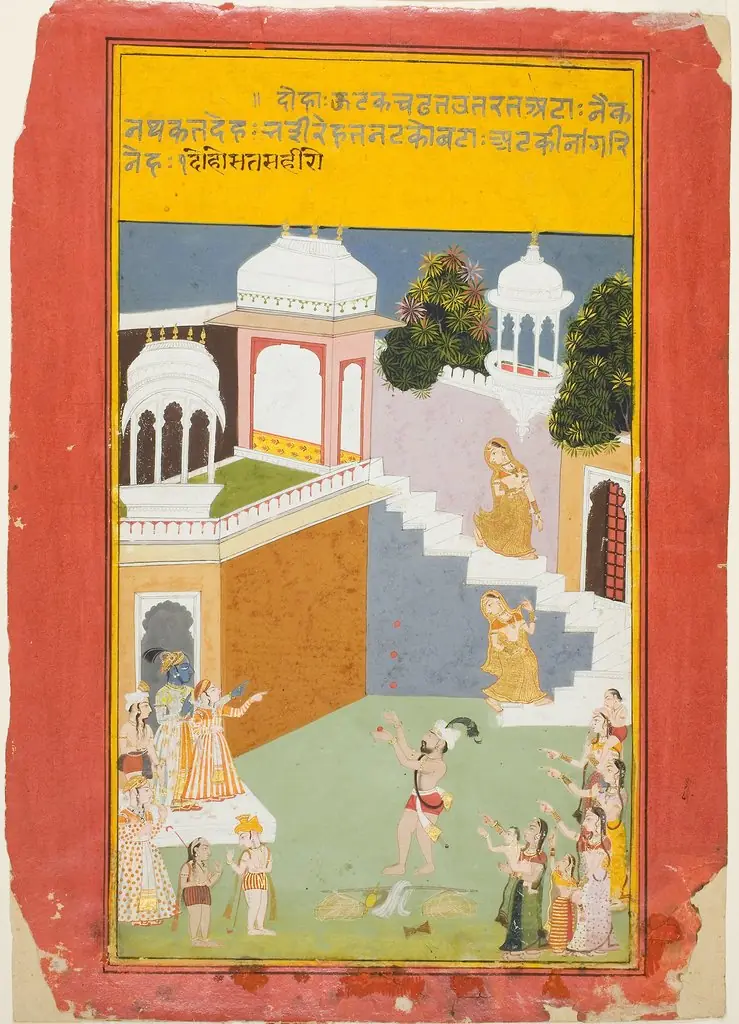 Krishna Watches A Juggler, from a copy of Bihari's Sat Sai
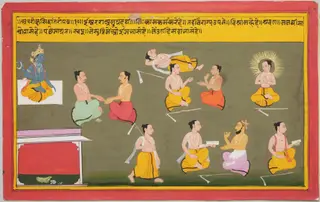 Worship of Hindu Deities (1 of 18)
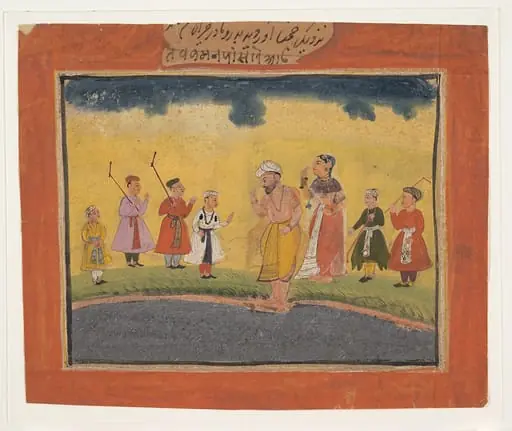 Untitled
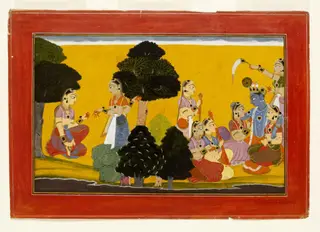 Radha and Krishna
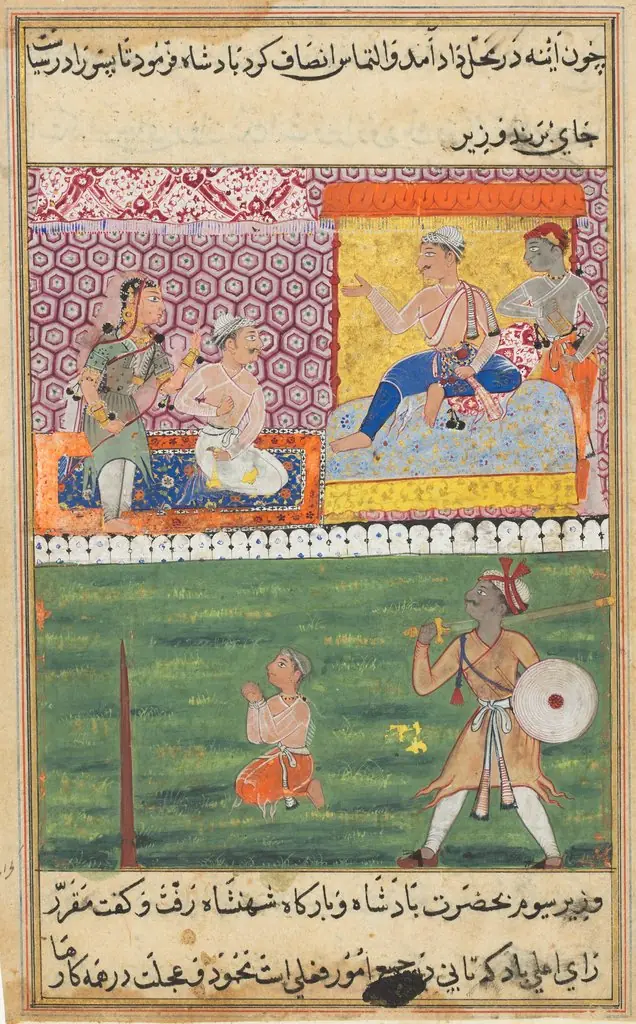 The handmaiden again appeals for justice and the prince is led to the place of execution for the third time, from a Tuti-nama (Tales of a Parrot): Eighth Night
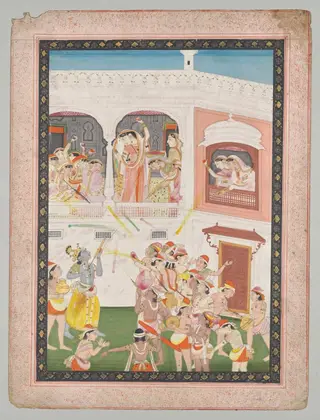 Radha and Hindu God Krishna celebrating the festival Holi
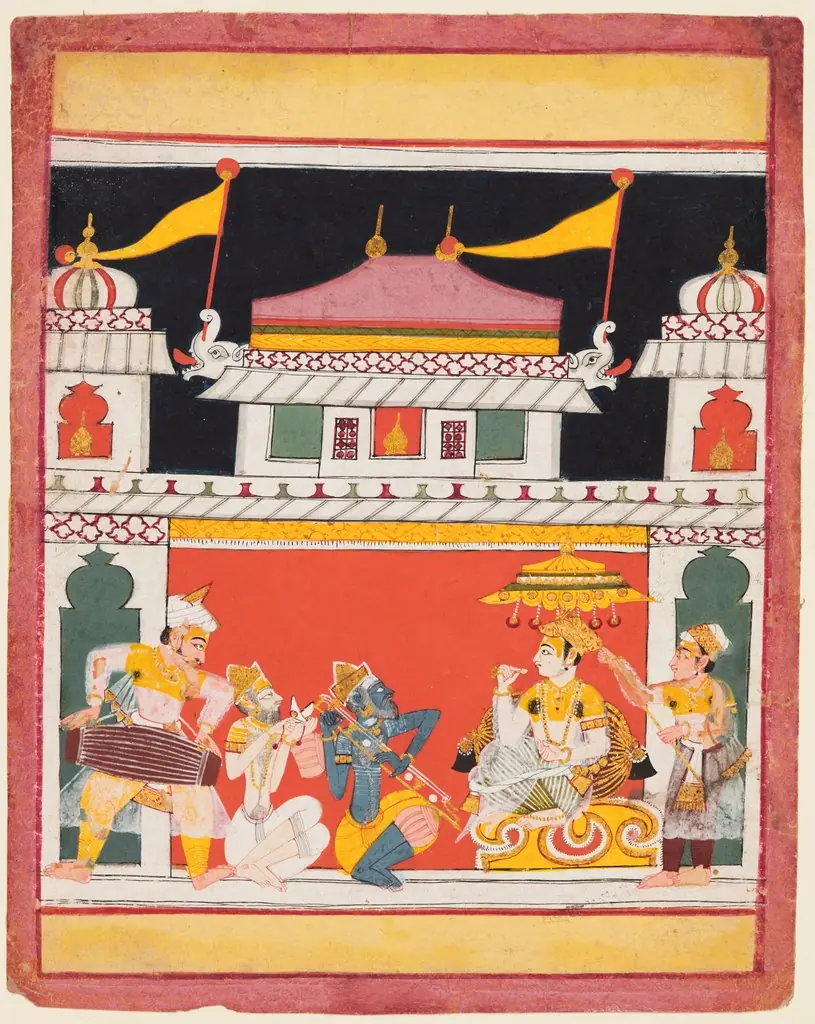 Three Musicians Perform Before a King: Shri Raga, from a Ragamala
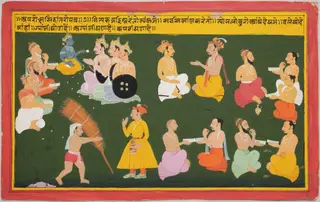 Worship of Hindu Deities (1 of 18)
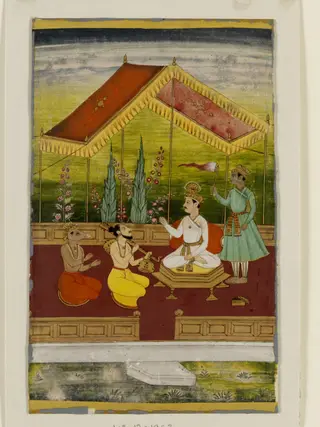 Sri Raga
![Rama and Lakshmana Fighting Ravana, from a Dashavatara (Ten Incarnations [of Vishnu]) series](https://artifactworldgallery.com/img/rama-and-lakshmana-fighting-ravana-from-a-dashavatara-ten-in--44f1c99a2c65cc54-w320.webp) Rama and Lakshmana Fighting Ravana, from a Dashavatara (Ten Incarnations [of Vishnu]) series
Rama and Lakshmana Fighting Ravana, from a Dashavatara (Ten Incarnations [of Vishnu]) series- Draupadi Rescued from Abduction, from a Mahabharata