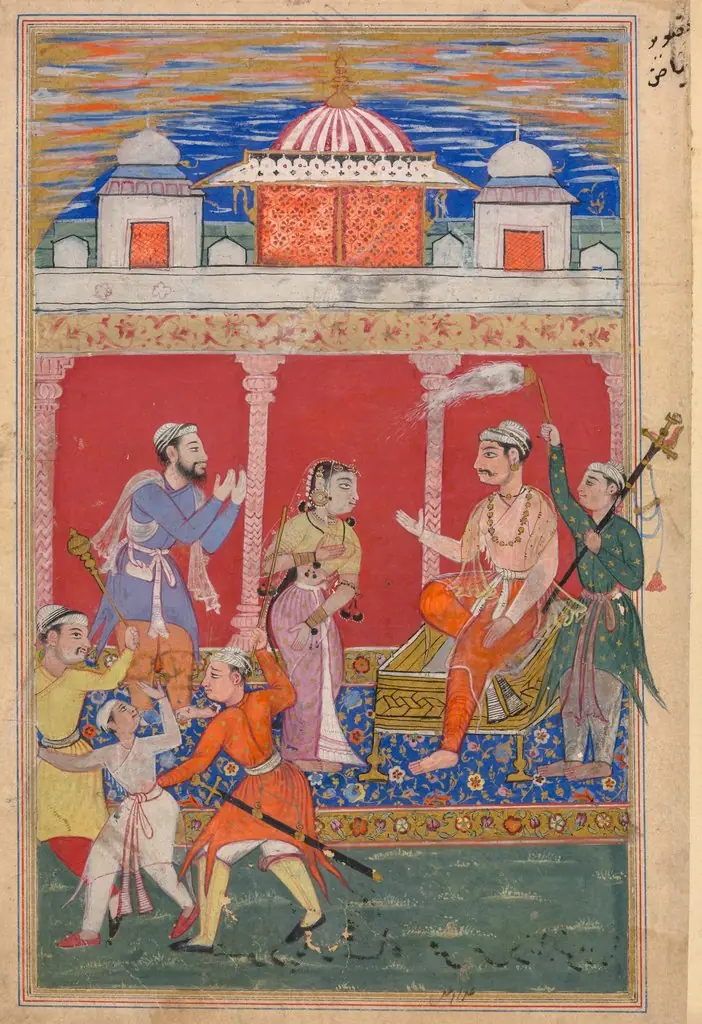
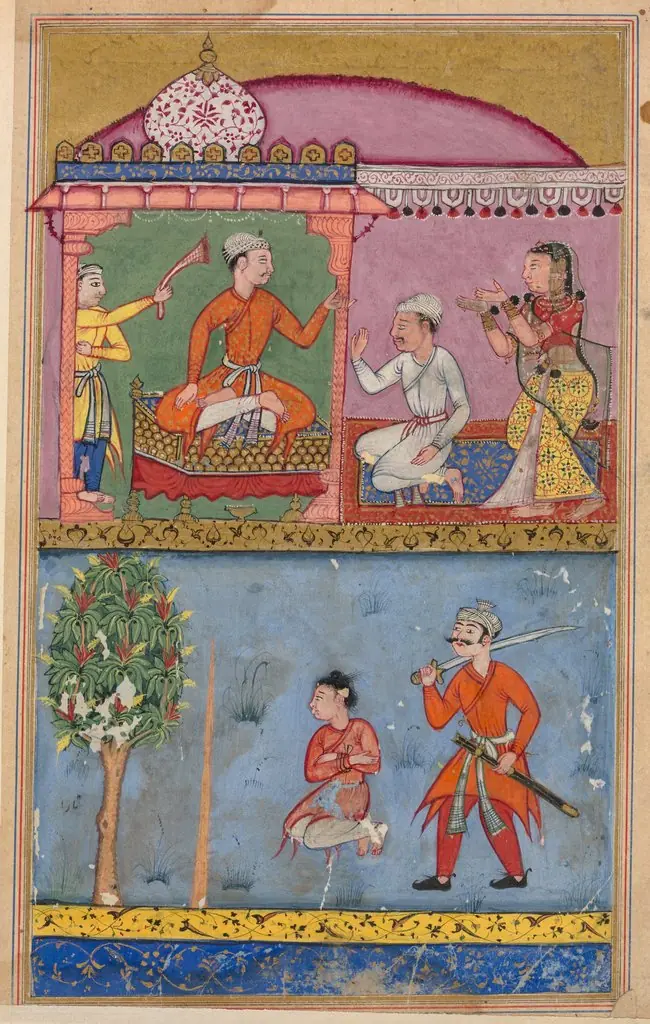
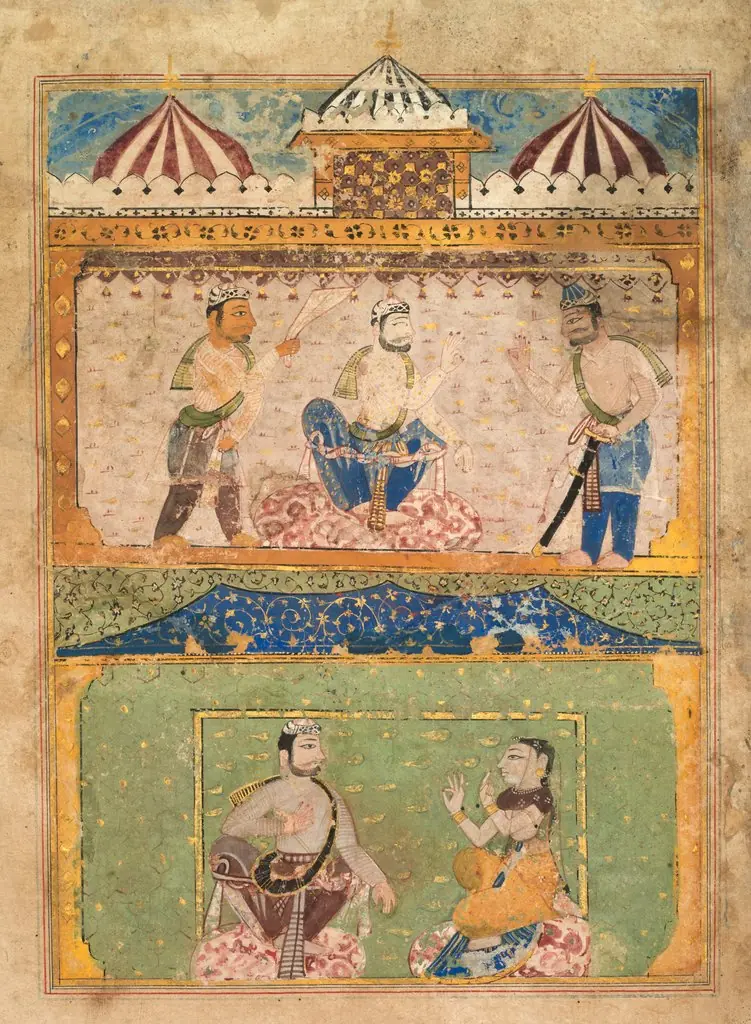
Artwork
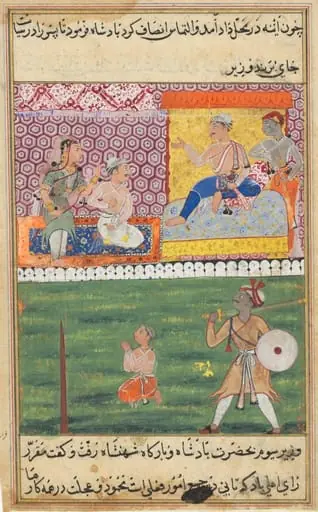
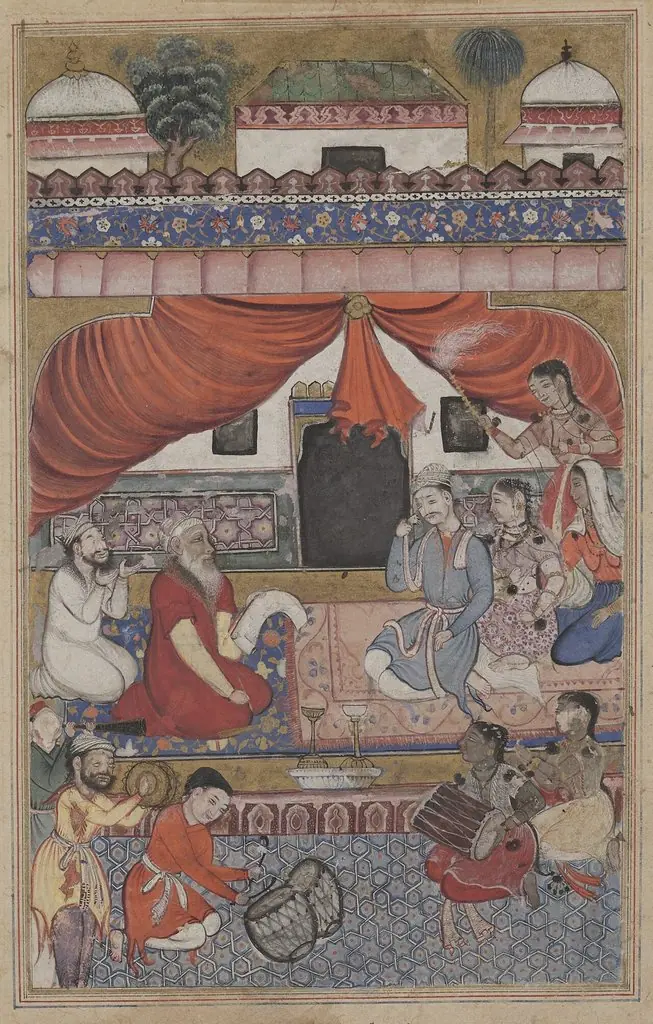
The handmaiden again appeals for justice and the prince is led to the place of execution for the third time, from a Tuti-nama (Tales of a Parrot): Eighth Night
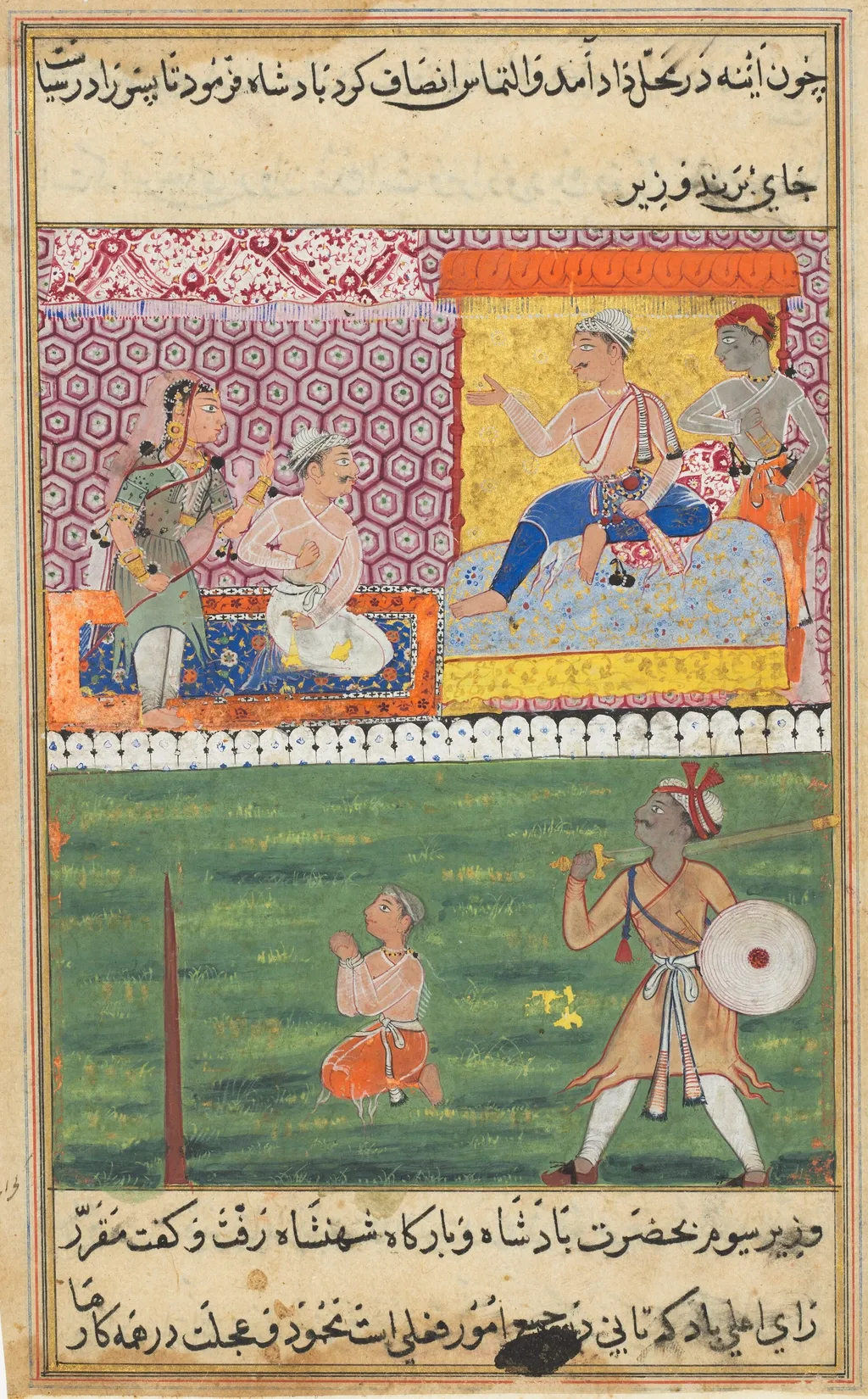
The handmaiden again appeals for justice and the prince is led to the place of execution for the third time, from a Tuti-nama (Tales of a Parrot): Eighth Night is an unspecified painting. It dates from 1560 and is held in the collection of the Cleveland Museum of Art.
About this work
History & Provenance
The painting is held in the collection of the Cleveland Museum of Art, where it is catalogued under the accession number 1962.279.61.b. It was created in 1560 within the Mughal Empire and has not been recorded in any major exhibition history beyond its inclusion in the museum’s permanent holdings.
Context
Executed in opaque watercolor and gold leaf on paper, the work exemplifies manuscript painting traditions of the imperial court.
The miniature depicting the handmaiden's plea for justice and the prince's third procession to execution, part of the Eighth Night of the Tuti-nama, reflects Mughal artistic practice circa 1560. Executed in opaque watercolor and gold leaf on paper, the work exemplifies manuscript painting traditions of the imperial court. Its composition and narrative intensity have been analyzed in scholarship on Persianate manuscript illumination, situating it within broader developments of Indo-Persian visual storytelling. The piece is housed in the Cleveland Museum of Art, which documents its provenance and material context.
Legacy
The miniature illustrating the handmaiden's plea for justice and the prince's third appearance at the execution site entered the public eye through a 1962 acquisition by the Cleveland Museum of Art, where it remains on view. Its inclusion in the museum's collection has allowed scholars to study the work's compositional vigor and narrative intensity, reinforcing its reputation as a masterful example of Mughal book illustration. The piece continues to be cited in discussions of 16th‑century Persianate manuscript painting, influencing later studies of courtly drama in illustrated texts.
Overview
The work, taken from the eighth night of the medieval Persian manuscript known as the Tuti‑nama (Tales of a Parrot), depicts two juxtaposed scenes. The upper register shows a richly dressed court with a lounging figure and a throne‑seated man attended by a woman, while the lower register presents an outdoor encounter between a shield‑bearing man and a kneeling woman. Vibrant reds, blues and gold dominate the composition, framed by ornate patterned borders and inscribed in an Arabic‑style script.
Subject & Meaning
The narrative illustrates a moment when a handmaiden petitions for justice on behalf of a prince who is being escorted to execution for the third time. The dual scenes contrast the formal, interior setting of royal authority with the more personal, external plea, emphasizing themes of mercy, power, and the tension between courtly protocol and individual supplication.
Technique & Style
Executed in miniature painting technique, the piece employs fine brushwork and a flat, decorative approach typical of Persian manuscript art. The use of intense pigments, particularly vermilion, lapis lazuli and gold leaf, creates a luminous surface, while intricate geometric and vegetal motifs frame the scenes, reinforcing the manuscript’s ornamental aesthetic.
Artist & collection

- The handmaiden again appeals for justice and the prince is led to the place of execution for the third time, from a Tuti-nama (Tales of a Parrot): Eighth Night
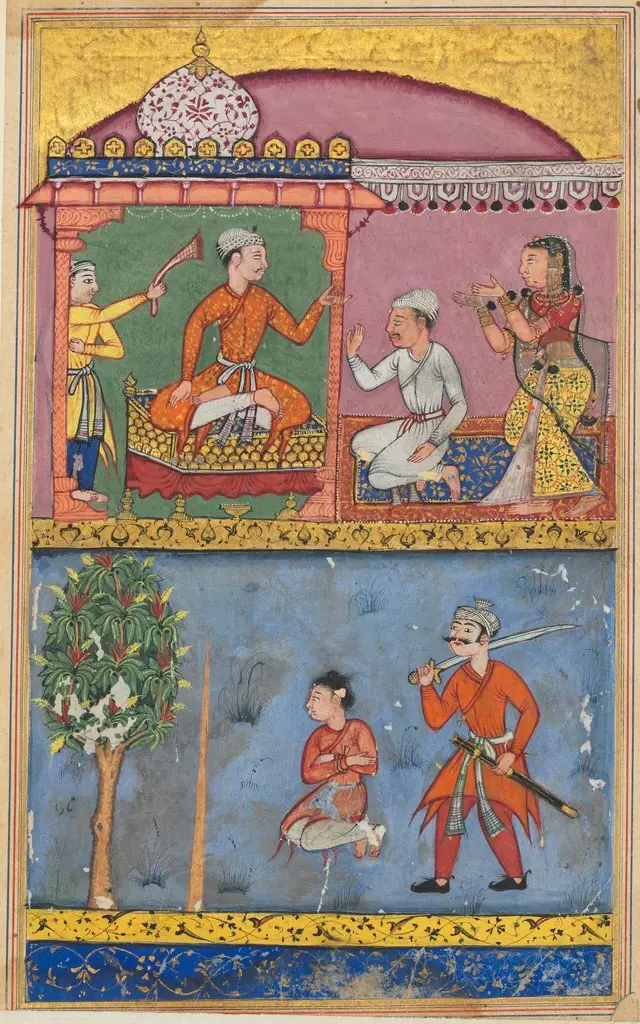 The handmaiden appeals for justice and the prince is taken to the execution site for the fourth time, from a Tuti-nama (Tales of a Parrot): Eighth Night
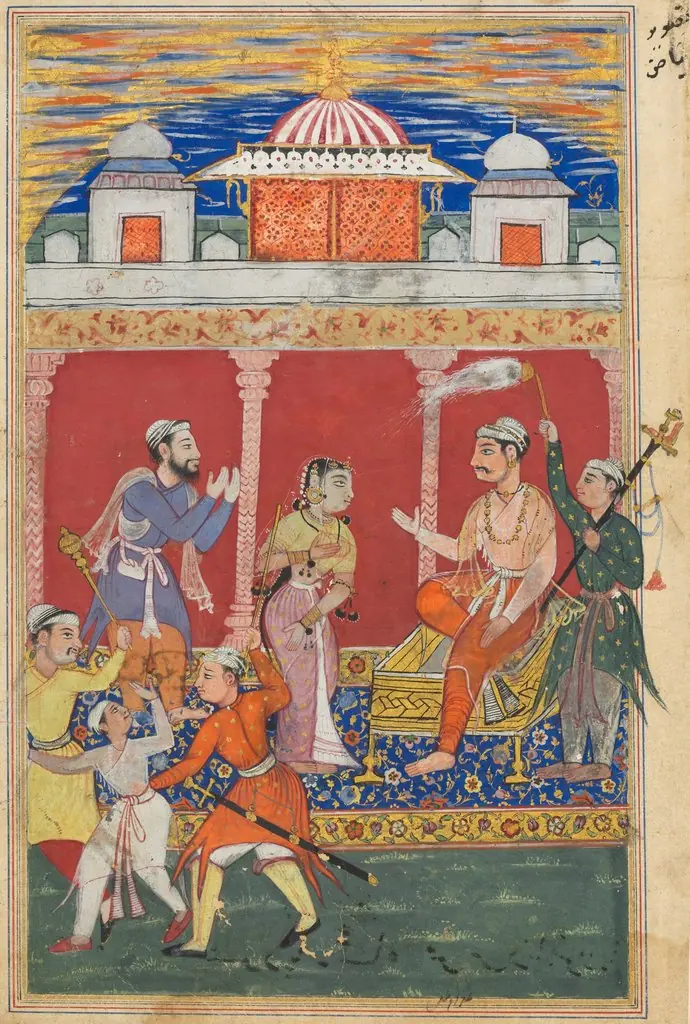 The prince’s ordeal continues, he is ordered away to be executed for the fifth time, from a Tuti-nama (Tales of a Parrot): Eighth Night
 The prince’s ordeal continues, he is ordered away to be executed for the fifth time, from a Tuti-nama (Tales of a Parrot): Eighth Night
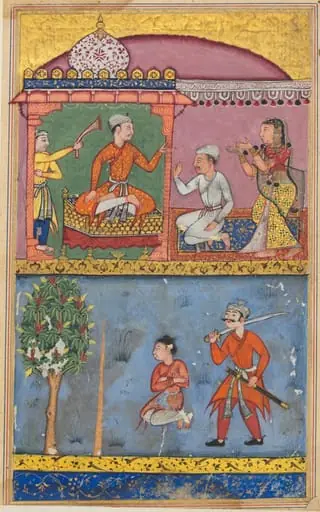 The handmaiden appeals for justice and the prince is taken to the execution site for the fourth time, from a Tuti-nama (Tales of a Parrot): Eighth Night
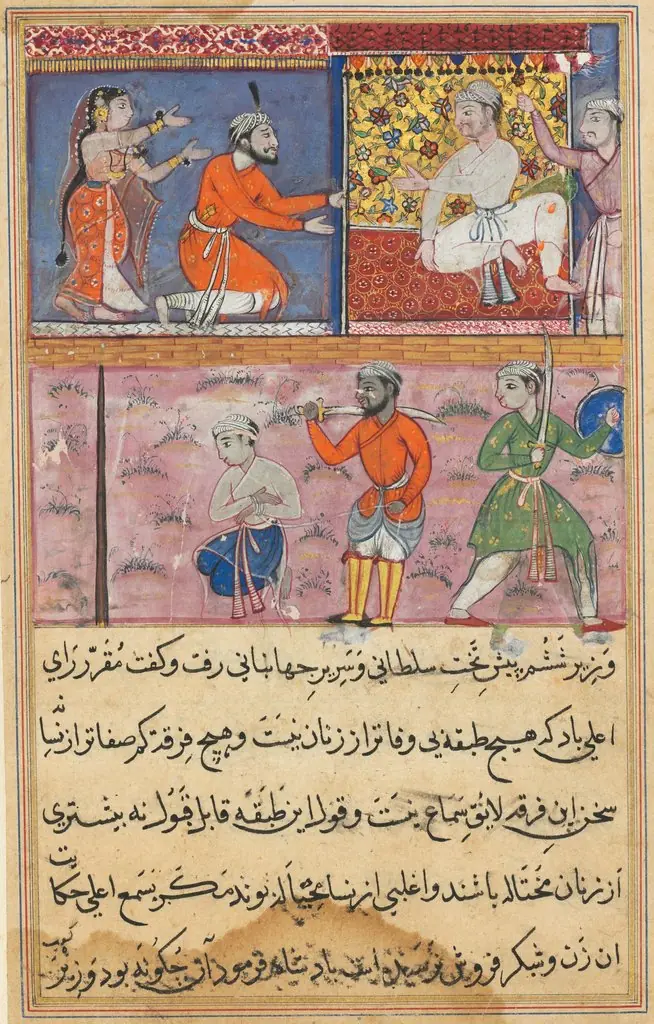 The prince sent back to the place of execution for the sixth time, from a Tuti-nama (Tales of a Parrot): Eighth Night
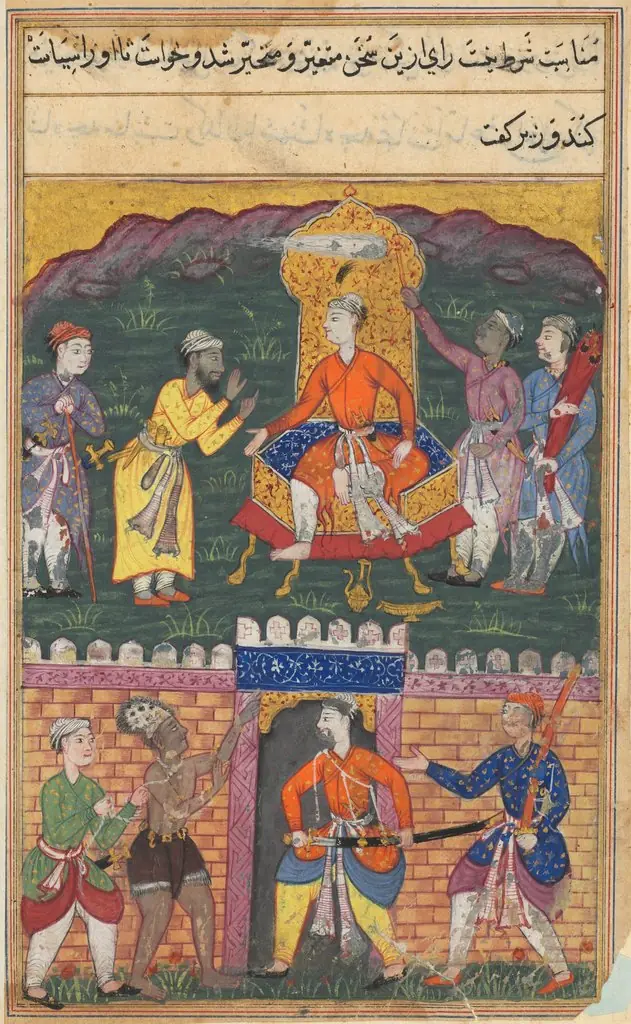 The vizier dissuades the king of Bahilistan from executing the dervish who asks for his daughter’s hand in marriage, from a Tuti-nama (Tales of a Parrot): Seventh Night
 The prince sent back to the place of execution for the sixth time, from a Tuti-nama (Tales of a Parrot): Eighth Night
 Preparation for the marriage of Mahmuda to the Young Vizier, from a Tuti-nama (Tales of a Parrot): Thirty-third Night