Artwork
Untitled
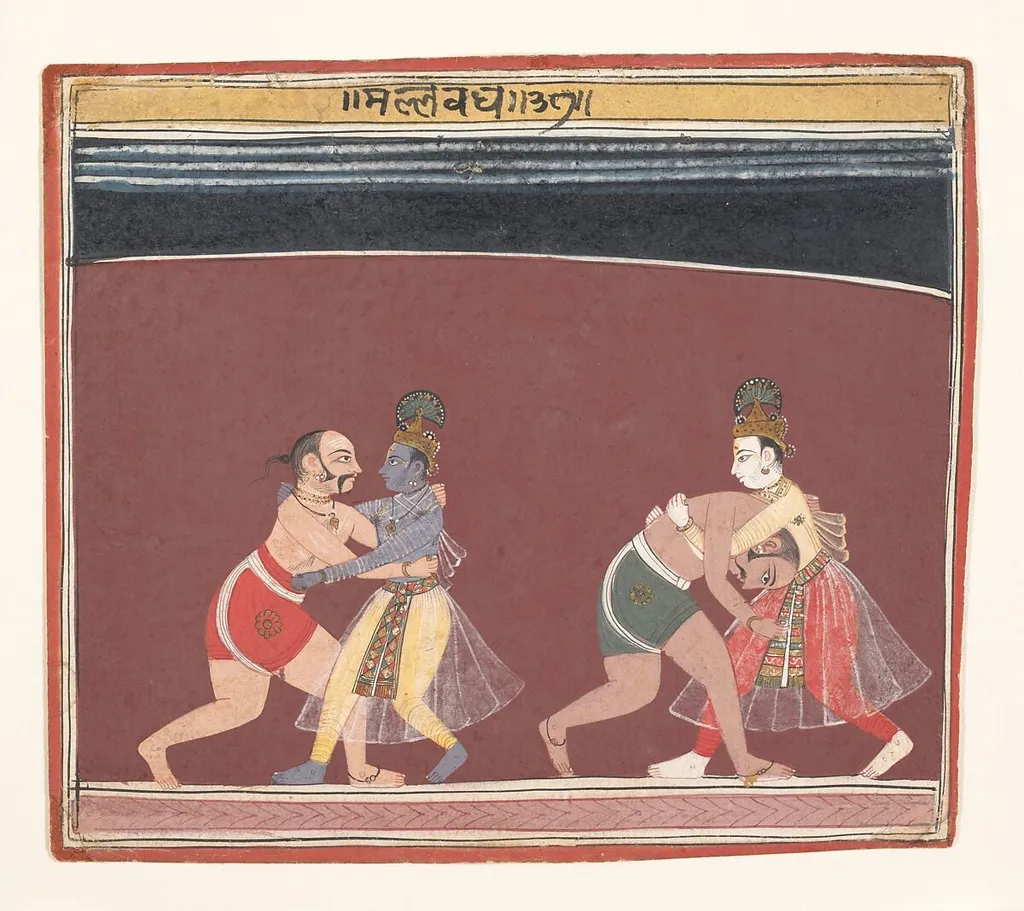
Untitled is a watercolor painting. It dates from 1650 and is held in the collection of the Metropolitan Museum of Art.
- Accession no.
- 1973.337
- Credit line
- Gift of Mr. and Mrs. Alvin N. Haas, 1973
About this work
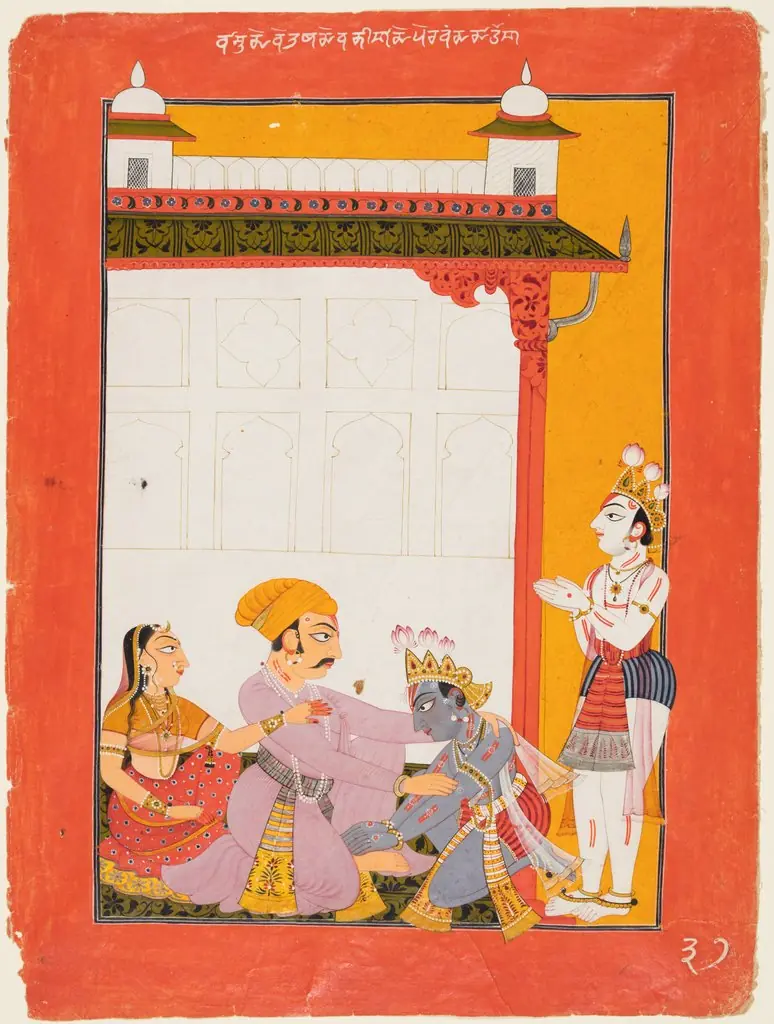
Two men wrestle under a dark sky, bodies twisting. One wears a peacock-feather crown, marking him as Krishna; the other is a mortal challenger. Sharp, quick ink lines keep the scene in motion.
From a small kingdom in central India around 1650, where artists often showed gods in everyday acts. The opaque watercolor gives thick, chalky color.
Subject & Meaning
Created in India around 1650, this ink and opaque watercolor painting illustrates a scene from Hindu mythology featuring the deity Krishna.
Created in India around 1650, this ink and opaque watercolor painting illustrates a scene from Hindu mythology featuring the deity Krishna. The composition focuses on a physical contest, specifically depicting Krishna engaged in a wrestling match with another male figure. As an untitled work by an anonymous artist, the imagery relies on the recognizable iconography of Krishna to convey its narrative context.
The depiction of the divine figure participating in mortal combat highlights themes of strength and divine play often associated with the deity's youthful legends.
Technique & Style
Executed in ink and opaque watercolor on paper, this untitled work employs the traditional South Asian miniature painting technique, in which pigments are bound with a gum medium and applied in thin, controlled layers over a fine paper support. The handling is characteristic of mid-seventeenth-century Indian painting practice, with precise brushwork used to delineate figures and patterned surfaces. The opaque watercolor allows for dense, saturated coloration and fine linear detail, while the ink underdrawing provides structural definition.
The composition centers on the mythological subject of Krishna wrestling, with the medium and scale consistent with devotional manuscript or album folios produced in India around 1650.
History & Provenance
The painting is dated to circa 1650 on technical and stylistic grounds, aligning with Mughal-period production in India. It is held in the collection of the Metropolitan Museum of Art in New York, which classifies the piece as a painting depicting a wrestling scene involving the deity Krishna and a man. No specific commission or early ownership history is recorded in available sources.
Context
The painting is dated to 1650, executed in ink with opaque watercolor on paper, and classified as a mythological work depicting Krishna wrestling a man. It is attributed to an anonymous Indian painter, reflecting the workshop practice of 17th-century North Indian art where individual hands were often indistinguishable. The artwork entered the collection of the Metropolitan Museum of Art, which records its origin in India circa 1650.
As a representative example of mythological illustration, it informs scholarly discussions of how Hindu narratives were visualized in early modern Indian visual culture.
Overview
This untitled painting, created around 1650 in a central Indian kingdom, captures a dynamic wrestling match between the Hindu deity Krishna and a mortal challenger. Executed with ink and opaque watercolor on paper, the artwork vividly portrays a moment of intense physical exertion under a dark sky. It exemplifies a regional artistic tradition that sought to present divine figures in relatable, humanistic contexts, making spiritual narratives accessible through engaging visual storytelling.
Artist & collection

- Malava Raga
 Draupadi Rescued from Abduction, from a Mahabharata
 Draupadi Rescued from Abduction, from a Mahabharata
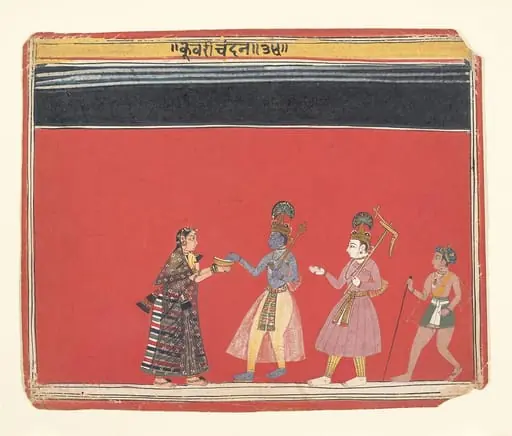 Untitled
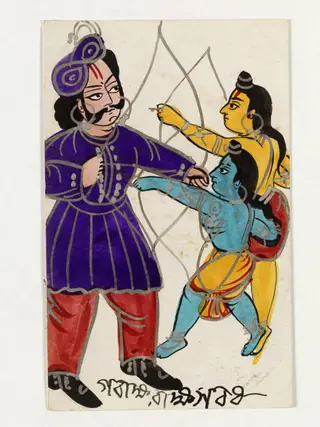 Rama, Lakshmana and Gavaksha
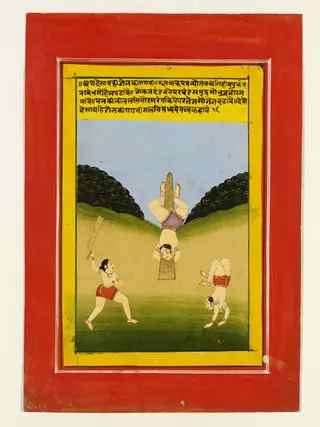 Desakh Ragini
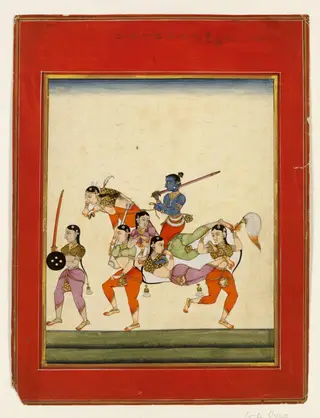 Vishnu
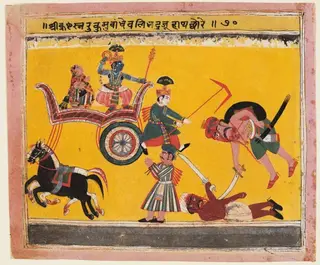 Abduction of Rukmini: Krishna Tied the Hands of Rukma, from a Bhagavata Purana
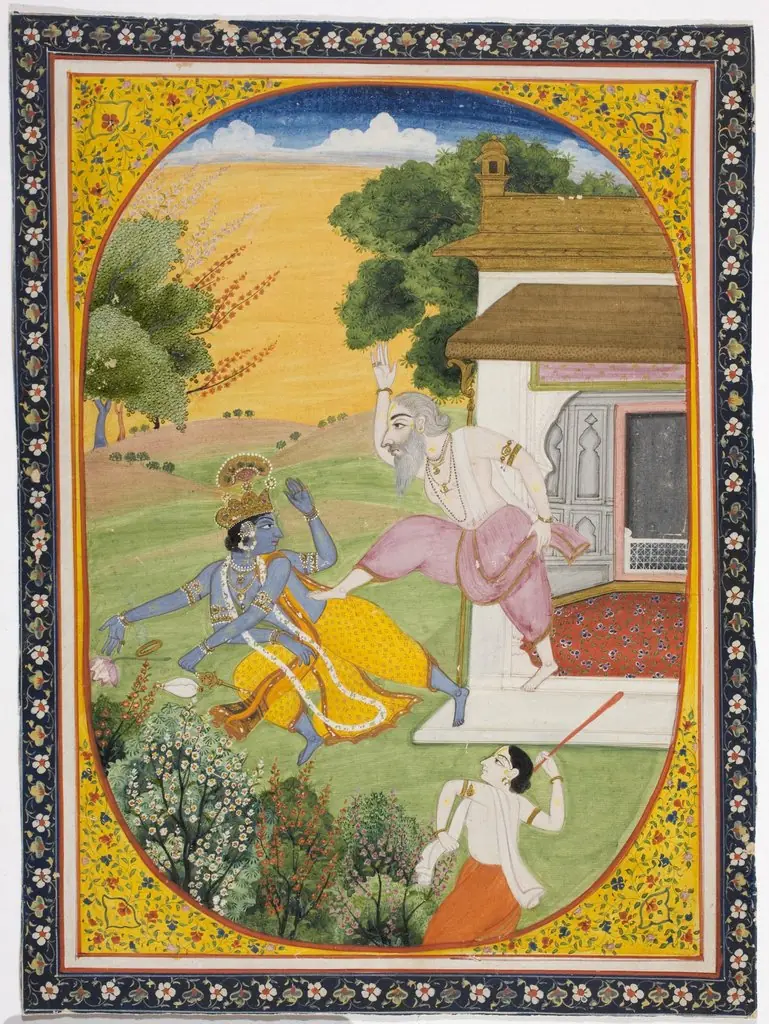 Krishna Rebuked by a Priest
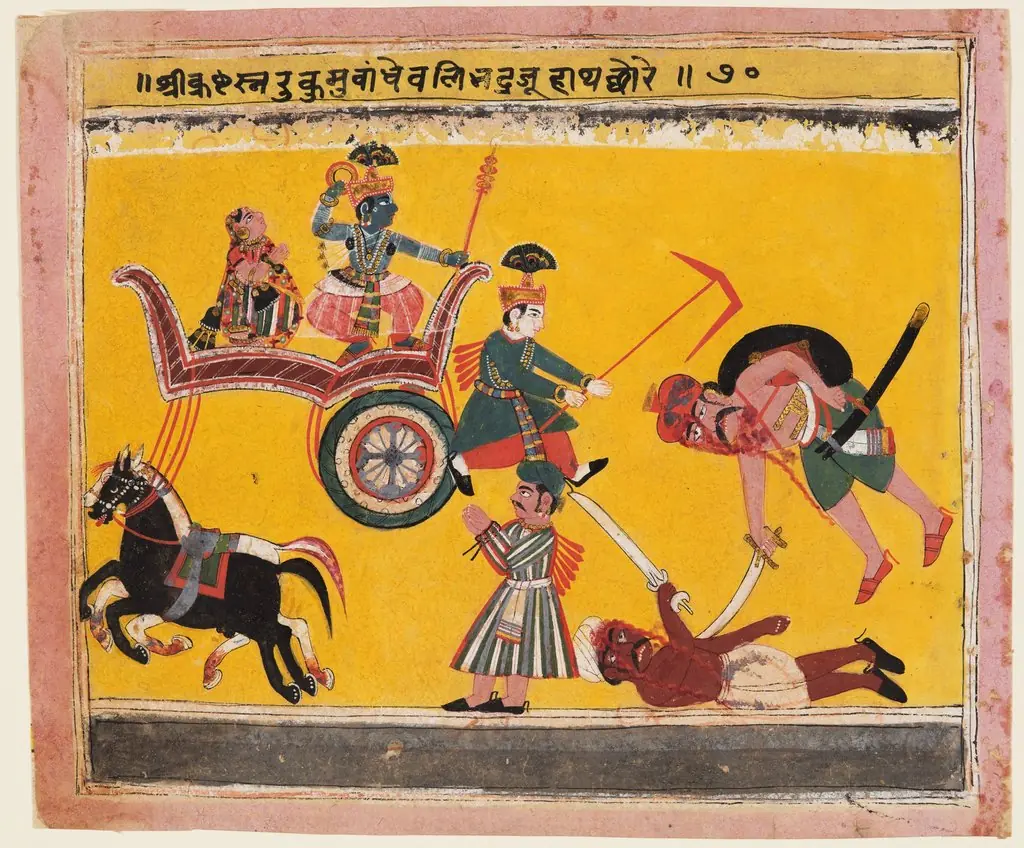 Abduction of Rukmini: Krishna Tied the Hands of Rukma, from a Bhagavata Purana
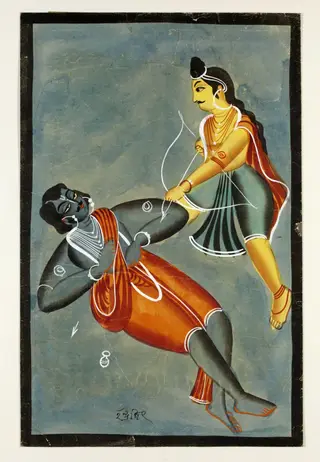 Lakshmana and Indrajit
 Krishna and Balarama Touching the Feet of Vasudeva and Devaki