Artwork
Untitled
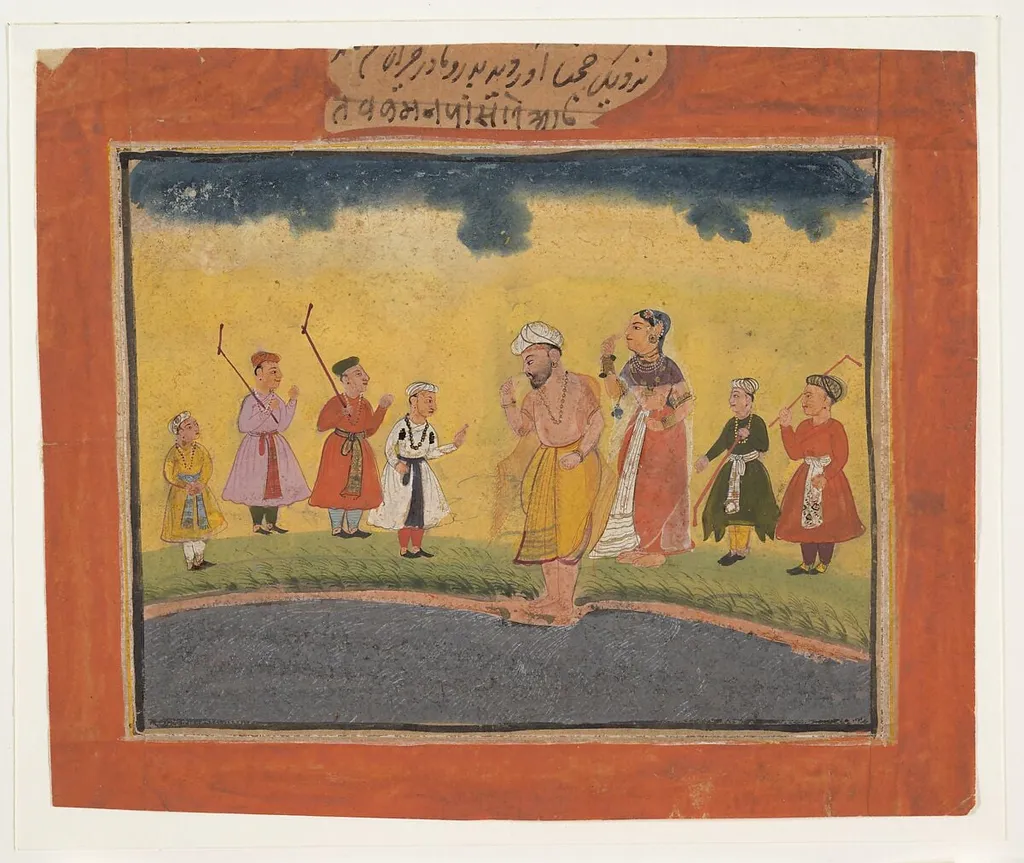
Untitled is a watercolor painting. It dates from 1615 and is held in the collection of the Metropolitan Museum of Art.
About this work
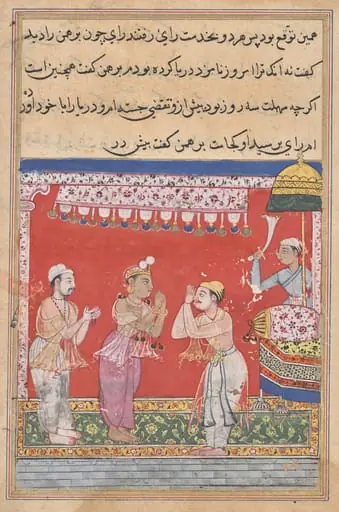
A man and woman sit on a riverbank under a tree while a boat glides past in the distance. The scene is drawn in ink and bright, flat colors on paper, made in India around 1615 by an unknown hand. The figures sit close but never touch, a quiet, private moment. The colors are simple but bold, with no shading to mimic real depth.
Subject & Meaning
The work, dated 1615 and created in India using ink and opaque watercolor on paper, portrays the Hindu deity Krishna together with a man, a river, and a woman.
The work, dated 1615 and created in India using ink and opaque watercolor on paper, portrays the Hindu deity Krishna together with a man, a river, and a woman. Its classification as a genre scene and the listed subjects in the source indicate a narrative composition, while the Metropolitan Museum of Art’s catalogue records it as part of their collection. The painting thus presents a mythological or story‑based subject typical of Indian art of the period, reflecting both the artist’s anonymous hand and the cultural context of early 17th‑century India.
Technique & Style
Created in 1615 in India, this anonymous work is executed in ink and opaque watercolor on a paper support. The painting measures 13 units in both height and width, presenting a compact format typical of the genre. Stylistically, the piece functions as a genre scene, visually narrating an interaction involving the deity Krishna alongside a man and a woman within a riverside setting.
The application of opaque watercolor suggests a vibrant, layered surface quality, while the use of ink likely defines the linear contours of the figures and the surrounding landscape elements. As a two-dimensional work on paper, the medium allows for the delicate rendering of details inherent to Indian painting traditions of the early seventeenth century.
History & Provenance
Created in India in 1615, this ink and opaque watercolor on paper was produced by an anonymous artist. The work, which depicts a genre scene featuring Krishna, a man, a woman, and a river, currently resides in the collection of the Metropolitan Museum of Art. While the specific circumstances of its commission and the detailed chain of ownership prior to its museum acquisition are not recorded in the available data, its inception is firmly dated to the early seventeenth century. The piece is classified as a painting and measures 13 units in both height and width.
Context
The painting, dated 1615 and executed in ink and opaque watercolor on paper, portrays the Hindu deity Krishna alongside a man, a river and a woman, reflecting devotional imagery common in Indian visual culture. Its authorship is attributed to an anonymous Indian painter, situating it within the broader tradition of early modern Indian manuscript illustration. As part of the Metropolitan Museum of Art's collection, the work has been referenced in scholarly discussions of 17th‑century Indian painting, though systematic critical reception remains limited.
The piece exemplifies genre‑scene representation within Indian art of the period, highlighting the thematic diversity of devotional subjects.
Legacy
The painting, though unsigned, entered the Metropolitan Museum of Art, where its inclusion has made it a reference point for scholars examining early Indian representations of Krishna; its composition, featuring Krishna alongside a man, river, and woman, is documented in the work’s description; as a rare dated example from 1615, it contributes to ongoing discussions of artistic exchange; its presence in a leading museum has ensured continued scholarly attention to its iconography and technique.
Overview
This untitled painting, executed with ink and opaque watercolor on paper, depicts a serene scene from early 17th-century India. It portrays a man and a woman seated on a riverbank beneath a tree, while a boat traverses the distant water. The artwork, whose creator remains unknown, offers a glimpse into the artistic conventions and thematic interests of its period, characterized by its distinct visual language and intimate subject matter.
Artist & collection

- Untitled
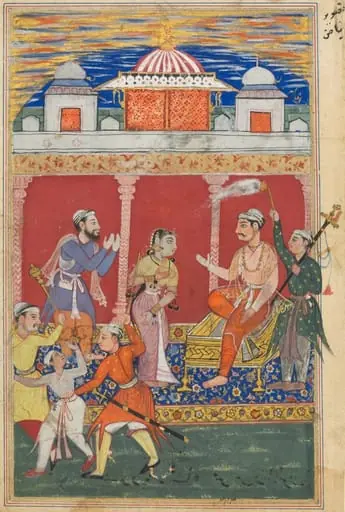 The prince’s ordeal continues, he is ordered away to be executed for the fifth time, from a Tuti-nama (Tales of a Parrot): Eighth Night
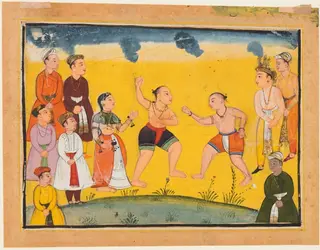 Draupadi Rescued from Abduction, from a Mahabharata
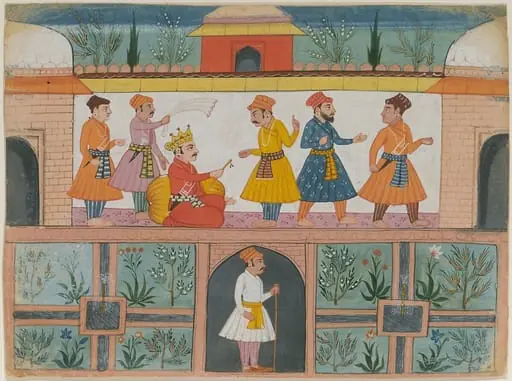 Untitled
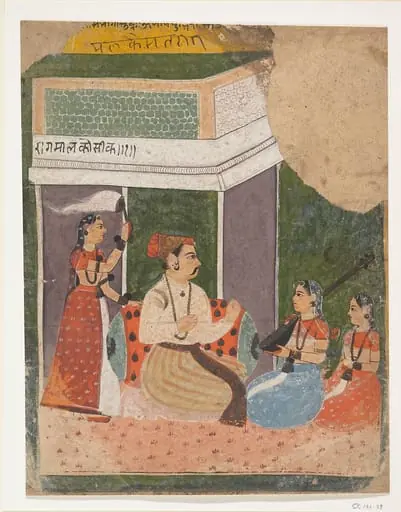
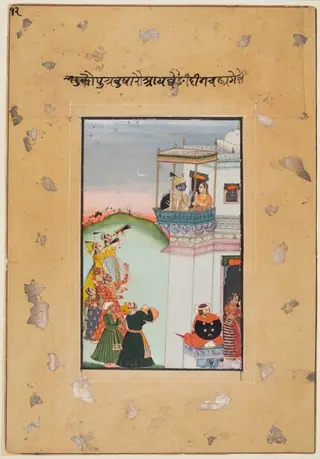 Krishna and Consort on a Palace Balcony with Musicians: Vukharo Ragaputra of Bhairav, from the “Boston Ragamala”
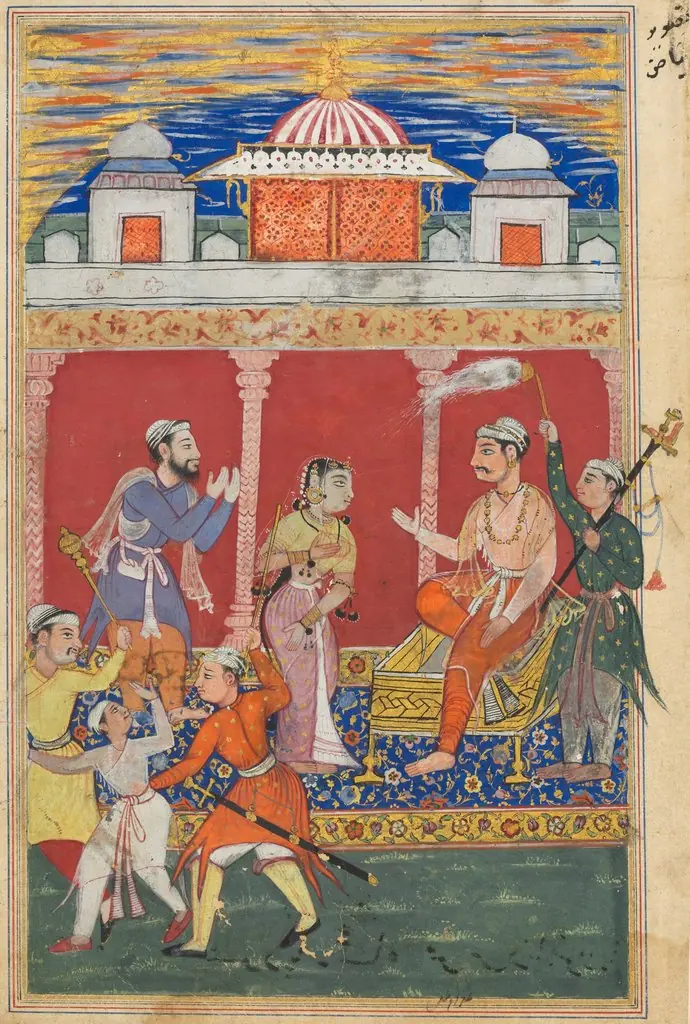 The prince’s ordeal continues, he is ordered away to be executed for the fifth time, from a Tuti-nama (Tales of a Parrot): Eighth Night
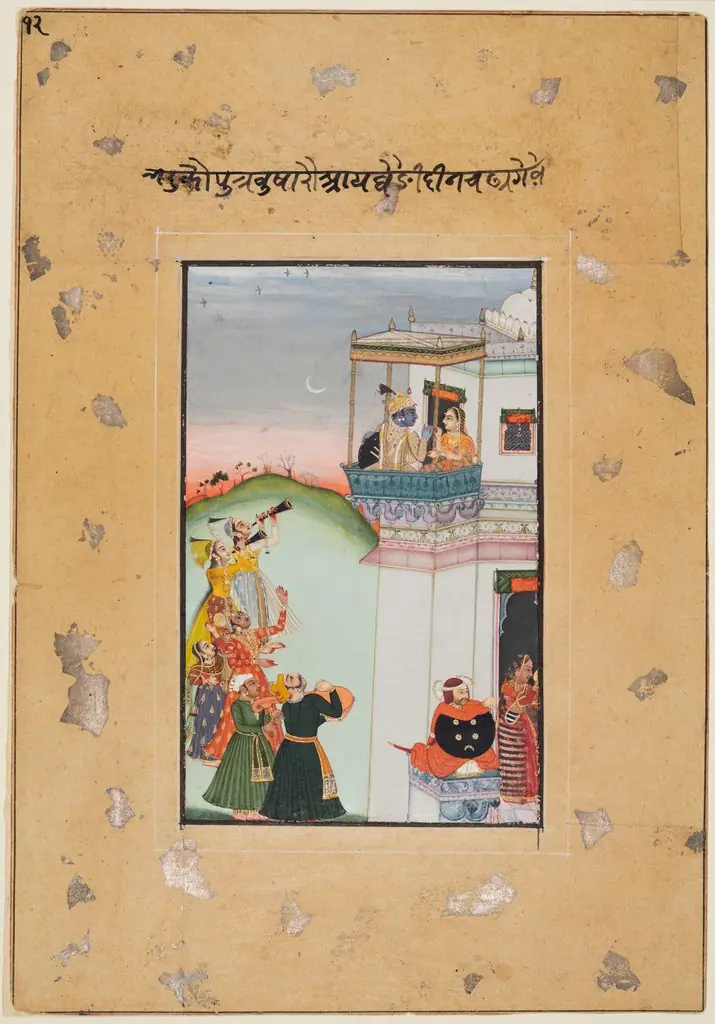 Krishna and Consort on a Palace Balcony with Musicians: Vukharo Ragaputra of Bhairav, from the “Boston Ragamala”
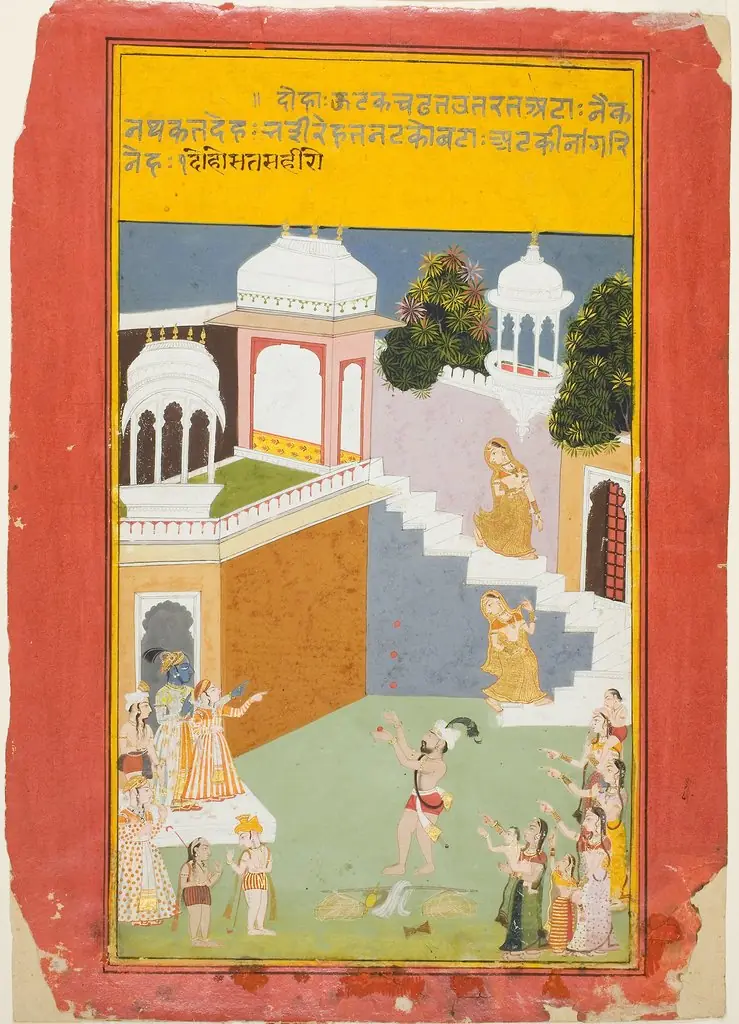 Krishna Watches A Juggler, from a copy of Bihari's Sat Sai
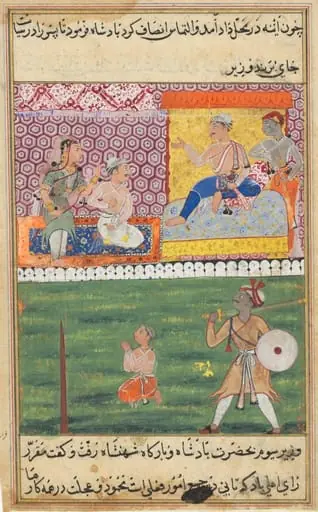 The handmaiden again appeals for justice and the prince is led to the place of execution for the third time, from a Tuti-nama (Tales of a Parrot): Eighth Night
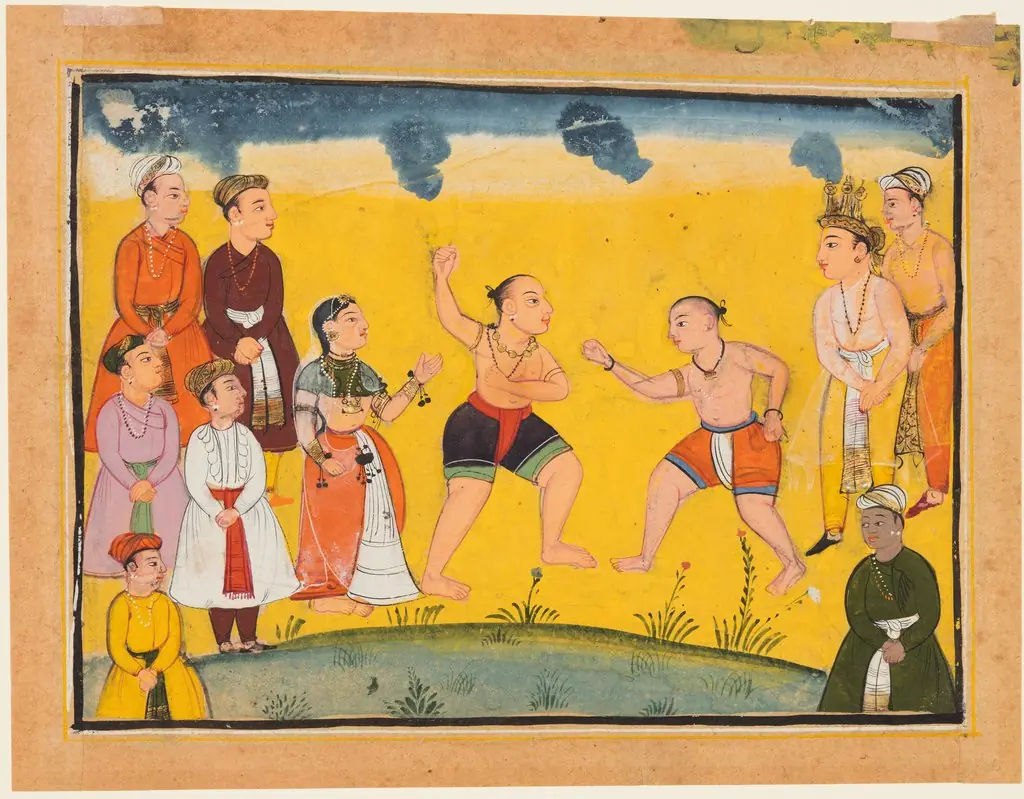 Draupadi Rescued from Abduction, from a Mahabharata
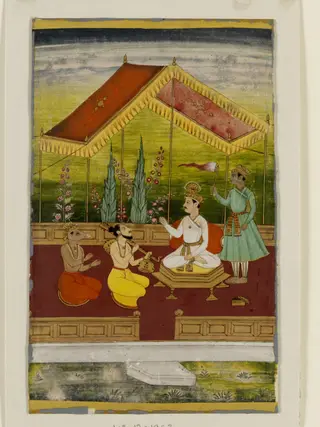 Sri Raga
 The king of the Ocean, having assumed human form, arrives at the court of the Raja, from a Tuti-nama (Tales of a Parrot): Eleventh Night