Artwork
瀟湘八景図|Eight Views of the Xiao and Xiang Rivers
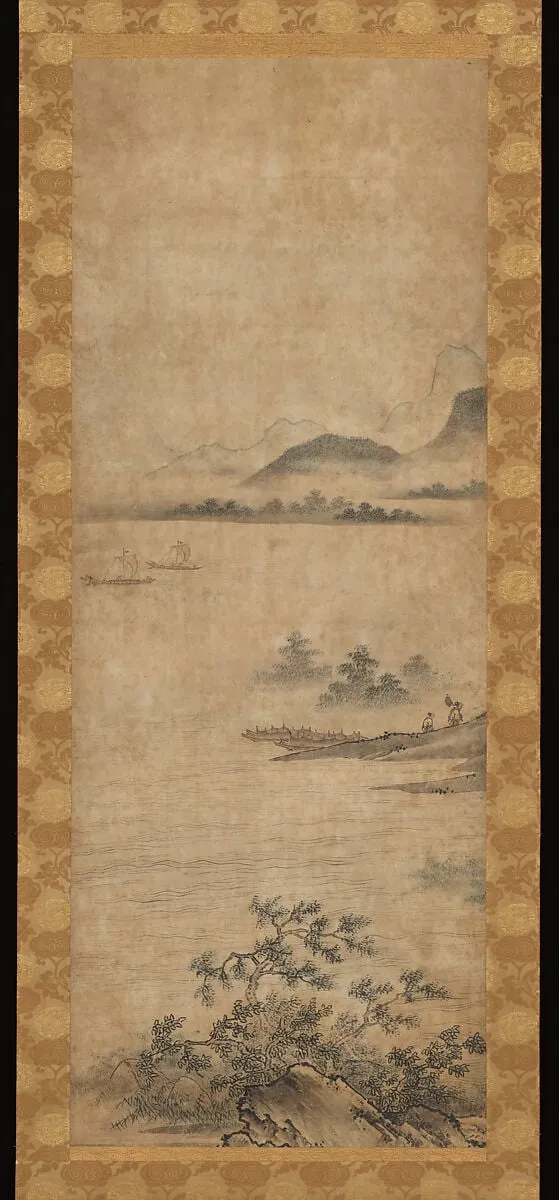
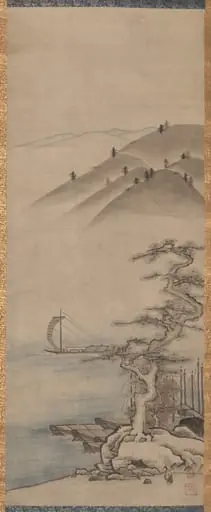
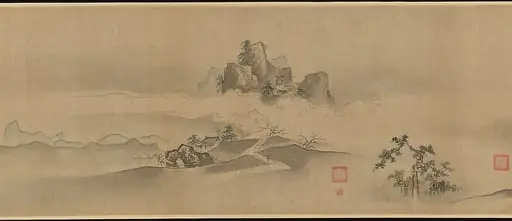
瀟湘八景図|Eight Views of the Xiao and Xiang Rivers is an ink painting. It dates from 1536 and is held in the collection of the Metropolitan Museum of Art. This artwork, titled Eight Views of the Xiao and Xiang Rivers, is a hanging scroll, forming part of a triptych.
About this work
Subject & Meaning
As part of a triptych of hanging scrolls, the work utilizes these specific visual motifs to evoke the poetic atmosphere associated with this renowned subject.
Created in Japan in 1536, this ink and color painting on paper illustrates the classical East Asian theme of the Eight Views of the Xiao and Xiang Rivers. The composition features a landscape dominated by mountains and water, incorporating a boat as a central narrative element. As part of a triptych of hanging scrolls, the work utilizes these specific visual motifs to evoke the poetic atmosphere associated with this renowned subject.
The depiction of the vessel amidst the mountainous terrain serves not merely as a scenic record but as an iconographic representation of travel, solitude, and the harmonious relationship between humanity and nature, which are traditional symbolic underpinnings of this genre.
Technique & Style
Created in 1536, the Eight Views of the Xiao and Xiang Rivers consists of a triptych of hanging scrolls executed in ink and color on paper. Produced in Japan by an anonymous artist, the work belongs to the landscape genre and features formal depictions of mountains and boats. As part of the Metropolitan Museum of Art's collection, the pieces are classified as paintings.
The medium utilizes traditional East Asian materials, combining monochromatic ink washes with applied color to render the scenic compositions on a paper support. The format of hanging scrolls suggests a presentation style intended for vertical display, consistent with the conventions of Japanese painting from the mid-sixteenth century.
History & Provenance
The Eight Views of the Xiao and Xiang Rivers, dated to 1536, is a triptych of hanging scrolls executed in ink and color on paper. Created in Japan, the work is attributed to an anonymous artist, as no specific painter is identified in the historical record. The set currently resides in the collection of the Metropolitan Museum of Art, where it is cataloged under the accession number 1985.239.1.
While the precise circumstances of its original commission remain undocumented, the surviving pieces depict traditional landscape motifs including mountains and boats. The work's creation in the mid-sixteenth century places it within a significant period of Japanese ink painting, though the specific patron or institutional context for its initial production is not detailed in available records.
The work resides in the Metropolitan Museum of Art, where it is catalogued under accession number 1985.239.1. It forms part of a triptych of hanging scrolls executed in ink and color on paper in 1536 and is attributed to an anonymous Japanese artist. The painting illustrates one of the Eight Views of the Xiao and Xiang Rivers, featuring a solitary boat amid a rendered mountain landscape.
Museum records classify it as a landscape painting created in Japan, and the collection entry notes its depiction of boat and mountain motifs. No exhibition history is recorded in the cited documentation.
Overview
This artwork, titled Eight Views of the Xiao and Xiang Rivers, is a hanging scroll, forming part of a triptych. Executed with ink and color on paper, it presents a series of landscape scenes. The painting depicts various moments along the Xiao and Xiang rivers in China, a subject with deep roots in East Asian artistic and literary traditions. It invites contemplation of nature's subtle shifts and the passage of time.
Context
The "Eight Views of the Xiao and Xiang Rivers" theme originated in China during the Song dynasty and became a popular subject for painters and poets across East Asia. This particular work exemplifies the enduring appeal of depicting specific, evocative landscapes that carry cultural and historical resonance. It belongs to a broader tradition of East Asian landscape painting, where the natural world is often explored for its philosophical and aesthetic depth, encouraging viewers to engage with the environment.
Artist & collection

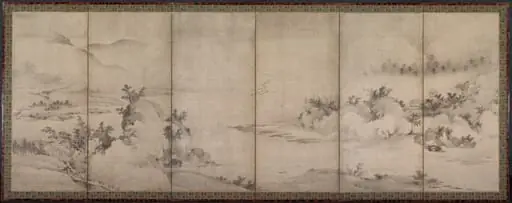
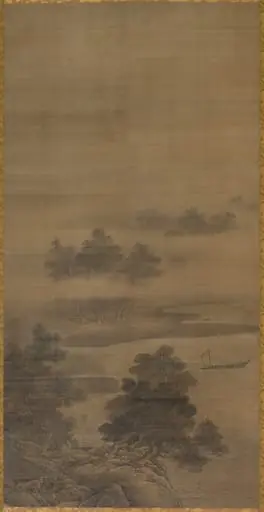
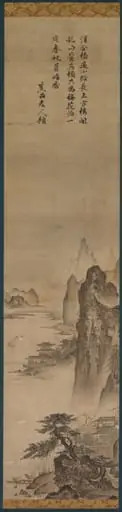
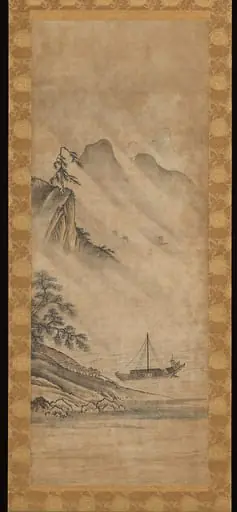
- 瀟湘八景図|Eight Views of the Xiao and Xiang Rivers
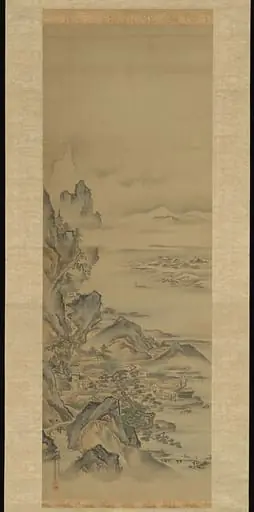 狩野探水守常筆 蓬莱山・瀟湘八景図|Mount Penglai with Eight Views of Xiao and Xiang
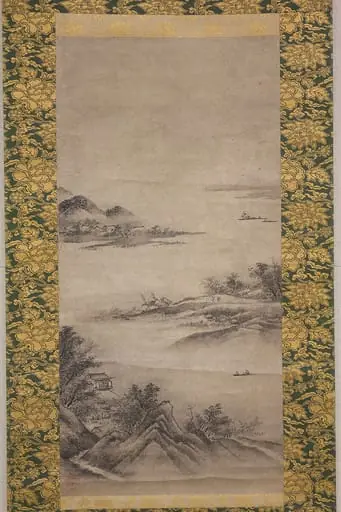 山水図|River Landscape in Evening
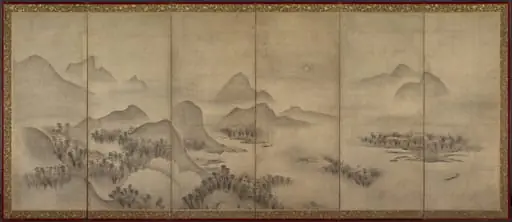 Moonlit Landscape (one of a pair)
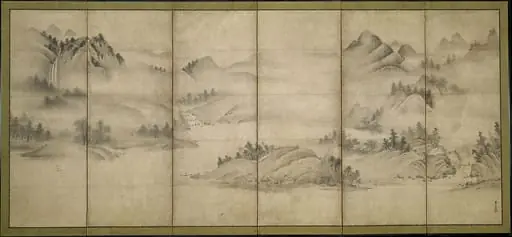 相阿弥筆 四季山水図 (瀟湘八景)|Landscape of the Four Seasons (Eight Views of the Xiao and Xiang Rivers)
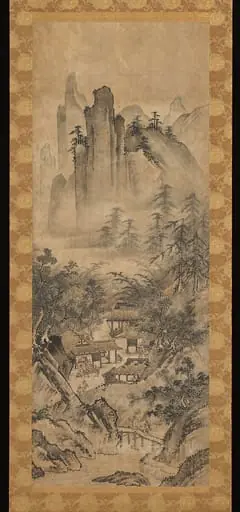 瀟湘八景図|Eight Views of the Xiao and Xiang Rivers
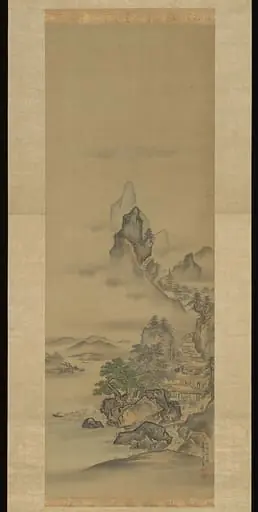 狩野探水守常筆 蓬莱山・瀟湘八景図|Mount Penglai with Eight Views of Xiao and Xiang
 狩野常信筆 潇湘八景図巻|Eight Views of the Xiao and Xiang Rivers