Artwork
Entombment of Christ
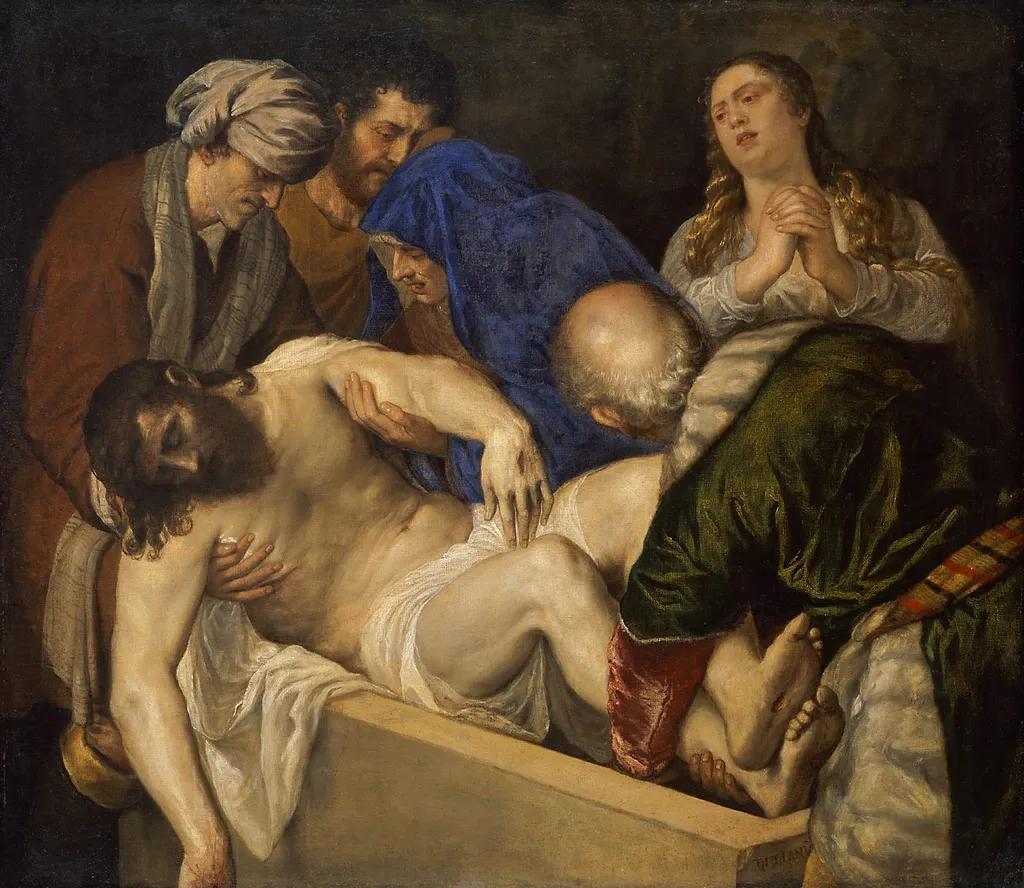
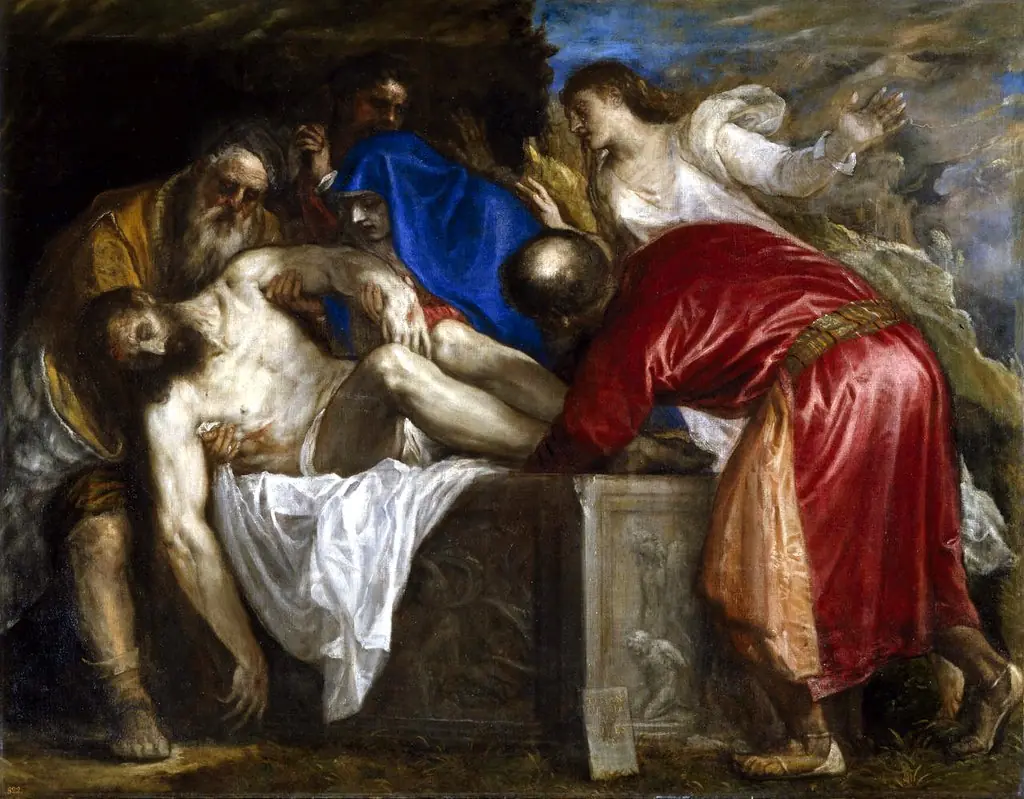
Entombment of Christ is an unspecified painting. It dates from 1550 and is held in the collection of the Kunsthistorisches Museum. The work depicts a solemn gathering around a lifeless, unclothed figure laid upon a stone slab.
About this work
Subject & Meaning
The depiction includes Jesus Christ and references to the sarcophagus, underscoring the narrative of Christ's burial and its theological significance.
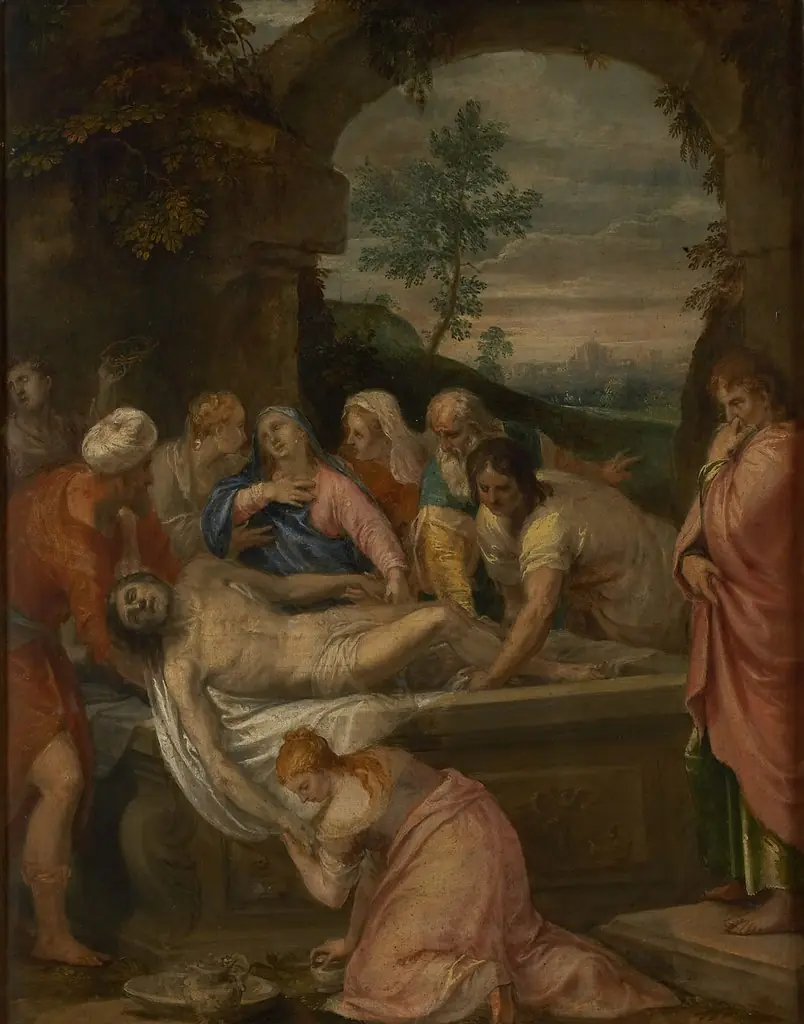
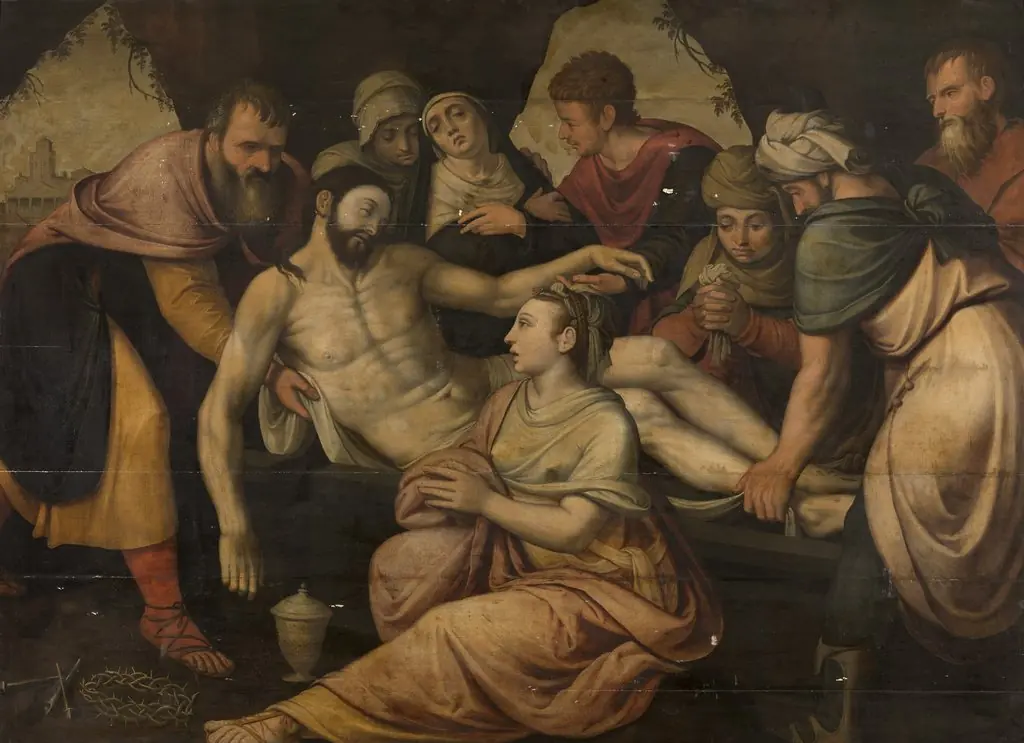
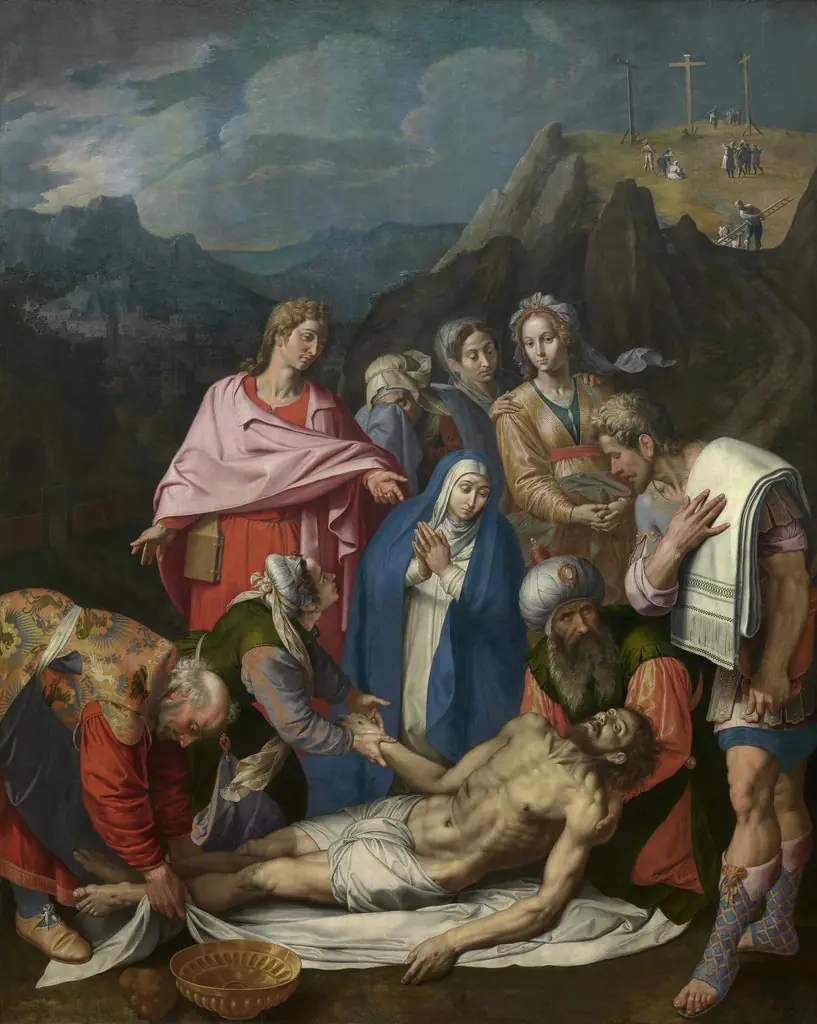
The painting shows the moment after the crucifixion when Christ's body is placed in a stone sarcophagus, a scene drawn from the biblical narrative of the burial. The composition emphasizes the solemnity of the entombment, highlighting themes of sacrifice and redemption within Christian iconography. The work belongs to the religious art genre, reflecting the devotional focus of Renaissance painting.
The depiction includes Jesus Christ and references to the sarcophagus, underscoring the narrative of Christ's burial and its theological significance.
The artwork is part of the collection at the Kunsthistorisches Museum, where it is displayed as a religious painting from the 16th century.
History & Provenance
The Entombment of Christ in the Kunsthistorisches Museum is attributed to the workshop of Titian and dated to around 1550. The painting entered the museum’s holdings as part of its core collection, where it has remained since the institution’s founding. Its religious subject aligns with Titian’s mature Venetian style, and the work has been classified within the museum’s permanent display of Venetian paintings from the mid-16th century.
The painting titled Entombment of Christ, attributed to the workshop of Titian and dated to 1550, is held in the collection of the Kunsthistorisches Museum. The work is classified as a religious painting depicting the entombment of Christ, Jesus Christ, and a sarcophagus. The provided sources do not list a specific inventory or accession number for the piece, nor do they contain details regarding its exhibition history or previous provenance.
Context
The Entombment of Christ, painted in 1550, exemplifies religious art within the corpus of works attributed to Titian's workshop, as documented in authoritative art historical records. Its provenance links directly to the Kunsthistorisches Museum in Vienna, where it remains on display, underscoring its significance within the broader context of Renaissance religious painting and Titian's artistic legacy.
Legacy
The Entombment of Christ, painted in 1550 and housed in the Kunsthistorisches Museum, has been studied for its role in shaping the visual language of religious art, particularly within the workshop traditions of Titian. Its compositional treatment of the entombment motif influenced subsequent depictions of Christ’s burial, contributing to a broader iconographic repertoire that emphasized solemnity and spatial depth. Scholars note its significance as part of a corpus of works emerging from Titian’s studio that reinforced Counter‑Reformation themes through painted narrative.
The painting’s reputation has been bolstered by its presence in major museum collections and scholarly catalogues, where it is cited as an exemplar of 16th‑century Venetian narrative painting. Its legacy persists in art‑historical discourse on the transmission of devotional imagery, underscoring its enduring impact on the representation of sacred subjects.
Overview
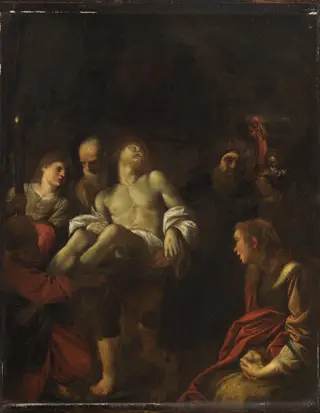
The work depicts a solemn gathering around a lifeless, unclothed figure laid upon a stone slab. A small, vivid wound marks the side of the corpse, contrasting with the pallid flesh. Surrounding mourners, dressed in dark, richly textured garments, lean in or stand, their expressions conveying grief and concern.
A kneeling woman reaches to touch the hand of the deceased, emphasizing the intimate sorrow of the scene.
Technique & Style
The artist employs a stark chiaroscuro, using deep shadows to envelop the background and illuminate the faces and the body’s wound. This contrast heightens the three-dimensionality of the figures and directs attention to emotional expressions. Rich, dark fabrics are rendered with careful brushwork, while the pale skin and the singular red spot of blood draw the viewer’s eye to the central narrative.
Artist & collection