Artwork
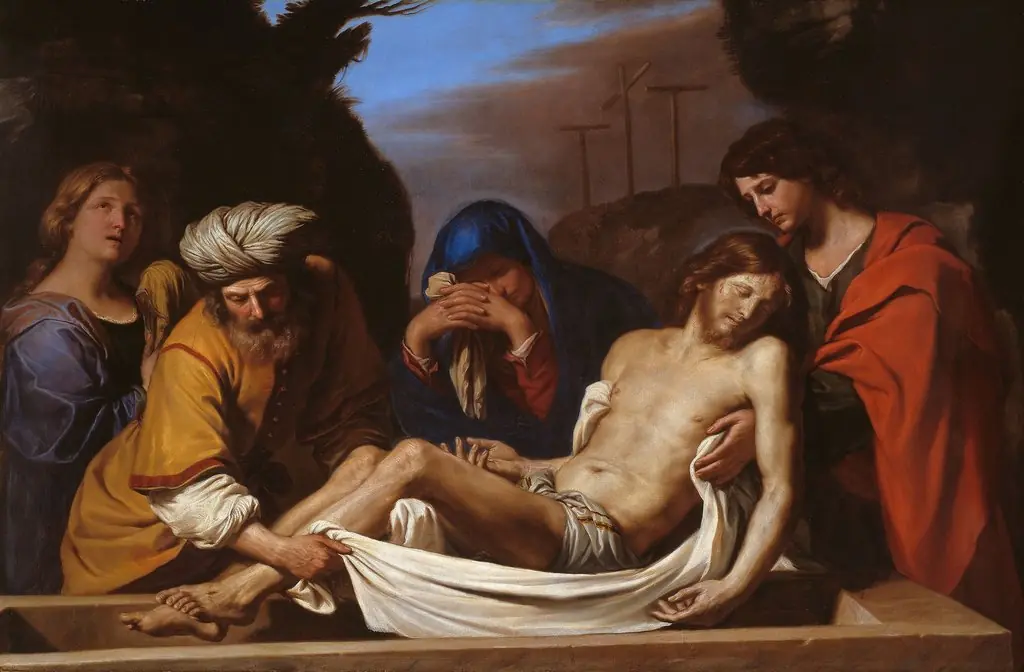
The Entombment
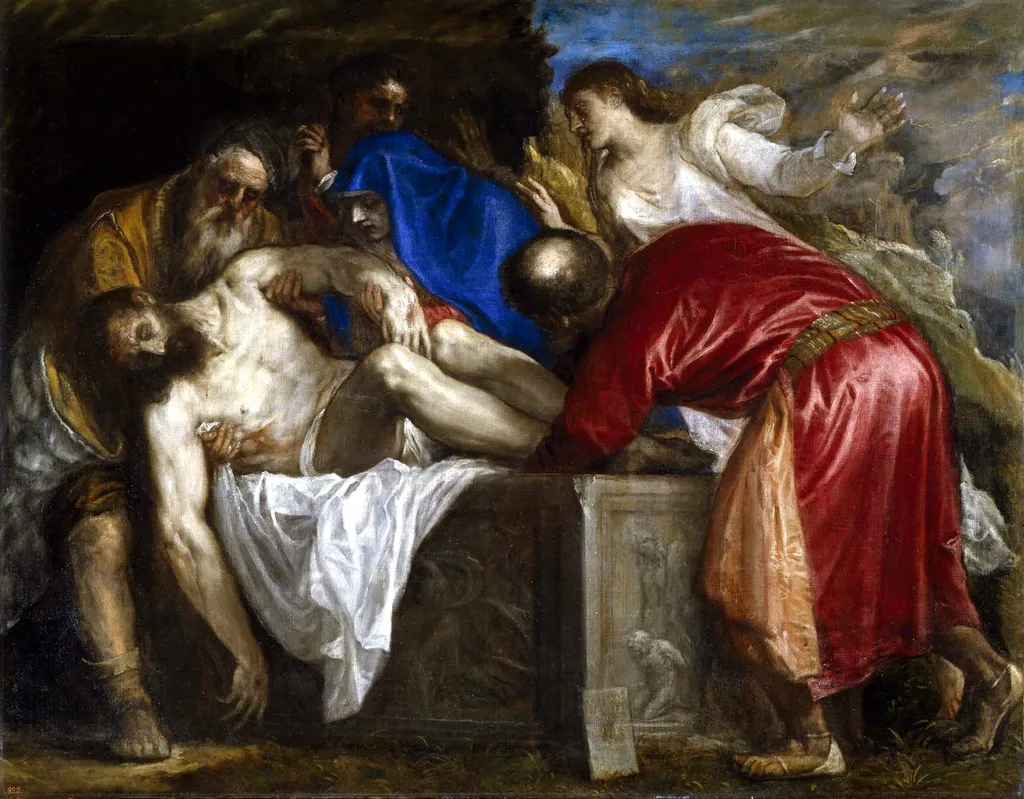
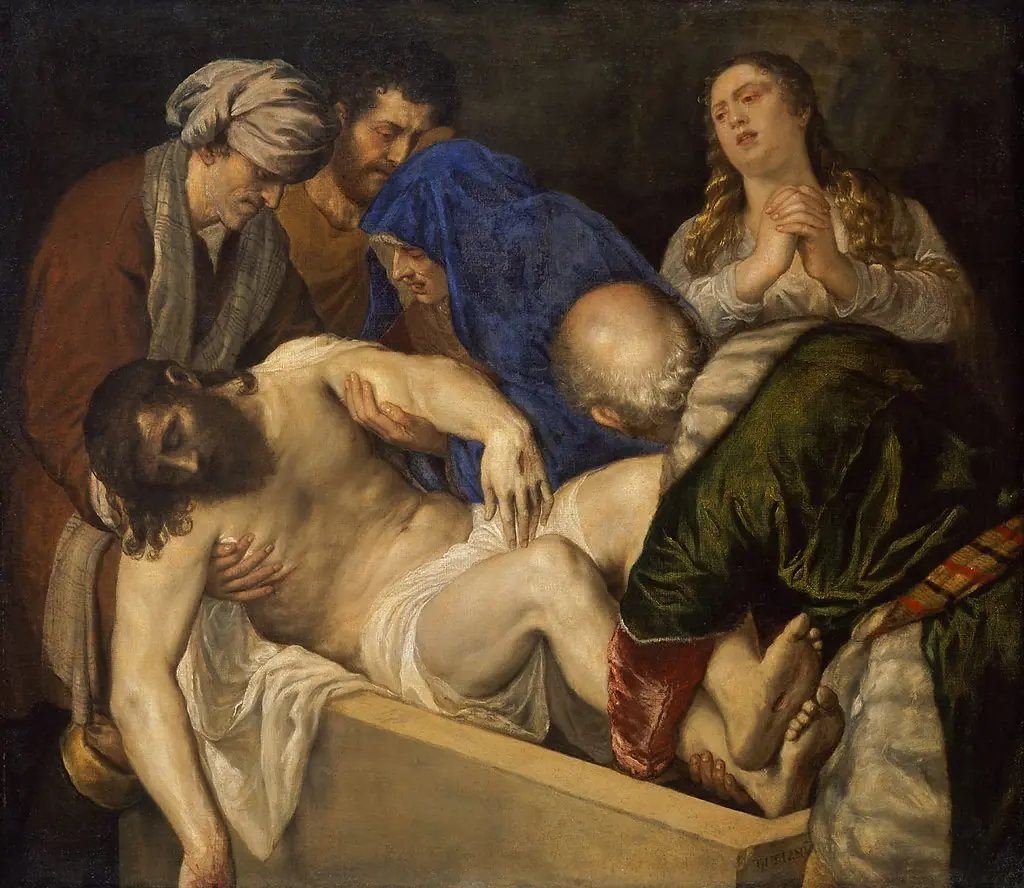
The Entombment is an oil painting by the High Baroque Italian artist Titian. It dates from 1559 and is held in the collection of the Museo del Prado.
About this work
Subject & Meaning
Titian portrays the Virgin actively participating in the entombment, a detail absent from the Gospels and possibly drawn from Pietro Aretino’s 1538 publication.
The Entombment depicts the burial of Jesus, shown lowered into a stone sarcophagus resembling ancient Roman examples. Five figures attend: Nicodemus supports Christ’s body, the Virgin Mary holds one of his arms, Joseph of Arimathea assists at the feet, while Mary Magdalene appears in a white robe to the right and John the Evangelist stands behind the Virgin with clasped hands.
Titian portrays the Virgin actively participating in the entombment, a detail absent from the Gospels and possibly drawn from Pietro Aretino’s 1538 publication. The artist identifies himself with Nicodemus, echoing Michelangelo’s precedent in his unfinished Deposition. Critics interpret the scene as expressing a quiet religious dissent, sometimes called Nicodemism, marked by introspective faith rather than overt confrontation.
Technique & Style
Executed in 1559, this work is an oil painting on canvas measuring 137 cm by 175 cm. The composition features a diagonal arrangement that emphasizes a Roman-style stone sarcophagus and the athletic form of Christ, whose pallor is heightened by a white shroud in the foreground. Titian employs broad brushwork and brilliant colors, a stylistic approach characteristic of his late period that imbues the scene with intense drama and pathos.
The painting depicts five figures surrounding the body, including Nicodemus, who bears the artist's own features, and the Virgin Mary, shown unusually assisting with the burial. This emotional intensity and the specific iconography are considered representative of the exaggerated pathos defining Titian's religious works from his final years.
History & Provenance
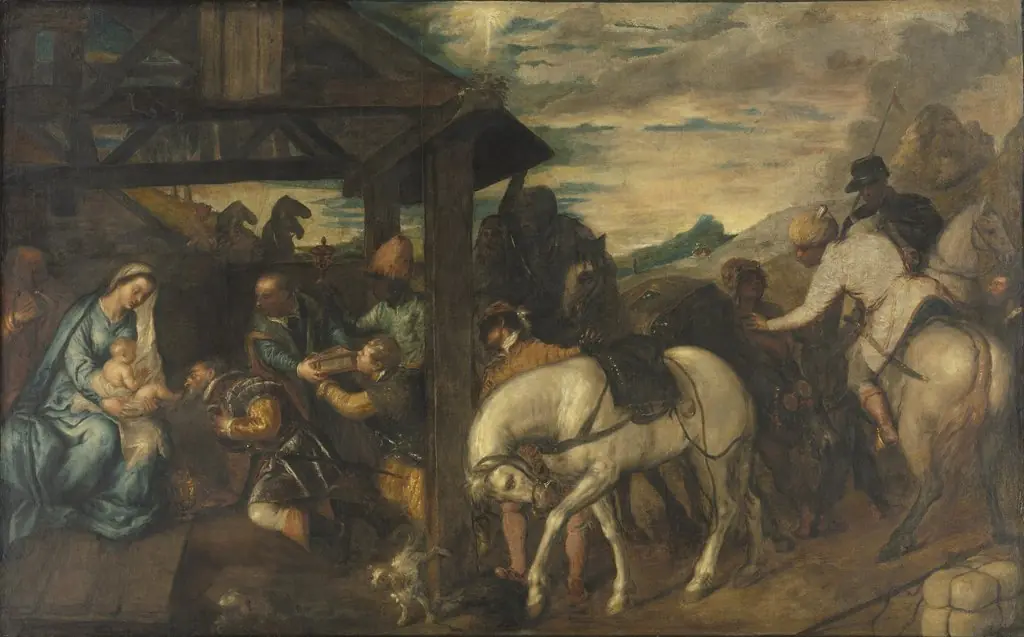
Painted in 1559, this oil-on-canvas work was commissioned by Philip II of Spain as the second version of an Entombment subject requested by the monarch. The initial 1557 attempt was lost during transit to Spain, prompting Titian to create this larger composition which was dispatched in 1559 alongside other mythological works. The painting arrived at the Royal Site of El Escorial in 1574, where it was installed in the Old Church alongside Titian's Adoration of the Magi and a later Martyrdom of Saint Lawrence.
In 1837, the artwork was transferred from the royal monastery to the Museo del Prado in Madrid, where it remains part of the permanent collection.
The painting is housed in the Museo del Prado, Madrid, where it is recorded under the museum’s inventory number Prado P440.
Commissioned by Philip II of Spain, the work was delivered to the Spanish court in 1559 and subsequently installed at the Monastery of San Lorenzo de El Escorial in 1574, displayed in the Iglesia Vieja alongside other Titian pieces; it remained there until 1837, when it was transferred to the Prado and entered the museum’s permanent collection.
Overview
Titian's 1559 oil-on-canvas painting, The Entombment, was commissioned by Philip II of Spain. Measuring 137 x 175 cm, this work depicts the burial of Jesus Christ, with his body being placed into a sarcophagus. The painting is now a significant holding of the Museo del Prado in Madrid.
It represents one of several interpretations of this subject by the Venetian master, reflecting a recurring theme in his extensive oeuvre.
Context
Titian revisited the subject of Christ's entombment multiple times throughout his career. An earlier version, dating to around 1520, was created for the Duke of Mantua and is now in the Louvre. Furthermore, the artist produced a similar composition in 1572, which he gifted to Antonio Pérez; this later work, also housed in the Prado, incorporates elements derived from the 1559 painting, demonstrating Titian's ongoing engagement with and refinement of the theme.
Artist & collection
Artist
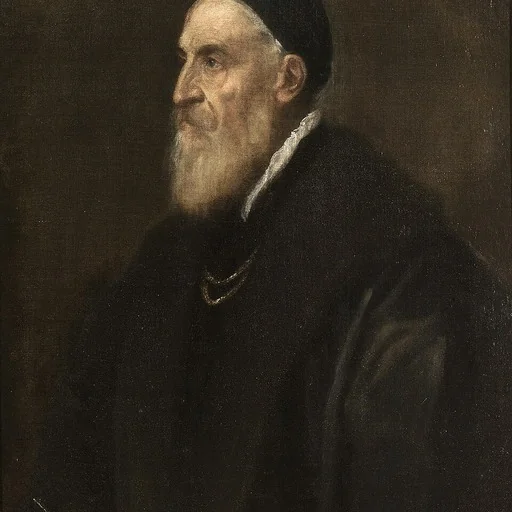
Tiziano Vecellio (Italian:; c. 1488/1490 – 27 August 1576), Latinized as Titianus, hence known in English as Titian ( TISH-ən), was an Italian Renaissance painter. The most important artist of Renaissance Venetian…