Artwork
Famous Views of Ōmi
Famous Views of Ōmi is an unspecified painting. It dates from 1690 and is held in the collection of the Cleveland Museum of Art.
About this work
Technique & Style
Condition details are not specified in the provided documentation, and no explicit statements about current preservation status are included.
The work Famous Views of Ōmi is a painting created in 1679 in Japan using traditional techniques associated with the Kano school. It is executed on a support typical of Japanese hanging scrolls, reflecting the medium and handling practices of 17th‑century Japanese art. The composition demonstrates formal qualities characteristic of the Kano school's stylized landscapes, with bold brushwork and restrained coloration that emphasize spatial depth and narrative clarity.
The painting is part of the Cleveland Museum of Art collection and is catalogued under accession number 1983.19.2, confirming its provenance and institutional preservation context.
Condition details are not specified in the provided documentation, and no explicit statements about current preservation status are included.
History & Provenance
Famous Views of Ōmi is held by the Cleveland Museum of Art, where it is catalogued under the inventory number 1983.19.2. The painting, created in 1679, entered the museum's collection as part of its holdings of Japanese art.
No exhibition history is documented in the available sources.
Overview
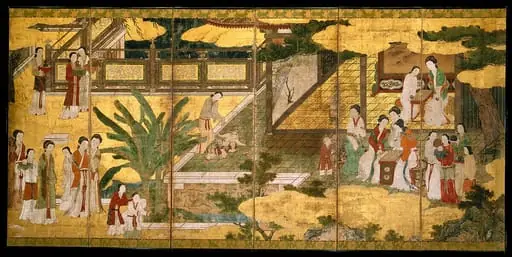
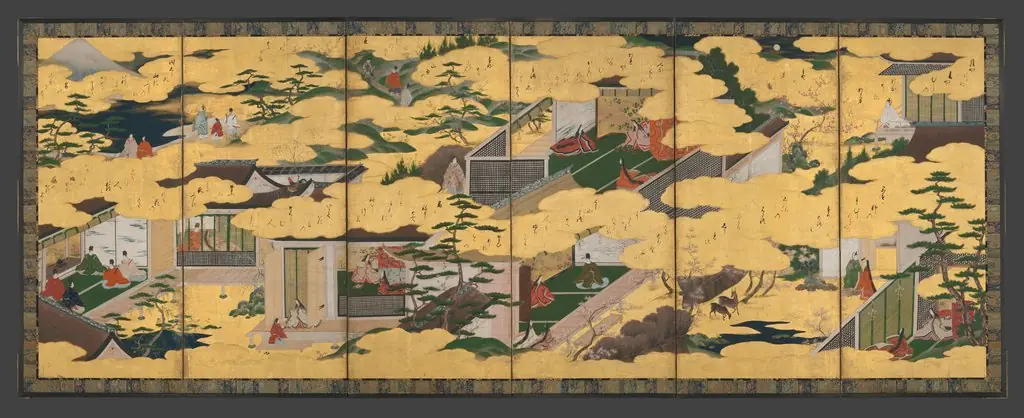
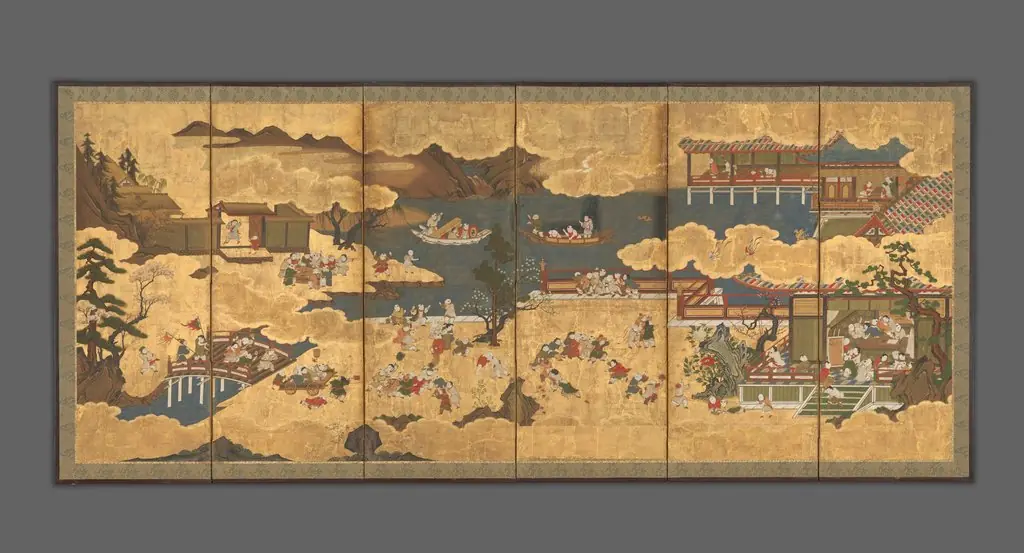
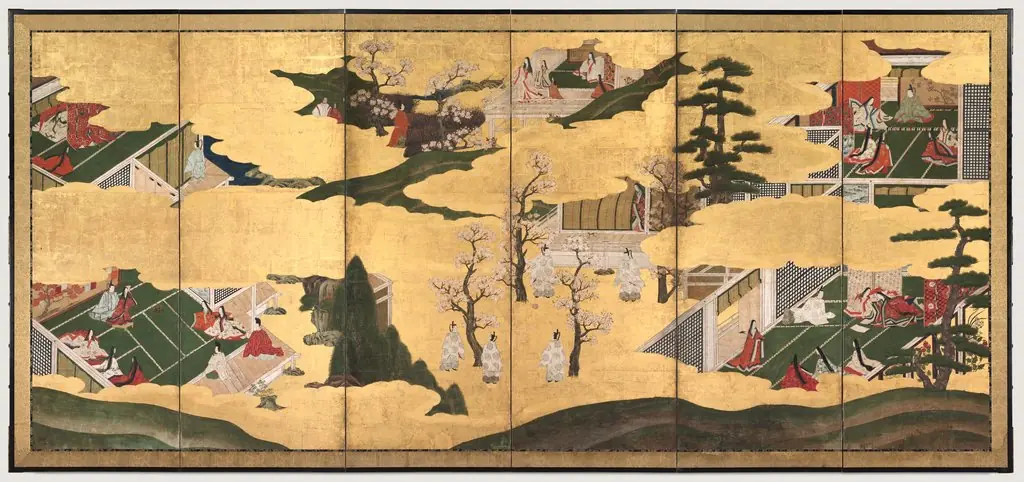
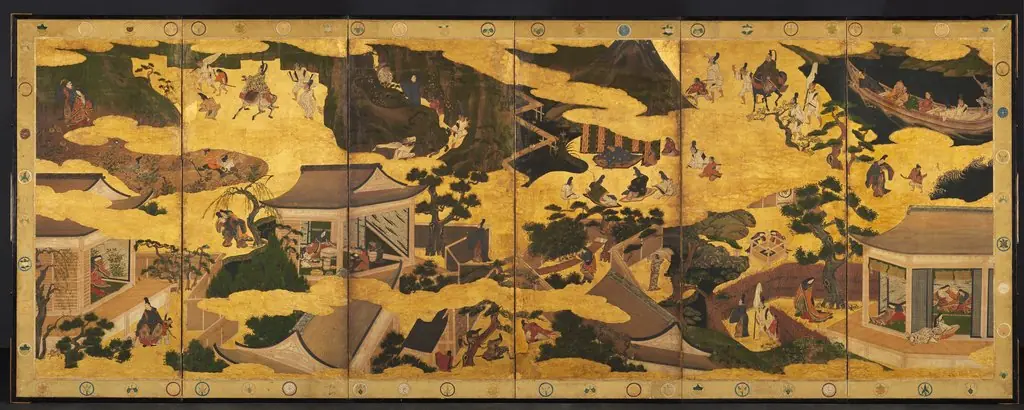
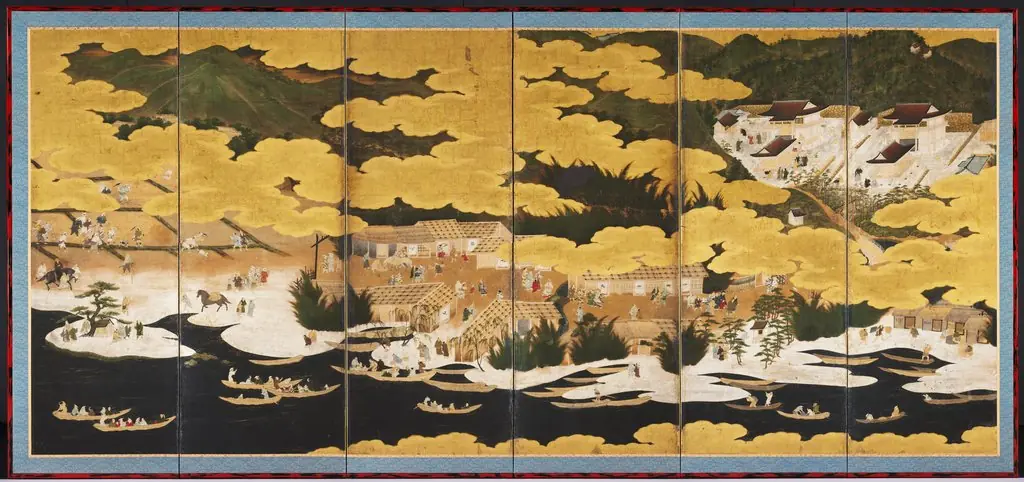
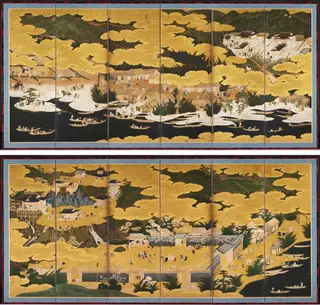
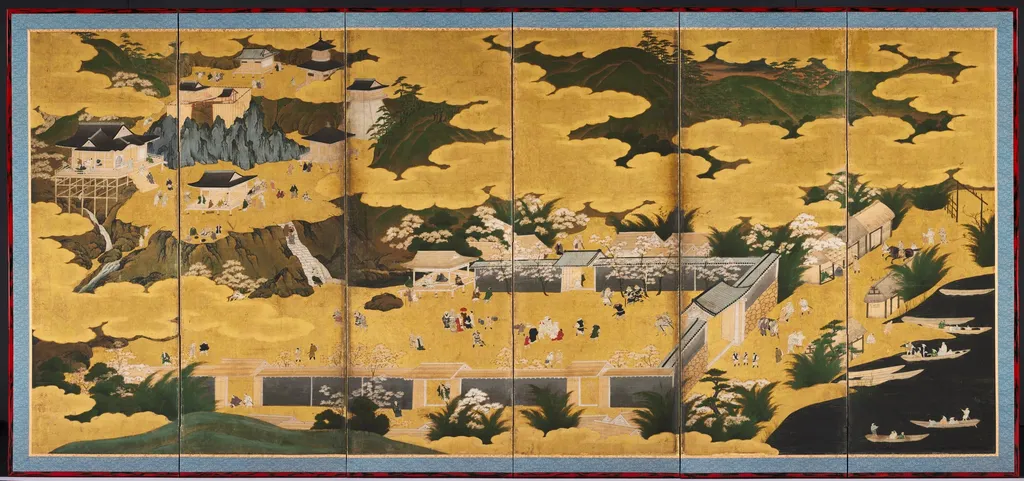
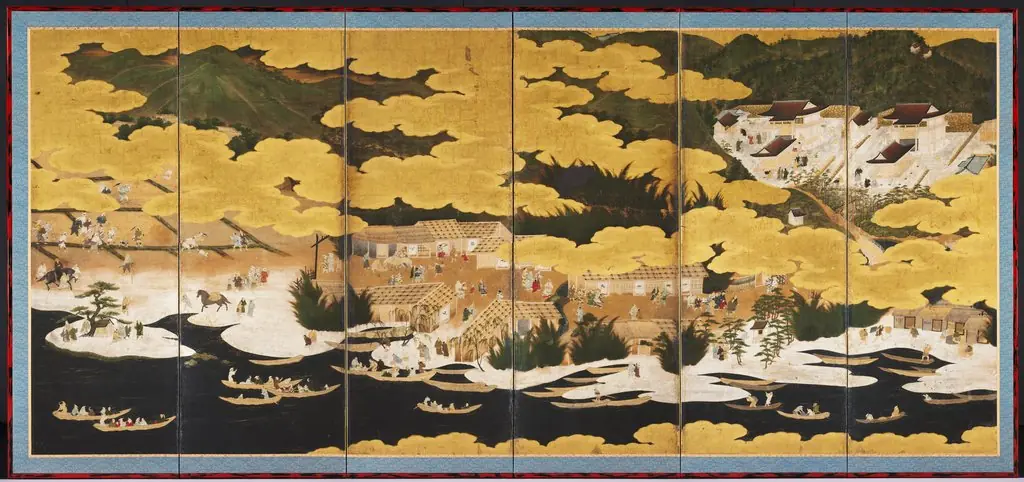
Famous Views of Ōmi is a six‑panel painted screen that presents an expansive Japanese landscape. The composition stretches across a golden ground, punctuated by verdant hills, billowing white clouds and architectural forms, while figures populate the scene engaged in everyday activities.
Subject & Meaning
The work depicts a panoramic view of the Ōmi region, integrating natural elements with human presence. Groups of people gather near a building and others traverse the distance, suggesting communal life and the interaction between society and its surrounding environment.
Context
The piece belongs to a tradition of Japanese screen painting that combines decorative luxury with narrative landscape. Its multi‑panel format allows a continuous visual narrative, a common approach for depicting extensive topographical scenes in Japanese art.
Artist & collection