Artwork
Four Elders of Mt. Shang
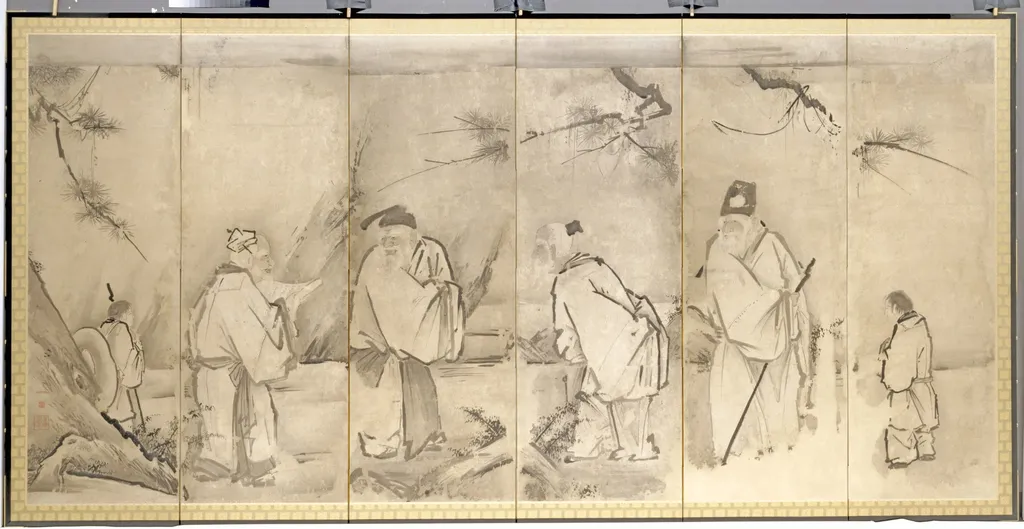
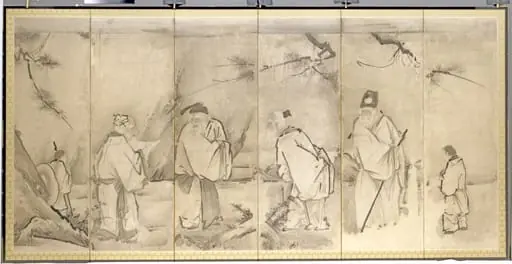
Four Elders of Mt. Shang is an unspecified painting. It dates from 1649 and is held in the collection of the Cleveland Museum of Art. Four Elders of Mt.
About this work
Subject & Meaning
By portraying these legendary figures, the artwork celebrates the enduring value of wisdom and the choice of a life dedicated to study over public service.
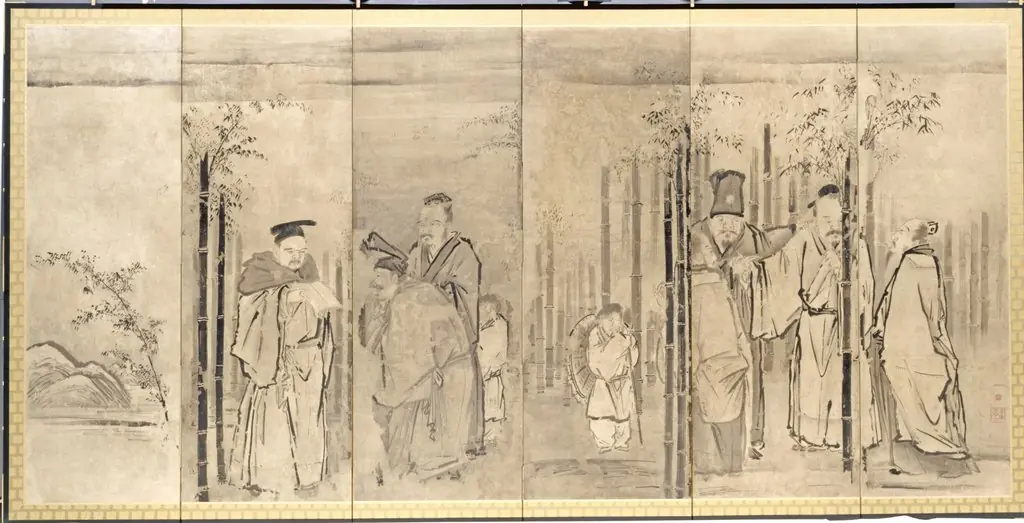
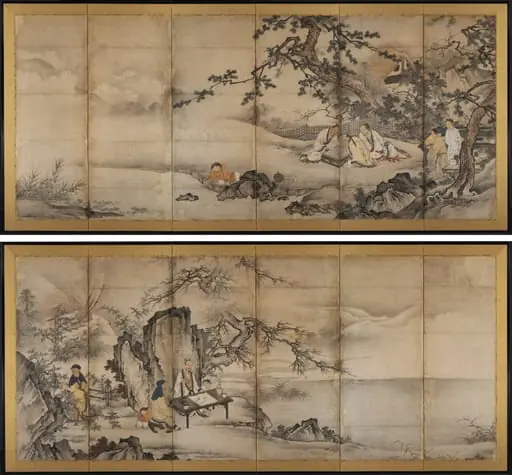
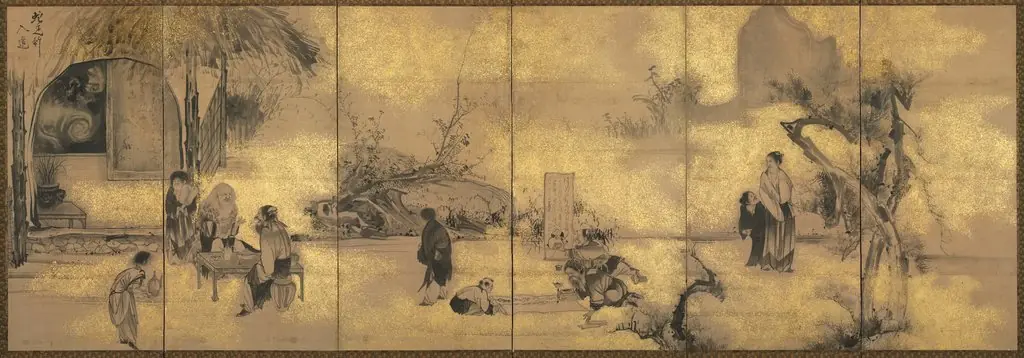
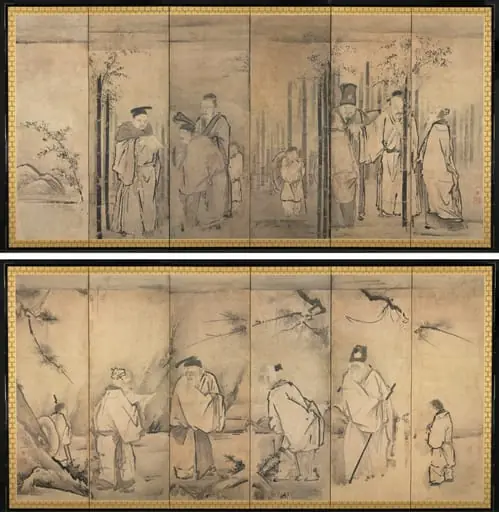
The painting depicts the Four Elders of Mt. Shang, a group of reclusive scholars from ancient China who became symbols of wisdom and moral integrity. Created in 1649 by the Japanese artist Kano Tan'yū, the work draws on this historical iconography to represent the ideal of the learned hermit.
The subject matter reflects a cross-cultural appreciation in which Chinese figures were adopted into Japanese Edo-period art to convey themes of retirement, scholarly virtue, and resistance to corrupt political power. By portraying these legendary figures, the artwork celebrates the enduring value of wisdom and the choice of a life dedicated to study over public service.
History & Provenance
The painting was created in 1649 in Japan and entered the collection of the Cleveland Museum of Art. Its attribution to the workshop of Kano Tan’yū is documented in the museum’s catalog entry, and the work carries the accession number 1979.78.2. No further provenance or exhibition history is detailed in the available sources.
Overview
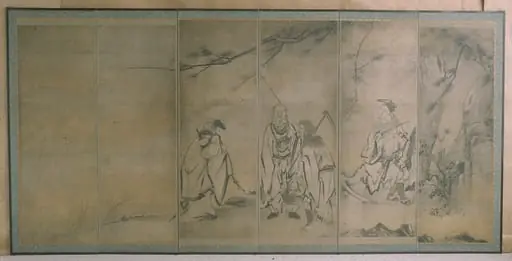
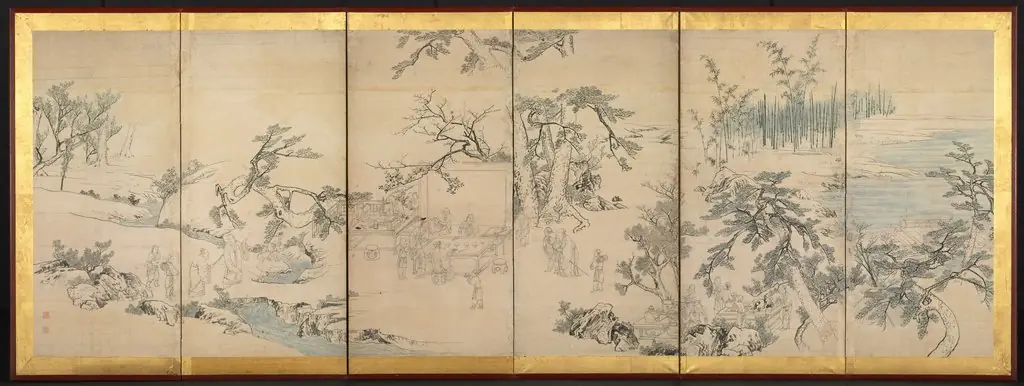
Four Elders of Mt. Shang is a monochrome painting that depicts a small group of elderly figures in flowing robes set against a sparse natural landscape. The composition balances the quiet presence of the men with a minimalist backdrop of trees and rocky terrain, rendered in soft, muted tones of gray and brown.
Technique & Style
Executed in ink on paper, the artist employs thin, rapid brushstrokes to suggest foliage and terrain, creating an impression of wind‑stirred leaves and shifting ground without detailed rendering. The limited palette and restrained line work emphasize atmosphere over realism, characteristic of traditional Chinese literati painting.
Context
The painting aligns with the aesthetic values of the literati tradition, where scholarly artists favored simplicity, spontaneity, and the expression of inner feeling through understated brushwork. The depiction of elder figures often served as a moral or philosophical reference to wisdom and the passage of time.
Legacy
Four Elders of Mt. Shang continues to be cited as an example of restrained composition and expressive ink technique, influencing later artists who explore the balance between figure and landscape within a minimal visual language.
Artist & collection