Artwork
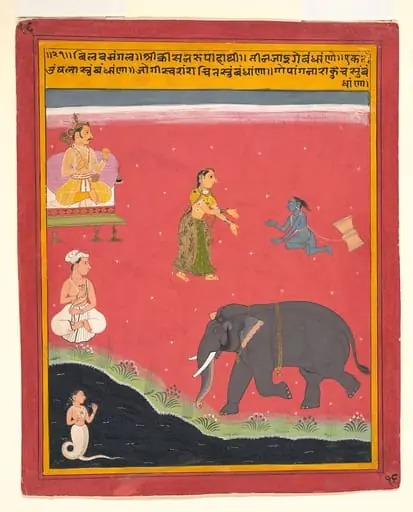
Gajendra Moksha: The Salvation of the King of the Elephants
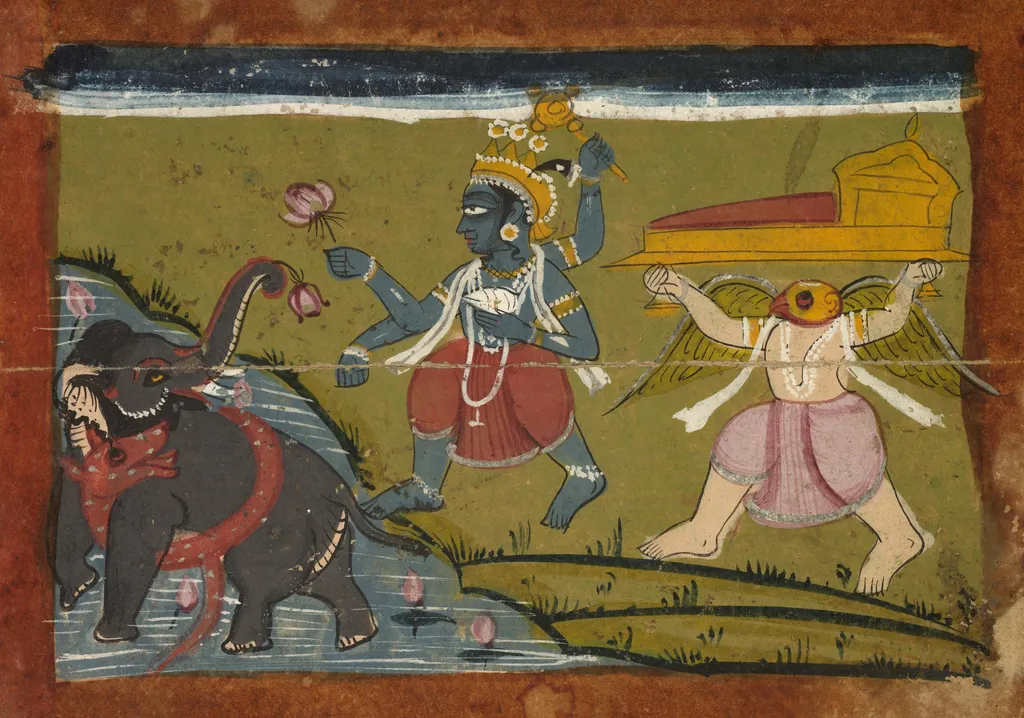
Gajendra Moksha: The Salvation of the King of the Elephants is an unspecified painting. It dates from 1850 and is held in the collection of the Cleveland Museum of Art.
About this work
Subject & Meaning
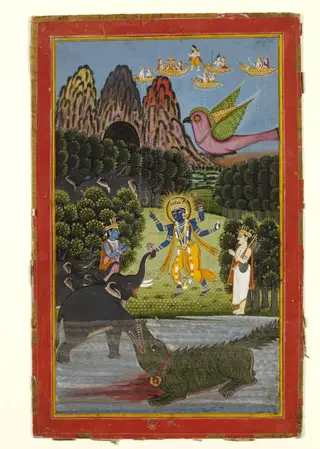
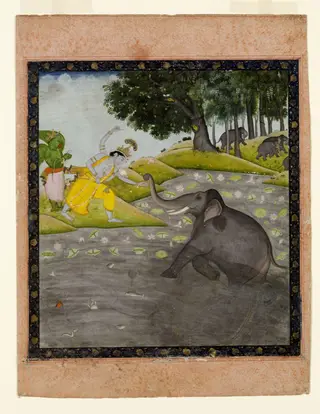
The subject illustrates the moment of divine intervention when the devotee, having called out in desperation, is liberated by the god.
The painting depicts Gajendra Moksha, a Hindu narrative of salvation in which Vishnu rescues Gajendra, the elephant king. The subject illustrates the moment of divine intervention when the devotee, having called out in desperation, is liberated by the god. The work represents themes of bhakti (devotion), surrender to the divine, and ultimate spiritual liberation (moksha).
As a 19th-century Indian painting, it embodies the visual traditions through which this sacred story was transmitted and venerated.
History & Provenance
The painting Gajendra Moksha: The Salvation of the King of the Elephants entered the collection of the Cleveland Museum of Art in 1933 as accession number 1933.452.
The work is catalogued to the year 1850, and its creator is recorded as unknown in the museum’s records.
Overview
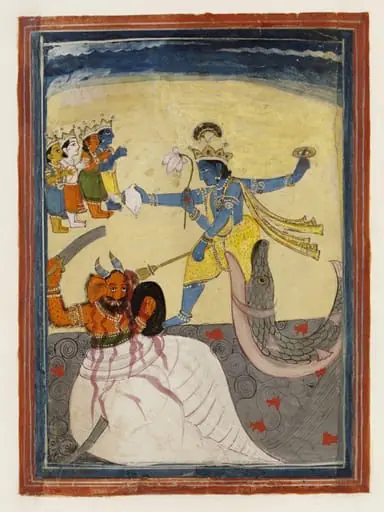
The work titled Gajendra Moksha: The Salvation of the King of the Elephants presents a vivid tableau in which a serene, blue‑skinned figure bearing a crown and necklace holds a flower at the centre. To the left, a red‑clad rider clings to a distressed dark elephant, while a winged being with a yellow headdress extends a hand from the right. The composition rests against a plain backdrop of green field and a distant yellow structure.
Technique & Style
Executed with bright, saturated pigments, the painting employs a flat, decorative background that emphasizes the central figures. The use of bold outlines and stylized forms reflects a traditional Indian narrative style, while the vivid colour palette enhances the dramatic tension between the tranquil deity and the struggling animal.
Context
Gajendra Moksha is a recurring motif in Indian art, illustrating the theme of divine intervention and the triumph of devotion over suffering. The composition’s inclusion of a crowned deity, a royal rider, and a celestial attendant situates the work within a broader visual tradition that blends mythological narrative with courtly iconography.
Artist & collection

 Untitled
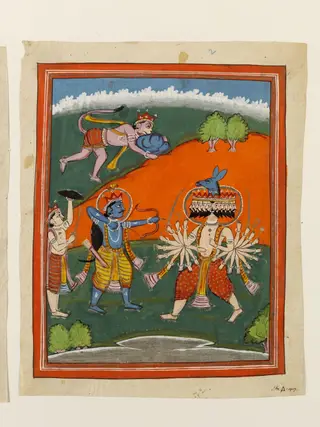 Rama and Ravana
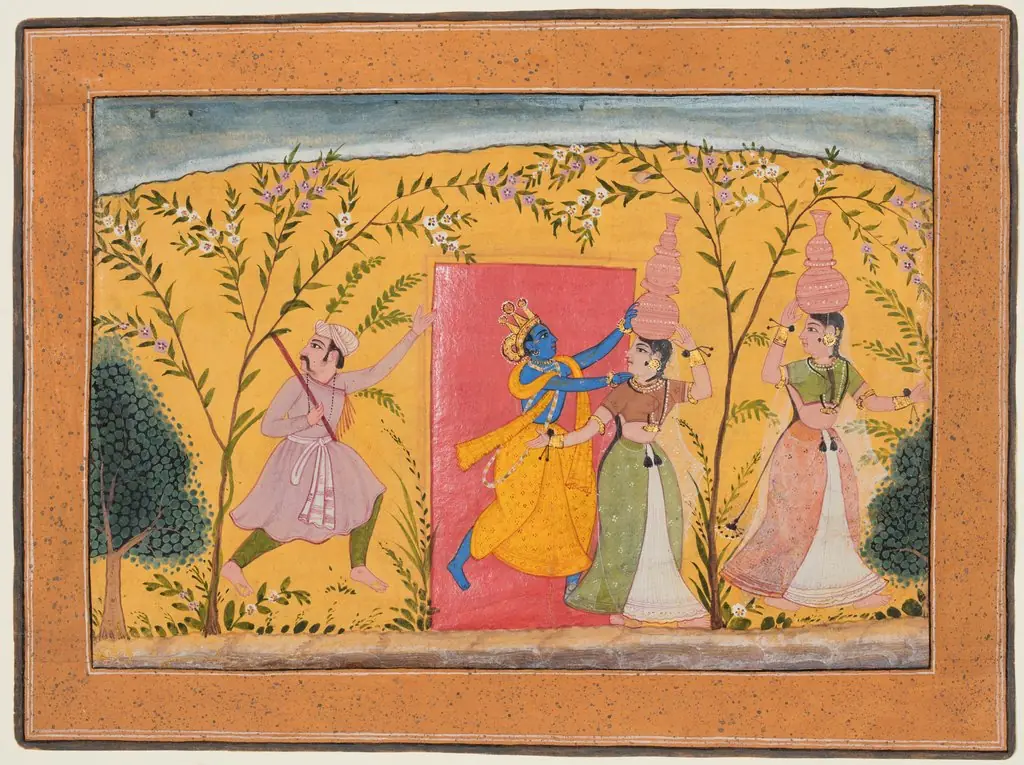 Krishna Exacts a Toll from the Milkmaids: Dana-Lila, from a Bhagavata Purana
 Krishna Exacts a Toll from the Milkmaids: Dana-Lila, from a Bhagavata Purana
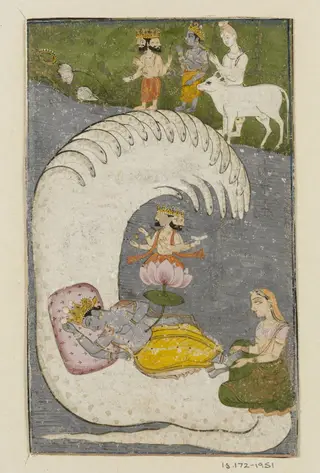 Vishnu and Lakshmi
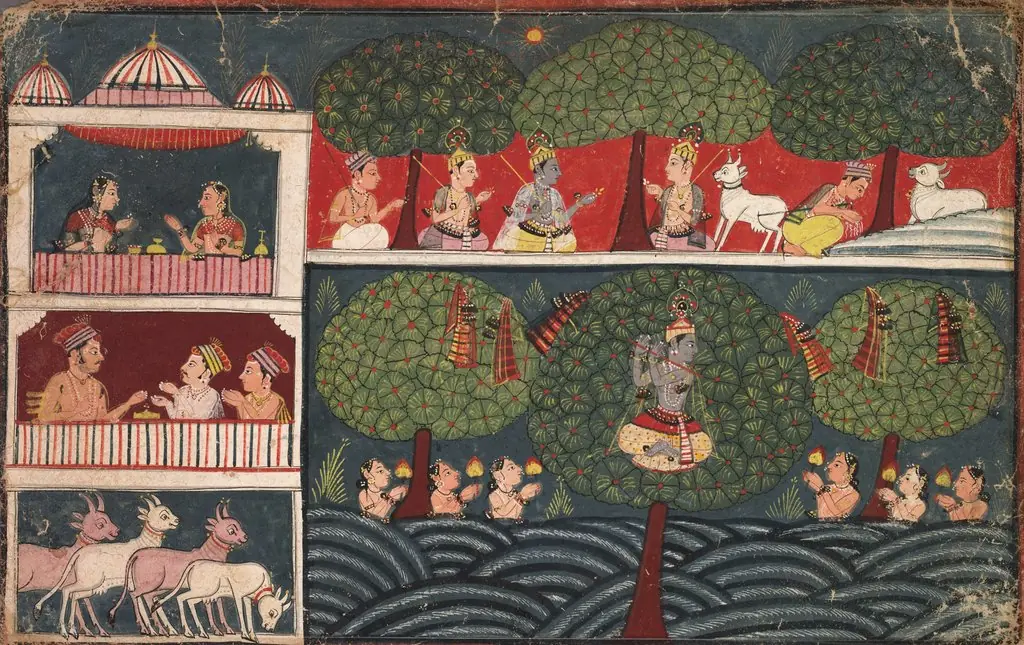 Krishna Steals the Clothes of the Milkmaids and Expounds on the Virtue of Trees, from a Braj Bhagavata Purana
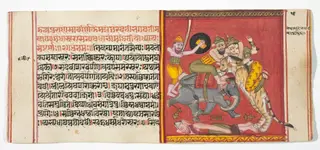 Legend of Durga
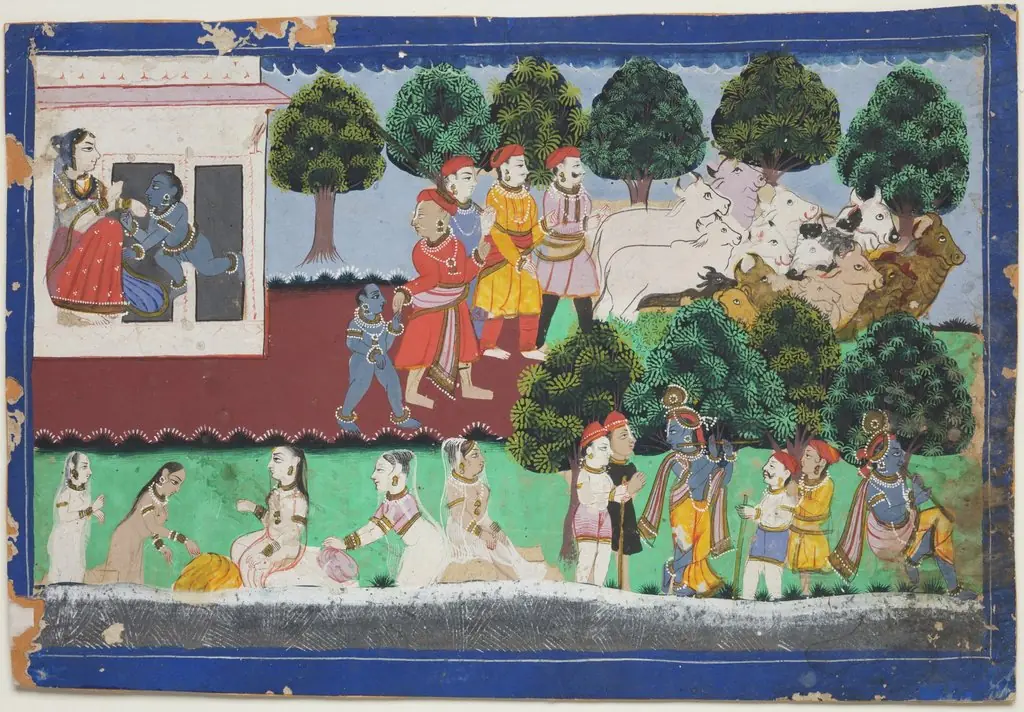 Scenes from Boyhood of Krishna
 Vishnu as Matsya