
Artist
Subject
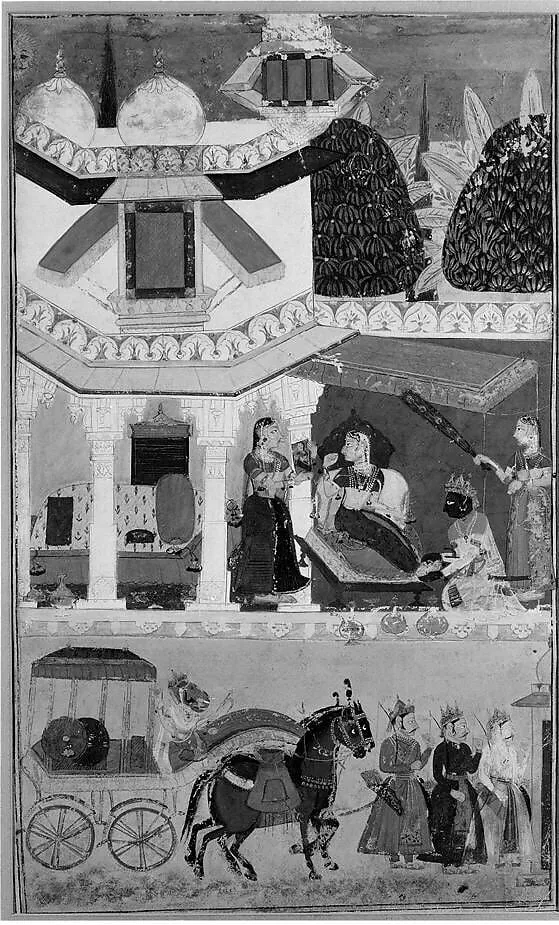
Krishna is a subject in art. The gallery holds 200 works in this subject in art, including works by The Kota Master, Chokha and Nainsukh.
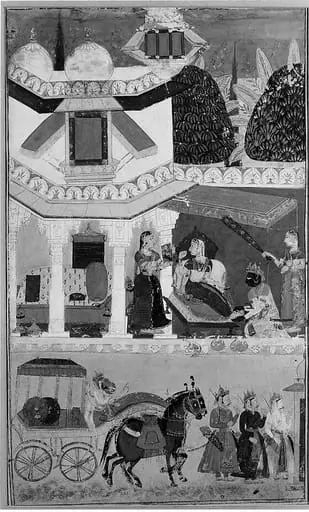
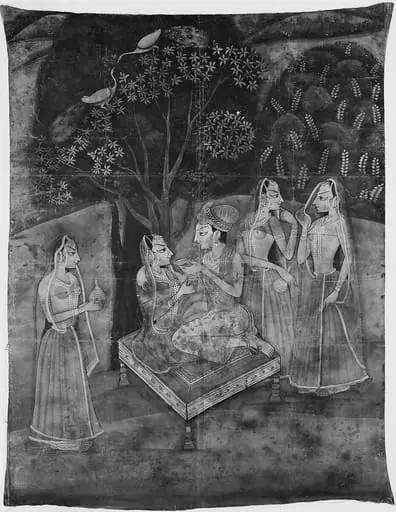
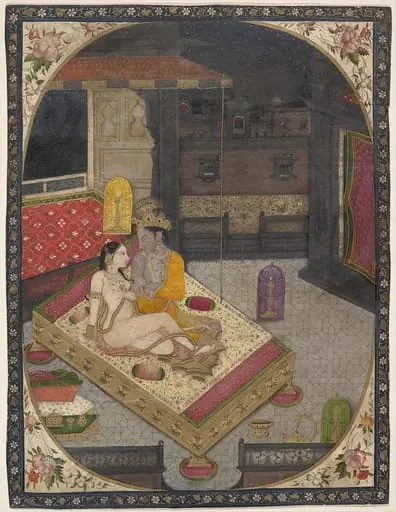
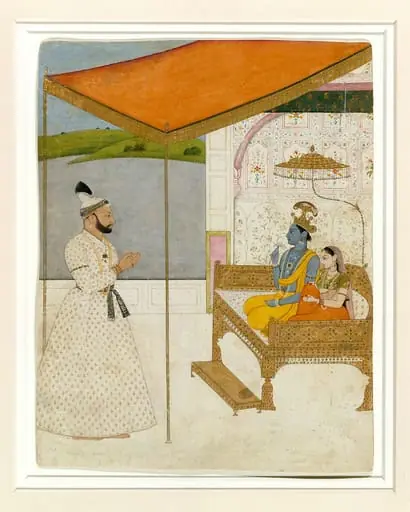
Krishna is among the most depicted figures in Indian art, a deity whose mythology gave painters an almost inexhaustible repertoire of love, mischief, heroism, and the divine. Worshipped both as an avatar of Vishnu and as supreme god in his own right, Krishna—whose name means "dark" or dark-blue—descends from the epic Mahabharata and the Bhagavata Purana, and his amorous play with the cowherd women of Vrindavan was crystallised in Jayadeva's twelfth-century Sanskrit poem the Gita Govinda. That literary inheritance, together with the Puranas and later devotional poetry, supplied the subjects that Rajasthani (Rajput) and Pahari painters of the seventeenth and eighteenth centuries rendered in jewel-like miniatures.
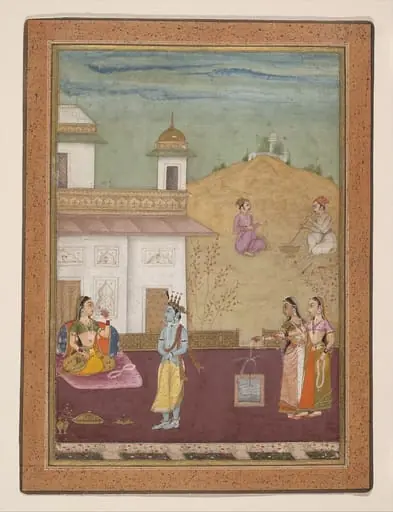
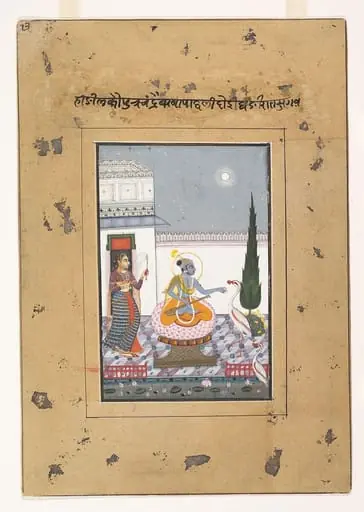
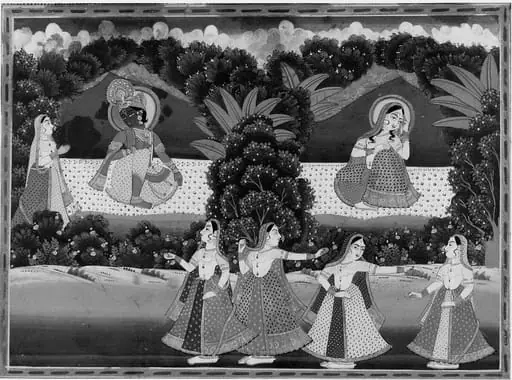
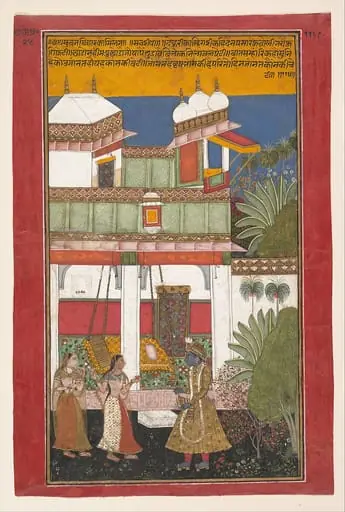
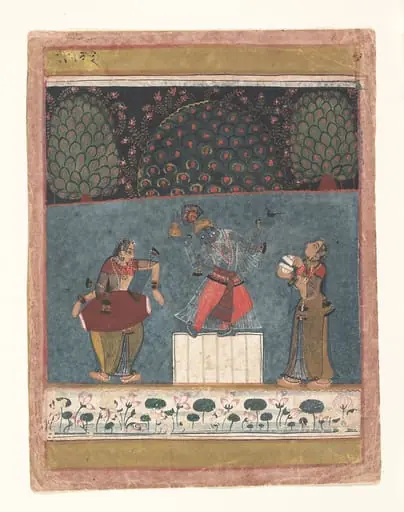
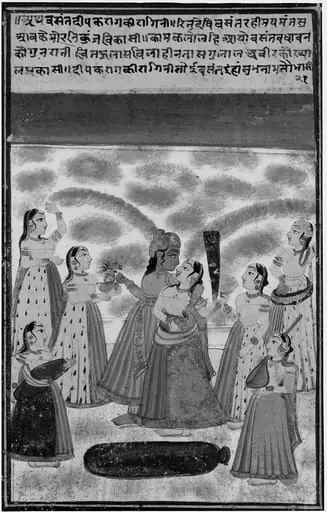
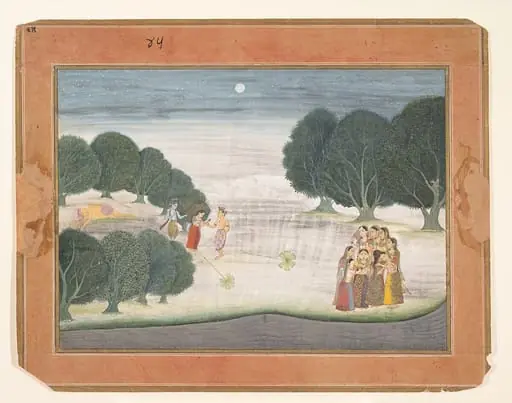
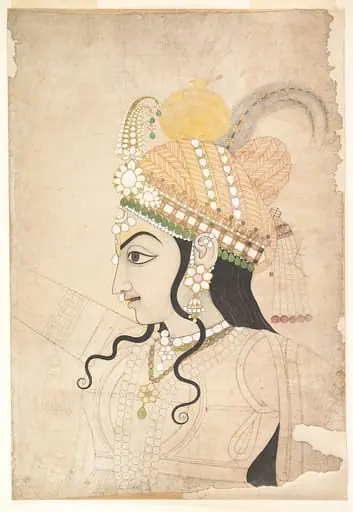
Krishna is instantly recognisable: blue- or slate-skinned, dressed in a yellow dhoti (the pitambara), garlanded, and crowned with peacock feathers, often raising a flute whose music draws the gopis from their homes. Painters worked in opaque watercolour and gold on paper at intimate scale, favouring flat fields of saturated colour, rhythmic line, and continuous narrative in which several episodes share a single sheet. Beloved scenes recur across schools—the infant stealing butter, the lifting of Mount Govardhan, the circular rasalila dance, and Radha and Krishna trysting in monsoon groves—each charged with the Vaishnava devotional mood of bhakti.
The Pahari hill courts produced the theme's greatest interpreters. Manaku of Guler painted a celebrated Gita Govinda series, while his younger brother Nainsukh (c. 1710–1778), called one of the most original of all Indian painters, absorbed Mughal naturalism into the idiom and, in his final Basohli phase, returned it to religious subjects. Their descendants carried this family style from Jammu to Garhwal, shaping the lyrical Kangra manner. In Rajasthan, court ateliers at Mewar, Kota, and Devgarh treated Krishna with bolder, more vernacular energy; the Devgarh painter Chokha (active 1799–c. 1826), son of Bagta, is among the holdings catalogued here, alongside works by Nainsukh and the anonymous Kota Master.
The Krishna theme bridged the bold Basohli and delicate Kangra poles of Pahari painting and the Rajput courts of the plains, and its imagery endured into Kalighat work, temple pichhwais, and the modern devotional print, remaining a living thread in South Asian visual culture.
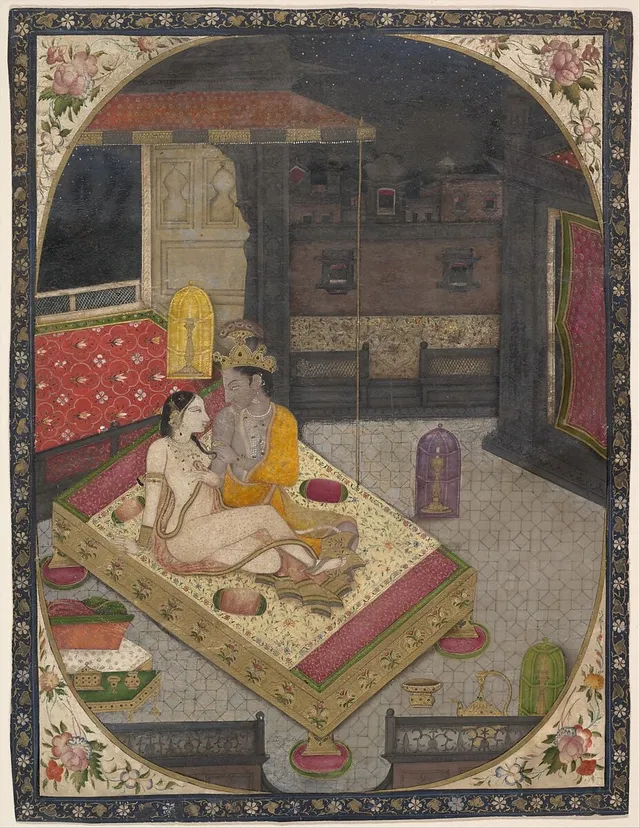
Krishna is a major deity in Hinduism, worshipped as the eighth avatar of Vishnu and also as the Supreme God in his own right. His name derives from the Sanskrit kṛṣṇa, meaning "black," "dark," or "dark blue," and he is consistently depicted with dark or blue skin. The narratives of Krishna's life, known as Krishna Lila, span from his miraculous birth in Mathura to his death by a hunter's arrow in Bhalka, Gujarat. These stories have made him one of the most frequently depicted subjects in Indian art, appearing across painting, sculpture, textiles, and metalwork. His enduring appeal lies in his multifaceted identity: divine child, prankster, lover, statesman, and philosopher. This versatility has allowed artists across centuries and regions to engage with Krishna as a subject of devotion, narrative, and aesthetic exploration.
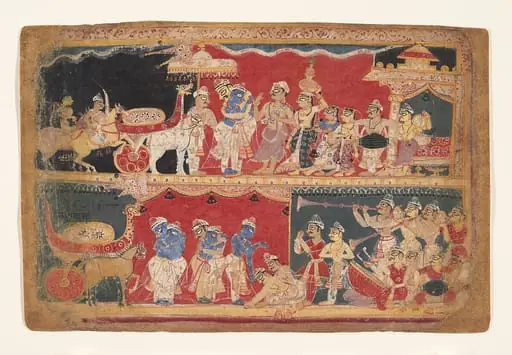
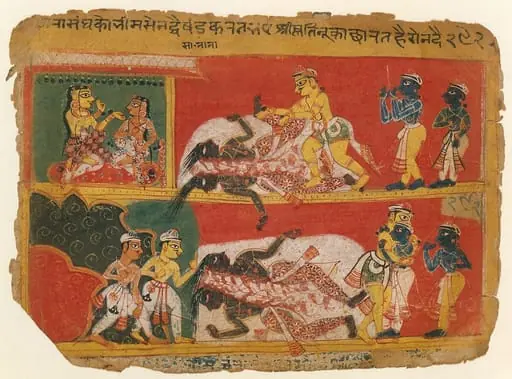
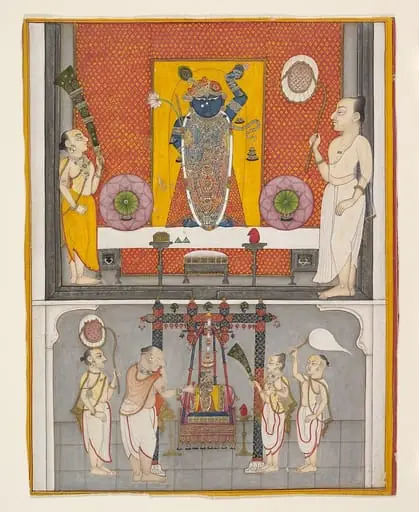
Krishna's iconography is exceptionally varied, reflecting the multiple stages and roles of his life. As an infant, he appears as Laddu Gopal or Balgopal, often shown stealing butter or tied to a mortar, a scene that emphasizes divine playfulness and accessibility. As a youth, he is the flute-playing cowherd (Muralidhar, Gopala), surrounded by gopis or paired with Radha, his principal consort. In this amorous mode, Krishna embodies the union of masculine and feminine divine principles. As prince and warrior, he is depicted in royal regalia or as the charioteer of Arjuna on the battlefield of Kurukshetra, the setting of the Bhagavad Gita. Regional variations abound: Shrinathji, a seven-year-old child form venerated in the Vallabh Sampradaya, originated in Nathdwara, Rajasthan; Jagannath in Odisha presents a starkly abstracted form. His attributes include the flute, the discus (chakra), the conch (shankha), and the mount Garuda. The color symbolism of his skin connects to his name and to lunar associations, while his multiple epithets, Govinda, Madhava, Keshava, Damodara, among over a hundred names recorded in the Mahabharata alone, each signal specific theological and narrative dimensions.
The collection holds 261 works depicting Krishna, making him one of its most extensively represented subjects. These works span multiple media and functions, from devotional objects to narrative illustrations and decorative arts. The range includes miniature paintings from various schools, bronze and stone sculptures, terracotta figures, wood and ivory carvings, and textiles such as picchwai and Kalamkari. Notable examples include a 19th-century Kangra miniature of Krishna's birth showing Vasudeva carrying the infant across the Yamuna; a bronze Laddu Gopal figure from the same period; a 20th-century marble sculpture of Krishna milking a cow with calf; a late 19th-century Nathdwara painting of Shrinathji; and an Bhagavata Purana illustration from 1700-1725 depicting Krishna subduing the serpent Kaliya. Krishna also appears on household and ornamental objects, including furniture, where his image confers piety and auspiciousness. The collection's picchwai textiles, used behind temple idols in Rajasthan, and Kalamkari and batik works from Andhra Pradesh demonstrate how Krishna imagery permeates both ritual and domestic contexts.
The treatment of Krishna in art has evolved significantly across periods and regions, while maintaining core devotional functions. Early sculptural traditions, such as Gupta period works, established canonical forms with divinely proportioned bodies, exemplified by the famous Keshi-Vishnu image showing Krishna defeating the horse demon. Chola bronze sculptures from South India, dating from the 10th century, were designed for processional use, dressed and jeweled for public ritual display. The Pahari and Kangra schools of miniature painting, flourishing from the 17th to 19th centuries, developed intensely lyrical and intimate depictions of Krishna's life, particularly the Rasalila and his relationship with Radha. These works often accompanied texts such as the Rasikapriya, Rasamanjari, and Jayadeva's Gitagovinda. The Kalighat painting tradition offered more direct, folk-influenced interpretations. With the advent of lithography and print culture, Krishna imagery became widely accessible, with calendar art and popular prints disseminating standardized iconographies across India. Modern and contemporary artists have continued to engage with Krishna, sometimes reinterpreting traditional themes through new visual languages. The spread of Krishna worship to the West since the 1960s, particularly through ISKCON, has generated further artistic production, though often drawing on established Indian conventions.
Several specific depictions stand out for their artistic and historical significance. The Gupta period Keshi-Vishnu sculpture, showing Krishna thrusting his arm into the mouth of the horse demon, represents a high point of early Indian sculptural achievement. A Pahari miniature from the National Museum of Scotland depicting Krishna swallowing a forest fire to save the cowherds exemplifies the emotional intensity of hill school painting. The Salar Jung Museum's own collection includes significant works: the 19th-century Kangra birth scene with its golden floral borders; the bronze Laddu Gopal; and the Bhagavata Purana illustration of Kaliya Daman from 1700-1725. The Jaina-manuscript style painting of Krishna tied to the mortar between the twin trees, which when uprooted released the cursed sons of Kubera, demonstrates how artists integrated narrative complexity with formal elegance. Jamini Roy's modernist interpretations of the butter thief theme show how 20th-century artists could distill traditional imagery into bold, simplified forms. The half-broken sculpture of Kaliya Daman at the Government Museum, Mathura, and the Harvard Art Museum's Daan-Lila painting of Krishna extracting butter-tribute from the gopis, further illustrate the geographical and institutional range of significant Krishna depictions.
Krishna's influence extends far beyond religious art into performance, literature, and global visual culture. The Bhagavata Purana, composed at the instruction of Narada to elaborate Krishna's childhood miracles, became a foundational text for subsequent artistic production. Krishna-related themes have inspired classical dance forms including Bharatanatyam, Kathakali, Kuchipudi, Odissi, and Manipuri. The medieval Bhakti movement elevated Krishna to supreme deity in traditions such as Krishnaism, generating sustained artistic patronage. In the modern era, Krishna has remained a vital subject for artists seeking to engage Indian tradition, while also becoming a global religious icon through ISKCON's missionary activities. The continued production of Krishna imagery for temples, publications, and popular consumption attests to his persistent cultural relevance. Children's literature, from board books to chapter books, regularly draws on Krishna stories, ensuring transmission to new generations. The Salar Jung Museum's substantial holding of 261 works, spanning from early illustrations to modern paintings, documents this enduring engagement and preserves the material evidence of how artists have continually reinterpreted this most versatile of Hindu deities.
 Untitled
 Untitled
 Untitled
 Untitled
 Untitled
 Untitled
 Untitled
 Untitled
 Untitled
 Untitled
 Untitled
 Untitled
 Untitled
 Untitled
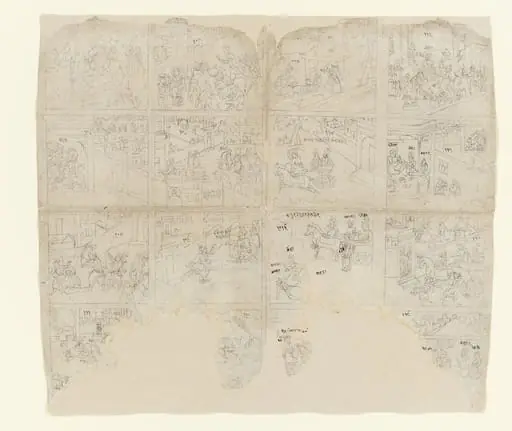 Untitled
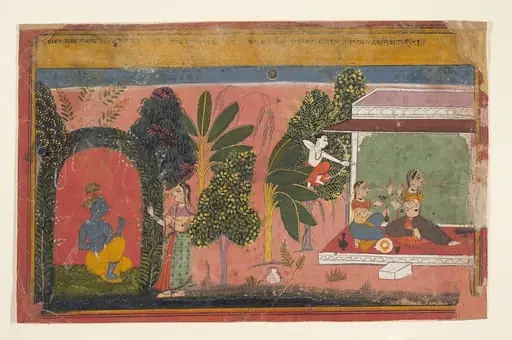 Untitled
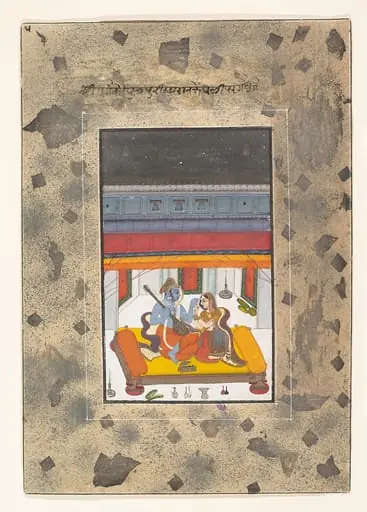 Untitled
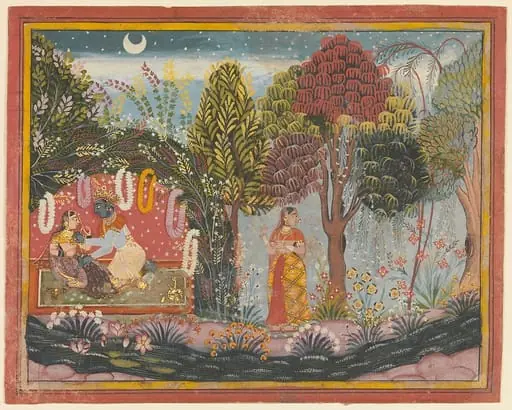 Untitled
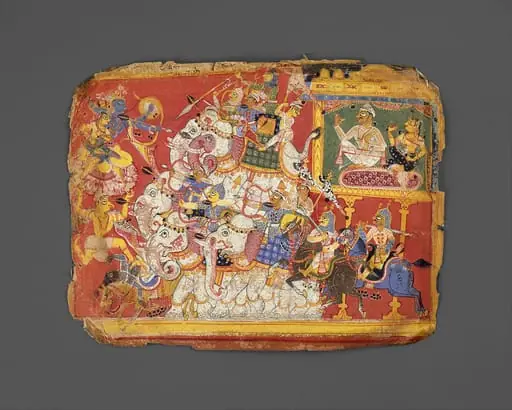 Untitled
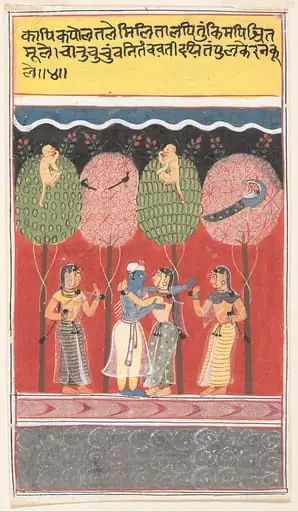 Untitled
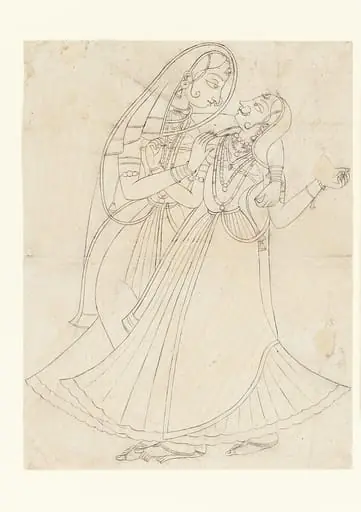 Untitled
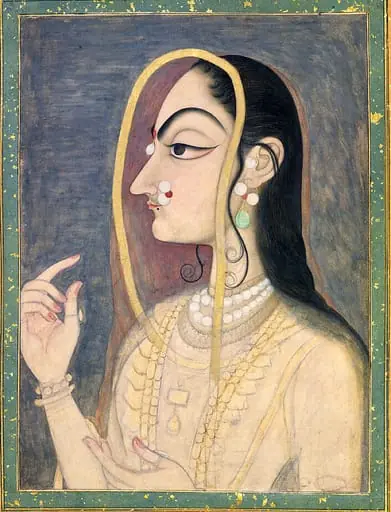 Untitled
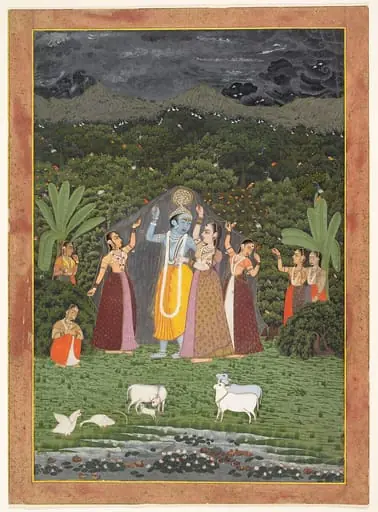 Untitled
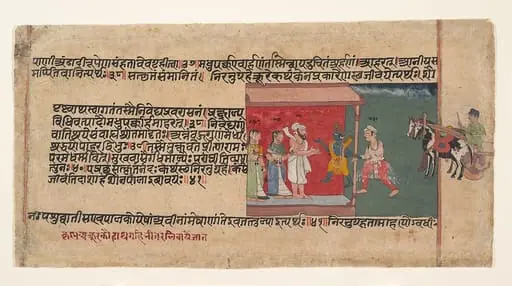 Untitled
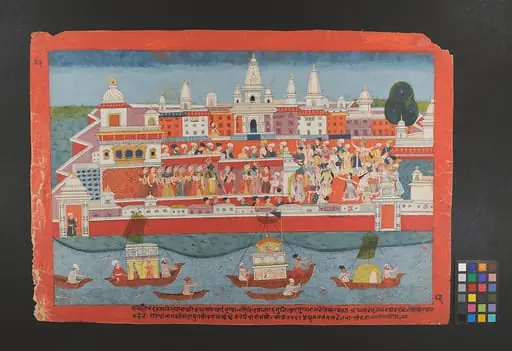 Untitled
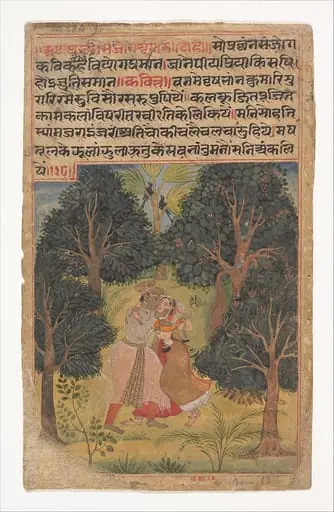 Untitled
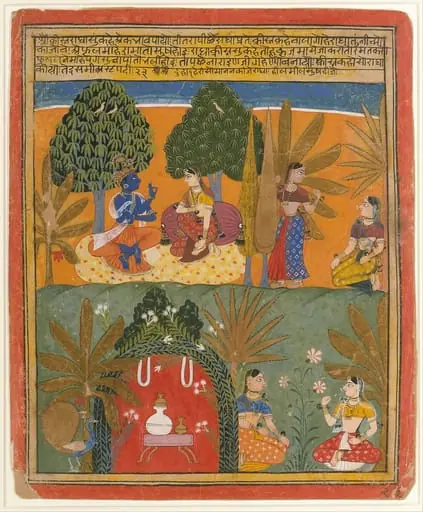 Untitled
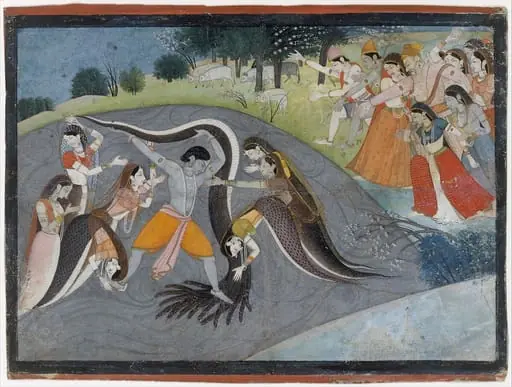 Untitled
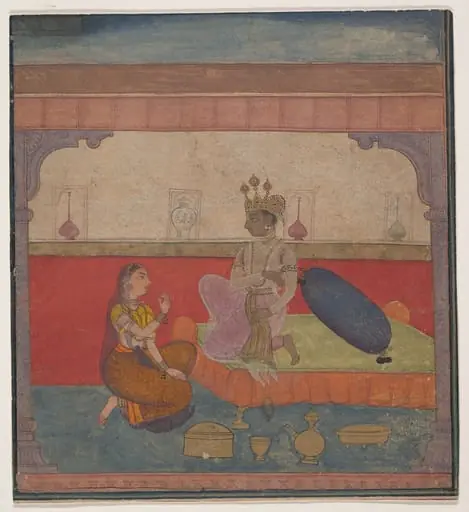 Untitled
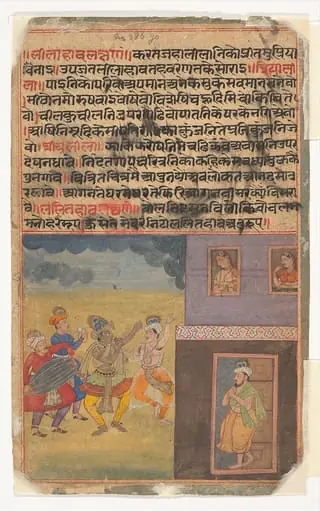 Untitled
 Untitled
 Untitled
 Untitled
 Untitled
 Untitled
 Untitled
 Untitled
 Untitled
 Untitled
 Untitled
 Untitled
 Untitled
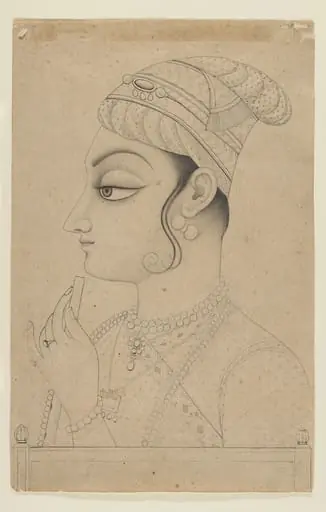 Untitled
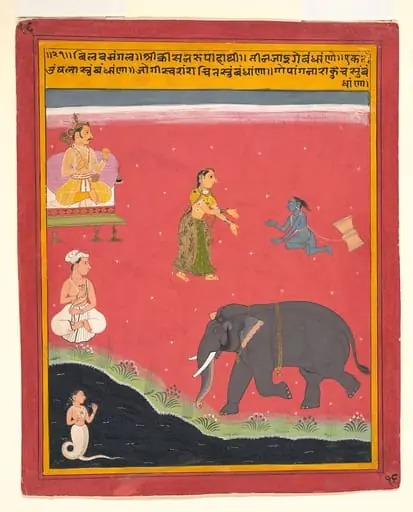 Untitled
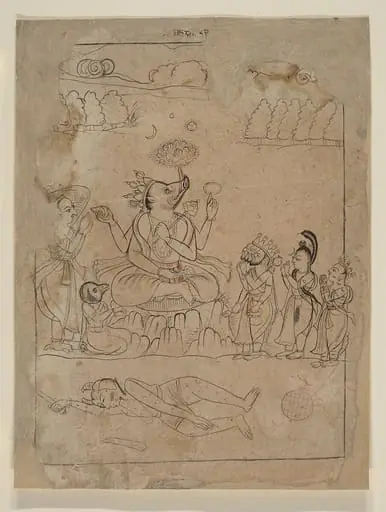 Untitled
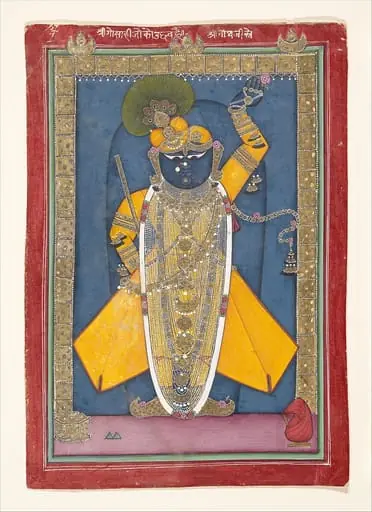 Untitled
 Untitled
 Untitled
 Untitled
 Untitled
 Untitled
 Untitled
 Untitled
 Untitled
 Untitled
 Untitled
 Untitled
 Untitled
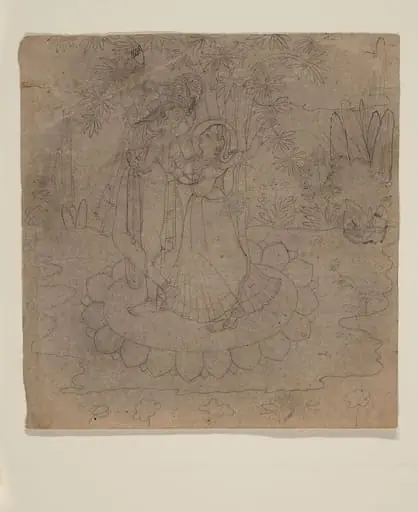 Untitled
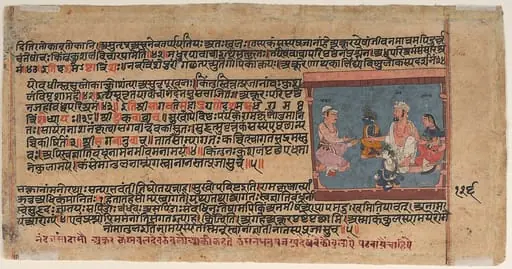 Untitled
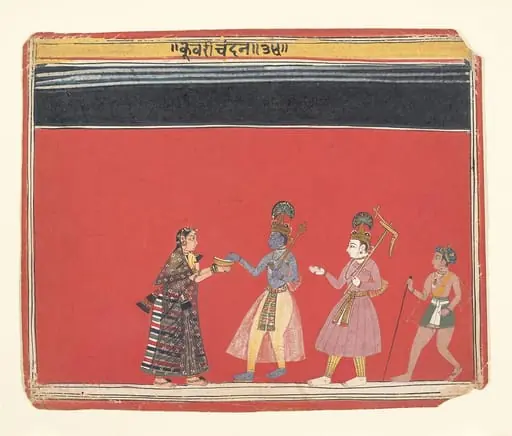 Untitled
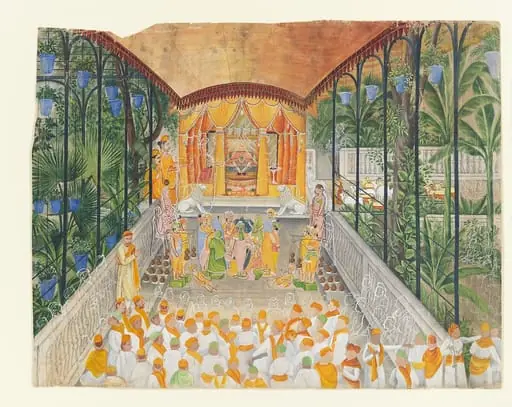 Untitled
 Untitled
 Untitled
 Untitled
 Untitled
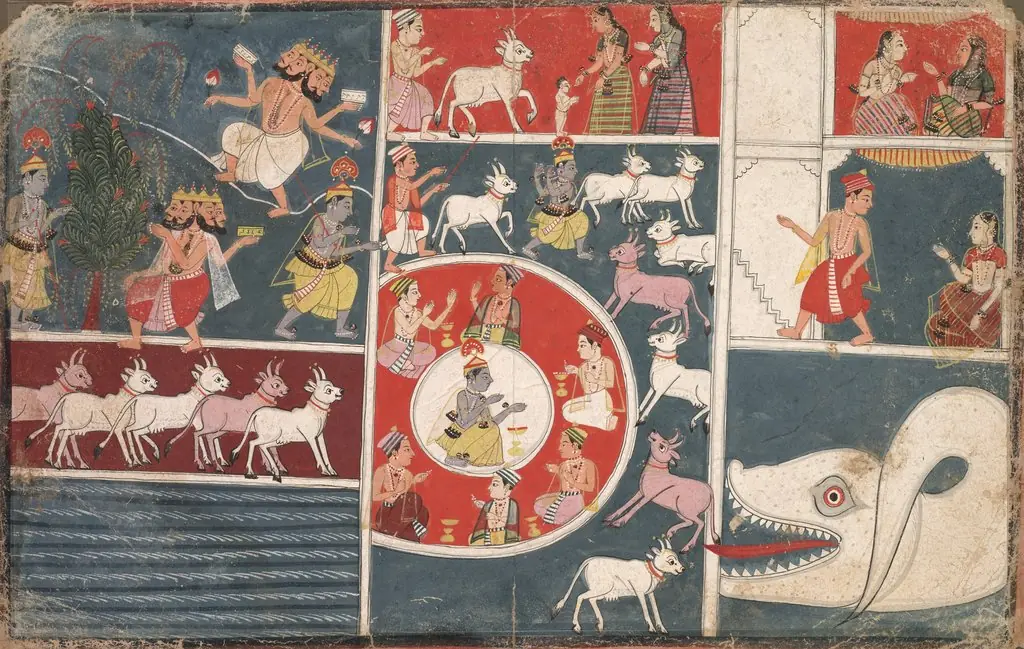 Krishna Playing the Flute and other Episodes from the Bhagavata Purana
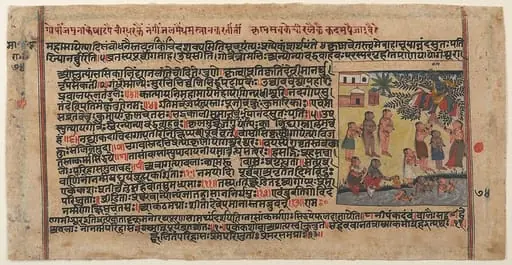
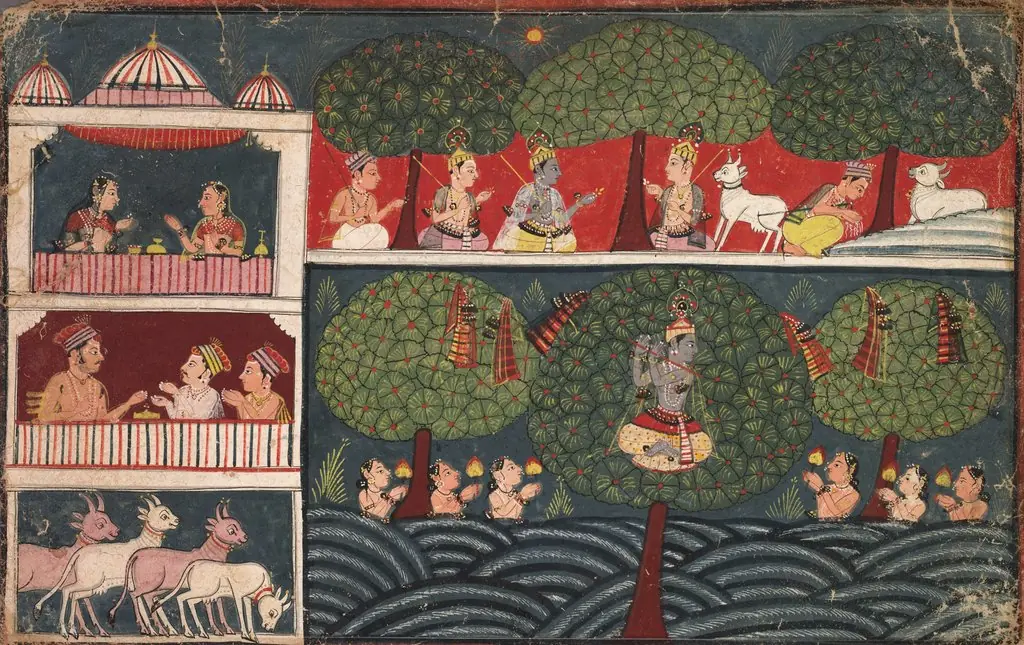 Krishna Steals the Clothes of the Milkmaids and Expounds on the Virtue of Trees, from a Braj Bhagavata Purana
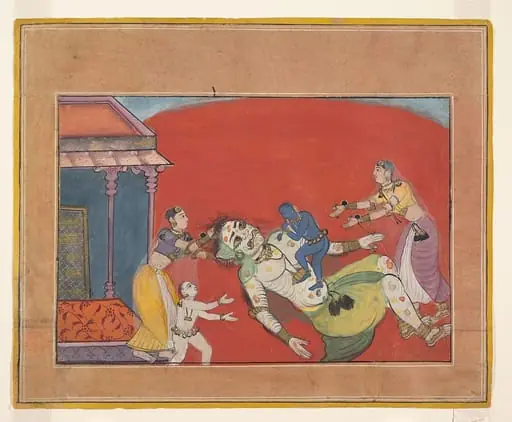
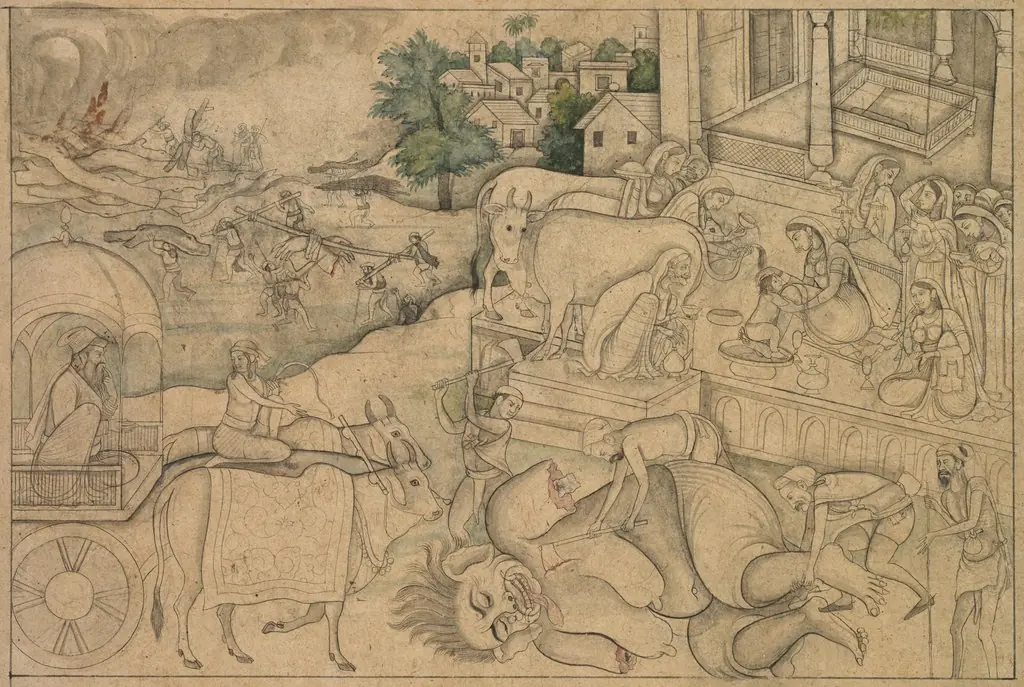 Cremation of the Demoness Putana, from a Krishna-Lila
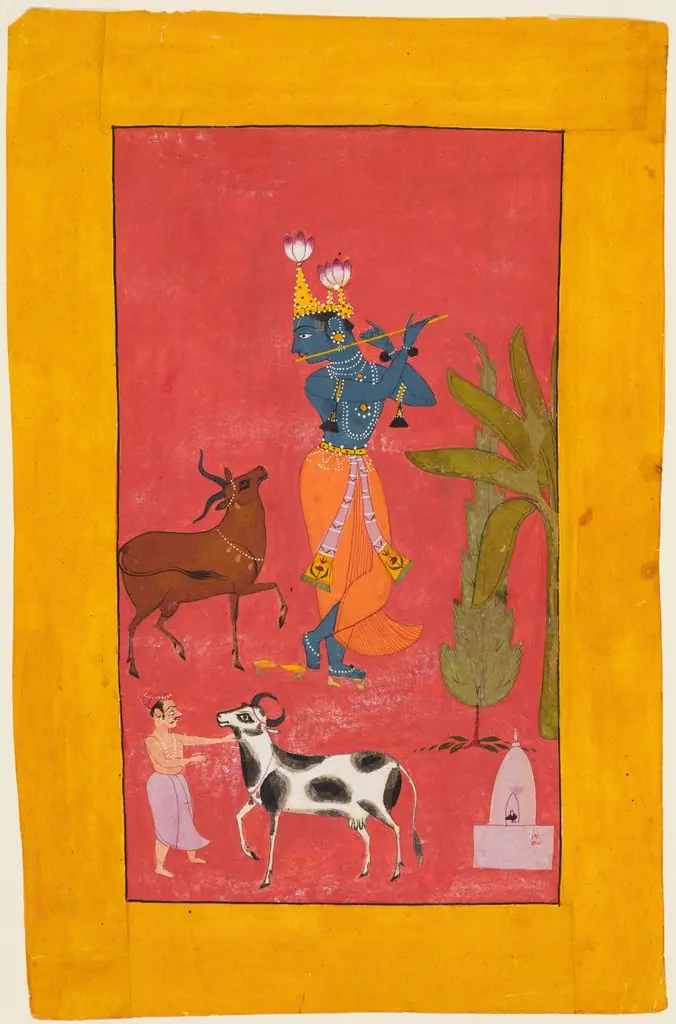 Krishna Fluting
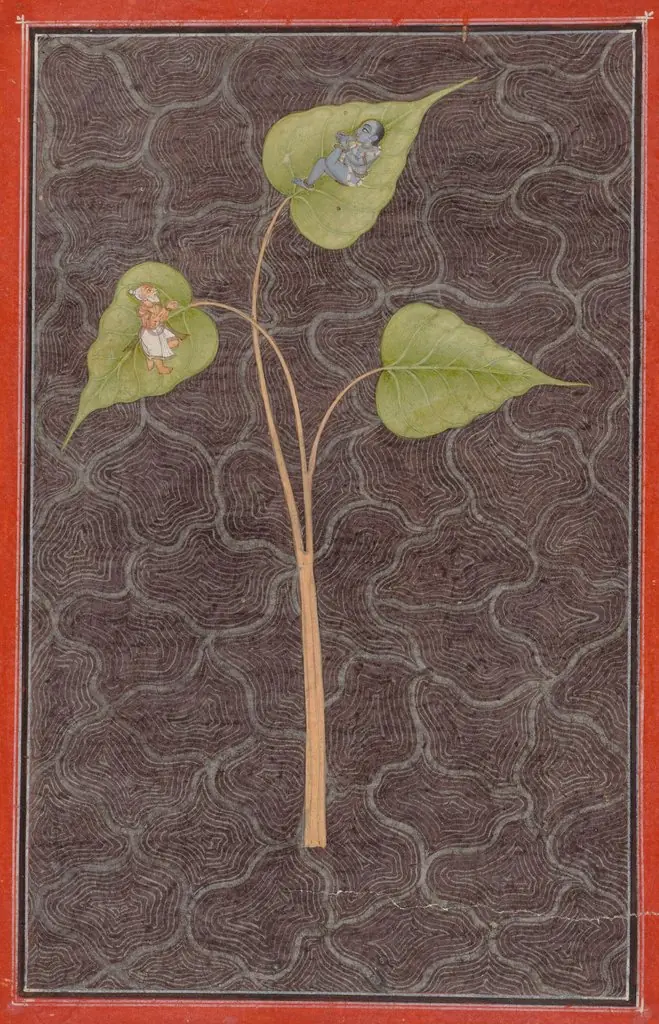 Markandeya Viewing Krishna in the Cosmic Ocean
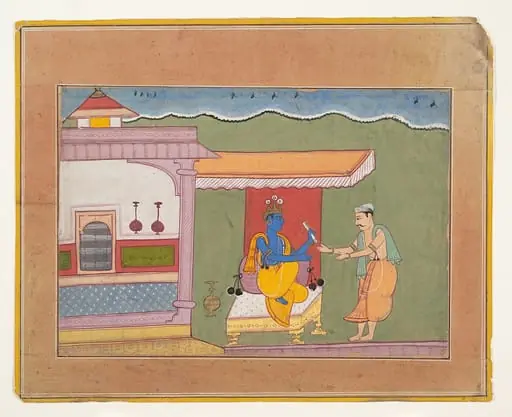 Untitled
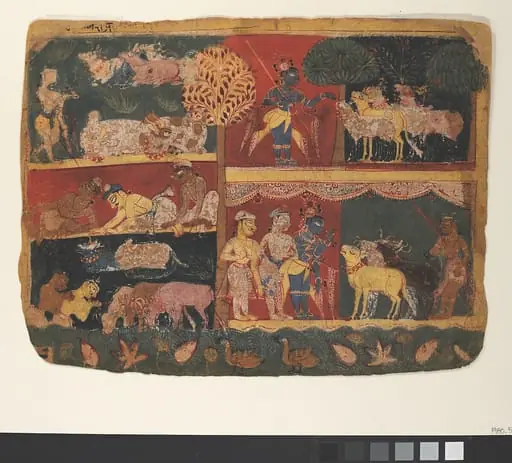 Untitled
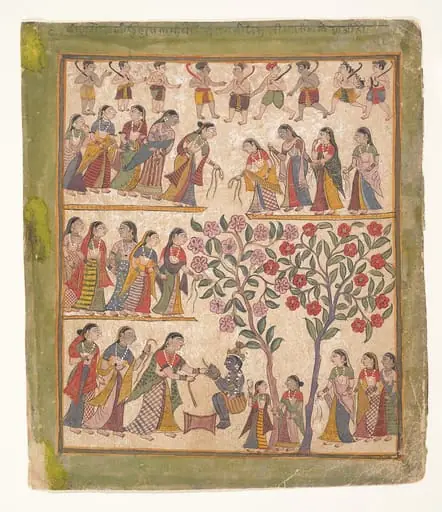 Untitled
 Untitled
 Untitled
 Untitled
 Untitled
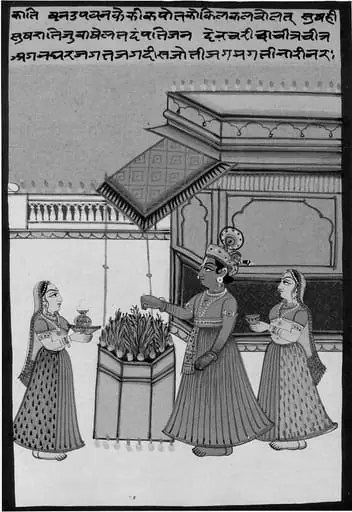 Untitled
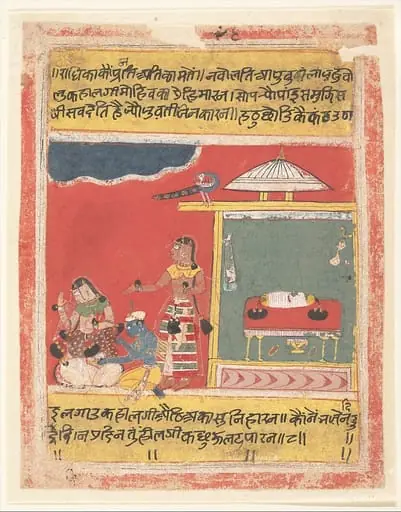
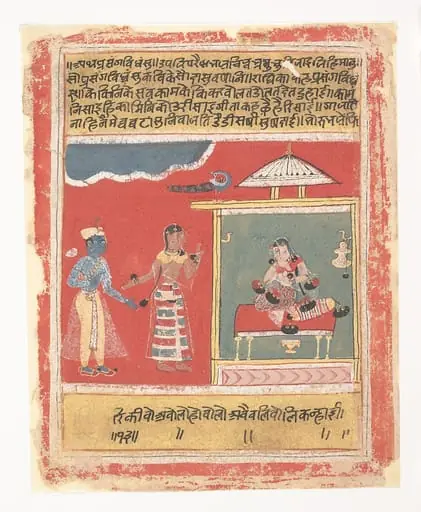
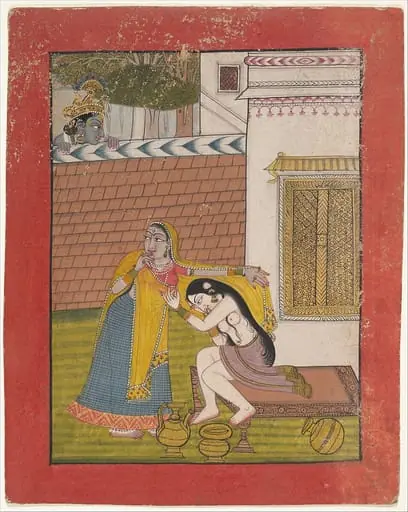
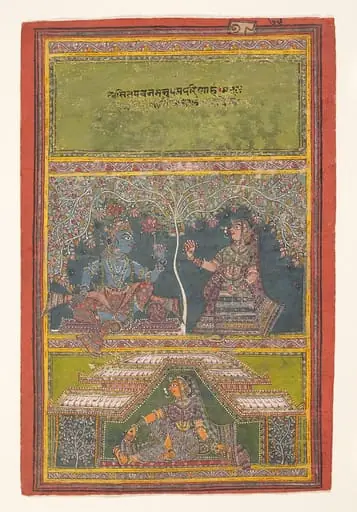
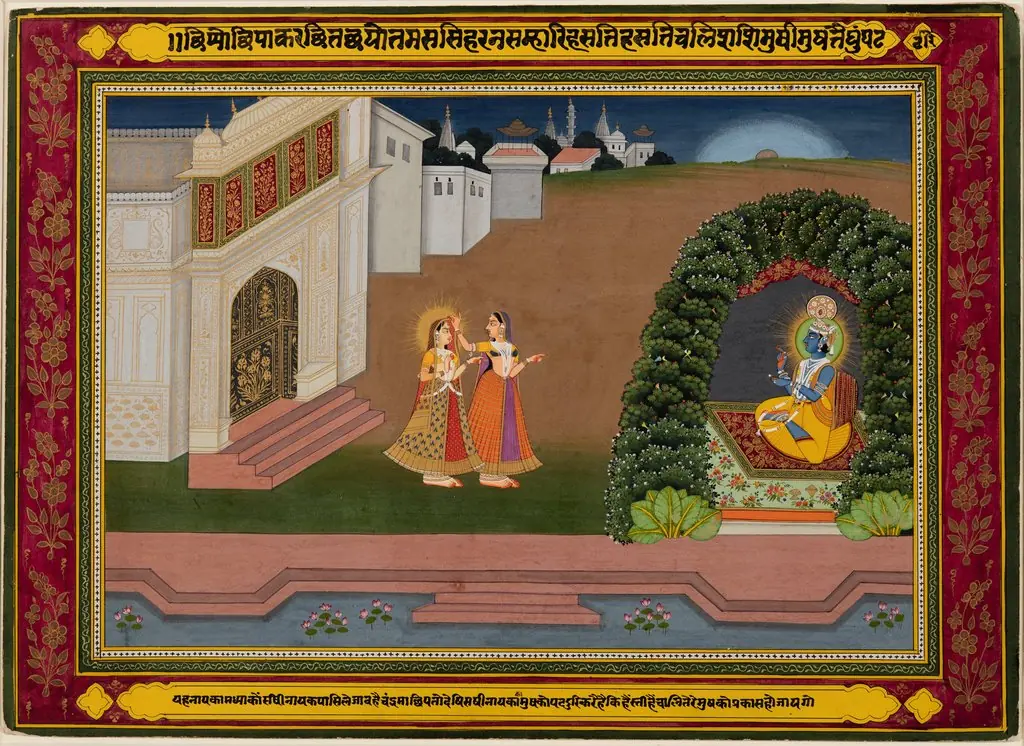 Radha’s Confidante Brings Her to Krishna, based on poetry of Bihari (Indian, 1595–1663)
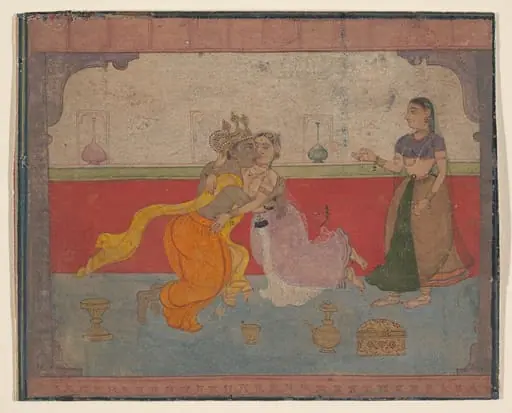
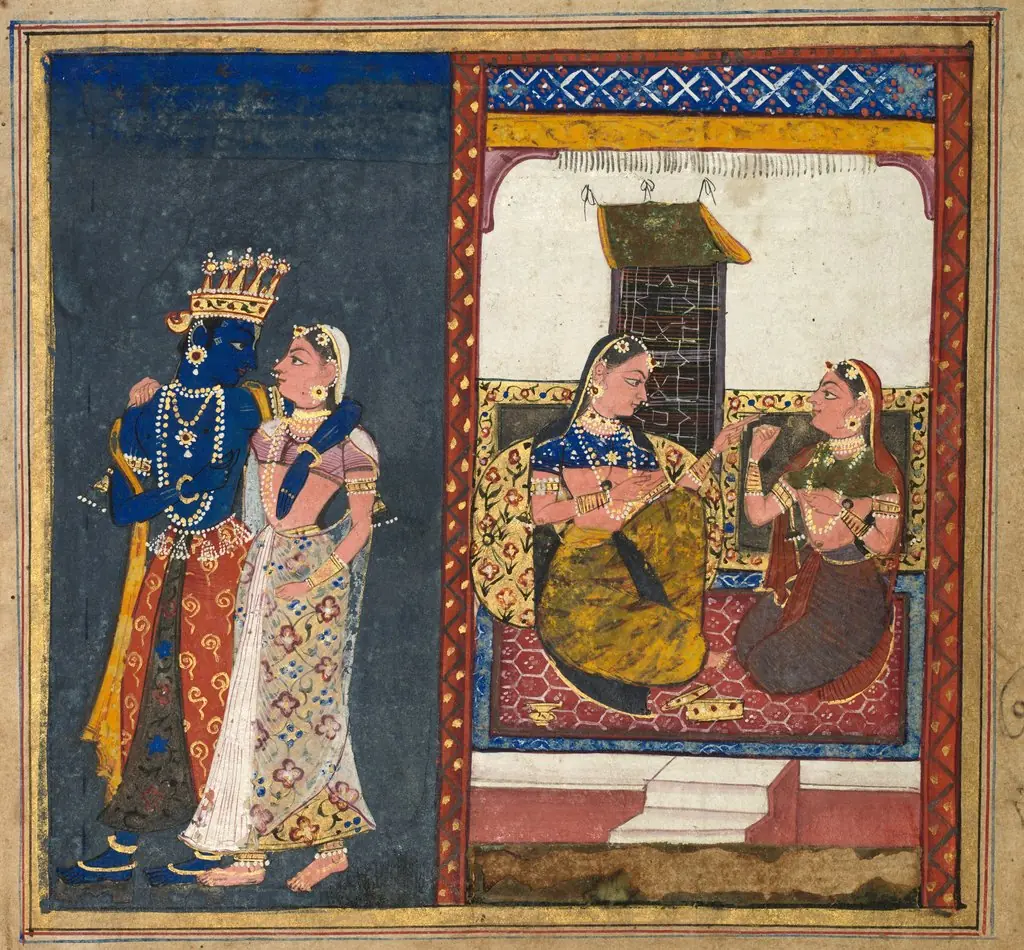 Radha and Krishna Embracing, Leaf from a Gita Govinda
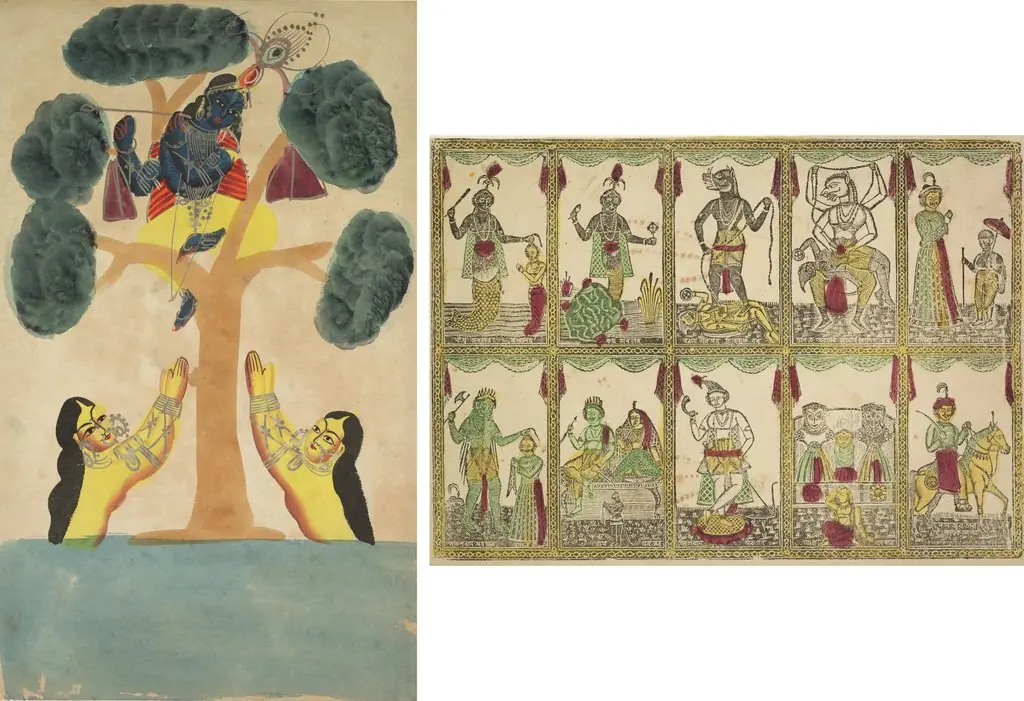 Leaf from a Kalighat album: Krishna Steals the Clothes of the Cowgirls (Gopis) (recto); Das Avataras, Ten Incarnations of Vishnu (verso)
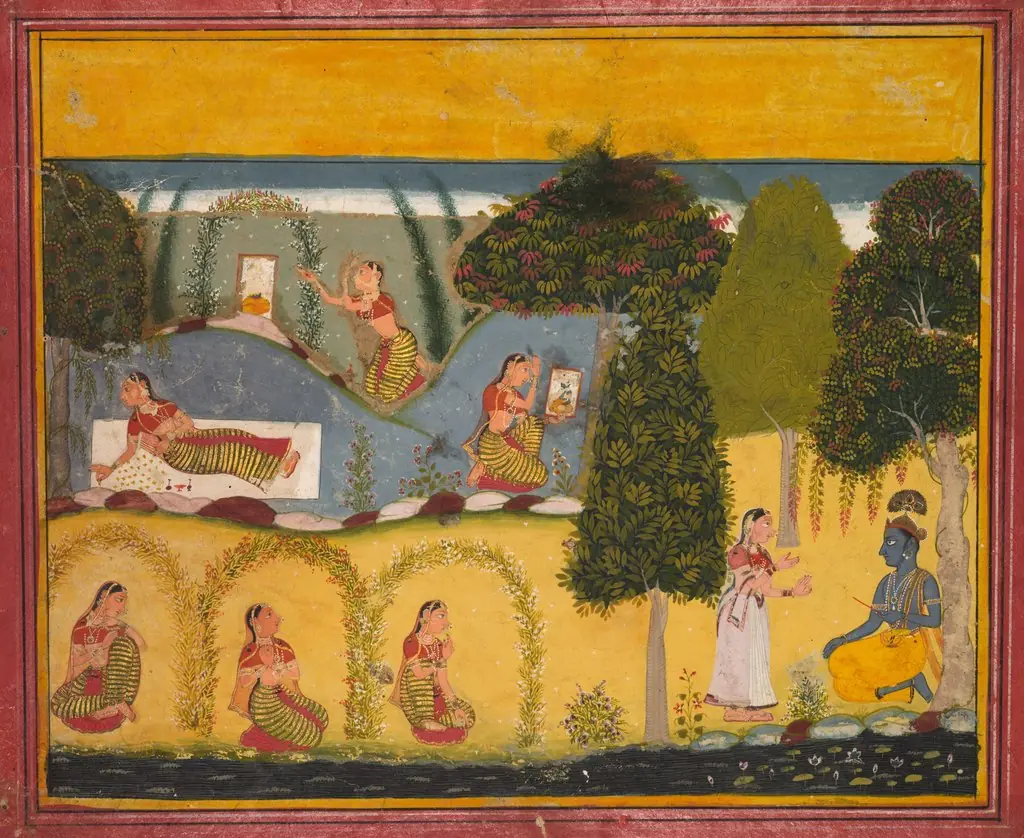 Radha Awaiting Reconciliation with Krishna, from a Gita Govinda of Jayadeva
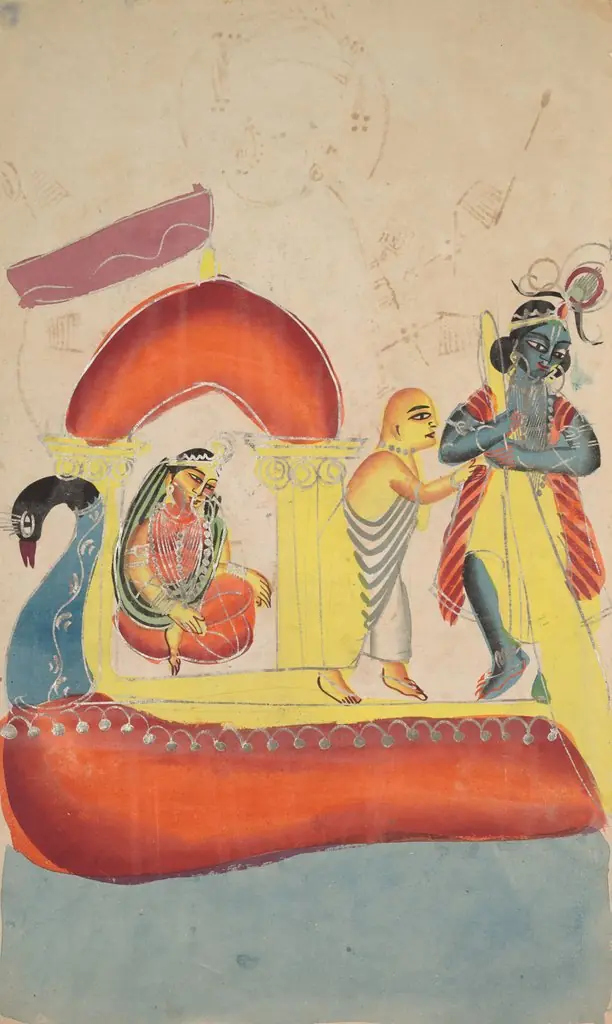 Krishna Ferrying Radha Across the Yamuna River (recto)
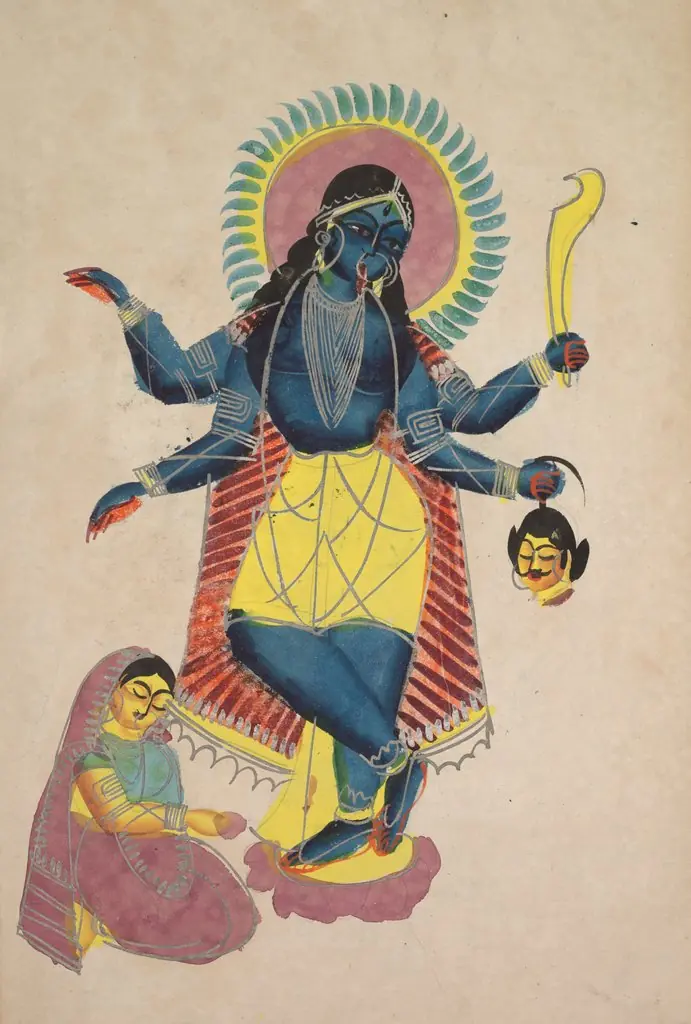 Krishna as Kali worshipped by Radha (recto), from a Kalighat album
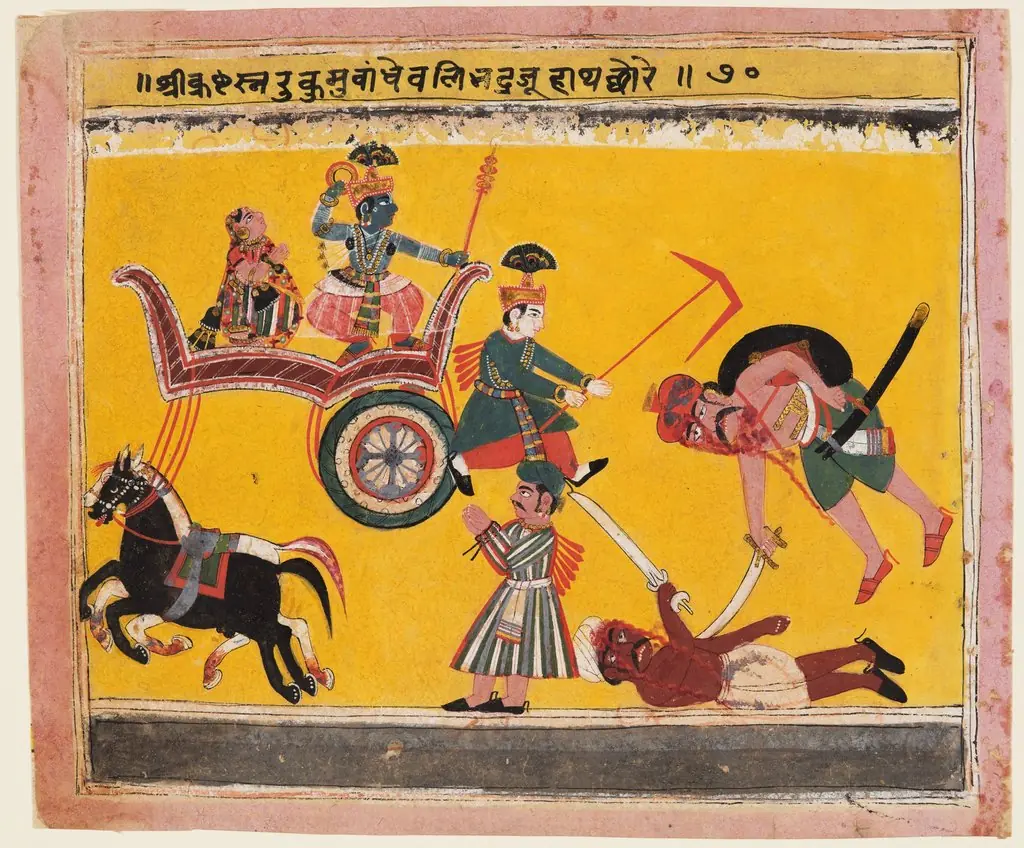 Abduction of Rukmini: Krishna Tied the Hands of Rukma, from a Bhagavata Purana
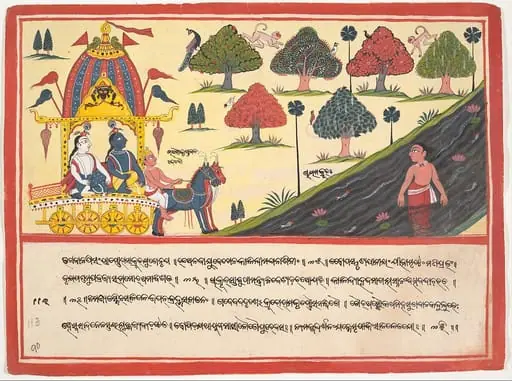
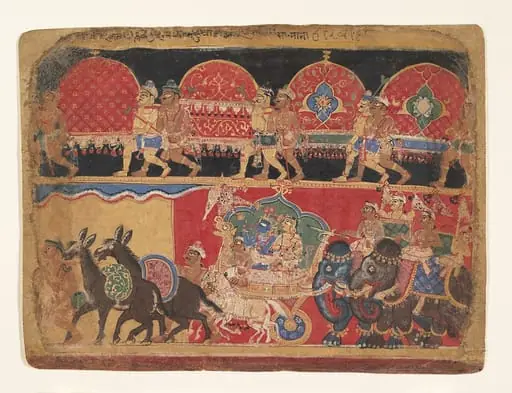
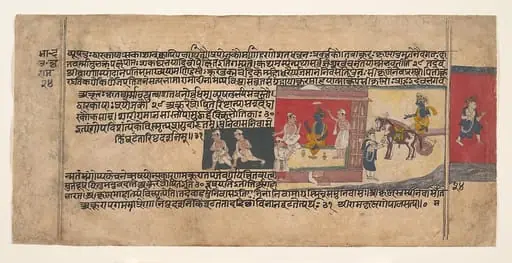
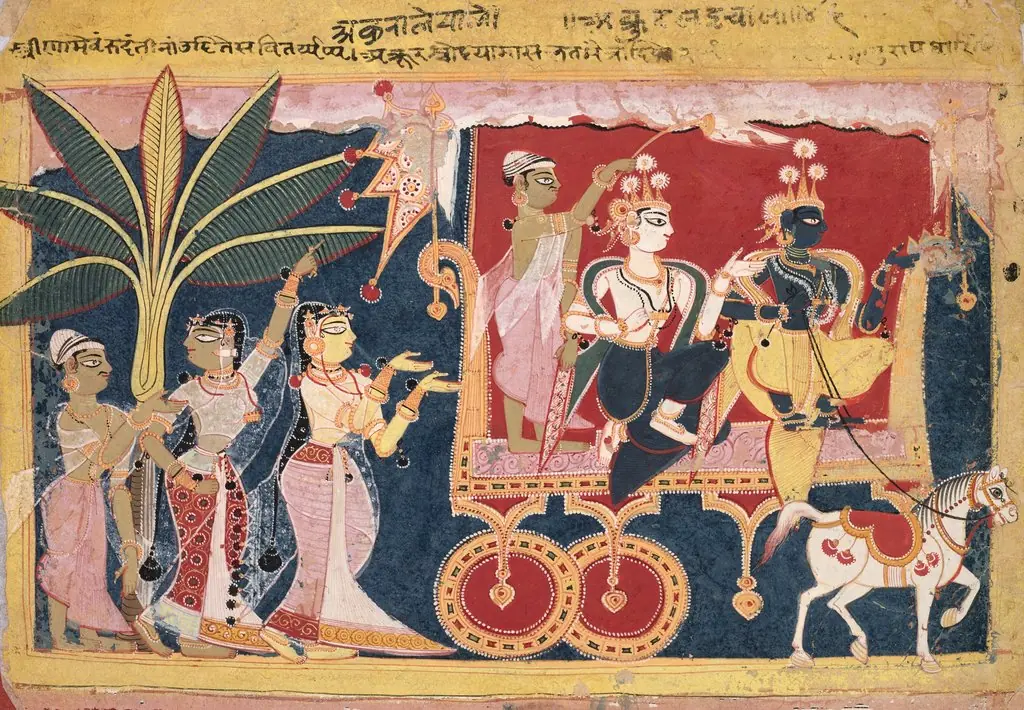 Akrura Drives Krishna and Balarama to Mathura, from the “Isarda Bhagavata Purana,”
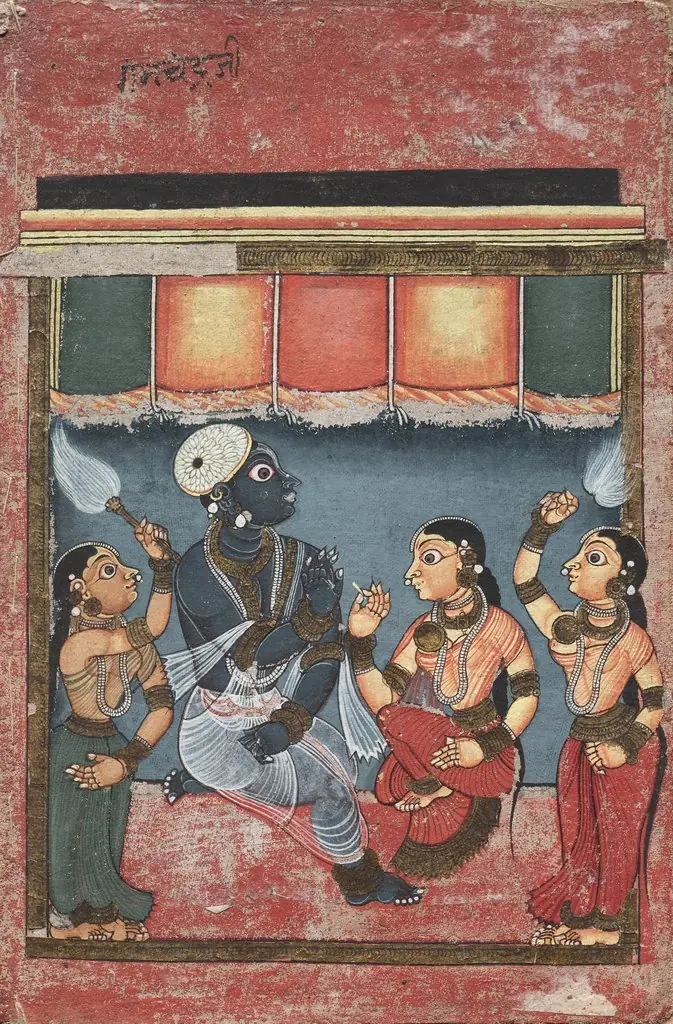 Krishna with Radha and Two Attendants (recto); Jagannath, Subhadra and Balarama in an Arch (verso)
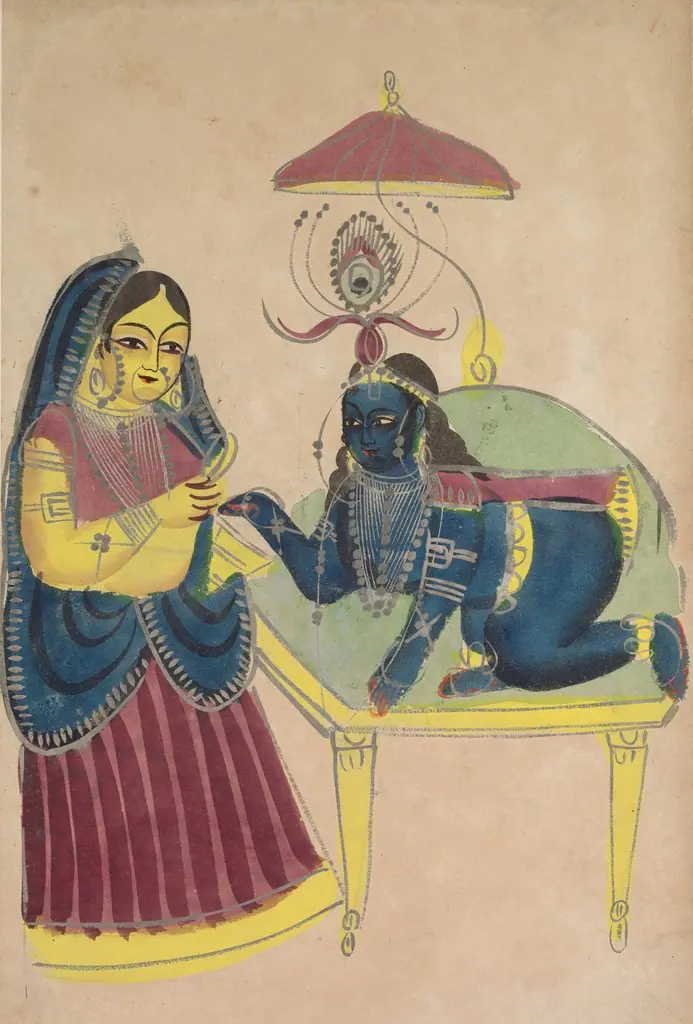 Baby Krishna Asking for Butter from Yashoda, from a Kalighat album
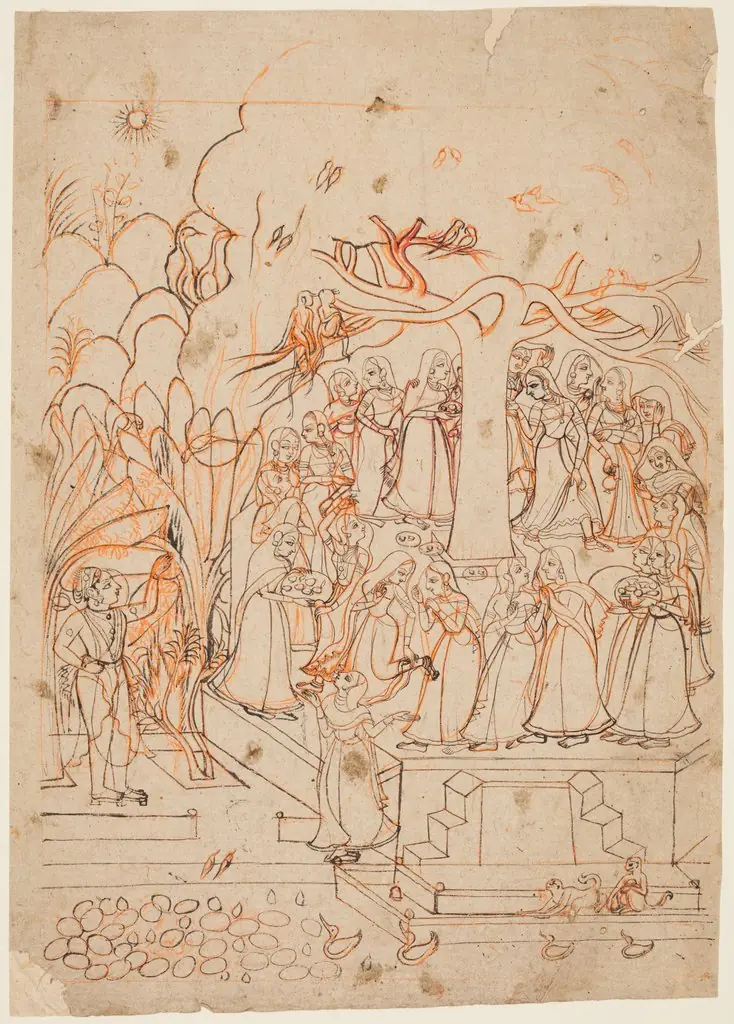 Krishna Watches the Milkmaids Circumambulating a Sacred Tree: the Month of Jyestha (May–June), from a Baramasa (The Twelve Months)
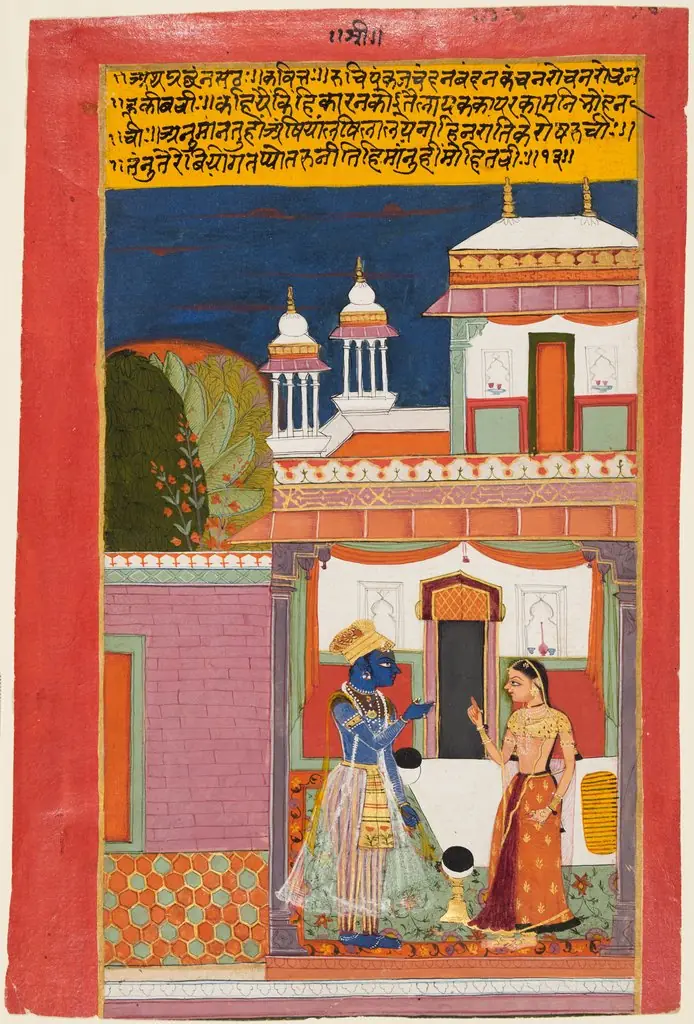 Krishna and Radha Quarreling: Shatha Nayaka, from a Rasikapriya
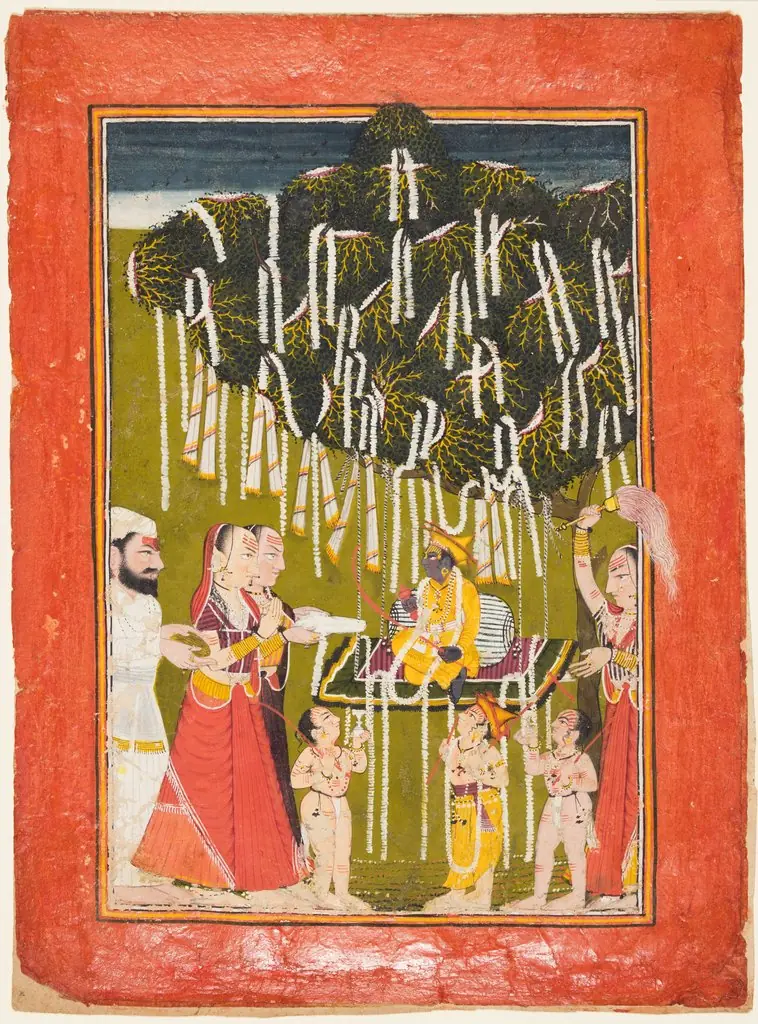 Fertility Worship of Krishna
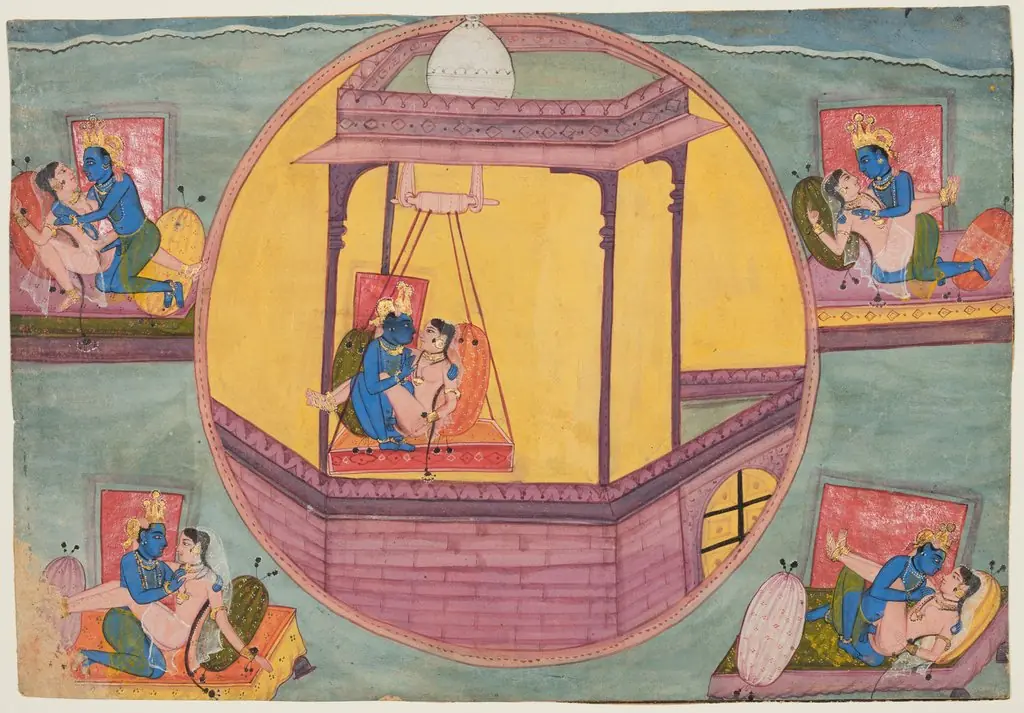 Five Poses of Krishna Making Love, from a Bikaner Bhagavata Purana
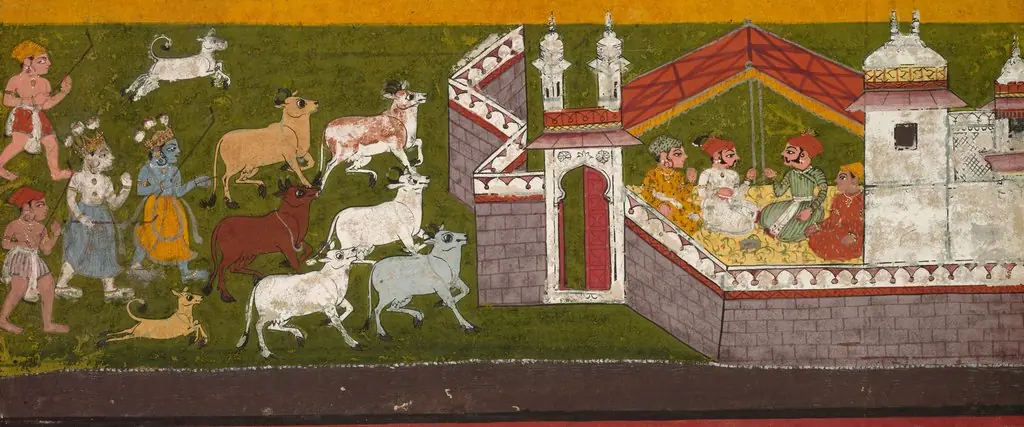 Krishna and Balarama Approaching Mathura
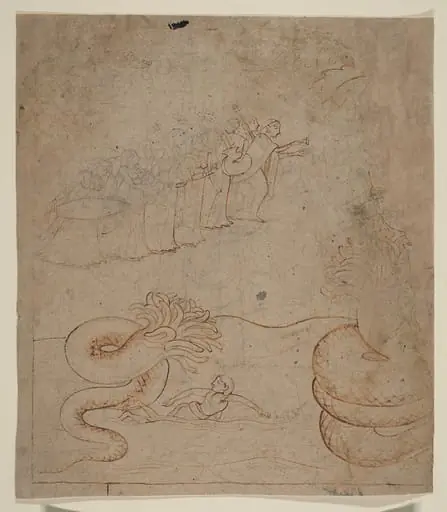
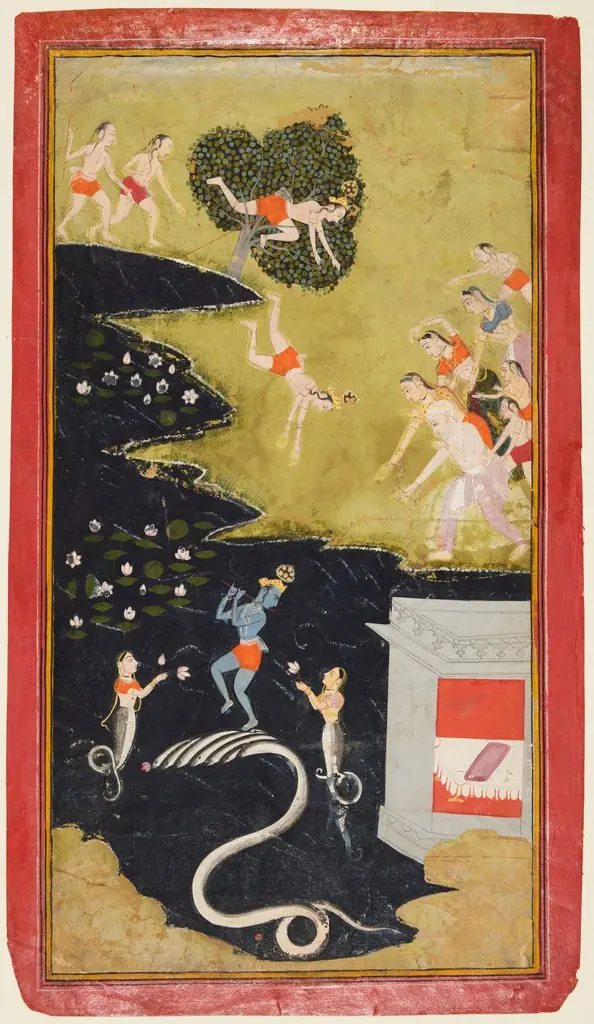 Krishna Quells the Serpent Kaliya, from a Bhagavata Purana
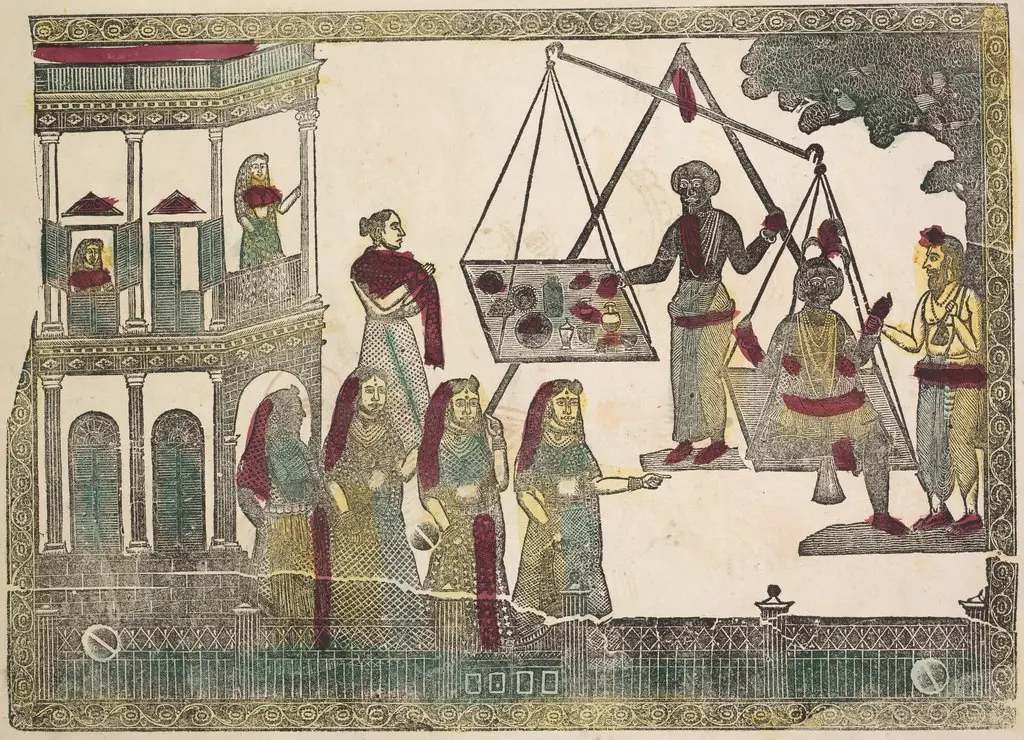 Krishna weighed against precious objects(?) (verso), from a Kalighat album
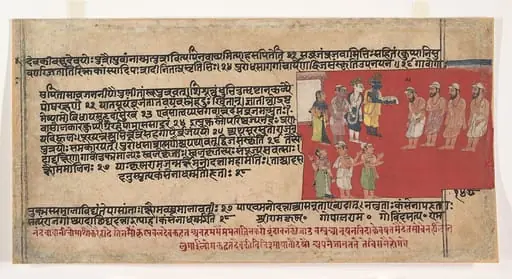
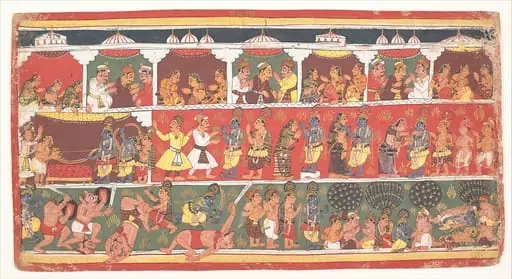
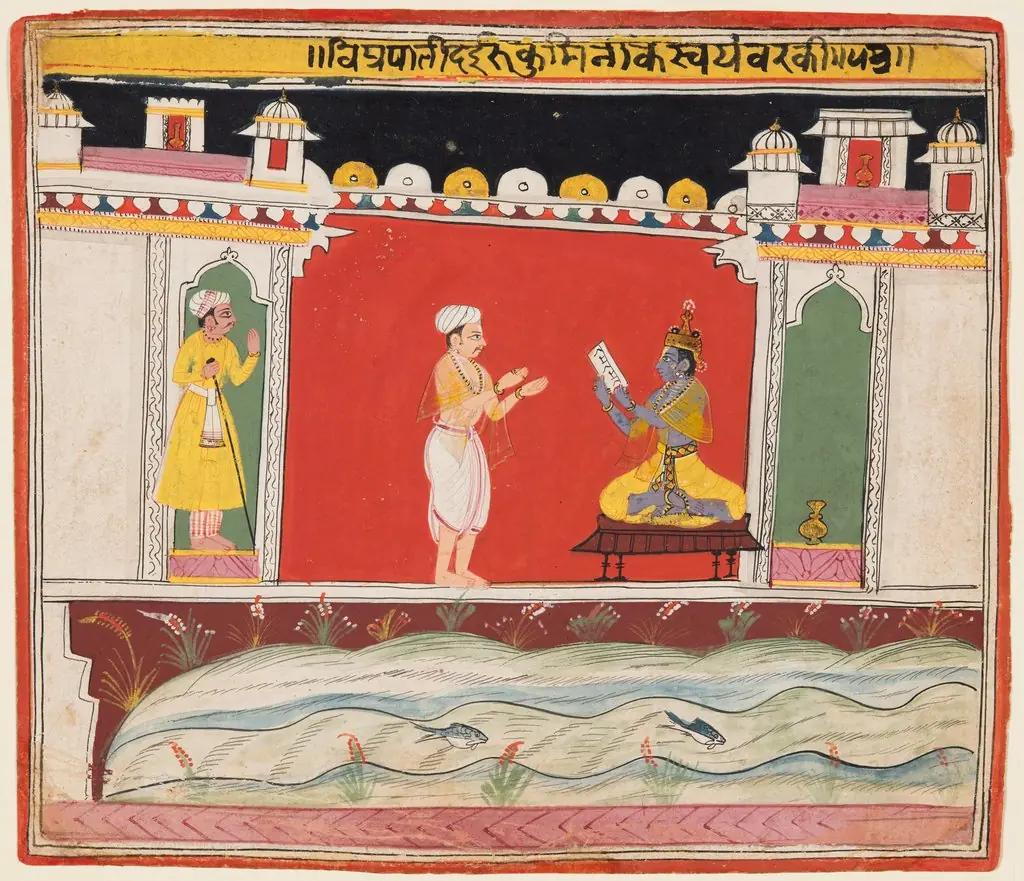 A Brahmin gives Krishna the Message or Invitation for the Competition to Rukmini’s Svayamvara, from a Bhagavata Purana
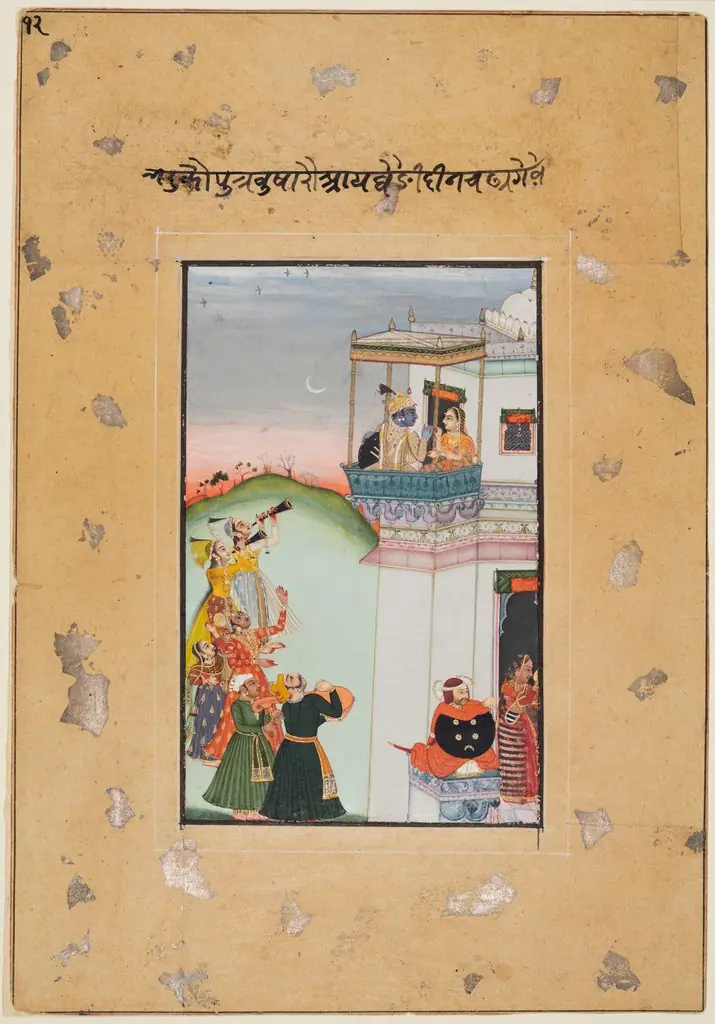 Krishna and Consort on a Palace Balcony with Musicians: Vukharo Ragaputra of Bhairav, from the “Boston Ragamala”
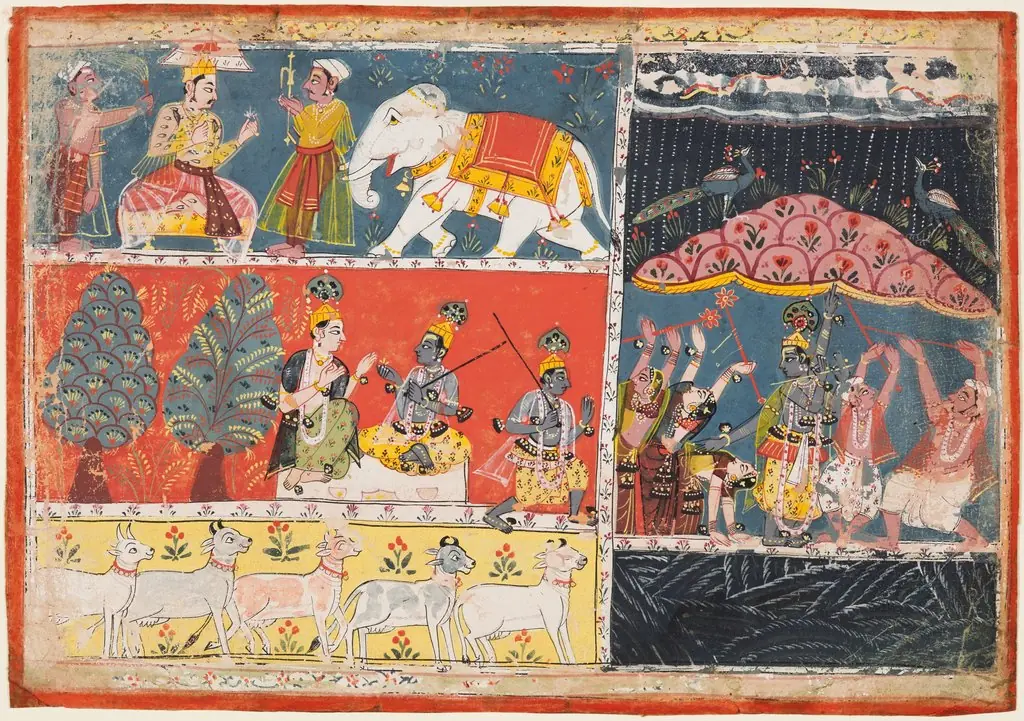 Krishna Lifts Mount Govardhan, from a Bhagavata Purana
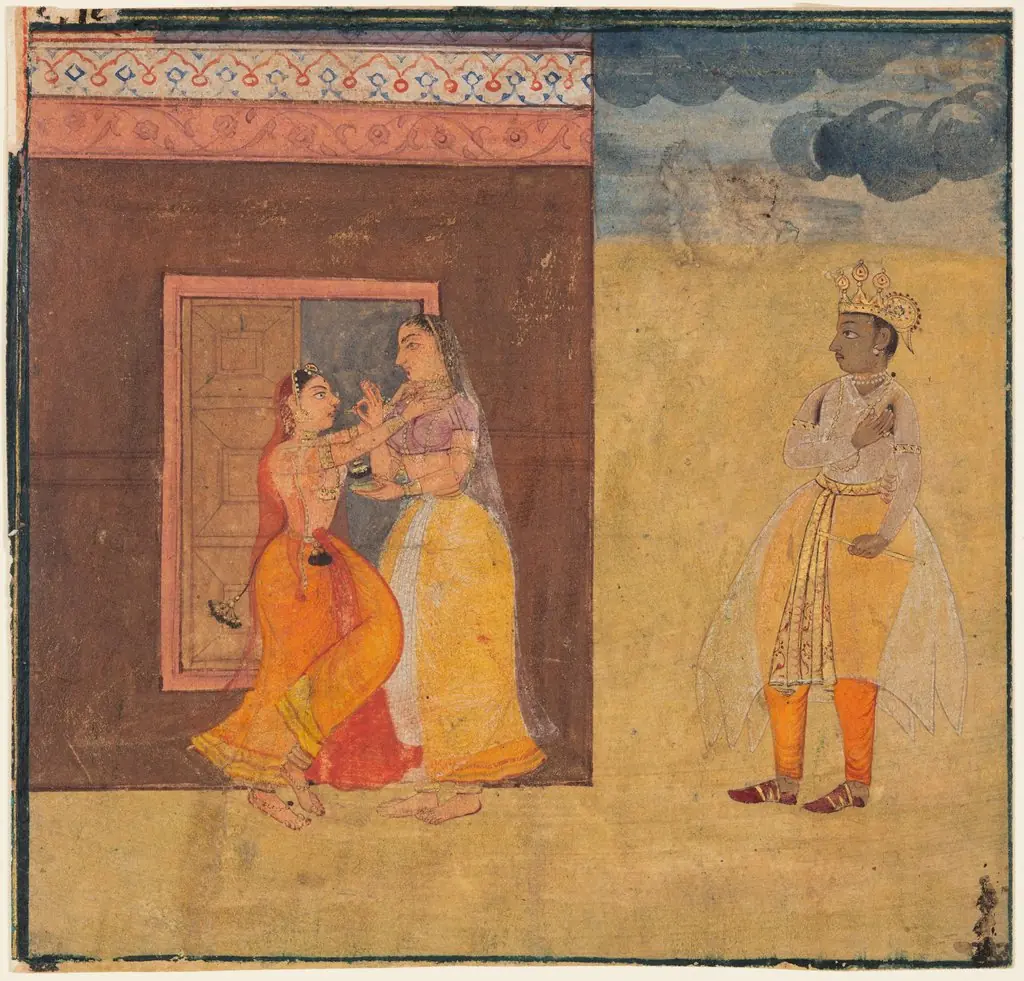 Krishna Abhisarika Nayika, from a Rasikapriya manuscript
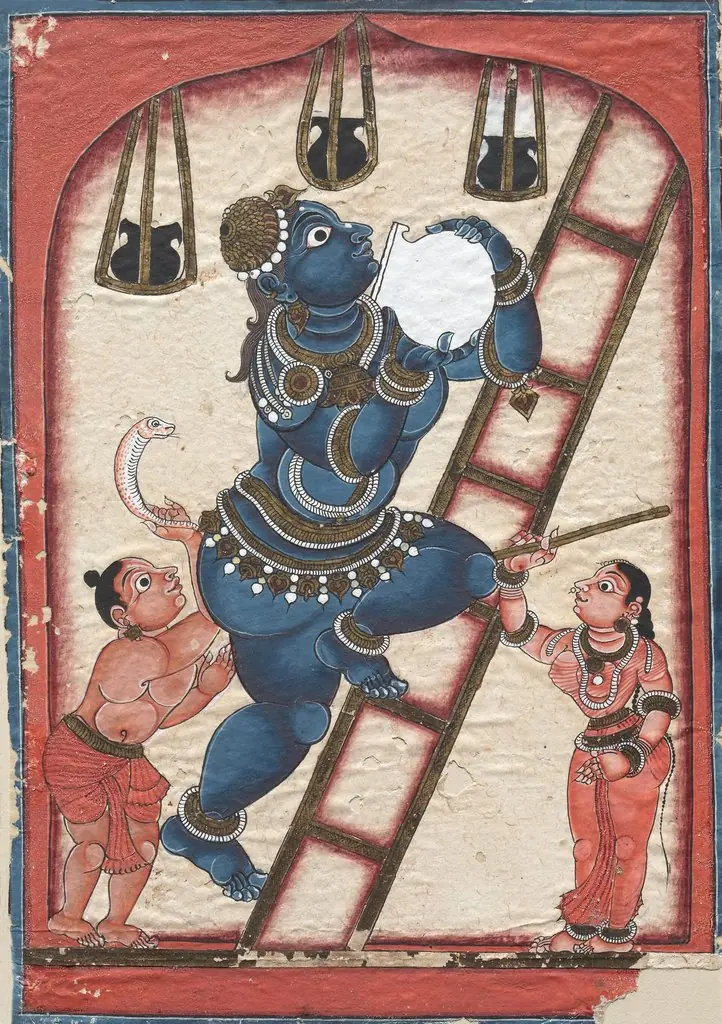 Krishna Stealing Curds
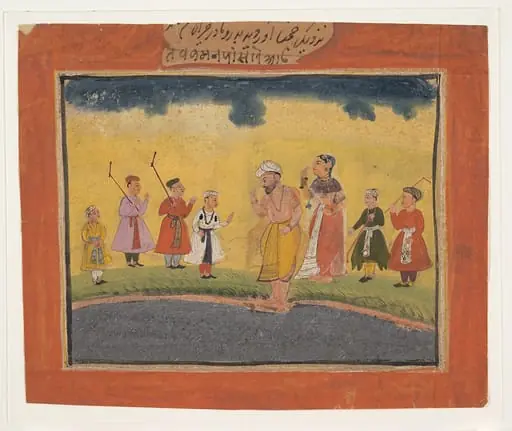
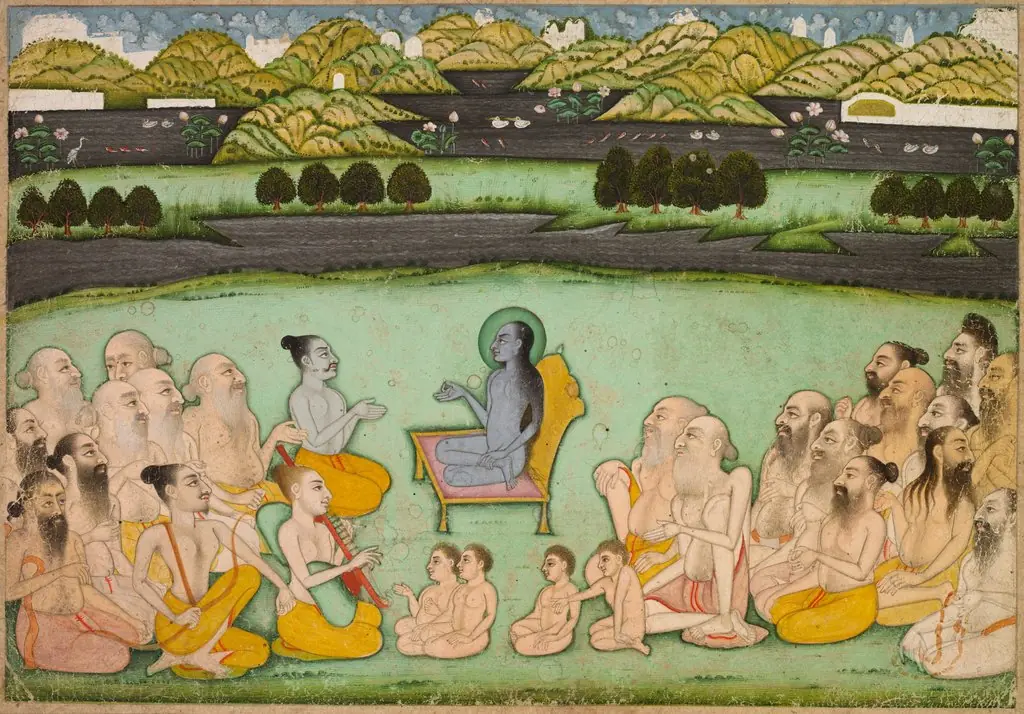 Hindu God Krishna Talking to Elders
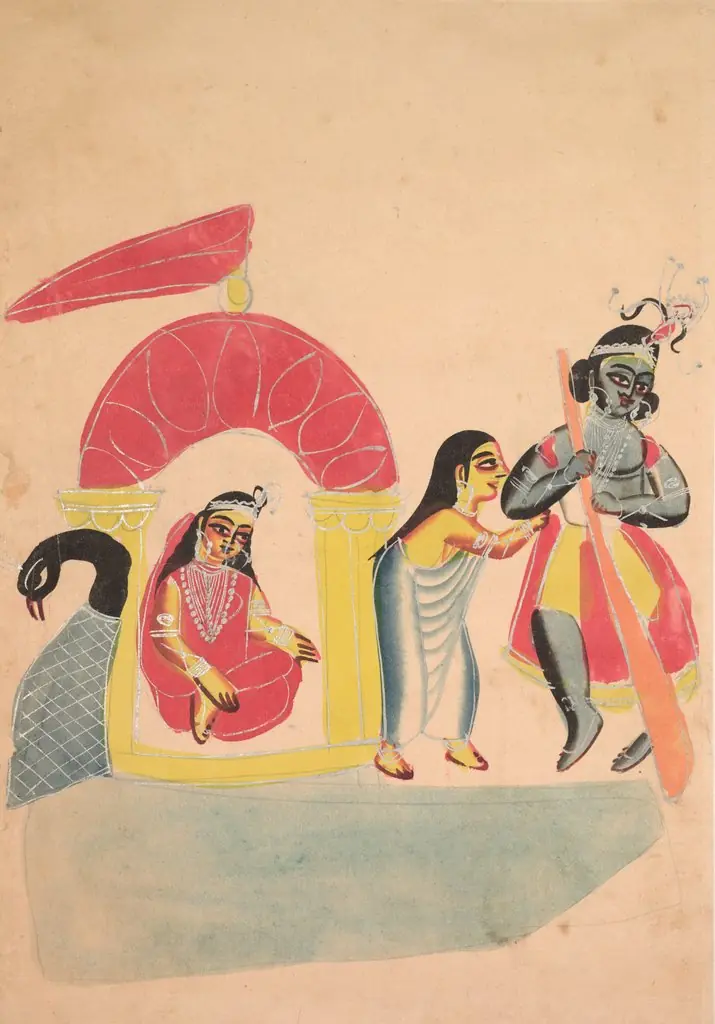 Krishna Ferrying Radha Across the Yamuna River
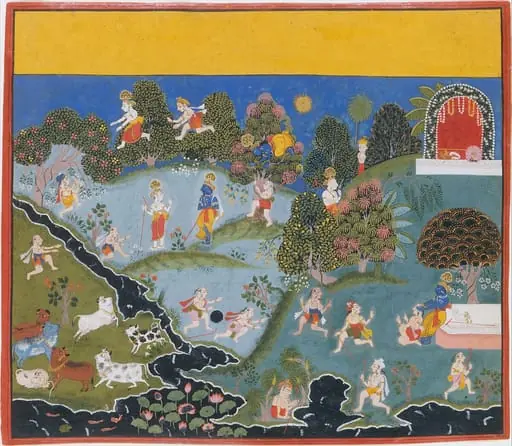
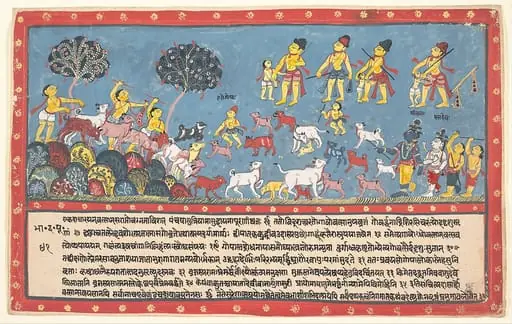
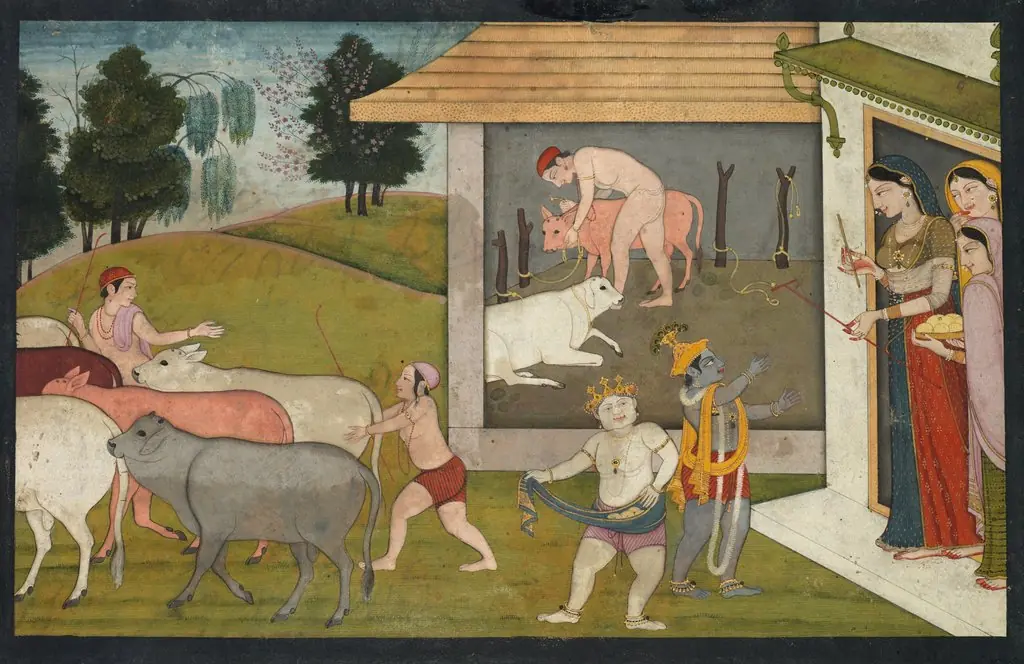 Krishna and Balarama Taking the Cattle Out to Graze, from a Bhagavata Purana
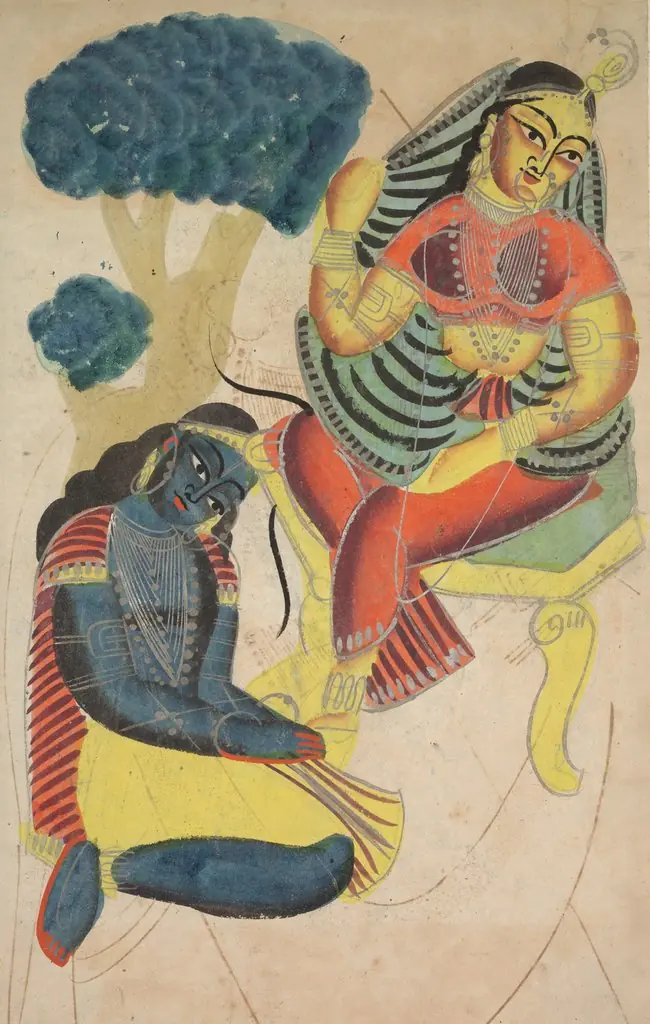 Krishna Stroking Radha's Feet (verso), from a Kalighat album
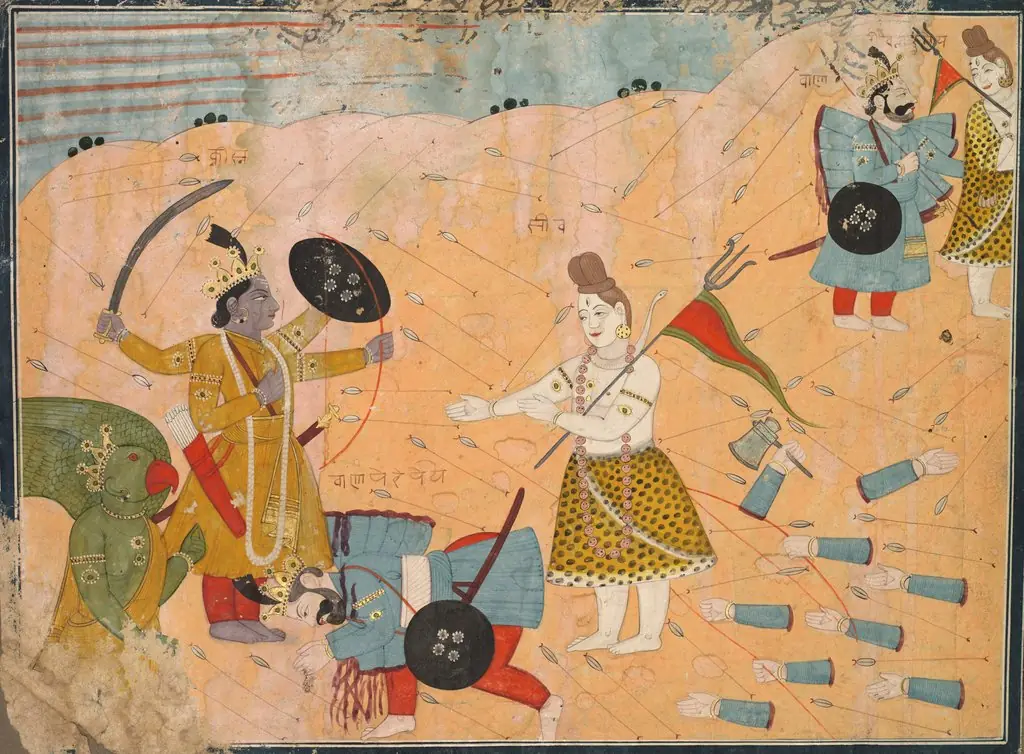 Shiva Intercedes for Vanasura: Scene from the Aniruddha Usha Section of Krishna Lila
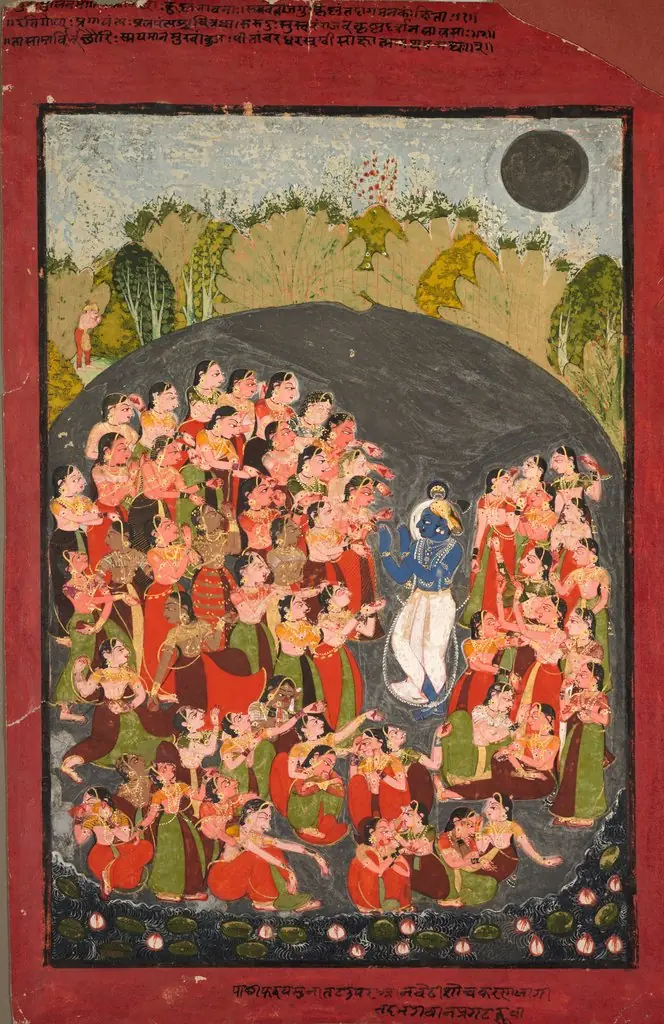 Krishna and the Gopis Gather for Rasamandala
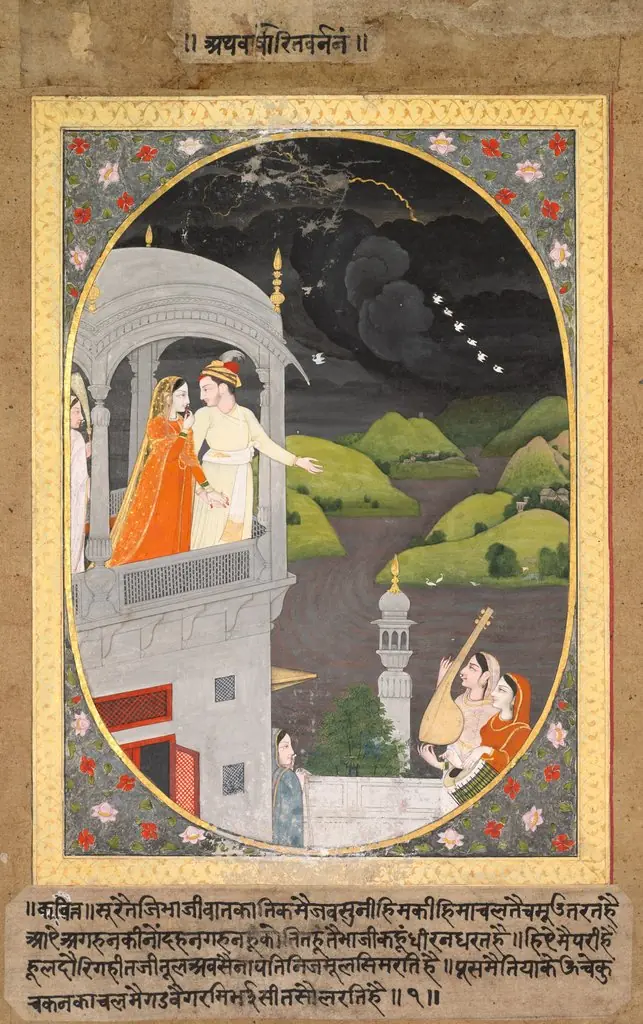 Krishna and Radha Watching Rain Clouds: The Month of Bhadon from Baramasa series
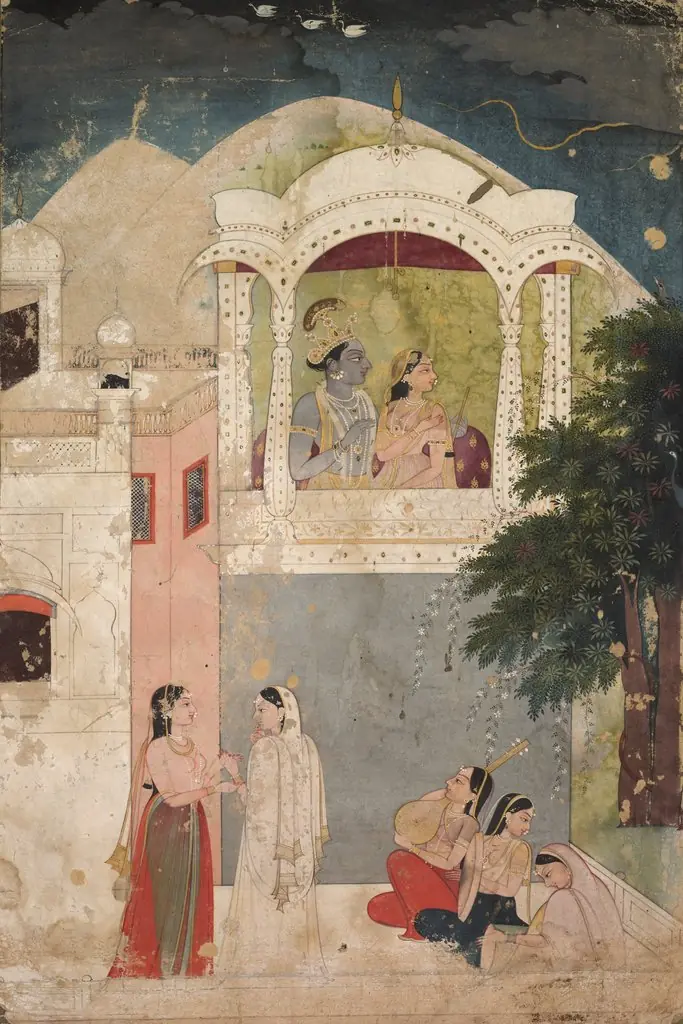 Radha and Krishna Seated on a Balcony
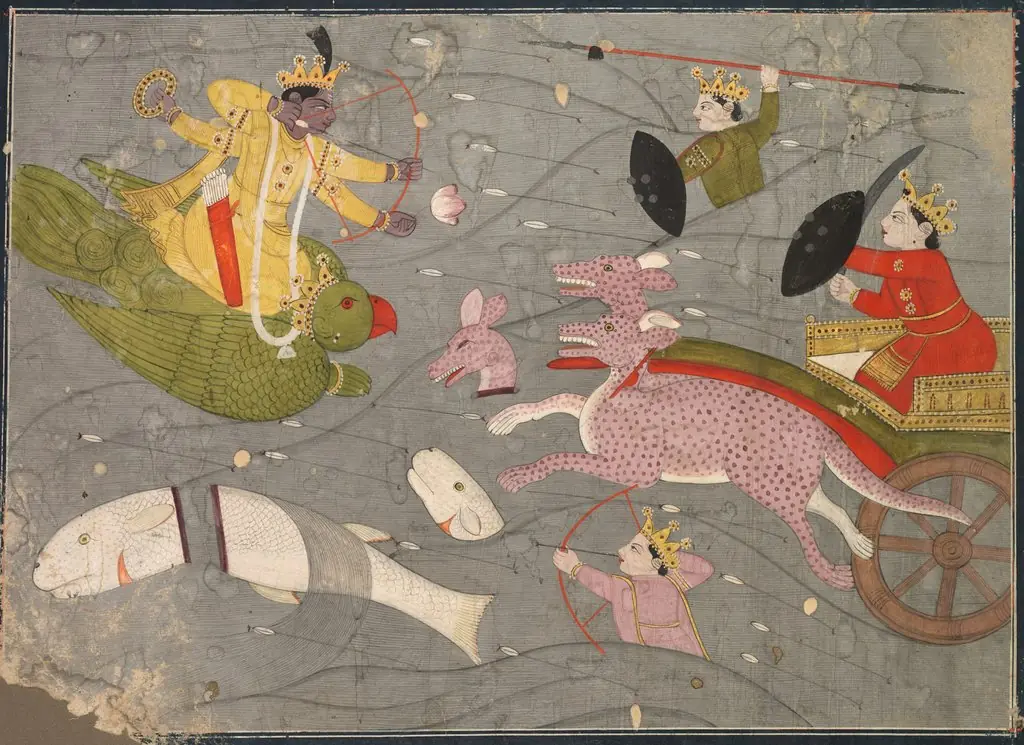 Krishna Fighting Vanasura's Sons: Scene from the Aniruddha Usha Section of Krishna Lila
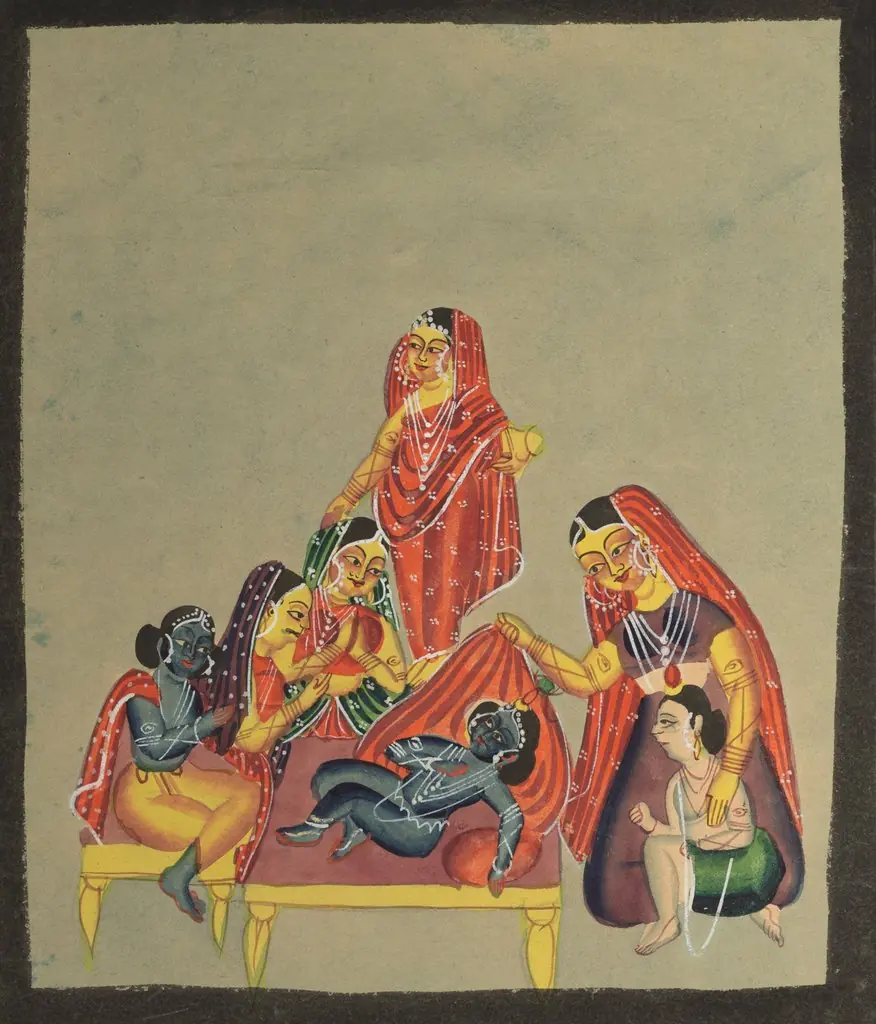 Worship of the Infant Krishna, from a Kalighat album
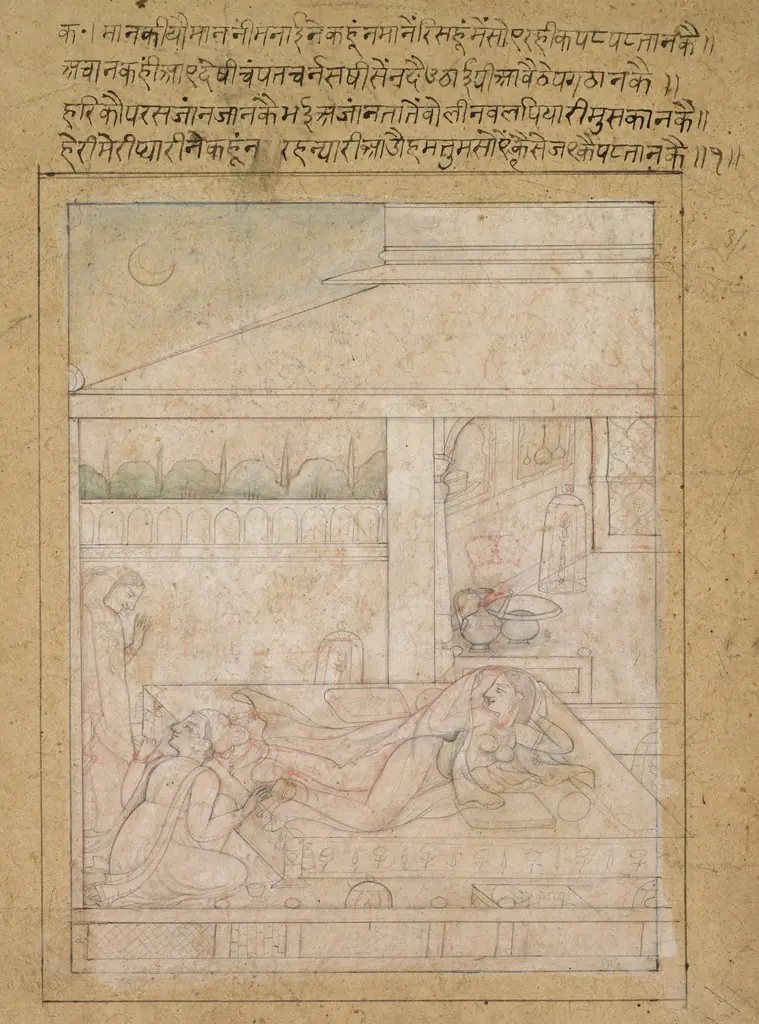 Radha and Krishna's Reconciliation
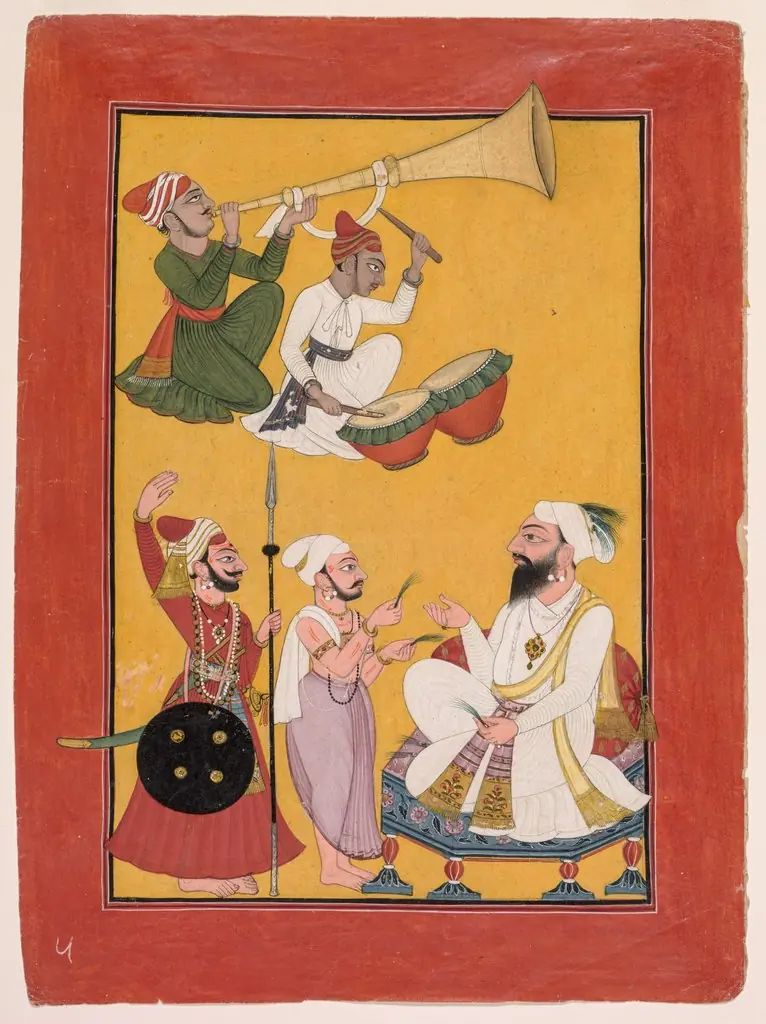 Celebrations of Krishna's Birth, from a Bhagavata Purana
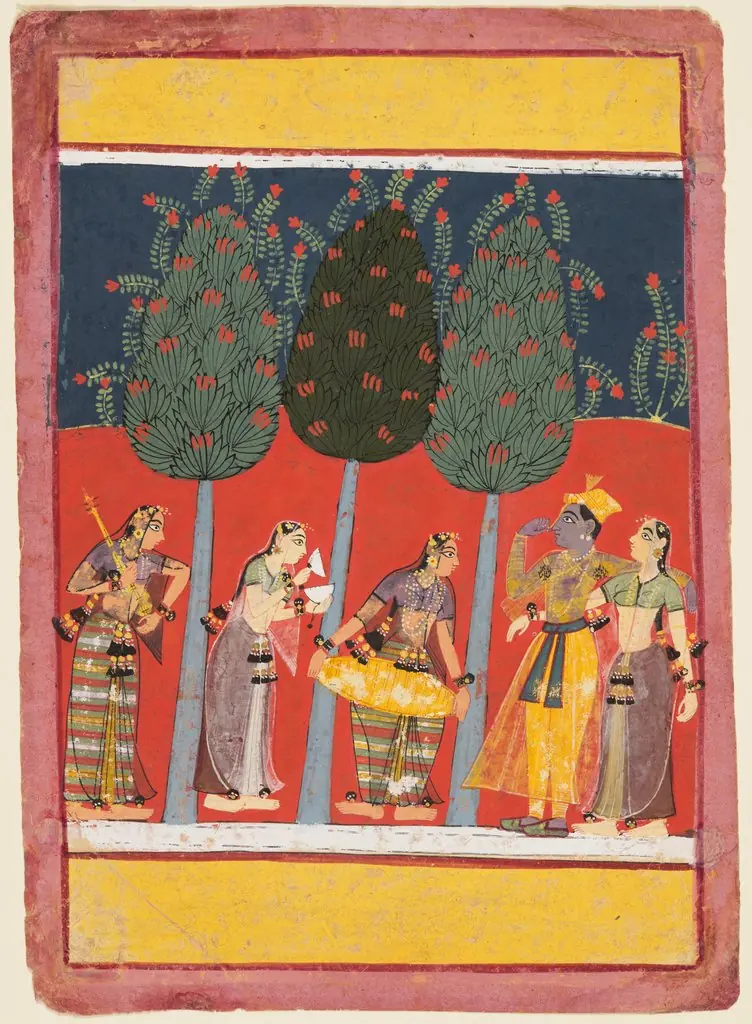 Women Play Music for Radha and Krishna: Chitrini Nayika, from a Rasikapriya
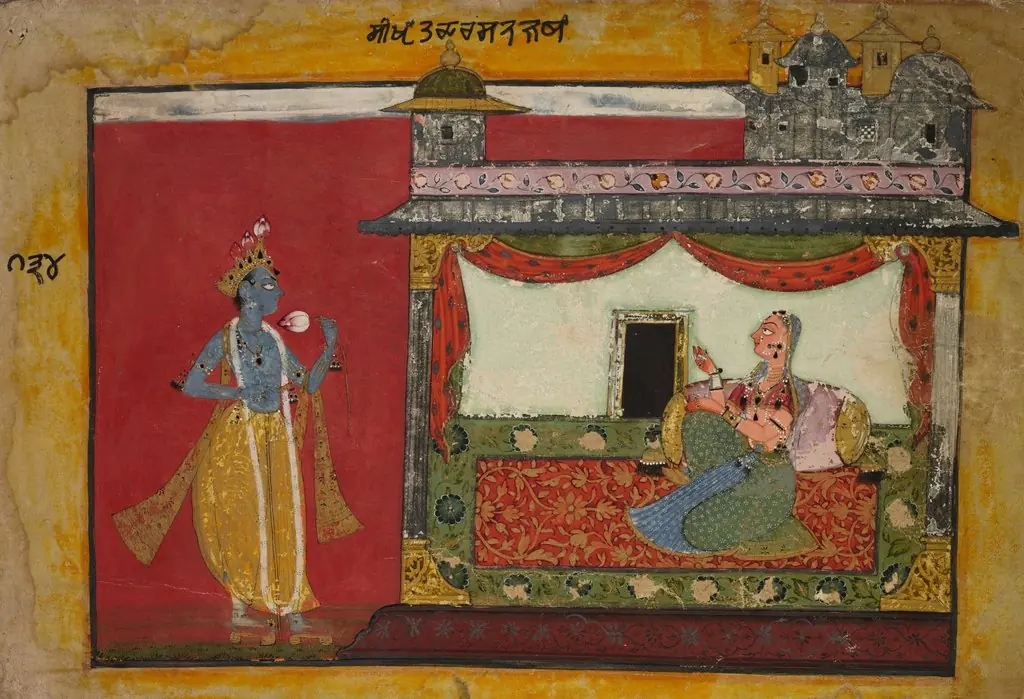 The Approach of Krishna. Page from a Rasamanjari
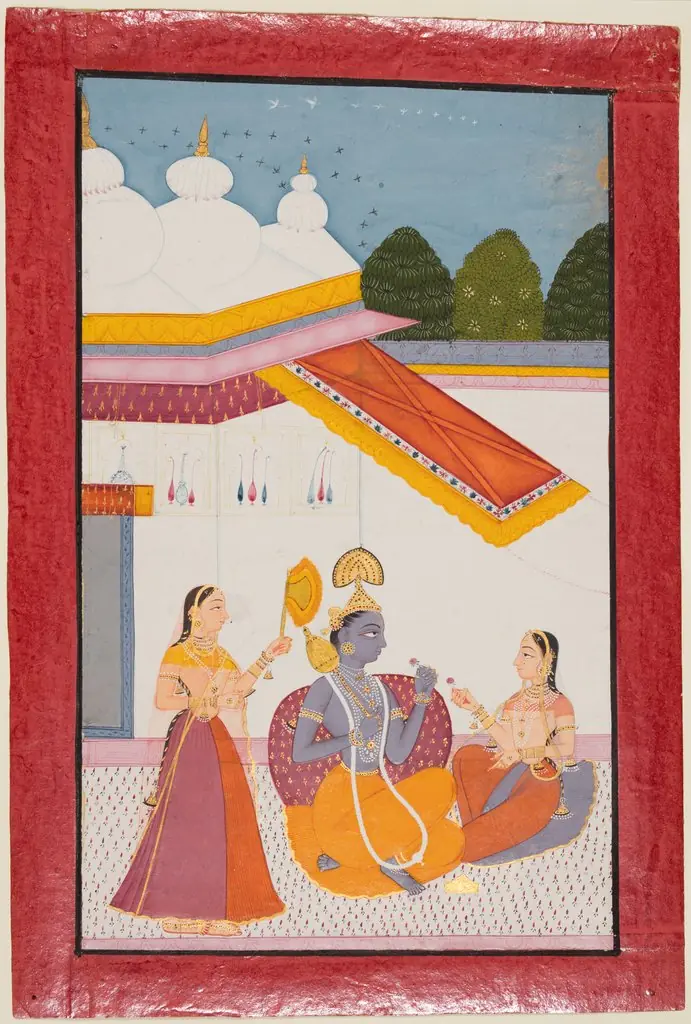 Krishna Under a Canopy
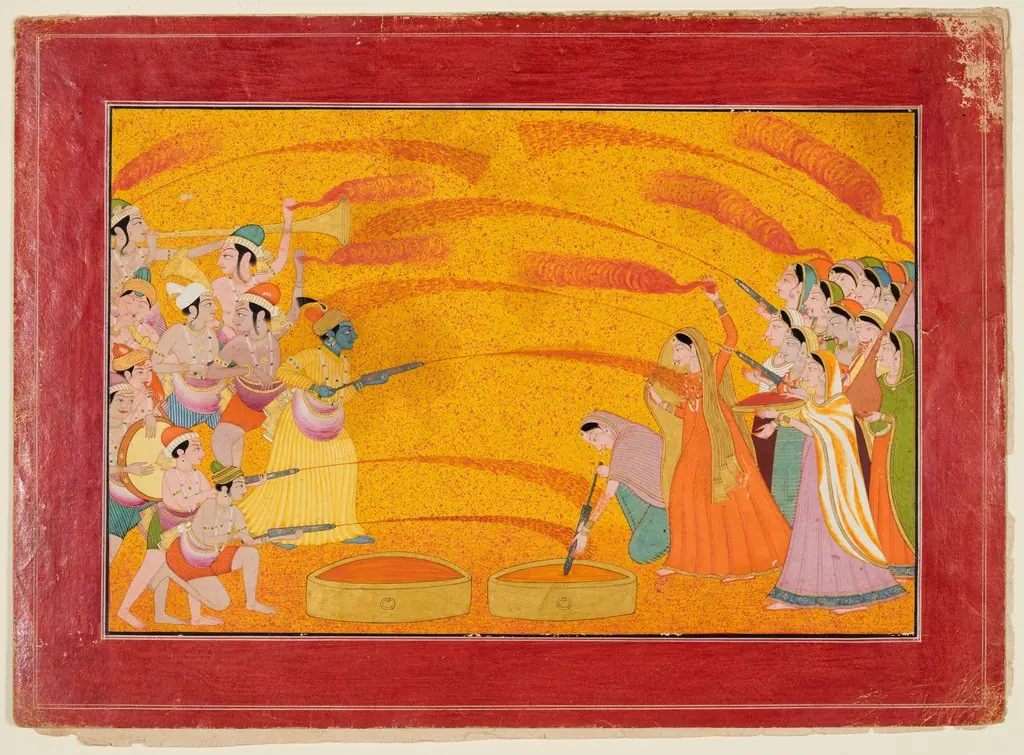 Krishna Celebrates Holi
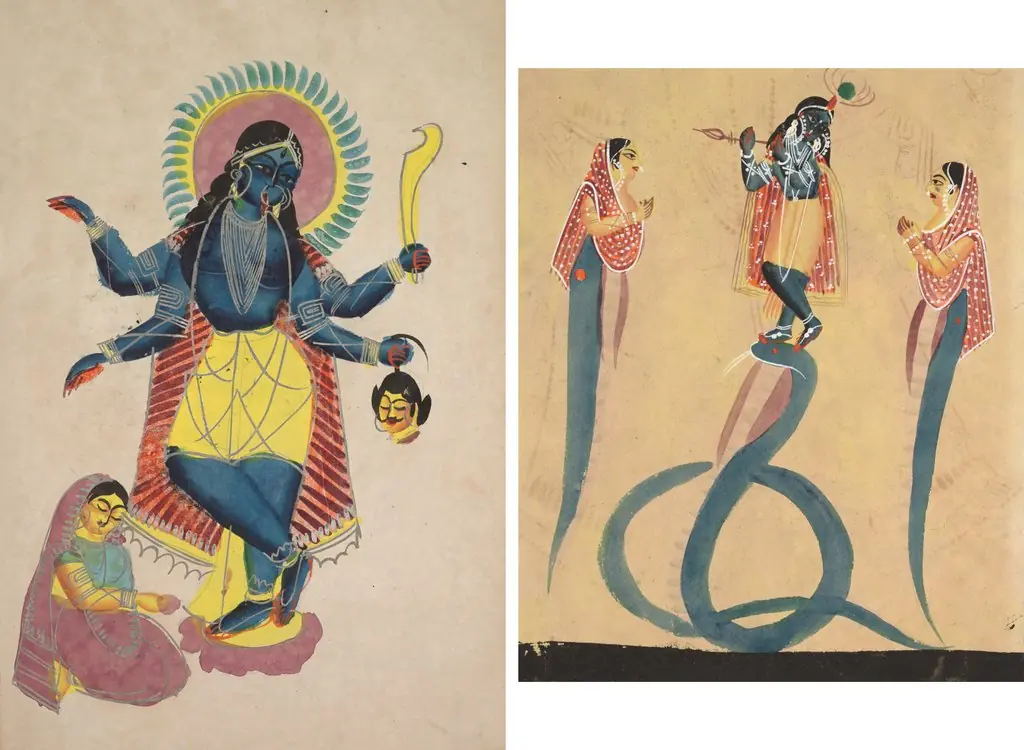 Leaf from a Kalighat album: Krishna as Kali worshipped by Radha (recto); Krishna quells the serpent Kaliya (verso)
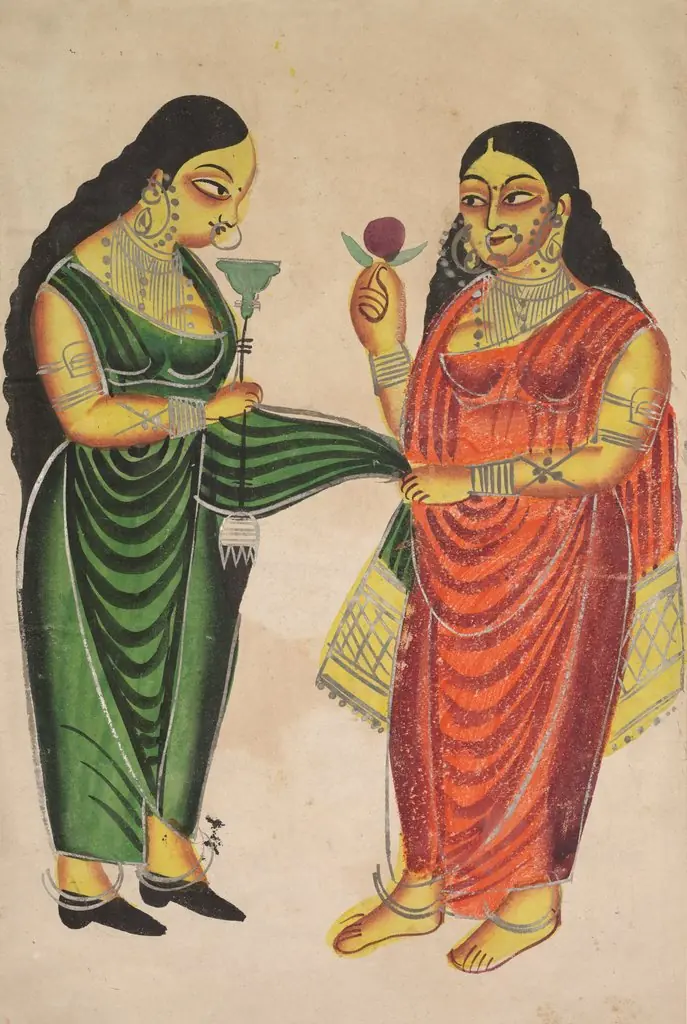 Leaf from a Kalighat album: Maid bringing a hookah to a lady (recto); Krishna weighed against precious objects(?) (verso)
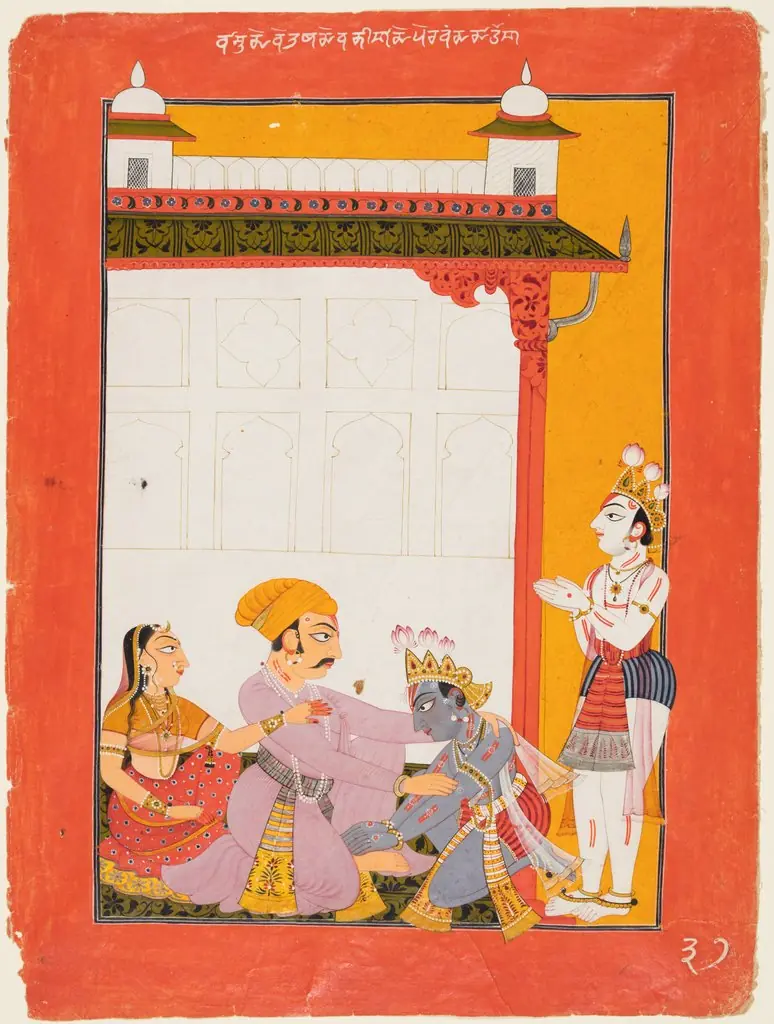 Krishna and Balarama Touching the Feet of Vasudeva and Devaki
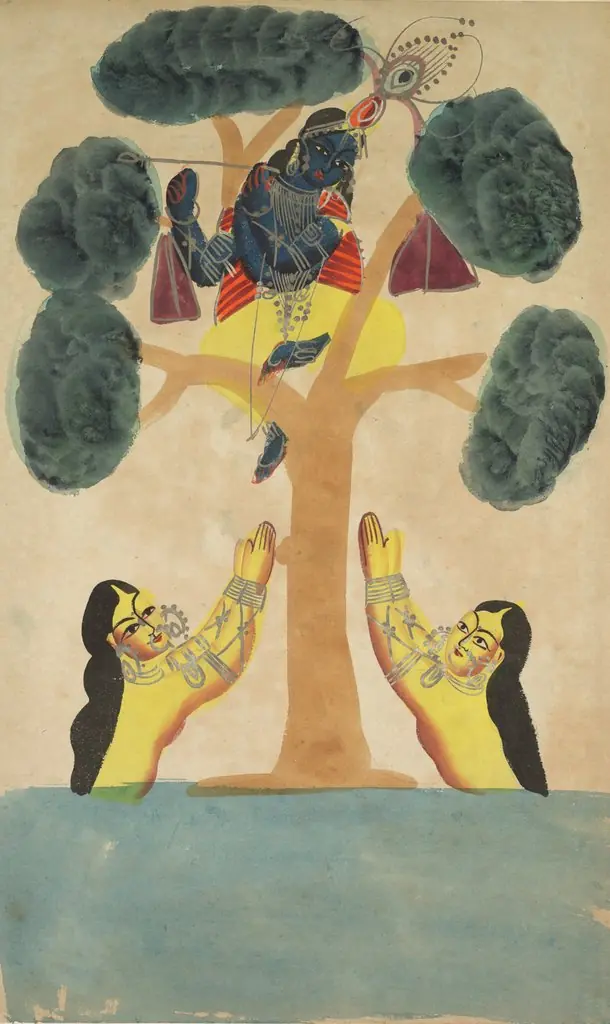 Krishna Steals the Clothes of the Cowgirls (Gopis) (recto), from a Kalighat album
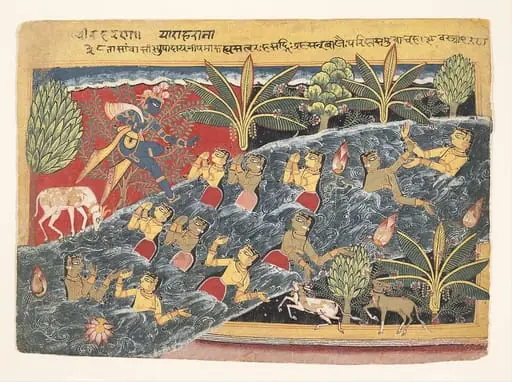
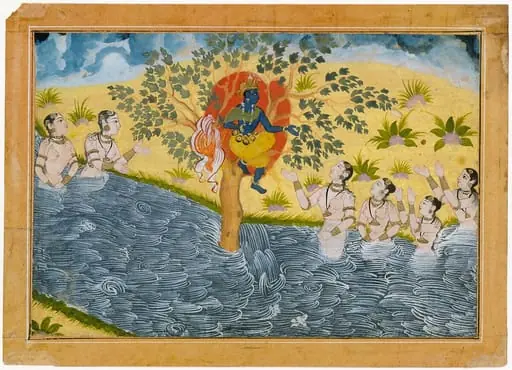
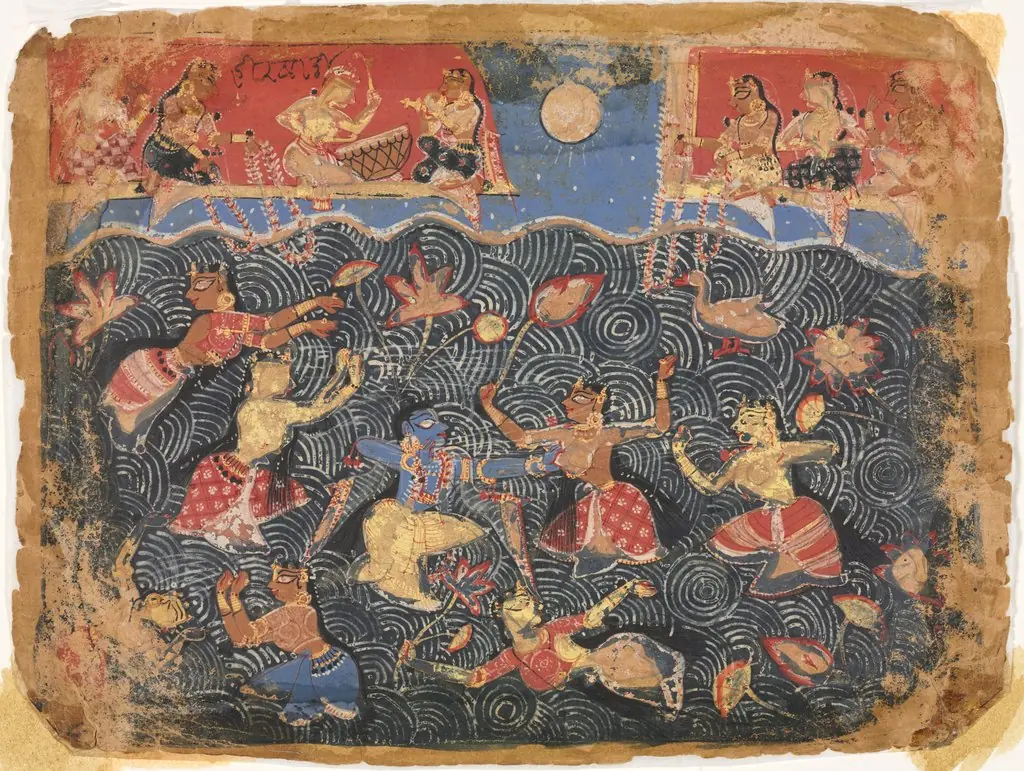 Krishna sporting with the gopis in the Jumna River, from a Bhagavata Purana
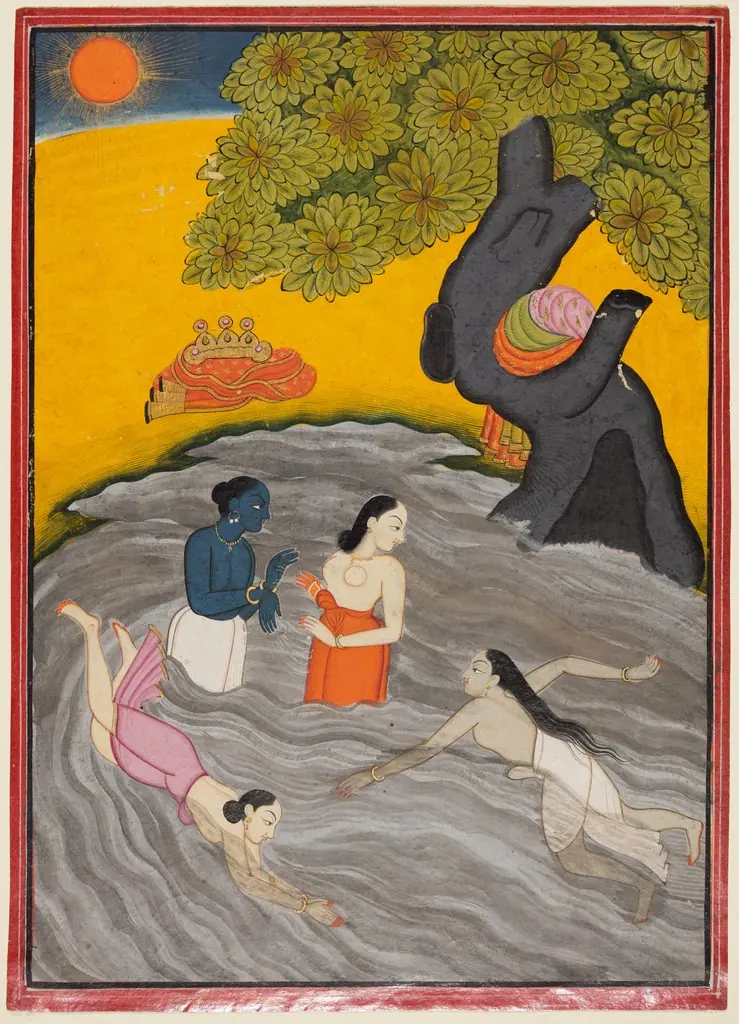 Krishna Playing with the Gopis in the Yamuna
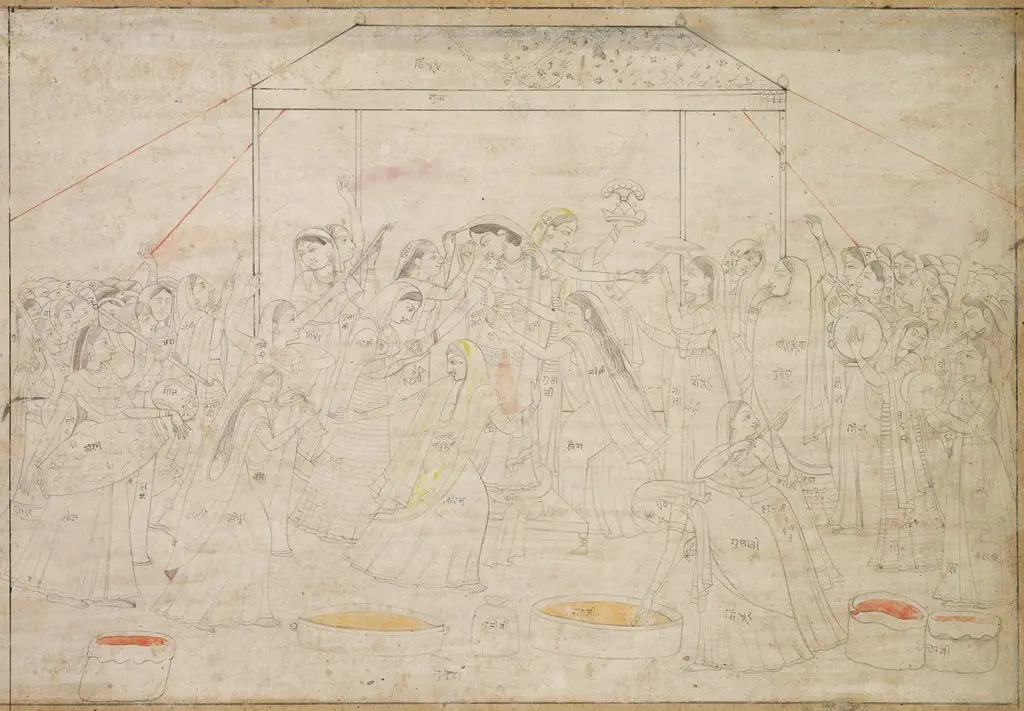 Hindu God Krishna Being Dressed in Women's Clothes for Spring Festival Holi
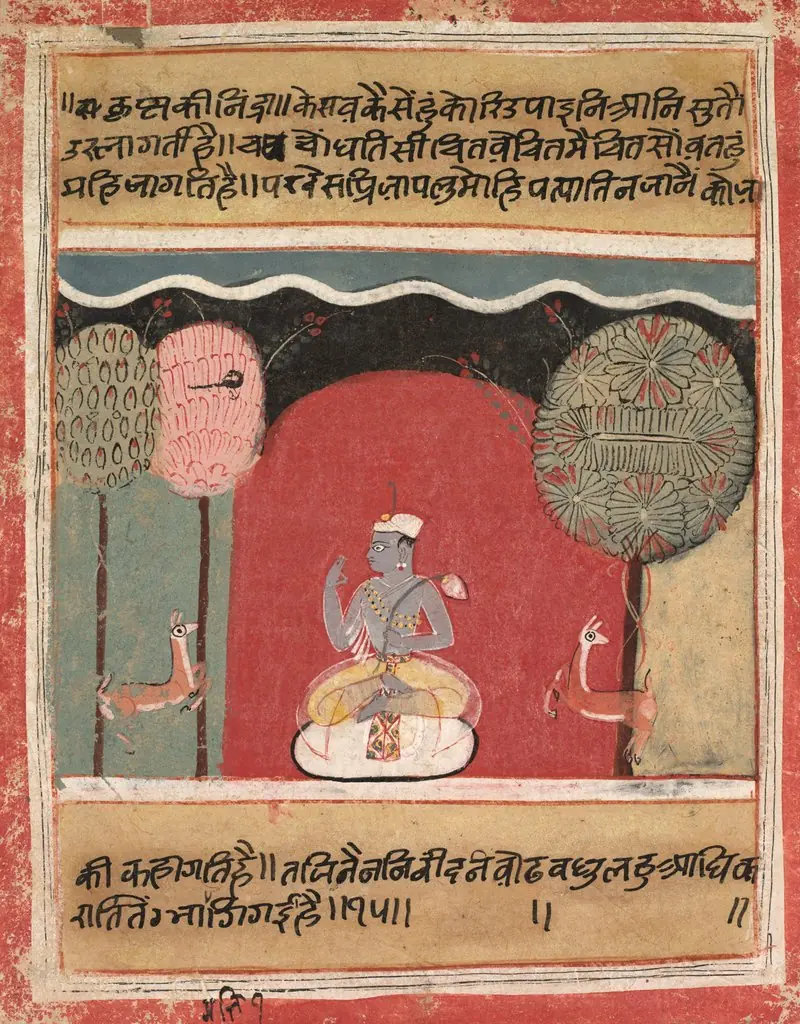 Krishna's Insomnia, Page from a Rasikapriya
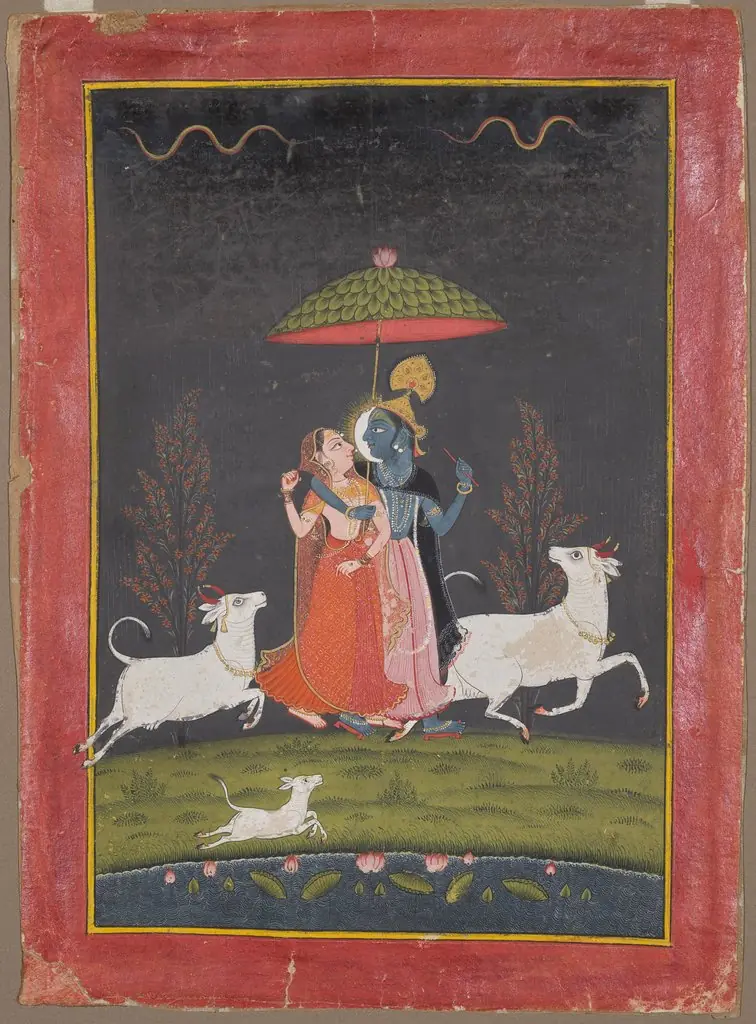 Radha and Krishna in the Rain
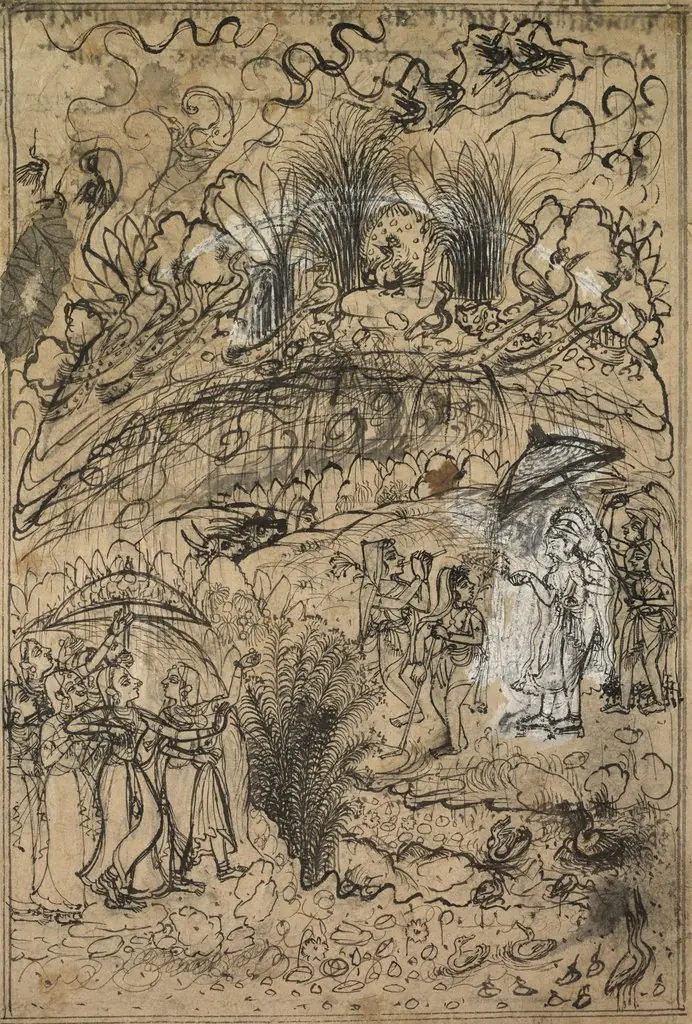 Krishna and Radha Under Mt. Govardhan
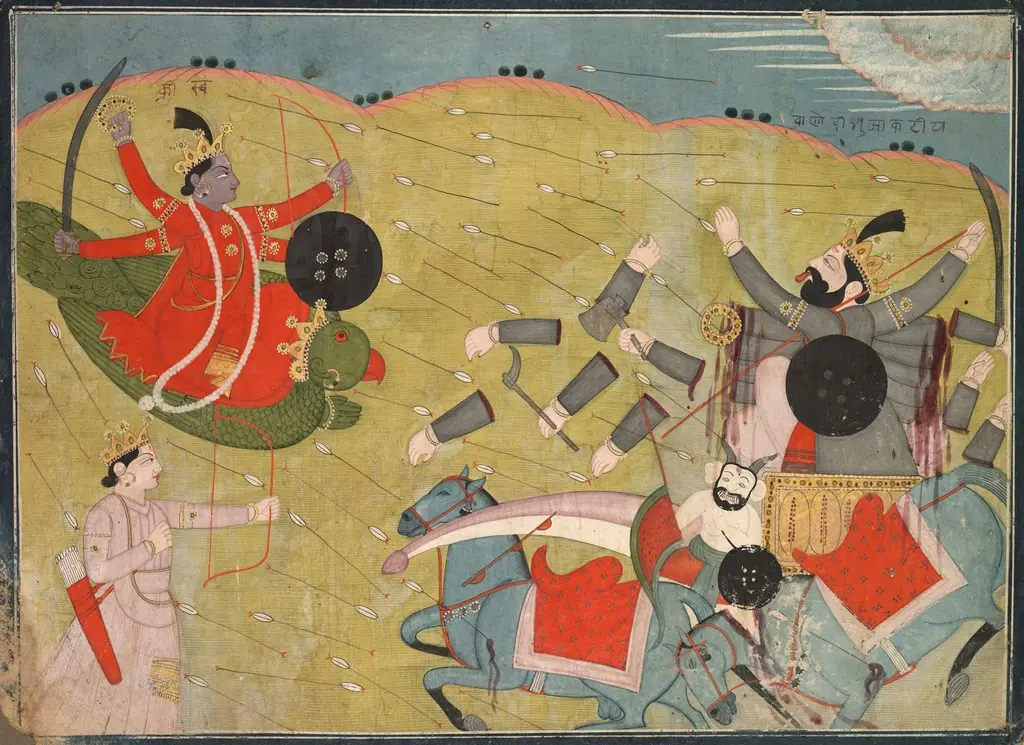 Krishna Vanquishing Vanasura: Scene from the Aniruddha Usha Section of Krishna Lila
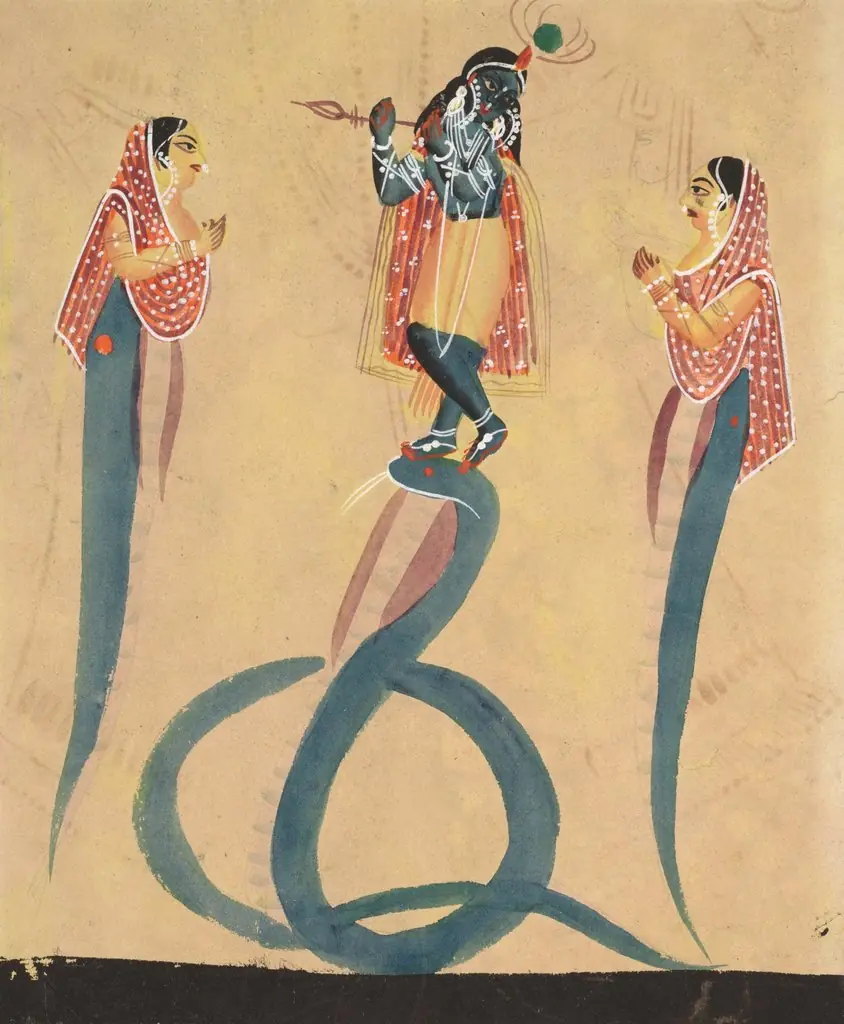 Krishna quells the serpent Kaliya (verso), from a Kalighat album
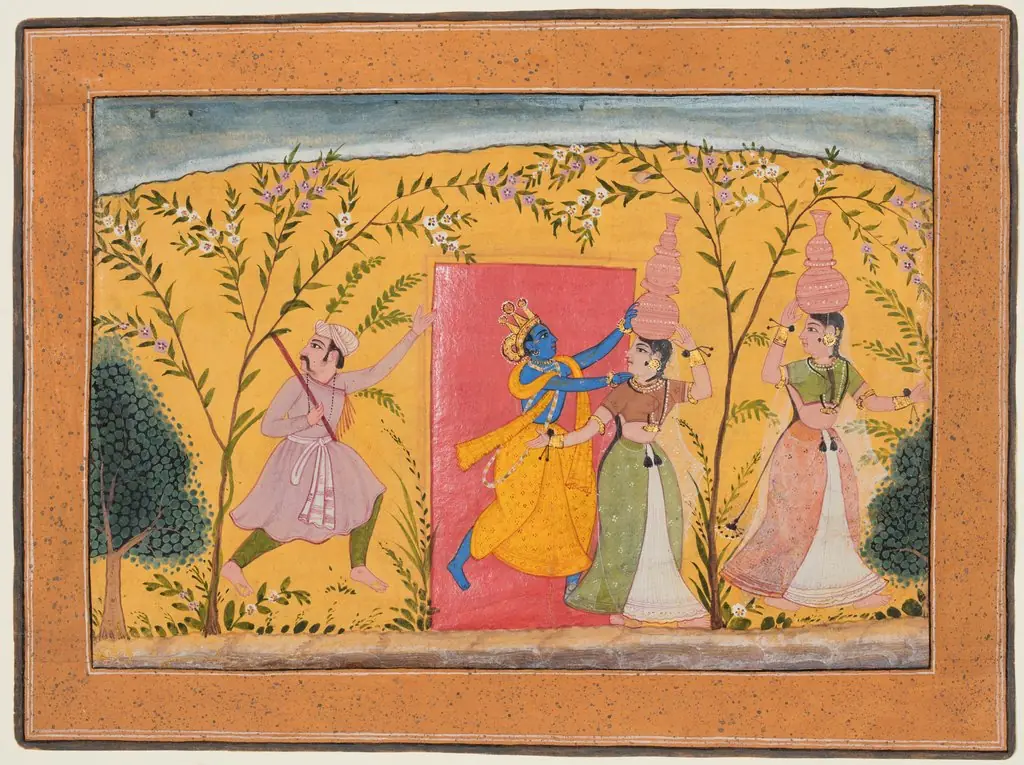 Krishna Exacts a Toll from the Milkmaids: Dana-Lila, from a Bhagavata Purana
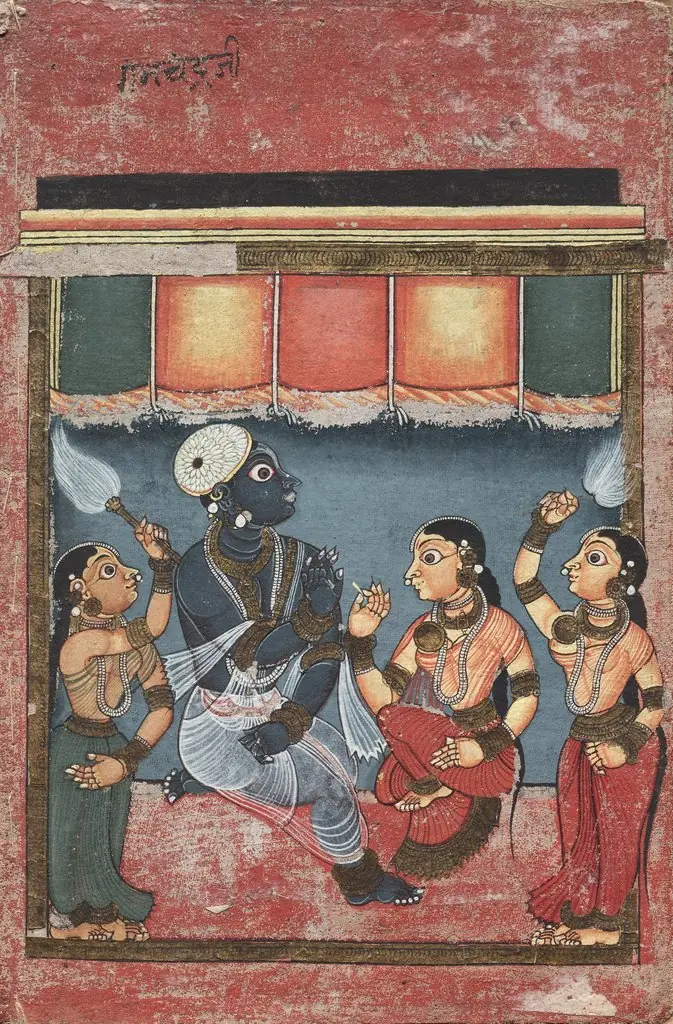 Krishna with Radha and Two Attendants (recto)
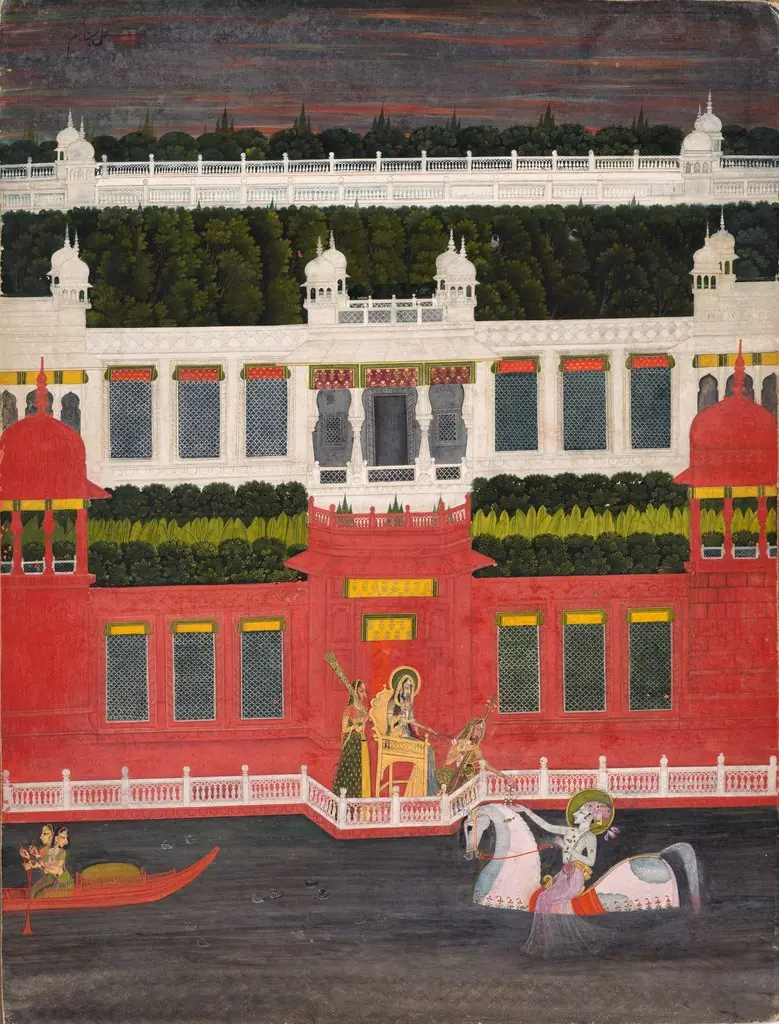 Krishna Receives a Flower Garland
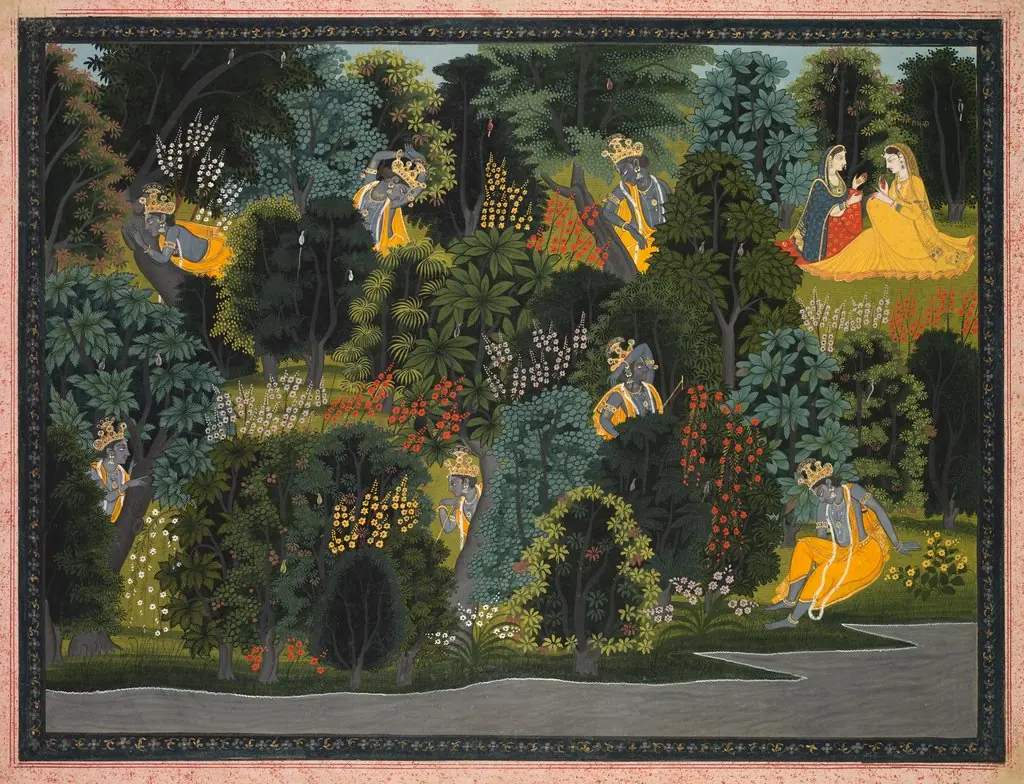 Krishna's Longing for Radha, from the Gita Govinda of Jayadeva
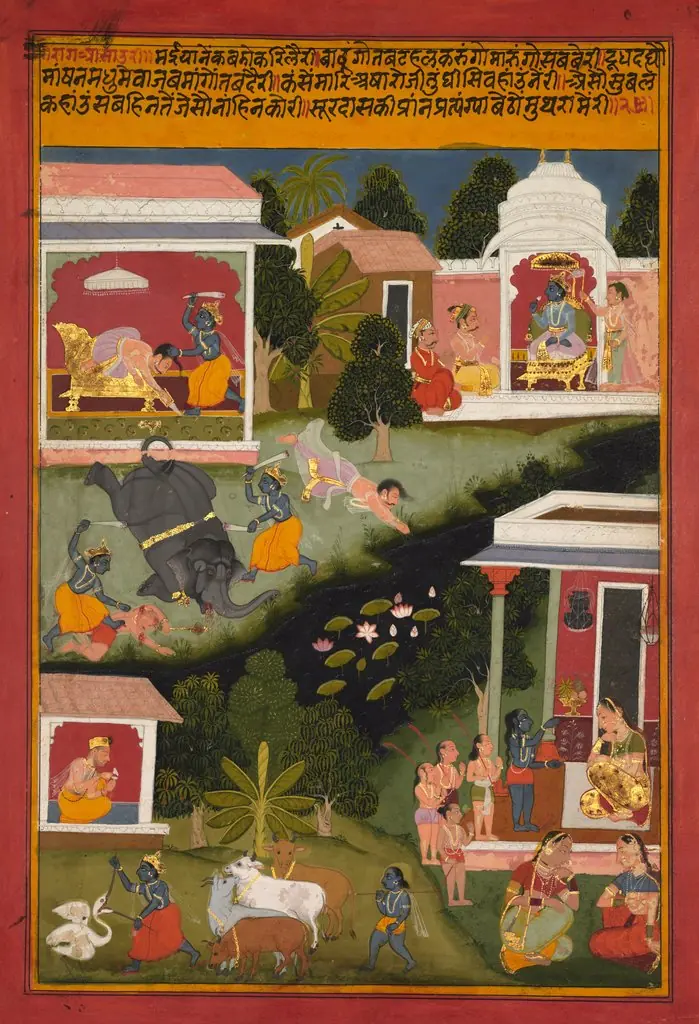 Krishna asks for sweets, from a Sursagar of Surdas (Indian, c. 1480–1580)
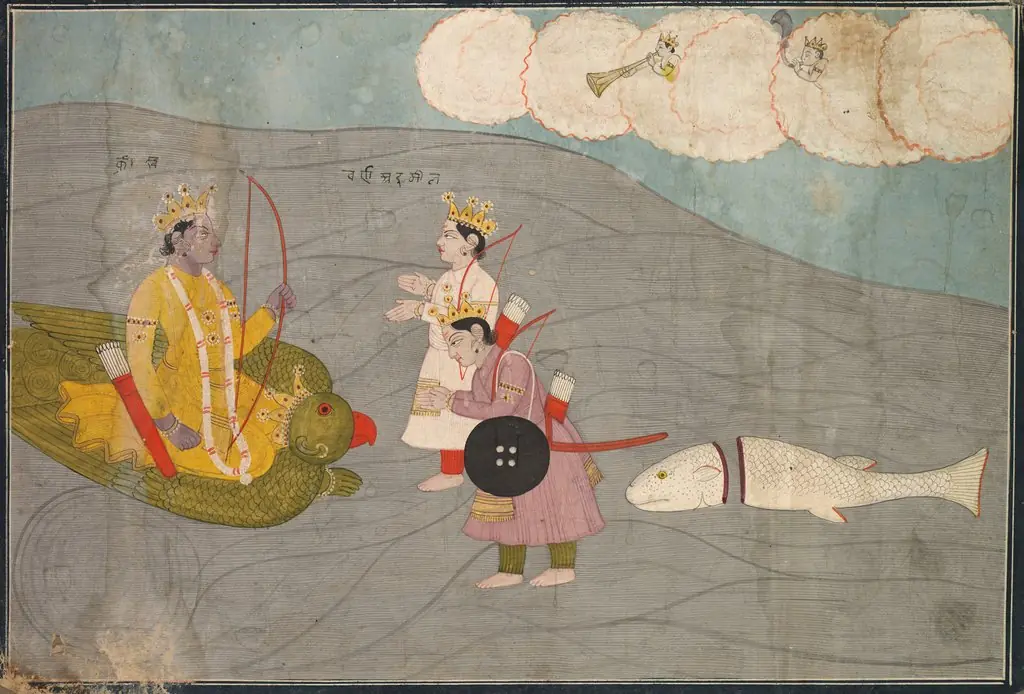 Vanasura's Sons Submit to Krishna: Scene from the Aniruddha Usha Section of Krishna Lila
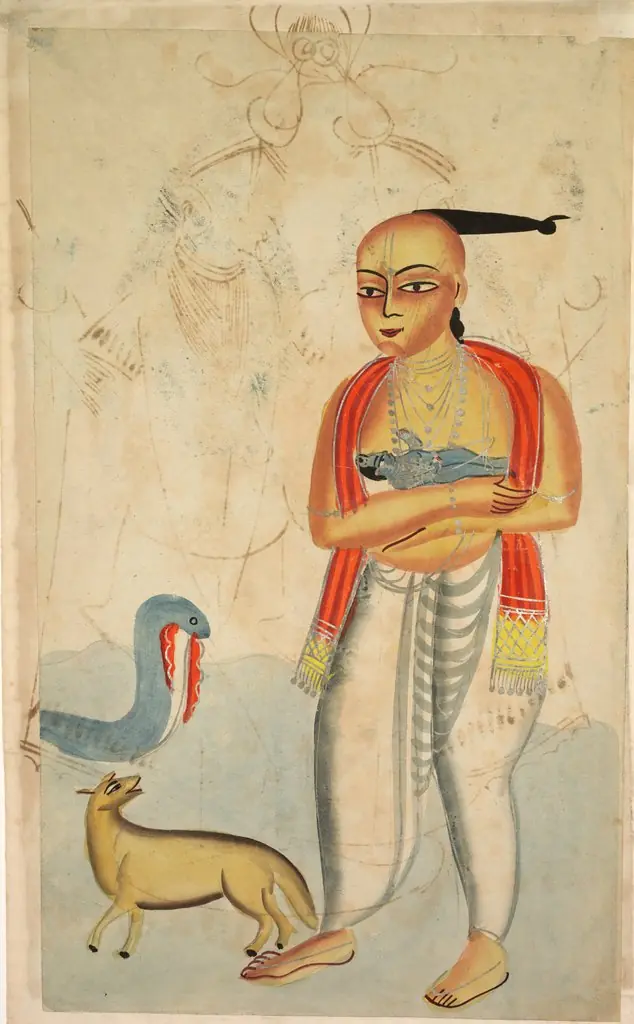 Vasudeva (Krishna's Father) Fleeing with Krishna Encounters a Cobra and a Jackal (verso), from a Kalighat album
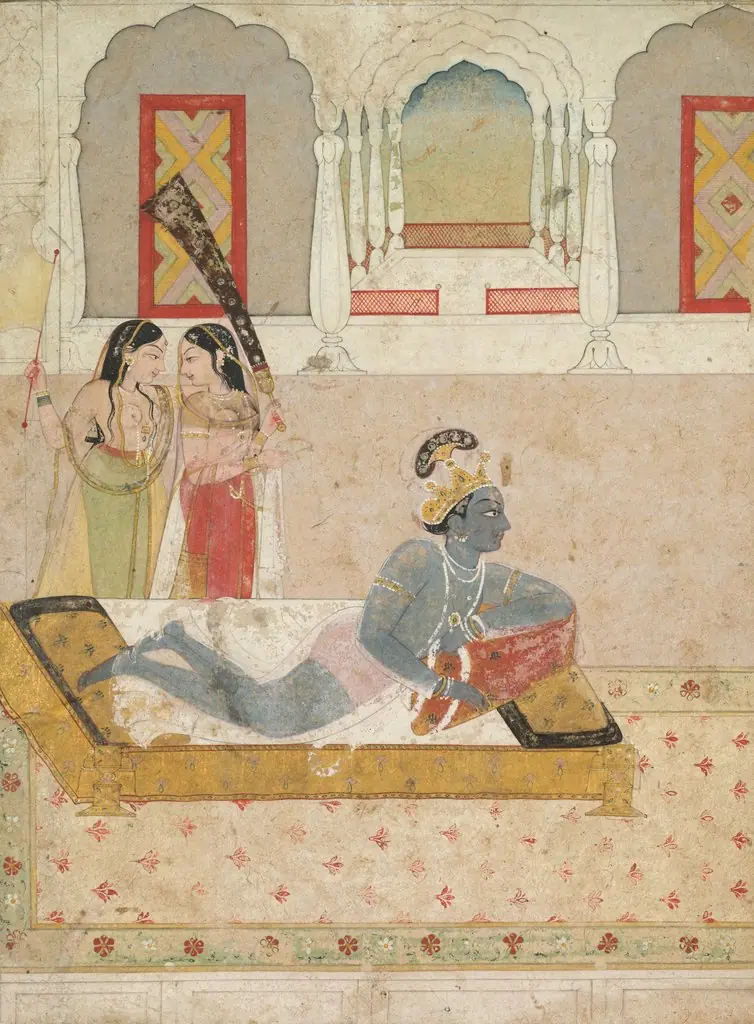 Krishna Awaiting Radha
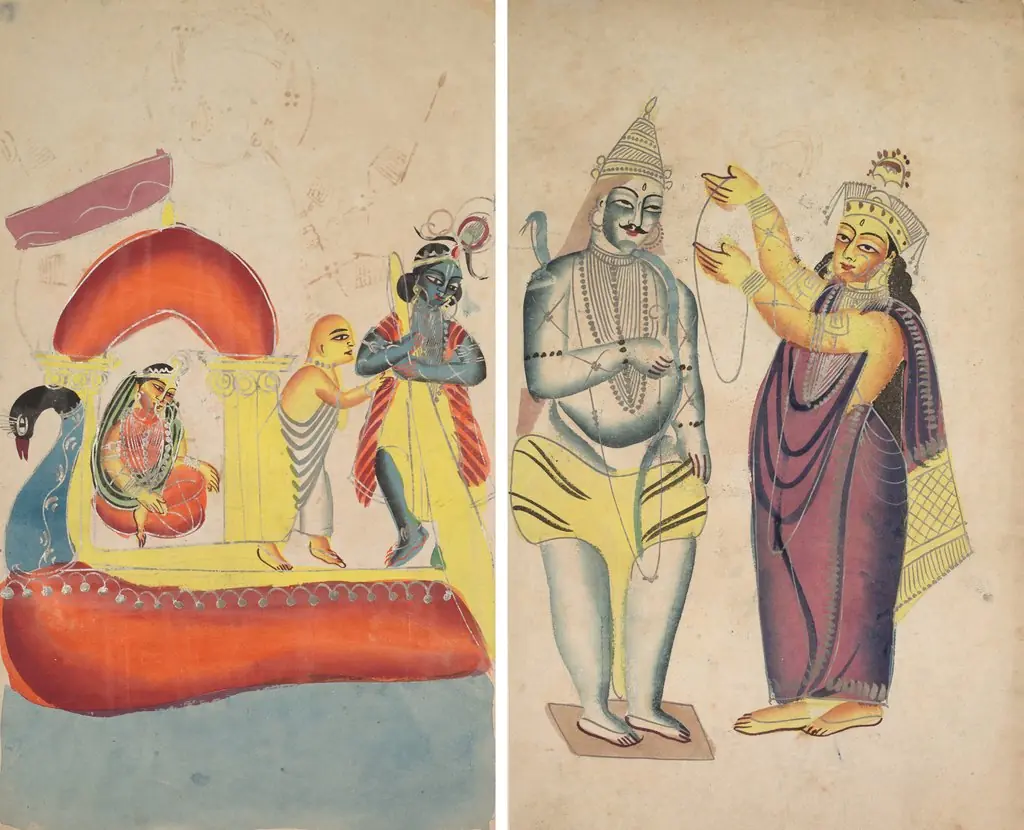 Krishna Ferrying Radha Across the Yamuna River (recto); Parivati Placing a Wedding Garland on Shiva (verso)
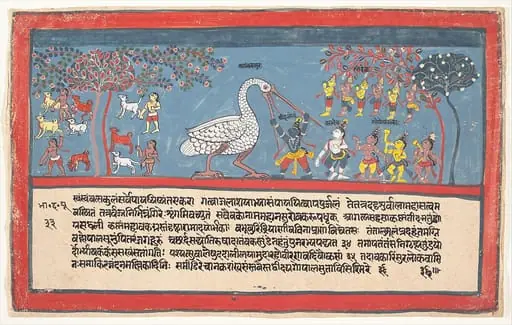
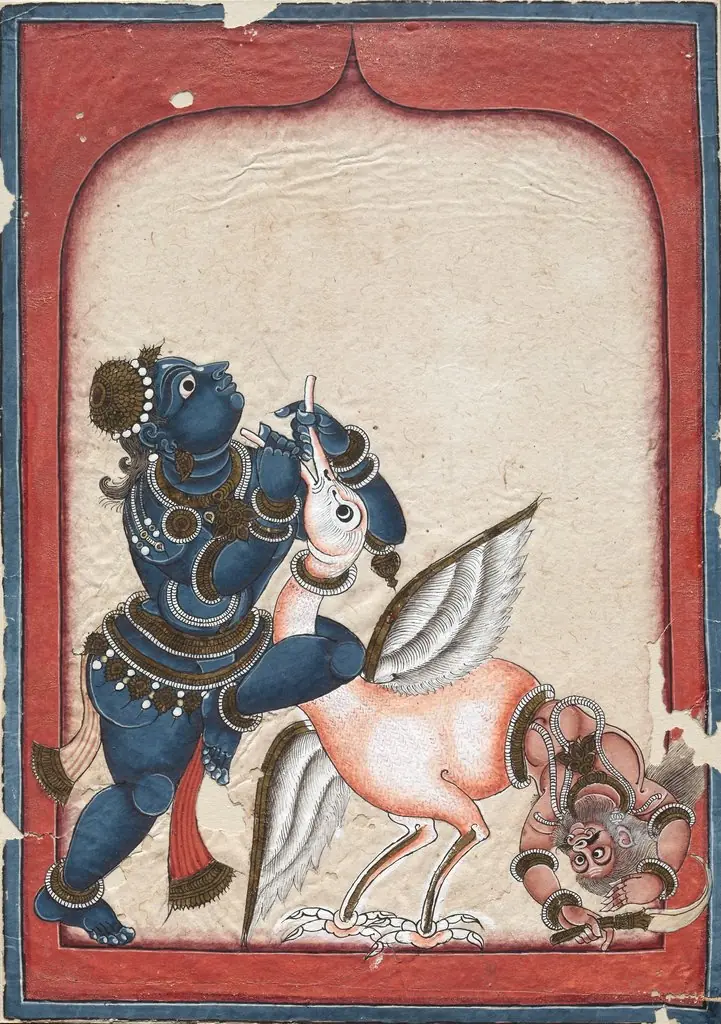 Krishna Vanquishing the Crane-Demon Bakasura
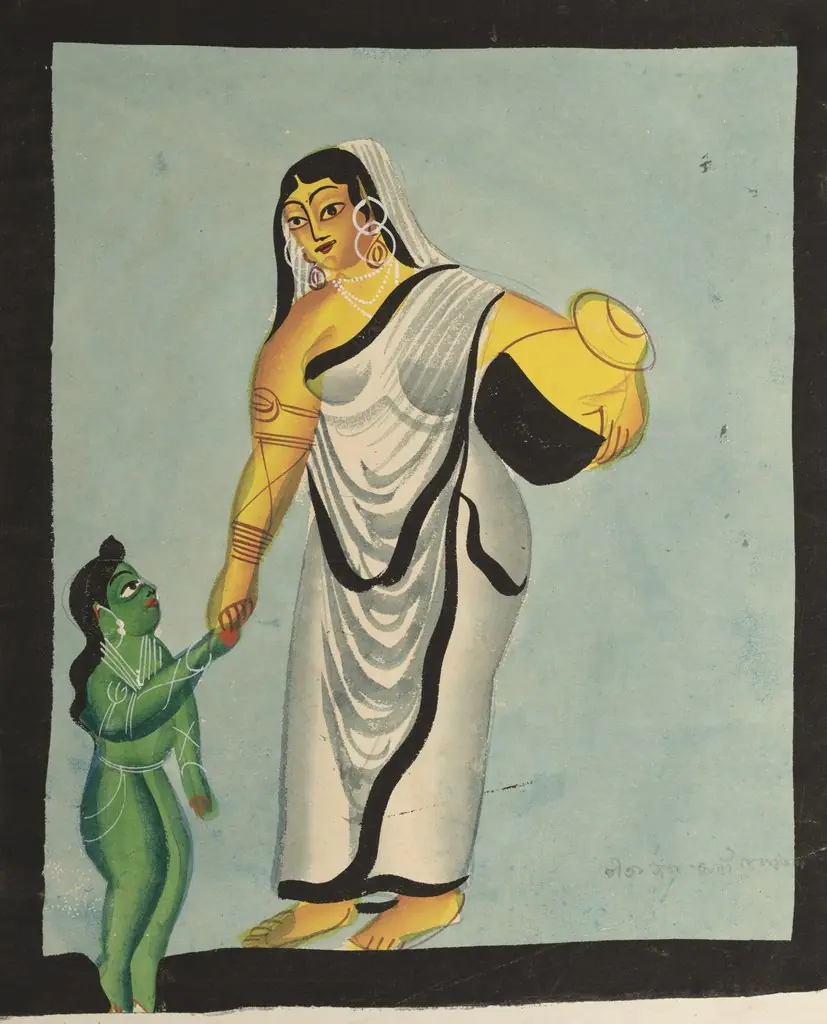 Yasoda Taking the Infant Krishna for a Walk
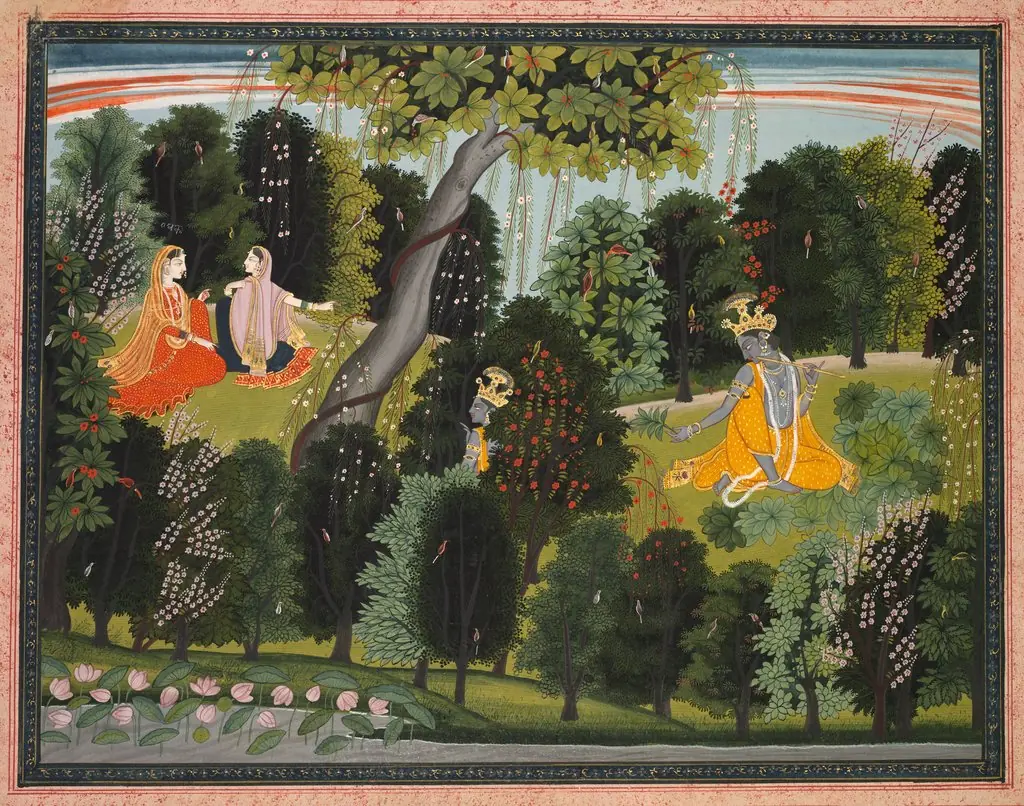 Sakhi Persuades Radha to Meet Krishna, from a Gita Govinda (Song of the Cowherd) of Jayadeva
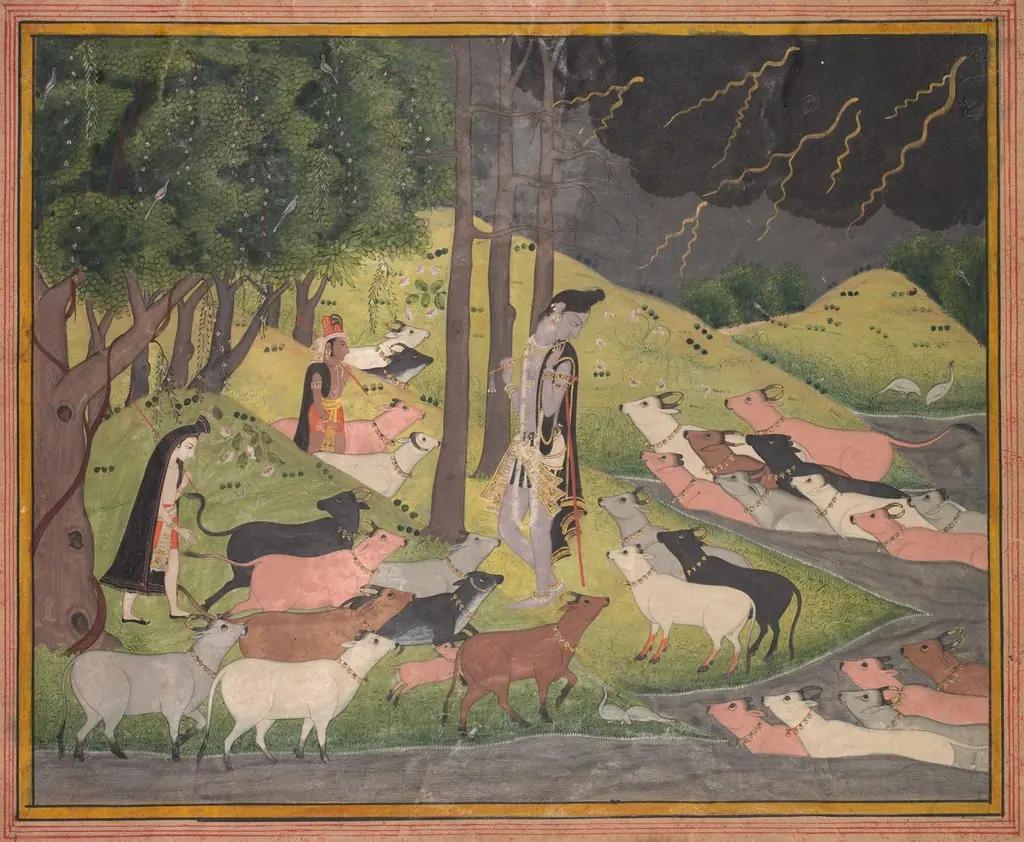 Krishna Summoning the Cows
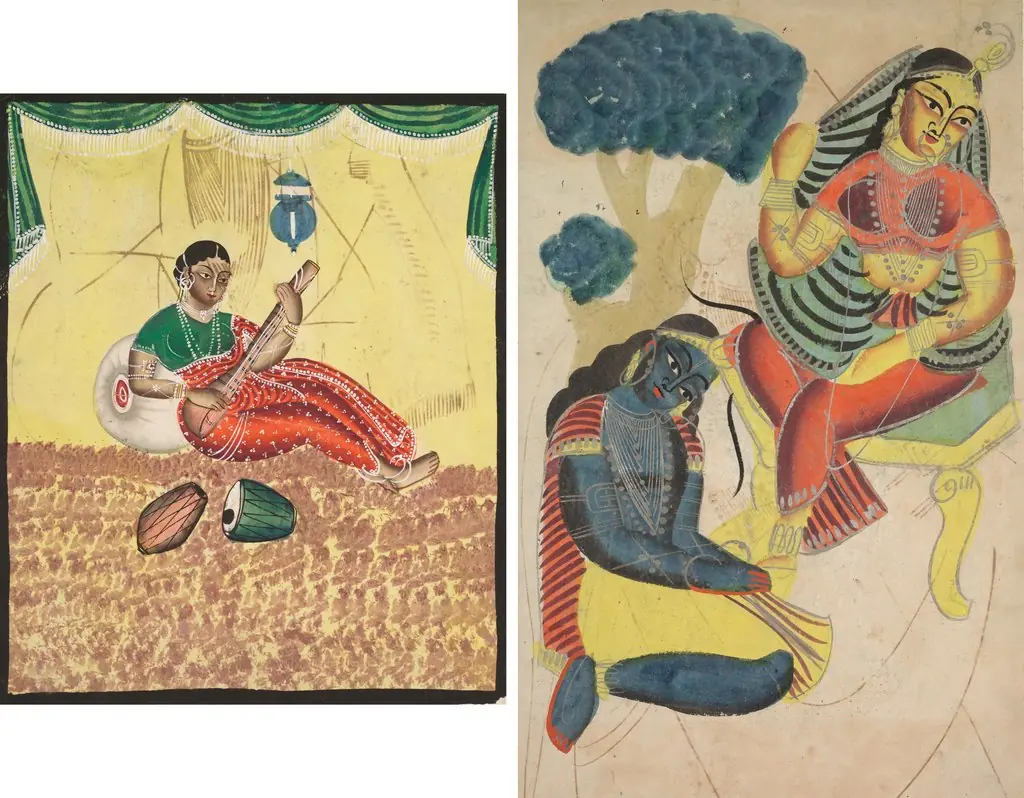 Leaf from a Kalighat album: Woman Playing Music (recto); Krishna Stroking Radha's Feet (verso)
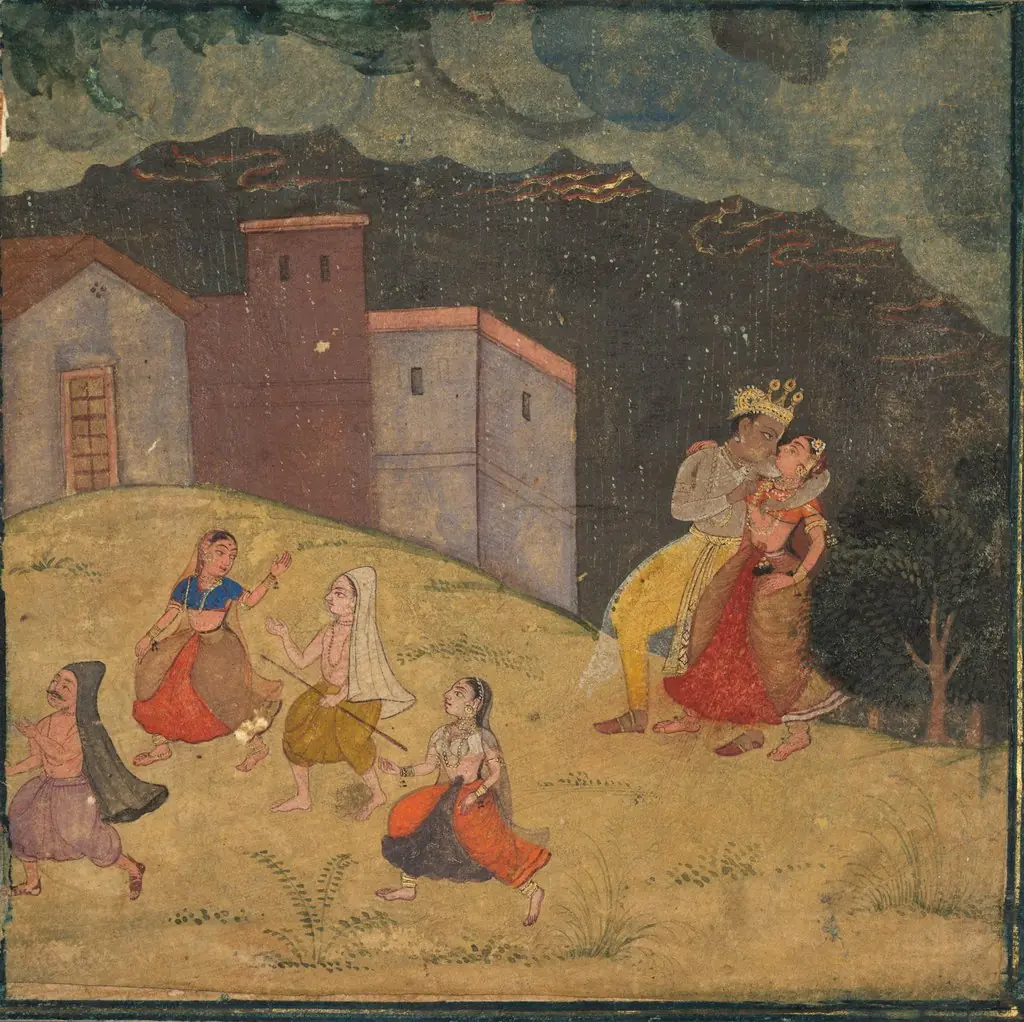 Radha and Krishna Caught in a Storm
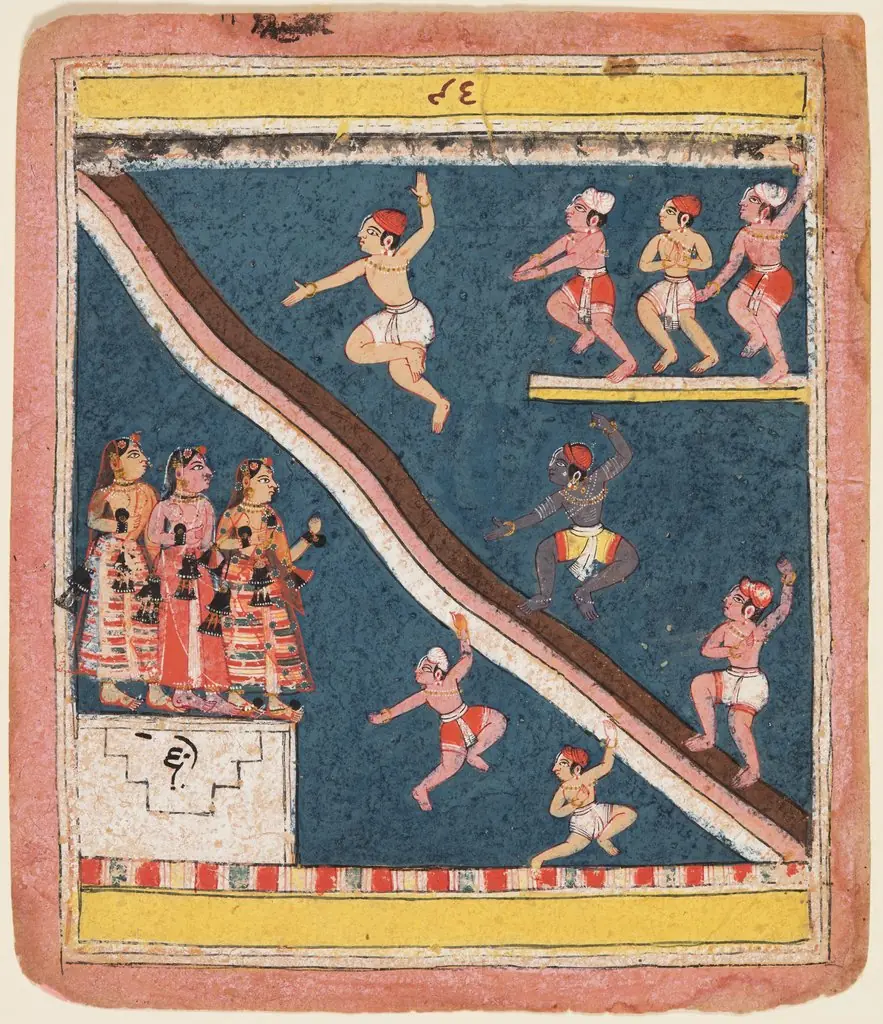 Krishna and the Cowherds Dive into the River, from a Rasikapriya
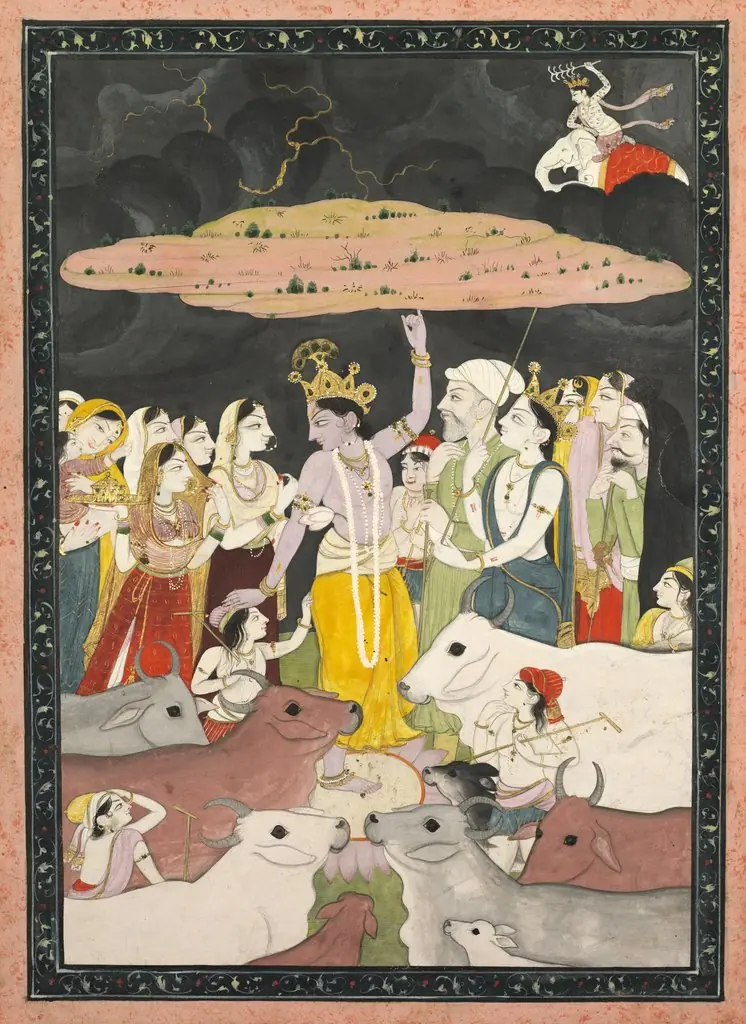 Krishna Lifting Mount Govardhan
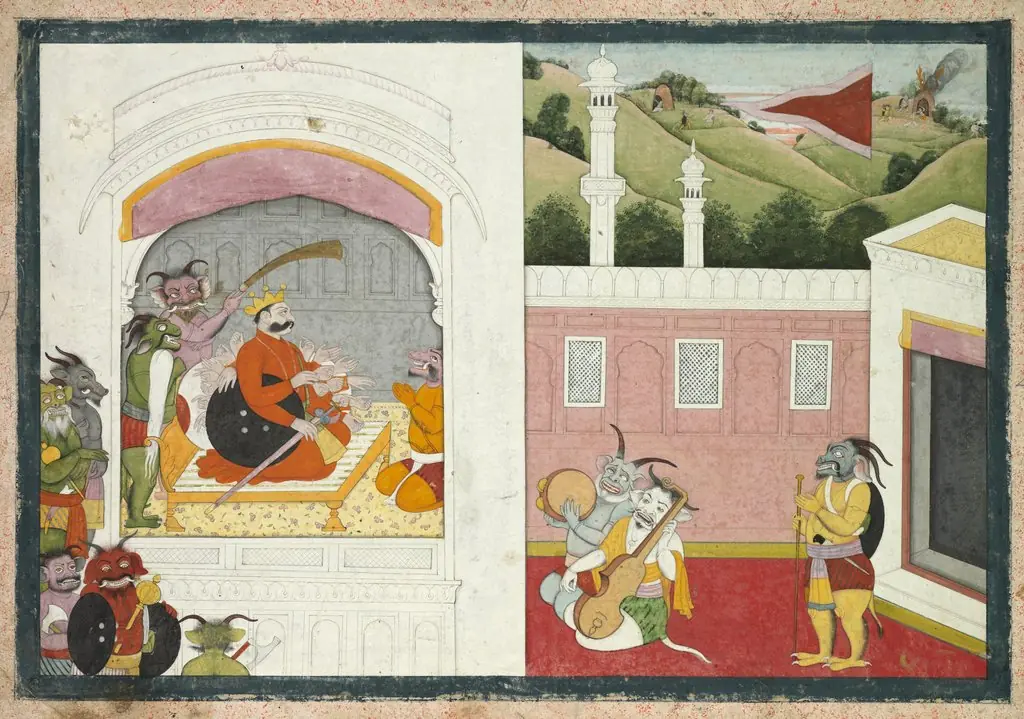 King Bana enjoying music in his court, from the Usha-Aniruddha section of a Krishna Lila
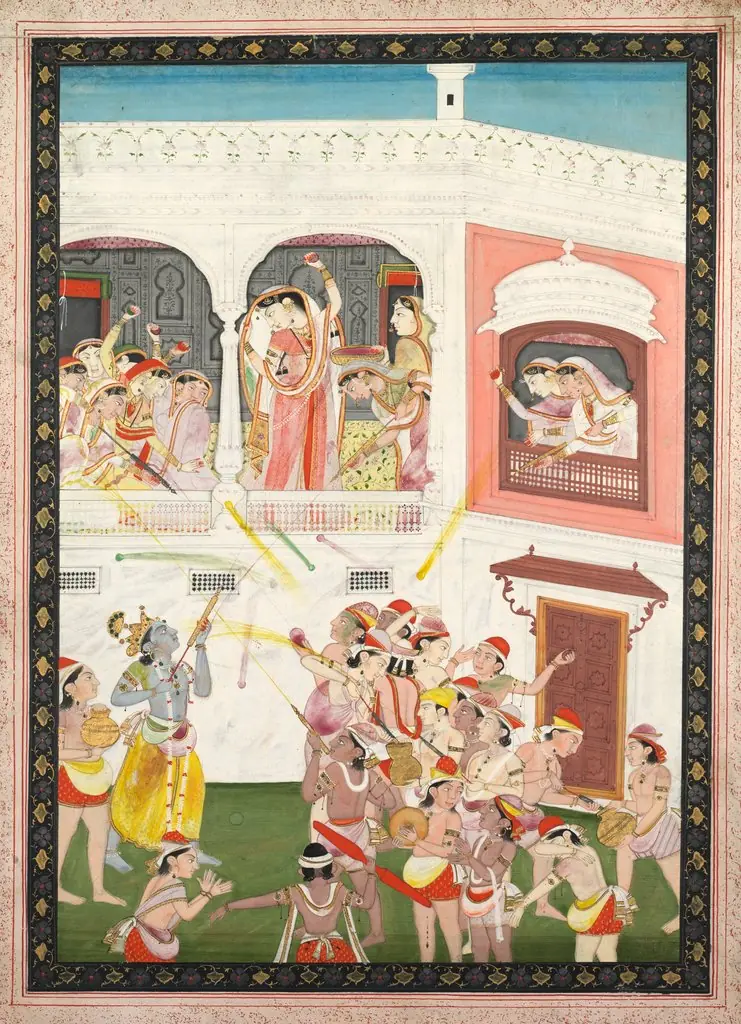 Radha and Hindu God Krishna Celebrating the Festival Holi
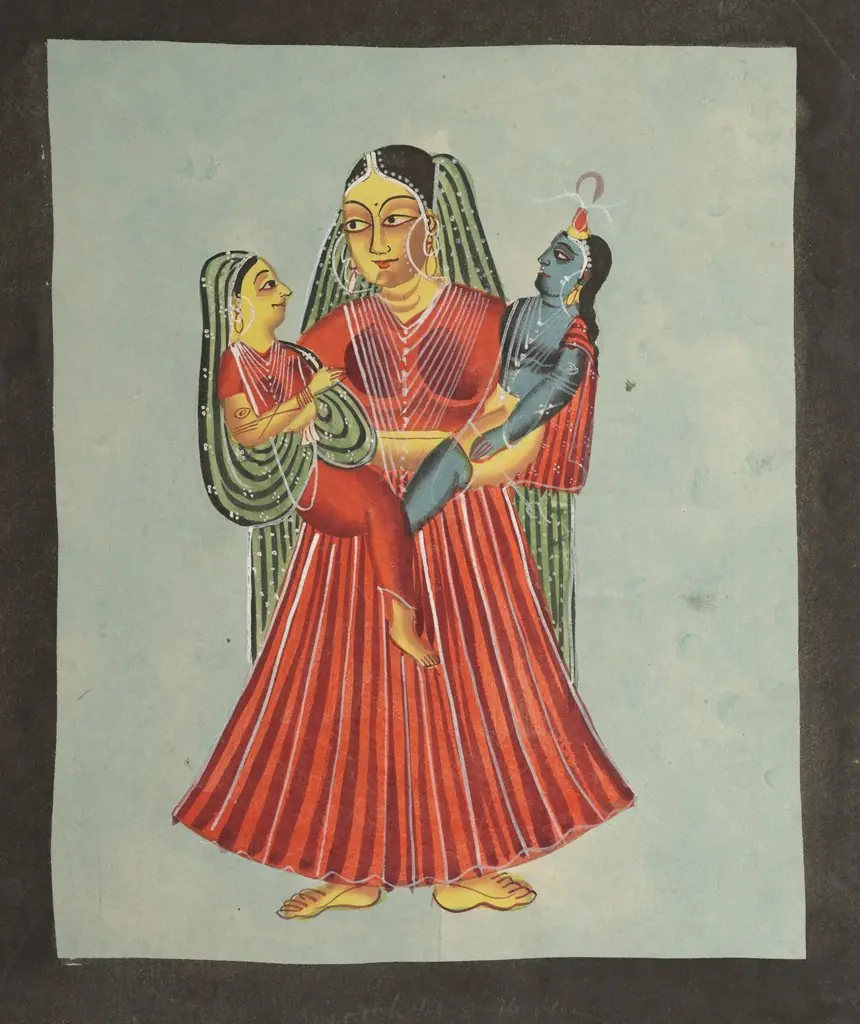 Yasoda Holding Krishna and Radha
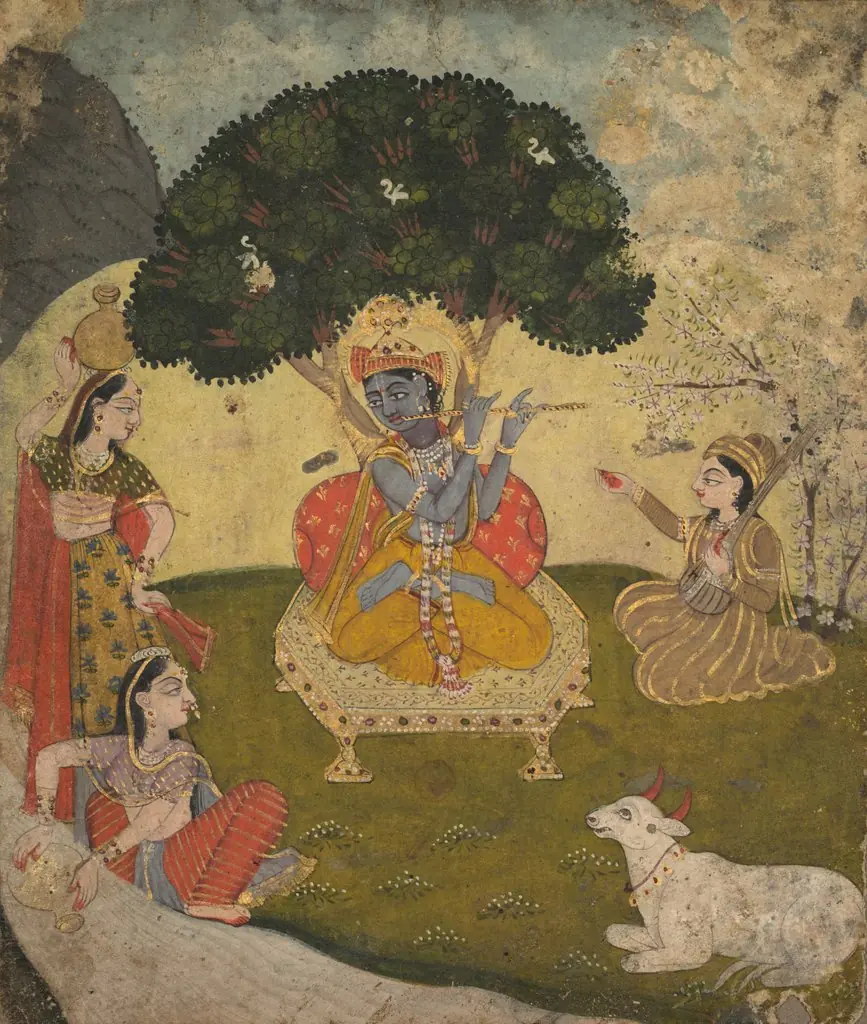 Krishna and Gopis
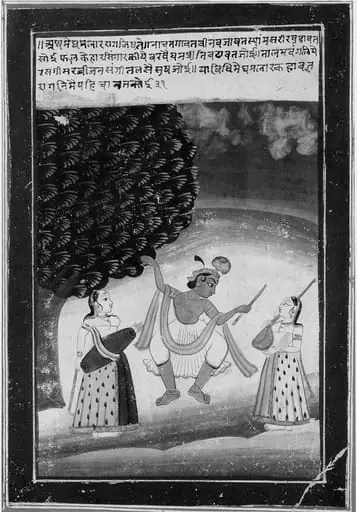
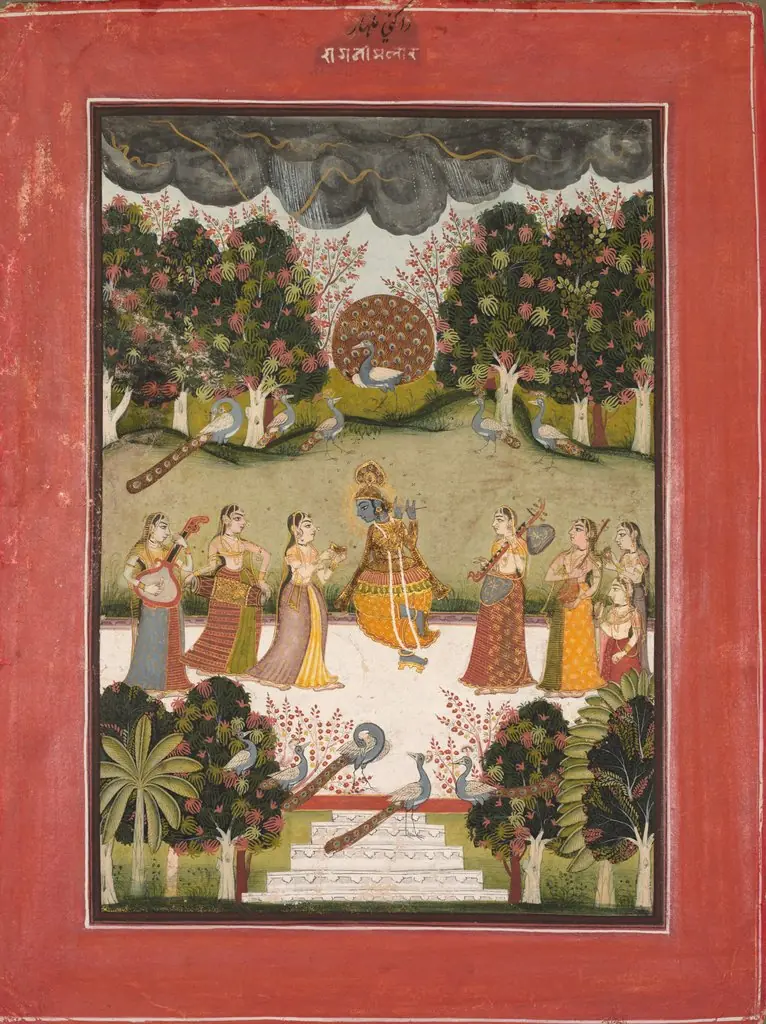 Malar Ragini: Krishna Playing the Flute to Seven Gopis Holding Musical Instruments, from the Ragamala Series
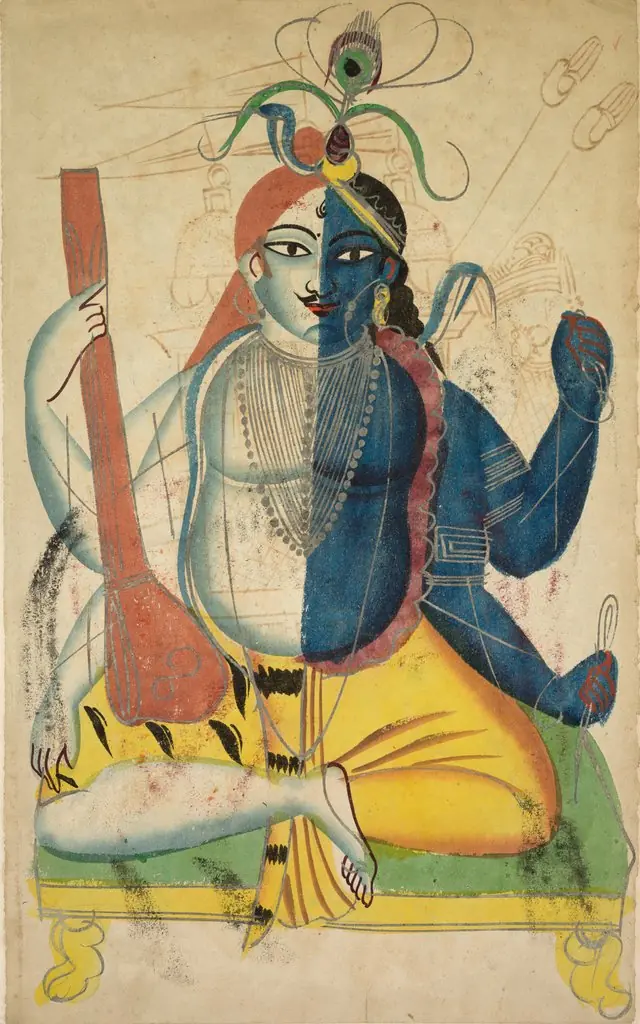 Leaf from a Kalighat album: Hari-Hara (recto); Vasudeva (Krishna's Father) Fleeing with Krishna Encounters a Cobra and a Jackal (verso)
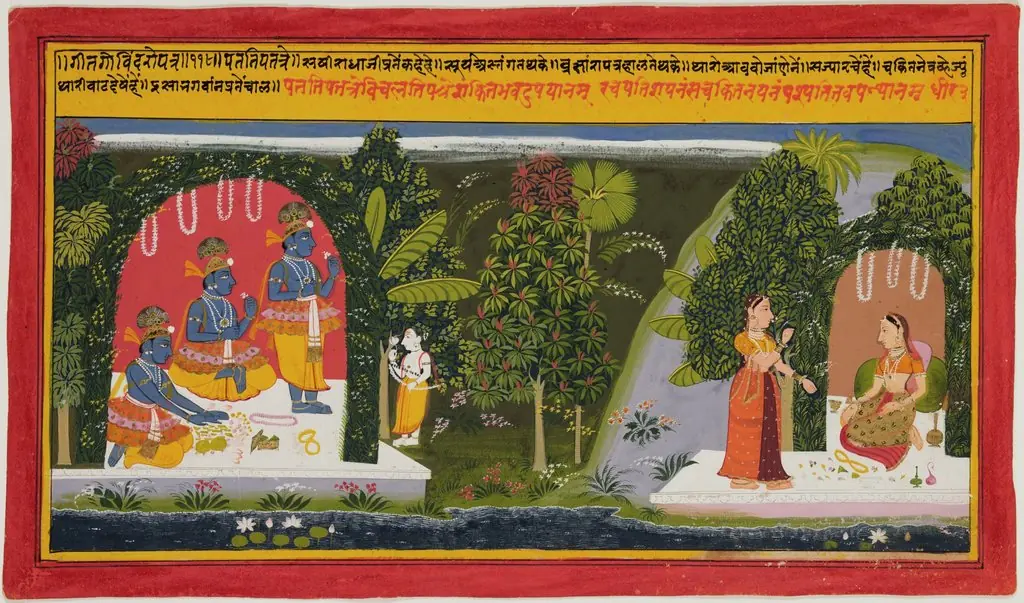 Krishna Prepares for Radha's Visit (page from the Gita Govinda)
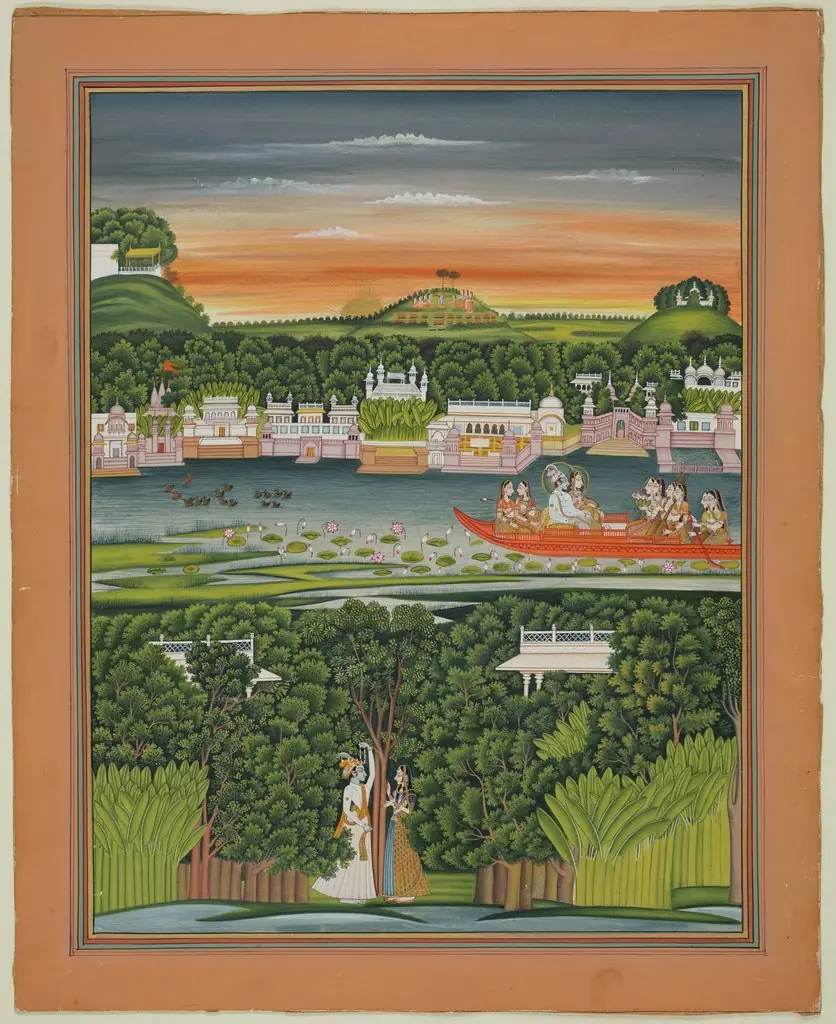 Krishna and Radha
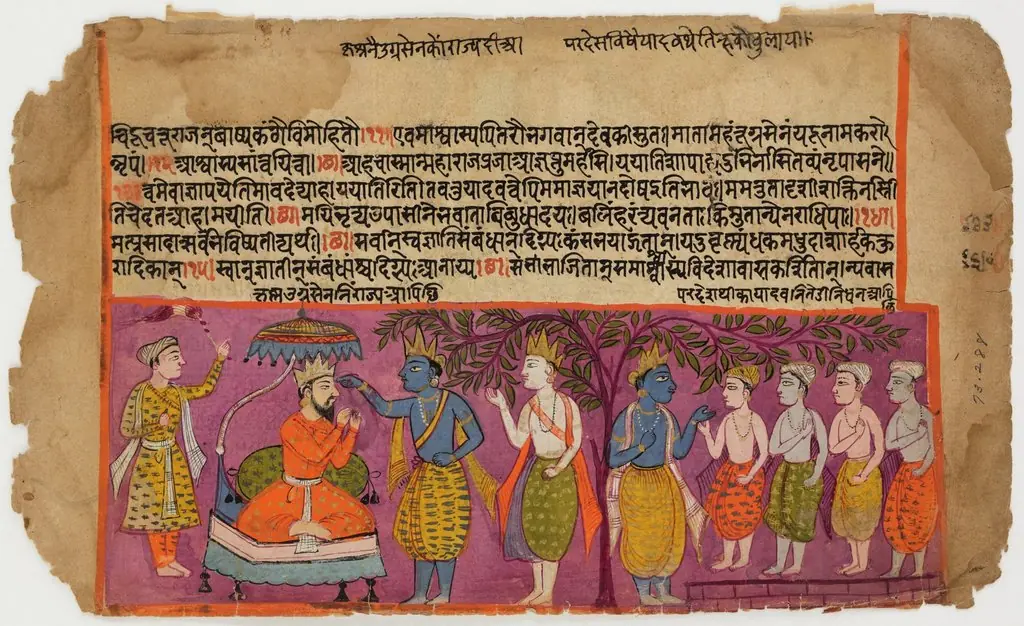 Krishna with King & Courtiers (Obv); Krishna & Courtiers in Forest Scene (Rev)
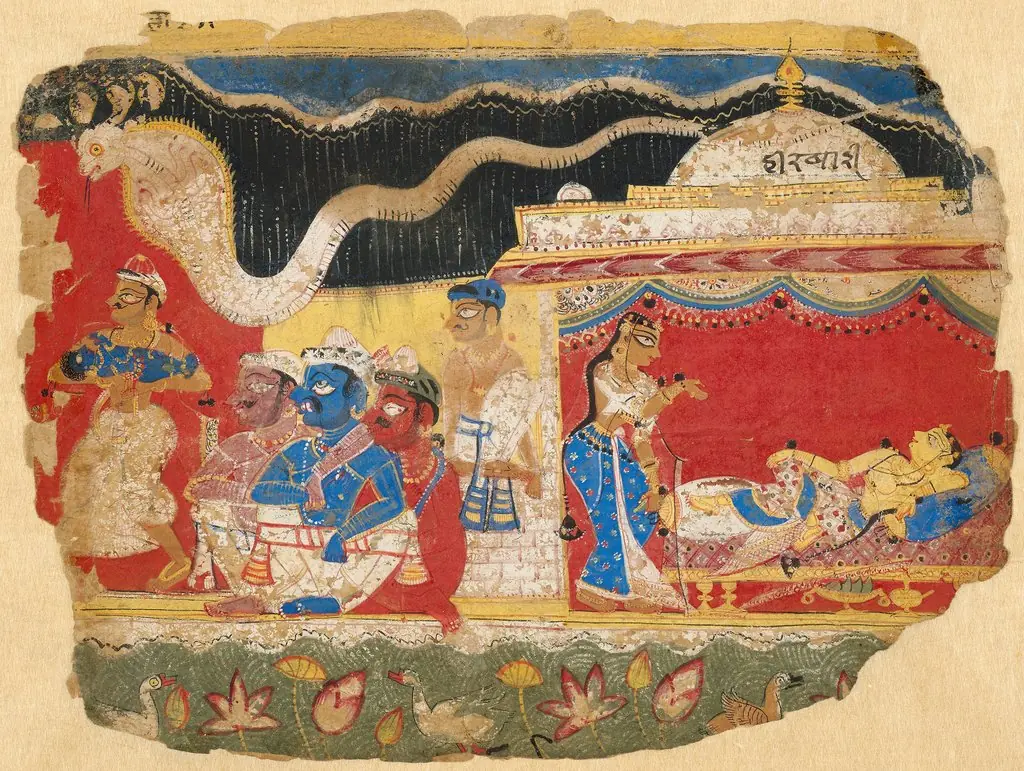 The Infant Krishna Spirited Away by Vasudev, page from the Dispersed Bhagavatapurana manuscript
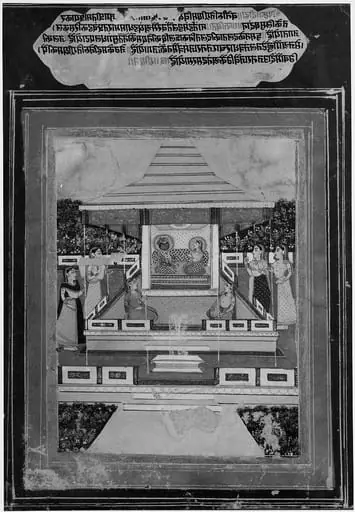
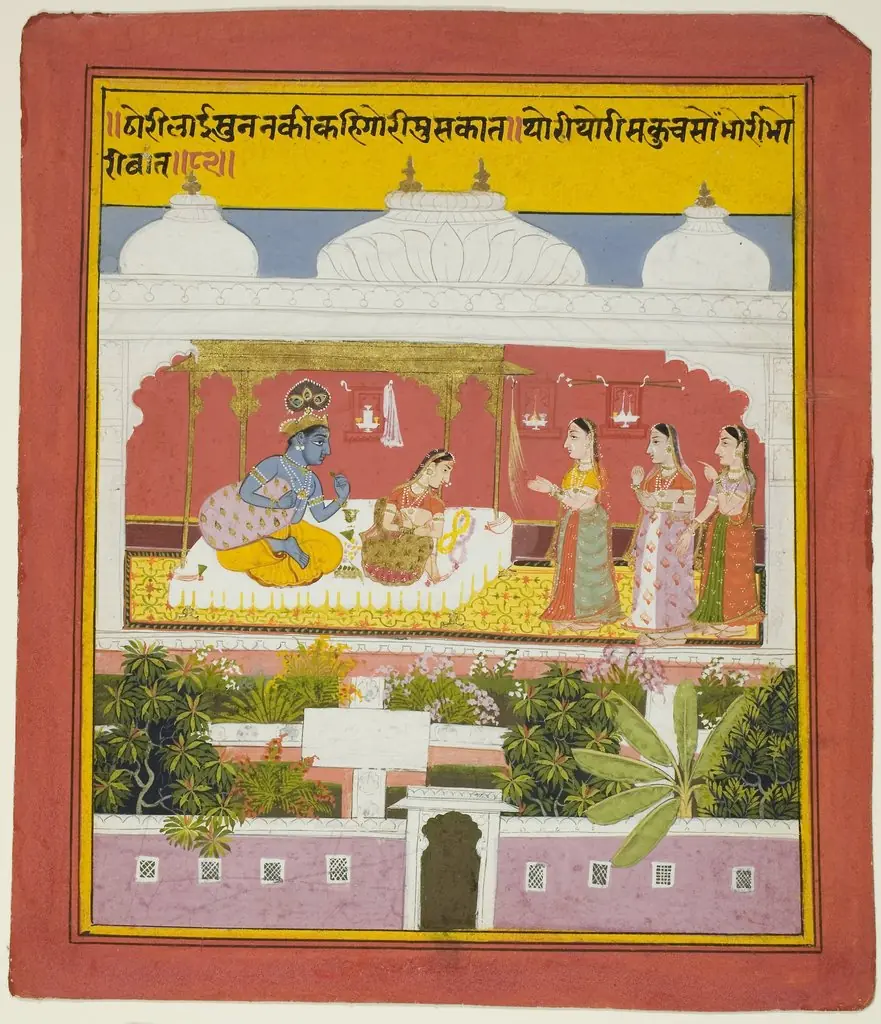 Krishna and Radha in a Pavilion, page from a copy of the Sat Sai Seven Hundred Verses)
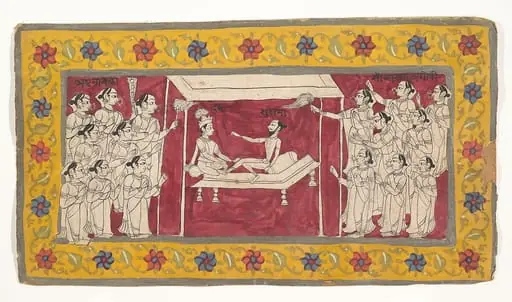
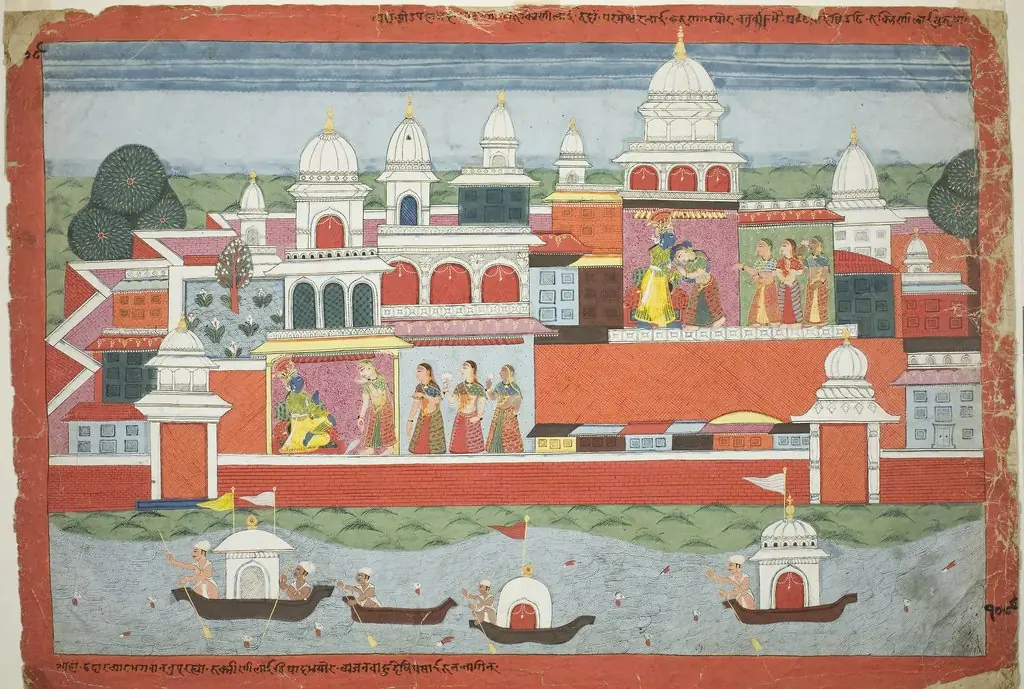 Rukmini Seeks Krishna's Permission to Visit her Brother Rukma, page from a manuscript of the Bhagavata Purana
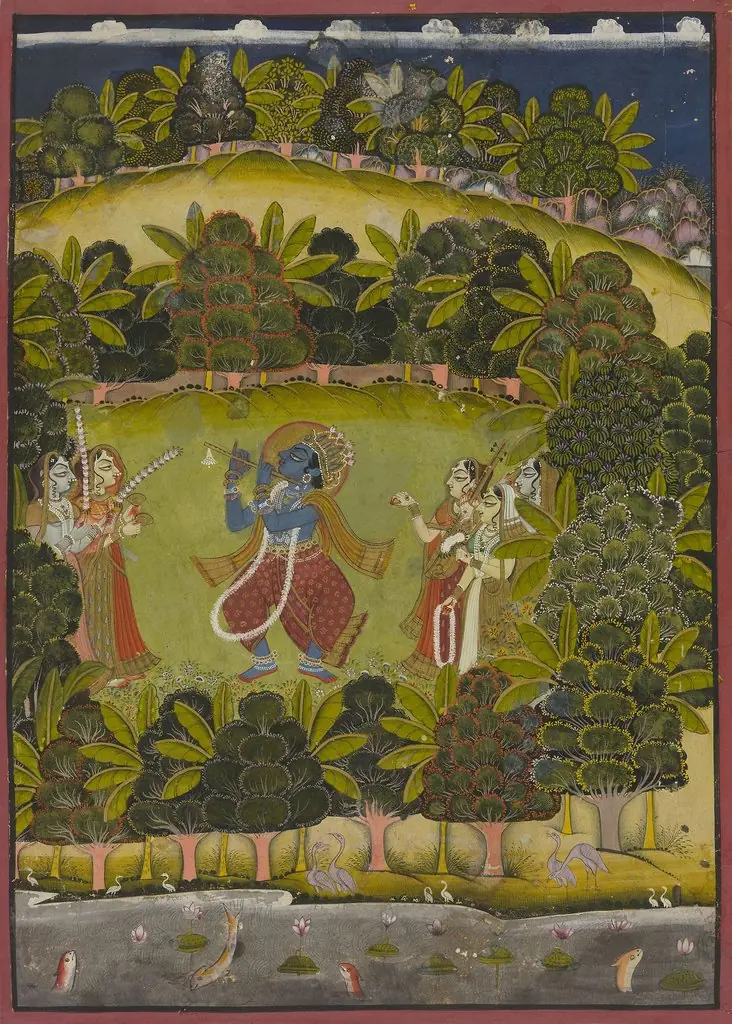 Krishna Fluting for the Gopis
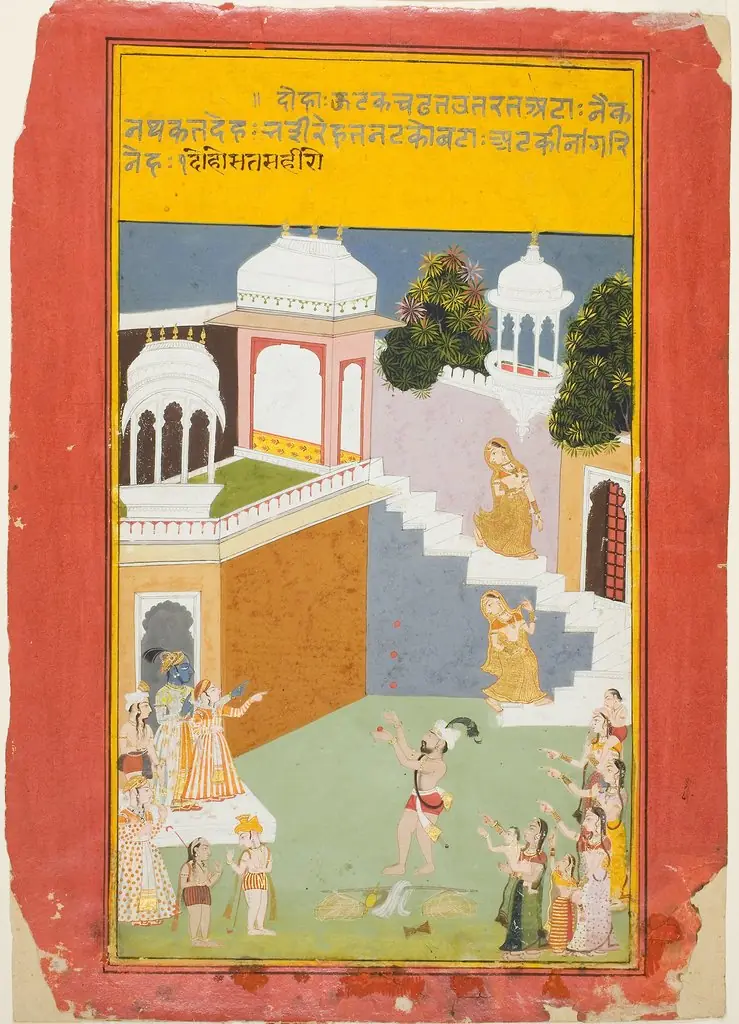 Krishna Watches A Juggler, from a copy of Bihari's Sat Sai
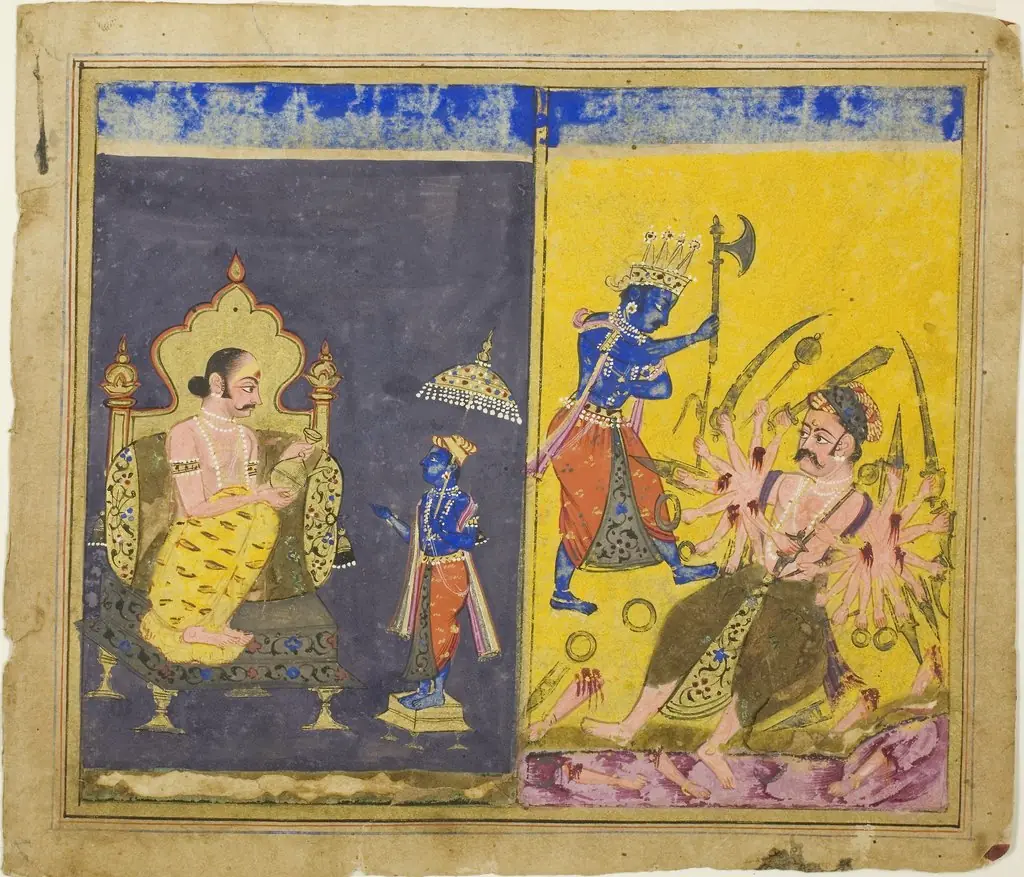 Krishna's Fifth and Sixth Avatars, page from a copy of the Gitagovinda of Jayaveda
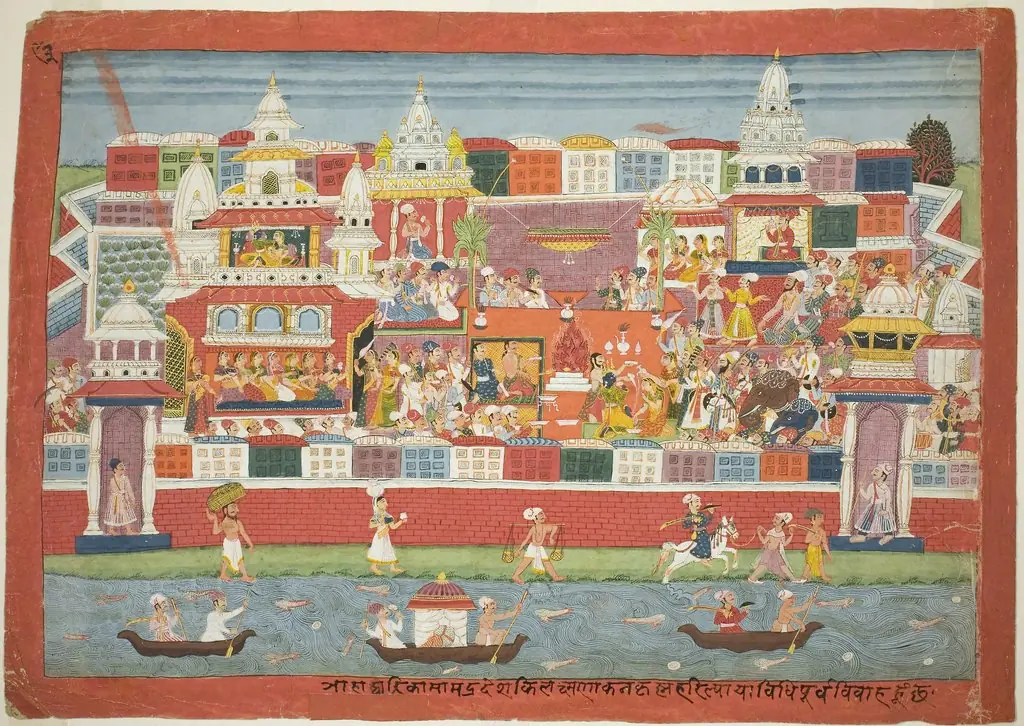 Krishna's Marriage to Kalinda, page from a manuscript of the Bhagavata Purana
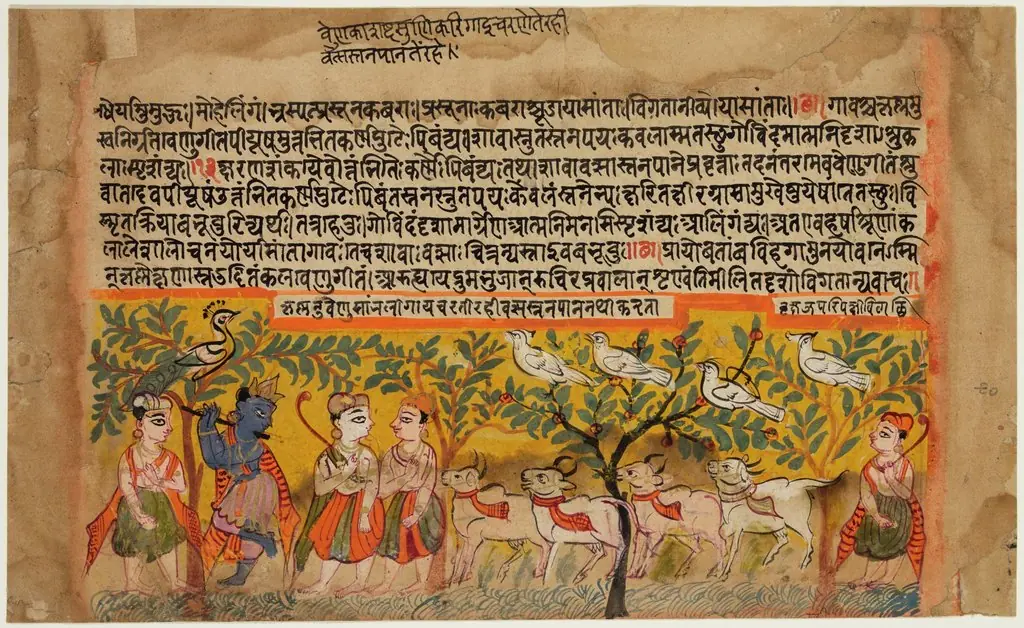 Krishna Fluting
 Krishna Prepares for Radha's Visit (page from the Gita Govinda)
 Krishna, Balarama and Gopis Swimming
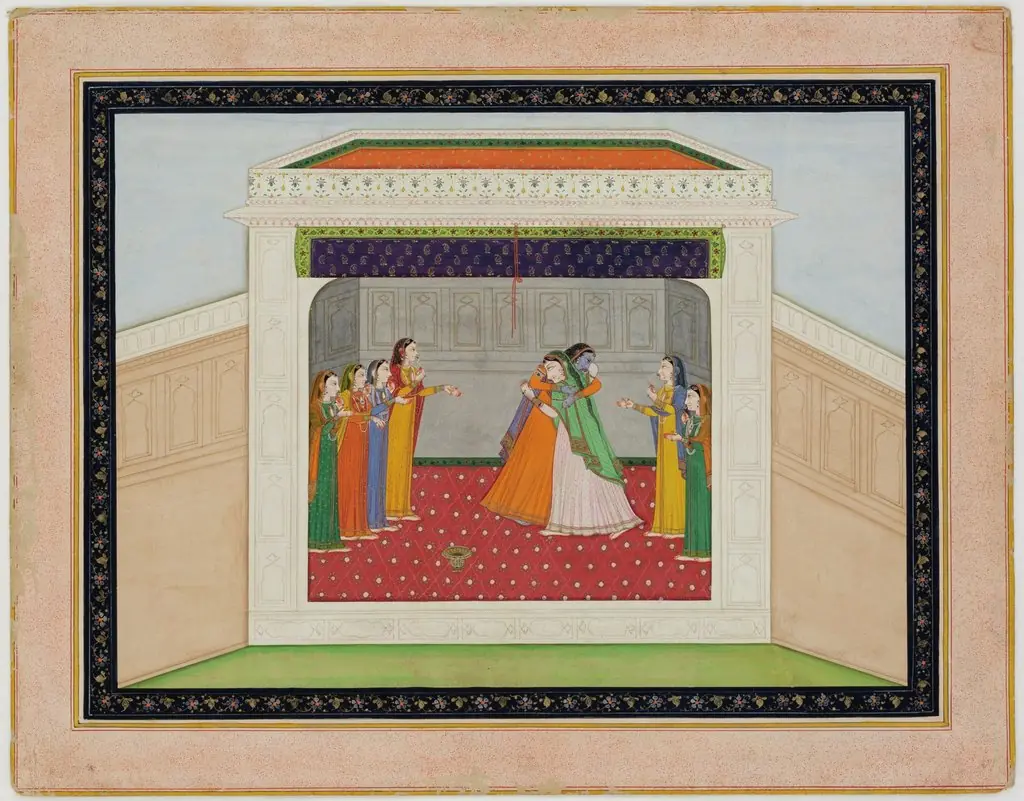 Story of Krishna and Radha
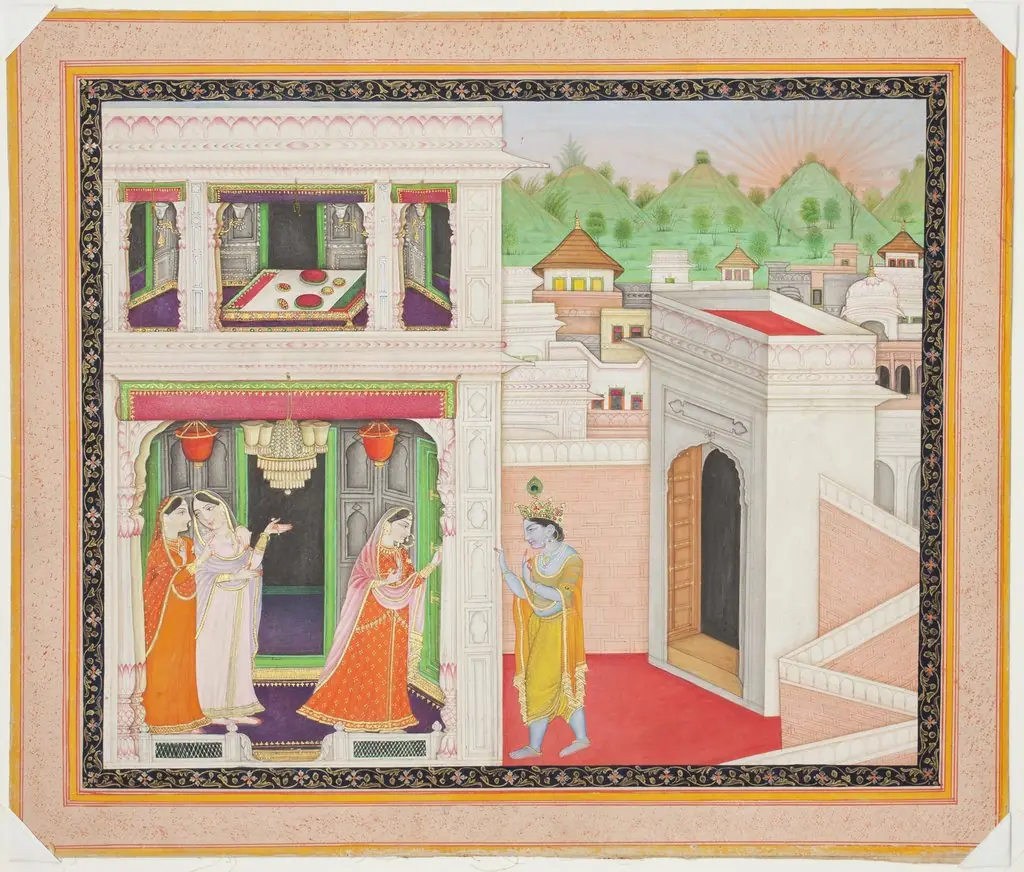 Radha and Krishna: The Exchange of Glances
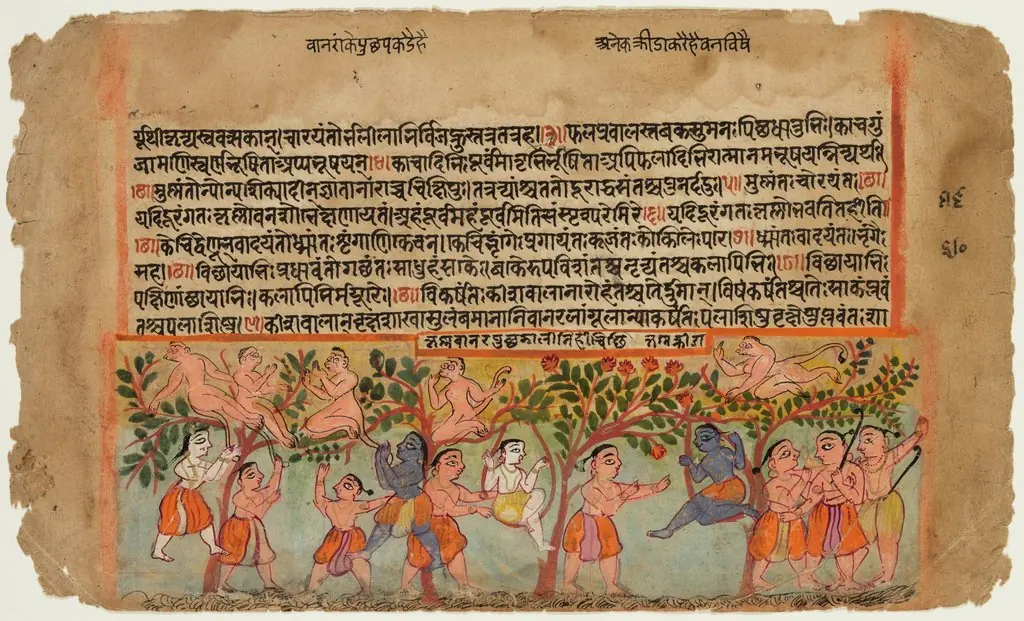 Krishna as a Boy Playing in the Forest
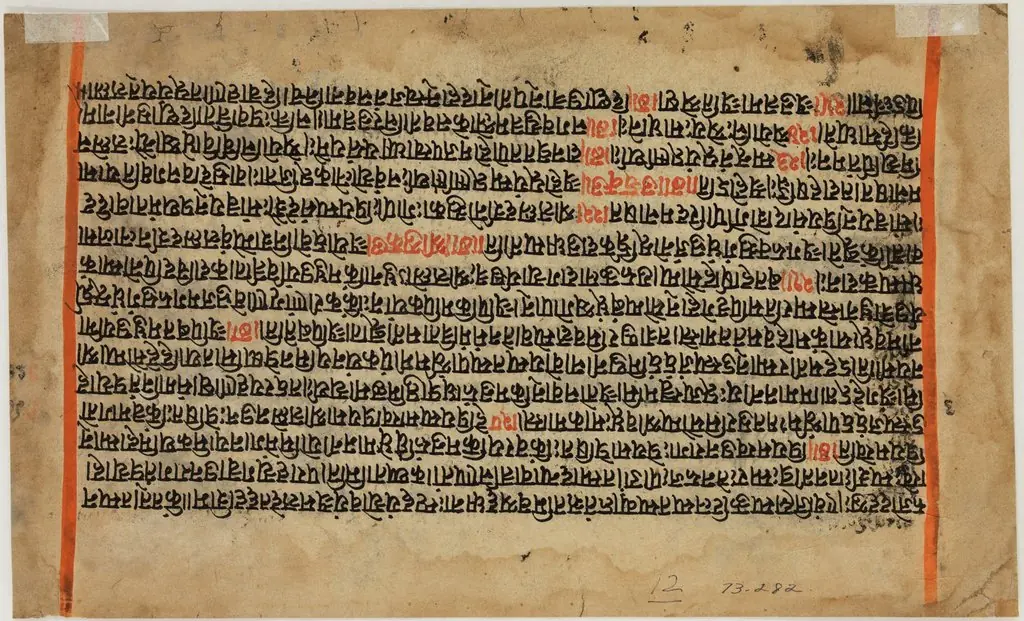 Krishna Fluting
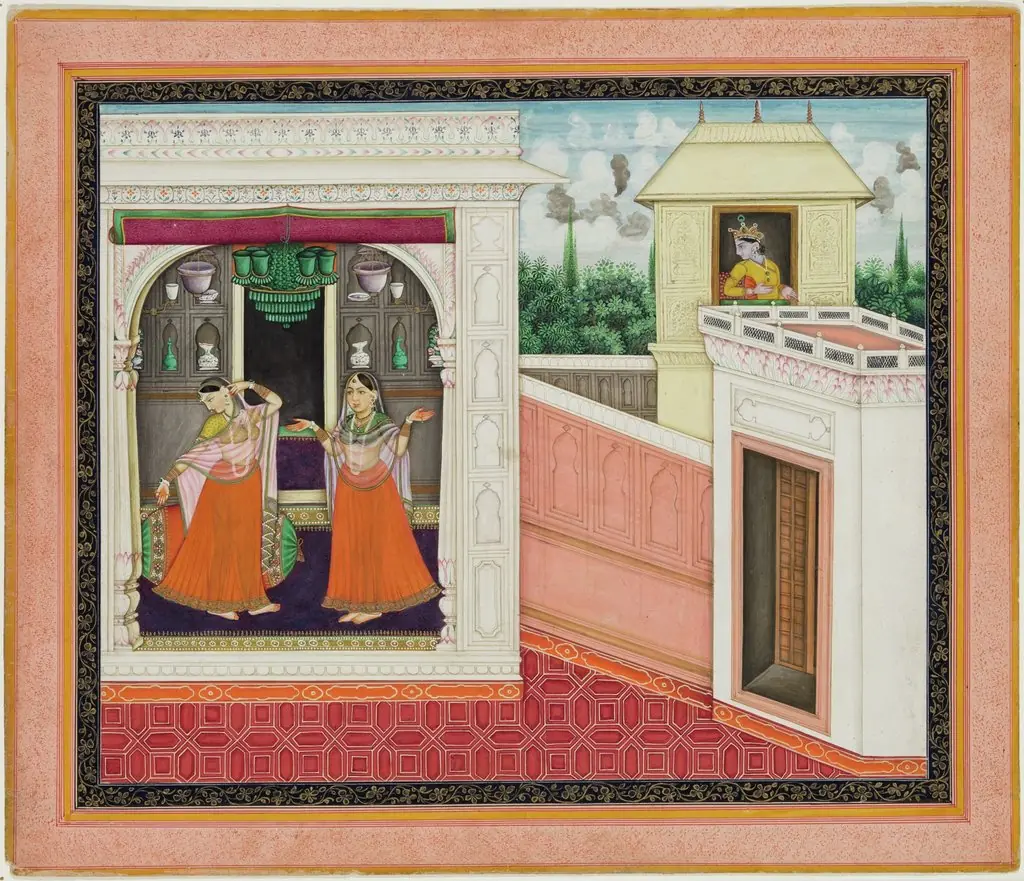 Story of Krishna and Radha
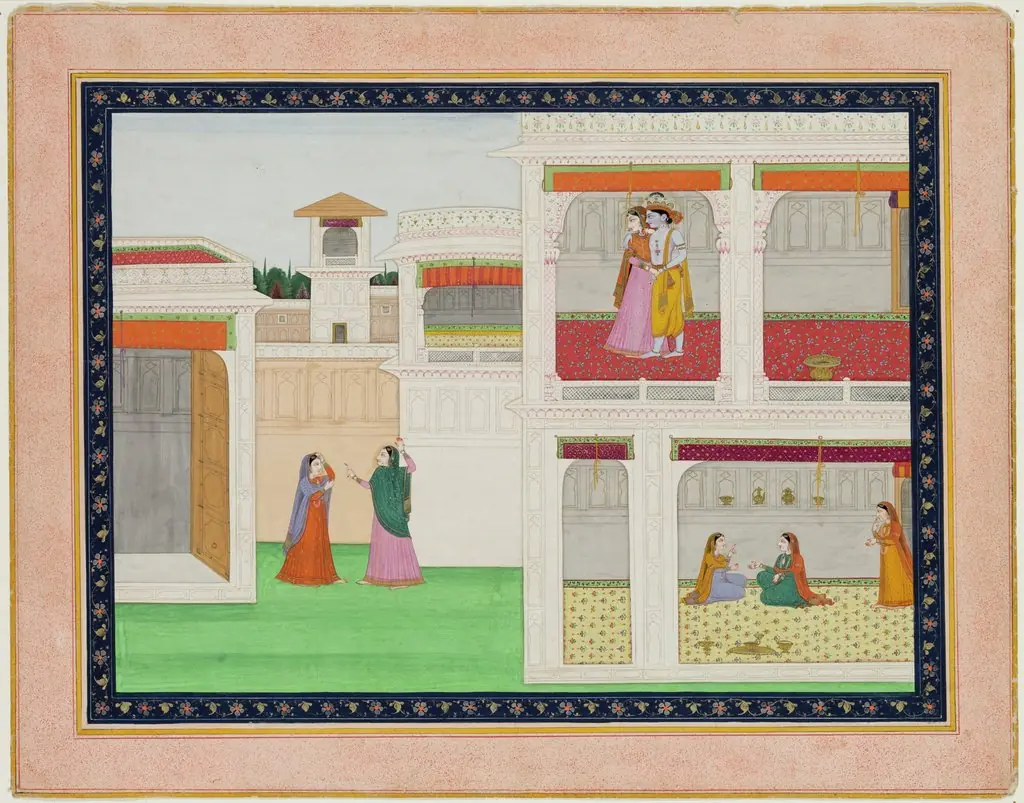 Story of Krishna and Radha
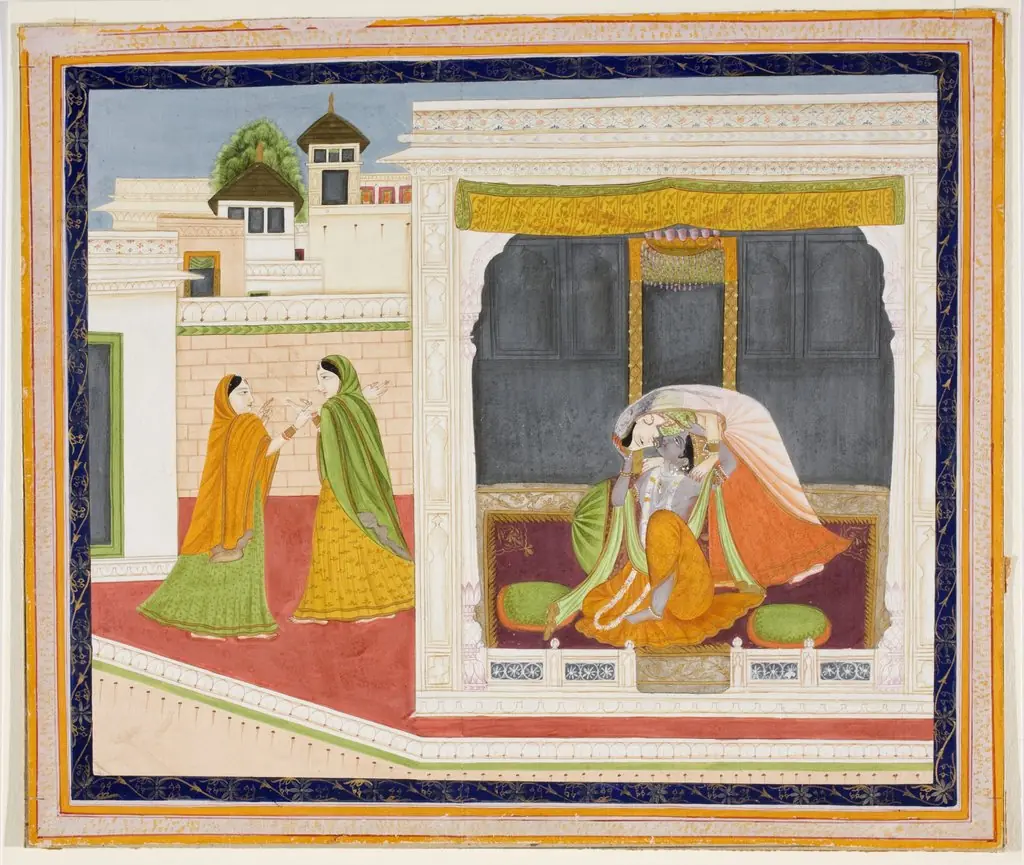 Radha and Krishna in Dalliance
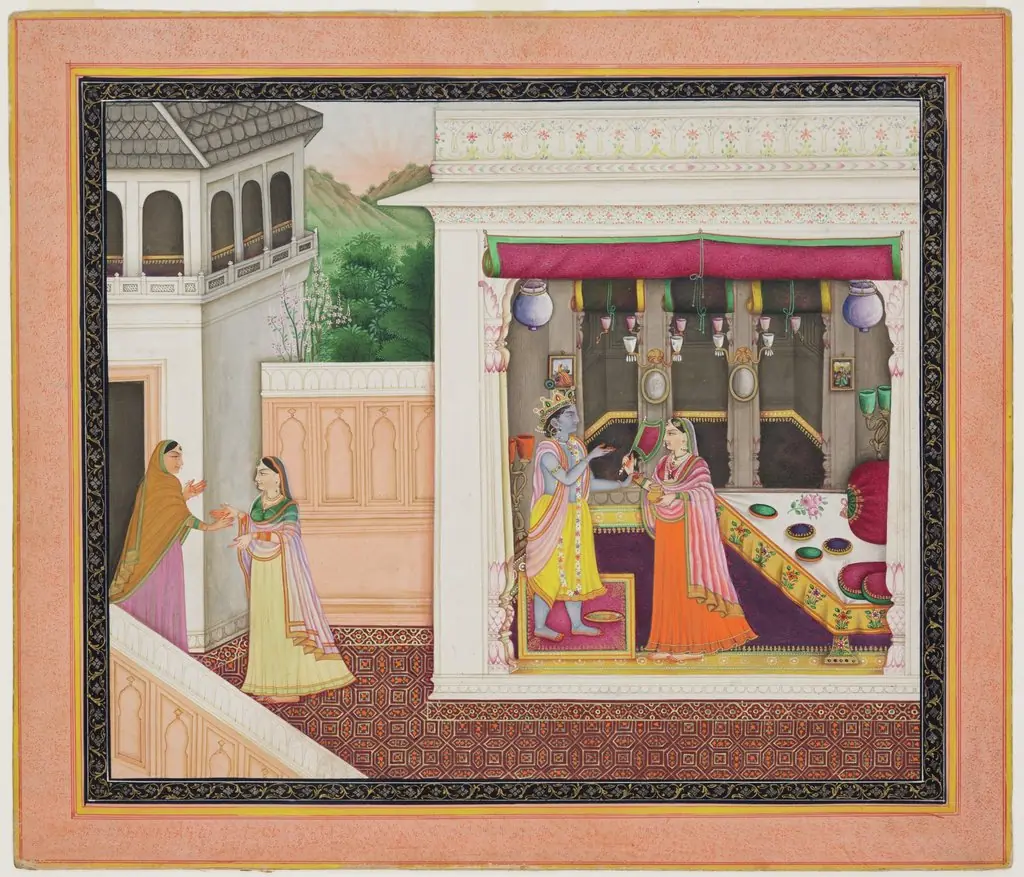 Story of Krishna and Radha
 The Meeting of Radha and Krishna in the Forest of Brindaban
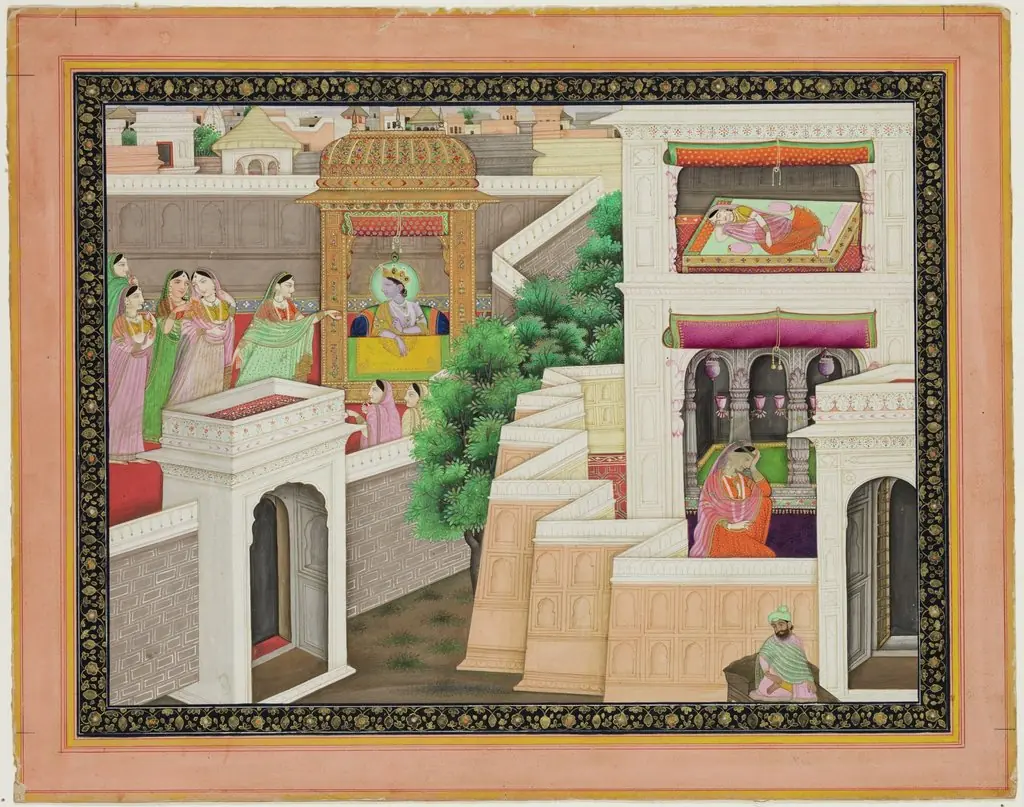 Story of Krishna and Radha
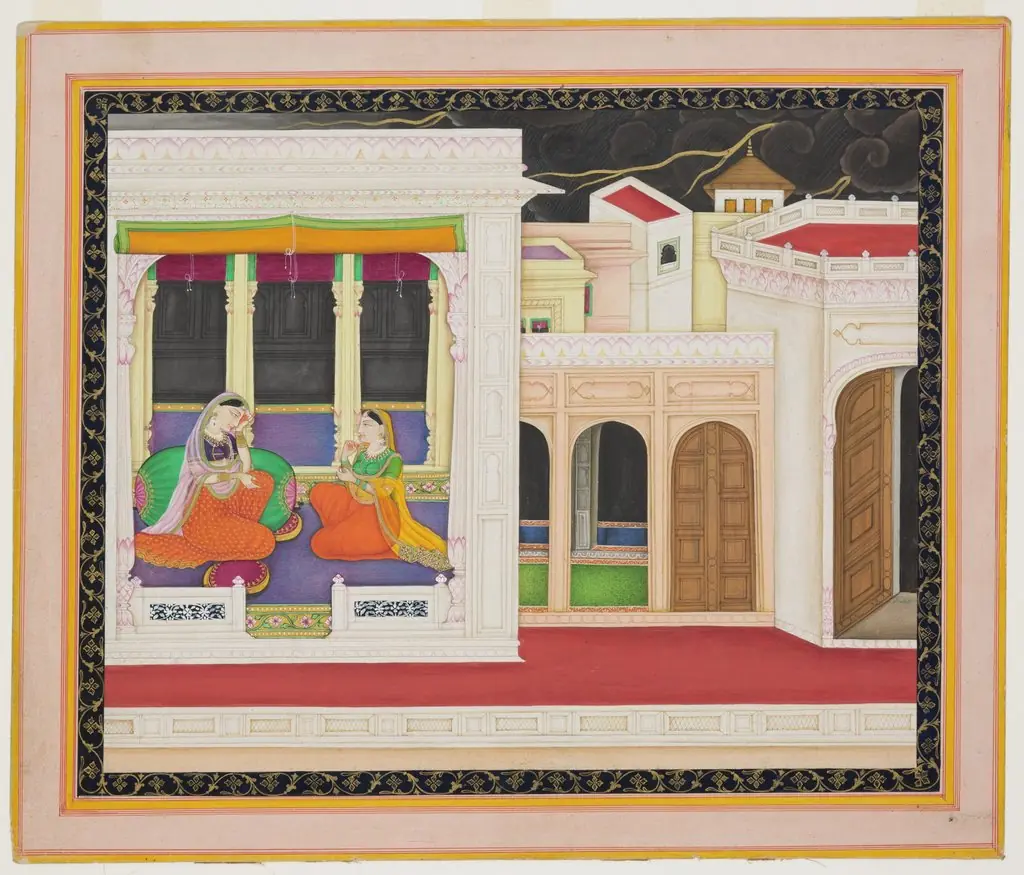 Story of Krishna and Radha
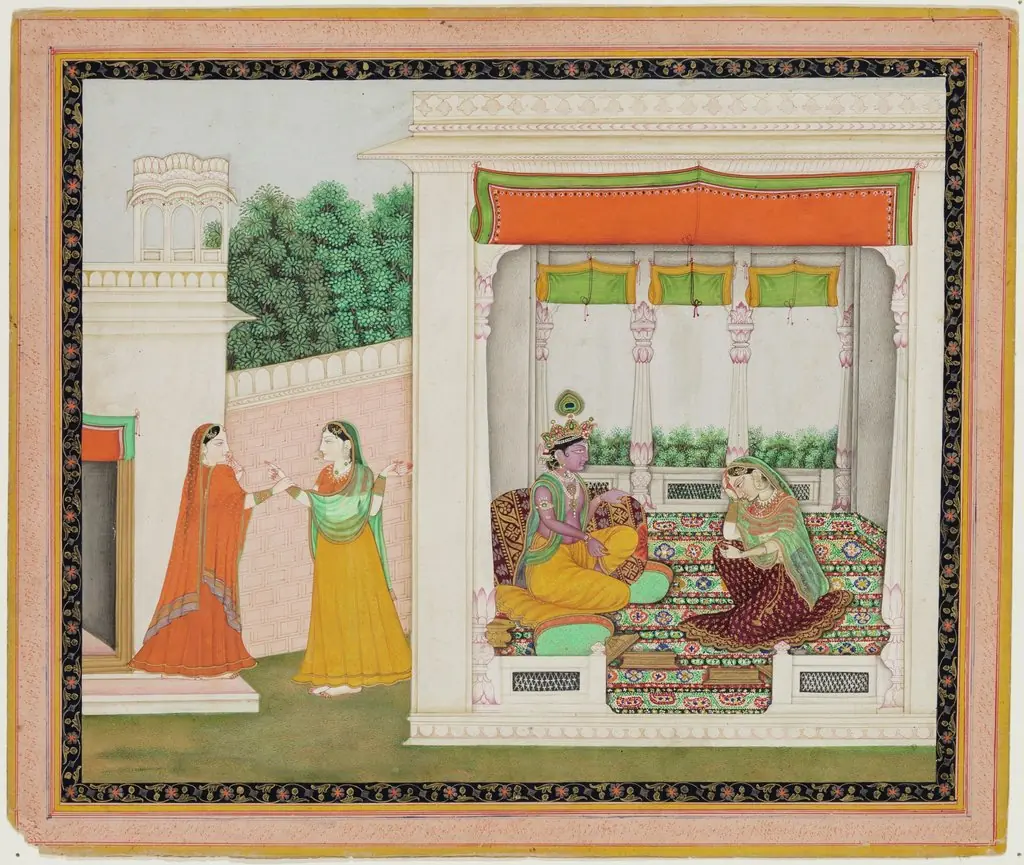 Story of Krishna and Radha
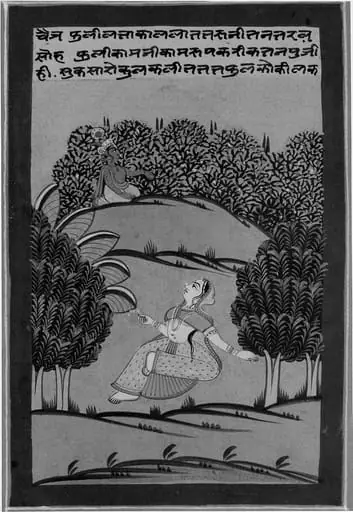
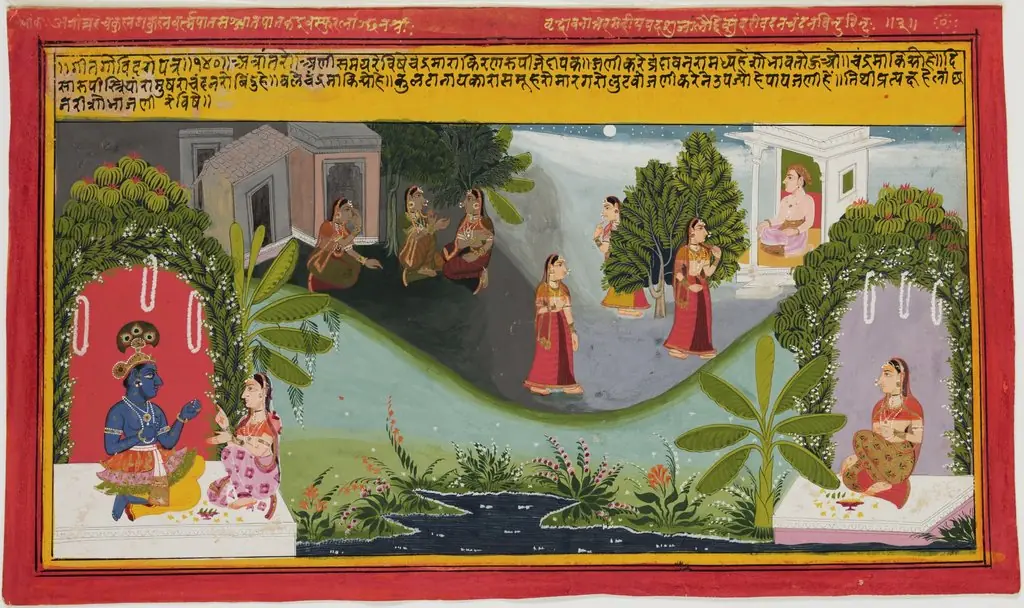 Radha's Attendant Converses with Krishna and Woman Travels By Moonlight to Meet her Lover (page from the Gita Govinda)
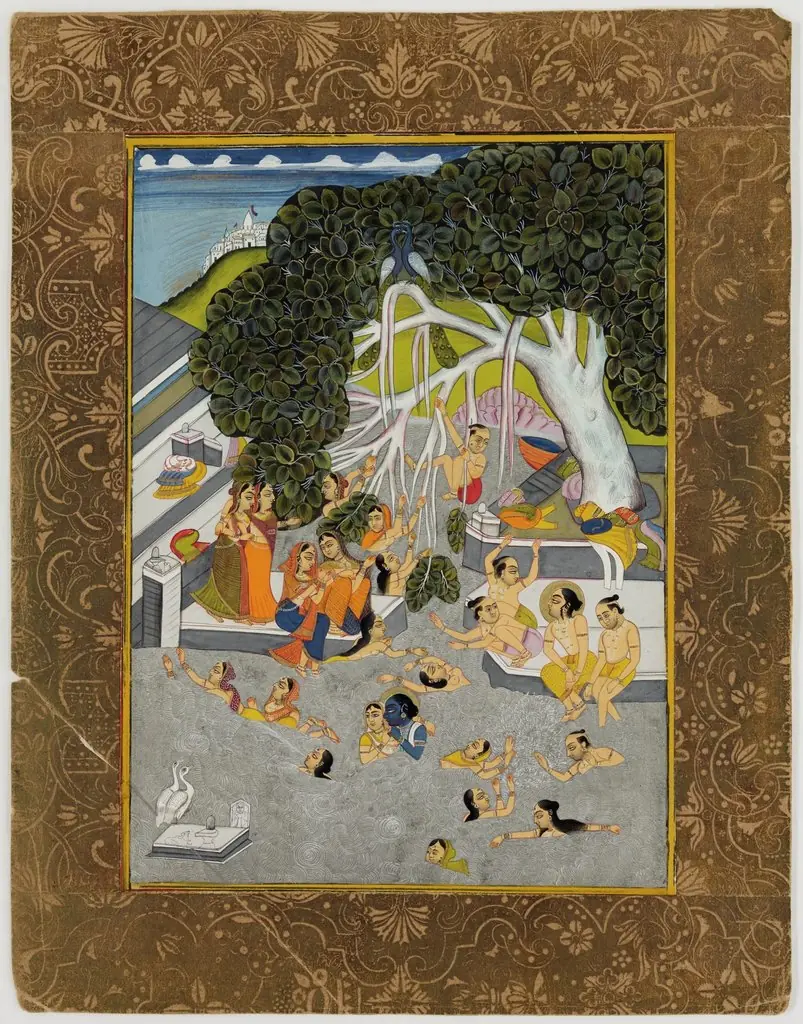 Krishna, Balarama and Gopis Swimming
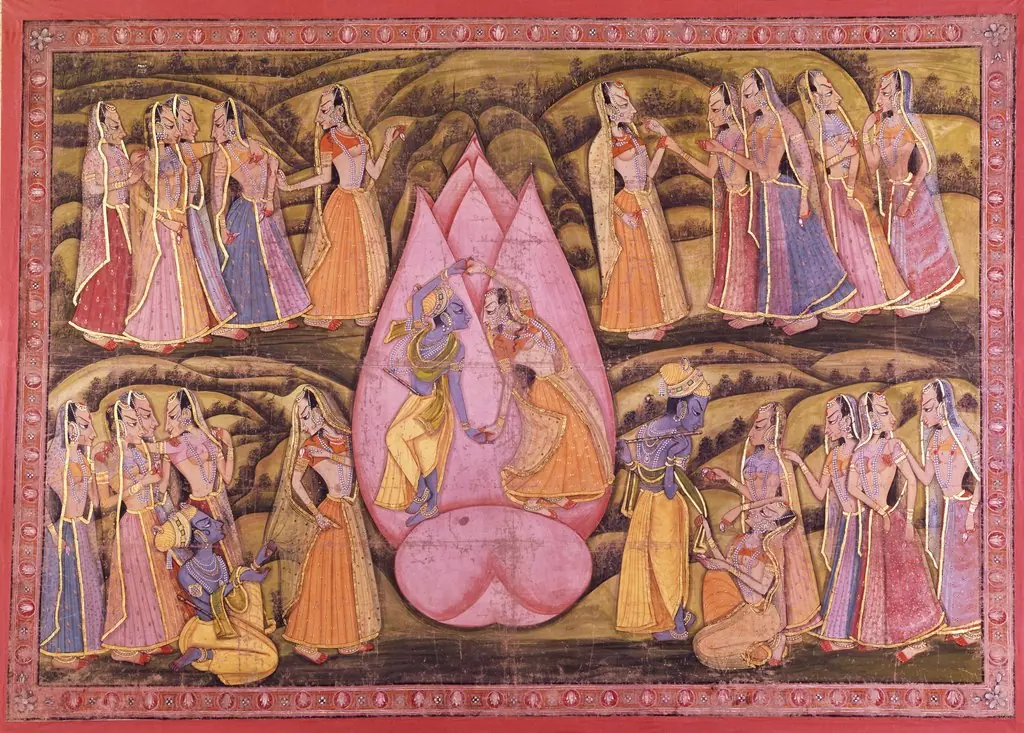 Krishna and Radha with Gopis
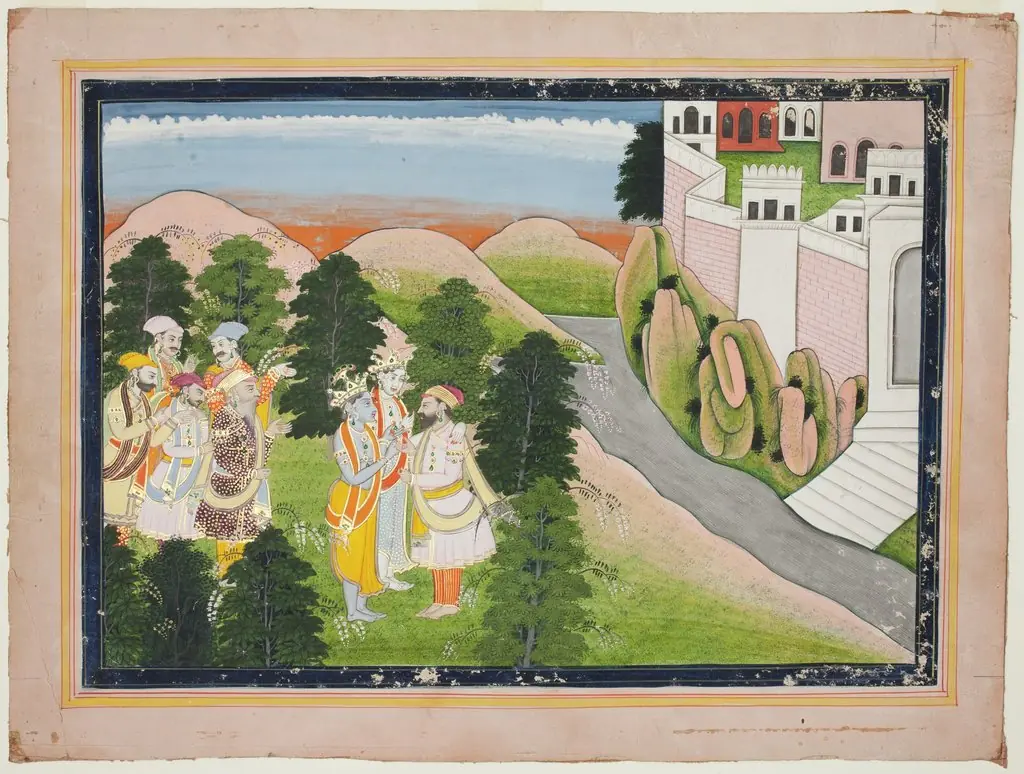 Krishna and Balarama with Various Nobles
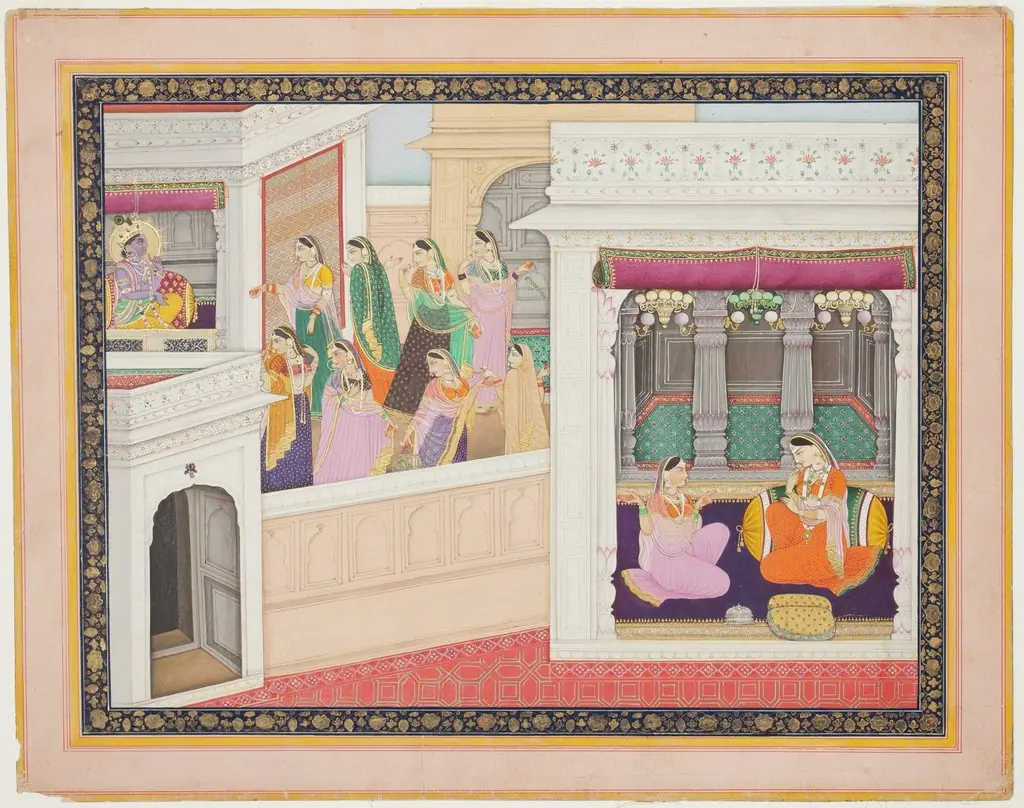 Krishna and Radha: Court Scene
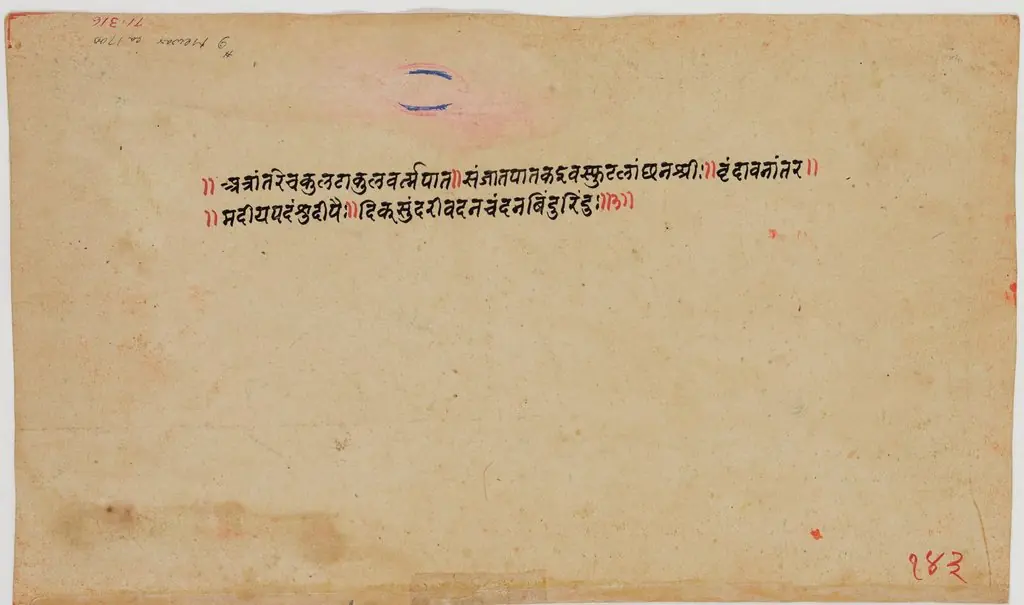 Radha's Attendant Converses with Krishna and Woman Travels By Moonlight to Meet her Lover (page from the Gita Govinda)
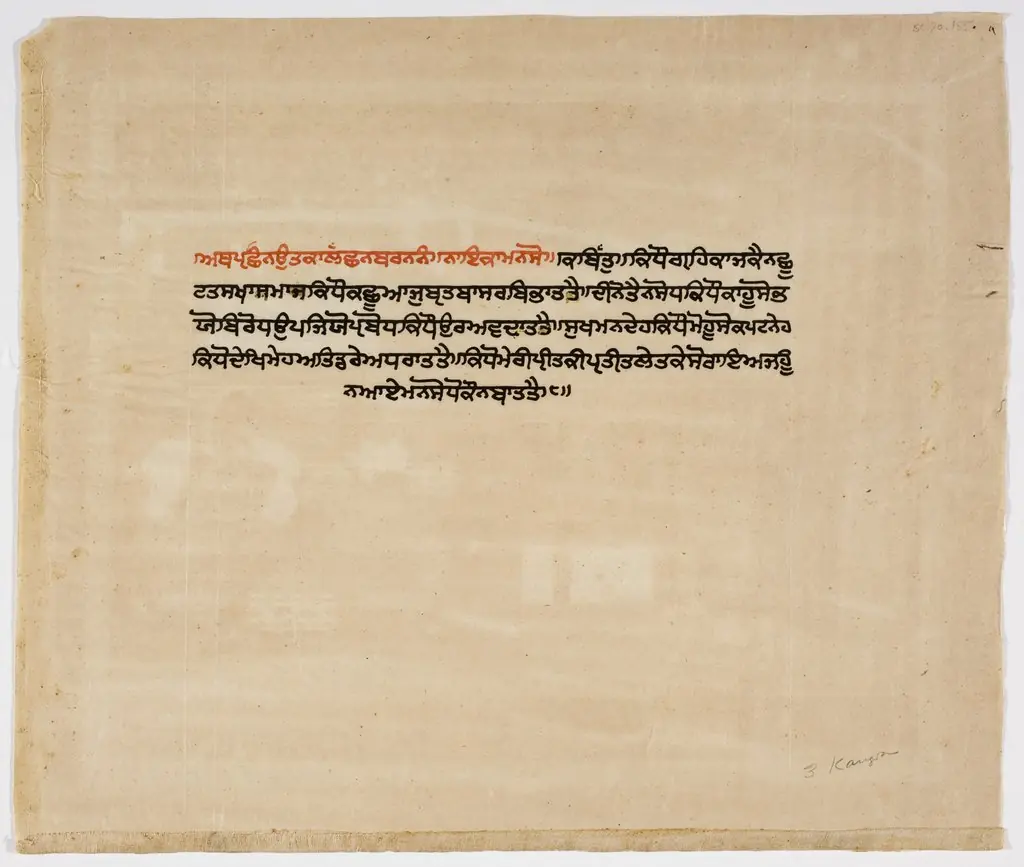 Krishna and Radha in Palace Scene
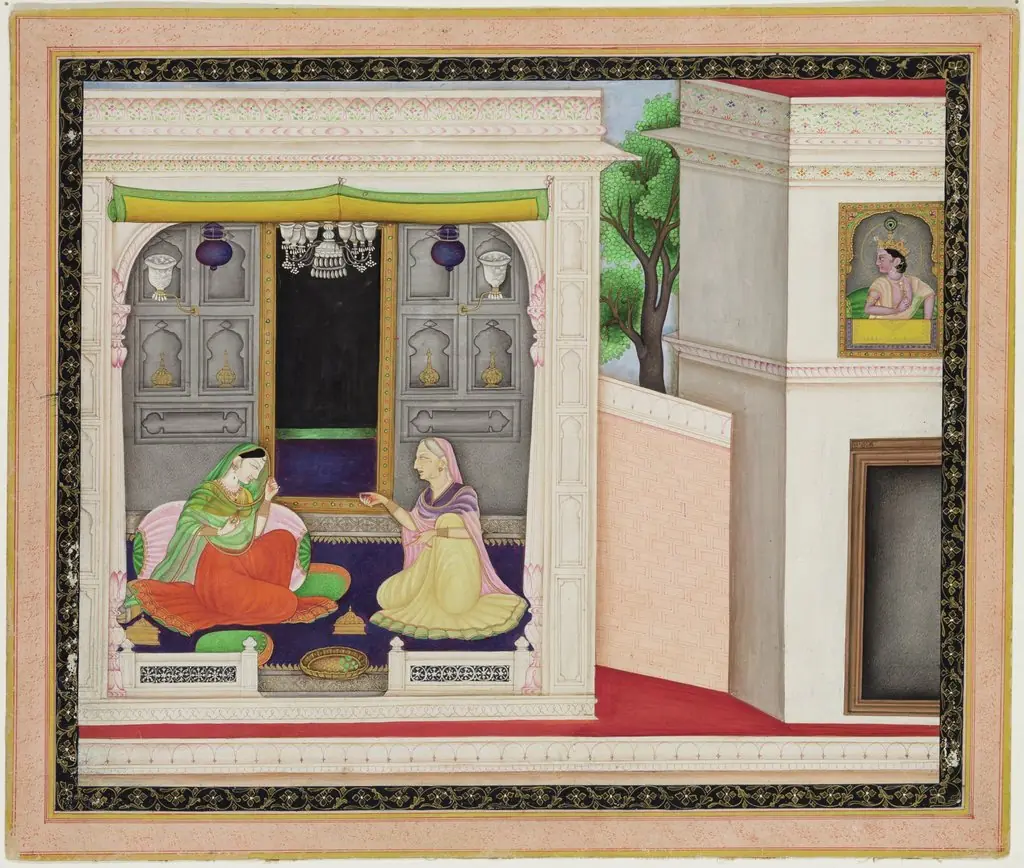 Story of Krishna and Radha
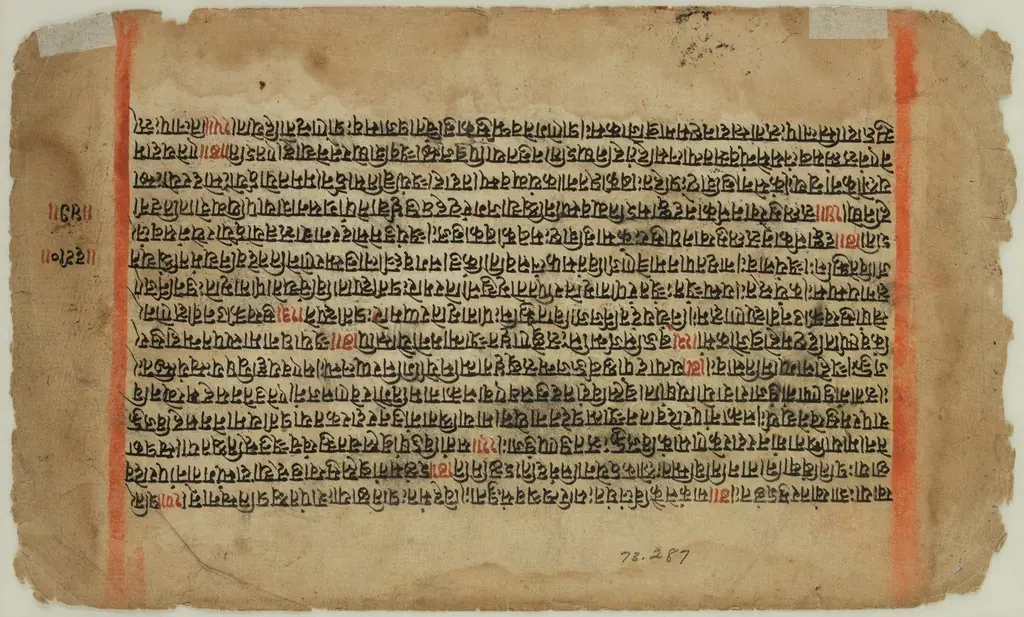 Krishna as a Boy Playing in the Forest
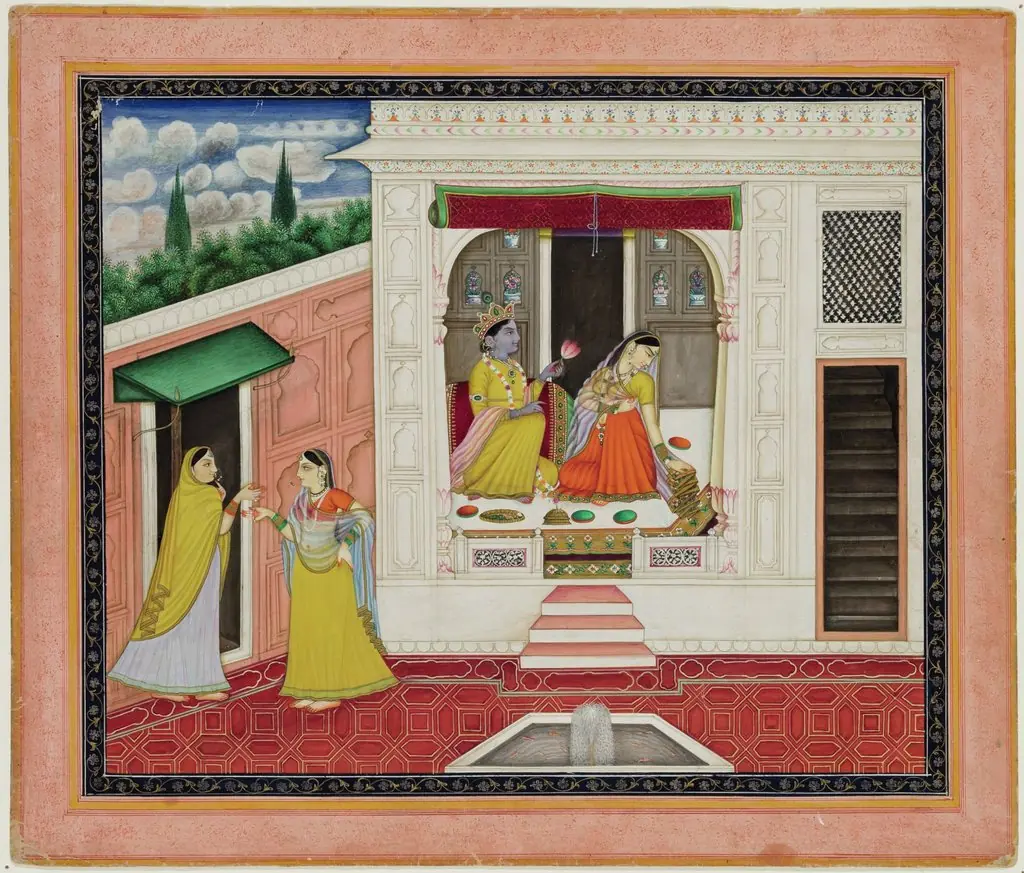 Story of Krishna and Radha
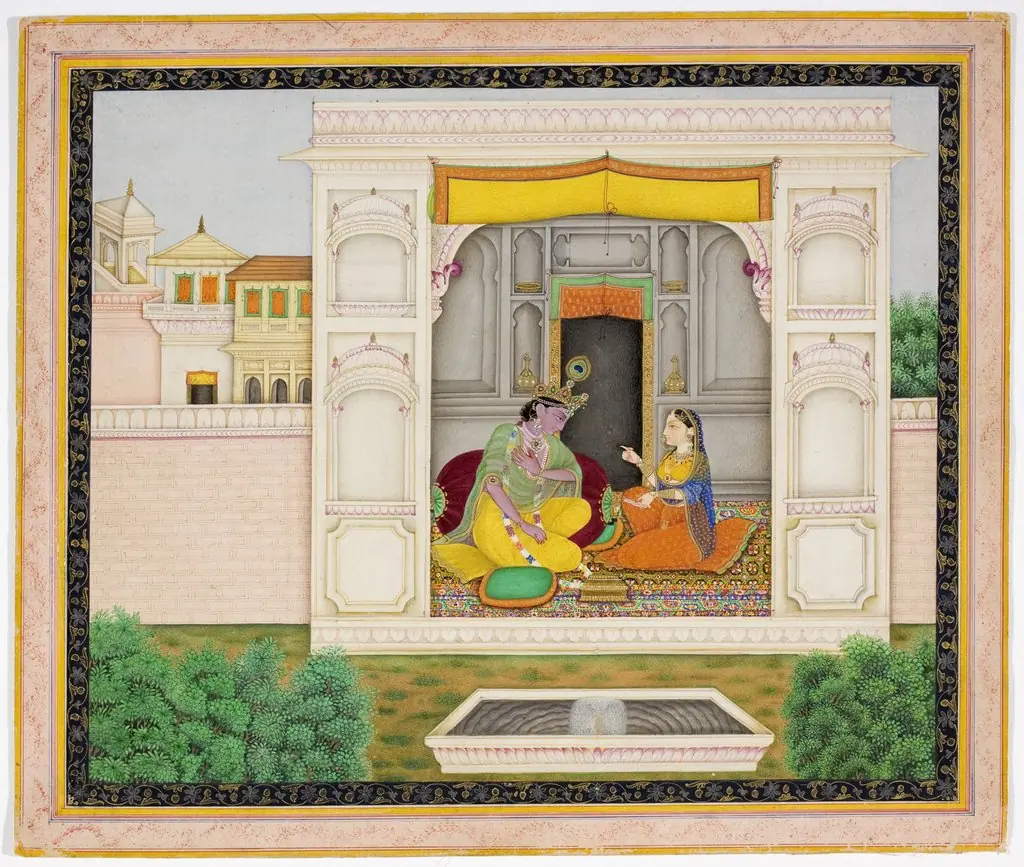 Krishna and Radha in Palace Scene
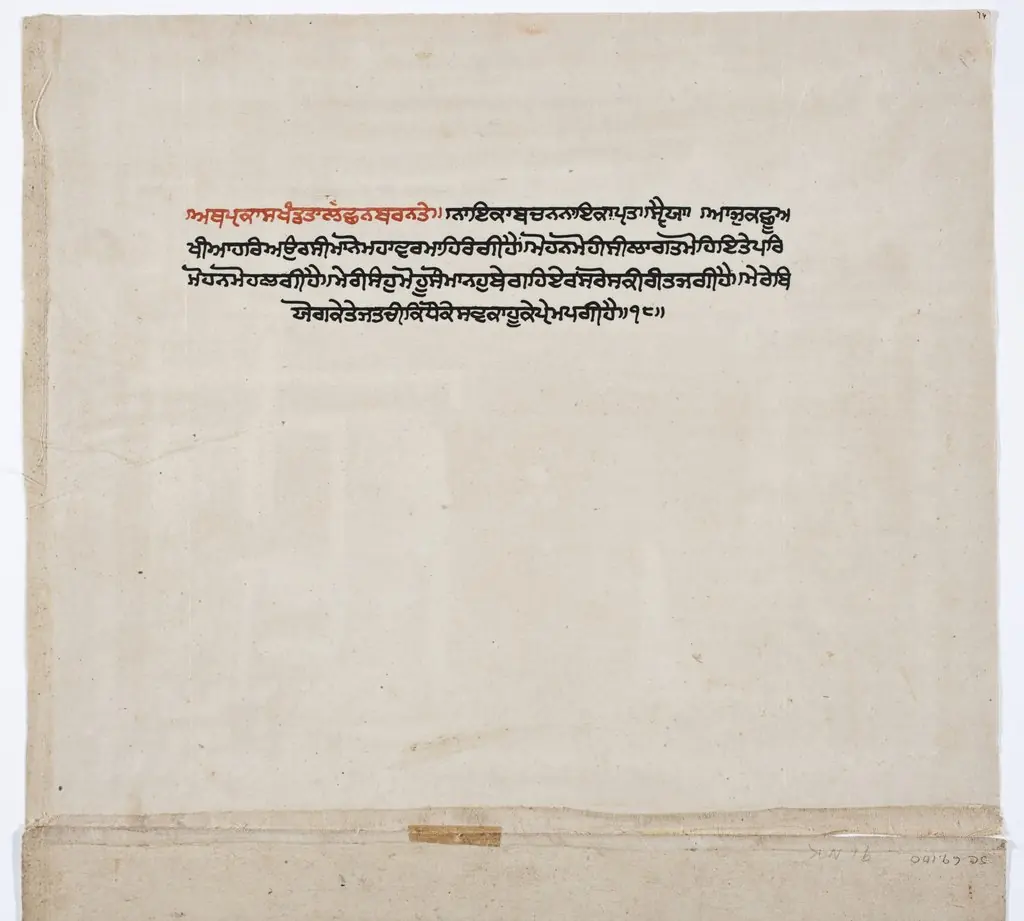 Radha and Krishna: The Exchange of Glances
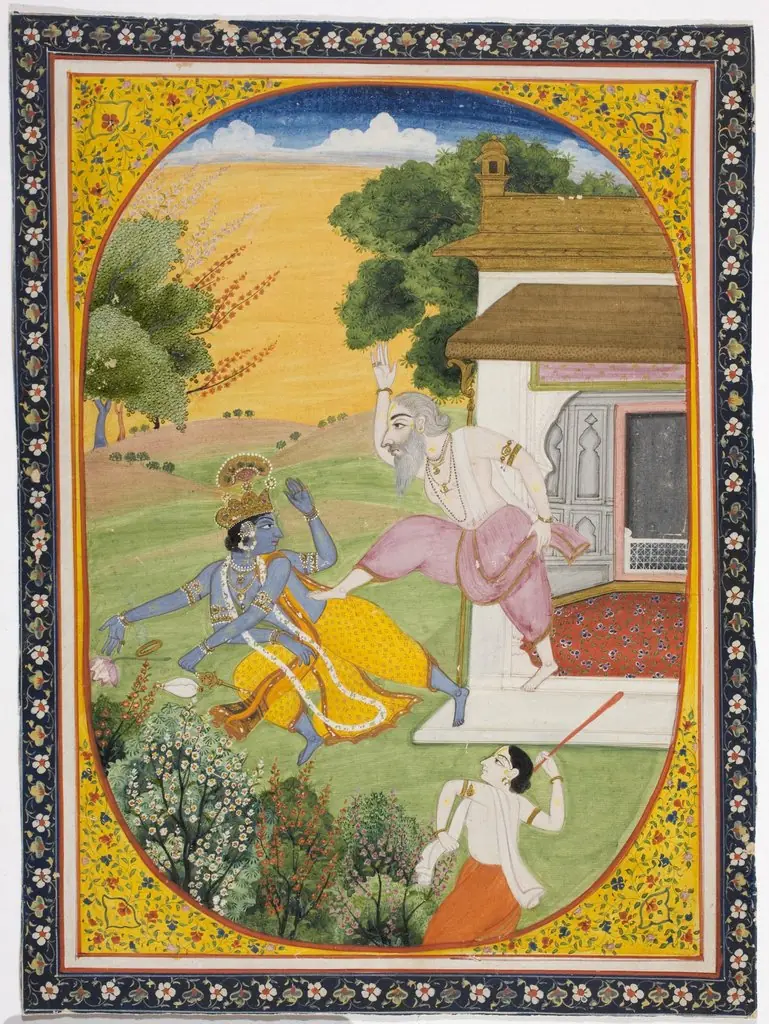 Krishna Rebuked by a Priest
 Krishna and Balarama with Various Nobles
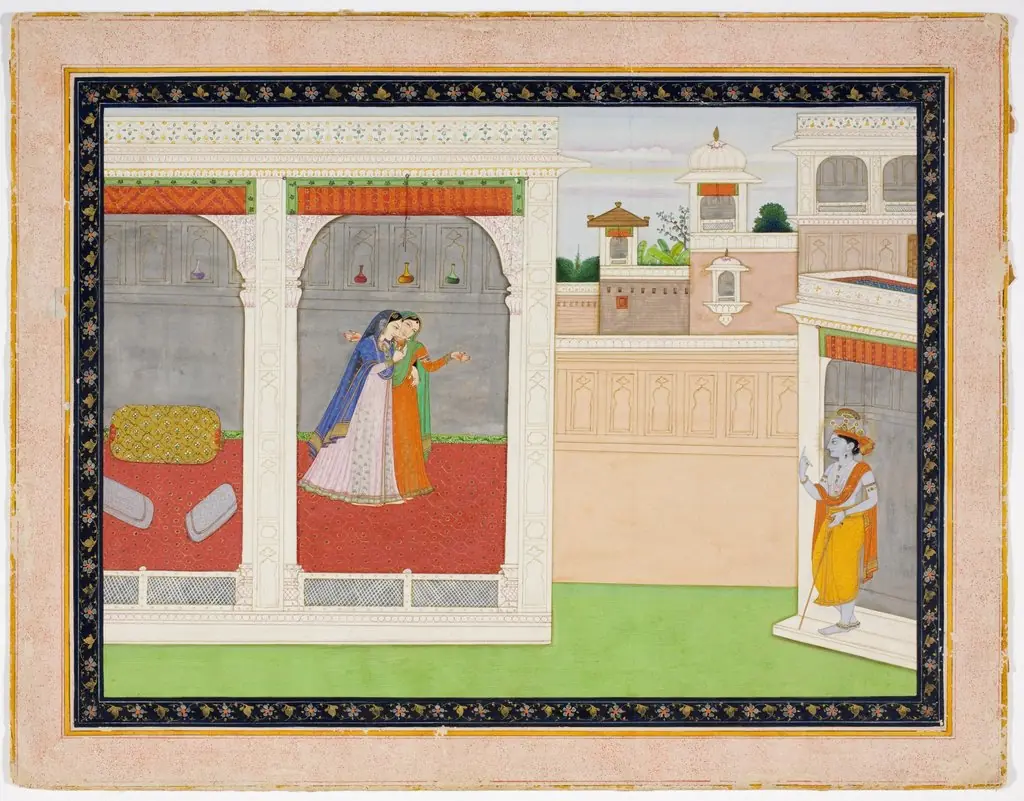
 Story of Krishna and Radha
 Krishna and Radha: Court Scene
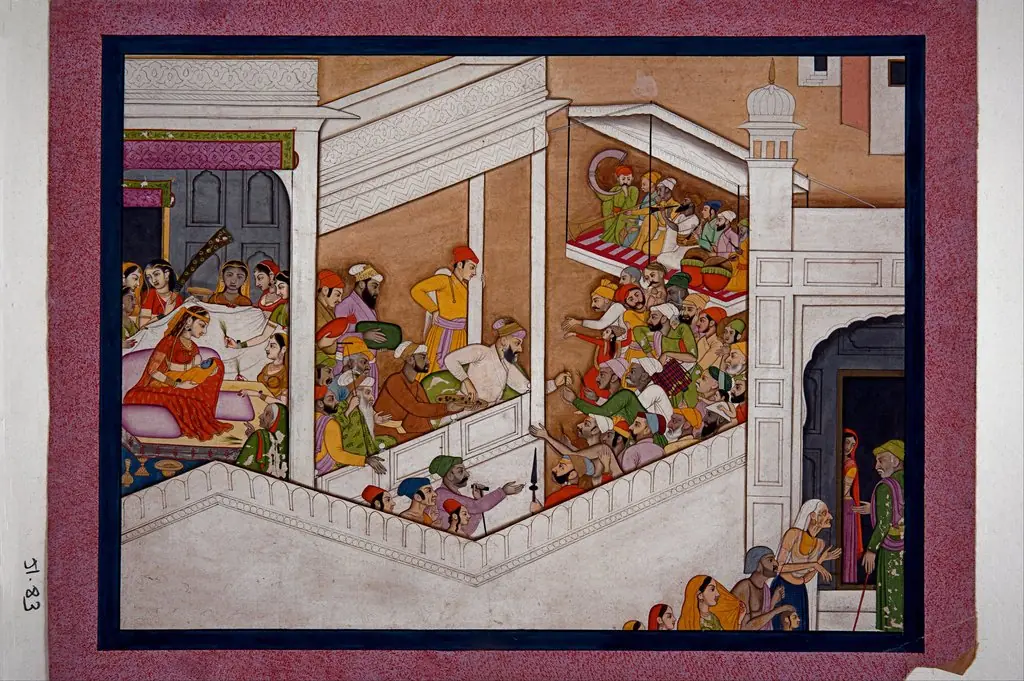 Celebrations of Krishna’s birth
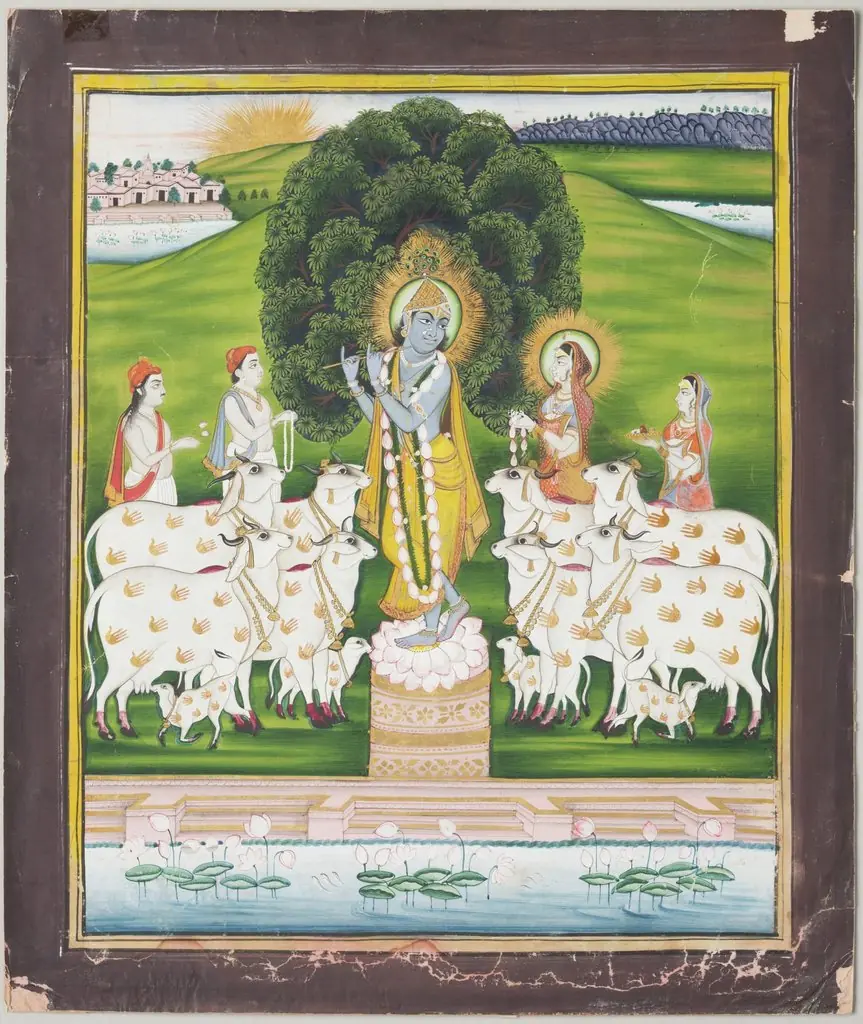 Worship of Krishna and His Flute
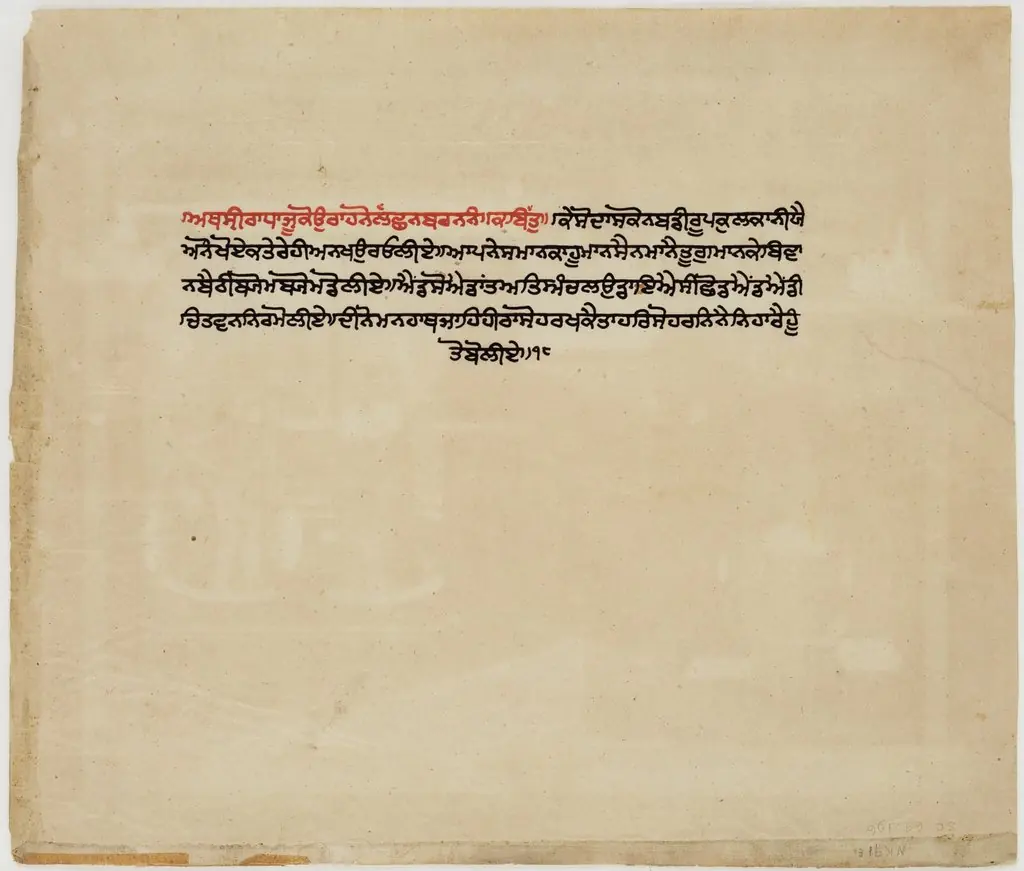 Story of Krishna and Radha
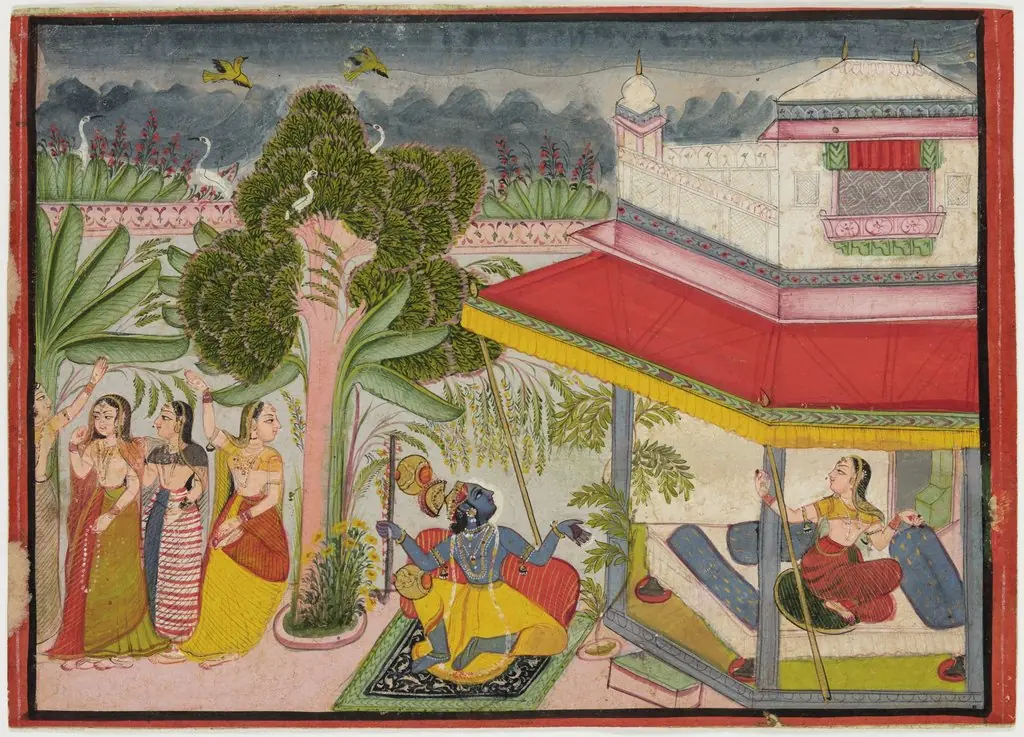 Krishna, Radha and Gopis
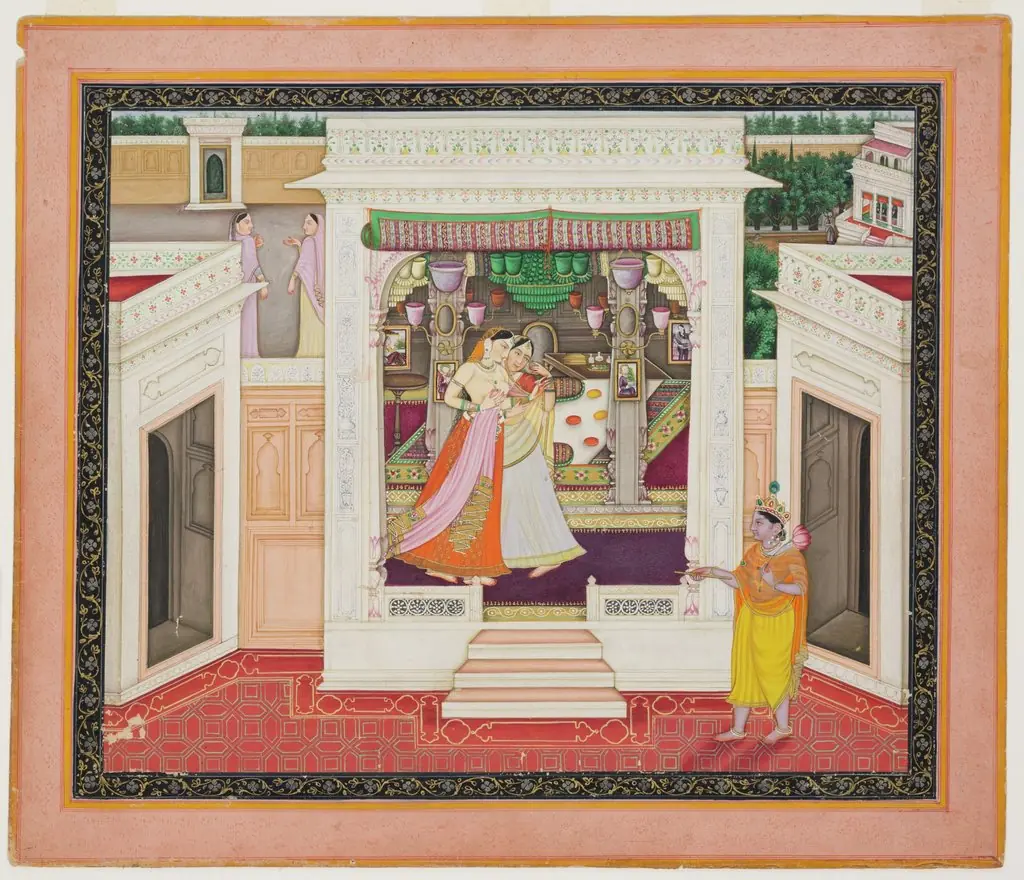 Story of Krishna and Radha
 Story of Krishna and Radha
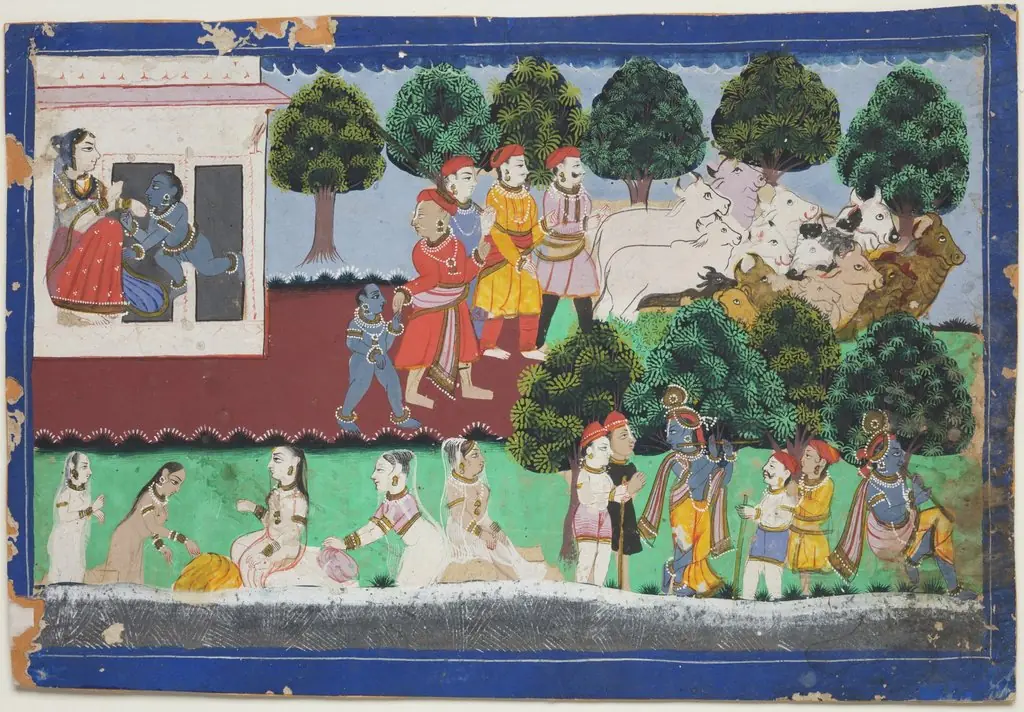 Scenes from Boyhood of Krishna
Krishna is a subject in art. male given name
Artifact World Gallery holds 200 public-domain Krishna works, all free to view and download.
Key Krishna artists in the collection include The Kota Master, Chokha and Nainsukh.
Krishna works in the collection are held by Cleveland Museum of Art, Metropolitan Museum of Art and Detroit Institute of Arts.
Your cart is empty
Browse artworks →

