Artwork
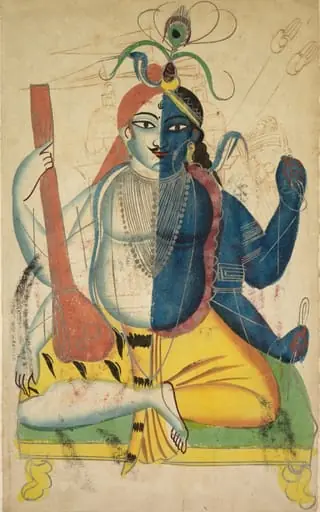
Hari-Hara (recto), from a Kalighat album
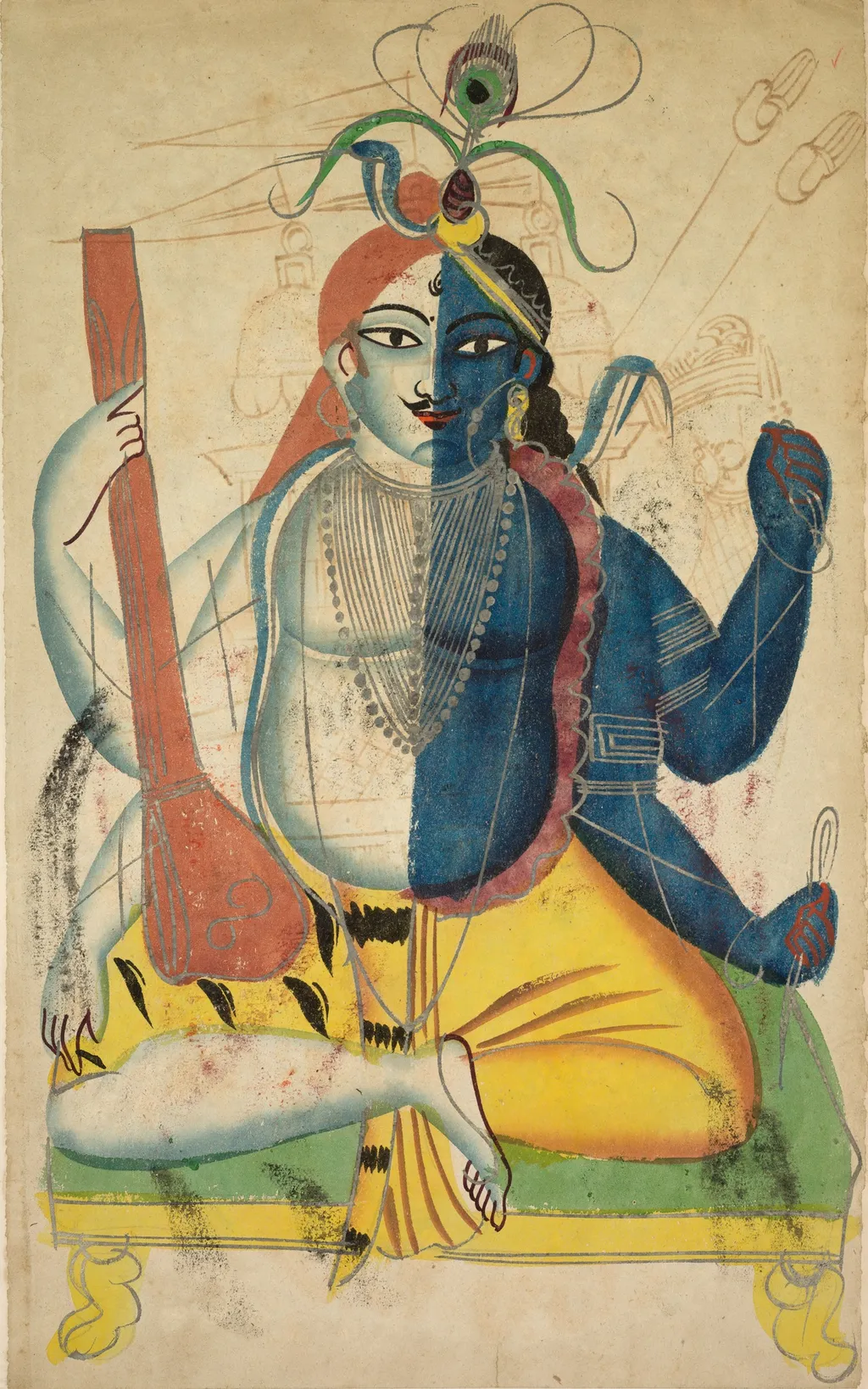
Hari-Hara (recto), from a Kalighat album is an unspecified painting. It dates from 1896 and is held in the collection of the Cleveland Museum of Art.
About this work
History & Provenance
The painting is currently housed in the museum’s Asian art galleries, where it is studied as an example of late‑19th‑century Kalighat production.
Hari-Hara (recto) is a Kalighat painting dated to 1890 and produced in Kolkata. The artist remains unidentified, and the work’s early ownership history is not recorded. It formed part of a Kalighat album before entering the Cleveland Museum of Art, where it was accessioned in 2003 as object 2003.100.a and has remained in the museum’s collection since.
The painting is currently housed in the museum’s Asian art galleries, where it is studied as an example of late‑19th‑century Kalighat production.
Hari-Hara (recto), from a Kalighat album, is held by the Cleveland Museum of Art, where it is part of the museum's collection. The work is catalogued under the inventory designation 2003.100.a. It was made in Kolkata in 1890.
No exhibition history is documented for this work in the available sources.
Context
The painting Hari-Hara (recto), from a Kalighat album, was created in 1890 in Kolkata by an unknown artist and is part of the Cleveland Museum of Art's collection. It exemplifies Kalighat painting traditions that emerged in 19th-century Bengal, blending Hindu mythological themes with popular print aesthetics. Scholarship situates these works within colonial-era folk art movements that influenced modern Indian art discourse, though specific critical reception details remain sparsely documented in available records.
The piece reflects broader artistic exchanges in colonial India, where devotional subjects were rendered in hybrid styles accessible to urban audiences. Its attribution to an anonymous creator highlights the collective nature of Kalighat production, while its presence in a major Western museum collection underscores its significance in transnational art historical narratives.
Legacy
The work's legacy lies in its role as a representative example of late nineteenth-century Bengali popular art, reflecting the devotional themes of Kalighat tradition while demonstrating evolving stylistic approaches in the late 1800s. Its presence in a museum collection highlights early efforts to document and preserve regional artistic expressions from colonial India.
Overview
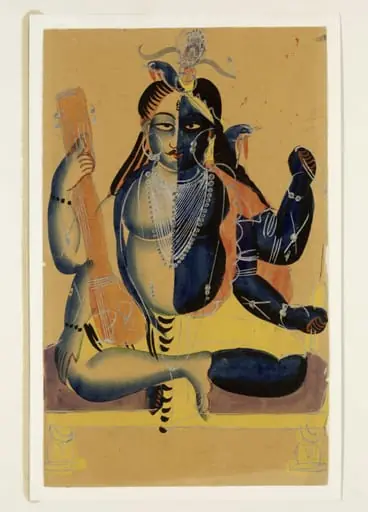
Hari‑Hara, a painted sheet from a Kalighat album, depicts a singular figure rendered in vivid blues, reds and golds on a warm‑toned paper background. The subject sits upon a yellow cushion, crowned with a peacock feather headdress, and holds a red stringed instrument and a small drum, one hand poised as if in performance.
Subject & Meaning
The iconography, blue skin, peacock plume and musical accessories, aligns with Hindu depictions of divine musicians, suggesting the figure represents a deity associated with music, such as Hari (Vishnu) or Hara (Shiva), or a syncretic embodiment of both.
Technique & Style
Executed in the Kalighat tradition, the work employs bold, simplified outlines and flat areas of saturated colour. The composition relies on stark contrast between the bright foreground and the plain, muted background, a hallmark of the popular, folk‑inspired aesthetic of 19th‑century Kolkata.
Artist & collection

- Hari-Hara (recto), from a Kalighat album
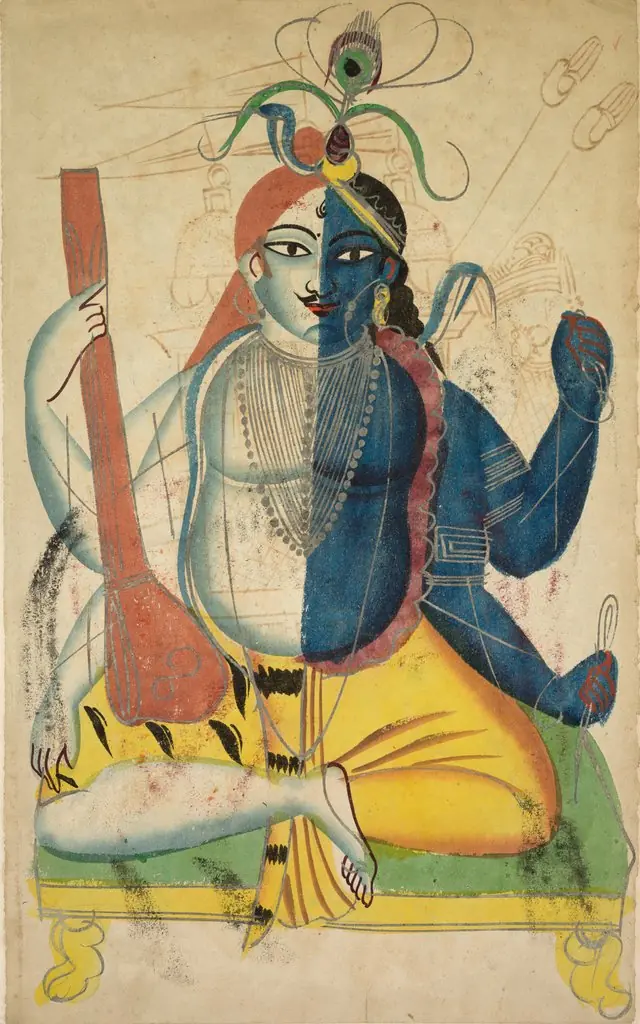 Leaf from a Kalighat album: Hari-Hara (recto); Vasudeva (Krishna's Father) Fleeing with Krishna Encounters a Cobra and a Jackal (verso)
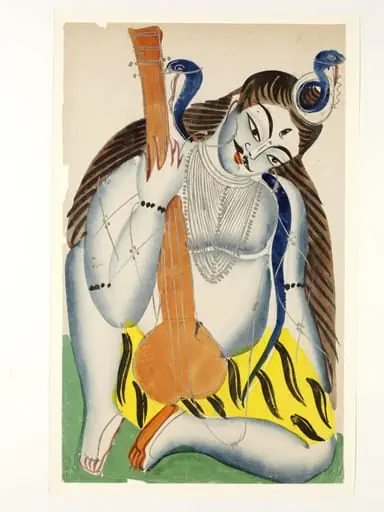
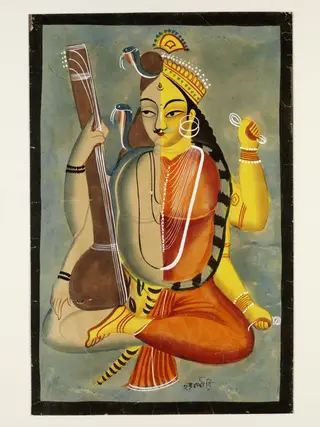
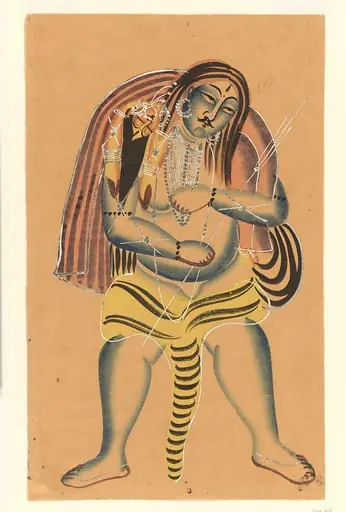
 Hari-Hara
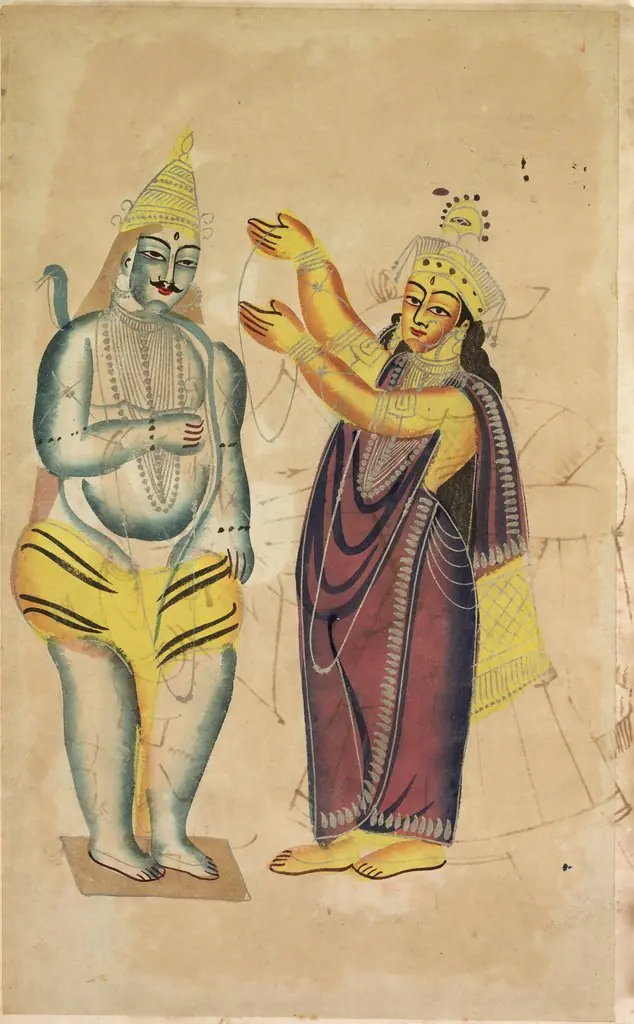 Parvati Placing a Wedding Garland on Shiva (recto), from a Kalighat album
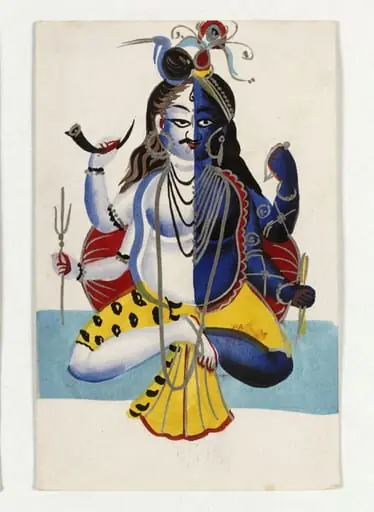 Hari-Hara
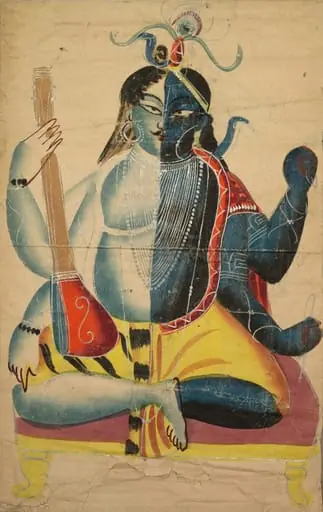 Hari-Hara
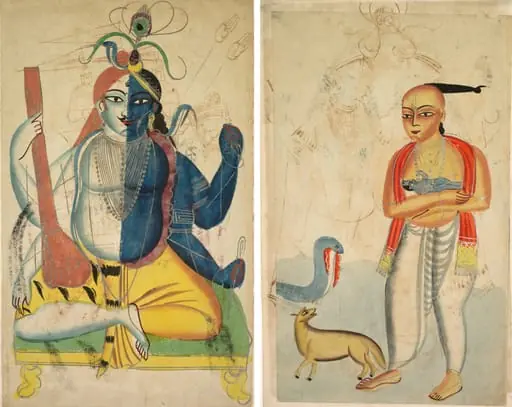 Leaf from a Kalighat album: Hari-Hara (recto); Vasudeva (Krishna's Father) Fleeing with Krishna Encounters a Cobra and a Jackal (verso)
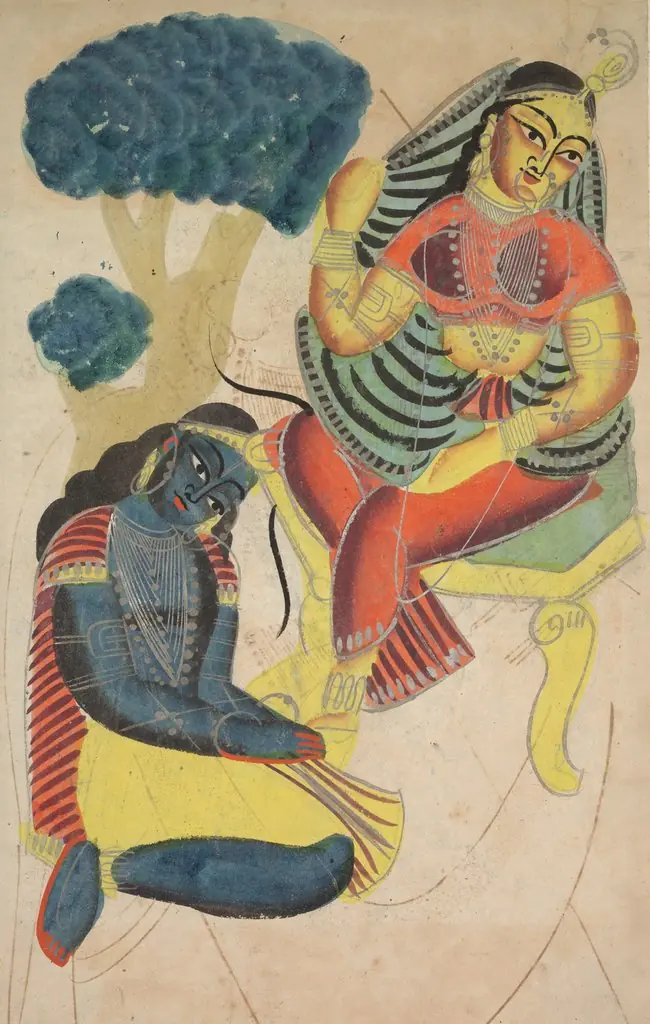 Krishna Stroking Radha's Feet (verso), from a Kalighat album
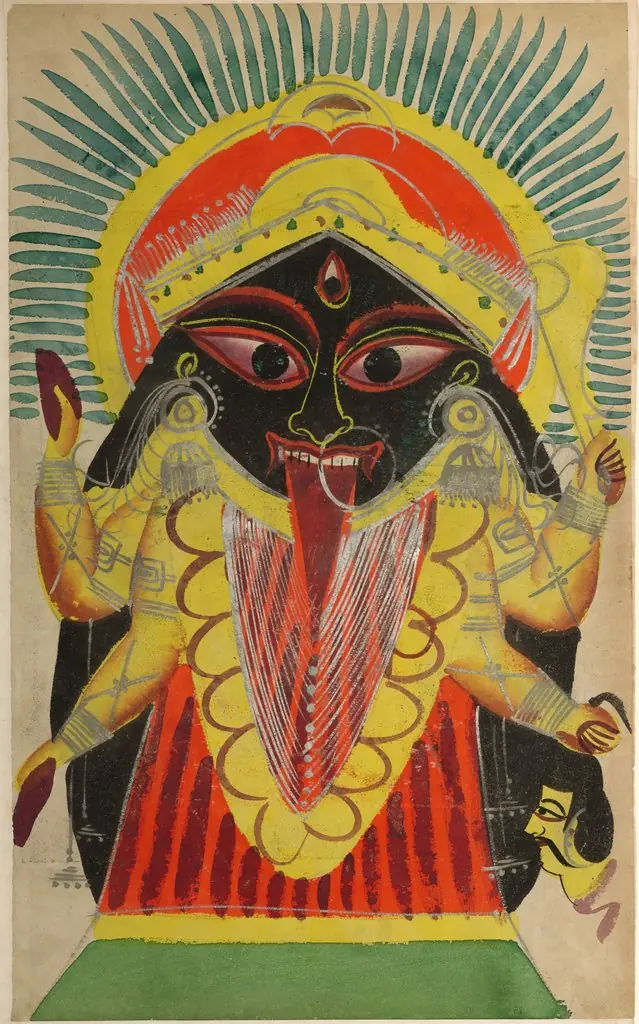 The Goddess Kali (recto), from a Kalighat album