Artwork
The Goddess Kali (recto), from a Kalighat album
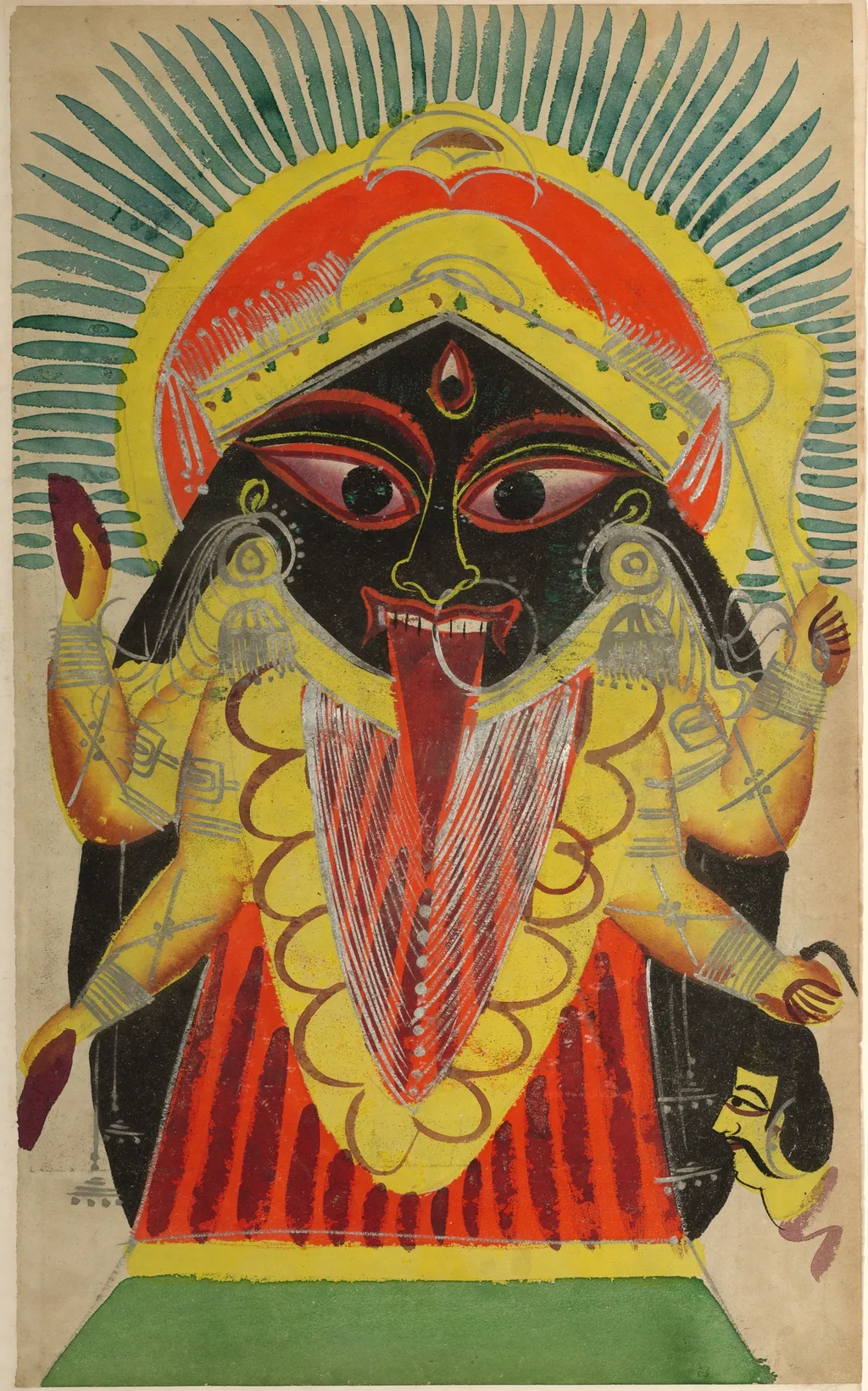
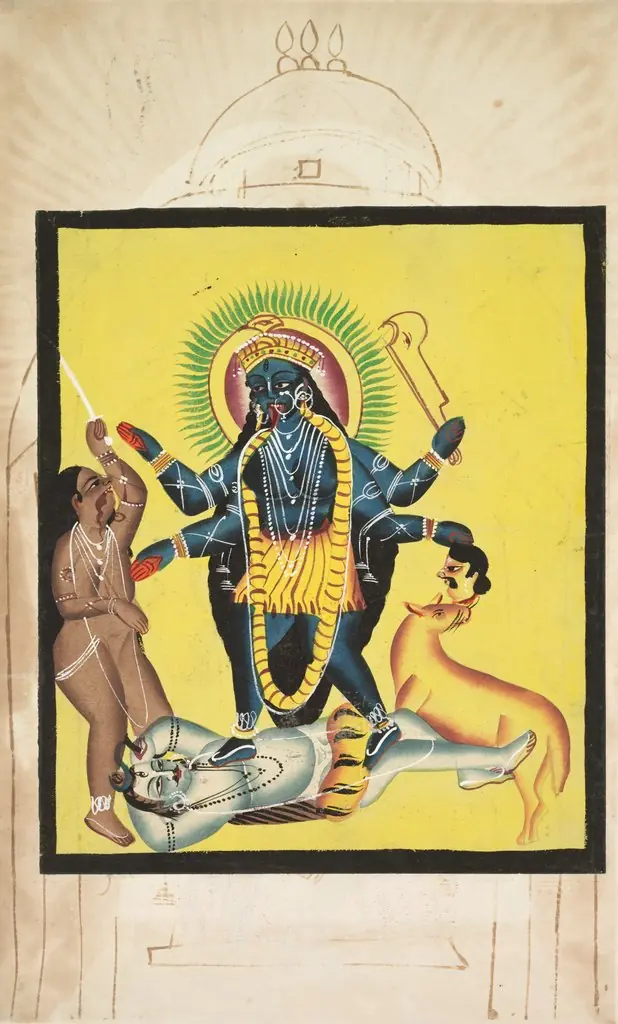
The Goddess Kali (recto), from a Kalighat album is an unspecified painting. It dates from 1896 and is held in the collection of the Cleveland Museum of Art. The work is a small panel from a Kalighat album depicting the Hindu deity Kali.
About this work
Subject & Meaning
The piece serves as a visual representation of this goddess within the context of late 19th-century devotional art produced in Bengal.
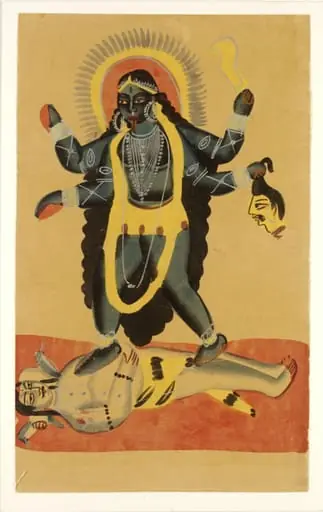
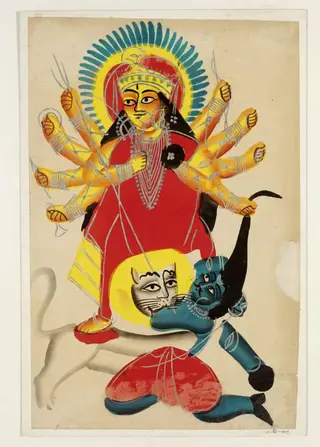
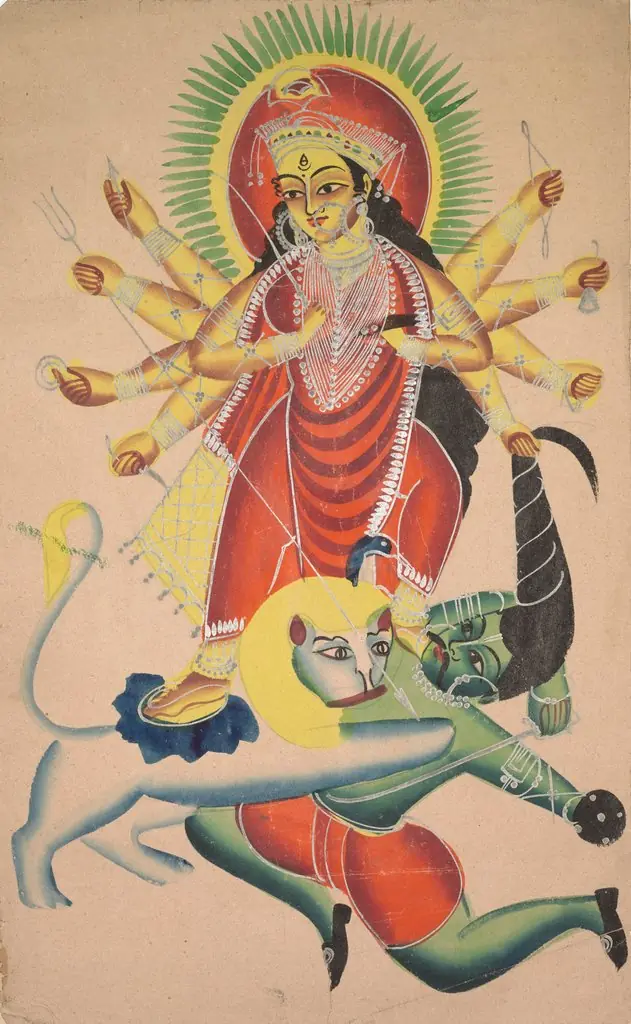
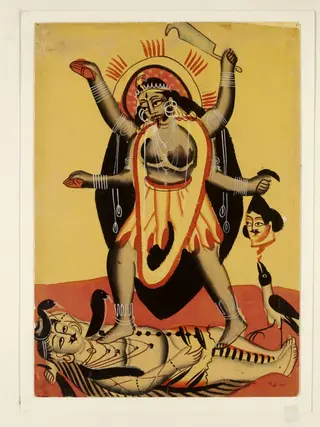
The work depicts the Hindu goddess Kali, identified by the recto title of the Kalighat album from which it originates. Created in Kolkata around 1896, this painting belongs to the Kalighat style, a tradition known for portraying deities and social scenes with bold outlines and vibrant colors. While the specific iconographic details of the figure are not elaborated in the provided records, the subject matter centers on the divine feminine power associated with Kali, a major deity in Hinduism often representing destruction of evil and motherly protection.
The piece serves as a visual representation of this goddess within the context of late 19th-century devotional art produced in Bengal.
Technique & Style
The recto of The Goddess Kali from a Kalighat album was created in 1896 in Kolkata, employing watercolor on paper as its medium and support. Executed by an unknown artist, the work is classified as a painting and is part of the Cleveland Museum of Art's collection. The composition exemplifies Kalighat folk style, characterized by bold outlines and simplified forms depicting the Hindu goddess in dynamic pose.
History & Provenance
The Goddess Kali (recto), from a Kalighat album, was created in 1896 in Kolkata, the city most closely associated with the Kalighat painting tradition from which the work takes its name. The painting entered the Cleveland Museum of Art's collection, where it is held under accession number 2003.110.a, having been acquired by the institution in 2003. No further details about its earlier ownership, commission, or chain of custody prior to the museum's acquisition are documented in the available sources, and no exhibitions are listed.
The work is classified as a painting, consistent with the album-leaf format typical of nineteenth-century Kalighat production centered on the Kali temple precinct in Calcutta.
Overview
The work is a small panel from a Kalighat album depicting the Hindu deity Kali. Rendered in vivid hues, the figure occupies a green platform and is framed by a radiating sunburst of red, yellow and green. The composition is dominated by stark black outlines that define a fierce visage, four arms, a protruding red tongue and a garland of skulls.
Context
Kalighat paintings emerged in 19th‑century Kolkata as popular prints sold to pilgrims and urban audiences. This piece reflects the genre’s blend of religious iconography and accessible visual language, serving both devotional and commercial purposes within the bustling cultural milieu surrounding the Kalighat temple.
Artist & collection

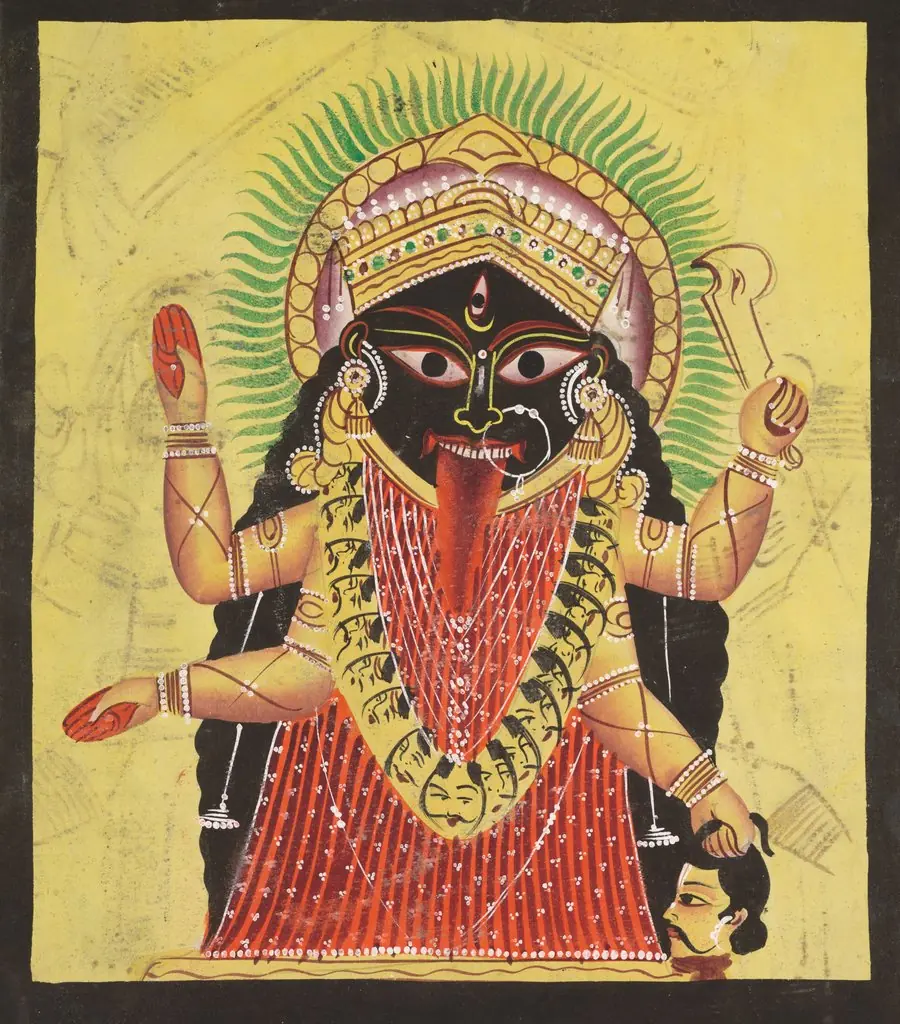
- Kali Enshrined (verso), from a Kalighat album
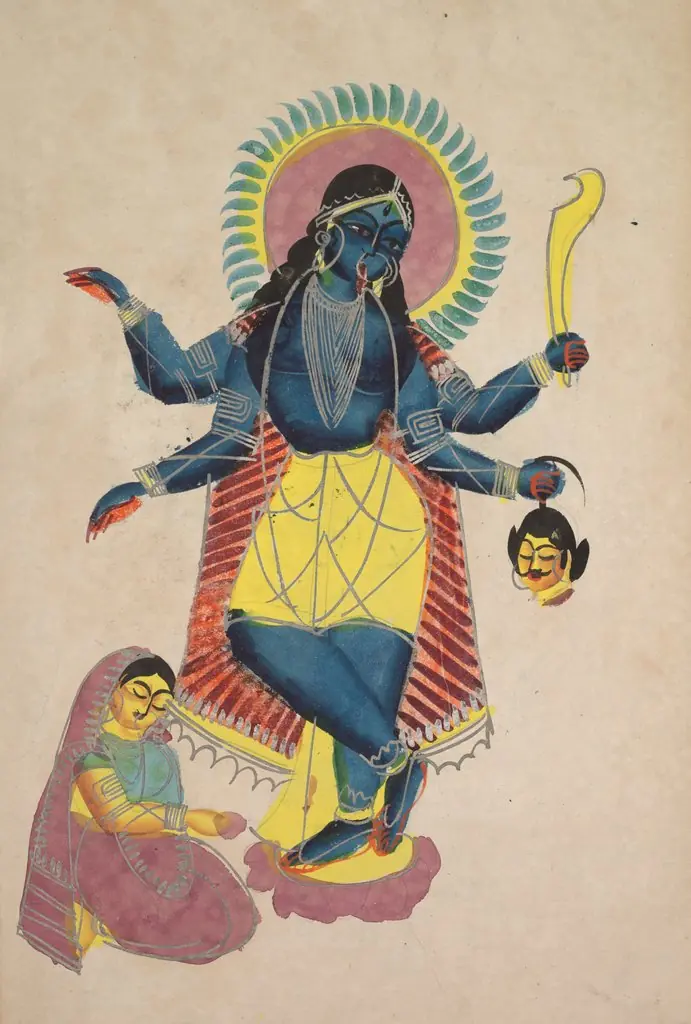 Krishna as Kali worshipped by Radha (recto), from a Kalighat album
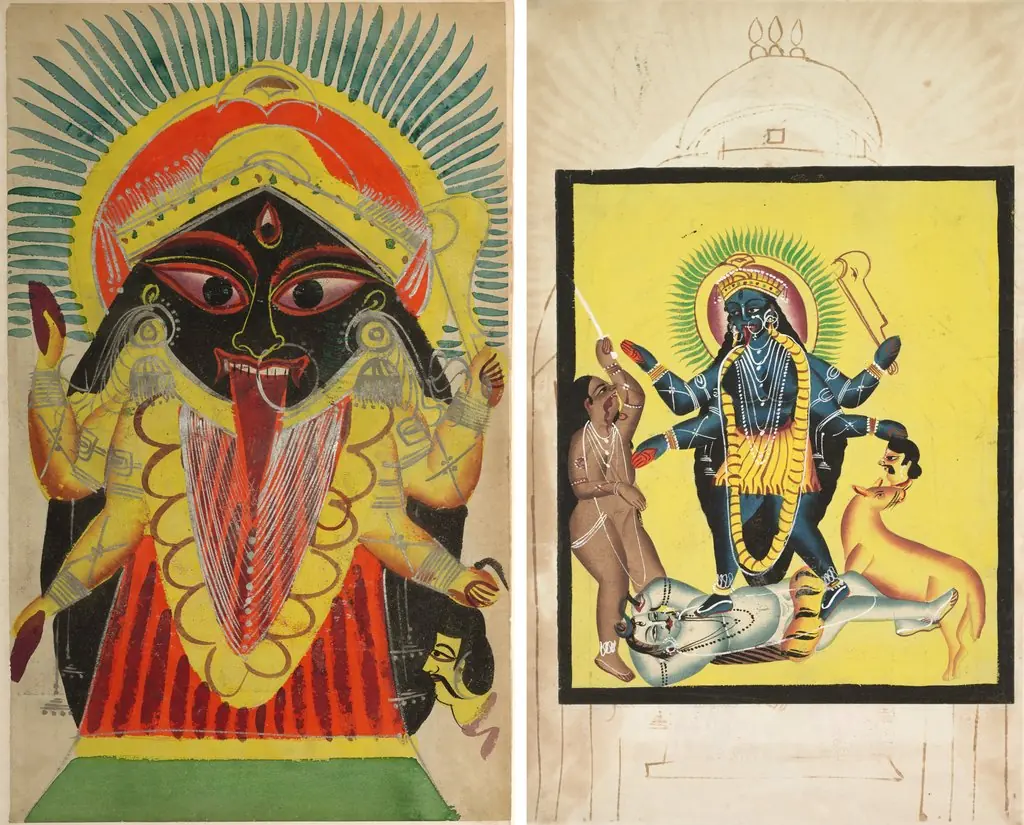 Leaf from a Kalighat album: The Goddess Kali (recto); Kali Standing on Shiva (verso)
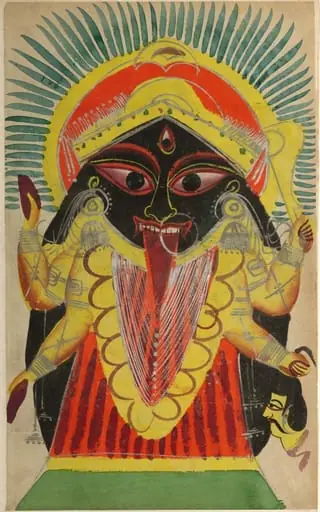 The Goddess Kali (recto), from a Kalighat album
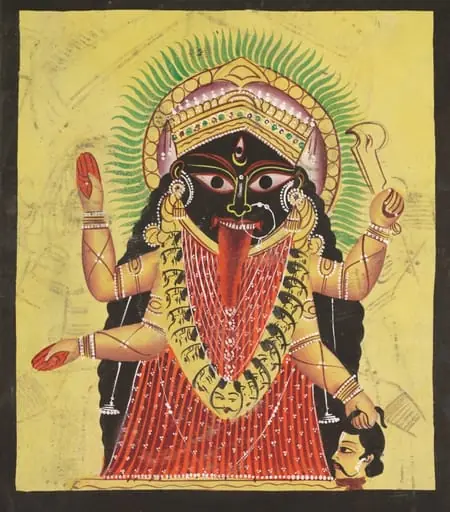 Kali Enshrined (verso), from a Kalighat album
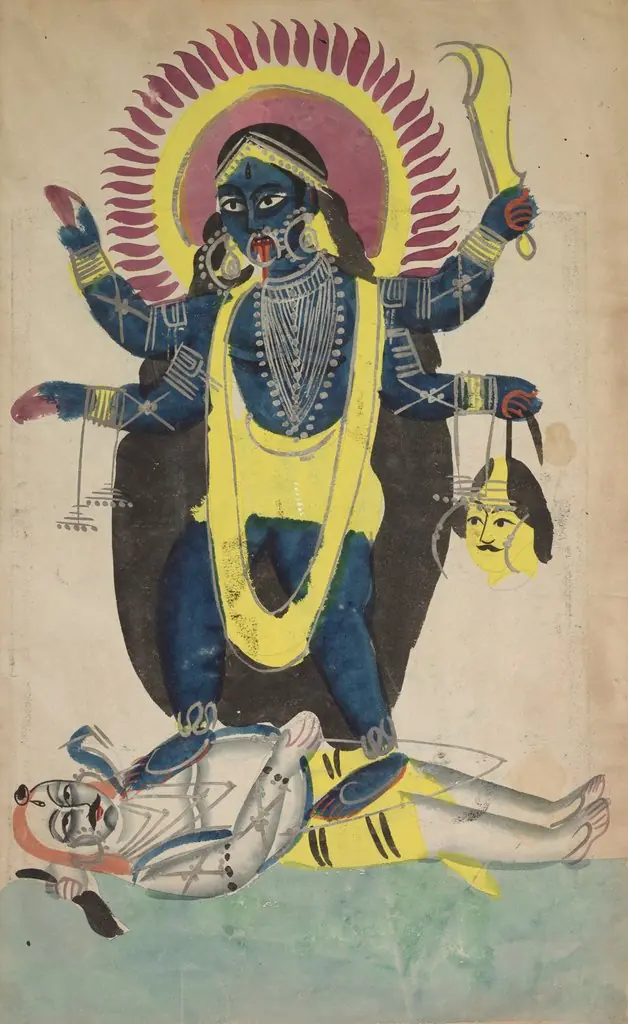 Kali Dancing on Shiva (recto), from a Kalighat album
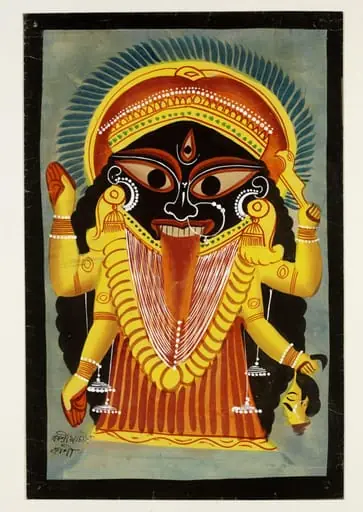 Kali
Kali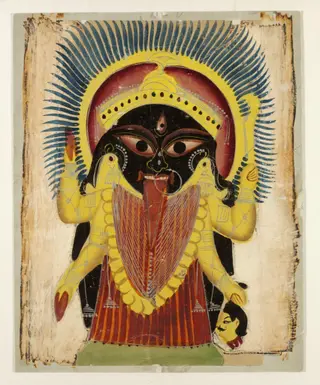 Kali
Kali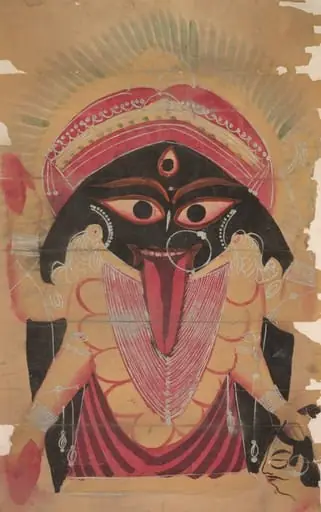 Kali
Kali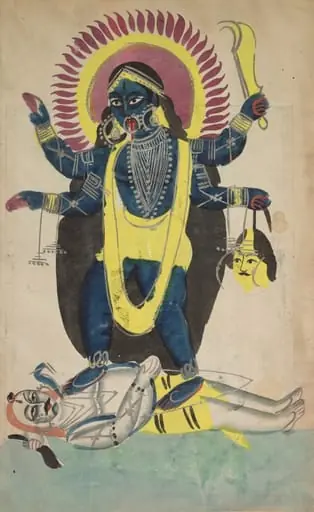 Kali Dancing on Shiva (recto), from a Kalighat album
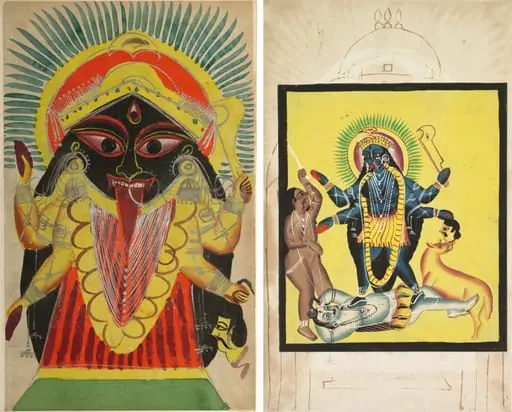 Leaf from a Kalighat album: The Goddess Kali (recto); Kali Standing on Shiva (verso)
 Kali Standing on Shiva (verso), from a Kalighat album