Artwork
Hari-Hara (recto), from a Kalighat album
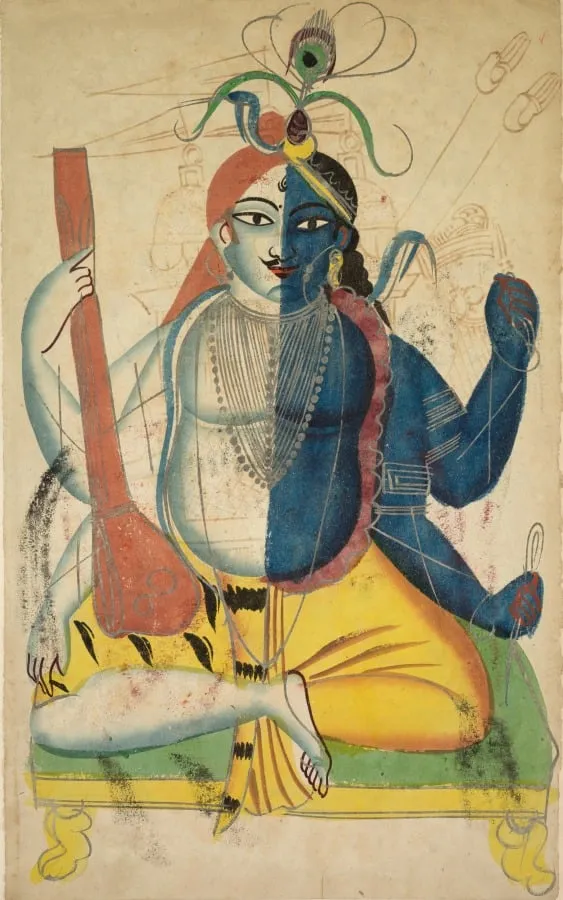
Hari-Hara (recto), from a Kalighat album is an unspecified painting by the Bengal School artist Unknown. It dates from 1890 and is held in the collection of the Cleveland Museum of Art. This painting is one panel from a small album produced in Kolkata during the 19th century, likely for sale to local and colonial buyers.
- Accession no.
- 2003.100.a
About this work
Overview
This painting is one panel from a small album produced in Kolkata during the 19th century, likely for sale to local and colonial buyers.
This painting is one panel from a small album produced in Kolkata during the 19th century, likely for sale to local and colonial buyers. Executed in watercolor on paper, it features a hybrid deity combining elements of Hindu gods Shiva and Vishnu. The loose brushwork, flat perspective, and vivid pigments are characteristic of Kalighat painting, a style emerging near the Kalighat temple as a response to changing urban culture and new markets.
Subject & Meaning
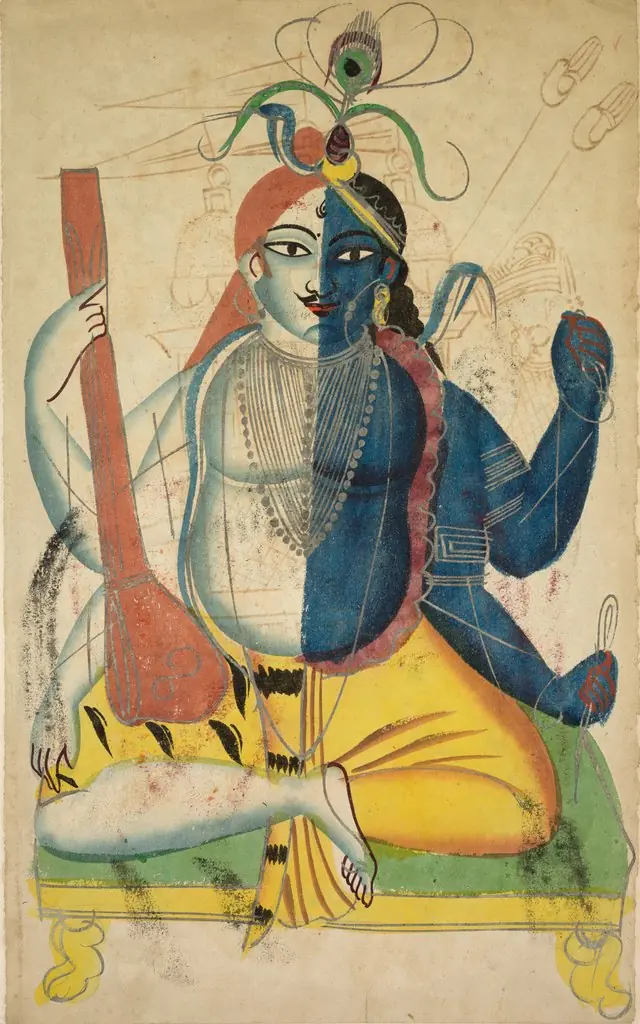
The figure represents Hari-Hara, a syncretic form uniting Vishnu (Hari) and Shiva (Hara), symbolizing the unity of preservation and destruction in Hindu cosmology. The peacock feather alludes to Vishnu’s association with the bird, while the drum connects to Shiva’s cosmic rhythm. The seated posture suggests meditative authority, and the plain background focuses attention on the deity’s dual nature, a concept central to theological traditions in Bengal.
Technique & Style
Rendered in opaque watercolor with bold outlines and unmodulated color fields, the painting reflects the rapid, economical methods of Kalighat artists. Brushstrokes are fluid and unrefined, emphasizing gesture over detail. The use of bright, locally sourced pigments, especially the vivid blue and red, contrasts with the muted, sketchy background, which may indicate preparatory underdrawings or compositional experiments common in album production.
History & Provenance
Created in the mid-1800s in the Kalighat neighborhood of Kolkata, the painting was likely part of a set sold to pilgrims or British collectors. These albums often combined religious imagery with social commentary, and many were collected by European residents. The faint outlines visible beneath the paint suggest the artist worked quickly, possibly repeating compositions across multiple panels in a single session.
Context
Kalighat paintings arose as urban art in a rapidly modernizing Kolkata, influenced by both indigenous traditions and colonial presence. Unlike European academic styles of the period, they rejected perspective and chiaroscuro, favoring symbolic clarity and decorative flatness. This work reflects a local visual language adapting to new audiences, blending devotional themes with commercial pragmatism in a city where tradition and change coexisted.
Legacy
Kalighat paintings like this one helped preserve Hindu iconography during a time of cultural disruption, while also influencing later Indian modernists who sought indigenous aesthetics. Though initially dismissed as folk art, these works are now recognized as dynamic responses to colonialism and urbanization. The album format and stylistic economy of this piece continue to inform contemporary discussions on art, identity, and mass production in South Asia.
Artist & collection









- Hari-Hara (recto), from a Kalighat album
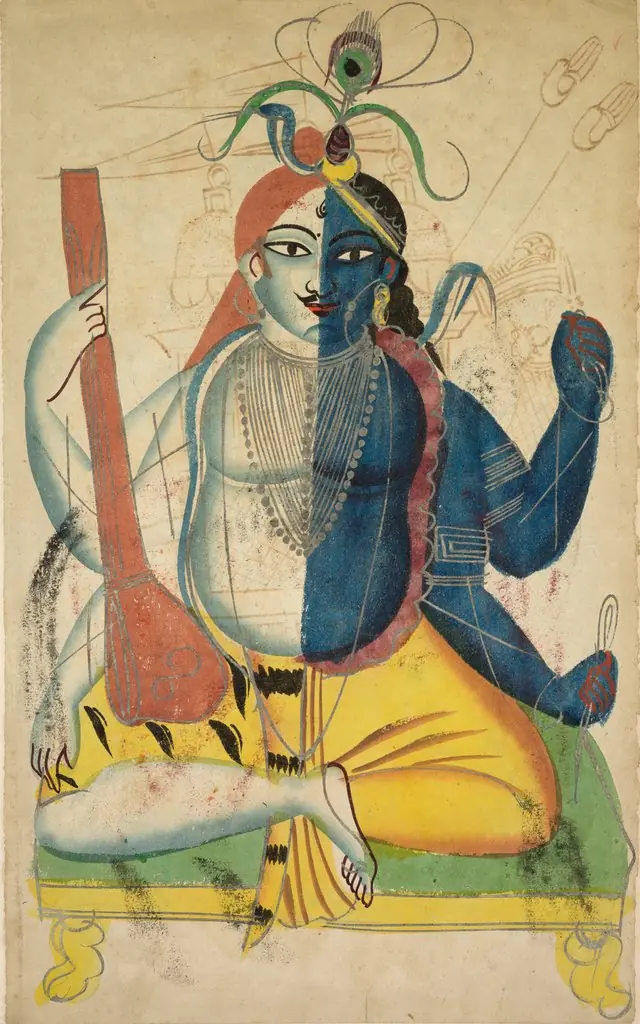 Leaf from a Kalighat album: Hari-Hara (recto); Vasudeva (Krishna's Father) Fleeing with Krishna Encounters a Cobra and a Jackal (verso)
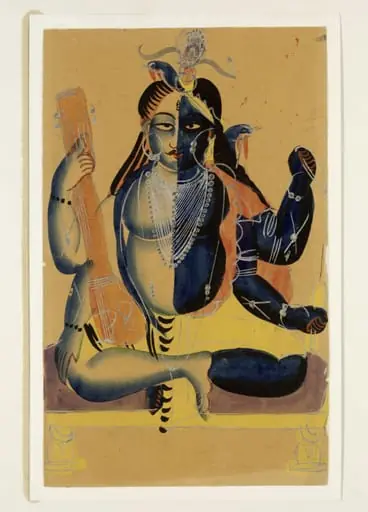 Hari-Hara
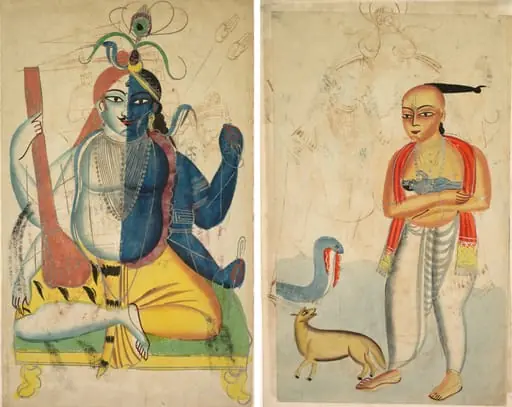 Leaf from a Kalighat album: Hari-Hara (recto); Vasudeva (Krishna's Father) Fleeing with Krishna Encounters a Cobra and a Jackal (verso)
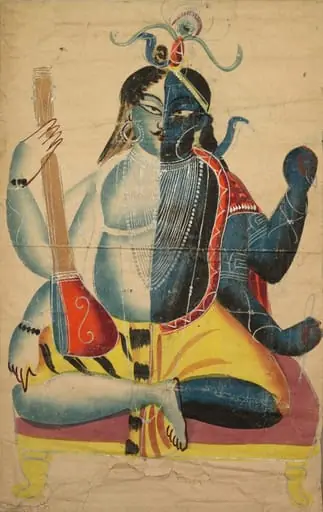 Hari-Hara
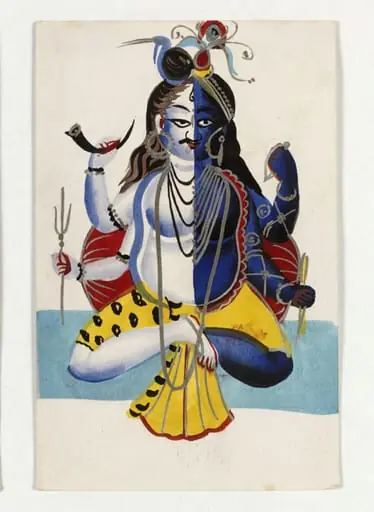 Hari-Hara
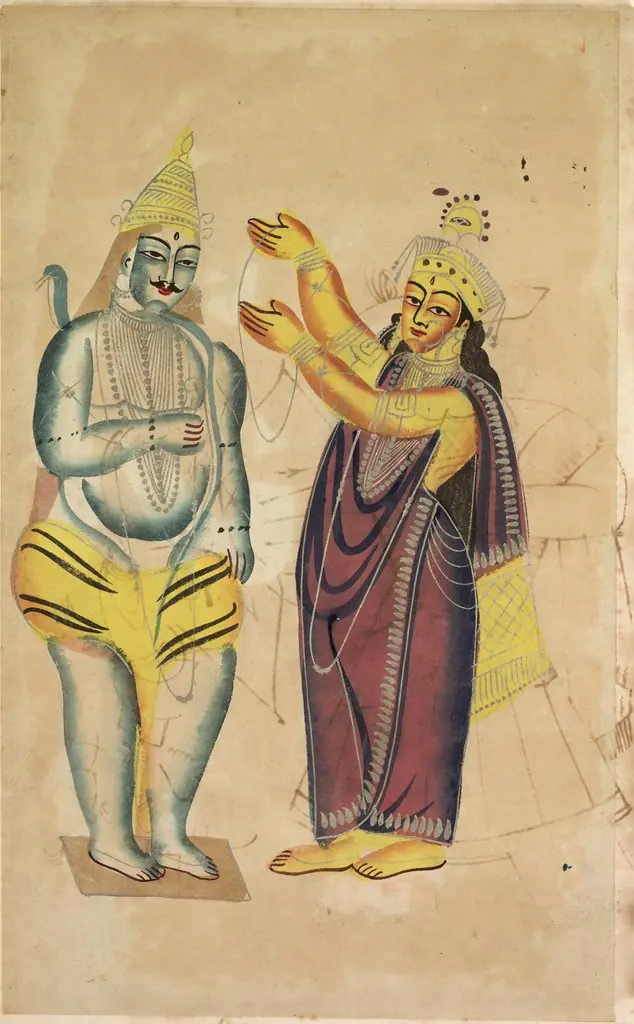 Parvati Placing a Wedding Garland on Shiva (recto), from a Kalighat album
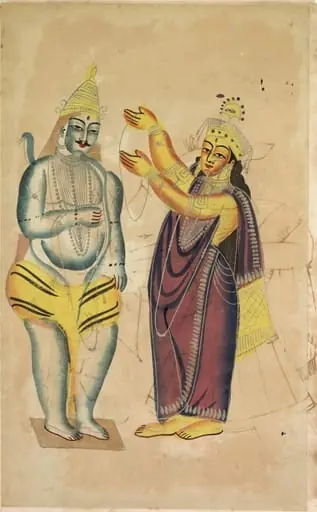 Parvati Placing a Wedding Garland on Shiva (recto), from a Kalighat album
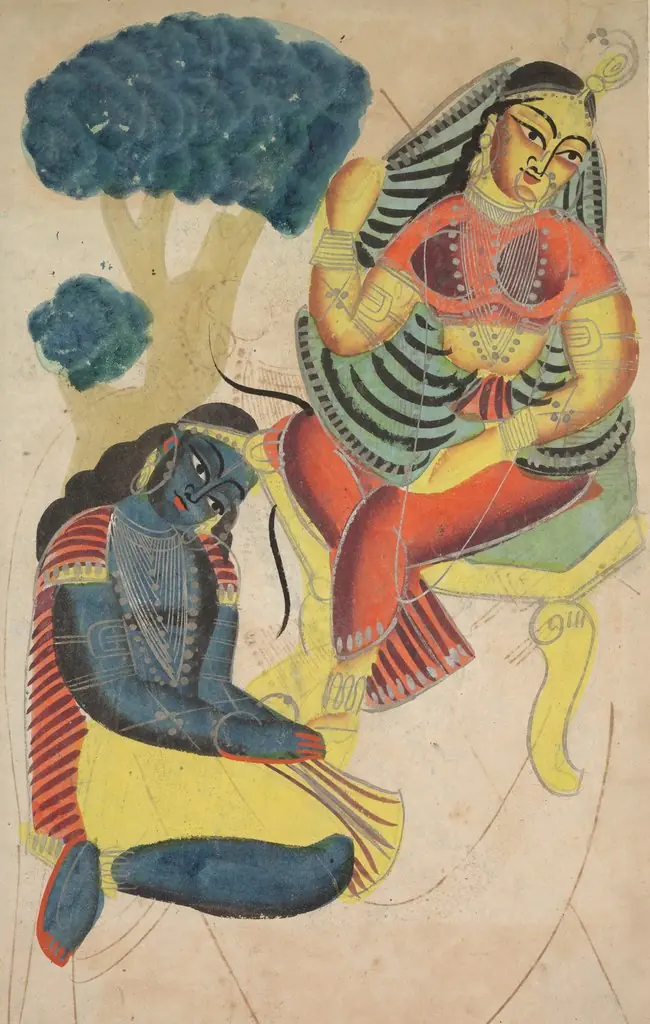 Krishna Stroking Radha's Feet (verso), from a Kalighat album