Artwork
Holy Family
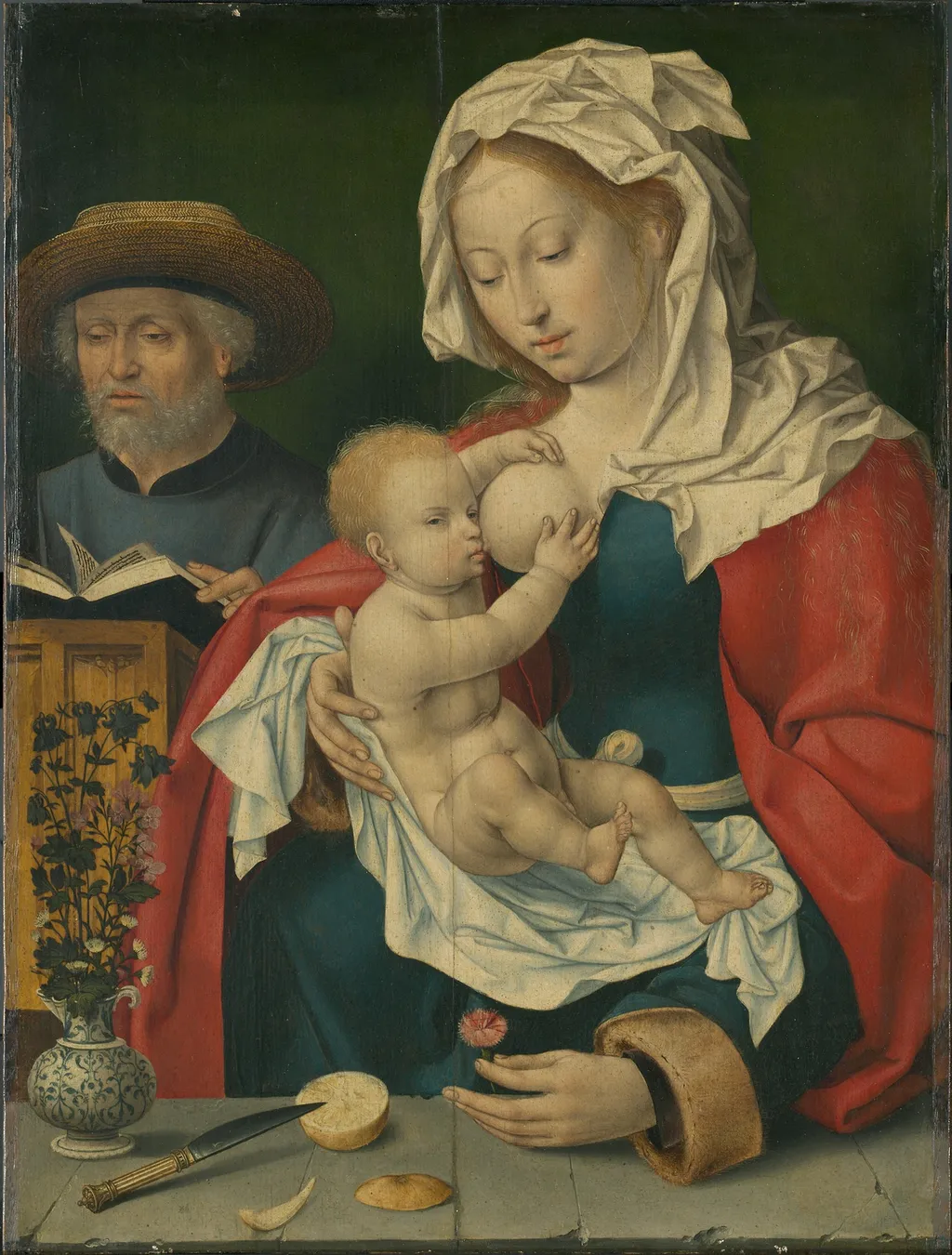
Holy Family is an oil painting. It dates from 1525 and is held in the collection of the Art Institute of Chicago.
About this work
Subject & Meaning
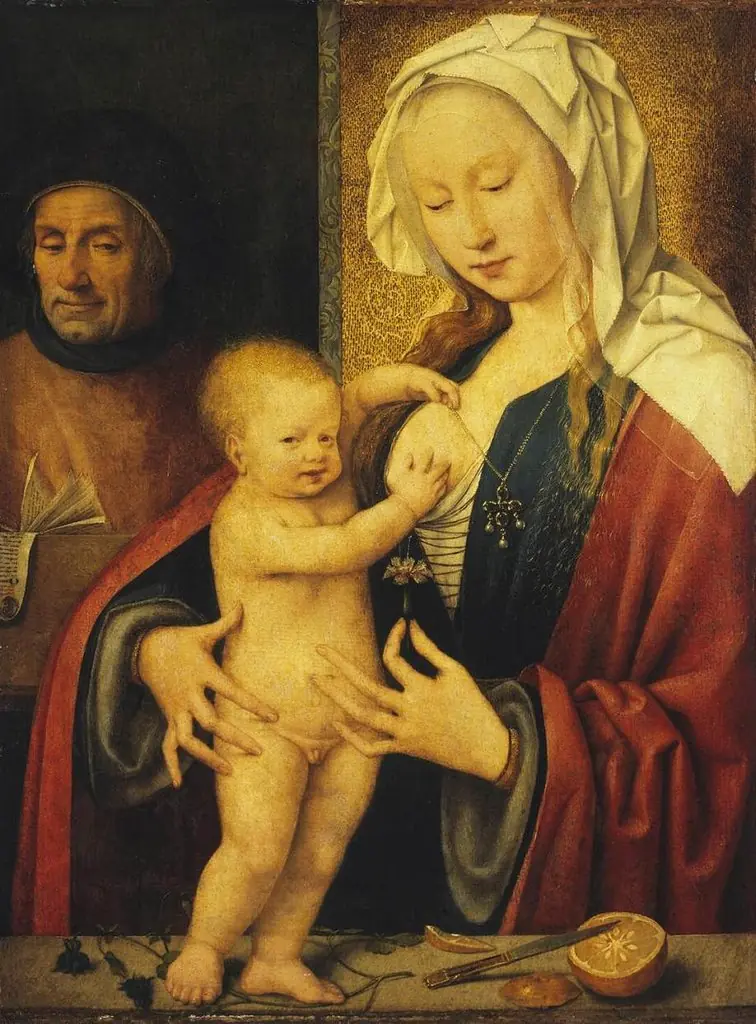
The painting depicts the traditional Christian subject of the Holy Family, featuring the Virgin Mary, the Christ Child, and Saint Joseph. As a work of religious art, the composition centers on the domestic intimacy and spiritual significance of this sacred trio. The iconography reflects the 16th-century devotion to the Holy Family as a model of piety and divine lineage within the Christian faith.
Technique & Style
The work depicts the figures of Mary, the Christ Child, and Joseph within a composition classified as religious art.
The Holy Family is executed in oil paint on a panel support, a standard medium for religious works of this period. Created by the Workshop of Joos van Cleve, the painting measures 48.3 cm in height and 36.6 cm in width. The work depicts the figures of Mary, the Christ Child, and Joseph within a composition classified as religious art.
While specific details regarding the brushwork or current physical condition are not provided in the available records, the piece remains a distinct example of early sixteenth-century panel painting technique.
History & Provenance
The painting titled Holy Family was created in 1524 by the Workshop of Joos van Cleve. Executed in oil paint on a panel, the work depicts the religious subject of Mary, the Christ Child, and Joseph. Current records indicate the piece entered the collection of the Art Institute of Chicago, where it is held today.
The painting is housed in the collection of the Art Institute of Chicago, where it holds the accession number 1954.265.
It has been exhibited in several venues, including the 1933 Century of Progress Exposition, the 1942 Chicago Century of Progress, and the 1953 Chicago Century of Progress Exhibition.
The work was created circa 1524–1525 by the Workshop of Joos van Cleve, depicting the Holy Family in oil on panel.
Its dimensions are 48.3 cm in height and 36.6 cm in width.
Context
The Holy Family, painted in 1524, exemplifies the devotional intensity of Northern Renaissance religious art and situates the work within Joos van Cleve's workshop practice, a significant contributor to early 16th-century devotional painting. Its composition, featuring Mary, the infant Christ, and Joseph, reflects evolving iconographic approaches to family spirituality during the period, as documented in scholarly analyses of workshop traditions. The painting's attribution to the Workshop of Joos van Cleve, confirmed by its presence in the Art Institute of Chicago's collection, underscores its importance in understanding the dissemination of devotional imagery among urban elites in the Low Countries.
This piece contributes to broader scholarship on how religious art functioned as both spiritual object and social marker in pre-Reformation Europe, particularly through its material execution in oil on panel and its enduring presence in a major modern art institution.
Overview
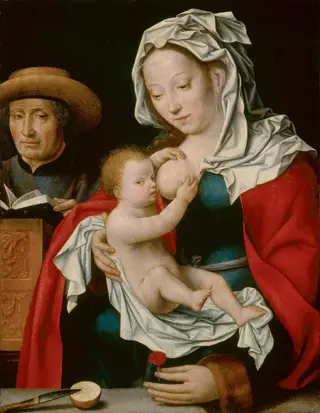
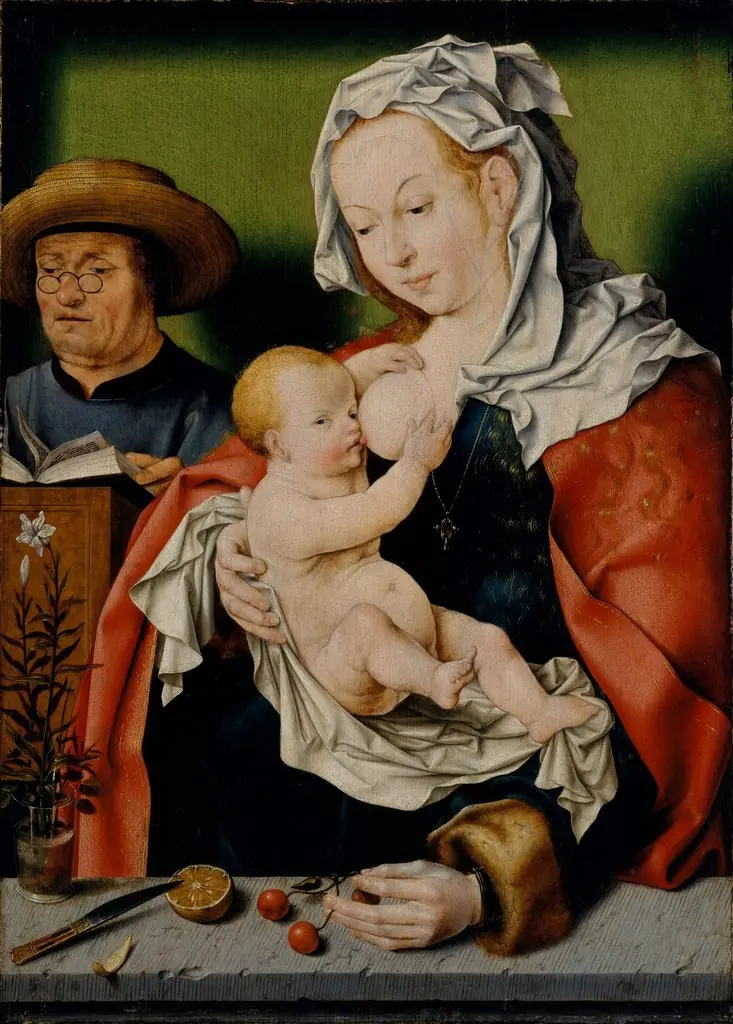
Holy Family is an oil painting that presents a domestic scene centered on a mother and child. The woman, dressed in a blue gown with a red mantle, cradles a plump infant who reaches toward a small round object. Behind them stands an older man wearing a wide‑brimmed hat, absorbed in a book that appears to be a biblical text.
The composition includes a broken loaf of bread and a vase of flowers on the floor, lending a quiet, everyday atmosphere.
Artist & collection