Artwork
Jupiter and Mercury at Philemon and Baucis
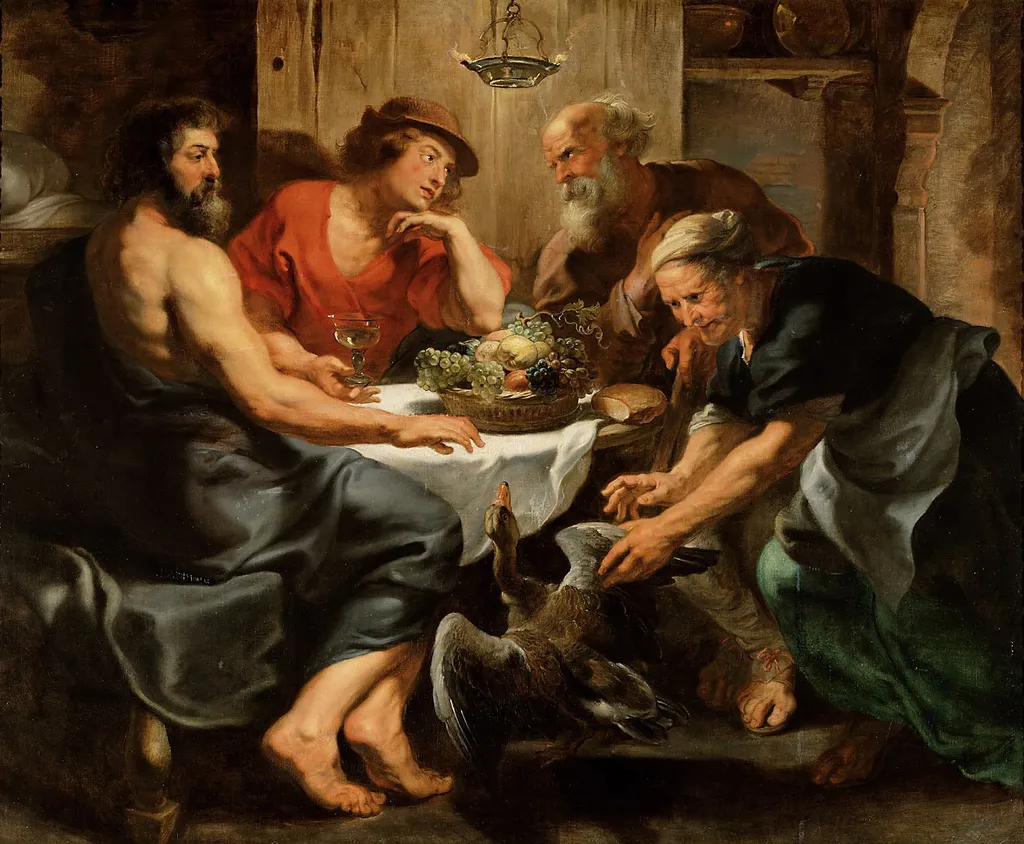
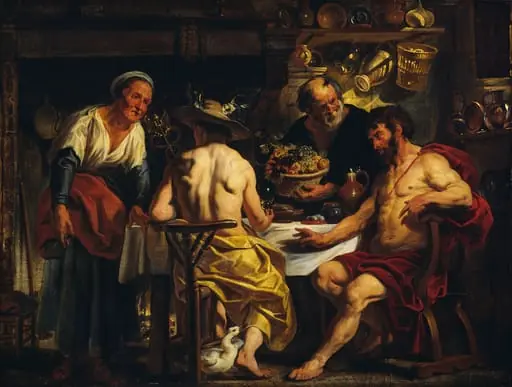
Jupiter and Mercury at Philemon and Baucis is an oil painting. It dates from 1622 and is held in the collection of the Kunsthistorisches Museum.
About this work
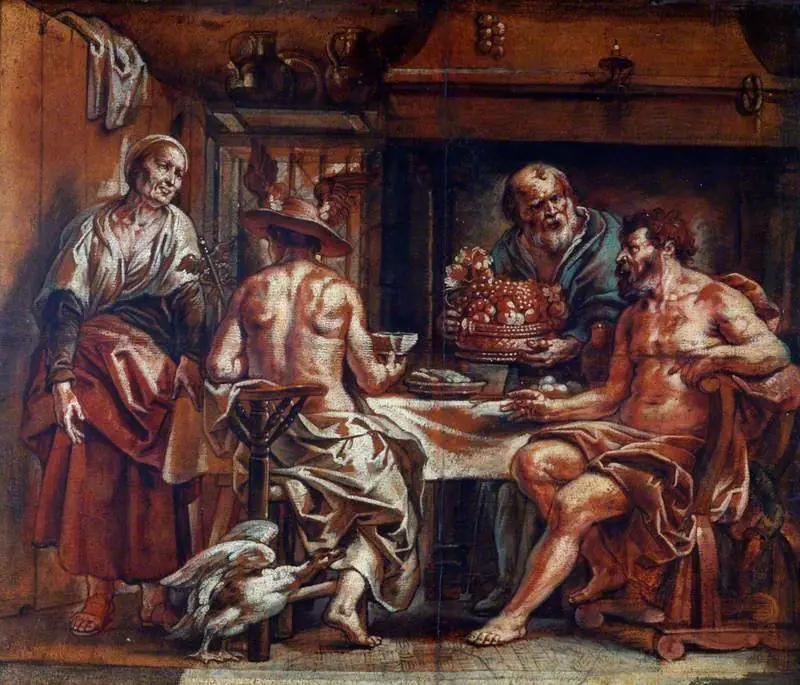
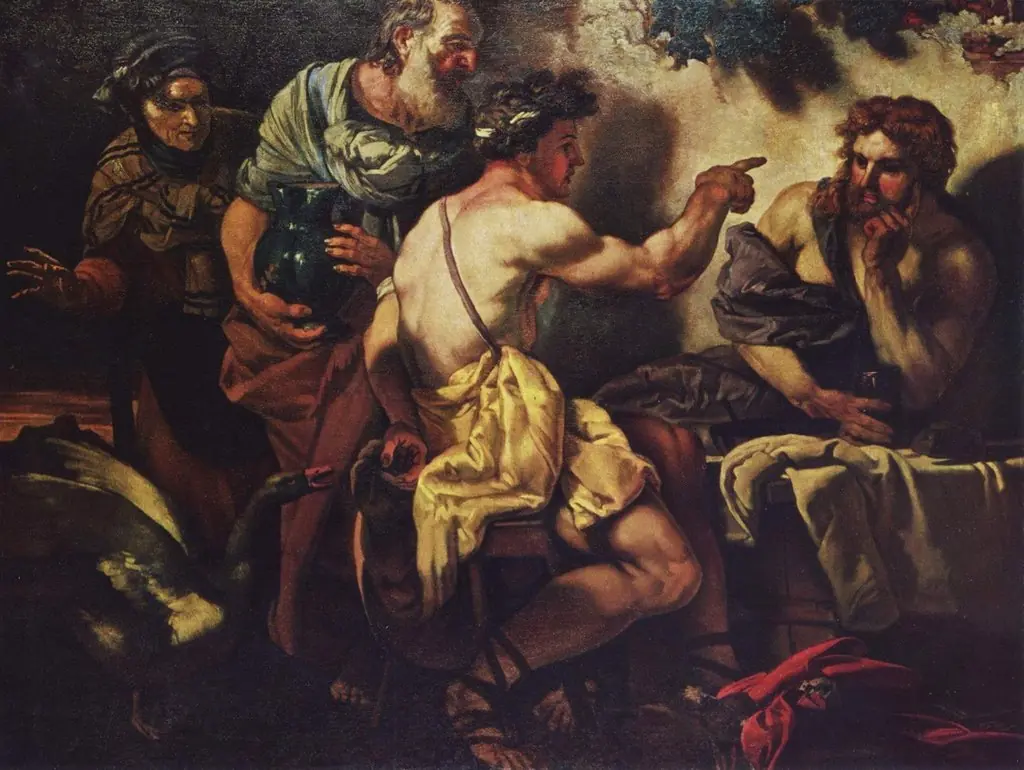
Four people sit around a table in a dim, wood-paneled room. The man in red leans on his elbow, looking thoughtful; a bearded man beside him holds a wineglass; an older woman reaches for a duck on the floor. A hanging lamp glows behind them. The duck just out of reach adds a touch of humor. Painted in 1622.
Subject & Meaning
The painting illustrates the mythological narrative of Philemon and Baucis, depicting the gods Jupiter (Zeus) and Mercury (Hermes) as humble travelers.
The painting illustrates the mythological narrative of Philemon and Baucis, depicting the gods Jupiter (Zeus) and Mercury (Hermes) as humble travelers. Upon arriving at the couple's modest home, the deities are received with hospitality despite the hosts' poverty. The scene is populated with specific iconographic elements including a table laden with bread, fruit, and a duck, alongside a white wine glass and a lamp, which emphasize the rustic setting and the act of serving.
The figures of Philemon and Baucis are shown barefoot, underscoring their simple, humble status. This work represents the classical theme of divine testing and the virtue of charity, where the gods reward the elderly couple for their generosity while punishing the inhospitable neighbors, a story central to Ovid's Metamorphoses.
Technique & Style
Executed in 1622, this mythological work is an oil painting on canvas measuring 153.5 by 187 centimeters. Attributed to the workshop of Peter Paul Rubens, the piece employs the fluid handling characteristic of the Baroque era to depict the narrative of Jupiter and Mercury visiting Philemon and Baucis. The composition features a dense arrangement of figures and still-life elements, including fruit, bread, and poultry on a table, rendered with rich tonal variations.
The application of oil paint allows for detailed textural contrasts between the barefoot hosts and the divine visitors, while the lighting focuses attention on the central interaction and the humble domestic setting.
History & Provenance
The work attributed to the workshop of Peter Paul Rubens, Jupiter and Mercury at Philemon and Baucis, is dated to 1622 based on internal records and Wikidata documentation. The painting entered the collection of the Kunsthistorisches Museum, Vienna, where it remains located. The composition depicts the mythological scene of Jupiter and Mercury visiting Philemon and Baucis, aligning with Rubens’s workshop practices of the early 1620s.
No direct commission record has been identified in the provided sources, though the subject matter and style are consistent with Rubens’s circle during this period.
The painting has been in the collection of the Kunsthistorisches Museum, where it remains held today. It is catalogued as an oil-on-canvas work dated 1622 and attributed to the workshop of Peter Paul Rubens. No specific inventory or accession number is recorded in the available sources.
Likewise, the provided documentation does not list any past exhibitions, loans, or display history for the work beyond its current institutional location.
Legacy
The 1622 oil painting, documented in the Rubens workshop records and now displayed at the Kunsthistorisches Museum, exemplifies Baroque mythological composition and has been cited in later scholarship as a reference point for depictions of divine hospitality, influencing subsequent artists who treated similar narrative scenes. Its composition, featuring Jupiter and Mercury among the elderly couple Philemon and Baucis, reflects the workshop’s emphasis on dynamic figuration and rich coloration, qualities that were emulated in 17th‑century mythological works across Europe, reinforcing its reputation as a prototype for narrative clarity and emotional nuance in the genre.
Overview
This oil painting, created in 1622, depicts a scene from classical mythology: Jupiter and Mercury's visit to the humble home of Philemon and Baucis. The composition features four figures gathered around a rustic table in a dimly lit, wood-paneled interior. The artist employs dramatic contrasts of light and shadow to enhance the narrative and create a sense of intimate domesticity within the sacred encounter.
Artist & collection