Artwork
Jupiter and Mercury at Philemon and Baucis
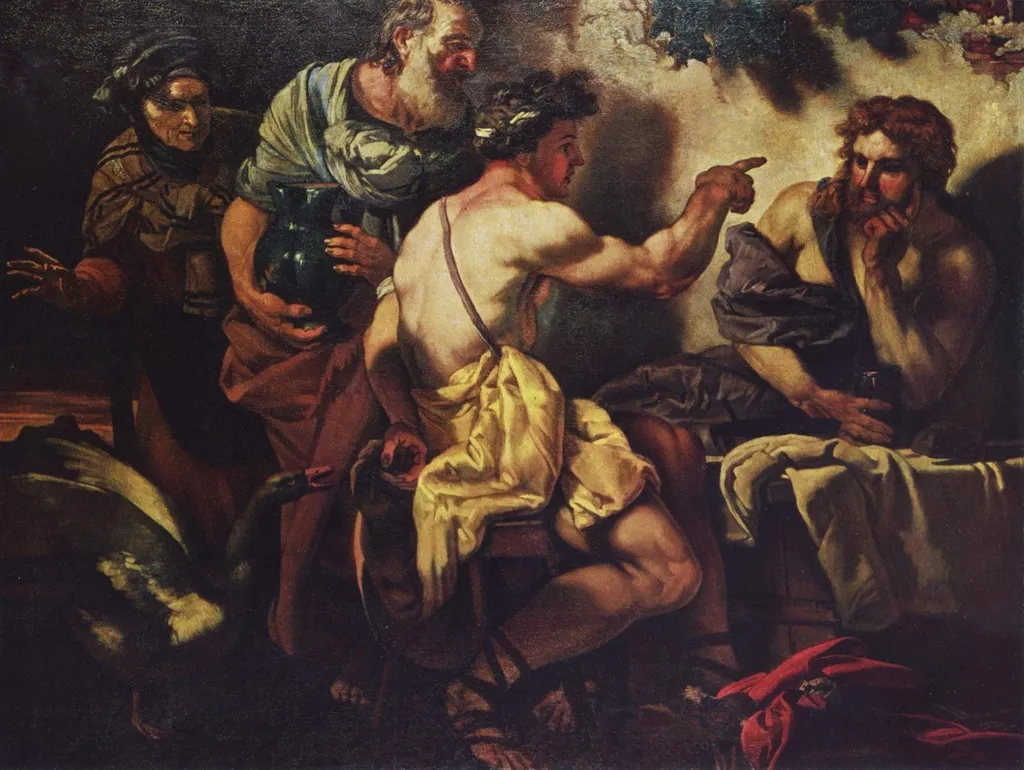
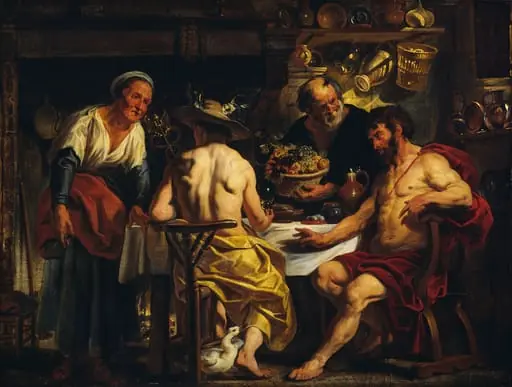
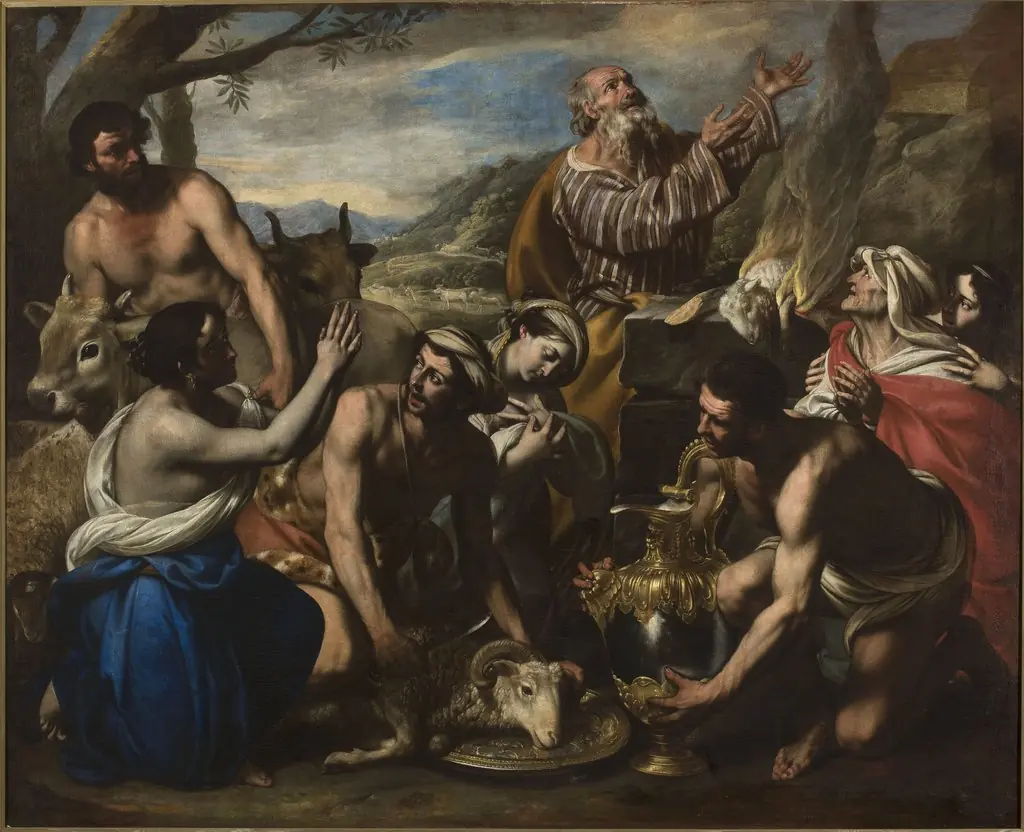
Jupiter and Mercury at Philemon and Baucis is an oil painting by the Flemish Baroque painting artist Johann Carl Loth. It dates from 1660 and is held in the collection of the Kunsthistorisches Museum.
About this work
Subject & Meaning
In this scene, the gods Jupiter and Mercury appear in disguise to test the devotion of mortals, a story that highlights themes of piety and divine reward.
Johann Carl Loth's 1660 oil painting depicts the mythological narrative of Jupiter and Mercury visiting Philemon and Baucis. The work belongs to the genre of mythological painting and centers on the main subject of the elderly couple, Philemon and Baucis, who are famous for their hospitality. In this scene, the gods Jupiter and Mercury appear in disguise to test the devotion of mortals, a story that highlights themes of piety and divine reward.
The composition illustrates the moment the deities reveal their true identities to the humble hosts, who had welcomed them when others refused. This subject matter serves as a moral allegory regarding the virtues of kindness and the consequences of welcoming strangers.
Technique & Style
The artwork is an oil painting on canvas, executed in 1660 by Johann Carl Loth. Depicting Jupiter with Mercury in the mythological scene of Philemon and Baucis, the composition is characteristic of Baroque mythological painting, featuring dramatic chiaroscuro and dynamic figure interaction. The work measures 178 centimeters by 232.5 centimeters and is housed in the Kunsthistorisches Museum, where it remains part of the collection assembled by Archduke Leopold Wilhelm of Austria.
History & Provenance
The mythological oil painting on canvas titled Jupiter and Mercury at Philemon and Baucis was created by Johann Carl Loth in 1660. It entered the collection of Archduke Leopold Wilhelm of Austria before being acquired by the Kunsthistorisches Museum in Vienna, where it remains on permanent display. The work measures 232.5 cm in width and 178 cm in height and is classified as a mythological painting.
The painting Jupiter and Mercury at Philemon and Baucis by Johann Carl Loth is held in the collection of the Kunsthistorisches Museum. It was acquired by Archduke Leopold Wilhelm of Austria and remains part of the museum's holdings. The work has been exhibited in the museum's European Paintings galleries as part of displays focusing on mythological subjects and Baroque art.
The artwork measures 232.5 cm in width and 178 cm in height and is classified as a mythological painting in oil on canvas. It was created in 1660 and is cataloged under the inventory number 2001/999 for exhibition records.
Exhibition history includes its consistent presence in the museum's permanent collection displays, with documented appearances in thematic exhibitions on mythological narratives in 19th-century European art and Baroque masterpieces.
Legacy
The painting inspired 19th-century academic artists who emulated Loth’s theatrical composition and fluid brushwork in mythological scenes. Contemporary scholars cite it as an example of Baroque mythological narrative that influenced later interpretations of Ovidian subjects in German art. The work remains part of the permanent collection at the Kunsthistorisches Museum where it is displayed in the Picture Gallery.
Overview
Painted in 1660 by Johann Carl Loth, this oil on canvas depicts a moment from Ovid’s Metamorphoses. The scene captures the divine visitation of Jupiter and Mercury in human form, arriving at the humble home of the elderly couple Philemon and Baucis. The composition centers on the revelation of their true identities, rendered with theatrical intensity and a focus on human reaction to the supernatural.
Context
Created during the Baroque era, the work aligns with a broader European trend of using mythological subjects to explore human virtue and divine justice. Loth, trained in Venice and active in Munich, absorbed the dramatic lighting of Caravaggio and the compositional dynamism of Venetian colorism. This synthesis is evident in the painting’s emotional immediacy and theatrical staging.
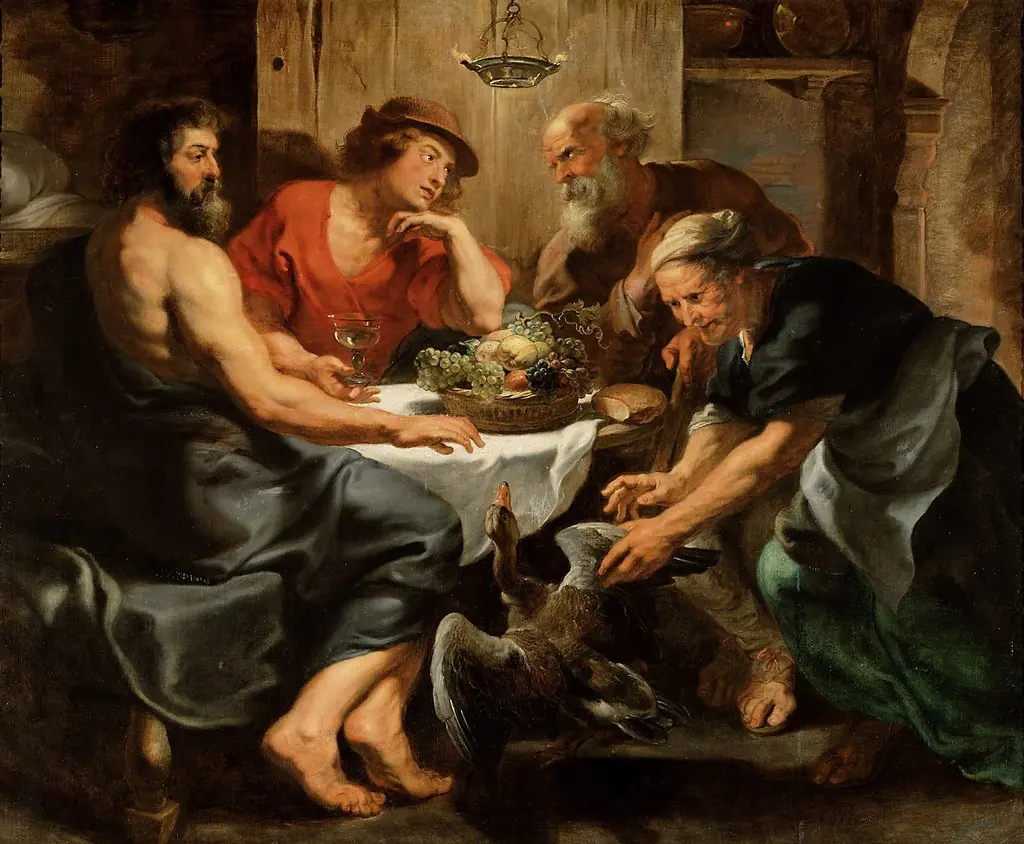
Own this work as a print
Artist & collection

 Jupiter ja Merkurius Filemonin ja Bauciin vieraina
 The Return of the Prodigal son
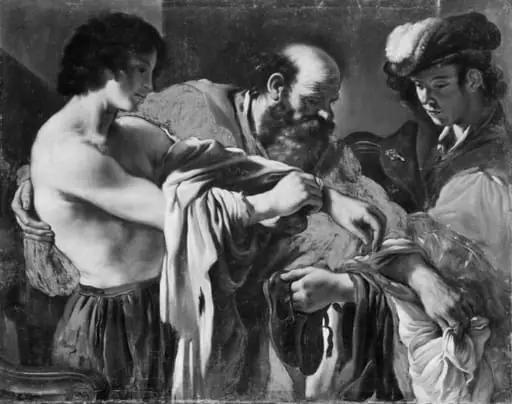 The Prodigal Son
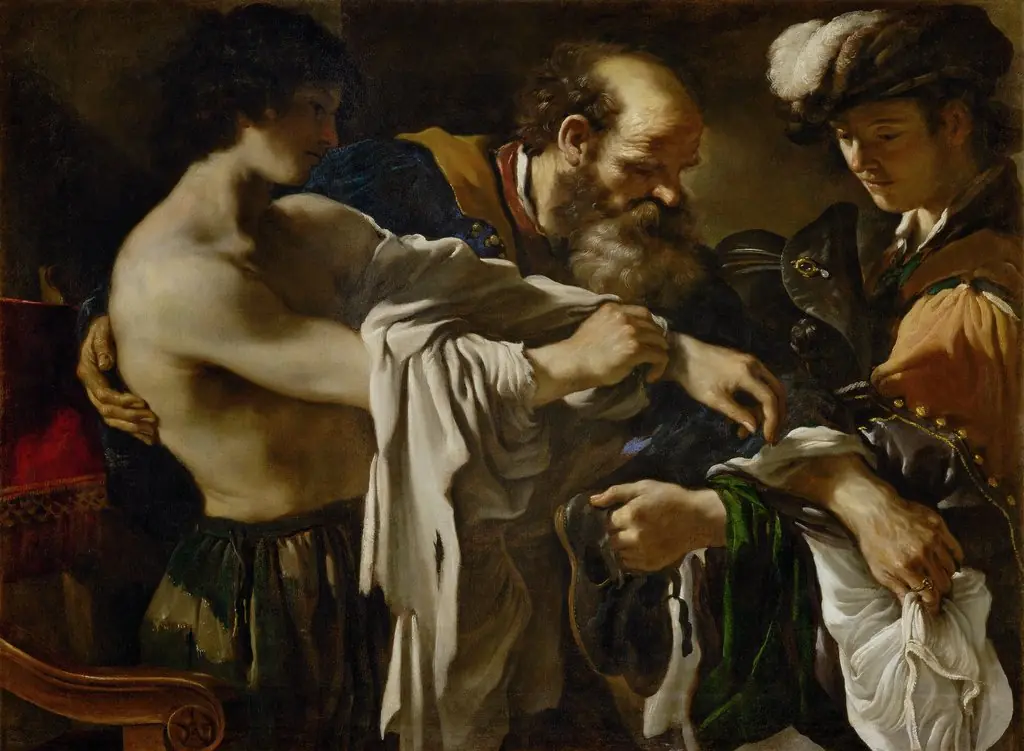 The Return of the Prodigal Son
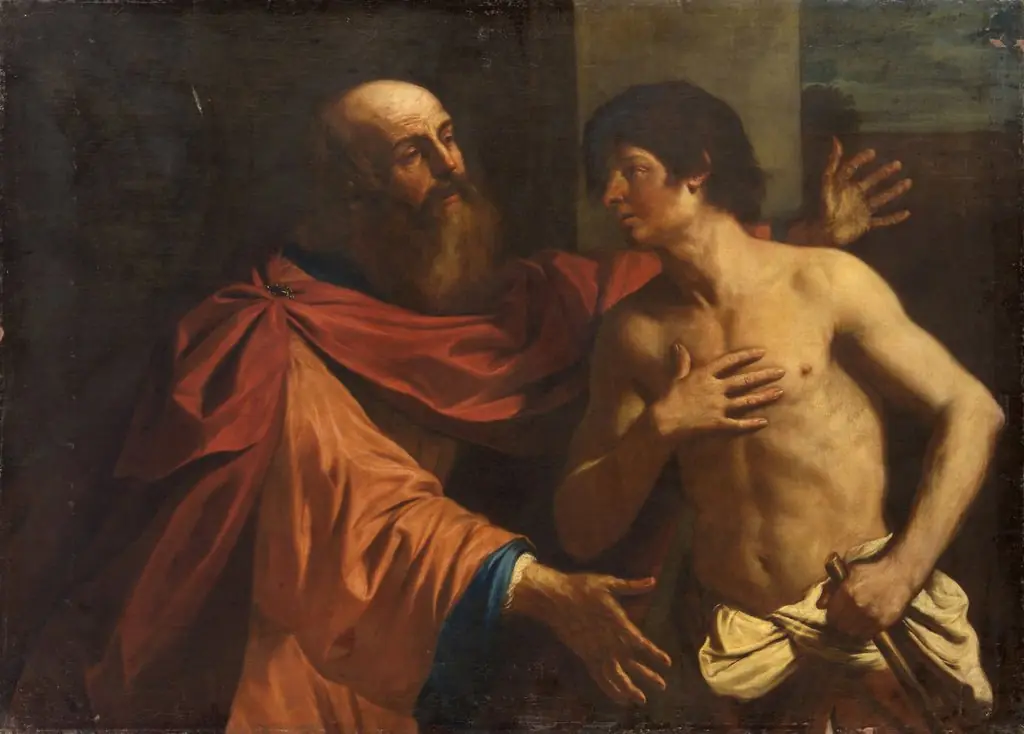 The Return of the Prodigal son
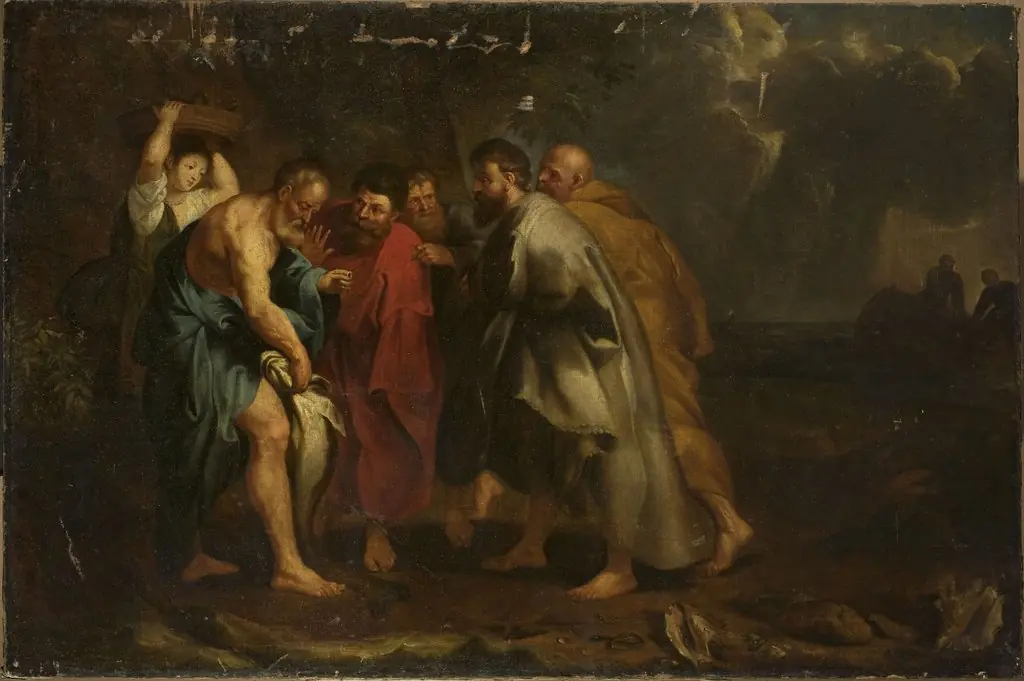 Apostles finding a coin inside a fish (Matthew 17:27)
 The Sermon of St. John the Baptist
 Mercury Killing Argus
 Apollo as Victor over Pan
 Mercury Killing Argus
 Sacrifice of Noah
- Jupiter and Mercury at Philemon and Baucis